Top 10 SaaS Project Management Techniques You Should Learn

Key Highlights:
- SaaS project management ensures flexibility through Agile methodologies, enabling continuous adaptation to changing customer needs.
- Customer success integration enhances client retention by focusing on onboarding, engagement, and feedback for growth.
- Effective resource optimization improves team efficiency by allocating resources wisely across projects.
Managing a SaaS project isn’t just about writing code or launching features – it’s an intricate dance of continuous delivery, customer satisfaction, and scalable growth. It is a cloud-driven world today and traditional project management approaches often fall short of meeting the unique challenges that SaaS development presents.
Are you scaling your first SaaS product? or managing multiple cloud applications? Your success hinges on mastering the delicate balance between rapid innovation and stable service delivery.
The guide explores proven techniques and strategies that will help you navigate the complexities of SaaS project management.
Let’s dive into how you can transform your SaaS project management approach and deliver exceptional value to your subscribers.
What is SaaS Project Management?
SaaS project management is a specialized approach to planning, executing, and overseeing the development as well as delivery of cloud-based software applications.
Unlike traditional software project management, it emphasizes continuous delivery, scalable infrastructure, and ongoing customer relationship management throughout the product lifecycle.
SaaS project management helps organizations balance rapid development with stable service delivery, ensuring that new features and updates don’t disrupt existing users while maintaining competitive advantage in a fast-moving market.
Key objectives
- Continuous value delivery: Ensure regular releases of new features and improvements while maintaining system stability as well as user satisfaction.
- Scalable infrastructure management: Maintain an architecture that can efficiently handle growing user bases and increasing data volumes.
- Customer success integration: Align development priorities with customer needs and ensure smooth onboarding, support, as well as retention processes.
- Sustainable revenue generation: Optimize subscription models while maintaining cost-effective development and operational processes.
Why is SaaS Project Management Important?
Effective SaaS project management is the secret to staying ahead in a fast-paced market. It helps streamline development and boost team collaboration. Let’s explore what else it has to offer.
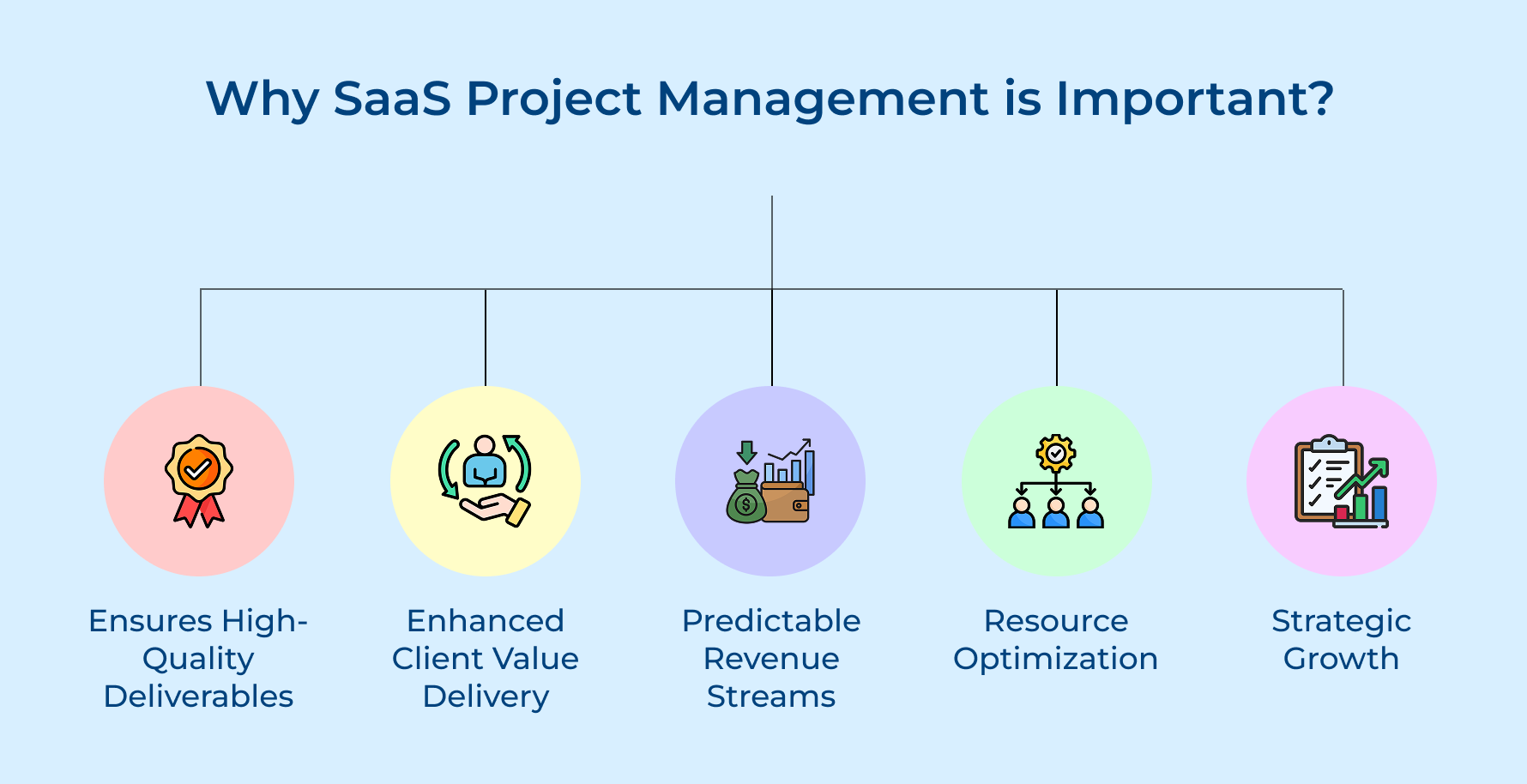
Ensures high-quality deliverables: Structured project management guarantees that SaaS solutions meet or exceed client expectations, with clear planning, quality assurance, and testing for bug-free, high-value products.
Enhanced client value delivery: Efficient resource utilization and timely deliverables ensure consistent, high-quality solutions across multiple engagements, strengthening client relationships while also boosting satisfaction.
Predictable revenue streams: Systematic project management enables better forecasting, resource allocation, and budget tracking. Thus, ensuring projects stay within budget and generate expected returns.
Resource optimization: Proper allocation of team resources helps balance workloads, prevent burnout, and effectively deploy specialized skills across client projects. It leads to smoother operations.
Strategic growth: Successful project execution, informed by metrics, feedback, and performance data, allows agencies to confidently expand services. The agencies can enter new markets and also build long-term business growth.
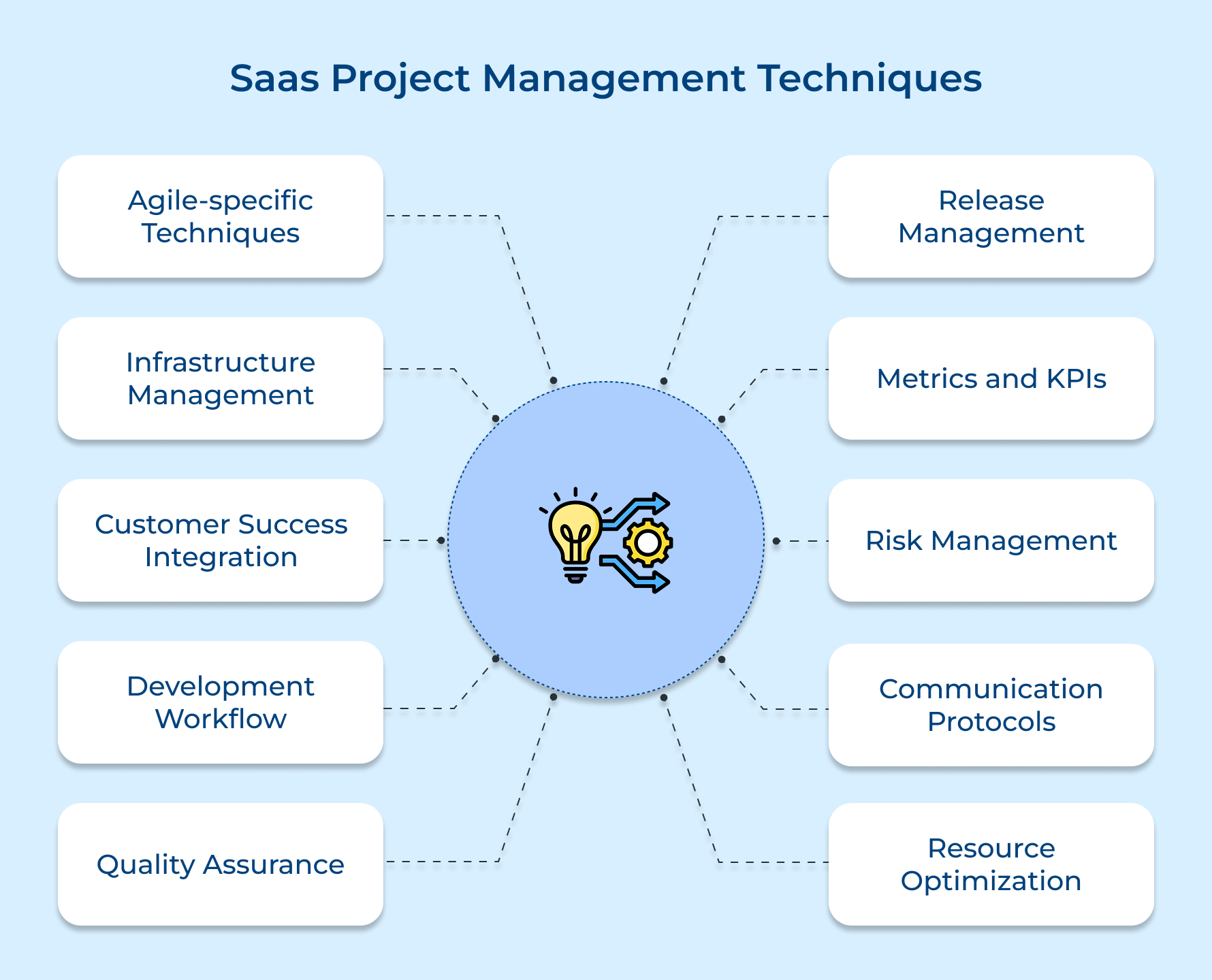
10 Saas Project Management Techniques You Need to Know
Mastering SaaS project management requires tailored techniques to navigate its unique challenges. Let’s explore strategies that drive efficiency and success.
1. Agile-specific Techniques
Agile project management is all about staying flexible and adaptive—perfect for SaaS development. With iterative cycles (sprints), continuous feedback, and adaptive planning, Agile ensures rapid delivery as well as frequent collaboration with customers.
In this rapidly evolving SaaS environment, where user needs and market demands constantly evolve, Agile helps you stay ahead. By responding quickly to feedback, minimizing risks through incremental releases, and rolling out regular feature updates, you maintain a competitive edge.
Try two-week sprint cycles with daily standups, sprint planning, as well as retrospectives to keep everything on track.
Incorporate tools like Asana, Jira, or Monday.com to manage project timelines, streamline collaboration, and track progress. Use features like Kanban boards for visual task management and real-time collaboration for seamless team communication.
Here’s a tip: Keep sprint meetings focused with structured agendas and timeboxing—15 minutes for standups, 1 hour for planning. Conduct “Stop-Start-Continue” retrospectives every sprint using tools like Miro or Notion to continuously improve processes and enhance team dynamics.
2. Infrastructure Management
Managing the infrastructure behind your SaaS application is critical for ensuring seamless functionality and scalability. But, how to build a reliable system?
- Efficient resource management: Take a systematic approach to handling technical resources like servers, databases, and cloud services to ensure your SaaS application is functional.
- Consistent and reliable performance: A robust infrastructure ensures smooth service delivery, optimal performance, and cost-effective scaling. It also means no downtime, enhanced security, and support for a growing user base without a hitch.
Here’s how to make it more effective,
- Automate scaling rules to adapt to demand changes effortlessly.
- Use monitoring systems to track performance and spot issues early.
- Create disaster recovery plans to handle unexpected scenarios effectively.
- Apply infrastructure-as-code (IaC) for consistency and quick problem resolution.
Pro Tips:
- Set up automated alerts to notify you when resource usage exceeds 80% capacity, helping prevent performance dips.
- Keep all infrastructure changes documented in a centralized wiki, and ensure peer reviews for major updates.
3. Customer Success Integration
Making sure your customers achieve their goals with your SaaS product requires a thoughtful approach to onboarding, engagement, and support. Here’s how to make it happen:
Impact on Retention and Growth
- Happy customers stick around, reducing churn and driving revenue growth.
- Ensure they see value consistently to turn them into loyal advocates.
Best Practices for Customer Success
- Design a clear and engaging onboarding process to set users up for success.
- Schedule regular check-ins to understand customer needs and build stronger relationships.
- Track usage metrics to identify trends and areas for improvement.
- Create feedback loops to gather insights and continuously refine your product.
Tips to consider:
- Build customer health scores with metrics like login frequency, feature usage, and support interactions.
- Use automation to detect early warning signs of churn, like declining usage patterns, and act quickly.
4. Development Workflow
Effective code management is all about having a structured process to handle code changes and develop features while deploying updates while keeping risks as well as errors at bay.
With a well-organized workflow, you can avoid conflicts, ensure code quality, as well as build seamless collaboration among team members. It’s a reliable way to minimize mistakes and accelerate development cycles.
To get started, use version control systems with feature branches to keep your development history clear while also being organized. Pair that with a strong code review process to catch issues early and maintain quality.
For added efficiency, enforce branch naming conventions like feature/, bugfix/, and hotfix/ to keep things straightforward. Automated quality checks can further enhance your workflow, ensuring only polished code makes it through.
5. Quality Assurance
Ensuring the quality of your SaaS product is all about systematic testing and verification to meet high standards for functionality, performance, as well as reliability. By catching bugs early, you maintain user satisfaction, reduce support costs, and deliver a consistent experience for all customers.
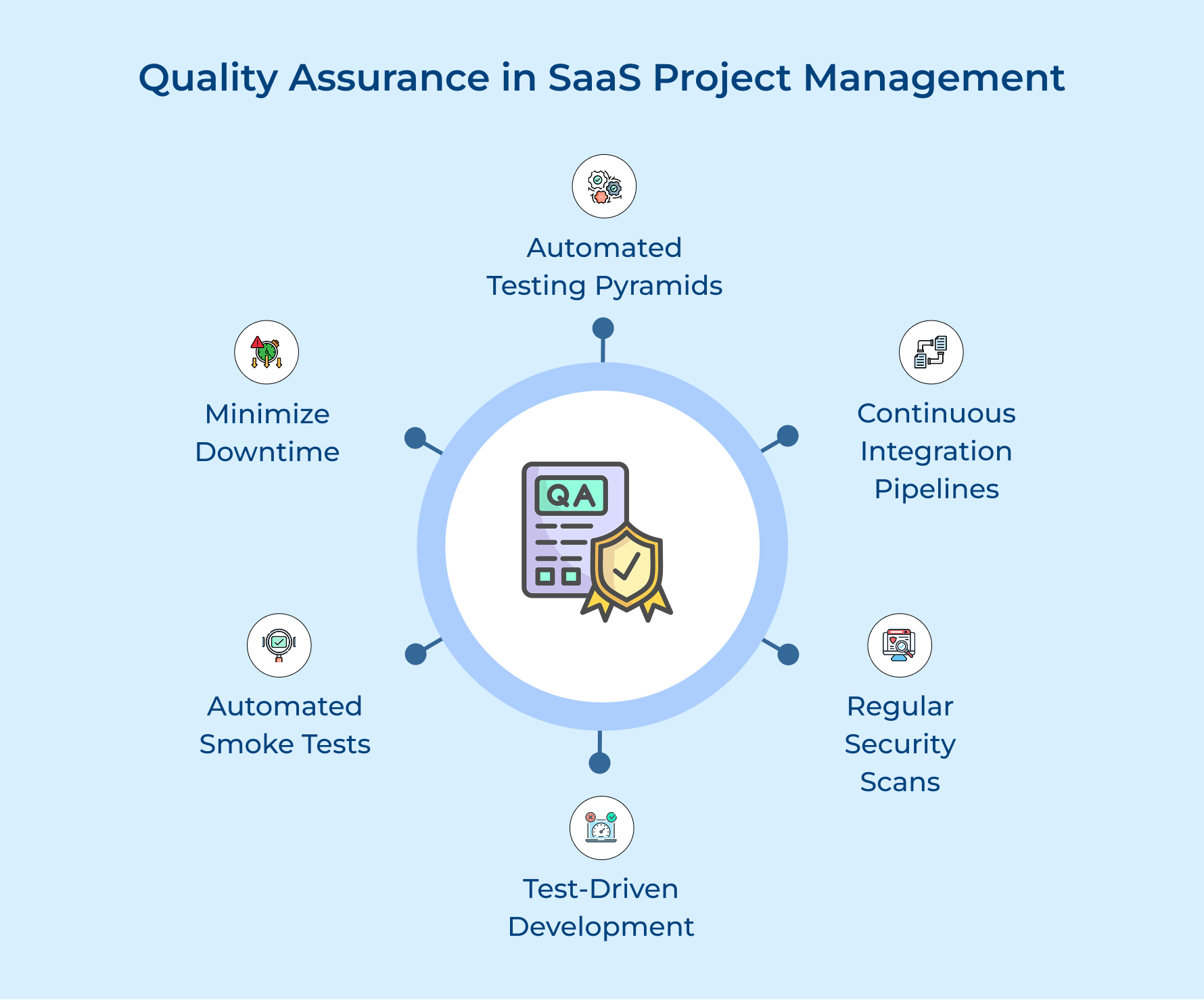
Start by incorporating automated testing pyramids into your workflows and setting up continuous integration pipelines to streamline development.
Regular security scans ensure your product remains robust and secure. For remote teams using collaboration tools, these practices can improve efficiency by reducing downtime and minimizing disruptions.
To take it a step further, implement test-driven development (TDD), where tests are written before coding critical features. Automated smoke tests that verify core functionality after every deployment can help project management solutions ensure smooth operations.
6. Release Management
Release management is all about planning, scheduling, and controlling software updates to ensure minimal impact on users as well as maintain system stability. Here’s how you can streamline the process:
- Plan smartly: Use powerful tools on a single platform to create detailed release schedules. This ensures task assignments and resource management are organized.
- Communicate early: Schedule releases during low-usage periods and inform users about the timelines at least a week in advance to set expectations.
- Be prepared: Maintain a deployment checklist and a detailed rollback plan with specific trigger conditions to handle unexpected issues during complex project updates.
- Controlled rollouts: Use feature flags for phased deployments, minimizing risk while testing new functionalities on a smaller scale.
With the right approach, your release management process can maintain service stability and keep users confident in your updates.
7. Metrics And KPIs
Quantifiable measurements tracking product performance, user engagement, business health, and development efficiency in SaaS operations.
Metrics provide objective insights into product success, guide decision-making, and help identify areas needing improvement. They ensure data-driven management of the SaaS product.
Implement dashboards tracking key metrics, set up automated reporting, and establish regular review cycles for analyzing trends while also making adjustments.
Tips to consider:
- Focus on no more than 5-7 key metrics that directly align with business objectives
- Review metrics weekly with stakeholders and create action plans for any negative trends
8. Risk Management
Risk management is all about identifying, assessing, and addressing potential threats to ensure your project stays on track. How to stay ahead of the game?
- Spot risks early: Regularly review technical, business, and operational risks with your project team to catch potential issues before they escalate.
- Plan for the unexpected: Create detailed contingency plans and risk assessment matrices to minimize disruptions as well as protect business continuity.
- Mitigation strategies: Develop proactive solutions to tackle risks head-on while ensuring service stability for your company and customers.
- Collaborate for insights: Conduct monthly risk assessment reviews with cross-functional teams to identify emerging threats and share actionable insights.
- Stay prepared: Keep an updated incident response playbook with clearly defined roles and responsibilities, so your team is ready to act when needed.
9. Communication Protocols
Effective communication systems keep everyone—team members, stakeholders, and customers—on the same page, ensuring clarity as well as alignment.
Clear communication prevents misunderstandings, keeps projects on track, and ensures everyone stays informed about progress along with any changes. It’s the glue that holds successful projects together.
Start by setting up regular meeting schedules, defining communication channels, and establishing strong documentation practices. Using templates for updates can save time and ensure consistency.
Tips:
- Use a “RACI” matrix to clearly define roles and responsibilities for key decisions.
- Standardize templates for updates—whether they’re daily, weekly, or monthly—to keep things streamlined.
10. Resource Optimization
Effective resource management is about strategically allocating human, technical, and financial resources to maximize value delivery.
Using resources efficiently helps you cut costs, boost productivity, and ensure sustainable growth. It’s all about maintaining profitability while delivering value to your customers.
Create clear resource allocation plans, track utilization metrics, as well as regularly review and adjust as needed to stay aligned with changing priorities.
Tips:
- Review resource allocation every quarter and make adjustments based on actual usage along with ROI.
- Use time-tracking tools to pinpoint where resources might be over or under-utilized.
6 Effective Best Practices for SaaS Project Management
Effective SaaS project management is key to maintaining long-term client satisfaction. Let us explore how implementing best practices enhances your agency’s overall growth.
1. Clear Project Scope Definition
Start by defining a detailed project scope that includes deliverables, timelines, and clear client expectations. Document requirements as well as success metrics from the get-go, and set up processes for handling any client change requests without compromising timelines or project profitability.
2. Structured Client Onboarding
Set up a streamlined onboarding process for new clients, including kickoff meetings, requirement gathering, and document reviews. Lay out project roadmaps, establish communication channels, and make sure everyone knows their role as well as the expectations for each milestone.
3. Customer-Centric Product Development
Always keep the client’s needs at the heart of the project. Establish a feedback loop through surveys, and user testing, while regular check-ins ensure the product meets their business goals and keeps them coming back for more.
4. Cross-functional Collaboration
SaaS projects often need input from different teams like development, design, and marketing. Make sure you have clear workflows and collaborative tools to ensure efficient handoffs, so teams can solve problems faster and deliver better outcomes.
5. Post-launch Support and Iteration
Once the product is launched, keep the momentum going with post-launch monitoring, user support, and regular updates. Staying engaged with your clients helps you address issues, gather feedback, and keep them happy long-term.
6. Strong Project Roadmap and Timeline Management
A solid project roadmap is your guide to success. Map out the entire lifecycle of the project, from start to finish, with clear timelines and deliverables. This helps keep everything on track, avoids scope creep, and ensures timely completion.
Mastering SaaS Project Management for Long-term Success
The journey of successful SaaS project management demands a delicate balance between technical excellence and customer satisfaction. Organizations achieve sustainable growth through robust agile methodologies, scalable infrastructure, and an unwavering focus on continuous value delivery.
Excellence emerges from maintaining flexibility while following structured processes. Proactive monitoring of KPIs, strategic risk management, and strong customer success integration form vital pillars for enduring success in the SaaS ecosystem.
Market evolution continues to shape the SaaS industry, making adaptability and customer focus essential while maintaining technical rigor. Project managers can build sustainable solutions through measured steps, consistent evaluation, and intelligent scaling – creating lasting value for both organizations as well as the customers.
Limit time — not creativity
Everything you need for customer support, marketing & sales.

Pooja Deshpande is a content contributor at Kooper, focused on creating insightful resources that help agencies and service providers scale efficiently. Passionate about SaaS trends, content strategy, and operational excellence, she delivers practical, easy-to-implement guidance for modern business leaders.