Project Closure: 8 Steps to Closing the Project Smoothly
- What is Project Closure in Project Management?
- What is a Project Management Closure Report?
- Core Benefits of Project Closure in Project Management
- 8 Critical Steps of Project Closure in Project Management
- 5 Essential Types of Project Management Closure
- Project Closure Checklist You Should Have
- Project Closing Real-Life Examples
- Wrap Up Projects Seamlessly with Project Closure Process
- FAQs about Project Closure in Project Management

Key Highlights:
- Project closure helps in ensuring consistent implementation across all client engagements when documented.
- Treat closure meetings as a chance to showcase results, remind clients of the value you’ve delivered and naturally discuss future opportunities.
- Turn project completion into a knowledge-sharing moment by collecting lessons learned and spreading them across the team.
Project managers everywhere deal with the same headache, projects that just won’t end! Even after delivering the final work, these “zombie projects” stick around, draining your team’s energy, just when you need to focus on new priorities.
Trying to move on without proper closure causes real problems. You could miss out on payments, leave clients feeling frustrated, or burn out your team. The good news is that you can fix it!
A simple, structured project closure process turns messy endings into smooth transitions. Our easy seven-step framework helps you end projects the right way, leave a great impression, gather useful insights and set your agency up for future success.
What is Project Closure in Project Management?
Project closure is the last step in the project lifecycle. It happens when all the work is done, approved and handed over to the client. This step includes finishing tasks, organizing documents, noting lessons learned and celebrating the work done. A clear closure helps make sure nothing is missed while everyone knows the project is complete.
Closing a project properly helps the agency make more money. It ensures full payment, avoids extra unpaid work and frees up the team for new projects. Documented wins and lessons also help improve future projects while making your agency more efficient.
Key objectives:
- Complete all contractual obligations and secure formal client sign-off acknowledging full delivery of agreed-upon deliverables.
- Document lessons learned, including challenges faced, solutions implemented and process improvements for future similar projects.
- Release team members and other resources back to the organization for assignment to new billable projects.
- Archive all project documentation in a structured format that can be easily accessed for reference in future proposals or projects.
- Conduct financial reconciliation ensuring all billable work is invoiced, client payments are received and project profitability metrics are calculated.
What is a Project Management Closure Report?
A project closure report is the final document that wraps up a project. It shows what was done, how it went and what was learned. This report proves that all work was finished as planned and becomes a helpful record for future projects.
The project manager usually prepares this report near the end. It includes input from the team, the client, financial reports and quality checks. Once it’s ready, important stakeholders review and approve it. Only after that can the project be officially closed and the team moved to new tasks.
Project closure documentation components:
- Executive summary presenting high-level project outcomes, including whether objectives were met, final budget figures and timeline adherence.
- Variance analysis comparing planned versus actual performance across scope, schedule, budget as well as quality metrics.
- Lessons learned register capturing successful approaches, challenges encountered and recommendations for process improvements on future projects.
- Client acceptance documentation with formal sign-off confirming that deliverables meet requirements and contractual obligations have been fulfilled.
- Resource release schedule detailing when team members and other organizational assets will be made available for reassignment to new projects.
Core Benefits of Project Closure in Project Management
Let us delve into the multifaceted advantages of project closure and why it should be a non-negotiable step in your project management process.
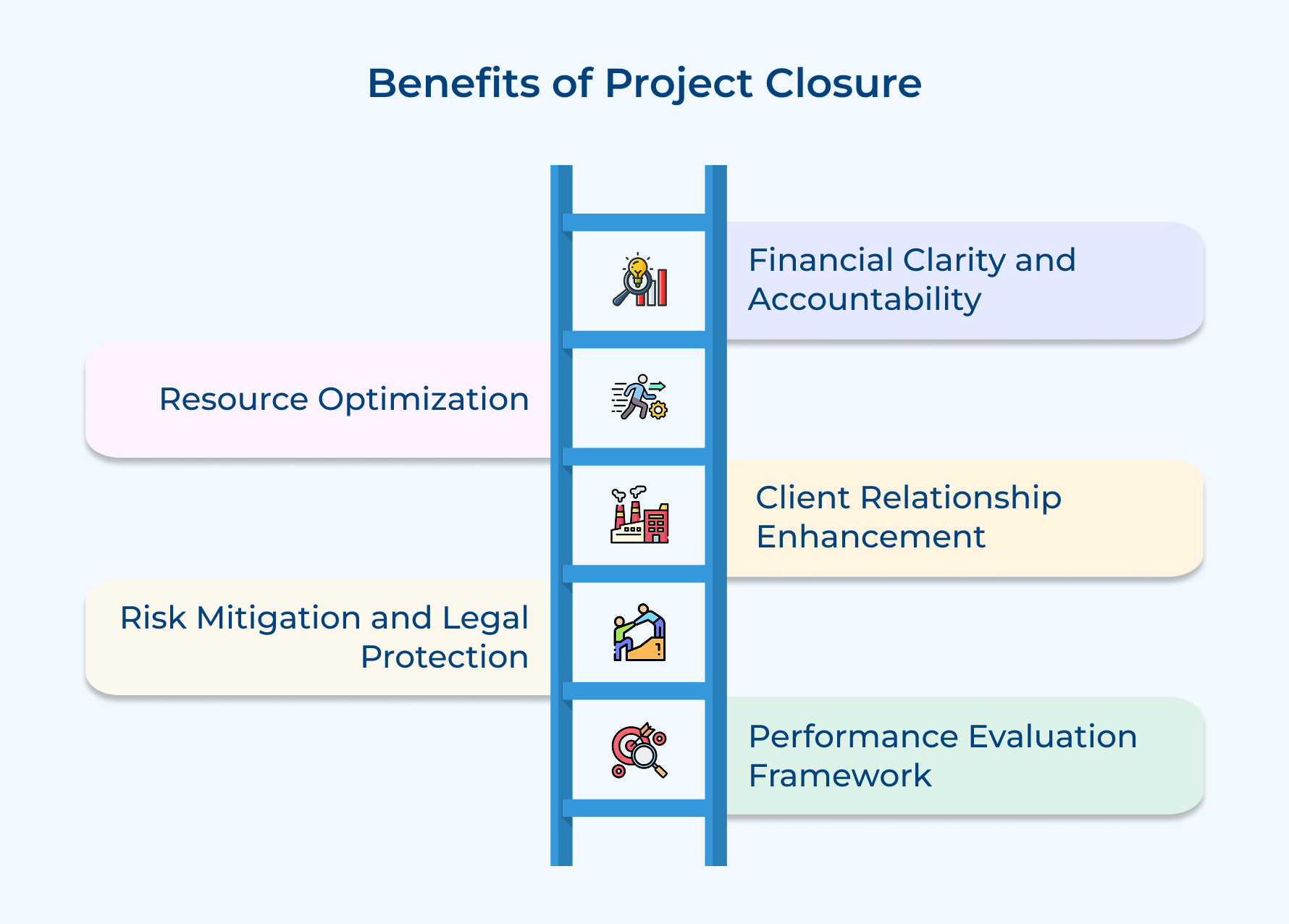
1. Financial Clarity and Accountability
Closing a project properly helps track all money matters. It includes logging billable hours, paying vendors, confirming client payments and checking profits. This avoids missed income and helps plan better for future projects.
2. Resource Optimization
Formal closure shows that a project is really done. Team members can move to new work without confusion. This saves time and ensures people focus on the next big task.
3. Client Relationship Enhancement
Finishing a project with a clear process shows clients you’re professional. It gives a chance to talk about future work. Clients like knowing exactly when a project is done.
4. Risk Mitigation and Legal Protection
A proper closing confirms that all contract work is complete and the client agrees. This protects your agency from legal problems later. It also ensures you meet all compliance rules.
5. Performance Evaluation Framework
Closing a project gives you time to review how the team performed. It helps spot top performers and skills that need growth. You also learn what to improve in the next project.
8 Critical Steps of Project Closure in Project Management
In the following guide, we’ll explore the eight essential steps of project closeout that every project management team should incorporate to ensure a seamless project conclusion.
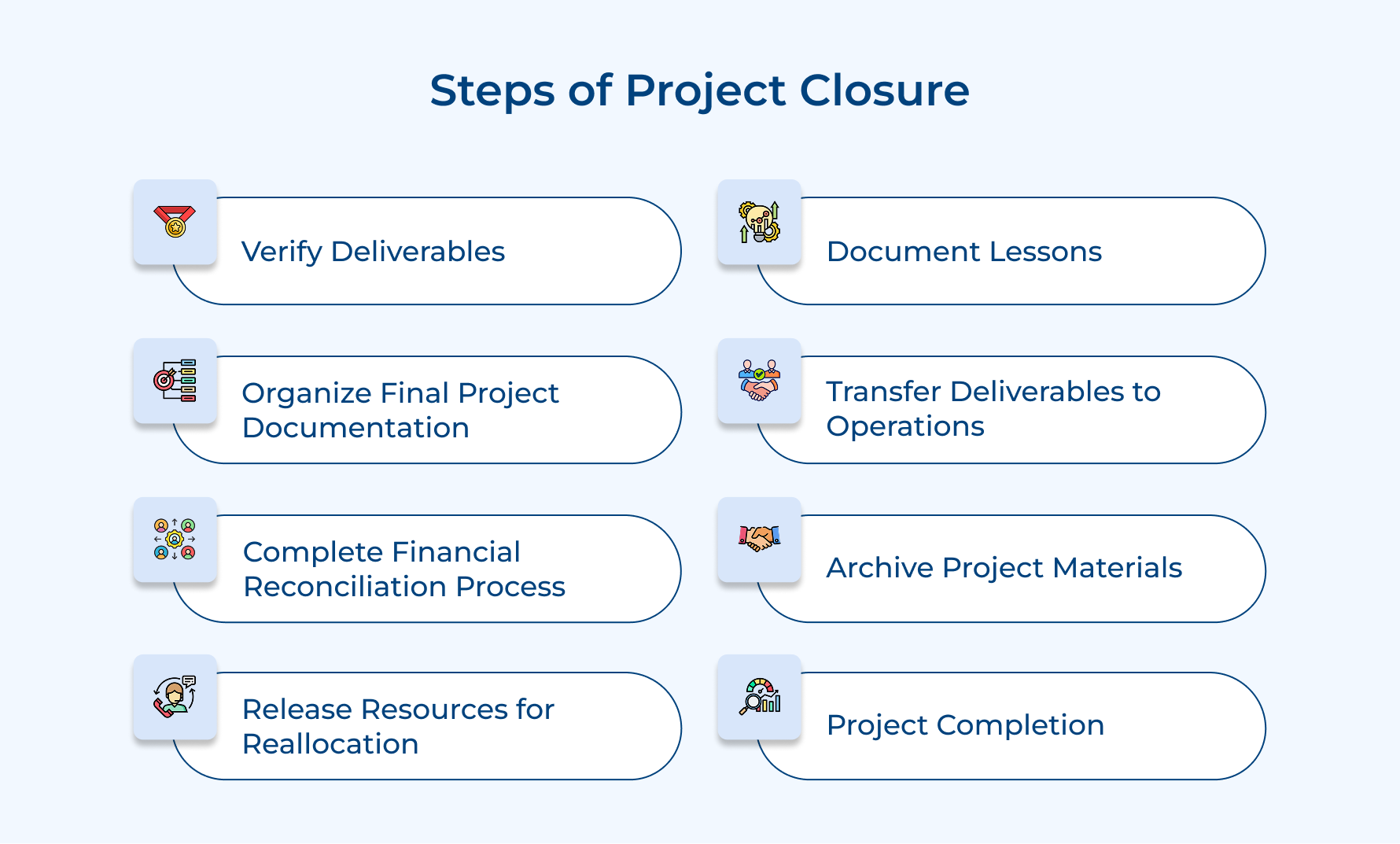
1. Verify Deliverables with Client Approval
Checking the deliverables is the first important step to close a project. This step makes sure the project meets all client needs and contract terms. It helps avoid confusion later and gives clear proof that everything promised was delivered.
Here are some simple tasks to help you verify deliverables with the client:
- Compare the original scope with the final work. Make a checklist to confirm each item was done correctly.
- Set up a walkthrough meeting. Show the client how each part works and let them test everything.
- Write an acceptance document. List each deliverable and leave space for the client to sign as well as date it.
- Share a satisfaction survey. Ask for feedback on quality and if the results meet their expectations.
Plan this step carefully. Clients may be busy, so give yourself extra time. If needed, offer conditional approval for small fixes. Keep the tone friendly and focused on shared success.
2. Organize Final Project Documentation
Good documentation helps your team find key information later. It keeps project knowledge safe and avoids losing important details. When done right, this step turns scattered files into a helpful resource for future work and protects you in case of any client issues.
Here are some easy ways to organize project documents:
- Create a Standard Folder System:
Use the same layout for every project. Label folders clearly; for example: plans, emails, deliverables, budgets and team files. Make sure the structure matches how your team works. Anyone should be able to find things quickly, even years later. - Build a Master Index:
This is like a table of contents. List every key document with a short description, version info and a direct link. It saves time by helping people go straight to what they need. - Use Clear File Names:
Make a rule for how to name every file. Include the project name or code, what the file is, the date and version number. It avoids mix-ups and makes sorting easy.
For example, during a website redesign, our team used a central SharePoint folder with a simple layout. The index helped everyone find design decisions fast. Later, when we worked on a similar site, we reused that documentation and saved about 15 hours of planning.
3. Complete Financial Reconciliation Process
Financial reconciliation is the final step in closing your project budget. It checks that all money-related tasks are complete and correct. This helps you make sure every service has been billed, every payment has been made and your expenses match your budget. It also shows the real profit your agency made.
Reconciling the finances gives important data for your business. It helps you improve pricing for future projects and spots where you can save money. You can also learn how well your team uses time and resources.
Pro tips:
- Double-check time logs, especially in the last few weeks. People often forget to track hours when they shift to new projects.
- Set up a review meeting with both the project and finance teams. It keeps everyone on the same page and avoids errors in reports.
4. Release Resources for Reallocation
Resource release is the process of officially ending team members’ roles on a finished project. It lets them focus fully on new work. This step avoids confusion and makes sure no one is stuck doing old tasks while starting something new.
Before you release team members, ask these questions:
- Have they finished all tasks and saved important documents?
- Do we expect any last-minute client changes that need their help?
- Does anyone have unique knowledge that should be shared first?
- Will their next project start right after this one, or will there be a gap?
- What feedback do they have about their experience on this project?
Use clear steps to release people from the project. Don’t rely on casual chats. Update your team tracker with end dates. Hold handoff meetings. Make sure their work is noted in performance reviews. If possible, give a short buffer before their next task in case issues pop up.
5. Document Lessons for Future Use
Lessons documentation helps teams capture what they’ve learned before they forget. It turns real project experiences into shared company knowledge. Your agency gets better over time and avoids repeating mistakes.
- Capture What Worked Well:
Write down strategies or steps that helped the project succeed. These can be reused in future work. Over time, your agency builds a set of reliable methods that improve results and give you an edge over others.
- Suggest Ways to Improve:
Use what the team learned to suggest changes. Maybe the process was too slow or communication didn’t flow well. Turn these ideas into clear actions your agency can take. This way, every project helps the team improve how they work going forward.
6. Transfer Deliverables to Operations
Deliverable transfer means handing over project results to the team that will manage them going forward. It avoids confusion, keeps things running smoothly and ensures someone is clearly responsible for each part of the finished work.
How to do it well
- Host Walkthrough Sessions
Have the project team explain how each deliverable works and why certain decisions were made. This ensures the new team understands more than just the “how.” - Write Clear Runbooks
Create easy-to-follow guides with steps for maintenance, solving problems and making future updates. This is more useful than just sharing technical specs. - Include a Shadowing Period
Let the operations team work with the project team for a while. They can ask questions and practice before taking full control. - Assign Clear Roles
Use a chart to show who is responsible for each part of the solution. It avoids confusion and makes ownership clear.
Let’s take an Example: For a CRM project, we handed over deliverables in three weeks. Week one had daily sessions. Week two had check-ins. Week three was support only if needed. The new team feels confident while still having backup.
7. Archive Project Materials Securely
Project archiving means storing all important project files in one organized place after the work is done. It helps your team find information later, meet legal rules and learn from past projects.
A well-organized archive is useful when similar work comes up again, when you need to answer questions about past decisions, or when someone new joins the team and needs background.
Best practices
- Use two levels of storage
Keep often-used files easy to access. Move sensitive or rarely needed documents to secure, long-term storage to save space and money. - Set clear rules for what to keep
Don’t save everything forever. Keep what you legally need and what helps your business. Skip the rest to avoid clutter and risk.
8. Celebrate Project Completion Appropriately
Project celebration is about recognizing the team’s hard work and officially closing the project. It gives everyone a sense of closure, boosts morale and shows the team their efforts truly matter.
Ways to celebrate:
- Have a Team Lunch:
Gather the team for a relaxed meal. Talk about wins, tough moments and lessons learned. Let each person share what made them proud. - Send Personal Thank-You Notes:
Leaders can write short notes to each team member. Mention something specific they did well to make the message feel genuine and special. - Share your Success:
Turn the project into a case study or blog post. It’s a great way to celebrate the team and show clients what your agency can do.
Celebrating helps people feel valued and motivated. It builds stronger teams and sets a positive tone for future projects.
5 Essential Types of Project Management Closure
Let’s explore the different types of project closure and how they can be applied to maximize the benefits as well as learnings from your completed projects.
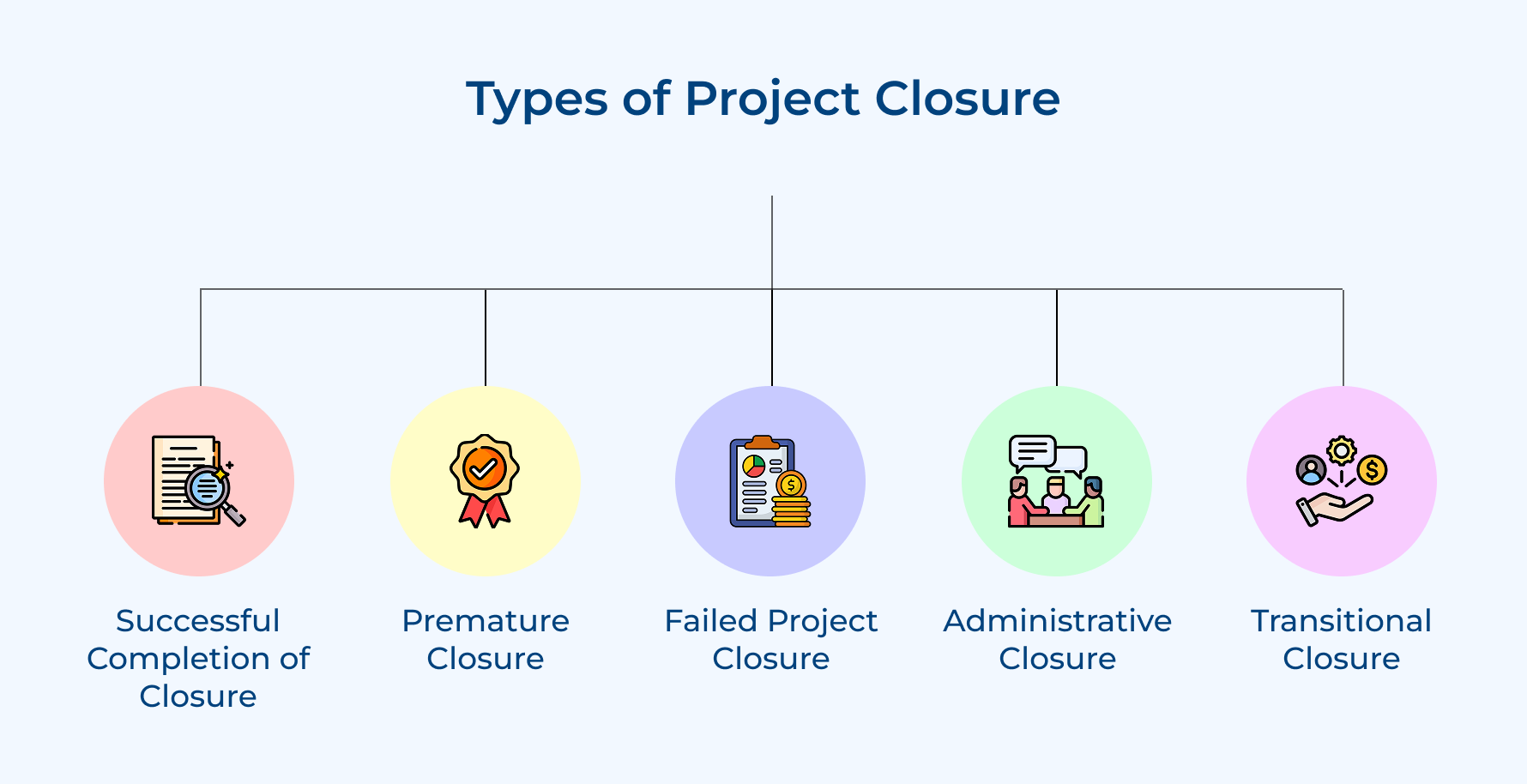
1. Successful Completion of Closure
Successful completion occurs when a project meets all objectives, delivers all promised outcomes and satisfies stakeholder expectations. The team has effectively managed scope, stayed within budget constraints and delivered quality work according to the agreed timeline.
Key questions to address during successful closure:
- How can we replicate this success in future similar projects?
- Which team dynamics contributed most significantly to our positive outcomes?
- What client feedback should we incorporate into our standard processes?
- How accurately did our initial estimates align with actual time and resource usage?
For successful projects, thorough documentation becomes especially valuable. These projects should become reference points for future proposals, team training and process refinement. Consider showcasing results (with client permission) in case studies to demonstrate your agency’s capabilities to prospective clients.
2. Premature Closure
Premature closure happens when a project must end before completion due to external factors like changing business priorities, market shifts, or client organizational changes. This isn’t necessarily a failure but requires careful handling to preserve relationships and salvage value.
Minimizing the impact of early termination by:
- Develop a clear inventory of completed versus incomplete deliverables.
- Create transition documentation for potentially resuming work later.
- Establish formal closing protocols that protect both parties legally.
- Conduct an abbreviated retrospective focused on salvaging the client relationship.
Despite the early termination, professional handling of premature closure can strengthen client trust. Focus documentation on capturing the value delivered up to the closure point and conduct an honest assessment of whether any agency actions contributed to the early ending to prevent future occurrences.
3. Failed Project Closure
Failed project closure occurs when a project cannot achieve its primary objectives despite continued effort. This may result from insurmountable technical challenges, significant miscommunication about requirements, or fundamental flaws in the initial project conception. Critical examination points for failed projects:
- Were there early warning signs we missed or dismissed?
- At what specific point did the project begin to significantly deviate from expectations?
- How might different resource allocations have altered the outcome?
- What changes to our qualification process might help us avoid similar situations?
Though uncomfortable, failed project wrap ups offer the richest learning opportunities. The documentation should be especially detailed and objective, avoiding blame while identifying systemic issues. Consider implementing a “no-penalty” review session where team members can speak openly about what went wrong.
4. Administrative Closure
Administrative closure focuses on the procedural and documentation aspects of ending a project. This type prioritizes proper archiving, financial reconciliation, resource reassignment and ensuring all contractual obligations have been fulfilled regardless of the project’s success level.
Good administrative closure protects your agency from future disputes or compliance issues. While sometimes viewed as mere paperwork, thorough administrative project close out creates operational efficiency for the organization by providing clean breaks between projects and establishing clear accountability for all aspects of completion.
5. Transitional Closure
Transitional closure occurs when a project deliverable moves into ongoing operations or maintenance. Rather than a complete end, this type involves shifting responsibility from the project team to operational teams, client staff, or dedicated support personnel.
Smooth transitions often lead to long standing client relationships and recurring revenue. Documentation should include detailed handover materials, training resources, troubleshooting guides as well as clear delineation of post-project responsibilities. Consider scheduling check-ins at 30, 60 and 90 days after transition.
Project Closure Checklist You Should Have
A comprehensive close project phase checklist ensures nothing falls through the cracks during the critical transition from active project to completion. The systematic approach helps agencies maintain professionalism, protect their interests and maximize value from every engagement. Essential Project
Closure Checklist Questions:
- Have all deliverables been completed according to specifications and formally accepted by the client in writing?
- Have all financial matters been reconciled, including final client invoicing, contractor payments and expense reports?
- Has all project documentation been organized, properly labeled and stored according to your agency’s knowledge management system?
- Have all team members been formally released from the project with clear next assignments or availability status?
- Have you captured and documented lessons learned, including successes to replicate as well as challenges to avoid in future projects?
- Has a formal handover to operations or maintenance teams been completed with appropriate training and documentation?
- Have all client-owned materials, access credentials and confidential information been either returned or documented for appropriate retention?
Project Closing Real-Life Examples
These real-world examples demonstrate how leading agencies and consultancies have transformed their closure processes to create competitive advantages and stronger client relationships.
1. McKinsey & Company
McKinsey uses a structured three-phase project closure process that starts well before the end date. This includes knowledge transfer sessions with the client, detailed implementation roadmaps and 30/60/90-day follow-up schedules. It ensures clients can continue executing recommendations independently, maintaining momentum after the project ends.
McKinsey’s thorough closure increases client retention and generates compelling success stories, often leading to new project opportunities while also strengthening client relationships.
2. Deloitte
Deloitte has a custom digital platform for project closures that centralizes deliverables, documentation and transition plans in one secure location. Project managers use an AI-guided checklist, adapting it based on project type to ensure comprehensive completion.
The streamlined process reduces post-project questions and support requests, improving client communication. Deloitte’s consistent and professional approach during closure enhances client satisfaction as well as contributes to the company’s strong reputation in engagement management.
3. Ogilvy
Ogilvy has developed a specialized closure process for creative projects that includes cataloging all creative assets. Teams conduct formal sessions to explain the strategic decisions behind each creative deliverable while providing guidance on future usage, modification and rights.
The approach reduces scope creep, prevents unauthorized revisions and clearly sets boundaries for the client. It also establishes clear pathways for additional billable work, ensuring clients value the work and see future opportunities.
Wrap Up Projects Seamlessly with Project Closure Process
Effective project closure isn’t merely administrative housekeeping but a strategic business practice that protects revenue, preserves knowledge and positions your agency for future opportunities. By transforming project endings from ambiguous fade-outs into structured, value-adding processes, you create clean transitions that benefit clients, teams and your bottom line.
Well-executed closures enhance profitability through complete financial reconciliation, improve operational efficiency by properly releasing resources and strengthen client relationships through professional handovers as well as celebration of achievements. When systematically implemented, these closure practices create a competitive advantage that distinguishes leading agencies from those offering similar services.
Limit time — not creativity
Everything you need for customer support, marketing & sales.

Shivank Kasera is part of the marketing team at Kooper, where he focuses on building content that helps agencies and service providers grow. With a keen interest in SaaS, operations, and scalability, he translates practical insights into actionable resources for business leaders.