How to Do Professional Services Marketing With Tactics for Growth
- What is Professional Services Marketing?
- 5 Core Principles of Professional Services Marketing
- How to Scale Professional Services Marketing with 7 Result-Driven Tactics
- The 6-Steps to Professional Services Marketing Success
- Examples of Effective Marketing for Professional Services
- Professional Services Marketing – Turning Expertise into Success
- FAQs about Professional Services Marketing

Key Highlights:
- Build credibility and trust through thought leadership as well as authentic client relationships.
- Create a professional services marketing plan that aligns with long-term business goals.
- Implement digital outreach and content strategies that convert expertise into consistent client opportunities.
Most professional service firms struggle to attract the right clients because they treat marketing like an afterthought instead of a strategic priority. You have deep expertise but potential clients never discover you because your marketing doesn’t effectively communicate your value.
You need a completely different approach that builds credibility and demonstrates expertise before anyone considers hiring you for their important projects.
This guide to professional services marketing walks you through seven proven tactics and a clear six-step process that turns your professional knowledge into consistent client attraction. You’ll learn exactly how to position your firm so ideal clients naturally choose you over competitors in your market.
What is Professional Services Marketing?
Marketing for professional service businesses means building trust and demonstrating expertise to attract clients who need specialized knowledge. Unlike product marketing, you’re selling intangible value through relationships and proven results. It focuses on showing potential clients why your firm can solve their specific problems better than others.
When done well, marketing transforms how professional service firms grow and sustain themselves. It shifts you from reactive waiting to proactive attraction of ideal clients. Strong marketing creates a pipeline of opportunities while positioning your expertise as the natural choice in your field.
Primary objectives:
- Build credibility and authority in your specific area of expertise so potential clients see you as the trusted expert.
- Generate qualified leads who actually need your services and can afford to pay for professional guidance.
- Differentiate your firm from competitors by clearly showing what makes your approach unique and valuable.
- Nurture relationships over time because professional service decisions often take months or years to materialize.
- Retain existing clients and encourage referrals since satisfied clients become your most powerful marketing channel.
5 Core Principles of Professional Services Marketing
Marketing for professional services requires a different approach than selling products. Every project you complete and every client interaction becomes part of how the market perceives your firm’s value.
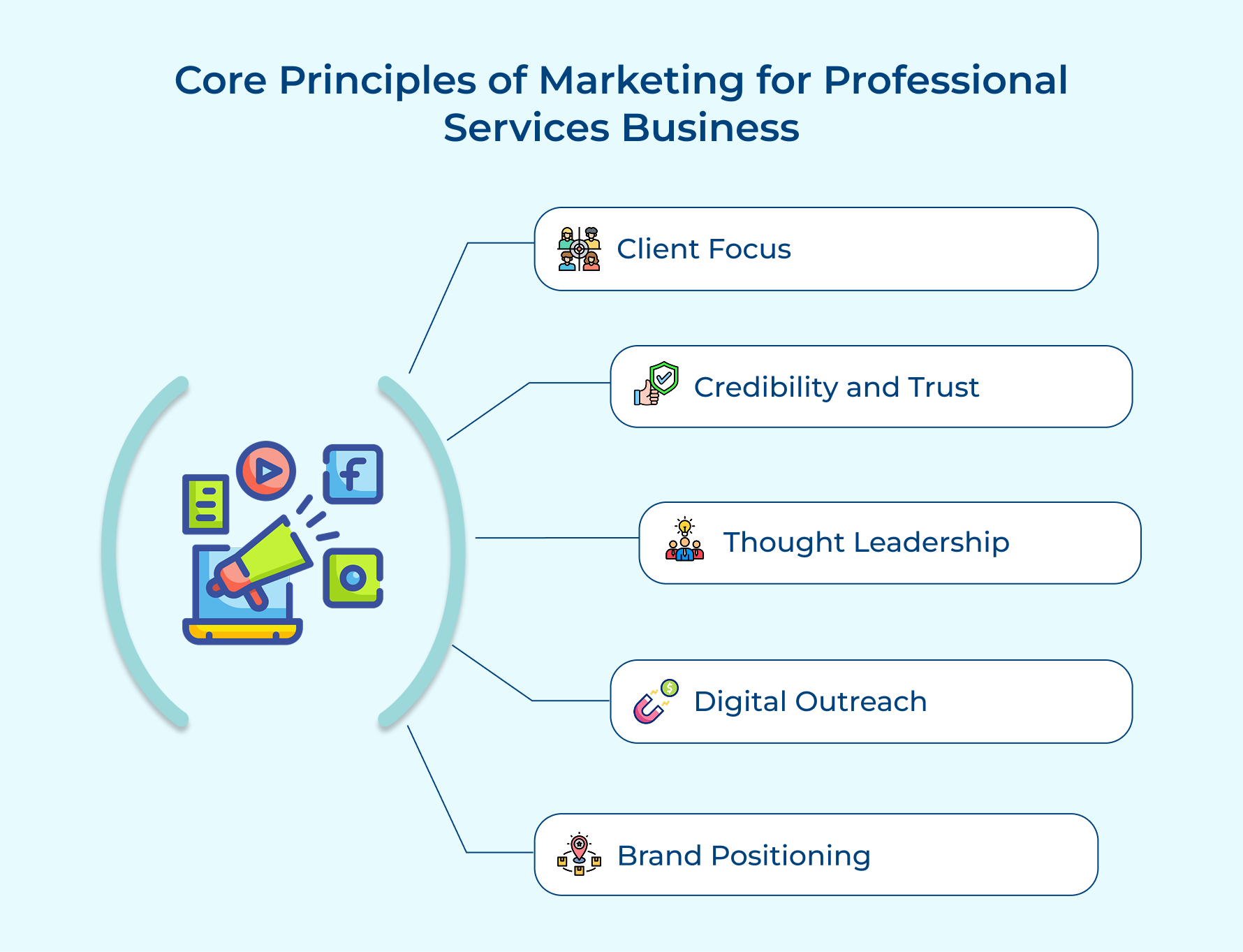
Client Focus
A strong professional services marketing plan starts with understanding your clients’ real challenges. When your messaging focuses on solving client problems, you naturally build deeper customer relationships and show that you truly understand their needs.
Credibility and Trust
Clients invest in expertise, not slogans. Use real results, testimonials and proven case studies to strengthen trust. This step in your marketing process demonstrates your capability and reassures clients that you’ve successfully handled similar challenges before.
Thought Leadership
Share meaningful insights through blogs, webinars, or speaking engagements. Thoughtful commentary on industry trends positions you as an expert and makes clients confident in your ability to guide critical initiatives.
Digital Outreach
A visible online presence amplifies your reach. A consistent marketing campaign across your website and professional platforms helps clients discover and connect with you when they need reliable expertise.
Brand Positioning
Define your niche clearly and communicate it consistently. Strong positioning helps potential clients quickly understand the specific projects and problems you’re best equipped to handle, making it easier for them to choose you with confidence.
How to Scale Professional Services Marketing with 7 Result-Driven Tactics
If you’re ready to elevate your marketing game and ensure your professional services not only meet but exceed client expectations. Here are the seven tactics that will set you on the path to success.
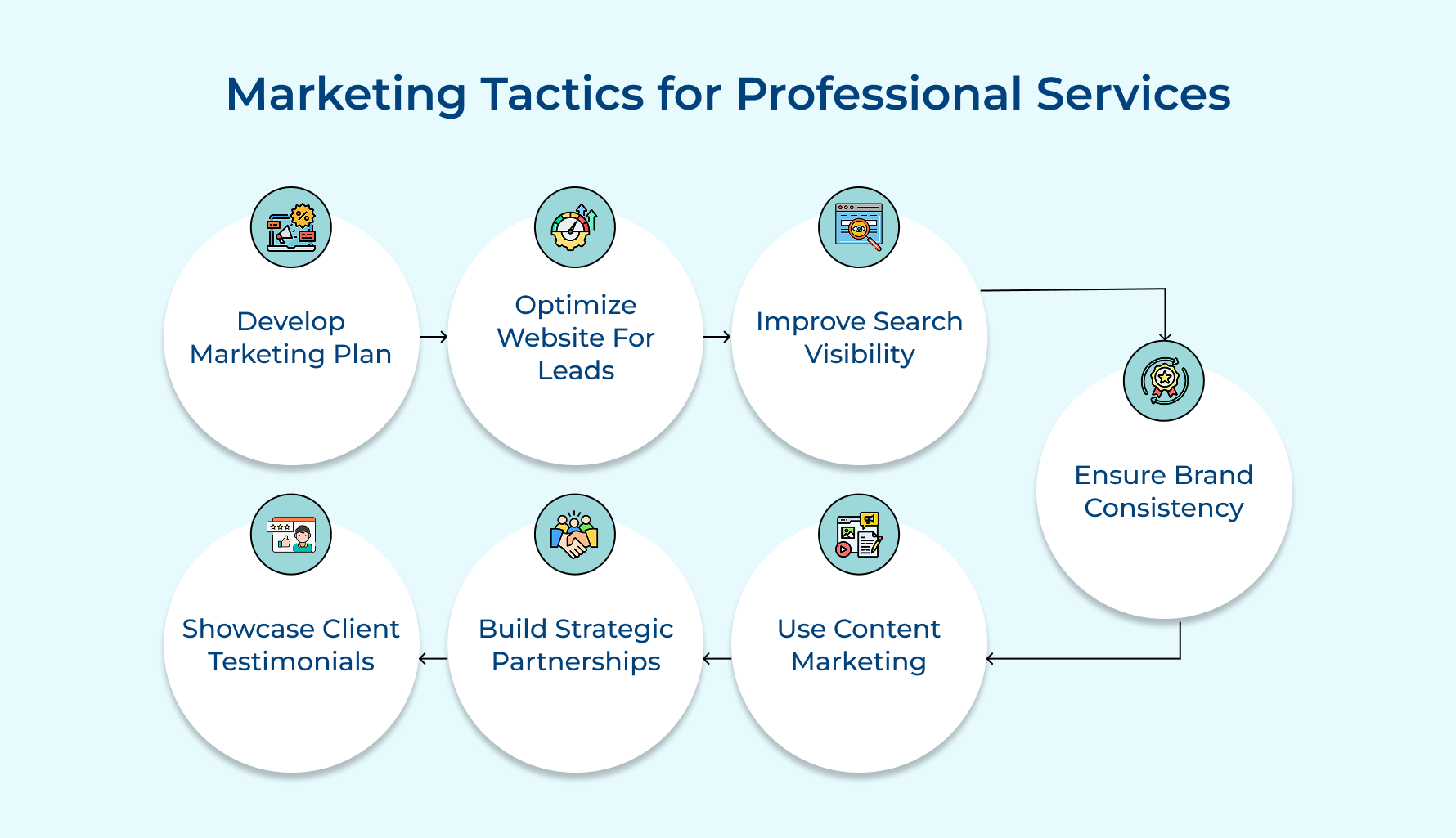
1. Create a Strategic Marketing Plan
A strategic professional services marketing plan gives your service firm clear direction instead of random promotional activities. A document without a plan can waste resources on tactics that don’t attract your ideal clients or build toward measurable business growth. The plan becomes your roadmap for making smart decisions about where to invest time and money.
Not sure where to start? Consider these four questions:
- Who are the specific clients we want to serve and what projects do they need help with?
- What marketing goals can we realistically achieve in the next six to twelve months?
- How much budget can we allocate to each marketing channel we plan to use?
- What metrics will tell us whether our marketing efforts are actually working?
Start by documenting your current client base and identifying patterns in your most profitable relationships. Then research where similar potential clients spend their time online and offline. Build your plan around reaching those specific people with messages that address their actual challenges.
Example marketing plan series for a professional service firm:
- Launch a monthly newsletter sharing industry insights to nurture 500 qualified prospects over six months.
- Attend three industry conferences where senior decision-makers gather to build relationships and speaking opportunities.
- Publish one in-depth article per month on the company blog targeting specific client pain points.
- Implement a referral program that encourages existing clients to introduce us to their professional networks.
2. Optimize Your Website for Leads
Your website is your always-on salesperson that works 24/7. Before potential clients even speak to you, they’ll likely visit your site to see if you truly understand their challenges and can deliver results. If your site doesn’t make that clear right away, you could be losing valuable opportunities without realizing it.
Here’s how to turn your website into a genuine lead-generation engine:
- Show Real Success Stories:
Share detailed case studies that highlight client challenges, your approach and measurable results. Add quotes along with before-and-after outcomes so prospects can easily picture themselves getting similar results. - Make Next Steps Obvious:
Every page should have a clear call-to-action like “Book a consultation” or “Download a free resource.” Place buttons and contact details where they’re easy to find. - Capture Qualified Leads:
Use short, mobile-friendly contact forms that ask the right questions—like project needs or budget range to help you identify strong prospects quickly.
Your website should feel like a conversation, not a sales pitch. Each page should answer a client’s question and gently guide them toward connecting with you. When visitors feel understood and see proof of your expertise, they’ll trust you enough to take that next step.
3. Embrace Search Engine Optimization Strategy
Search engine optimization helps potential clients find you exactly when they’re looking for solutions you provide. When someone searches for help with a specific professional challenge, appearing in those search results puts you in front of motivated buyers. Without SEO your website remains invisible to people actively seeking services like yours.
Focus on creating genuinely helpful content that answers the real questions your ideal clients are asking. Search engines reward websites that provide valuable information rather than sites stuffed with keywords or empty promotional language. Build your SEO strategy around being the most useful resource in your specific area of professional expertise.
Best practices:
- Target long-tail keywords that reflect specific client problems rather than broad generic terms with intense competition.
- Earn backlinks by contributing expert insights to industry publications where your potential clients already read and trust the content.
4. Review Your Brand for Consistency
Brand consistency means presenting the same professional image everywhere potential clients encounter your firm. When your website says one thing but your LinkedIn profile suggests something different, clients feel confused about who you really are. A consistent brand builds recognition and trust faster because clients see a cohesive story.
Before implementing brand consistency, consider answering these four questions:
- Does our current brand accurately reflect the type of clients and projects we want to attract?
- Are we using the same tone / messaging across our website and social media as well as email communications?
- Do our visual elements like logos and colors look professional while appearing consistently everywhere?
- Have we clearly defined what makes our firm different from competitors in our positioning statement?
These questions reveal gaps between how you see your firm and how the market experiences it. The clarity you gain makes the implementation process much more focused and effective.
Start by gathering all your marketing materials including your website and brochures as well as social profiles. Look for differences in how you describe services or inconsistencies in visual identity. Create brand guidelines that document your approved messaging and design elements so your team maintains consistency.
5. Leverage Content Marketing and Insights
Content marketing involves sharing your professional knowledge through articles and guides that help potential clients solve problems. This tactic works well for professional services because clients want to hire experts who clearly understand their challenges. When you consistently publish valuable insights, you build authority and stay top-of-mind.
So how do you figure out which content will resonate with your target clients? Listen to the questions your current clients ask during consultations and throughout projects. Those repeated questions reveal the knowledge gaps that keep potential clients from moving forward. Create content addressing those specific concerns.
Here are five content marketing examples you can publish:
- Industry trend analysis: Write about emerging changes in your clients’ industries and how these shifts will impact their businesses.
- Problem-solving guides: Create step-by-step resources that walk clients through common challenges they face before hiring outside help.
- Client success breakdowns: Share anonymized stories about how you helped clients overcome obstacles with details about your approach and results.
- Common mistake articles: Explain typical errors you see companies making in your area of expertise and how to avoid them.
- FAQ deep dives: Take the most common questions prospects ask and turn each into a detailed article demonstrating your knowledge.
6. Build Strategic Networking and Partnerships
Networking and partnerships create referral channels that bring you qualified clients without expensive online advertising campaigns. Professional services thrive on trust and recommendations, so building relationships with people who know your work becomes invaluable. Strategic connections multiply your reach far beyond what you could achieve alone.
Focus your networking efforts on events where your ideal clients actually spend time rather than generic business gatherings. Build genuine relationships by offering help and insights before asking for anything in return. Partner with complementary firms serving the same clients but not competing directly.
Pro tips:
- Follow up within 48 hours after meeting someone with a specific reference to your conversation to stay memorable.
- Commit to attending the same events regularly so people recognize you as a consistent community presence.
7. Utilize Client Testimonials and Reviews
Client testimonials provide the social proof that potential clients need before trusting you with important projects. When prospects read about real results you delivered for clients facing similar challenges, their skepticism decreases and confidence grows. This tactic transforms satisfied clients into your most persuasive marketing team without additional effort.
Here are three powerful ways to leverage testimonials:
- Website homepage credibility: Display your strongest testimonials prominently where first-time visitors immediately see proof of your expertise. Choose quotes addressing potential client concerns and include the client’s name as well as company for authenticity.
- Proposal reinforcement: Include relevant case studies in proposals that match the specific challenge the prospect faces. When prospects see you’ve successfully solved their exact problem before, they feel more confident choosing your firm.
- Email nurture campaigns: Weave client success stories throughout email sequences to prospects who aren’t ready yet. Each testimonial reminds them of your track record and keeps you top-of-mind until they move forward.
A consulting firm that helped a manufacturer reduce production costs by 30 percent through process improvements shares that client’s detailed testimonial on their website. Other manufacturers facing similar cost pressures immediately see themselves in that story and understand the firm’s proven capabilities.
The 6-Steps to Professional Services Marketing Success
Professional services marketing requires a structured approach that builds momentum over time. These six steps create a foundation that attracts the right clients and positions your firm as the obvious choice.
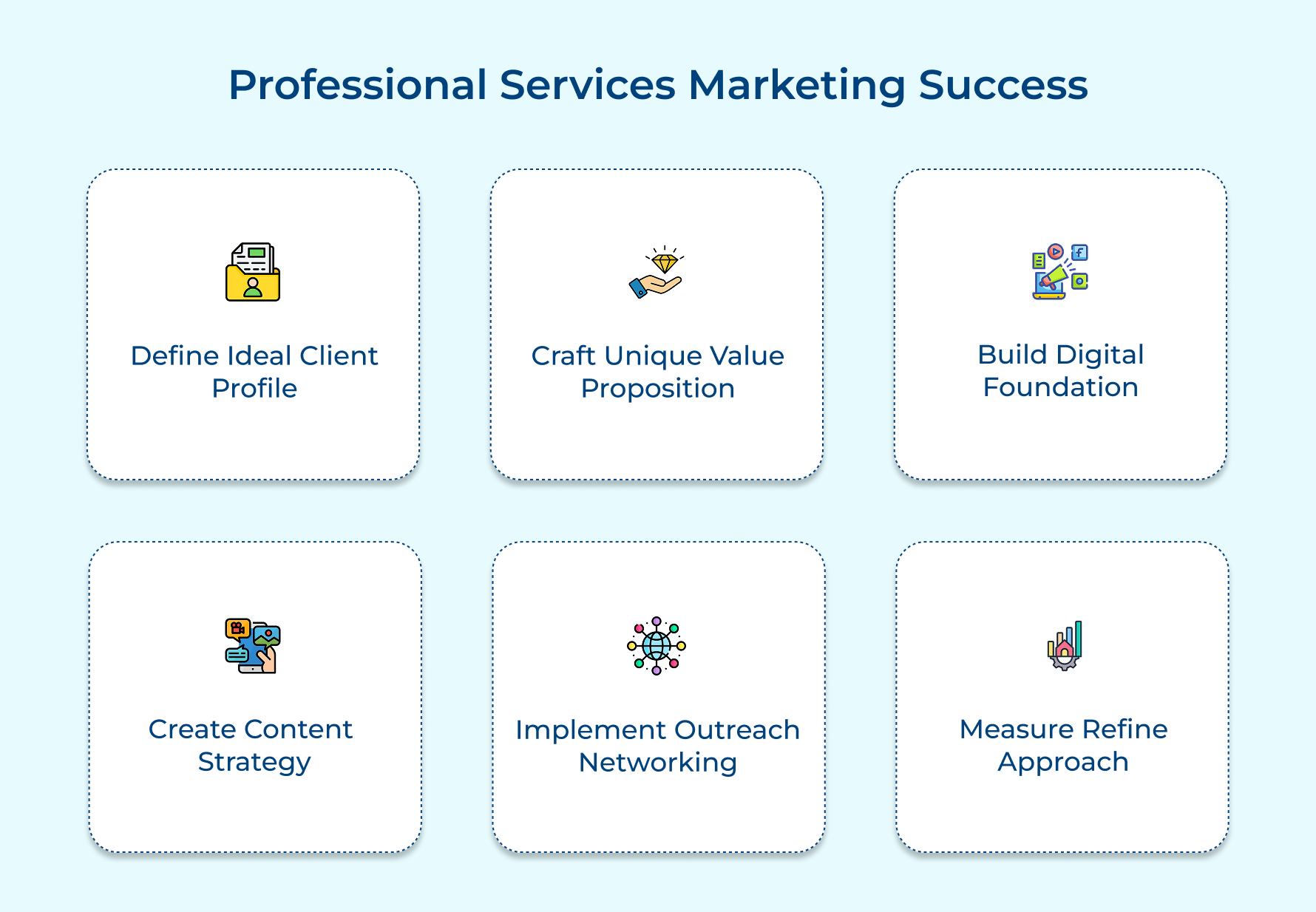
Step 1: Define Your Ideal Client Profile
Get crystal clear about who you want to serve rather than trying to appeal to everyone. Document the specific characteristics of clients who value your work and pay well. This clarity helps you focus professional services marketing efforts on attracting people who actually need your services.
Step 2: Craft Your Unique Value Proposition
Articulate exactly what makes your firm different and why clients should choose you over alternatives. Your value proposition must address a specific problem as well as explain your unique approach to solving it. This statement becomes the foundation for all messaging.
Step 3: Build Your Digital Foundation
Create a professional website that clearly communicates your expertise and makes contacting you easy. Establish profiles on platforms where your ideal clients spend time with consistent professional imaging. Your digital presence must work as your always-available representative building credibility.
Step 4: Create a Content Strategy
Develop a plan for regularly sharing insights that demonstrate expertise and help prospects understand their challenges. Focus on content answering the actual questions your prospects ask during initial conversations. Consistent valuable content positions you as the trusted expert.
Step 5: Implement Outreach and Networking
Actively connect with potential clients and referral partners through digital channels along with in-person events. Build genuine relationships by offering help before asking for business or referrals from your network. Strategic outreach accelerates visibility and creates opportunities.
Step 6: Measure and Refine Your Approach
Track which marketing activities actually bring in qualified leads and convert them into paying clients. Review results monthly to identify what works as well as what wastes resources so you can adjust. Continuous improvement based on real data makes marketing more effective.
Examples of Effective Marketing for Professional Services
Learning from successful firms helps you understand what actually works in professional service marketing. These four examples show different approaches that built strong reputations and attracted ideal clients.
McKinsey & Company
McKinsey publishes extensive research through their quarterly journal and industry reports that executives actually read. Their articles don’t promote consulting services directly but instead demonstrate deep expertise in solving complex problems.
This positions McKinsey consultants as trusted advisors before any sales conversation begins with potential clients. When executives face significant strategic decisions, they naturally think of McKinsey because they’ve already experienced the firm’s thinking. The thought leadership creates authority that makes competing firms seem less credible by comparison.
Mishcon de Reya
Mishcon de Reya formed strategic partnerships with organizations in technology and innovation rather than traditional law firm marketing. They collaborated with fashion brands and tech startups to position themselves as forward-thinking advisors for disruptive businesses.
The impact transformed how the market perceived this law firm compared to conservative competitors in the industry. Potential clients began associating Mishcon de Reya with innovation and modern business thinking rather than stuffy legal services. Their partnership strategy opened doors that traditional law firm marketing could never have reached.
Accenture
Accenture encourages their consultants to actively share insights on LinkedIn about industry trends and challenges. They provide training so professionals can build personal brands while representing the firm well.
The distributed approach means Accenture appears in prospect feeds regularly through authentic professional voices rather than corporate advertising. When decision-makers see multiple Accenture consultants sharing valuable insights, it reinforces the perception of expertise.
Deloitte
Deloitte built their marketing around broader social impact and purpose beyond just delivering consulting services. They published research on social issues and positioned themselves as advisors helping organizations create positive change.
This purpose-driven approach attracted both clients and talented professionals who wanted alignment with their values. Companies increasingly want partners who understand stakeholder capitalism and social responsibility. Deloitte’s marketing concepts differentiated them where most competitors focused solely on expertise as well as results.
Professional Services Marketing – Turning Expertise into Success
Professional services marketing works differently because you’re selling trust and expertise rather than tangible products. Success comes from demonstrating your knowledge consistently through content and building genuine relationships that lead to referrals over time.
The firms that win focus on helping potential clients understand their challenges before asking for business from them. When you combine strategic planning with authentic relationship building and valuable content, your expertise naturally attracts the clients who need what you offer most.
Limit time — not creativity
Everything you need for customer support, marketing & sales.

Shivank Kasera is part of the marketing team at Kooper, where he focuses on building content that helps agencies and service providers grow. With a keen interest in SaaS, operations, and scalability, he translates practical insights into actionable resources for business leaders.