8 Common Capacity Planning Mistakes and How to Fix Them
- What are Capacity Planning Mistakes?
- 8 Mistakes to Avoid in Capacity Planning & Management
- Best Practices of Capacity Planning that Prevent Serious Mistakes
- Benefits of Overcoming Resource and Capacity Planning Mistakes
- Turn Mistakes Into Milestones With Expert Capacity Planning
- FAQs about Capacity Planning Mistakes

Key Highlights:
- Prevent burnout through accurate workload distribution and achievable project timelines.
- Improve project predictability by addressing key capacity planning mistakes early in the process.
- Build resilient teams by fixing common capacity management mistakes and improving communication.
Many project managers see their well-planned projects fall apart when teams get overwhelmed and deadlines start slipping.
When capacity planning is ignored, teams face constant resource conflicts and quality drops. People end up working late nights but still miss key milestones, frustrating clients and hurting long-term trust.
The best part is that you can avoid all that chaos. Learn the five most common capacity planning mistakes, you’ll understand how to build stronger, more reliable project systems. Having real-time visibility and clearly defined resource roles, you can turn messy resource management into smooth, predictable success that builds confidence as well as supports steady business growth.
What are Capacity Planning Mistakes?
Capacity planning and management mistakes occur when project managers incorrectly assess or allocate their team’s available resources as well as capabilities. These errors involve misjudging how much work people can handle within specific timeframes. Think of it like trying to pour a gallon of water into a cup – the mismatch between demand and available capacity creates inevitable overflow problems.
When capacity planning goes wrong, client deliverables suffer through delayed timelines and compromised quality standards. Teams become overwhelmed and rushed, leading to incomplete work that fails to meet original specifications.
Key objectives:
- Accurate resource forecasting: Predict exactly how much work your team can realistically handle during the project timeline.
- Optimal workload distribution: Balance tasks evenly across team members to prevent burnout while maximizing productivity.
- Realistic timeline establishment: Set achievable deadlines that account for actual human limitations and unexpected challenges.
- Skill-based task alignment: Match specific project requirements with team members who possess the right expertise levels.
- Buffer time integration: Build cushions into schedules that accommodate inevitable delays and scope changes without derailing delivery.
8 Mistakes to Avoid in Capacity Planning & Management
Let’s explore eight pivotal mistakes that often go unnoticed but can significantly impact your operational efficiency. Here you learn to avoid resource overloading and improve resource supply.
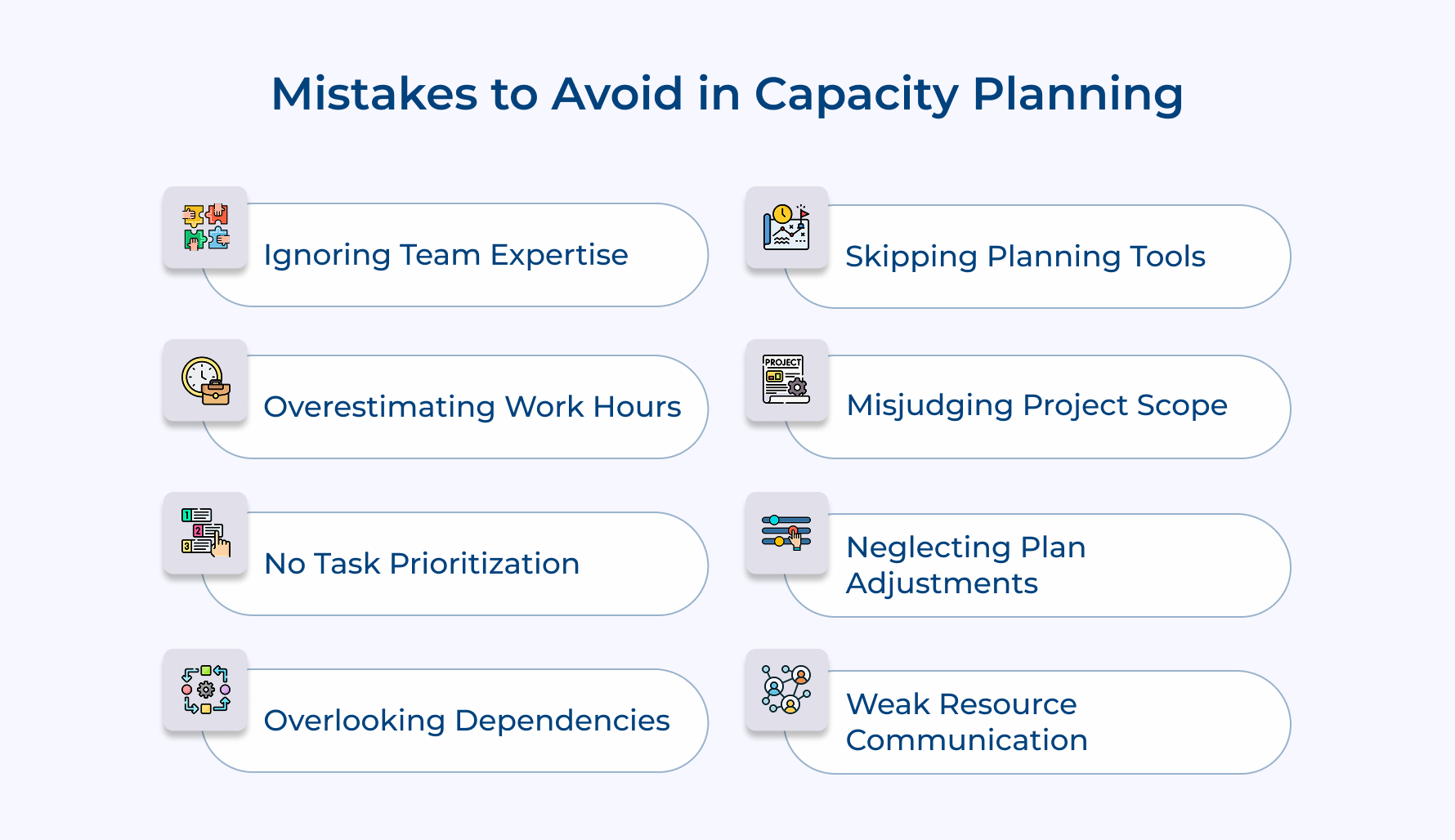
1. Ignoring Team Skills and Experience Levels
This mistake occurs when managers treat all team members as interchangeable resources without considering their actual capabilities and expertise. Overcoming this creates better task alignment and significantly improves project quality as well as delivery speed.
Here are three effective approaches to address this fundamental planning error:
- Conduct comprehensive skills assessment: Before project kickoff, evaluate each team member’s technical abilities and experience levels. Document their strengths and areas where they might need additional support or training.
- Create a detailed competency matrix: Build a visual map showing who excels at which tasks and their proficiency levels. This matrix becomes your go-to reference for making smart assignment decisions throughout the project lifecycle.
- Match complex tasks with experienced personnel: Reserve your most challenging deliverables for team members who have proven track records. Junior staff can handle simpler tasks while learning from observing the experts in action.
For example a software development team assigned junior developers to build complex database architecture without considering their limited experience. The result was buggy code that required complete reconstruction by senior developers.
2. Overestimating Available Working Hours Per Day
It happens when managers assume every team member can work productively for eight full hours a day. In reality, that never happens. Ignoring leads to unrealistic schedules, missed deadlines and frustrated teams.
The real challenge is figuring out how much actual work time people have after accounting for meetings, emails and admin tasks. Most professionals spend a good chunk of their day on non-project activities that quietly eat into their productive hours.
Pro tips:
- Include meetings and admin time: Plan for status updates, check-ins and documentation so schedules stay realistic.
- Calculate true productive hours: Consider emails, interruptions and context switching when estimating daily capacity. It’s better to plan smartly than push your team to burnout.
3. Lack of Prioritization in Task Management
Chaos takes over when every task feels urgent and teams struggle to tell what truly matters. When priorities aren’t clear, deadlines slip, focus fades and everyone feels overwhelmed.
Create a strong prioritization plan, start by asking a few key questions:
- Which tasks directly affect client satisfaction?
- What work blocks others from moving forward?
- Which features bring the most business value?
- What deadlines can’t be moved?
- Which tasks need specific expertise or roles?
These questions help identify what truly drives progress when resources are tight. Build a simple ranking system (like color codes or numbers) to mark task importance. Get stakeholder agreement on top priorities and review them in weekly check-ins to stay aligned.
Clear prioritization keeps teams focused on meaningful work, ensuring they deliver real impact instead of getting lost in competing demands.
4. Failure to Allow Dependencies and Constraints
When planners schedule tasks without considering how different activities connect and rely on each other, it becomes unmanageable. Teams end up waiting for approvals or deliverables that block their progress completely.
Common causes that create this problematic planning oversight include these interconnected factors:
- Insufficient discovery phase: Rushing through initial planning without mapping task relationships creates blind spots.
- Poor stakeholder communication: Failing to identify all approval processes and external dependencies early.
- Overly optimistic scheduling: Assuming everything will proceed smoothly without considering potential delays.
- Limited cross-functional coordination: Not involving all departments that influence project deliverables and timelines.
Begin by creating visual maps that show how every task connects to others and where external approvals might create bottlenecks. Then build buffer time around these critical connection points so delays don’t cascade through your entire project timeline.
5. Not Using Dedicated Planning Tool Systems
Many teams struggle when they rely on spreadsheets or informal tracking instead of using proper capacity planning software. Without the right tools, managers lose real-time visibility into resource roles and can’t adjust plans quickly when things change.
When choosing a capacity planning system, keep these factors in mind:
- Integration: Pick tools that work smoothly with your existing project management and communication platforms.
- Scalability: Choose software that can handle future growth in team size and project complexity.
- Ease of use: Go for tools with a clean, simple interface that your team can learn fast.
- Real-time reporting: Make sure it offers instant visibility into resource allocation and project capacity.
Once you’ve chosen a tool, focus on smooth implementation. Integrate it with your current workflows and train your team through practical, hands-on sessions that show how to use it in real project scenarios.
6. Underestimating Project Scope and Complexity Factors
Many project managers run into trouble when they underestimate how complex project requirements can be. Overlooking these hidden details often leads to budget overruns, missed deadlines and unnecessary stress for the team.
Accurate scope estimation is key to avoiding those issues. It ensures your team can deliver quality work within realistic timelines and available resources.
One of the best ways to get better at estimating is to look at historical data from similar past projects. Those records provide valuable benchmarks that show how much effort specific tasks usually take and highlight where problems tend to arise.
Pro tips:
- Break large deliverables into smaller measurable components: Decompose complex features into specific tasks that can be estimated more accurately.
- Conduct thorough requirement analysis with subject experts: Involve specialists who understand technical complexities before finalizing scope estimates.
7. Failing to Monitor and Adjust Plans
Many managers build capacity plans at the start of a project and then never revisit them. When that happens, even small changes can throw the entire plan off track. Reviewing and updating regularly helps teams stay flexible as well as handle shifting priorities without losing momentum.
Two common situations often expose this mistake:
- Scope creep: New requirements get added, but capacity plans remain the same, leaving teams stretched too thin.
- Team availability changes: People move to other projects or take time off, but the plan doesn’t reflect it.
Fix this by setting up a consistent review schedule to compare actual capacity with your original estimates. Update plans whenever new information surfaces and communicate these changes clearly with everyone involved.
8. Poor Communication About Resource Availability Changes
Many projects run into trouble when managers don’t share timely updates about changing team availability or shifting priorities. Clear, proactive communication keeps everyone aligned and prevents last-minute chaos.
To improve resource communication:
- Use real-time reporting: Set up automated alerts and dashboards that show current capacity levels so managers can act before issues arise.
- Standardize updates: Create clear processes for how and when to share availability changes, so every team gets the right information quickly.
- Define escalation steps: Outline who makes decisions when conflicts occur to speed up reassignments and avoid delays.
Transparent visibility into team workloads builds trust and helps everyone make smarter decisions. When people can see who’s available and what’s coming next, projects run smoother—as well as small scheduling hiccups never grow into full-blown delivery problems.
Best Practices of Capacity Planning that Prevent Serious Mistakes
Beyond avoiding common pitfalls, these proactive strategies strengthen your capacity planning foundation and create resilient project delivery systems that adapt to changing circumstances.
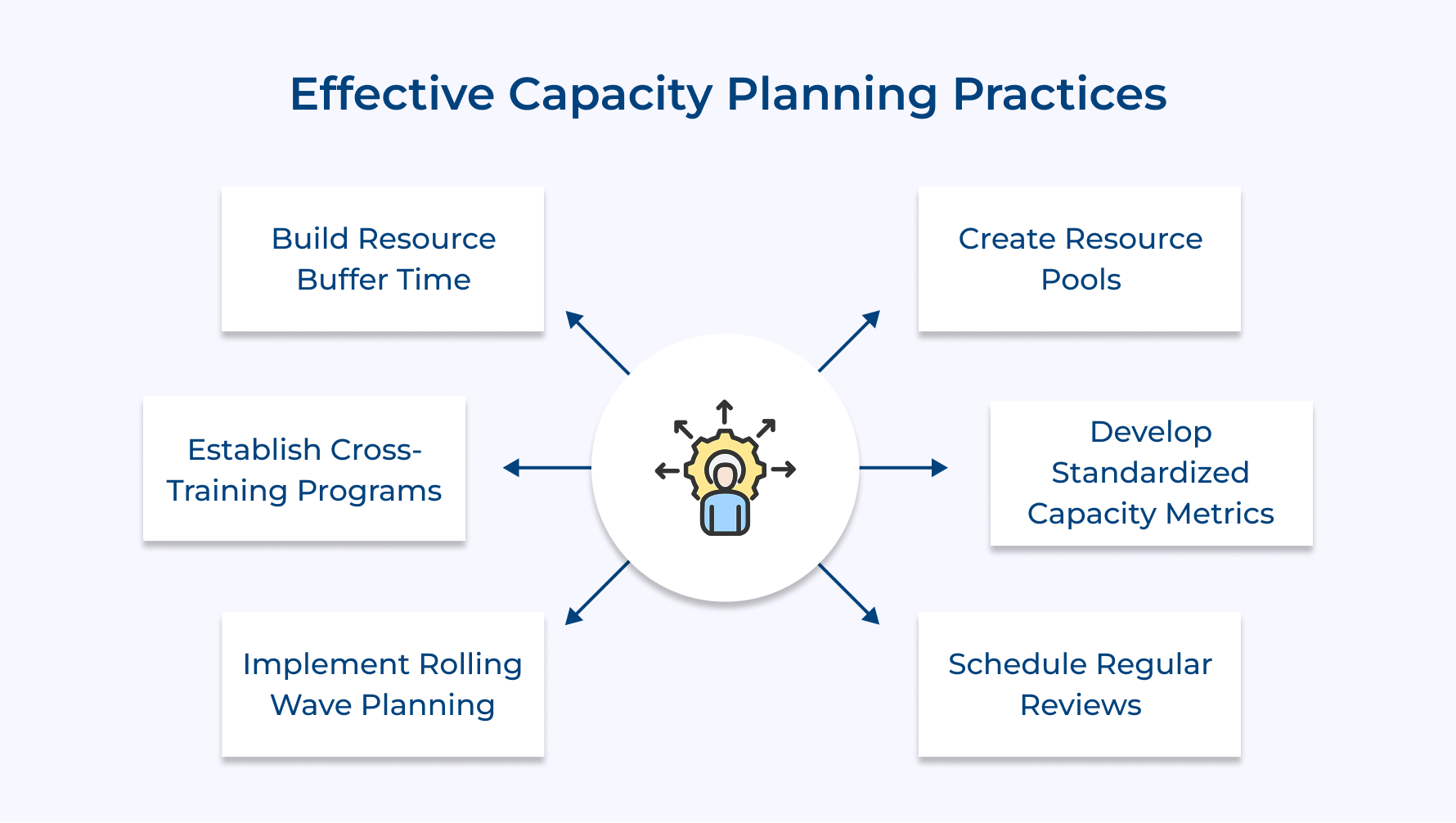
Build Resource Buffer Time
Smart planners add 15-20% buffer time to their initial estimates because unexpected challenges always emerge during project execution. This extra cushion prevents minor delays from cascading into major deadline disasters.
Establish Cross-Training Programs
When only one person knows how to perform essential tasks, projects become vulnerable to disruption from illness or departure. Cross-training creates backup expertise that maintains project momentum regardless of individual availability changes.
Implement Rolling Wave Planning
Instead of detailed planning for entire project durations, focus intensive planning on immediate phases while keeping future work at higher levels. This approach allows for course corrections as requirements and team capabilities evolve naturally.
Create Resource Pools
Flexible resource pools allow managers to shift people between projects based on changing priorities and workload demands. This approach maximizes utilization while preventing some teams from becoming overloaded while others remain underutilized.
Develop Standardized Capacity Metrics
Consistent measurement approaches enable accurate comparisons between different initiatives and help identify patterns in resource consumption. Standard metrics also improve forecasting accuracy for future project planning efforts.
Schedule Regular Capacity Planning Reviews
Monthly stakeholder meetings focused specifically on resource allocation ensure alignment between business priorities and team capabilities. These sessions provide opportunities to adjust plans before small issues become major problems that threaten delivery commitments.
Benefits of Overcoming Resource and Capacity Planning Mistakes
When project managers learn from their capacity planning errors and implement better practices, they unlock significant advantages that transform team performance and client satisfaction.
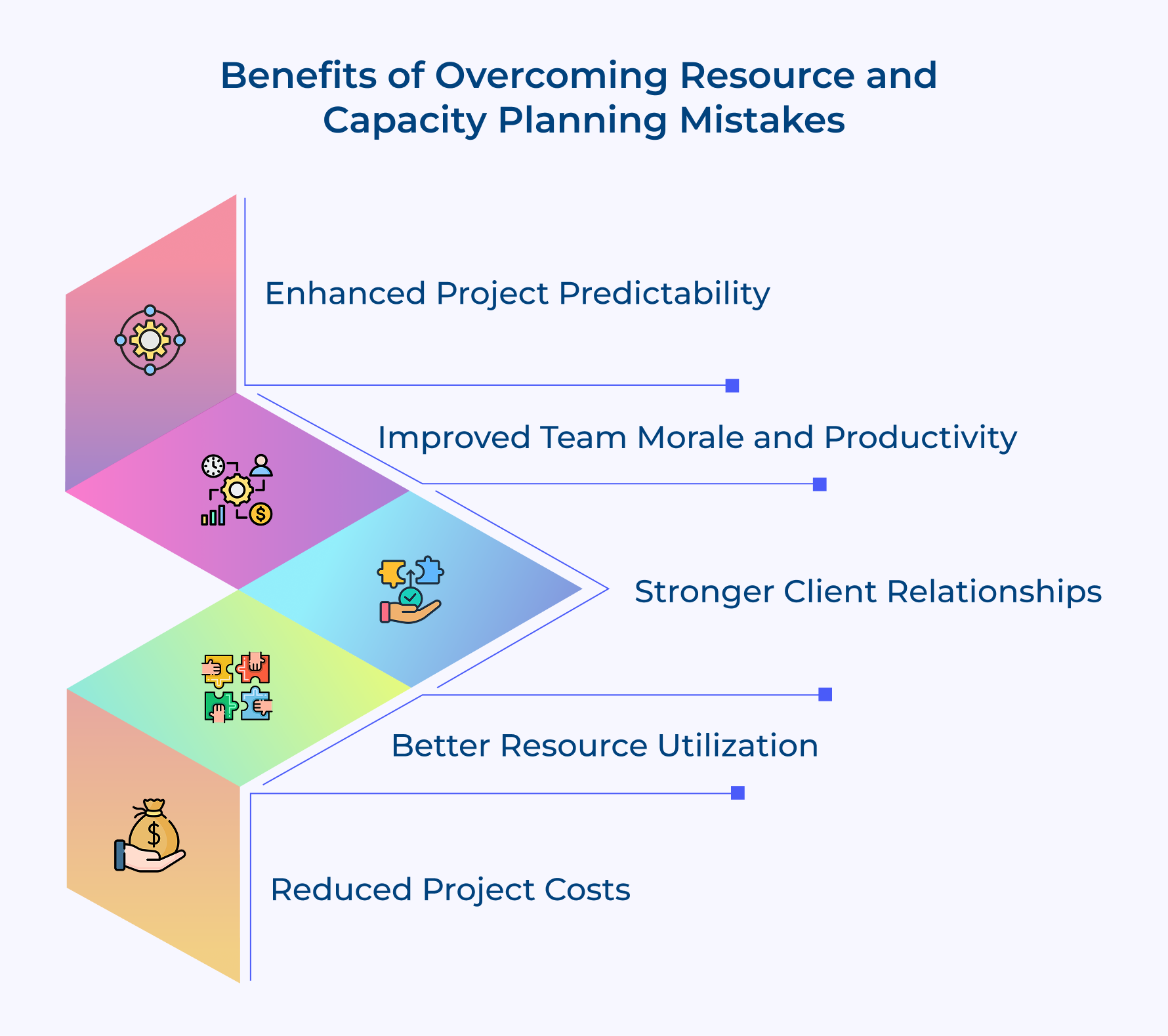
Enhanced Project Predictability
Teams develop reliable delivery patterns when capacity planning improves, making project outcomes more consistent as well as trustworthy. Managers can confidently promise realistic timelines to clients without fear of embarrassing delays or quality compromises.
Improved Team Morale and Productivity
Balanced workloads prevent employee burnout while ensuring everyone contributes meaningfully to project success. Teams work more efficiently when they understand their responsibilities and have adequate time to complete tasks properly.
Stronger Client Relationships
Clients gain confidence in your organization when projects consistently meet deadlines and quality standards without last-minute surprises. Trust builds naturally when expectations align with actual delivery capabilities and communication remains transparent throughout.
Better Resource Utilization
Organizations maximize their human resources capital investment by matching the right people with appropriate tasks at optimal times. This strategic alignment reduces waste while ensuring specialized employee skills contribute where they create the most value.
Reduced Project Costs
Accurate capacity planning or resource estimates eliminates expensive rush work, overtime payments and external contractor fees that result from poor scheduling. Companies save money by avoiding the premium costs associated with fixing planning mistakes under pressure.
Turn Mistakes Into Milestones With Expert Capacity Planning
Knowing your capacity planning mistakes is half battle won! Effective planning transforms project chaos into predictable success by implementing proven strategies. When you master resource allocation and avoid planning pitfalls, your projects deliver consistent results that exceed client expectations.
Remember that capacity planning mastery develops through practice and continuous improvement rather than perfect execution from the start. Each mistake becomes a learning opportunity that strengthens your planning skills and builds more resilient project delivery systems for future success.
Limit time — not creativity
Everything you need for customer support, marketing & sales.

Shivank Kasera is part of the marketing team at Kooper, where he focuses on building content that helps agencies and service providers grow. With a keen interest in SaaS, operations, and scalability, he translates practical insights into actionable resources for business leaders.