What Are Milestones in Project Management? Examples & Tips
- What is a Milestone in Project Management?
- Advantages of Setting Project Milestones
- Key Types of Milestones in Project Management
- How to Identify a Project Milestone in Project Management: 7 Steps
- How to Set Milestones in Project Management: 6 Key Tips
- Common Challenges Faced During Milestone Delivery
- Examples of Project Milestones
- Turning Project Plans Into Reality with One Milestone At a Time
- FAQs about Milestones in Project Management

Key Highlights:
- Clear milestones in project management turn complex plans into measurable checkpoints that improve visibility, accountability and on-time delivery.
- Practical project milestones examples show how to align deliverables, timelines and stakeholder expectations across every project phase.
- Proven milestone strategies help teams track progress as well as control scope while keeping clients informed.
You’re juggling a dozen project tasks, yet stakeholders keep asking the same question: Are we actually on track, or just busy? Clear checkpoints help teams as well as clients feel confident about timelines, project costs and if the work is moving in the right direction.
Missing milestones cause deadlines to slip, motivation to drop and the project scope to quietly expand because “almost done” means something different to everyone. That’s when projects start drifting instead of progressing.
Milestones in project management fix this by turning effort into visible progress. They create shared moments of clarity, alignment and accountability. In this guide, you’ll learn how to define, set and manage milestones that keep everyone focused while moving toward a successful finish.
What is a Milestone in Project Management?
A milestone marks a significant point in your project timeline where important work gets completed or a major decision gets made. These markers help everyone understand where the project stands and what comes next without getting lost in daily tasks.
Understanding Milestone Charts
A milestone chart displays your project’s key achievements on a visual timeline that anyone can quickly understand. Instead of showing every single task, it highlights only the major completion points that matter most. This birds-eye view keeps everyone focused on what truly drives the project forward.
These charts boost client satisfaction because they make progress visible and easy to grasp at a glance. Clients can see exactly when they’ll receive deliverables without wading through complex schedules or technical project plans. This transparency builds trust and reduces anxiety in case things are moving in the right direction.
Key principles of milestones:
- Clear definition: Each milestone must represent a specific and measurable achievement that leaves no room for confusion about what “done” means.
- Zero duration: Milestones mark a moment in time rather than a period of work because they represent completion rather than ongoing effort.
- Strategic placement: Position milestones at natural break points where one phase ends and another begins to create logical project segments.
- Stakeholder alignment: Choose milestones that matter to everyone involved so they generate genuine interest and accountability across the team.
Advantages of Setting Project Milestones
Setting milestones transforms how you manage projects by creating clear markers for your team. Let’s explore how these strategic checkpoints make your project journey smoother and more successful.
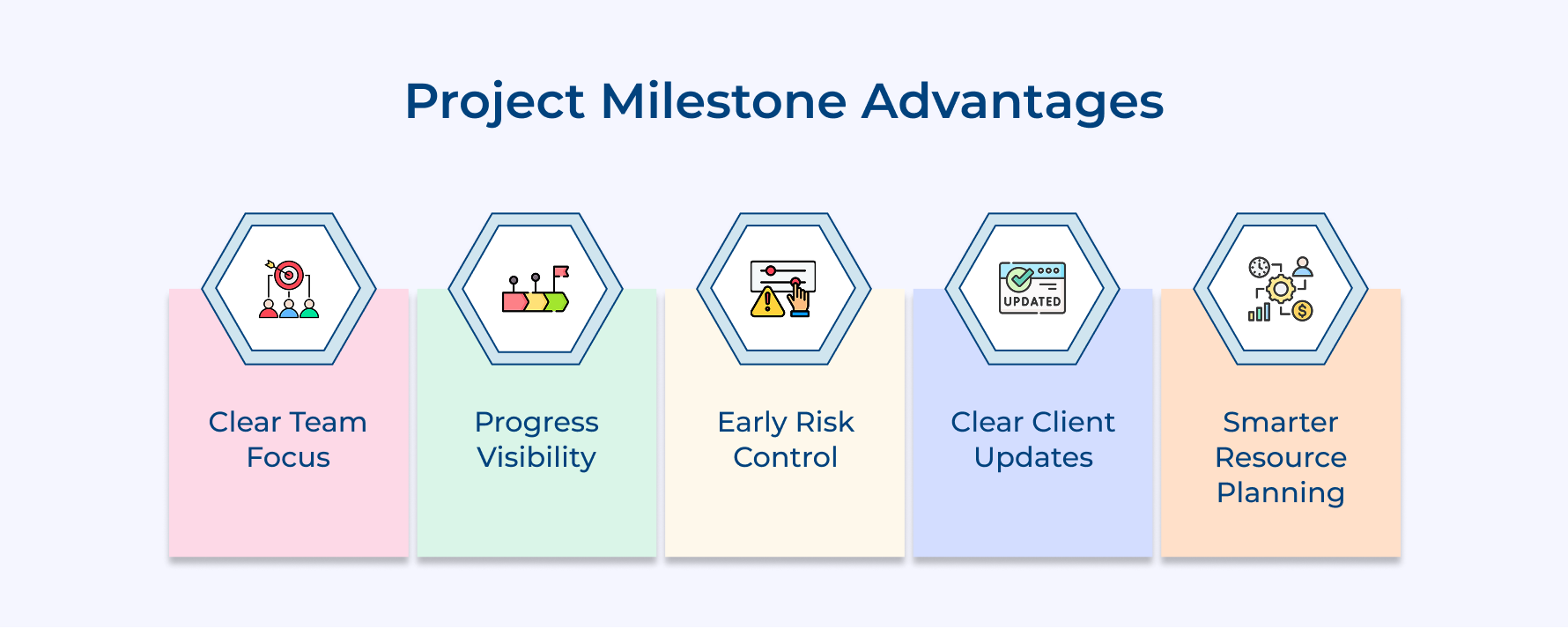
Enhanced Team Focus and Direction
Milestones give your team clear targets instead of vague project phases. When everyone knows the next checkpoint, daily work becomes easier to prioritize. A good project management tool makes these goals visible so no one is guessing what matters most.
Improved Progress Tracking
Tracking progress feels more real when you can tick off milestones instead of relying on gut feelings. Project management software turns milestones into visual proof of progress, giving stakeholders confidence that things are moving as planned.
Better Risk Management
Milestones surface problems early. If a milestone slips, it signals the need for a quick requirements review before issues snowball into bigger risks.
Stronger Client Communication
Milestones create natural update points. Clients know when to expect results, milestone fees feel justified and conversations stay focused.
More Accurate Resource Planning
Using milestone templates helps you plan people, time and budgets around key moments—without constant rescheduling stress.
Key Types of Milestones in Project Management
Understanding the different types of milestones helps you build a more complete picture of your project’s journey. Each type serves a unique purpose in tracking progress and keeping everyone aligned on what success looks like.
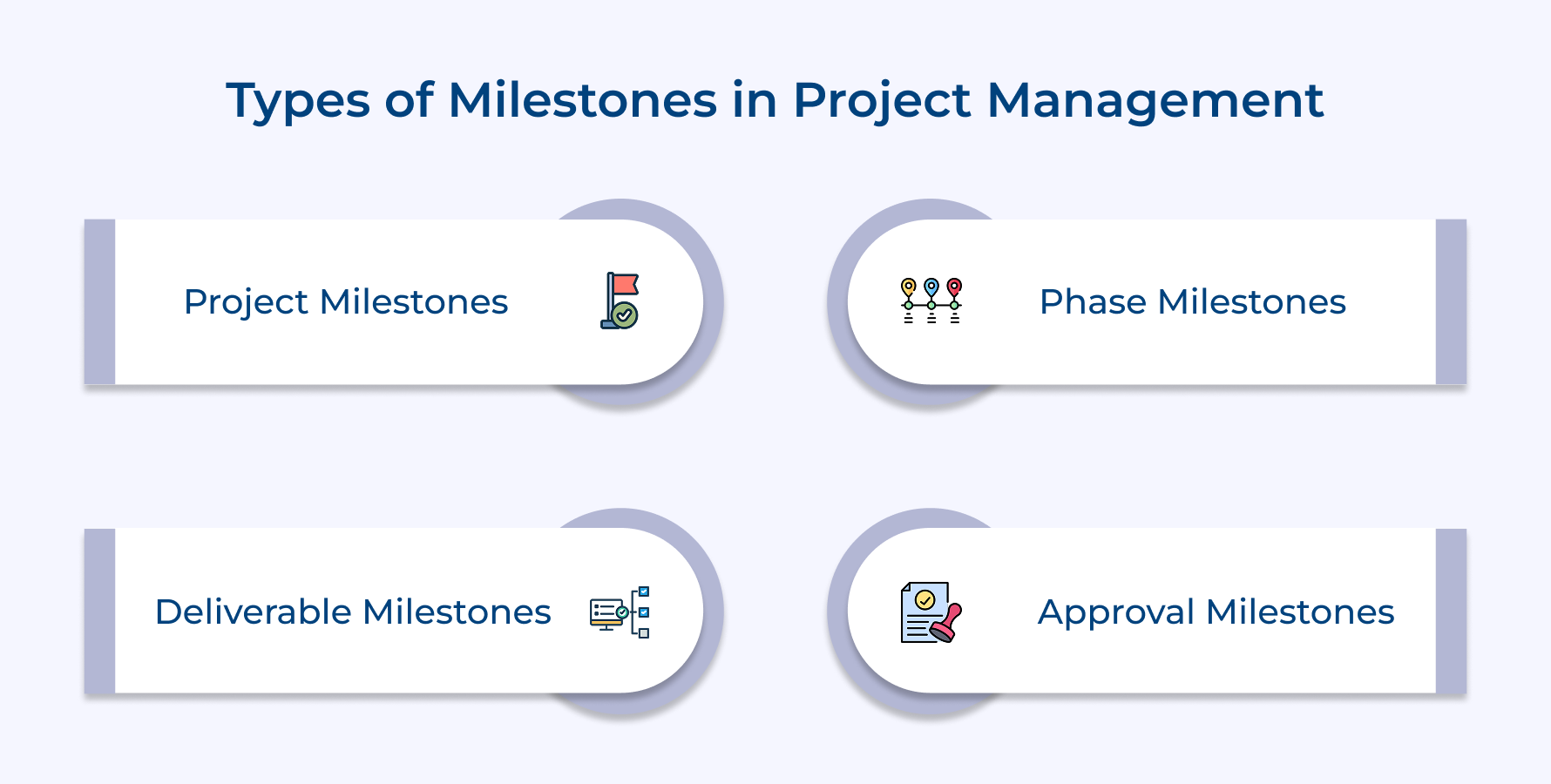
Project Milestones
These mark the beginning and end of your entire project to establish clear boundaries for when work officially starts as well as stops. Think of them as bookends that signal to everyone when commitment begins and when celebration can start.
Phase Milestones
Phase milestones signal that you’ve finished one major section and you’re ready to move into the next stage. These checkpoints prevent teams from rushing ahead before completing critical foundation work that later stages depend on.
Deliverable Milestones
These celebrate moments when you hand over specific outputs that stakeholders have been waiting to receive. A deliverable milestone confirms that a tangible product is ready for client inspection rather than still being worked on.
Key deliverable moments that build client trust:
- Design approval: The point where mockups get the green light and production work can begin
- Beta version release: The working prototype that lets users test functionality before final development
Deliverable milestones create natural feedback loops where clients can course-correct your work before you’ve invested too much effort. Regular deliverable checkpoints keep everyone synchronized on what success looks like as understanding deepens throughout the project.
Approval Milestones
Approval milestones mark critical decision points where stakeholders must review your work and give formal permission to continue forward. These gates ensure that everyone with authority agrees you’re on the right track.
Getting documented approval creates a paper trail that confirms everyone agreed to specific decisions at specific times. This protects both you and the client legally throughout the project.
How to Identify a Project Milestone in Project Management: 7 Steps
Let’s go through seven essential steps to skillfully leverage project milestones, ensuring your projects run smoothly and achieve their desired success.
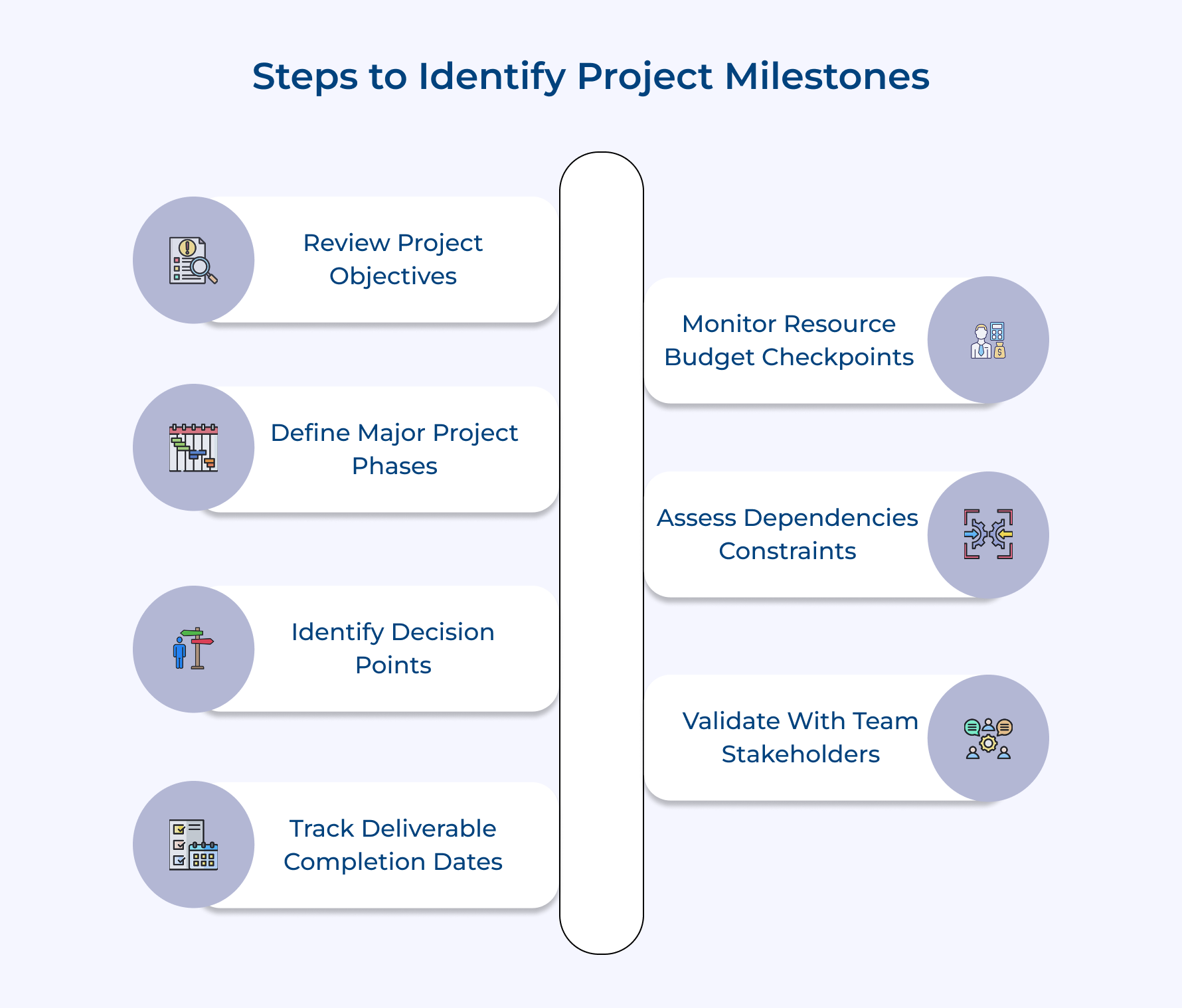
1. Review Project Objectives and Goals
Examine what your project aims to achieve and why those outcomes matter to your organization or client. You need this foundation because milestones must connect directly to objectives rather than appearing at random intervals throughout your timeline.
Three effective ways to align objectives with milestone identification:
- Conduct stakeholder interviews to understand expectations: Talk directly with clients and sponsors to learn what deliverables they consider most important for measuring success.
- Map objectives to measurable outcomes: Transform vague goals like “improve efficiency” into specific targets such as “reduce processing time by 30 percent.”
Consider a software development project where the main objective is launching a customer portal by year-end. Your milestones would include completing user authentication, finishing payment gateway integration and deploying to production servers.
2. Break Down Major Project Phases
Divide your project into logical sections where distinct types of work happen in sequence. You need phase breakdown because it reveals natural stopping points where one kind of activity ends and another begins.
Phase division works by grouping related tasks together while identifying when those clusters reach completion before new work starts. For example, construction moves from design to foundation to framing as separate phases where each boundary represents a potential milestone.
Pro tips:
- Use the finish-to-start relationship to spot phase boundaries where the next phase cannot begin until the current one completes.
- Look for moments when your team composition or required expertise changes significantly as these often signal phase endings.
3. Spot Key Decision-Making Points
Find moments where someone with authority must approve your work before you can continue. These decision points matter because they represent stakeholder commitment and protect you from investing effort in directions that leadership might later reject.
If you struggle to identify decision gates, ask yourself these questions:
- Where does my project require formal sign-off from executives or clients before proceeding?
- Which deliverables need legal or compliance review that could stop progress completely?
- When do budget holders need to approve additional spending for the next phase?
- What technical decisions require architectural review or security clearance before implementation?
These questions help you think systematically about control points rather than assuming you can work continuously without approval interruptions. Each question targets a different type of authority that commonly creates natural gates in project workflows.
Now take each identified decision point and mark it on your timeline as a milestone with clear criteria for what “approved” means. For instance, if legal review is required, your milestone becomes “legal team provides written approval of contract terms.”
4. Identify Critical Deliverable Completion Dates
This step means pinpointing exactly when you’ll hand over tangible outputs that stakeholders can see and evaluate directly. You need these dates marked because deliverables represent the most visible proof of progress to clients.
How deliverable identification translates into actionable milestone markers:
- Contract review reveals mandatory delivery dates: Your signed agreement likely specifies exact dates when certain outputs must be ready. These contractual commitments automatically become milestones because missing them triggers penalties.
- Technical dependencies establish sequence requirements: Some deliverables must exist before others can begin because later work depends on earlier outputs. The completion of prerequisite deliverables marks critical milestones.
- Quality gates demand inspection points: Deliverables typically need approval before you proceed to dependent tasks. These approval moments become milestones where you pause for review.
Your deliverable milestones should align with how clients measure value rather than internal task completion. A milestone for “database schema designed” matters less than “user registration system deployed and tested” because only the latter represents something clients can experience.
5. Recognize Resource or Budget Checkpoints
Here you get to identify moments when significant financial approvals happen or when your team composition shifts in major ways. These checkpoints matter because they represent commitment gates where stakeholders decide to continue investing based on demonstrated progress.
You can recognize these checkpoints by reviewing your budget allocation schedule and noting when funding gets released in tranches. Look also for planned changes in team size or when specialized consultants join or leave.
How resource and budget recognition translates into milestone identification:
- Funding release gates create natural approval points: When stakeholders release the next budget tranche, they’re approving your progress and giving permission to continue forward.
- Team onboarding marks capability expansion: Bringing new specialists onto your team signals you’ve reached a phase where their particular skills become necessary.
- Equipment procurement indicates readiness thresholds: Major tool purchases happen only when you’ve proven you’re ready to use them effectively in the next phase.
- Resource reallocation shows priority shifts: When team members move to other projects, it confirms you’ve completed work requiring their expertise.
Consider a marketing campaign project where your client approves an initial $50,000 for strategy and creative development. Once you deliver the creative concepts, they release another $150,000 for production. That budget release moment becomes a clear milestone confirming client satisfaction.
6. Check Dependencies and Constraints
This step is all about spotting which tasks need to be completed before others can even begin, along with any external deadlines you don’t control. Skipping this often leads to milestones that look good on paper but are impossible to hit because the groundwork isn’t done yet.
Dependencies create a natural order of work where one output unlocks the next activity. For example, software can’t be tested until the code is written. Looking at real milestones examples like “development complete” or “testing ready” helps you place milestones at true completion points, not hopeful estimates.
Pro tips:
- Map all tasks that have three or more dependent activities waiting on them as these represent critical bottlenecks worthy of milestone status.
- Treat any external deadline with penalties or legal consequences as a non-negotiable milestone regardless of your internal phases.
7. Validate with Team and Stakeholders
Validation involves confirming that your identified milestones make sense to both the people doing the work and those evaluating progress. You need it because milestones that ignore team capacity or client expectations will create frustration rather than guidance.
Team validation begins with capacity confirmation because milestones mean nothing if your team cannot reasonably achieve them. If you set a milestone for two weeks from now but your developers need four weeks, you’ve created stress rather than a helpful checkpoint.
Three ways to verify team capacity alignment properly:
- Hold conversations with key team members to understand their confidence level in meeting proposed milestone dates
- Review historical velocity data from similar past projects to ground expectations in actual performance
- Build in buffer time between milestones to account for unexpected complications
Now let’s think about the client perspective. Why does client agreement matter so much? Because if your client doesn’t recognize your milestones as meaningful progress, you’ll face constant questioning.
Imagine you set internal milestones around technical tasks like “database optimization complete” but your client cares only about user-facing features. You’d be celebrating while your client wonders why they haven’t seen anything valuable.
How to Set Milestones in Project Management: 6 Key Tips
Setting milestones effectively requires more than just picking random dates on your calendar. These tips help you create meaningful checkpoints that actually guide your team toward successful project completion.
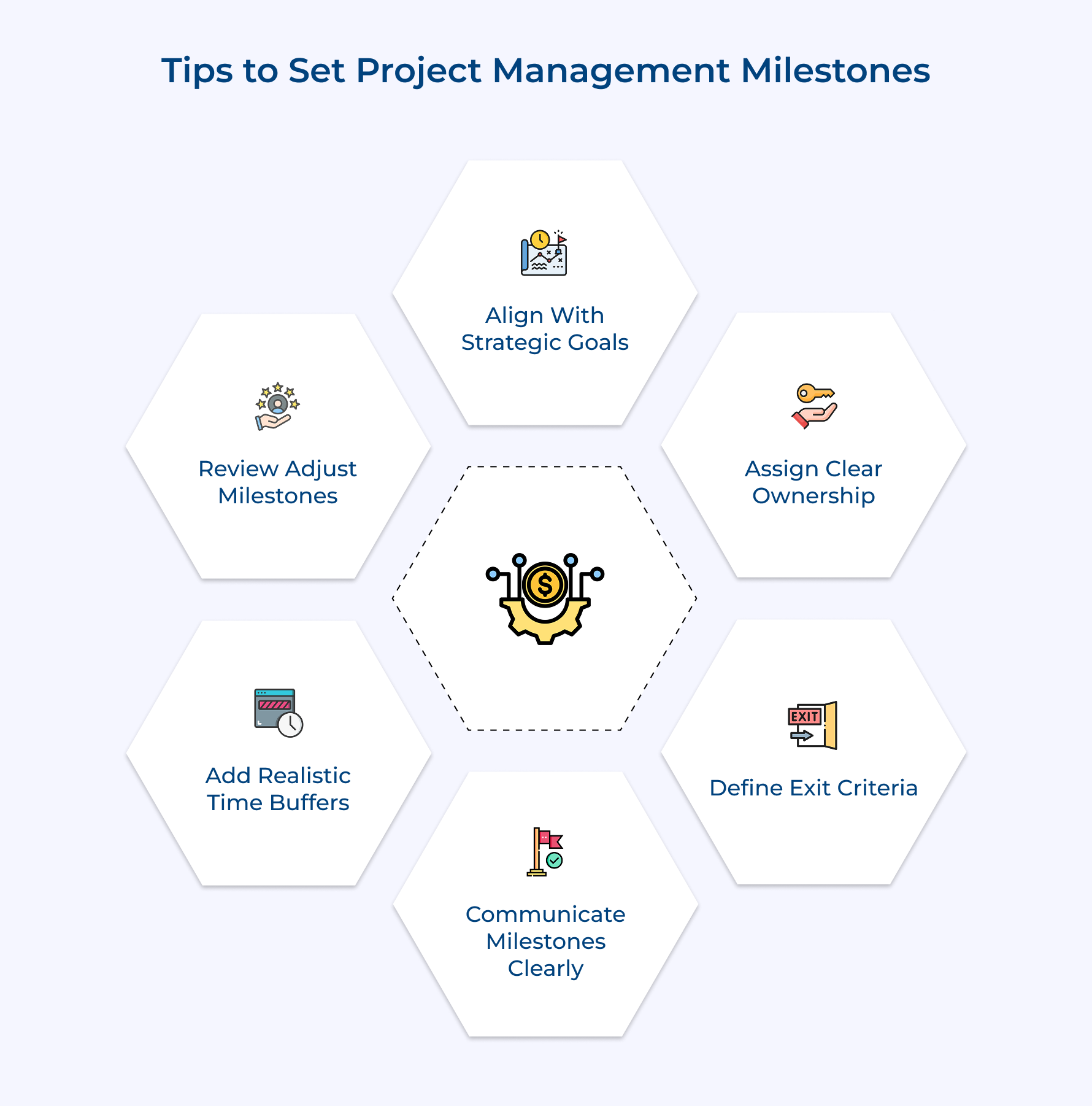
1. Align Milestones with Strategic Objectives
The purpose of this alignment is connecting every milestone directly to outcomes that matter for your business or client success. That connection matters because it ensures you’re tracking meaningful progress, not arbitrary completion points that only show activity, not real value being delivered.
Start by listing your project’s core objectives and then work backwards to identify which deliverables prove you’ve achieved each one. For instance, if your objective is “increase customer retention by 20 percent,” your milestone might be “loyalty program launched and processing first rewards.” This keeps everyone focused on results rather than just checking off activities.
How to implement?
- Each milestone becomes a mini-validation that you’re moving toward the ultimate goal rather than drifting sideways into scope creep
- Stakeholders can immediately see the business value behind each checkpoint instead of wondering why certain dates matter
2. Assign the Responsible Person
Assigning ownership means designating one specific individual who will ensure that milestone is achieved on time and meets quality standards. Because milestones without clear ownership tend to slip through the cracks when everyone assumes someone else is handling it.
The responsible person doesn’t need to do all the work themselves but they coordinate the efforts and communicate status updates. For a milestone like “user acceptance testing completed,” you might assign your QA lead who ensures testers run all scenarios and document results properly.
Key responsibilities that come with milestone ownership to ensure accountability:
- Monitoring progress of all tasks feeding into the milestone and flagging delays early enough to course-correct
- Communicating with stakeholders about status and any risks that might prevent timely completion
- Making decisions about trade-offs when conflicts arise between quality standards and timeline constraints
Choose people who have both the authority to make decisions and the expertise to judge when work truly meets the milestone criteria. A junior team member might lack the experience to know when “design approved” actually means the design is production-ready versus just looking pretty in mockups.
3. Set Exit Criteria
Exit criteria are the clear signals that tell you a milestone is truly finished and it’s safe to move ahead. When these standards aren’t defined, teams end up debating if the work is done or just almost there.
Think of exit criteria as your shared definition of success, with no room for guesswork. Using a milestone chart template helps document these conditions upfront, while key performance indicators make them measurable.
Before finalizing your milestone, ask yourself these validation questions:
- What specific evidence would prove to a skeptical stakeholder that this milestone has been genuinely achieved?
- Could someone look at the current state and debate if we’ve reached this point or not?
- What quality standards must be met before we’re comfortable moving to the next phase?
These questions force you to get concrete about success criteria rather than accepting vague statements like “mostly finished” or “good enough for now.” When your QA lead can point to passed test cases and your client can actually use the prototype, you have objective proof the milestone is complete.
4. Communicate Milestones Clearly
Clear communication means ensuring that everyone involved in your project understands what each milestone represents and when it needs to happen. This prevents the common problem where different people have completely different ideas about what a milestone actually means or requires.
Essential elements to include when announcing milestones to your team:
- The specific date or timeframe when the milestone should be reached along with any flexibility or hard deadlines
- Who owns responsibility for coordinating the work and who should be contacted with questions or concerns
- What dependencies exist that could affect the milestone timing and what contingency plans address potential delays
Visual tools like Gantt charts or milestone roadmaps help people grasp the sequence and timing at a glance. But don’t rely solely on visuals because some team members need written descriptions to fully understand expectations and deliverables.
5. Build in Realistic Time Buffers
Time buffers are extra padding you add between milestones to absorb unexpected delays without derailing your entire schedule. This tip recognizes that projects almost never go exactly according to plan because surprises emerge during execution no matter how well you prepare.
Calculate buffers by reviewing similar past projects to see how much time was needed beyond initial estimates for comparable work. If your team historically takes 20 percent longer than estimated for development milestones, build that buffer into your schedule rather than hoping this time will be different.
Consider these reality-check questions when setting milestone dates for accuracy:
- What could go wrong that would delay reaching this milestone and how likely are those scenarios?
- How much time would we need to recover if we hit typical obstacles like key team members getting sick?
Your stakeholders might push back against buffers claiming they add unnecessary time to the project timeline. Push back by explaining that buffers actually increase the likelihood of hitting your committed dates because they account for real-world friction instead of assuming perfect execution every single time.
6. Review and Adjust Milestones Regularly
Regular review means periodically checking in case your established milestones still make sense given current project realities and changing circumstances. Projects evolve as you learn more about requirements as well as encounter unexpected challenges that weren’t visible during initial planning stages.
Schedule monthly or quarterly milestone reviews where you examine upcoming checkpoints and adjust dates or criteria if needed based on lessons learned. If you consistently miss milestones by two weeks, either your estimates are too aggressive or you need to address underlying execution problems causing delays.
Warning signs that indicate your milestones need immediate adjustment:
- Multiple consecutive milestones have been missed by significant margins suggesting your baseline plan is fundamentally flawed.
- Stakeholder priorities have shifted and certain milestones no longer align with what they actually care about measuring.
Common Challenges Faced During Milestone Delivery
Understanding these common challenges helps you anticipate problems and respond effectively.
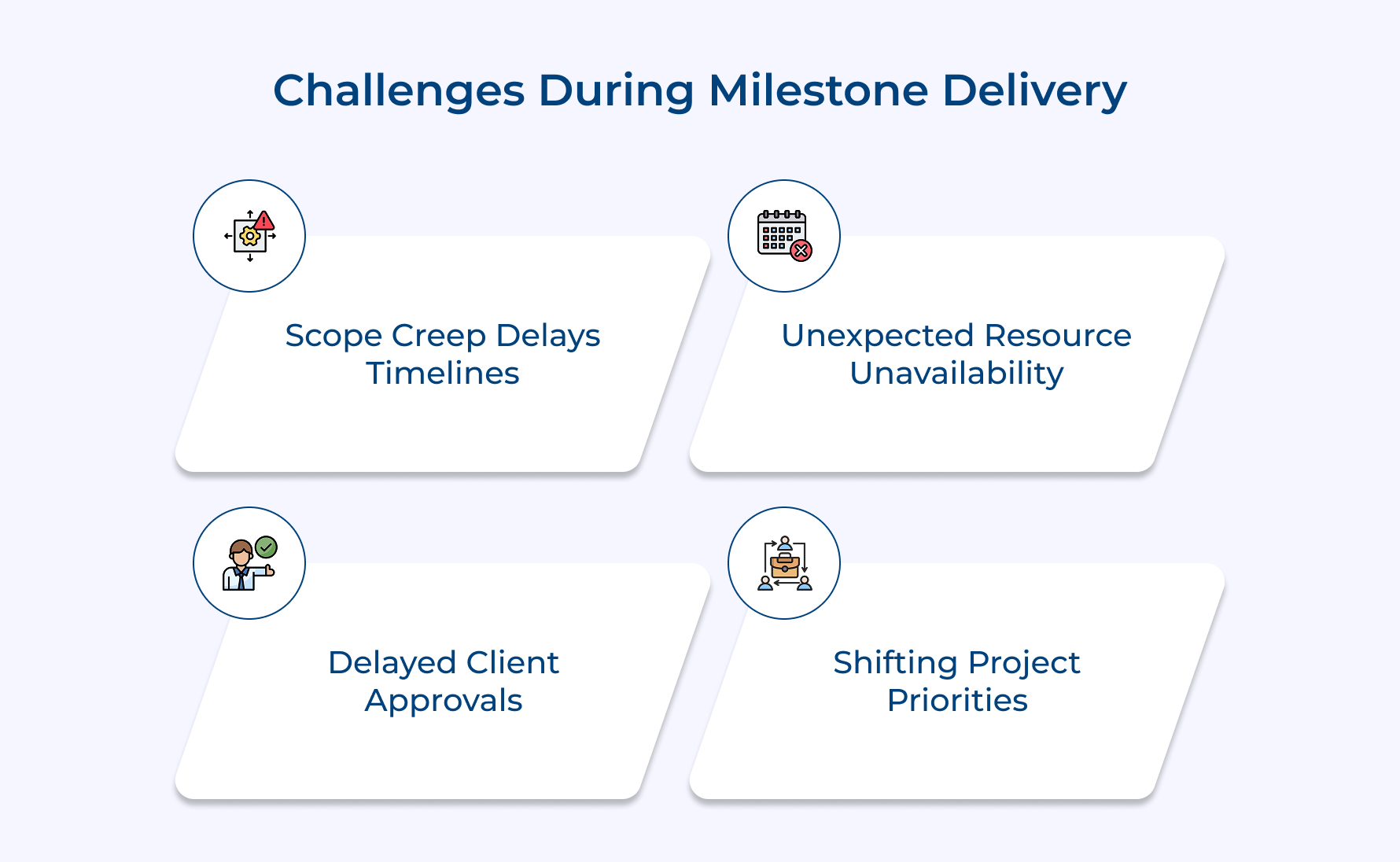
1. Scope Creep Pushes Milestone Dates
Scope creep happens when additional requirements get added after milestones are set without adjusting deadlines accordingly. Clients often request “small changes” that seem minor but collectively push your team past the point where original milestone dates remain achievable.
2. Resource Availability Changes Unexpectedly
This challenge emerges when team members become unavailable due to illness or get pulled onto urgent issues for other projects. Your milestone plan assumed certain people would be available but suddenly those assumptions no longer hold and work stalls.
3. Client Approval Processes Take Longer Than Expected
Client organizations often have complex approval chains where multiple stakeholders must review deliverables before you can proceed. What you assumed would take two days stretches into two weeks as your deliverable bounces between departments.
These solutions help you address obstacles that commonly threaten milestone achievement and keep your project moving forward.
- Require clients to document requested changes and approve revised timelines before your team starts additional work.
- Cross-train team members so multiple people can handle critical tasks and identify backup resources you can activate.
- Contact dependency owners regularly to confirm delivery dates and identify potential delays early enough to escalate.
- Get clients to agree during kickoff that approvals will happen within defined windows with escalation procedures if exceeded.
Examples of Project Milestones
Looking at real examples across the project lifecycle helps you recognize what meaningful checkpoints look like in practice.
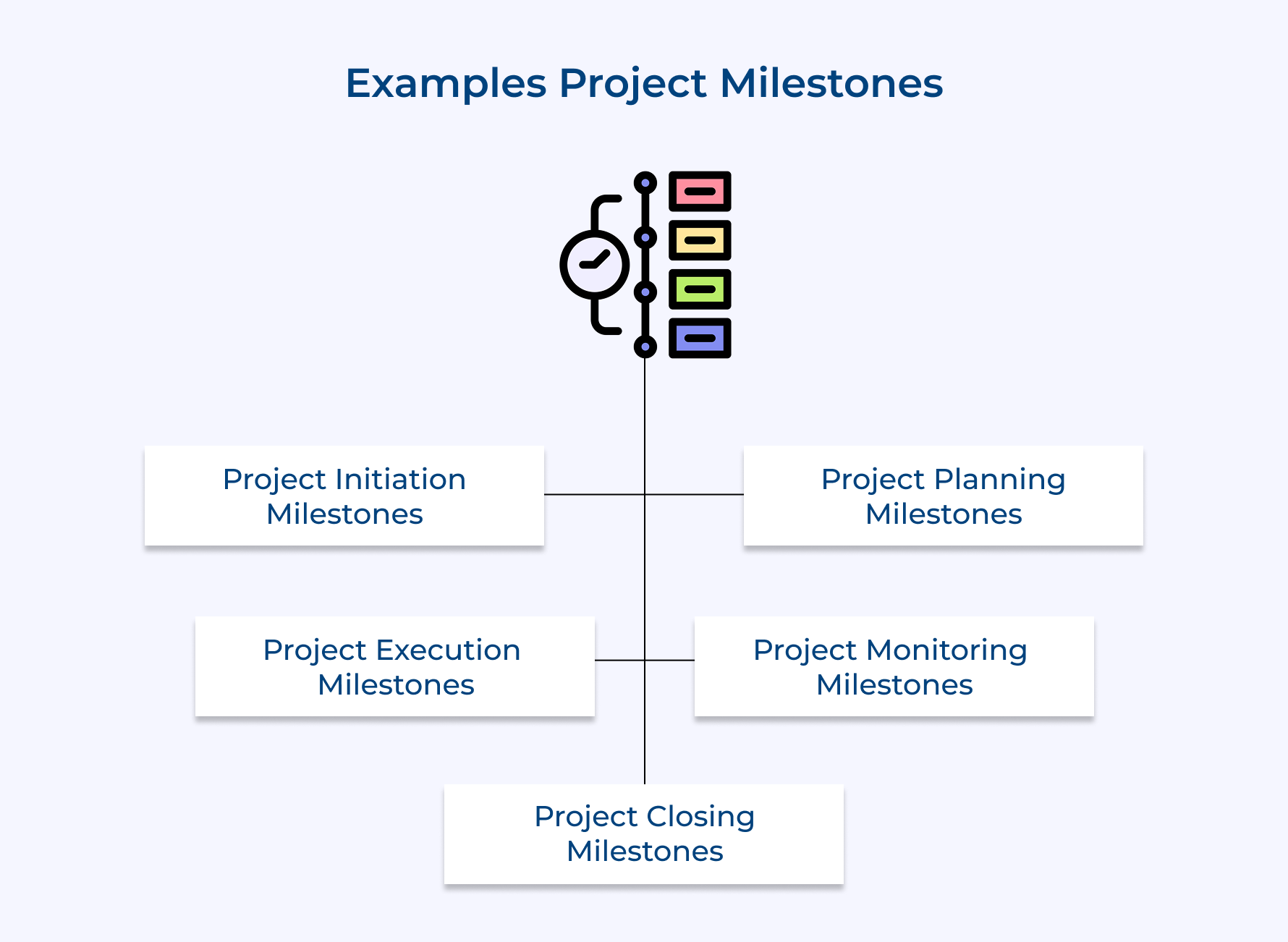
Initiation Phase Milestones
The initiation phase focuses on getting formal approval to start your project and establishing the foundation for everything that follows. This is where you transform an idea into an officially sanctioned project with committed resources.
Here are the key milestones that signal successful project initiation:
- Project charter approved: The sponsor signs the charter document that formally authorizes your project and gives you permission to use organizational resources.
- Initial stakeholder identification completed: You’ve mapped out everyone who will affect or be affected by your project and documented their interests for future engagement.
- High-level budget estimate approved: Leadership has reviewed your rough cost projections and confirmed they’re willing to invest that amount in the project.
Planning Phase Milestones
The planning phase involves creating detailed roadmaps for how you’ll execute the project and what resources you’ll need throughout. These milestones confirm you’ve thought through the work thoroughly before committing to action.
These milestones confirm your project is ready for actual execution:
- Detailed project plan completed: Your comprehensive plan covering scope, schedule, budget and quality standards is finished as well as ready for execution.
- Resource allocation finalized: You’ve secured commitments from all the people and equipment needed to execute your plan successfully.
- Risk management plan approved: You’ve identified potential threats and created response strategies that stakeholders find acceptable for moving forward.
Execution Phase Milestones
The execution phase is where your team does the actual work of creating deliverables and bringing your plan to life. Milestones here mark the completion of significant outputs that represent tangible progress.
Watch for these milestones that demonstrate you’re building real value:
- First major deliverable completed: Your team has finished and handed over the initial significant output that clients can review while providing feedback on.
- Quality assurance testing passed: Your deliverables have been formally tested against quality standards and met all acceptance criteria without major defects.
- User training materials delivered: All documentation and guides needed to help end users understand as well as operate your solution are complete.
Monitoring and Controlling Phase Milestones
This phase runs parallel to execution and focuses on tracking progress while making adjustments when things deviate from your plan. These milestones mark important checkpoints where you assess project health.
These checkpoints help you maintain control throughout your project journey:
- First performance review completed: You’ve conducted a formal assessment comparing actual progress against your baseline plan to identify any concerning variances.
- Change control board established: You’ve set up the formal process that will evaluate and approve scope changes to protect your timeline going forward.
Closing Phase Milestones
The closing phase wraps up all project activities and transitions deliverables to whoever will maintain them long-term. These milestones ensure you finish properly rather than just stopping when you run out of time.
Look for these final milestones that signal proper project completion:
- Final deliverable accepted: The client has formally reviewed everything and signed documentation confirming all requirements have been met to their satisfaction.
- Lessons learned documented: Your team has captured what went well and what should be done differently in future projects for organizational learning.
- Resources released: All team members and equipment have been officially freed up to move to other projects or return to regular duties.
Turning Project Plans Into Reality with One Milestone At a Time
Milestones in project management transform overwhelming projects into manageable journeys by breaking complex work into clear achievement points that everyone can celebrate. Each milestone you reach proves to your team and clients that real progress is happening rather than just busy activity.
The key is setting milestones that genuinely matter to project success rather than creating arbitrary checkpoints nobody cares about. When you align milestones with strategic goals and validate them with your team, you create a roadmap that delivers real value one checkpoint at a time.
Limit time — not creativity
Everything you need for customer support, marketing & sales.

Neeti Singh is a passionate content writer at Kooper, where he transforms complex concepts into clear, engaging and actionable content. With a keen eye for detail and a love for technology, Tushar Joshi crafts blog posts, guides and articles that help readers navigate the fast-evolving world of software solutions.