9 Must-Follow Tips for Managing Small Business Finances
- What is Financial Management in Small Businesses?
- Key Benefits of Properly Managing Business Finances
- 9 Simple Tips to Manage Small Business Finances Better
- 4 Best Software for Small Business Financial Management
- Common Mistakes to Avoid in Small Business Financial Management
- Streamline Small Business Financial Management With Kooper
- FAQs About Managing Small Business Finances

Key Highlights:
- Managing small business finances ensures clarity, stronger vendor ties and stress-free tax seasons.
- Build emergency funds, automate repetitive tasks and review financial reports monthly to safeguard cash flow while planning for long-term.
- Avoid common mistakes like underpricing, delayed collections and relying on credit cards; proper planning ensures sustainable small business financial management.
Picture this: You’re working 60-hour weeks, landing new clients and delivering great work, yet somehow your bank account tells a different story. Sound familiar? You’re experiencing the painful disconnect between being busy and being profitable.
The harsh truth is that most small businesses fail due to cash flow problems, not because they lack customers or talent. Poor financial management slowly strangles promising businesses while owners focus on everything except the numbers that actually determine survival and growth.
The fact about how to manage small business finances is that it doesn’t require an accounting degree or expensive consultants. With nine straightforward strategies, you can transform financial chaos into clarity, ensuring your hard work translates into sustainable profit and peace of mind.
What is Financial Management in Small Businesses?
Financial management in small businesses is the practice of planning, organizing, as well as controlling the money that flows in and out of your company. It involves tracking cash flow, managing expenses and making smart decisions about how to use your limited resources to keep your business growing.
Financial management works by creating systems to track your money and using that information to make better business decisions. You collect data about sales and expenses, analyze patterns to understand what’s working, then adjust your spending as well as pricing accordingly. It’s like having a financial dashboard that shows you exactly how your business is performing in real-time.
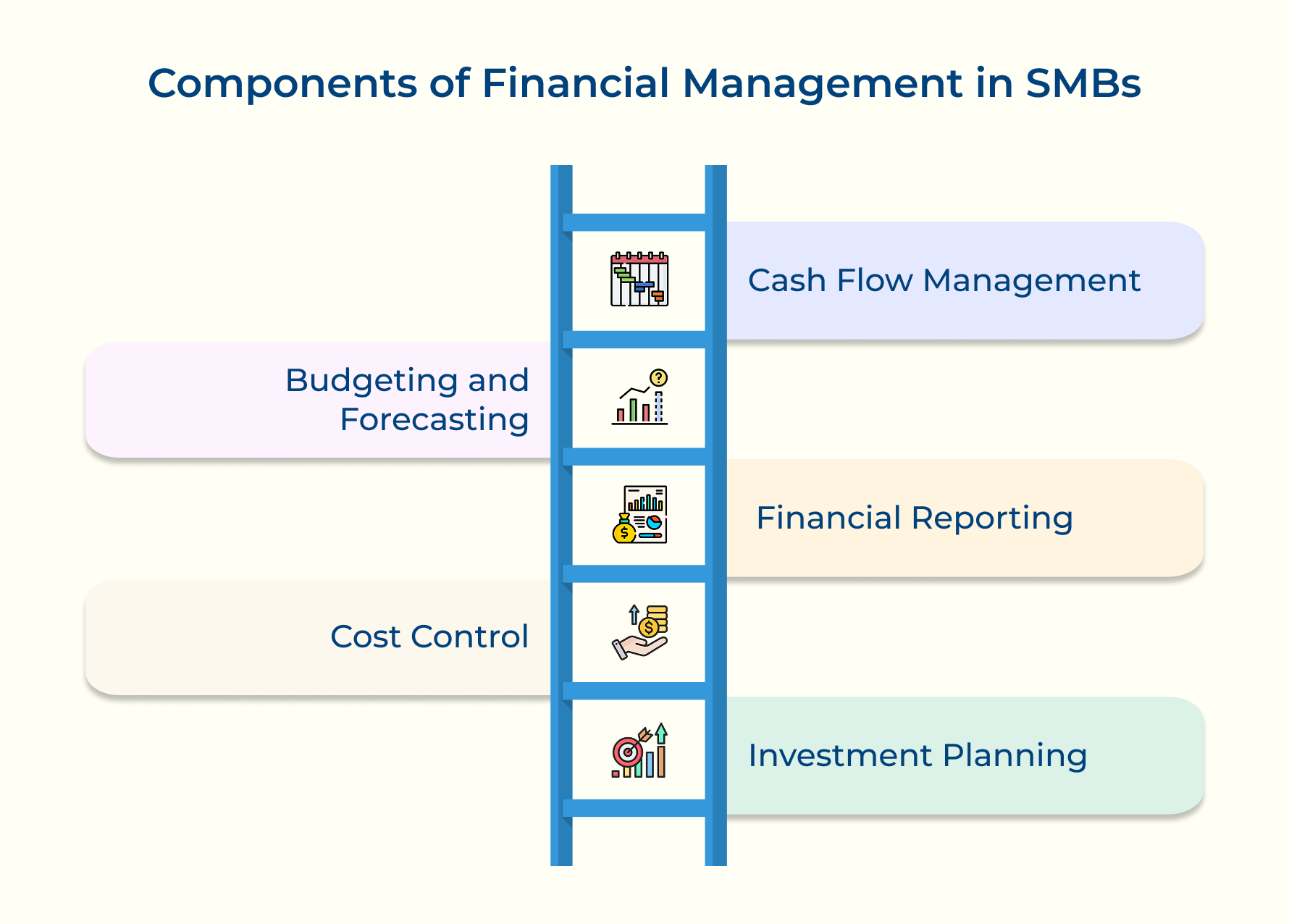
Essential components:
- Cash flow management: Tracking the money coming in and going out to ensure you always have enough to pay bills as well as invest in growth opportunities
- Budgeting and forecasting: Creating realistic spending plans and predicting future financial needs based on past performance along with market trends
- Financial reporting: Generating regular statements that show your profit margins, expenses and overall financial health in clear numbers
- Cost control: Finding ways to reduce unnecessary expenses while maintaining quality and identifying which costs actually drive revenue
- Investment planning: Deciding when and how to reinvest profits back into the business for equipment, inventory, or expansion opportunities
Key Benefits of Properly Managing Business Finances
Managing SMB finances over a period of time strengthens your financial position and builds the foundation for long-term success. Let’s explore how it benefits you:
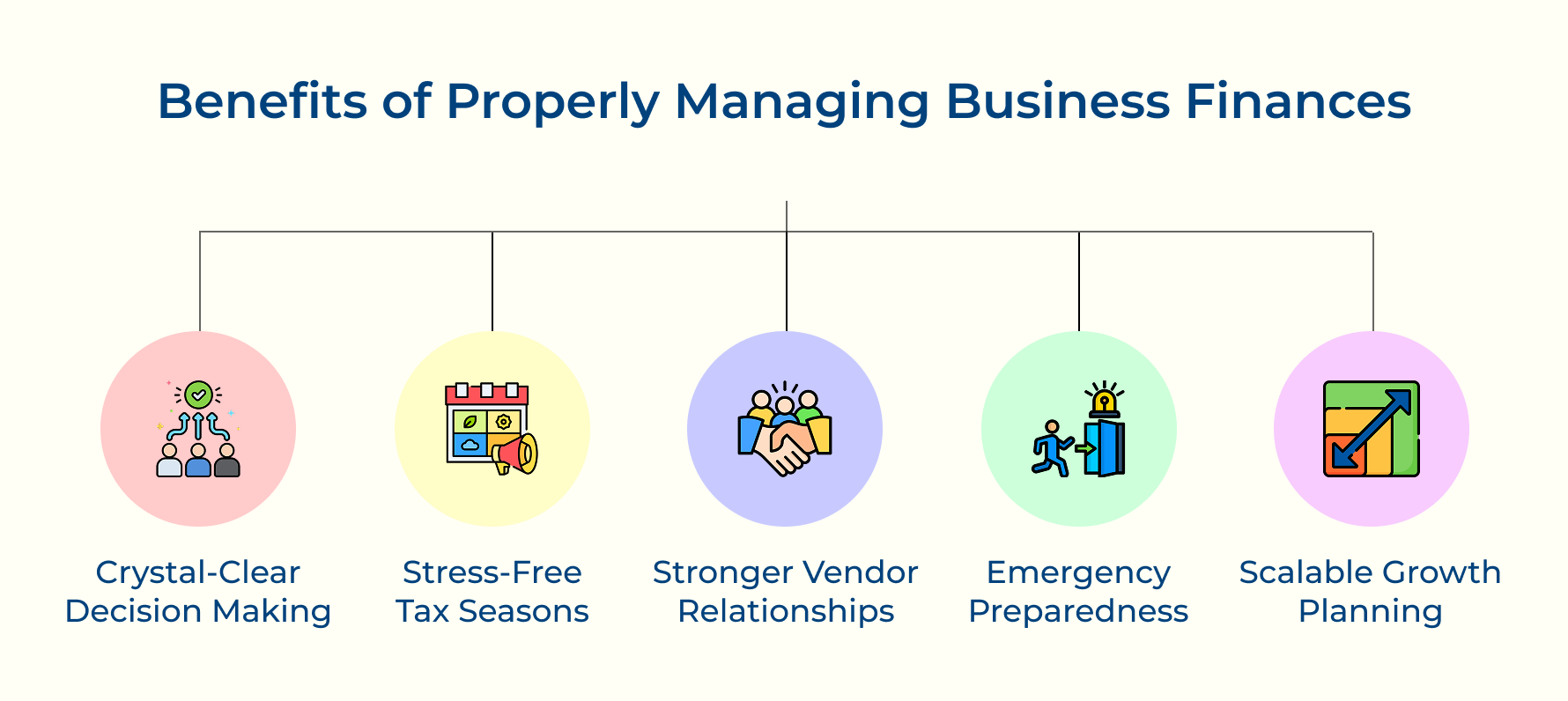
1. Crystal-Clear Decision Making
When you know where every dollar goes, you’re not guessing – you’re making informed and smart choices. Financial clarity helps you act quickly on opportunities and avoid money-wasting mistakes.
2. Stress-Free Tax Seasons
No more last-minute receipt hunts or deadline panic. Keeping things organized year-round saves you from headaches, accountant overcharges and missed deductions.
3. Stronger Vendor Relationships
Paying on time earns trust and often brings perks like early payment discounts. Good financial habits help you maintain strong, reliable supplier relationships.
4. Emergency Preparedness
Life (and business) throws curveballs. A well-managed budget lets you build an emergency fund, so you’re prepared for slow months, surprise expenses, or economic dips.
5. Scalable Growth Planning
Want to scale? Your numbers will show you when you’re truly ready. By tracking profit margins as well as expenses, you’ll know which areas deserve investment and which to cut back.
9 Simple Tips to Manage Small Business Finances Better
Here are eight essential tips to help you effectively manage your small business finances and set your business on a path to prosperity.
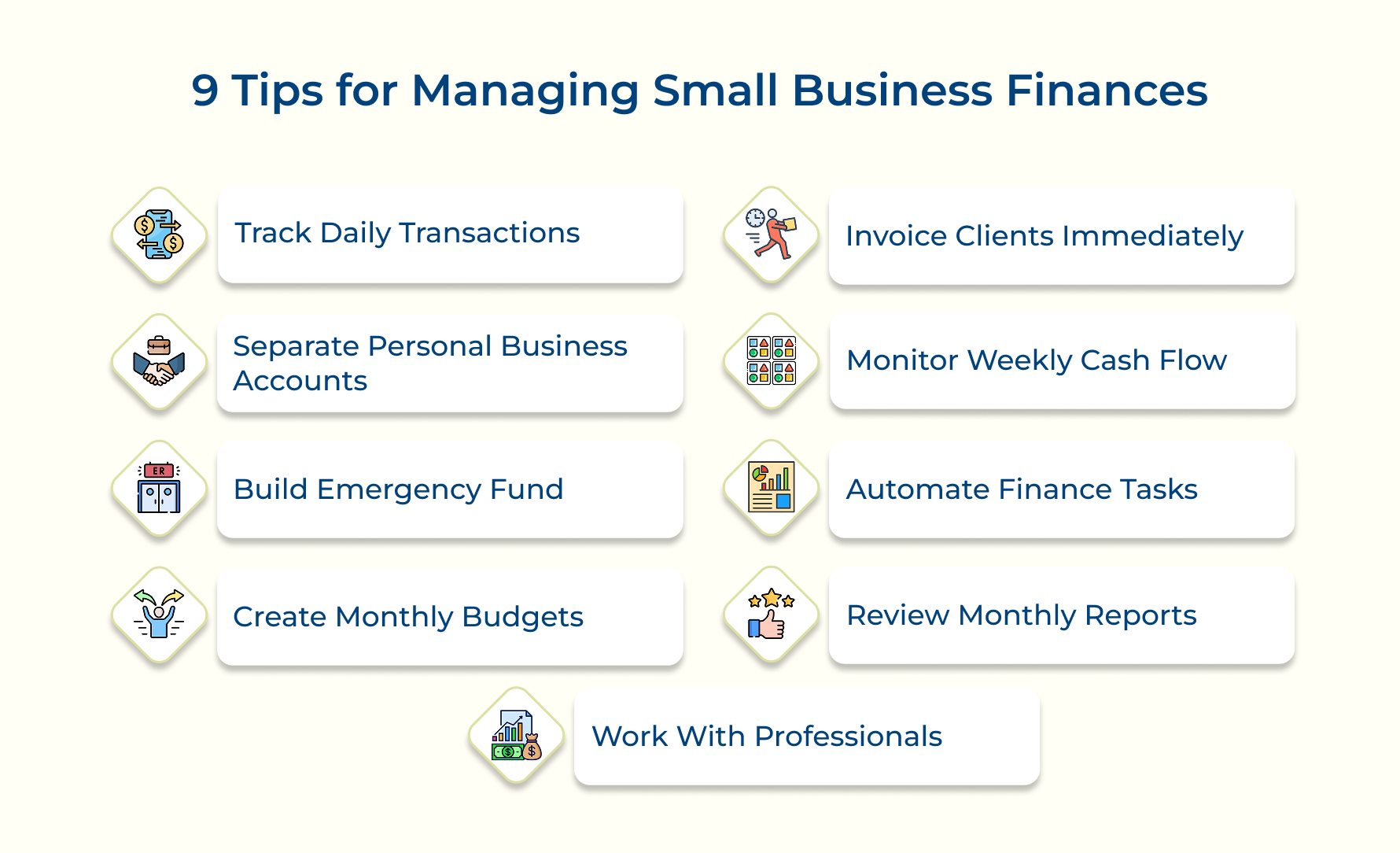
1. Track Every Single Transaction Daily
Tracking daily transactions might sound tedious, but it’s a game changer for your business. Recording every rupee as it comes in or goes out helps you stay on top of your cash flow and avoid costly mistakes later.
Here’s how to make it easy:
- Log expenses right away, don’t wait and risk forgetting details or losing receipts.
- Connect your bank to accounting software to automate entries and cut down on manual work.
- Do a quick daily check to match your records with your bank. Just five minutes a day can save hours of trouble later.
This small daily habit brings order to your finances, helps you catch issues early and gives you the confidence to make smart money decisions.
2. Separate Personal and Business Accounts
Mixing personal and business finances creates tax nightmares as well as makes it impossible to track true profitability. Separate accounts provide clear financial boundaries and simplify everything from bookkeeping to tax filing while protecting personal assets.
Opening dedicated business accounts takes just one bank visit but saves countless hours during tax season. You’ll instantly see business performance without filtering through personal transactions and maintain the legal separation required for liability protection.
Best practices:
- Deposit all business income into business accounts only and pay yourself a regular salary or draw.
- Use business credit cards exclusively for company expenses to build business credit history separately.
3. Build Your Emergency Fund First
An emergency fund acts as your business safety net when unexpected costs arise or revenue drops suddenly. This financial cushion prevents you from making desperate decisions or taking expensive loans during tough times. Before building your emergency fund, answer these critical questions:
- What are my fixed monthly expenses including rent and payroll?
- How many slow months did I experience last year?
- Which expenses could I cut temporarily if needed?
- Do I have seasonal revenue fluctuations to consider?
Start by calculating three months of essential expenses and set up automatic transfers. Move 10% of each payment received directly into a separate high-yield savings account before touching other funds.
4. Create Realistic Monthly Business Budgets
Think of your business budget like a roadmap for your personal finances—but for your company. It helps you plan spending, avoid overspending and stay ready for taxes, business loans as well as unexpected costs.
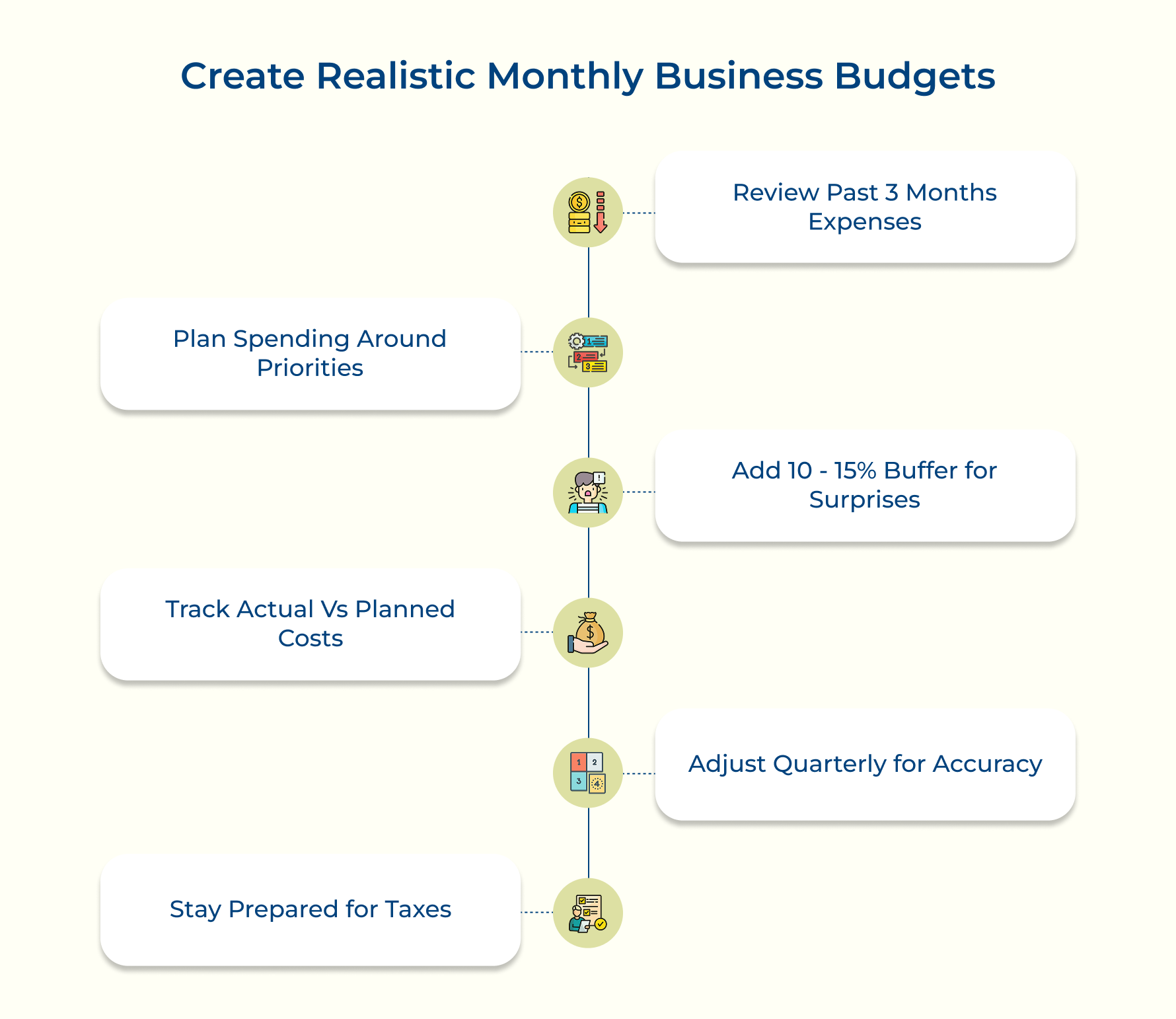
Start by looking at real data. Review your last three months of business expenses to understand where your money actually goes. This keeps your budget grounded in reality, not guesswork.
Always include a buffer (around 10–15%) for surprise costs like equipment repairs or price hikes. It’s your safety net.
Check your budget every quarter. Are your actual expenses matching your plan? If not, adjust. Business needs change and your budget should too.
This approach keeps your finances healthy, supports loan planning and helps you stay ahead of tax obligations.
5. Invoice Clients Immediately After Delivery
One of the simplest ways to manage SMB finances better is by invoicing fast—ideally within 24 hours of completing the work. It keeps cash flow steady and shows clients you run a professional operation.
When you send invoices quickly, details are fresh in everyone’s mind, reducing disputes and speeding up payments. Clear payment terms upfront like due dates, deposit requirements, or penalties. Set expectations early and protect your cash flow.
As part of smart SMB financial management, ask yourself: Can your business handle 30- or 60-day payment cycles? Should you request upfront deposits for big jobs?
Automate follow-ups for unpaid invoices at 7, 14 and 30 days. It’s a stress-free way to stay consistent with collections and improve how you manage SMB finances overall.
6. Monitor Cash Flow Patterns Weekly
Monitoring cash flow weekly is one of the smartest ways to manage your business finances. It shows patterns monthly reports often miss and helps you avoid cash crunches before they hit.
Try these simple habits:
- Take a monday snapshot: Note your bank balance and list incoming payments as well as expenses for the week. You’ll instantly see if you’re on track or heading for trouble.
- Map it on a calendar: Mark when clients usually pay and when bills are due. Visual cues help you plan ahead.
- Know your burn rate: Divide your monthly expenses by 30. This tells you how much cash you need daily.
Ignoring cash flow means risking panic decisions just to stay afloat. Stay ahead, not reactive.
7. Automate Repetitive Tasks With Finance Management Software
If you’re wondering how to manage SMB finances more efficiently, automation is a game changer. Instead of spending hours on repetitive money tasks, let software handle the busywork so you can focus on growth.
Start by asking yourself:
- Which financial tasks take the most time?
- How often do I mess up manual entries?
- What’s my budget for finance tools?
Once you know your pain points, automation can help with:
- Recurring invoices: Set it once and let it bill clients every month.
- Expense sorting: Link your bank account to auto-categorize expenses for taxes.
- Bill payments: Schedule once and skip late fees forever.
- Reports: Get instant profit and cash flow reports, no spreadsheets.
8. Review Financial Reports Every Month
Monthly financial reviews are like regular health check-ups for your business, they help you catch small issues before they become big, costly problems.
Each month, take time to review your profit-loss statements and expense reports. Compare actual results with your goals and budget. Look for red flags like rising costs in certain areas or shrinking profit margins.
Here’s how to keep it simple and effective:
- Pick a set day each month, treat it like a non-negotiable client meeting.
- Use a checklist to track key metrics like gross margin and expense ratios. That way, you’ll always review the essentials.
Staying consistent with monthly reviews is a core part of how to manage SMB finances. It keeps your decisions data-driven and your business on track.
9. Work With Financial Professionals Regularly
Smart SMB financial management is all about knowing when to bring in the pros. Financial experts like accountants and advisors help you spot risks, maximize deductions, as well as stay compliant.
Here’s how to make the most of their support:
- Check in quarterly: Meet your accountant every 3 months to review performance and adjust plans before problems grow.
- Ask before big moves: Planning a major purchase or signing a lease? A quick consultation with your tax expert can save you thousands.
- Try fractional CFOs: As your business grows, consider part-time financial leadership. You’ll get strategic insight without the full-time price tag.
With the right partners, SMB financial management becomes proactive, not reactive—and that’s where real growth happens.
4 Best Software for Small Business Financial Management
Modern financial software transforms overwhelming number-crunching into manageable tasks, giving small business owners the clarity they need without requiring extensive accounting knowledge or hiring full-time financial staff.
Kooper
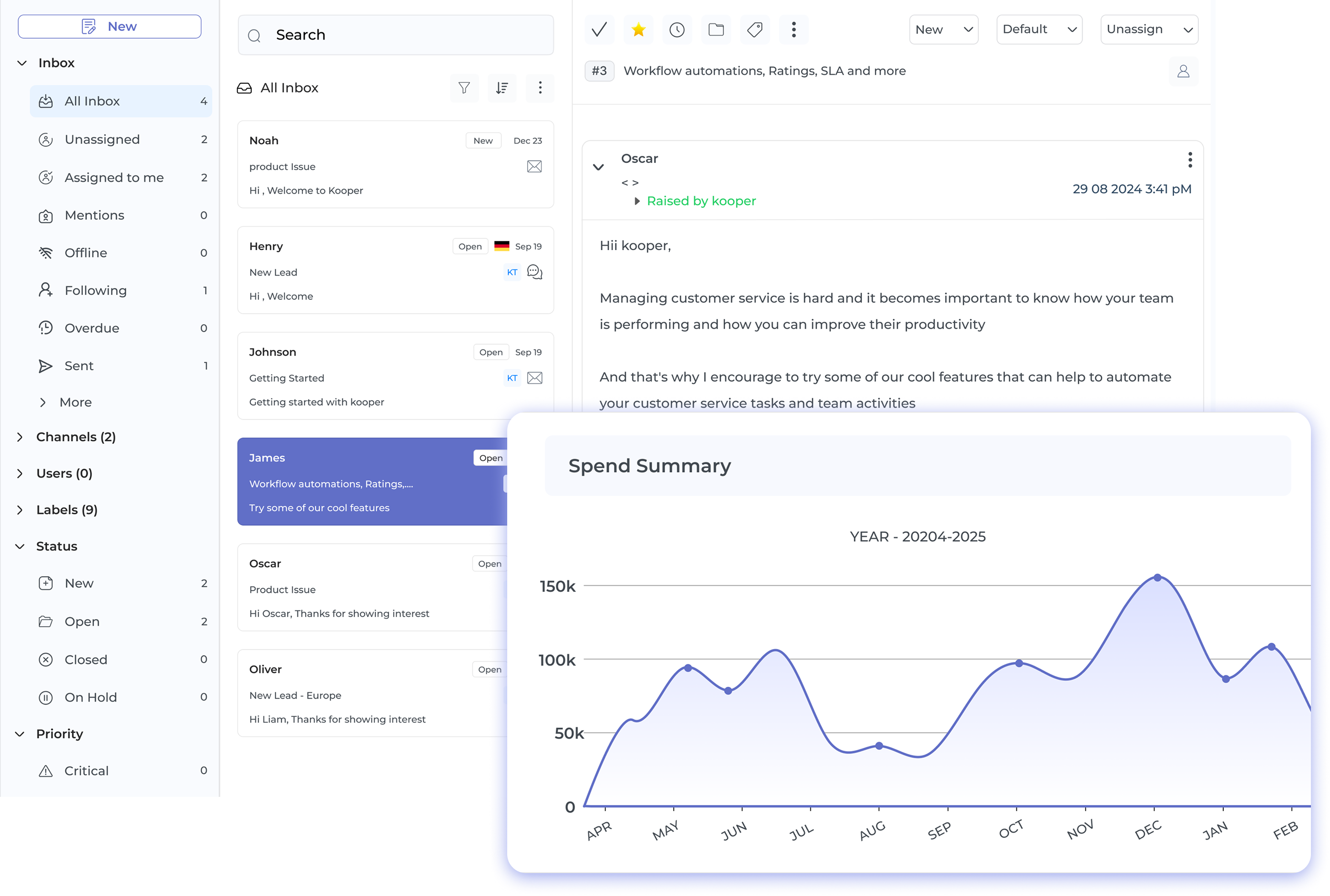
Kooper is your all-in-one business management (PSA) software built for seamless financial control and project visibility, no more juggling disconnected tools. It brings everything into one smart platform so your team, finances and projects stay perfectly aligned.
Key features include:
- Real-time project + revenue tracking: Instantly see how project progress ties to revenue and profitability.
- Auto-generated invoices: Send accurate, professional invoices automatically, no manual input needed.
- Live financial dashboards: Get a clear, real-time view of key financial metrics with easy-to-read visuals.
- Centralized team + client data: Keep all your project, client and financial info in one secure, accessible place.
- Built-in time tracking: Automatically capture billable hours to ensure every minute gets counted.
- Custom workflows for smarter automation: Set up rules to automate tasks and keep your business running smoothly.
QuickBooks Online
QuickBooks Online stands as the industry standard for small business accounting, offering comprehensive features that grow with your business. This cloud-based platform connects directly to your bank accounts, automatically categorizing transactions while generating professional invoices and tracking expenses. Its intuitive dashboard presents complex financial data in digestible visual formats that help you understand your business health at a glance.
FreshBooks
FreshBooks specializes in making invoicing and time tracking painless for service-based businesses as well as freelancers who bill by the hour. The software excels at project-based financial management, allowing you to track time, expenses and profitability for each client or project separately. Its mobile app ensures you can capture receipts and log hours wherever work takes you, preventing lost billable time.
Xero
Xero brings powerful automation and integration capabilities that save hours of manual data entry while reducing human error significantly. This platform shines through its extensive app marketplace, connecting seamlessly with over 1,000 business tools from inventory management to point-of-sale systems. Real-time collaboration features let you work simultaneously with accountants and bookkeepers, ensuring everyone stays aligned on financial decisions.
Common Mistakes to Avoid in Small Business Financial Management
Even the most passionate entrepreneurs can stumble when it comes to managing money, often learning expensive lessons that could have been avoided with proper financial awareness from the start.
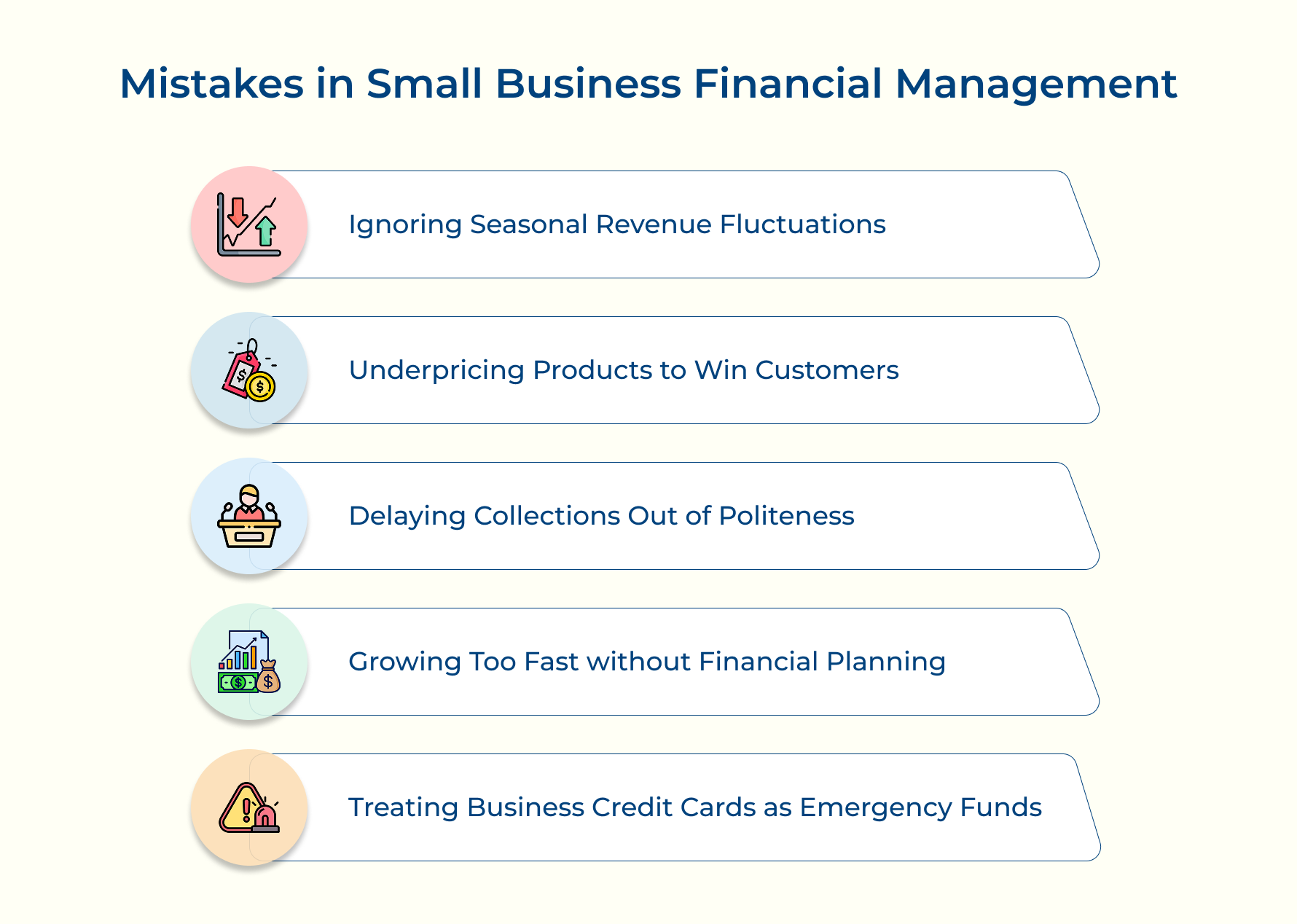
Mistake #1: Ignoring seasonal cash flow
It’s easy to budget based on your best months, but if you don’t factor in seasonal dips, you’ll face cash crunches. Create a rolling 12-month forecast based on historical trends and upcoming market shifts.
Mistake #2: Underpricing just to compete
Setting prices without calculating true costs (like labor and overhead) might win customers but will slowly bleed your finances. Calculate full product costs and set prices that include healthy profit margins.
Mistake #3: Delaying collections out of courtesy
Avoiding invoice follow-ups feels polite, but it hurts your cash flow and sets the wrong expectations. Use automated payment reminders to keep things professional and prompt.
Mistake #4: Growing too fast without planning
Taking on every opportunity without checking your cash flow first can overwhelm your finances. Only say yes to new contracts if you’ve verified positive cash flow.
Mistake #5: Using credit cards for emergencies
Relying on high-interest cards for shortfalls builds long-term debt that’s hard to escape.
Build a dedicated emergency fund equal to at least three months of expenses.
Streamline Small Business Financial Management With Kooper
Trying to manage small business finances without the right tools can quickly become a nightmare. Simple tasks take forever, manual errors creep in and before you know it, you’re spending more time fixing mistakes than growing your business.
That’s where Kooper comes in. It brings invoicing, expense tracking and accounting together in one easy-to-use platform. No more juggling spreadsheets or re-entering data, just smooth, connected workflows that save time and reduce errors. With Kooper, you get real-time financial insights that help you make smarter decisions, faster.
Limit time — not creativity
Everything you need for customer support, marketing & sales.

Shivank Kasera is part of the marketing team at Kooper, where he focuses on building content that helps agencies and service providers grow. With a keen interest in SaaS, operations, and scalability, he translates practical insights into actionable resources for business leaders.