
Key Highlights:
- Understand project constraints early to prevent delays, budget overruns and unrealistic expectations during execution.
- Use structured strategies to identify, monitor and manage constraints in project management before risks escalate.
- Apply automation, dashboards and historical insights to improve visibility as well as decision-making around project management constraints.
Your project starts with excitement and clear goals but then reality hits hard. Budgets tighten, deadlines loom closer and resources become scarce. These limitations can derail even the most promising projects if you don’t handle them right.
The problem isn’t that constraints exist but that most teams discover them too late. Poor constraint management turns manageable challenges into full-blown crises that compromise quality and stakeholder trust.
This guide shows you how to identify and manage project constraints before they become problems. You’ll learn practical strategies that transform limitations into decision-making tools. Master constraints and you’ll deliver successful projects consistently regardless of industry or complexity.
What are Project Constraints in Project Management?
Project constraints are the limitations and boundaries that shape how a project gets executed. They define what’s possible and what’s not within your project scope. These constraints directly impact your decisions and determine which trade-offs you’ll need to make throughout the project lifecycle.
Project constraints occur when resources become limited or when specific requirements must be met. They emerge from organizational policies, stakeholder demands, budget allocations, time pressures and available skills. External factors like regulations and market conditions also create constraints that project managers must navigate.
Project goals:
- Establish realistic expectations with stakeholders about what the project can actually deliver.
- Make informed decisions when trade-offs become necessary during project execution.
- Allocate resources efficiently by understanding where limitations exist.
- Identify risks early by recognizing which constraints might become problems.
- Maintain project quality while working within the boundaries of time and budget.
Why are Constraints Important in Project Management?
Constraints aren’t obstacles to avoid. They’re the framework that keeps your project grounded in reality and helps you deliver actual results.
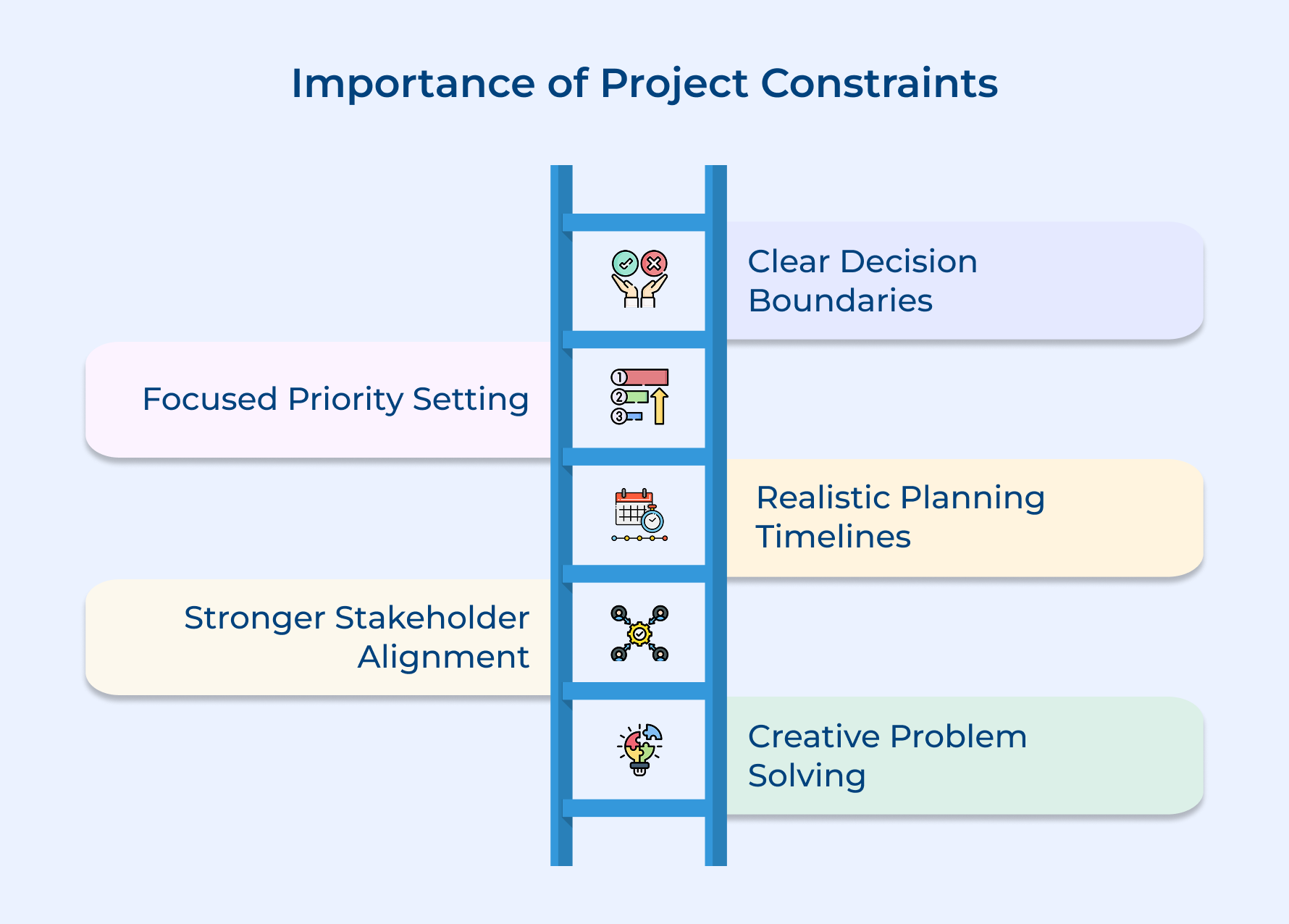
1. Create Clear Boundaries for Decision-Making
Constraints set clear boundaries, so your team knows exactly where to focus. Instead of second-guessing every move, decisions happen faster and stay aligned with the project goal, reducing confusion as well as unnecessary scope changes.
2. Force Prioritization of What Really Matters
When time, budget, or people are limited, prioritization becomes unavoidable. This is where Risk Management thinking naturally steps in – helping you separate critical work from nice-to-have tasks and protect the outcomes that matter most.
3. Enable Realistic Planning and Scheduling
Knowing your limits allows you to build timelines your team can actually follow. Having the right project management tools helps schedules are practical instead of overly optimistic, which means fewer delays and more predictable delivery.
4. Improve Stakeholder Communication and Alignment
Visible constraints make conversations more honest. Stakeholders understand trade-offs early and structured planning – often supported by a clear Work Breakdown Structure – keeps everyone aligned on expectations as well as priorities.
5. Drive Creative Problem-Solving and Innovation
Interestingly, limits often spark the best ideas. When the obvious path isn’t available, teams explore new approaches, collaborate more deeply and discover innovative solutions that might never surface in a constraint-free environment.
What are the Triple Constraints of Project Management?
The triple constraints form the foundation of project management theory. These three elements work together like a balancing act that defines your project’s success.
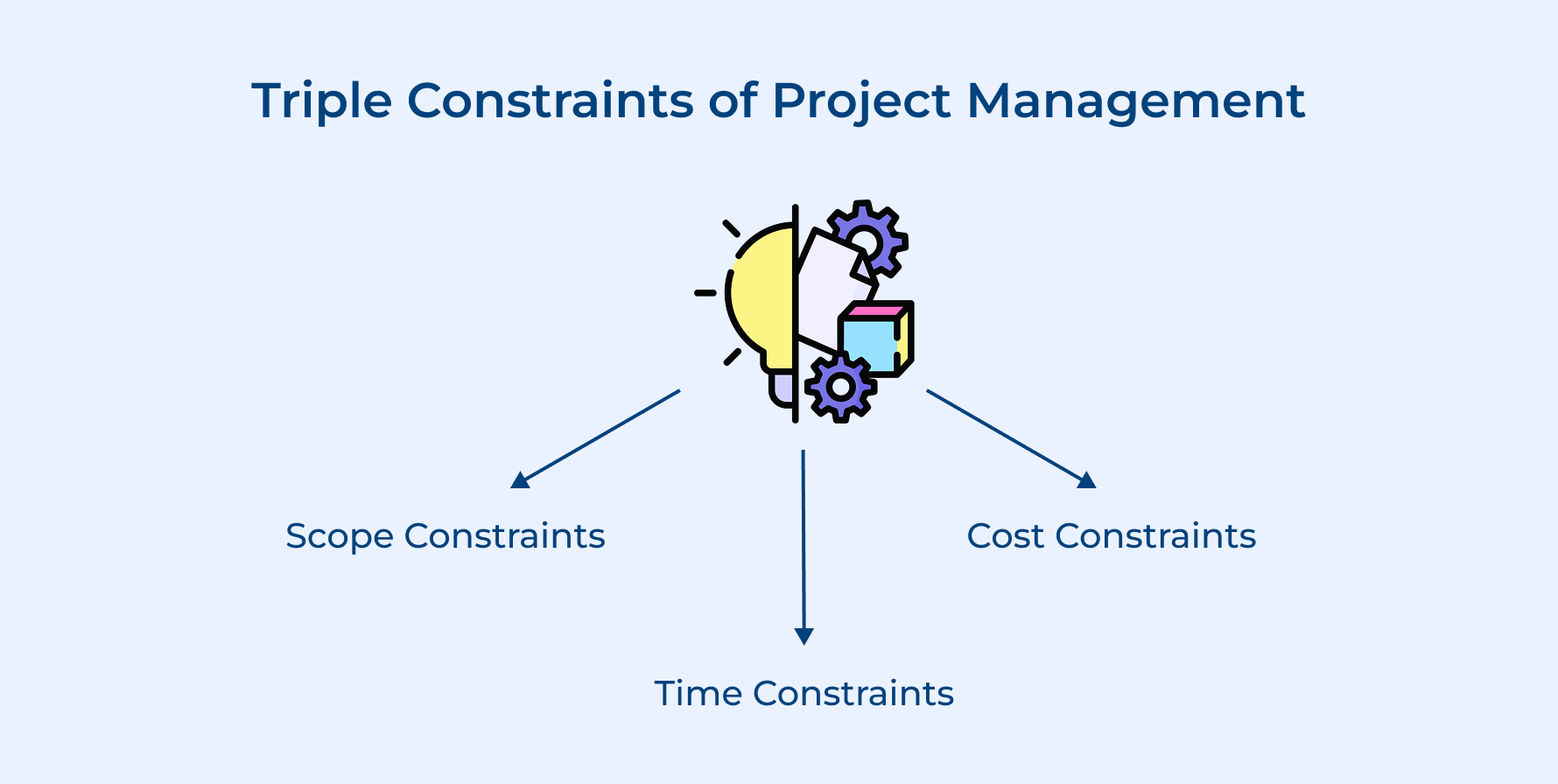
Scope Constraints
Scope constraints define exactly what your project will deliver and what it won’t. They set the boundaries around features, deliverables and the work required to complete them. Without clear scope constraints, projects drift endlessly as new requests keep piling up.
Here’s what scope constraints typically control in your project:
- Deliverables: The specific outputs and results your project must produce
- Features: The functionalities and characteristics included in the final product
- Requirements: The standards and specifications that must be met for completion
Managing scope means knowing when to say no to changes. A well-defined scope keeps your team aligned and prevents the project from expanding beyond its original intent. It’s your shield against endless revisions as well as unrealistic expectations.
Time Constraints
Time constraints establish when your project must be completed and key milestones achieved. They create urgency and help teams maintain momentum throughout the project lifecycle. Deadlines drive action and force teams to make progress instead of perfecting endlessly.
Time constraints impact several critical aspects of project execution:
- Deadlines: The fixed dates by which deliverables must be completed
- Milestones: Key checkpoints that mark significant progress in the project
- Dependencies: The sequence in which tasks must be completed
Every project has a ticking clock whether you acknowledge it or not. Missing deadlines can mean lost opportunities, increased costs, or competitive disadvantages. Time constraints keep everyone accountable and focused on delivering results promptly.
Cost Constraints
Cost constraints determine how much money you can spend on your project. They cover everything from salaries to software licenses to equipment purchases. Budget limitations force you to allocate resources wisely and find efficient solutions.
Here’s where your budget gets spent in most projects:
- Resources: Personnel costs, equipment purchases and material expenses
- Operations: Day-to-day running costs like software subscriptions and utilities
- Contingencies: Reserve funds set aside for unexpected issues and changes
Going over budget isn’t just a financial problem. It erodes stakeholder confidence and can kill projects before completion. Cost constraints push you to maximize value from every dollar spent.
7 Effective Ways to Identify and Manage Project Constraints
Let’s delve into effective strategies that can help you pinpoint and manage constraints, ensuring your projects are not just completed, but completed with excellence.
[av_image src=’https://kooperhq.com/wp-content/uploads/2026/03/How-to-Identify-and-Manage-Project-Constraints.png’ attachment=’10146′ attachment_size=’full’ src_dynamic=” copyright=” caption=” image_size=” styling=” box_shadow=’none’ box_shadow_width=’10’ box_shadow_color=” align=’center’ font_size=” overlay_opacity=’0.4′ overlay_color=’#000000′ overlay_text_color=’#ffffff’ link=” link_dynamic=” target=” animation=’no-animation’ animation_duration=” animation_custom_bg_color=” animation_z_index_curtain=’100′ parallax_parallax=” parallax_parallax_speed=” av-desktop-parallax_parallax=” av-desktop-parallax_parallax_speed=” av-medium-parallax_parallax=” av-medium-parallax_parallax_speed=” av-small-parallax_parallax=” av-small-parallax_parallax_speed=” av-mini-parallax_parallax=” av-mini-parallax_parallax_speed=” hover=” blur_image=” grayscale_image=” fade_image=” appearance=” css_position=” css_position_location=’,,,’ css_position_z_index=” av-desktop-css_position=” av-desktop-css_position_location=’,,,’ av-desktop-css_position_z_index=” av-medium-css_position=” av-medium-css_position_location=’,,,’ av-medium-css_position_z_index=” av-small-css_position=” av-small-css_position_location=’,,,’ av-small-css_position_z_index=” av-mini-css_position=” av-mini-css_position_location=’,,,’ av-mini-css_position_z_index=” transform_perspective=” transform_rotation=’,,,’ transform_scale=’,,’ transform_skew%3