Overallocation of Resources: Causes, Impacts and Solutions
- What is Overallocation of Resources in Project Management?
- Impacts of Resource Overallocation in Project Management
- What Are The Common Causes of Resource Overallocation?
- How to Avoid Overallocation of Resources? 8 Ways
- Tools to Manage Overallocation of Resources in a Project
- Transform Overload into Efficiency with Resource Overallocation Strategies
- FAQs about Resource Overallocation

Key Highlights:
- Overallocation of resources occurs when workload exceeds actual capacity and available working hours.
- Overburdened teams struggle with missed deadlines, rushed work and growing client dissatisfaction.
- Poor planning, unrealistic deadlines and skill bottlenecks are major drivers of resource overallocation.
Your best developer just told you she’s working on five projects simultaneously and feels completely overwhelmed. You check the schedule and realize three different managers assigned her work without knowing about her other commitments. This is resource overallocation in action.
When team members have more work than hours available, something has to give. Quality drops and deadlines slip while your most valuable people start updating their resumes. The problem spreads like a virus across your entire project portfolio.
The good news is that overallocation is completely preventable once you understand what causes it. This guide shows you exactly how to spot overallocation early and implement strategies that keep your resources balanced as well as your projects on track.
What is Overallocation of Resources in Project Management?
Resource overallocation happens when you assign more work to a team member or asset than they can reasonably handle within their available time. The resource exists, but it can’t be in multiple places simultaneously or work beyond its capacity.
When resources get stretched too thin, client satisfaction takes a direct hit. Deadlines start slipping because your team is juggling too many tasks at once. Quality drops as people rush through work to keep multiple plates spinning. Your clients notice the difference between focused attention and divided effort.
Key objectives:
- Realistic capacity planning: Match workload assignments to actual available hours and skill levels.
- Improved delivery timelines: Keep projects on schedule by ensuring resources aren’t spread impossibly thin.
- Enhanced work quality: Allow team members enough time to do thorough work rather than cutting corners.
- Better team morale: Prevent burnout by distributing workload fairly across your available resources.
- Transparent communication: Identify potential conflicts early so you can reset expectations with clients before problems emerge.
Impacts of Resource Overallocation in Project Management
Resource overallocation creates a domino effect that touches every aspect of your project delivery. Let’s examine how this problem manifests in real-world scenarios and what it costs organizations.
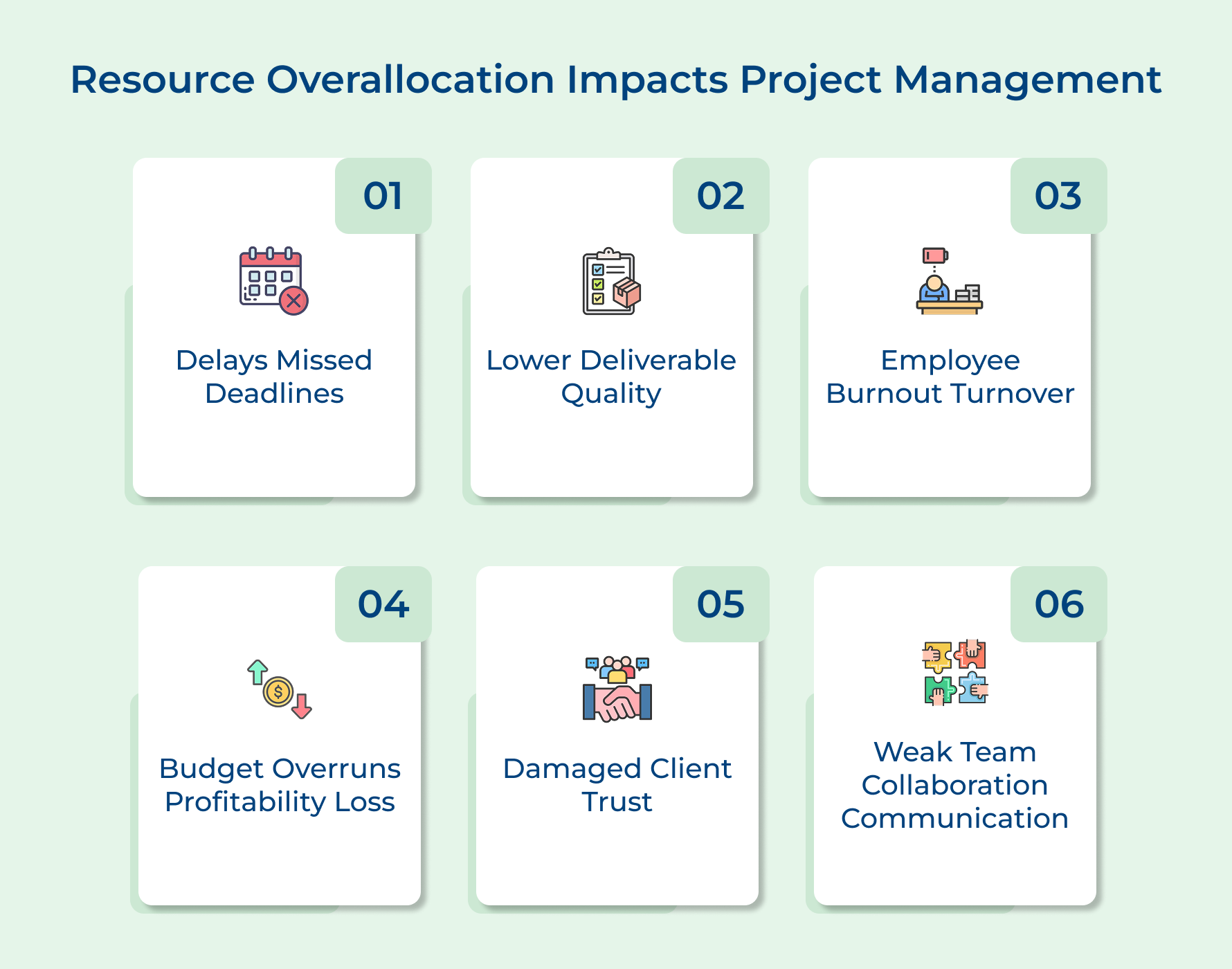
1. Project Delays and Missed Deadlines
Overallocated team members physically cannot complete everything assigned to them on time. Tasks take longer because people context-switch between competing priorities. Your project timeline becomes fiction rather than a reliable roadmap for delivery.
2. Declining Quality of Deliverables
Overwhelming workloads push Project Professionals to rush tasks, skip proper testing and miss details, resulting in work that only meets basic expectations.
3. Increased Employee Burnout and Turnover
Sustained overallocation pushes your best people toward exhaustion and eventual resignation. They start dreading Monday mornings instead of feeling energized about their work. Replacing experienced team members costs far more than preventing overallocation in the first place.
4. Budget Overruns and Reduced Profitability
Projects take longer than planned, which means you’re paying salaries for extra hours. You might need to bring in contractors at premium rates to compensate. The profit margin you projected during the sales phase evaporates as inefficiency compounds.
5. Damaged Client Relationships and Trust
Clients lose confidence when you consistently miss commitments or deliver subpar results. They stop believing your estimates and start micromanaging progress. Winning back trust takes exponentially more effort than maintaining it through proper resource allocation.
6. Poor Team Collaboration and Communication
Overloaded team members stop sharing knowledge because they’re too busy firefighting their own tasks. Silos form as people protect their time from additional requests. The collaborative culture that drives innovation gets replaced by defensive territorialism.
What Are The Common Causes of Resource Overallocation?
Understanding why overallocation happens is the first step toward preventing it. These common causes show up across industries and project types, often working in combination to create resource bottlenecks.
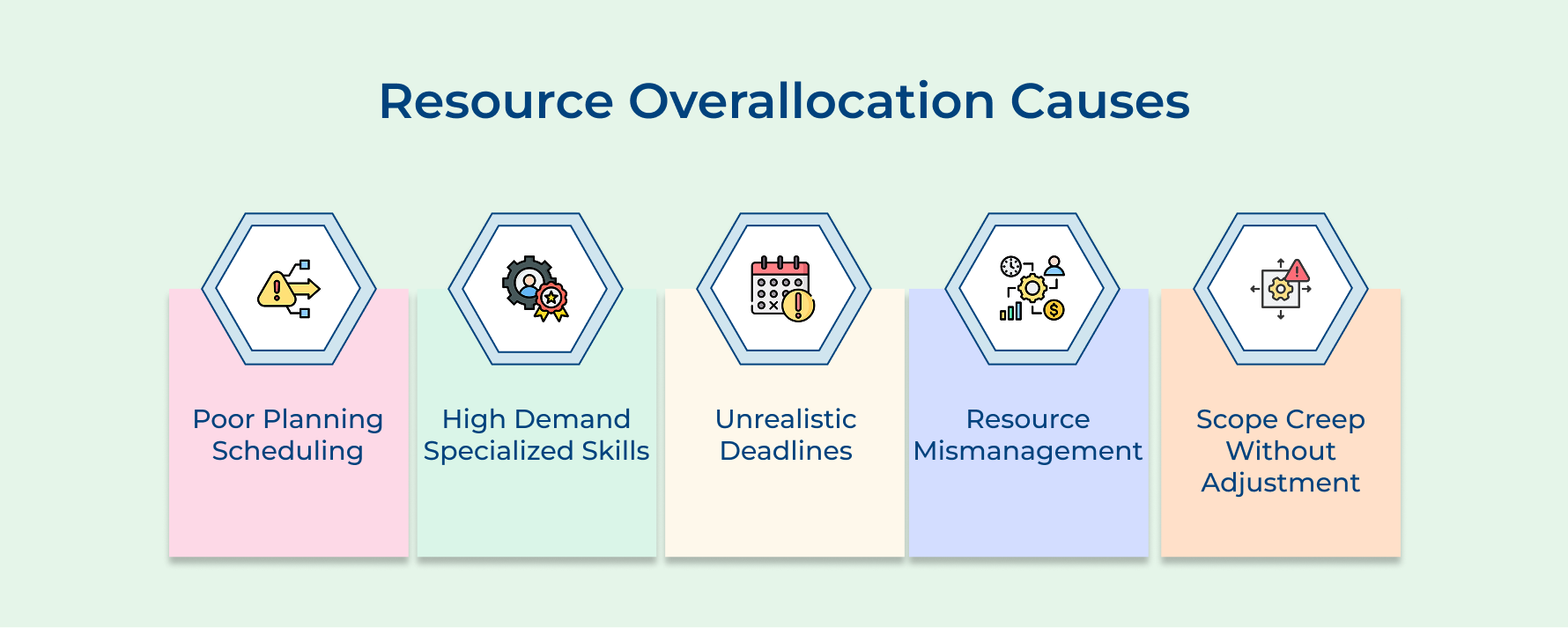
1. Poor Planning and Scheduling
Many project managers underestimate how long tasks actually take when they’re building initial schedules. They forget to account for meetings, emails and the natural friction that comes with switching between different types of work. This optimistic resource scheduling sets up a mismatch from day one.
The problem gets worse when managers schedule tasks back-to-back without buffer time for unexpected issues. Real work rarely flows as smoothly as a Gantt chart suggests. When one task runs over, it creates a cascade effect that overloads resources downstream.
2. High Demand for Specialized Skills
Your senior developer or experienced designer becomes a bottleneck because everyone needs their specific expertise. These specialists get pulled into multiple projects simultaneously because nobody else can do what they do.
The market shortage of certain skills makes this worse because hiring additional specialists takes months. You can’t just snap your fingers and find another data scientist or cloud architect. Meanwhile, your existing experts get stretched across more commitments than they can reasonably handle.
3. Unrealistic Deadlines
Sales teams sometimes promise delivery dates without consulting the people who’ll actually do the work. Clients push for aggressive timelines based on their business needs rather than technical realities. Project managers then try to make impossible schedules work by overloading resources.
External pressures like market launches or regulatory deadlines force teams to compress timelines beyond reasonable limits. Everyone knows the schedule is unrealistic, but the deadline is non-negotiable. The only variable left to manipulate is how much work you pile onto your team.
4. Mismanagement of Resources
Some organizations lack visibility into who’s working on what across different projects and departments. A team member might be assigned to three projects by three different managers who don’t communicate showcasing the inaccuracies of resource utilization. This happens especially in matrix organizations where resources report to multiple stakeholders.
Resource managers sometimes play favorites or make political decisions rather than optimizing for capacity and skills. They assign their preferred people to high-profile projects regardless of existing workload. The result is uneven distribution where some team members drown while others have reasonable schedules.
5. Scope Creep Without Resource Adjustment
Projects evolve as clients refine their requirements or discover new needs during development. Teams add features and deliverables to the project scope without revisiting the resource plan. The assumption is that existing team members will simply absorb the additional work.
Nobody wants to go back to clients or executives asking for more time or budget. Project managers hope their teams can stretch a bit further to accommodate changes. These small additions accumulate over time until resources are carrying significantly more than they were originally allocated for.
How to Avoid Overallocation of Resources? 8 Ways
Let’s explore eight practical strategies to prevent resource overallocation and keep your projects on track.
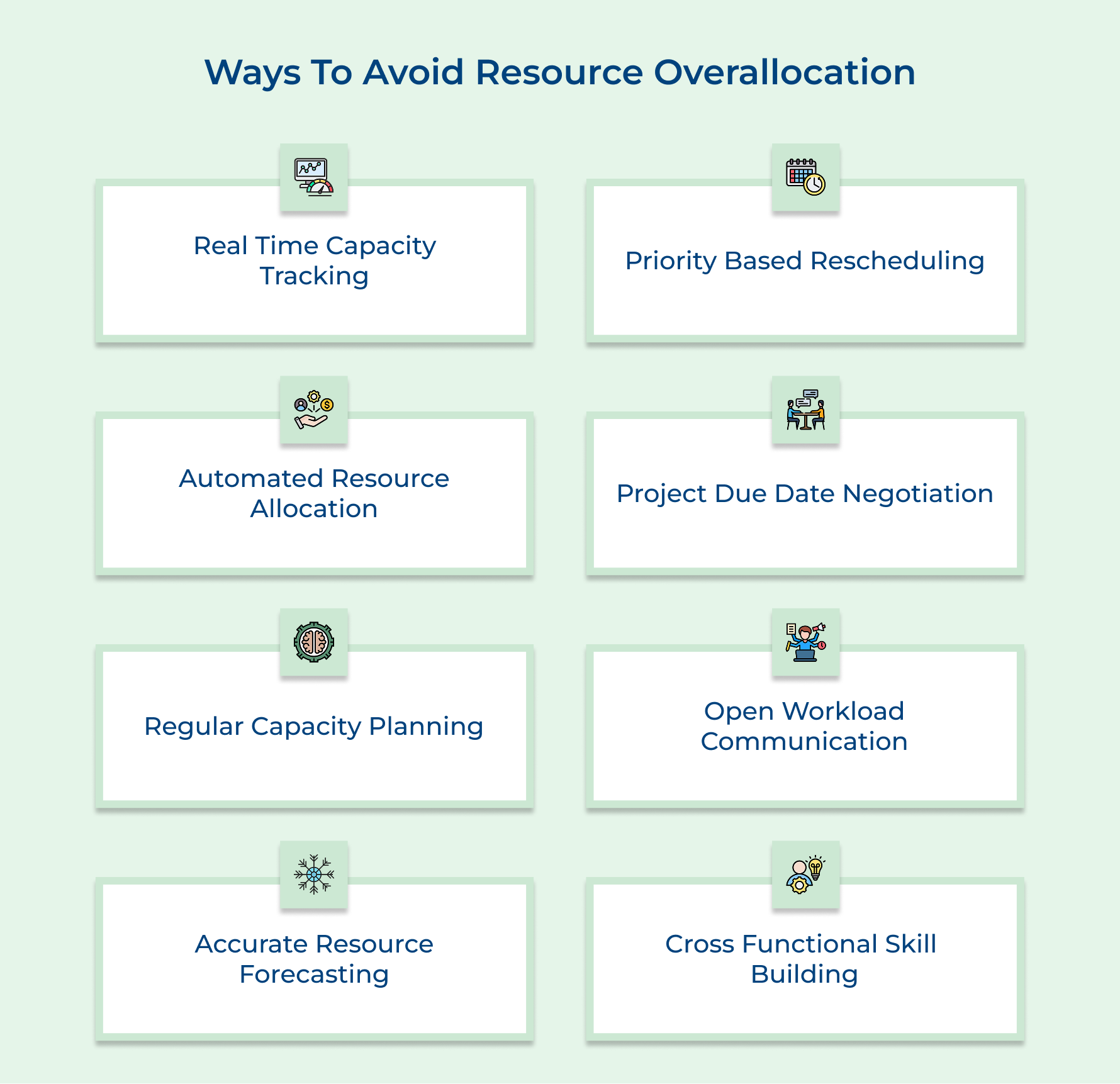
1. Implement Real-Time Resource Capacity Tracking
Real-time capacity tracking gives you an accurate picture of who’s doing what at any given moment. Without this visibility, you’re essentially flying blind and making allocation decisions based on outdated information or guesswork.
Here are three effective ways to implement real-time resource capacity tracking in your projects:
- Monitor current workload across all team members: Set up dashboards that display each person’s active tasks and hours committed.
- Track availability against scheduled commitments daily: Compare planned hours versus actual available hours accounting for holidays and time off.
- Identify allocation conflicts before they escalate: Run automated checks that alert you when someone gets assigned beyond their capacity.
Let me show you how this works in practice. A marketing agency notices their lead designer is assigned 50 hours of work next week but only has 40 hours available. The system alerts the project manager who redistributes tasks before the designer becomes overwhelmed.
2. Reschedule Work Based on Priority
Rescheduling based on priority acknowledges a simple truth: not everything can happen simultaneously when resources are limited. This strategy prevents overallocation by deliberately choosing what gets done now versus what can wait until capacity opens up.
The key is evaluating which deliverables genuinely need immediate attention versus which ones carry flexible timelines. You assess business impact and move less critical work to time slots where your team actually has bandwidth available.
Pro tips:
- Create a priority matrix that weighs both urgency and business value before making rescheduling decisions.
- Document why you rescheduled specific tasks so stakeholders understand the rationale behind timeline adjustments.
3. Automate Resource Planning and Allocation
Automation removes human error from capacity calculations and provides instant visibility into resource availability across your entire portfolio. Manual spreadsheets can’t keep pace with the complexity of modern project environments where assignments change daily.
Here’s how automation prevents overallocation in practical scenarios:
- Automatic capacity calculations: Software tracks each person’s total allocated hours and compares them against available time automatically.
- Real-time visibility across projects: Everyone sees the same updated information about who’s available and when across different teams.
- Reduced manual scheduling errors: The system prevents you from accidentally booking someone during their vacation or double-booking them.
What if we don’t have the budget for expensive resource management software right now? Start with simpler tools like shared calendars or free project management platforms that offer basic capacity tracking. The principle matters more than the sophistication of your tools initially.
4. Negotiate Due Dates for Projects
Negotiating due dates means having honest conversations about what’s achievable given your actual resource availability. When you skip this step and accept unrealistic deadlines, you guarantee overallocation because the only way to meet impossible timelines is overloading your team.
Before entering any negotiation, assess your current capacity and understand exactly how much bandwidth exists for new work. Know your team’s existing commitments so you can propose dates grounded in reality rather than hopeful guessing.
Before understanding implementation, consider these questions that guide effective deadline negotiations:
- What resources do we have available during the proposed timeline?
- Which existing commitments might conflict with this new project?
- Can we deliver value through phased releases instead of one big deadline?
- What’s the actual business driver behind the requested due date?
These questions reveal if a deadline is truly fixed or just someone’s initial wish. You often discover the client needs certain features by a specific date but other elements can follow later.
Now let’s understand how negotiation works in practice. You present your capacity constraints transparently and propose alternative timelines or phased delivery options. This prevents overallocation by ensuring commitments match available resources rather than forcing resources to stretch impossibly.
5. Run Regular Capacity Planning Sessions
Regular capacity planning sessions might seem like just another meeting, but they’re essential for catching resource conflicts before they happen. These structured check-ins create a rhythm where you proactively review workload instead of constantly reacting to crises that could have been prevented.
Here’s what effective agencies typically cover during their capacity planning sessions:
- Upcoming project pipeline review: Teams examine which projects are starting in the next 30 to 60 days and what resource commitments they’ll require.
- Current utilization analysis: Managers assess whether team members are currently over or under their target capacity levels across active projects.
- Skill gap identification: The group identifies where specialized expertise might become a bottleneck and discusses options for addressing it.
How do client-based agencies actually make time for these sessions when everyone’s already busy? Start with a weekly 30-minute standup focused purely on the next two weeks of capacity. The discipline of regular review matters more than the duration or formality of your sessions.
6. Encourage Open Communication About Workload
Open communication about workload creates an environment where people feel safe raising concerns before they hit breaking point. Without this psychological safety, team members suffer in silence while you remain oblivious to overallocation happening right under your nose.
Establish Safe Channels for Workload Concerns
Create multiple ways for people to communicate capacity issues including one-on-one meetings and anonymous feedback tools. Some team members need private conversations to share honestly about feeling overwhelmed.
Validate Concerns Without Dismissing Legitimate Issues
When someone says they’re overloaded, resist the urge to suggest they work faster. Listen to understand their specific situation and acknowledge that their perception of overwork deserves attention.
Respond Quickly When Capacity Problems Surface
Take action within 24 to 48 hours of learning about overallocation rather than adding it to a someday list. Quick response shows speaking up leads to actual relief instead of just being heard and ignored.
7. Forecast Resources Needed Accurately Upfront
Accurate resource forecasting means estimating project needs realistically before you commit to timelines or say yes to new work. This prevents overallocation by ensuring you understand the true resource cost upfront rather than discovering halfway through that you’re short-staffed.
The practice works by breaking projects into granular tasks and estimating each one honestly including all the hidden work that often gets forgotten. You’re accounting for actual effort required rather than the idealized version where everything goes smoothly.
Best practices:
- Always add a contingency buffer of 15 to 20 percent to account for unknowns and complexity.
- Involve the people who’ll actually do the work in creating estimates rather than having managers guess.
8. Build Cross-Functional Skills Within Teams
Building cross-functional skills means developing versatility within your team so multiple people can handle different types of work. It gives you flexibility to shift work around instead of being stuck when your one specialist becomes overloaded.
So how do you start training team members in adjacent specialties without overwhelming them? Begin by pairing junior members with experts on real project work where they learn by doing. The learning happens naturally through collaboration rather than requiring separate training time.
Here’s why reducing single points of failure matters for allocation:
- Your project timelines become more predictable: When multiple people can perform critical tasks, one person’s vacation doesn’t automatically derail your schedule.
- Work distribution becomes more flexible: You can balance workload across several people instead of piling everything onto your star performer.
What happens if your critical specialist gets sick during a crucial project phase? Creating backup coverage means identifying your most essential skills and deliberately developing at least one backup person. You’re ensuring that losing any single person doesn’t completely halt important work.
Tools to Manage Overallocation of Resources in a Project
The right tools transform resource management from guesswork into data-driven decision making. Let’s explore five types of tools that help you spot and prevent overallocation before it damages your projects.
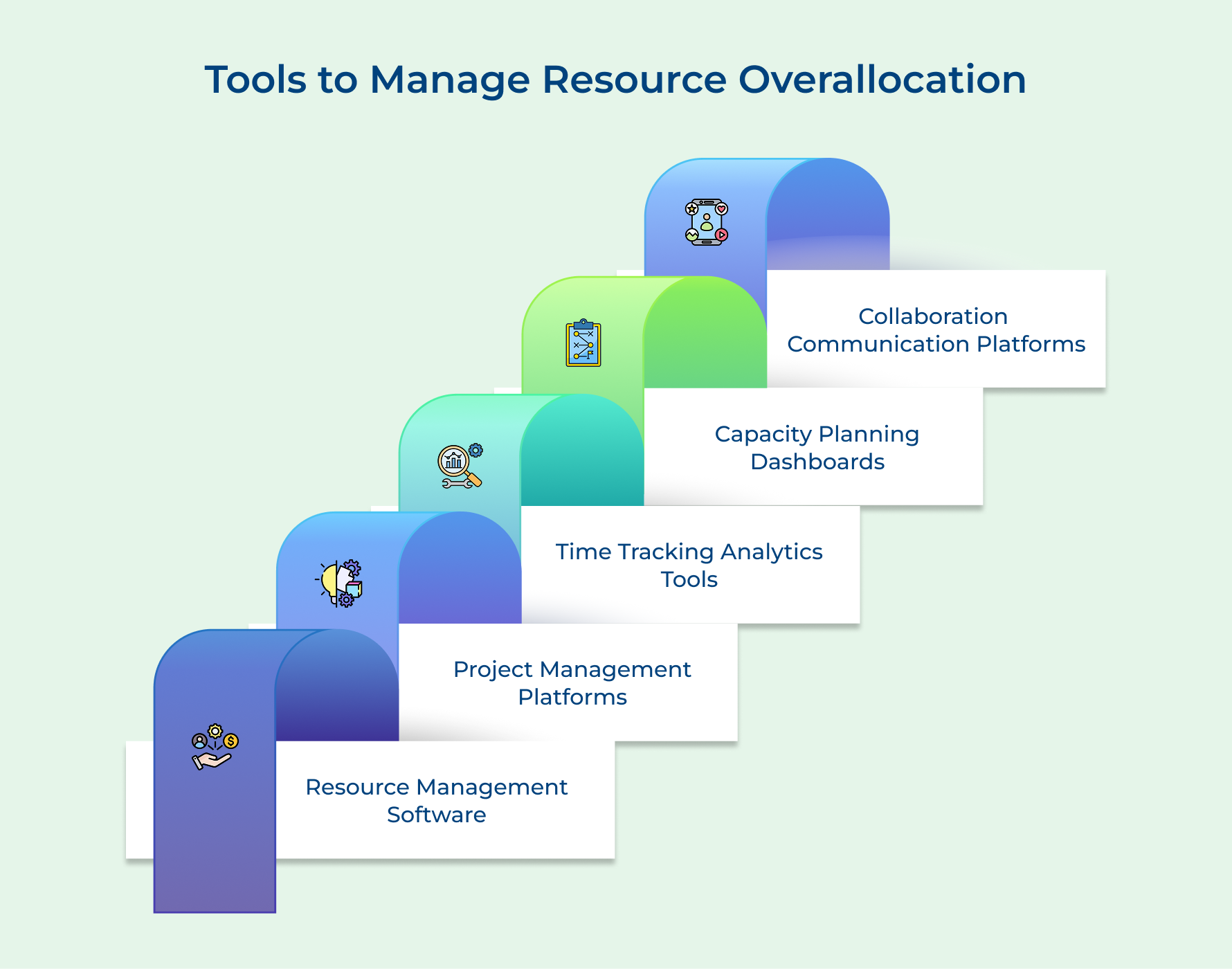
1. Resource Management Software
Dedicated resource management platforms give you a centralized view of every team member’s capacity and current assignments across all projects. These tools automatically calculate utilization rates as well as flag when someone’s allocated hours exceed their available time. You get visual dashboards showing who’s overloaded and who has spare capacity for additional work.
2. Project Management Platforms
Comprehensive project management systems track tasks and assignments while showing you the bigger picture of workload distribution. They connect individual task assignments to overall team capacity so you see conflicts as they’re being created. Many platforms include workload views that display each person’s scheduled hours compared to their availability in easy-to-read formats.
3. Time Tracking and Analytics Tools
Time tracking software shows you the gap between estimated work and actual effort required for different types of tasks. This historical data helps you forecast more accurately for future projects and spot when estimates consistently fall short. The analytics reveal patterns like certain team members always running over capacity or specific project types requiring more resources than initially planned.
4. Capacity Planning Dashboards
Specialized capacity planning tools focus specifically on matching resource supply with project demand over time. They let you model different scenarios by asking what-if questions about new projects or timeline changes. You can visualize how adding a new project would impact existing commitments before making any actual assignments.
5. Collaboration and Communication Platforms
Team collaboration tools create transparency around workload by making it easy for people to share when they’re approaching capacity limits. These platforms facilitate the quick conversations needed to redistribute work when someone flags they’re overloaded. Built-in status indicators and availability settings help managers see at a glance who might have bandwidth for urgent requests.
Transform Overload into Efficiency with Resource Overallocation Strategies
Resource overallocation doesn’t have to be an inevitable part of project management. The strategies we’ve covered give you practical ways to maintain healthy workloads while delivering excellent results for your clients. Real-time tracking and open communication transform chaos into predictable workflows.
Start with one or two strategies that address your biggest pain points right now. Maybe that’s implementing capacity planning sessions or having honest conversations about deadlines with clients. Small consistent changes in how you allocate resources create massive improvements in team morale and project outcomes over time.
Limit time — not creativity
Everything you need for customer support, marketing & sales.

Neeti Singh is a passionate content writer at Kooper, where he transforms complex concepts into clear, engaging and actionable content. With a keen eye for detail and a love for technology, Tushar Joshi crafts blog posts, guides and articles that help readers navigate the fast-evolving world of software solutions.