Common Resource Allocation Problems and Smart Solutions
- What are Resource Allocation Problems in Project Management?
- Why Solving Resource Allocation Problems Matters?
- Common Resource Allocation Problems in Project Management
- 7 Efficient Strategies to Overcome Resource Allocation Problems
- Top 4 Tools to Improve Resource Allocation Efficiency
- Overcome Resource Allocation with Strategic Implementation
- FAQs about Resource Allocation Problems

Key Highlights:
- Smart strategies turn resource allocation problems in project management into predictable processes.
- Overallocation and double-booking create cascading delays across multiple projects.
- Transparent communication and continuous monitoring prevent resource allocation problems from escalating.
Resource allocation problems silently destroy project timelines while teams scramble to meet impossible deadlines. Your talented specialists get double-booked across competing priorities while critical tasks wait for available expertise.
Every misallocated resource creates a domino effect where delayed deliverables frustrate clients and overworked team members consider jumping ship. These allocation disasters compound exponentially until entire project portfolios become unmanageable chaos.
Smart project managers use proven frameworks and modern tools to transform resource allocation from reactive firefighting into predictable systematic processes. This comprehensive guide reveals six common problems and their solutions.
What are Resource Allocation Problems in Project Management?
Resource allocation problems occur when project managers struggle to distribute limited resources effectively across competing project demands. These challenges arise from having finite budgets, personnel, equipment and time while facing multiple projects or tasks that all need attention. The core issue becomes balancing what you have against what you need to achieve optimal project outcomes.
Resource allocation problems manifest when demand exceeds supply within project constraints. Project managers must decide which activities get priority access to scarce resources like skilled team members or specialized equipment.
Main principles:
- Prioritize based on strategic value: Focus resources on activities that directly contribute to your most important project objectives first.
- Build flexibility into resource planning: Create buffer capacity and cross-train team members so you can adapt when unexpected demands arise.
- Use data-driven allocation decisions: Base resource assignments on actual performance metrics and realistic time estimates rather than guesswork.
- Communicate resource constraints transparently: Keep stakeholders informed about resource limitations so they understand why certain trade-offs become necessary.
- Monitor and adjust allocations continuously: Track resource utilization regularly and redistribute assets when you spot inefficiencies or changing priorities.
Why Solving Resource Allocation Problems Matters?
Getting resource allocation right becomes the foundation that separates thriving agencies from struggling ones. Smart resource management directly impacts profitability and client satisfaction.
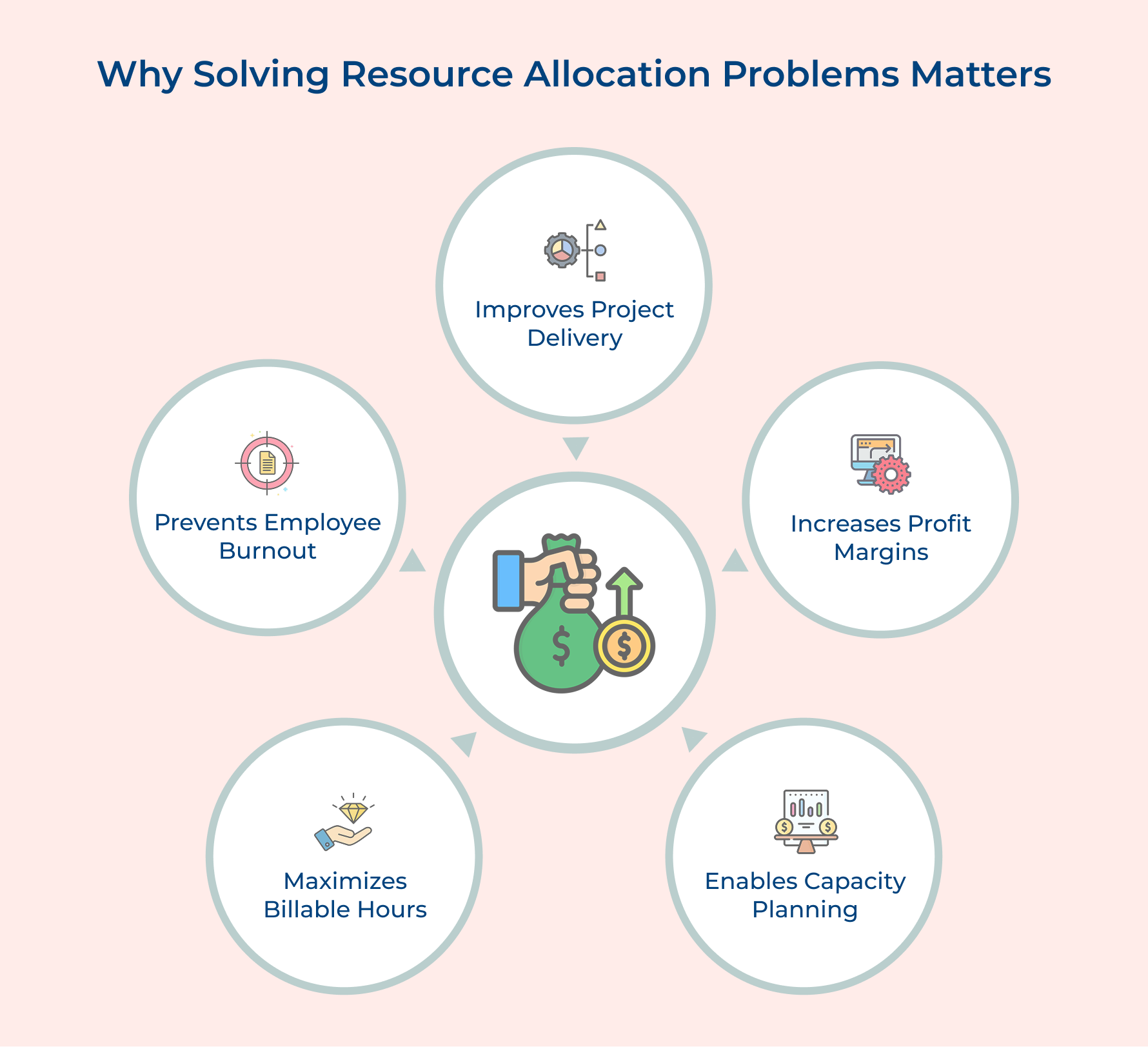
Maximizes Billable Hour Utilization
When resources are allocated wisely, your team spends more time on revenue-generating work instead of waiting around for the next project. This means more of their hours turn into billable client work, directly boosting your bottom line.
Prevents Employee Burnout and Turnover
Spreading work evenly across your team avoids overloading some people while leaving others underused. Balanced workloads keep employees engaged, motivated and far less likely to burn out or quit. Thus, saving you from costly rehiring.
Improves Client Project Delivery Times
A proper planning helps you assign the right experts to projects from day one. This reduces delays, clears bottlenecks and ensures faster delivery. Clients notice the efficiency and that builds trust.
Increases Profit Margins Per Project
Smart resource allocation keeps costs in check by reducing rework and avoiding expensive last-minute fixes. Projects finish on time, within budget and with the quality that lets you charge premium rates confidently.
Enables Better Capacity Planning for Growth
Tracking resource usage will help you know exactly when it’s time to hire or take on more clients. That foresight helps you grow without overcommitting or letting client relationships suffer.
Common Resource Allocation Problems in Project Management
Resource allocation challenges create ripple effects that impact timelines, budgets and team morale across entire organizations. We’ve curated a specific list and how to overcome these problems:
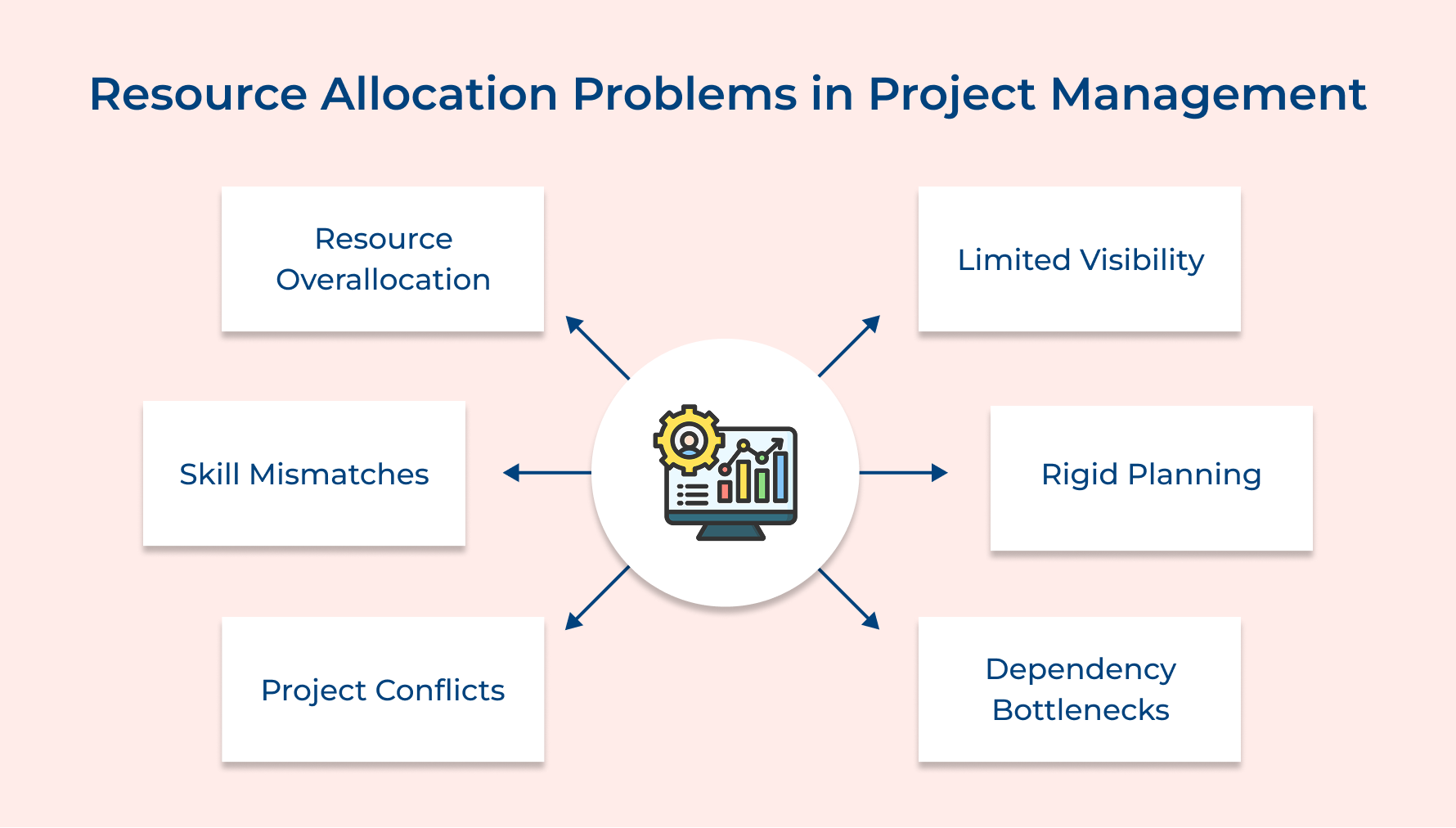
1. Resource Overallocation and Double-Booking
The most frequent problem occurs when project managers assign the same person to multiple tasks simultaneously without considering realistic capacity limits. This creates impossible expectations where team members cannot physically complete all assigned work within given timeframes.
Common overallocation scenarios that create chaos:
- Senior developers scheduled for three different client projects during the same week
- Key subject matter experts committed to back-to-back meetings while also handling urgent deliverables
- Project managers promising the same specialist to multiple clients without checking actual availability
Teams scramble to meet unrealistic deadlines while quality suffers from rushed work. Employees experience stress and frustration when they cannot deliver on commitments that were made without their input or realistic assessment.
2. Skill Mismatches and Inefficient Assignments
Projects often run into trouble when people are assigned tasks that don’t match their skills or experience. Instead of speeding things up, this creates delays because team members struggle with unfamiliar work, while true experts get stuck doing routine tasks.
Why skill mismatches happen in busy environments:
- Rushed role assignments: filling project gaps quickly without checking if the person has the right skills.
- “Anyone can do it” mindset: assuming minimal training is enough for complex tasks.
- Limited visibility: not knowing each team member’s real strengths or how much they already have on their plate.
Projects drag on longer, deliverables fall short of expectations and teams waste time fixing mistakes. On top of that, organizations lose money due to inefficiency while skilled specialists feel frustrated being underused.
3. Resource Conflicts Between Competing Projects
Multiple projects often compete for the same limited resources simultaneously, creating tension between project managers and delayed deliverables. Priority conflicts emerge when every project manager believes their work deserves first access to key team members.
Typical resource conflict situations that derail progress:
- Two high-priority clients demanding the same graphic designer during identical timeframes
- Emergency projects pulling resources away from planned long-term initiatives
- Department heads fighting over shared equipment or specialized software licenses
Projects experience delays as teams wait for resource availability while client relationships strain under missed deadlines. Organizations struggle to maintain service quality when internal competition creates scheduling chaos.
4. Inadequate Resource Visibility and Tracking
Many organizations don’t have clear systems to track who is working on which projects. They also lack visibility into when people will be available. This gap causes poor allocation decisions. Managers often rely on outdated or incomplete information about resource use.
Information gaps that create allocation disasters:
- Spreadsheet-based tracking that becomes outdated within hours of creation
- No central system showing real-time availability across departments
- Project managers making assumptions about team capacity without current data
Decisions get made with incomplete information while opportunities for optimization remain hidden. Teams waste time on coordination efforts that proper visibility tools could eliminate entirely.
5. Inflexible Resource Planning and Poor Adaptability
Rigid resource plans cannot accommodate the inevitable changes that occur during project execution. When original assumptions prove incorrect, inflexible systems create bottlenecks rather than enabling smooth adjustments to new realities.
Rigidity problems that compound project challenges:
- Resource plans locked in without consideration for changing project requirements
- No backup options when key team members become unavailable due to illness or other priorities
- Inability to quickly reallocate resources when project scope changes or deadlines shift
Projects become vulnerable to any disruption while missed opportunities for efficiency improvements pile up. Organizations struggle to respond quickly to client needs when resource plans cannot adapt to changing circumstances.
6. Resource Dependencies and Bottleneck Creation
Critical resources become bottlenecks when too many project activities depend on single individuals or shared assets. These dependencies create cascade delays where one person’s availability determines the pace of multiple project streams.
Entire project portfolios slow down to match the availability of constrained resources. Teams experience frustration when their productivity depends entirely on factors beyond their direct control.
7 Efficient Strategies to Overcome Resource Allocation Problems
Let’s explore seven strategies guaranteed to help you navigate through and conquer resource allocation challenges.
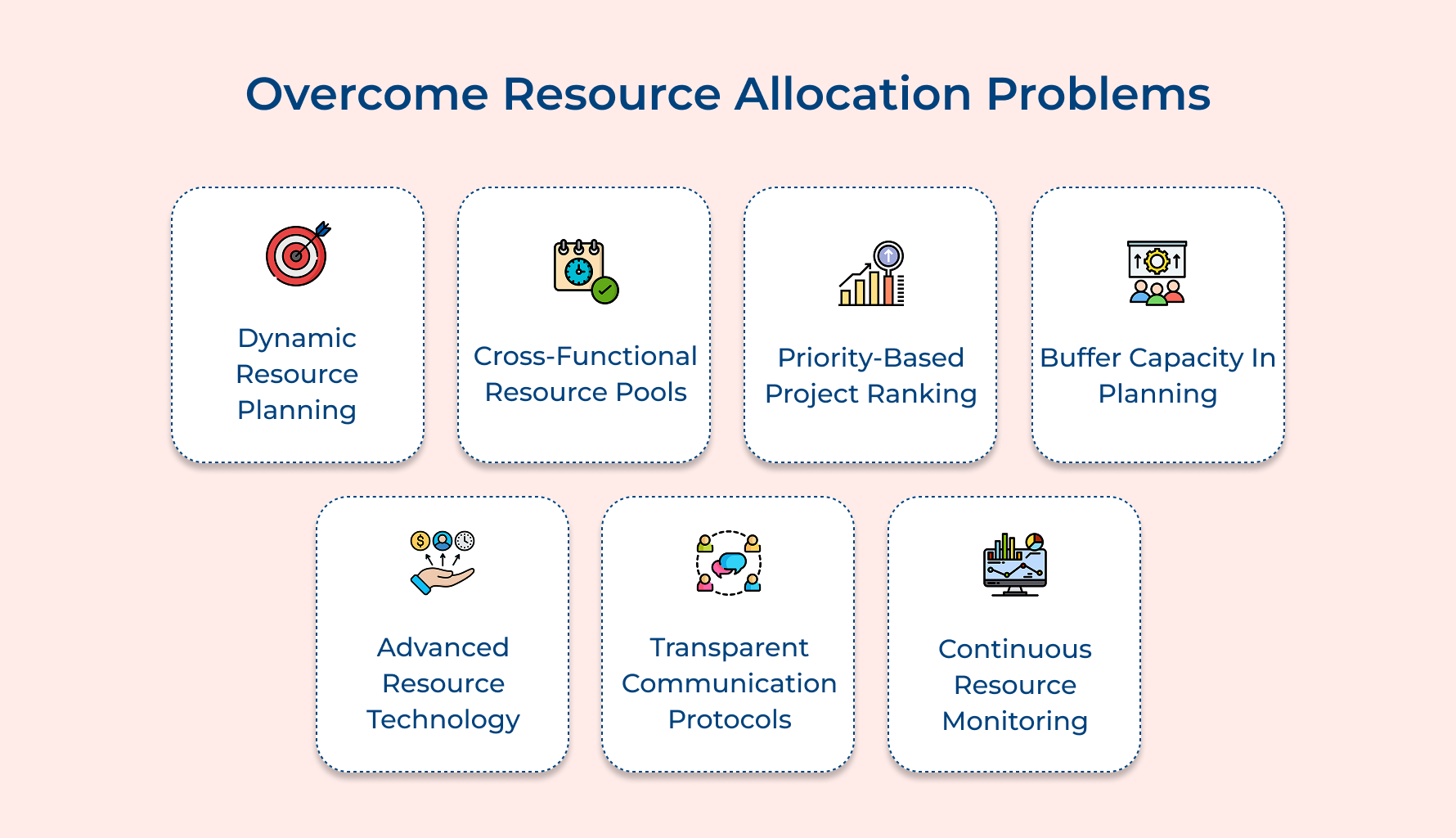
1. Implement Dynamic Resource Planning Systems
Traditional static planning doesn’t cut it anymore, projects move too fast. Dynamic resource planning gives you real-time visibility into team availability and automatically adjusts schedules as things shift.
Here’s how it helps:
- Instant availability checks: No more overpromising to clients.
- Automatic workload balancing: Tasks move around when someone’s overloaded.
- Proactive bottleneck alerts: Catch issues before they delay delivery.
- Optimized utilization: Identify underused talent and assign them to priority work.
- To implement: Map your current tracking process, spot the gaps and choose software that integrates smoothly with your project tools.
2. Create Cross-Functional Resource Pools
Rigid skill silos slow projects down. Cross-functional resource pools let people contribute across multiple areas, making your team more adaptable. More flexible teams and faster delivery even if key specialists aren’t available.
Key steps:
- Do a skills gap analysis: Focus training where bottlenecks exist.
- Align with career growth: Cross-train in areas that match personal goals.
- Encourage knowledge sharing: Use structured processes for skill transfer.
- Set clear validation standards: Define when someone is ready to take on new tasks.
3. Establish Priority-Based Project Ranking Framework
When multiple projects compete for the same people, subjective decisions create conflicts. A ranking framework helps allocate resources fairly and strategically.
How it works:
- Score projects against set criteria.
- Allocate resources to high-ranking projects first.
- Update scores regularly as priorities shift.
Best practice: Give weight to client lifetime value, long-term clients deserve higher priority over one-off work.
4. Build Buffer Capacity Into Planning
Allocating 100% of a resource’s time sounds efficient but is actually risky. Buffer capacity ensures unexpected demands don’t derail everything.
Steps to build it in:
- Analyze past projects: Look for disruption patterns.
- Calculate buffer percentages: Usually 15–25% works best.
- Protect bottlenecks: Add extra buffers around high-demand roles.
- Set backup roles: Train secondary people as substitutes.
- Define release rules: Decide when buffer time can be tapped.
Example: A marketing agency reserves 20% of a designer’s time. If they’re out for a week, campaigns still stay on track.
5. Deploy Advanced Resource Management Technology
Human managers can’t process all the variables in multi-project environments. AI-driven tools handle the complexity.
Look for features like:
- Real-time capacity modeling: Updates as projects progress.
- Predictive analytics: Forecasts future resource demands.
- Cross-project optimization: Balances resources across all active projects.
- Automated conflict resolution: Suggests best-fit solutions when clashes arise.
Choose tech that matches your organization’s complexity, avoid over-engineering simple needs.
6. Develop Transparent Communication Protocols
Clear communication is the glue that holds resource allocation together. When stakeholders feel left out of the loop, small conflicts can quickly turn into relationship issues. Transparent communication protocols help prevent this by setting clear channels and regular touchpoints for resource discussions.
Here’s how to make it work:
- Set structured review meetings to discuss allocation decisions before issues arise.
- Proactively update stakeholders about constraints so surprises don’t derail deliverables.
- Share the “why” behind decisions, this transforms tough conversations into collaborative problem-solving.
Pro tips:
- Talk about potential resource limitations upfront during project kickoff meetings.
- Keep written records of allocation decisions so everyone understands the strategic reasoning.
7. Institute Continuous Resource Performance Monitoring
You can’t improve resource allocation if you don’t track it. Continuous monitoring helps you see how effectively your team is being used and where adjustments are needed. Instead of waiting for problems to snowball, you catch them early and fix them fast.
Ask yourself these key questions before setting up monitoring:
- Which metrics will actually help us make better allocation decisions?
- How often should we review data to stay proactive without drowning in numbers?
- Who needs access to performance data and at what level of detail?
- What baseline standards will help us separate normal fluctuations from real problems?
For best results:
- Run weekly utilization reviews to spot short-term issues.
- Do monthly allocation assessments that mix numbers with team feedback.
Top 4 Tools to Improve Resource Allocation Efficiency
These software solutions transform chaotic resource juggling into streamlined allocation processes that prevent conflicts and optimize team productivity.
Kooper
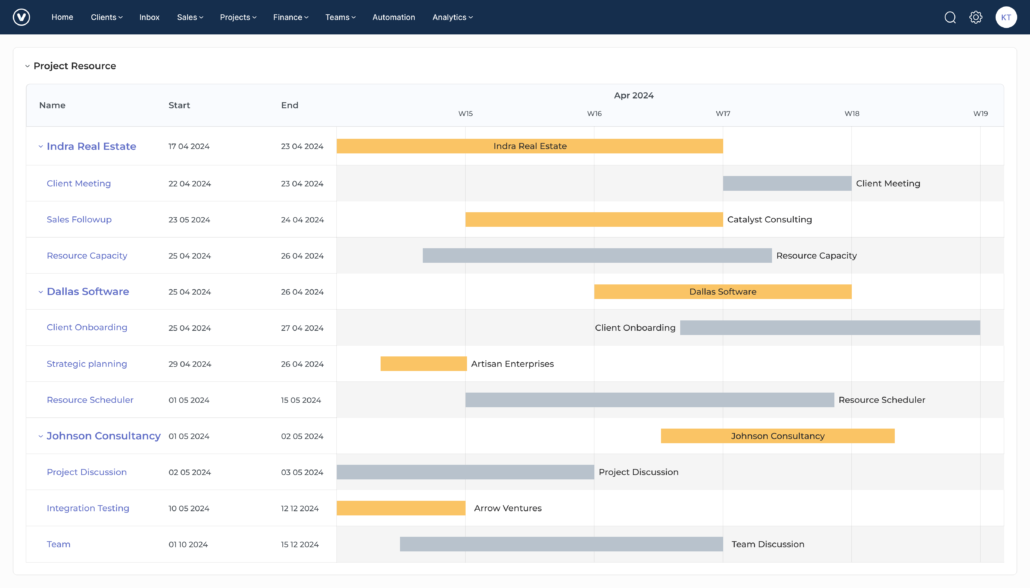
Kooper operates as an all-in-one resource allocation platform that includes project management with resource allocation tools alongside accounting and CRM functionalities that helps achieve your project goals. This unified approach eliminates the data silos that typically complicate resource planning by connecting project demands directly with financial constraints and team availability.
Key features:
- Real-time resource utilization tracking: allows managers to monitor team capacity across all active projects while identifying underutilized talent that could be reassigned to high-priority initiatives.
- Integrated financial planning: connects resource costs directly to project budgets so allocation decisions automatically consider profitability impacts and prevent cost overruns before they occur.
- Advanced project timeline visualization: displays resource dependencies and potential conflicts through interactive Gantt charts that make complex allocation scenarios easy to understand and adjust.
- Automated workload balancing: distributes tasks intelligently based on team member skills and current capacity while sending alerts when allocation changes might create bottlenecks or overload situations.
- Cross-project resource analytics: provide insights into allocation patterns and efficiency metrics that help managers optimize future resource planning based on historical performance data as well as utilization trends.
Smartsheet
Smartsheet combines spreadsheet familiarity with advanced resource management capabilities including automated workload balancing and real-time collaboration features. This platform particularly shines in environments where teams need flexible resource tracking without the steep learning curve of traditional project management software.
Resource Guru
Resource Guru specializes exclusively in resource scheduling and capacity management with intuitive drag-&-drop interfaces that make allocation adjustments effortless for busy project managers. The tool provides excellent visibility into team availability while offering powerful reporting features that help identify utilization patterns and bottlenecks.
Monday.com
Monday.com delivers visual resource management through customizable dashboards and automated workflow triggers that streamline allocation processes across departments as well as project types. The platform’s strength lies in its ability to integrate resource planning with broader project communication and task management in one unified workspace.
Overcome Resource Allocation with Strategic Implementation
Mastering resource allocation requires combining systematic planning approaches with modern technology solutions that provide real-time visibility into team capacity and project demands. These advanced strategies transform chaotic resource juggling into predictable processes that consistently deliver successful project outcomes.
The journey from resource allocation problems to optimized team performance depends on implementing comprehensive frameworks that address both immediate allocation needs and long-term organizational capacity building. Success emerges when project managers embrace data-driven decision making supported by robust communication protocols.
Limit time — not creativity
Everything you need for customer support, marketing & sales.

Shivank Kasera is part of the marketing team at Kooper, where he focuses on building content that helps agencies and service providers grow. With a keen interest in SaaS, operations, and scalability, he translates practical insights into actionable resources for business leaders.