What is the Real Difference Between PPM and PSA Software?
- What is a Project Portfolio Management (PPM) Software?
- What is a Professional Services Automation (PSA) Software?
- Benefits of Using PPM vs PSA Software for Service Firms
- What Are the Differences Between PSA Vs PPM Software?
- Key Features of PPM Software
- Key Features of PSA Software
- Choosing the Right Software Between PPM and PSA for your Organization
- FAQs about PPM Vs PSA Software
Key Highlights:
- The difference is on a strategic level, where PPM governs portfolio-level investment while PSA manages client delivery and resource utilization at operational level.
- Organizations with the right project management infrastructure save more budget, making the PPM and PSA software the highest-impact technology.
- The comparison of PPM vs PSA software concludes that growing service firms need both tools running in parallel with a clean data handoff process.
Ever wonder why most firms fail during project execution? They fail because of picking the wrong tool to manage it. Organizations that invest in the right project management infrastructure save 28 times more budget.
PPM software helps organizations prioritize and govern multiple projects as a strategic portfolio, while PSA software manages client delivery, billing, as well as resource utilization at the operational level.
Understand exactly how these two platforms differ to choose the one that fits your firm’s current needs. Explore the core functionality, key use cases and direct comparison between PPM vs PSA software.
What is a Project Portfolio Management (PPM) Software?
Project portfolio management software is a centralized tool for planning, prioritizing, and overseeing multiple projects simultaneously. It gives decision-makers a clear view of all resources, budgets and timelines across every active initiative.
Why is PPM Software Important for Firms?
For example, when your teams are managing dozens of projects at once, knowing what a PPM software is and how it works can change your firm’s decision-making process. It aligns every project with broader business goals and objectives.
Firms that use a combination of PPM and PSA software stop flying blind on capacity as well as cost. The presence of visibility means fewer failed projects and smarter allocation of your best people or even budgets.
Key Factors:
- Portfolio visibility: The centralized dashboard displays the real-time status of all active projects.
- Resource utilization: Tracks team capacity to prevent over-allocation across projects.
- Budget & cost management: Analyze cost spend against forecasts at both project and portfolio levels.
- Risk management: Identifies and flags potential risks before they affect project delivery.
What is a Professional Services Automation (PSA) Software?
Professional services automation software is an end-to-end platform for service-based firms to manage projects, billing, time tracking and client delivery in a unified place. It becomes an ideal solution for a consulting firm or a managed services team because it directly impacts the process of team operations.
Why is PSA Software Important for Firms?
Most service firms lose revenue through unbilled hours, missed deadlines and poor resource scheduling. Combine PSA and PPM software to close those gaps. PSA specifically brings the operational discipline that keeps client projects profitable and accountable.
Key Factors of PSA Software
- Billable hour accuracy: Every hour worked is captured and tied directly to client billing.
- On-time project delivery: keeps engagements on track by scheduling risks before they become delays.
- Profit margin visibility: Shows real-time profitability per project to course-correct margin early.
- Team utilization control: make sure no resource is overused or sitting idle across active engagements.
Benefits of Using PPM vs PSA Software for Service Firms
The right choice between PPM and PSA software is not just a technology decision, but a business strategy call. Explore how each actually delivers when implemented correctly in a service firm.
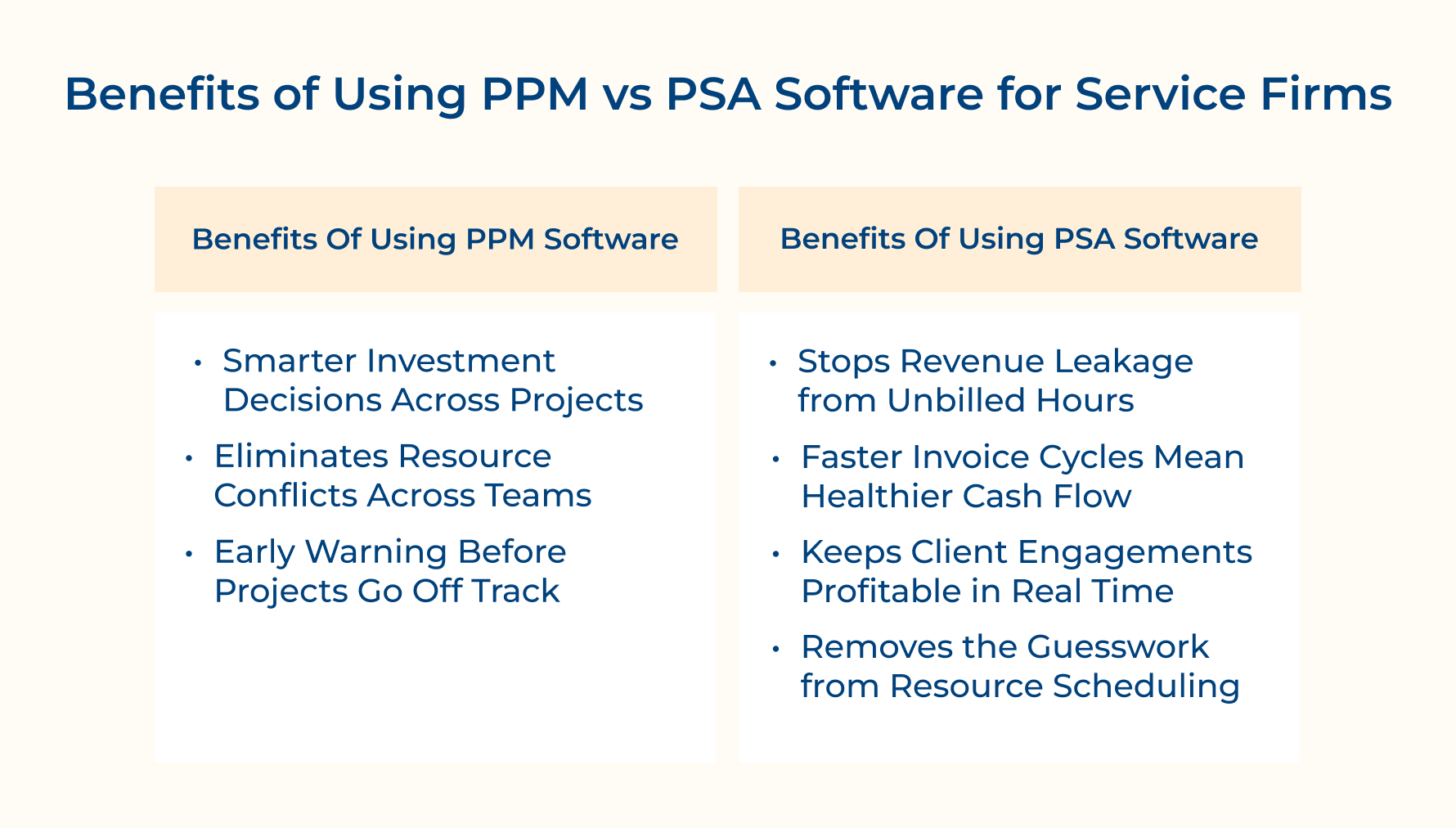
Benefits of Using PPM Software
1. Smarter Investment Decisions Across Projects
PPM software prevents firms from funding wrong projects by giving a portfolio-wide view of ROI potential. It is all about stopping guesswork and starting to allocate budgets for creating the most business impact.
2. Early Warning Before Projects Go Off Track
Instead of knowing your project is delayed after the damage is done, PPM identifies risk signals early. Project managers use it to intervene before a timeline slips or a budget overruns to make the project a success.
3. Eliminates Resource Conflicts Across Teams
The comparison between PPM and PSA software reveals that PPM uniquely solves cross-portfolio resource conflicts. This works best for situations when multiple projects compete for the same people or resources. It prevents double-booking with clear visibility.
Benefits of Using PSA Software
1. Stops Revenue Leakage from Unbilled Hours
Untracked time in service firms is unrecovered revenue and PSA software closes that gap automatically. Every billable minute gets captured and tied to the right client invoice without manual chasing.
2. Faster Invoice Cycles Mean Healthier Cash Flow
The difference between PSA vs PPM software becomes real when your invoices are delayed by weeks due to the manual billing process. PSA automates the entire cycle and gets invoicing faster that improves cash flow.
3. Keeps Client Engagements Profitable in Real Time
Most firms only discover a budget overrun in a project after delivery or closed. PSA helps in s tracking margin health per engagement while the project is still running to adjust scope or effort in time.
4. Removes the Guesswork from Resource Scheduling
The right resource assignment in a project is the hardest operational challenge in most service firms. A professional service automation software gives real utilization data for scheduling decisions based on facts and not assumptions.
What Are the Differences Between PSA Vs PPM Software?
Below are the highly specific differences between PPM and PSA software that will help you make the right call for your firm.
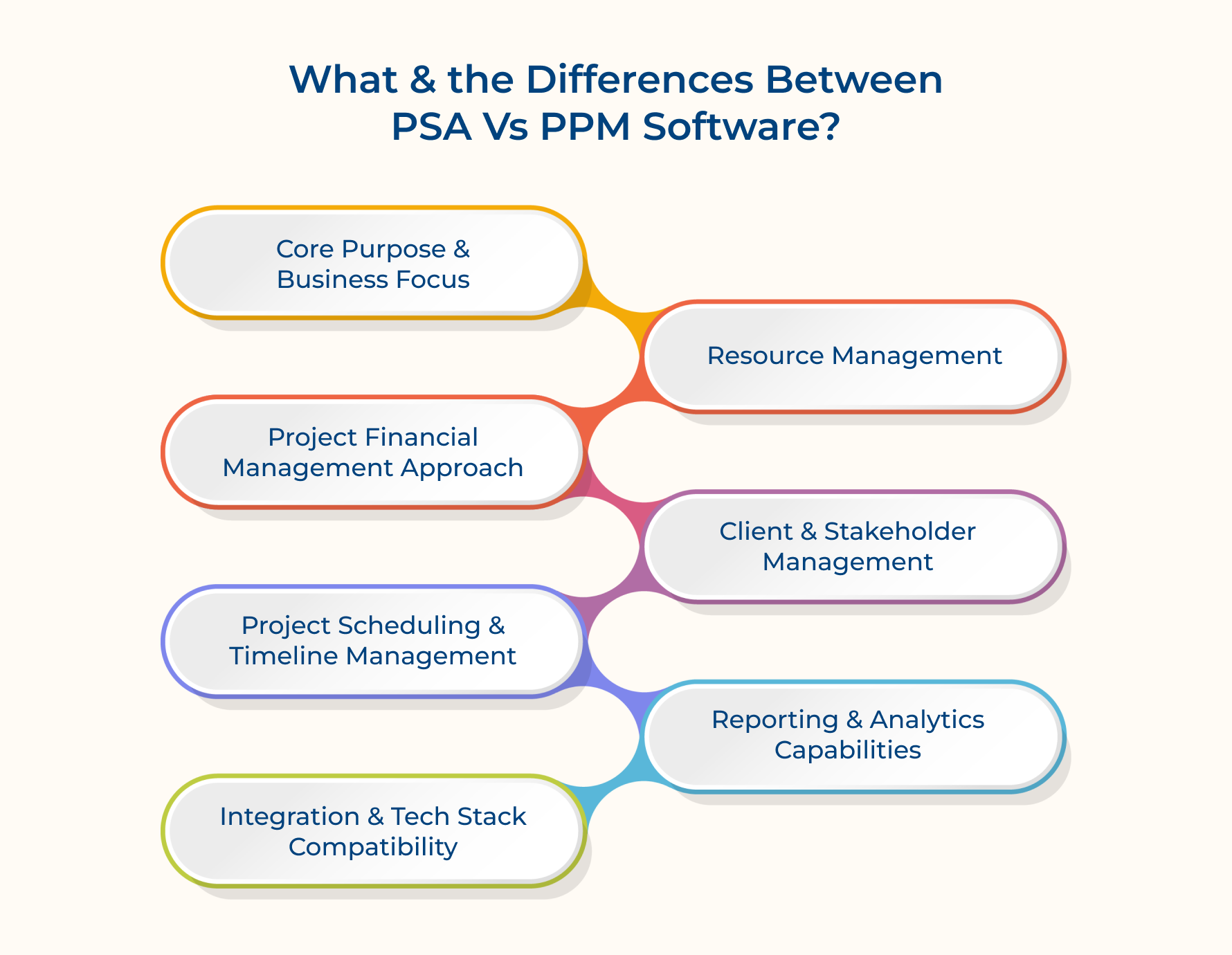
1. Core Purpose and Business Focus
PSA software is designed for client delivery to make sure service engagements are profitable. Every module, from time tracking to invoicing, serves customer relationships and protects margins.
What happens when a firm is struggling with revenue leakage and missed billing cycles? PSA is the direct fix. It focuses on solving day-to-day delivery problems that PPM simply cannot.
So what does a PSA cover on the operational front?
- Tracks billable hours, expenses and invoices combined for each client engagement.
- Identify scope creep early before it leads to project margins.
- Keeps delivery teams aligned on milestones without depending on scattered spreadsheets.
PPM software, in comparison to PSA, is built around portfolio-level decision-making and long-term alignment. It answers “which projects your firm should run? “ and “what value your current mix is delivering?”.
- Best for PSA: Service firms billing clients based on time and materials contracts.
- Best for PPM: Firms manage large internal project portfolios along with competing priorities.
2. Resource Management
PSA helps in managing resources at the project level. It tracks each resource assigned and the total hours logged. It also tracks whether utilization is healthy per engagement. The focus is on keeping individual projects on track without team burnout.
For example, a common scenario is a project manager realizing mid-engagement that a senior consultant is running at 140% utilization. PSA software helps in identifying this conflict before it becomes a delivery risk.
So, before you start your next resource planning cycle, ask these questions:
- Are your teams consistently over-utilized with no clear visibility?
- Is mid-project resource reassignment taking days of back-and-forth?
- Are utilization reports being built manually in spreadsheets every single week?
PPM handles resources at the portfolio level. It looks across every project to make sure the right people are allocated to the right initiatives based on strategic value. The comparison of PSA vs PPM software is clear:
- PSA optimizes individual project staffing
- PPM optimizes firm-wide resource distribution across the entire portfolio.
3. Project Financial Management Approach
PSA tracks project finance at the engagement level where every hour logged, expense submitted and invoice raised are directly linked to a specific client project. It is built around revenue recognition and margin protection per client.
So, where PSA financial tracking makes the operational difference:
- Fixed-price where margin erosion occurs silently without real-time cost tracking.
- Multi-resource engagements where expense approvals and billing need to be tightly linked.
- High-volume client portfolios where manual invoice creates costly revenue and delivery delays.
Financial tracking in PPM is less about individual project billing and more about the total investment with respect to the ROI. The difference between PPM and PSA software is that one protects revenue per engagement, while the other governs allocation across the entire business.
4. Client and Stakeholder Management
PSA is a client-facing software that stores engagement history, contract terms and communication records for every project. It is ideal for service firms to maintain transparency with clients on deliverables, timelines and billing without digging into email chains.
This is one area where PSA and PPM software differences become most visible in daily operations. A client asking for a project status update can be answered in minutes with PSA because all data lives in one unified place.
Consider these questions for your current client management setup:
- Do account managers spend more time finding information than with actual clients?
- How long does it take to pull a full engagement trail when a client disputes an invoice?
PPM software, on the other hand, does not manage external client relationships. Instead, it controls internal stakeholders such as portfolio managers and finance teams.
5. Project Scheduling and Timeline Management
PSA software manages scheduling from the client’s commitment point of view, where every milestone, deadline and deliverable is mapped against promises. For example, when a timeline shifts, it immediately displays the impact on billing and client expectations.
So, what a good scheduling process look like in PSA:
- Every milestone is synced to a billable event to get clear visibility into financial changes.
- Resource schedules update automatically when project timelines get extended.
- Client-facing delivery is backed by real capacity data and instead of optimistic estimates.
The comparison between PPM vs PSA software in terms of scheduling reveals a key truth where PSA keeps individual engagements on track, while PPM makes sure the entire project calendar makes strategic sense.
- Best for PSA: Teams managing client deadlines with billing tied directly to milestone delivery.
- Best for PPM: Leadership teams sequence large initiatives to prevent capacity clashes across portfolios.
6. Reporting and Analytics Capabilities
Reporting and analytics in PSA show how profitable each engagement is, where hours are invested along with how accurately clients are billed. Consider these questions to test your current reporting setup:
- Can you track profitability per engagement without exporting data into a spreadsheet?
- Do you get automated alerts when a project’s margin drops a defined threshold?
- Does the current analytics setup help in making faster decisions?
PPM comparison to PSA is built around strategic business intelligence by giving managers a consolidated view of project health, resource allocation and performance across the entire portfolio.
Pro tip: The difference between PSA vs PPM software in reporting is the operational analytics and strategic analytics that serve completely different decision-makers in the organization.
7. Integration and Tech Stack Compatibility
PSA software includes integration with the tools that run a service business. The goal is to form a single workflow that includes the opportunity to invoice without any data falling through the cracks.
Think about how much time your team spends on transferring data between your project tool and accounting software. A well-integrated PSA eliminates that friction by making those systems sync with each other automatically.
So, where does a PSA integration deliver the immediate operational value:
- CRM integration makes sure deals flow directly into project setup without manual process.
- Accounting system sync means invoices raised in PSA are reflected in your financial records.
The comparison between PSA and PPM software in terms of integrations clarifies that PSA connects the foundational layer of business, while PPM connects the strategic area. Organizations that need both often run them in parallel with a proper handoff process.
Key Features of PPM Software
Below is the breakdown of what PPM features actually matter and when it is best to evaluate the platform for your firm.
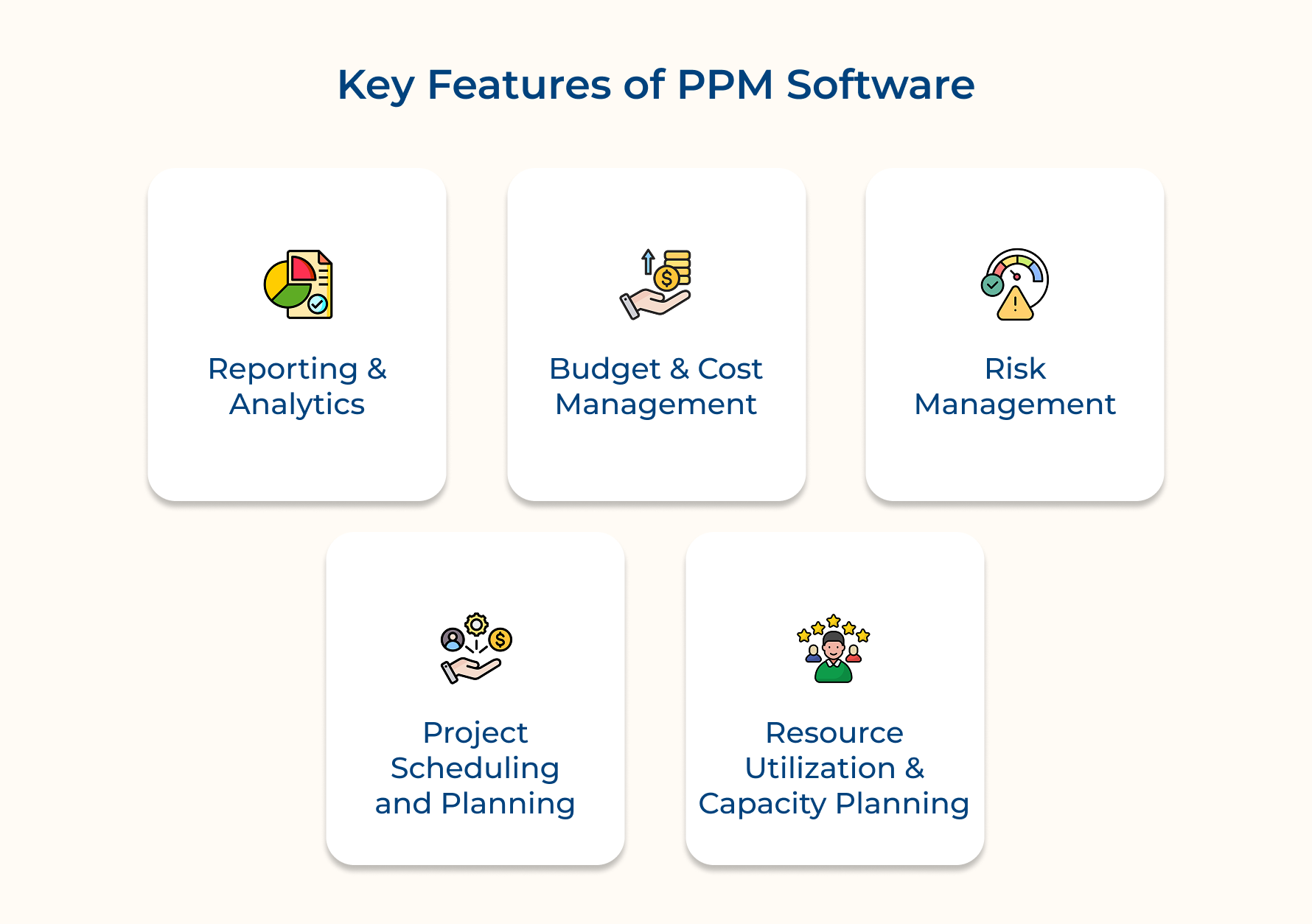
1. Project Scheduling and Planning
PPM software gives managers the ability to plan multiple projects on a single unified timeline. It makes sure that no two high-priority projects are demanding the same critical resources at the same time.
Ever tried to find out why three of your best projects are slipping at the same time? It is due to poor portfolio-level scheduling. PPM lets you model the entire project calendar before conflicts transform into crises.
2. Budget and Cost Management
Budget visibility goes beyond tracking spend and connects every dollar allocated to a project directly. Portfolio managers can track which projects are consuming budget efficiently while others are just liabilities.
3. Risk Management
PPM software helps in assessing the probability and impact of those risks across every active project. That cross-portfolio risk view cannot be replicated effectively by any spreadsheet or standalone project tool.
So what happens when one delayed vendor quietly holds up four other projects? PPM connects risk dependencies to get a view of the full impact upfront and make containment decisions before damage spreads across the portfolio.
4. Reporting and Analytics
The reporting and “analytics” are designed for portfolio-level decision-making. It translates complex data into clear visual dashboards that leadership can actually act on it
5. Resource Utilization and Capacity Planning
Resource utilization in PPM software works at a scale. It gives managers a wide view of all available resources, who is over-committed and where capacity gaps appear in the next 2 weeks.
Key Features of PSA Software
Below are core features of a PSA software that actually does work when it is working the way it should.
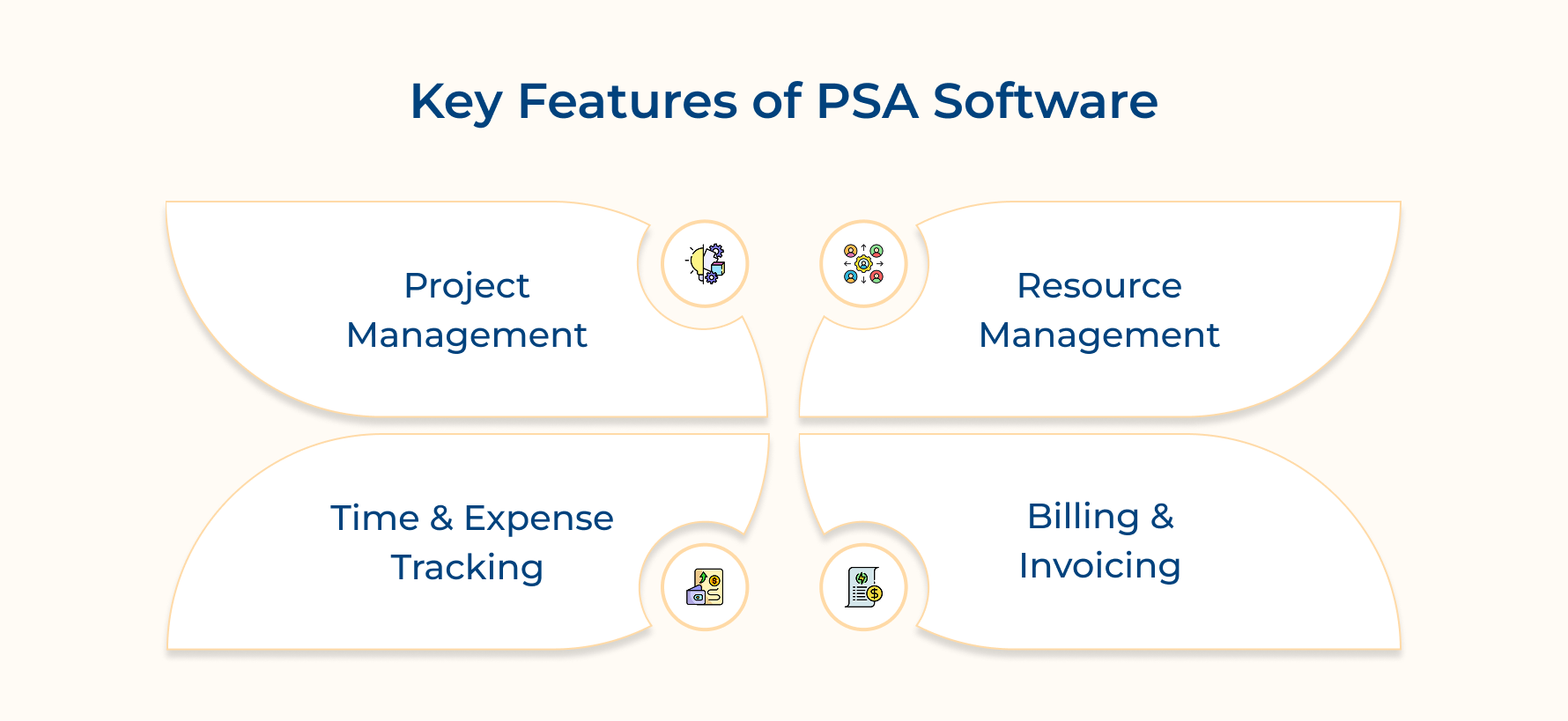
1. Project Management
PSA software manages projects right from when a deal is signed to final delivery and client sign-off. All tasks, milestones and deliverables are tracked in a unified place so nothing gets lost during the handoff process.
2. Resource Management
The resource management feature matches the right people to the right projects based on availability. It is all about keeping every billable resource productive without pushing anyone into burnout territory.
So, how often does your team discover resource conflict? PSA identifies those clashes a few weeks in advance to give time to rebalance workloads before the delivery timeline takes a hit.
3. Time and Expense Tracking
Time and expense tracking is the foundation of accurate billing followed by healthy project margins. Every hour logged and expense submitted flows directly into the financial record of client engagement without any human intervention.
4. Billing and Invoicing
Billing and invoicing in PSA handle the complexity that firms deal with every day. It makes fixed-fee projects, time and materials contracts, along with milestone-based payment schedules, run simultaneously. It also automates the entire invoicing cycle to make sure your finance team does not piece together timesheets at the end of every month.
Choosing the Right Software Between PPM and PSA for your Organization
The difference between PPM and PSA software comes down to one question: are you managing a portfolio or running a client-facing service operation? Both tools are powerful for your firm, but they solve different problems and use cases across all client projects.
- PPM software governs strategic priorities, resource allocation and portfolio-level investment.
- PSA software protects service delivery margins and billing accuracy for better client engagement efficiency.
- Many growing firms need both tools to run in parallel with a clean data handoff.
Ready to see what best fits your business? Explore a live demo of both our platforms to take the next step. The PPM vs PSA software decision is about identifying which problem your firm needs to solve first.
Limit time — not creativity
Everything you need for customer support, marketing & sales.

Neeti Singh is a passionate content writer at Kooper, where he transforms complex concepts into clear, engaging and actionable content. With a keen eye for detail and a love for technology, Tushar Joshi crafts blog posts, guides and articles that help readers navigate the fast-evolving world of software solutions.