Top Project Management KPIs & Metrics to Boost Agency Success
- What are Project Management KPIs?
- Key Benefits of Tracking Project Management KPIs
- 12 Most Important Project Management KPIs for Agencies
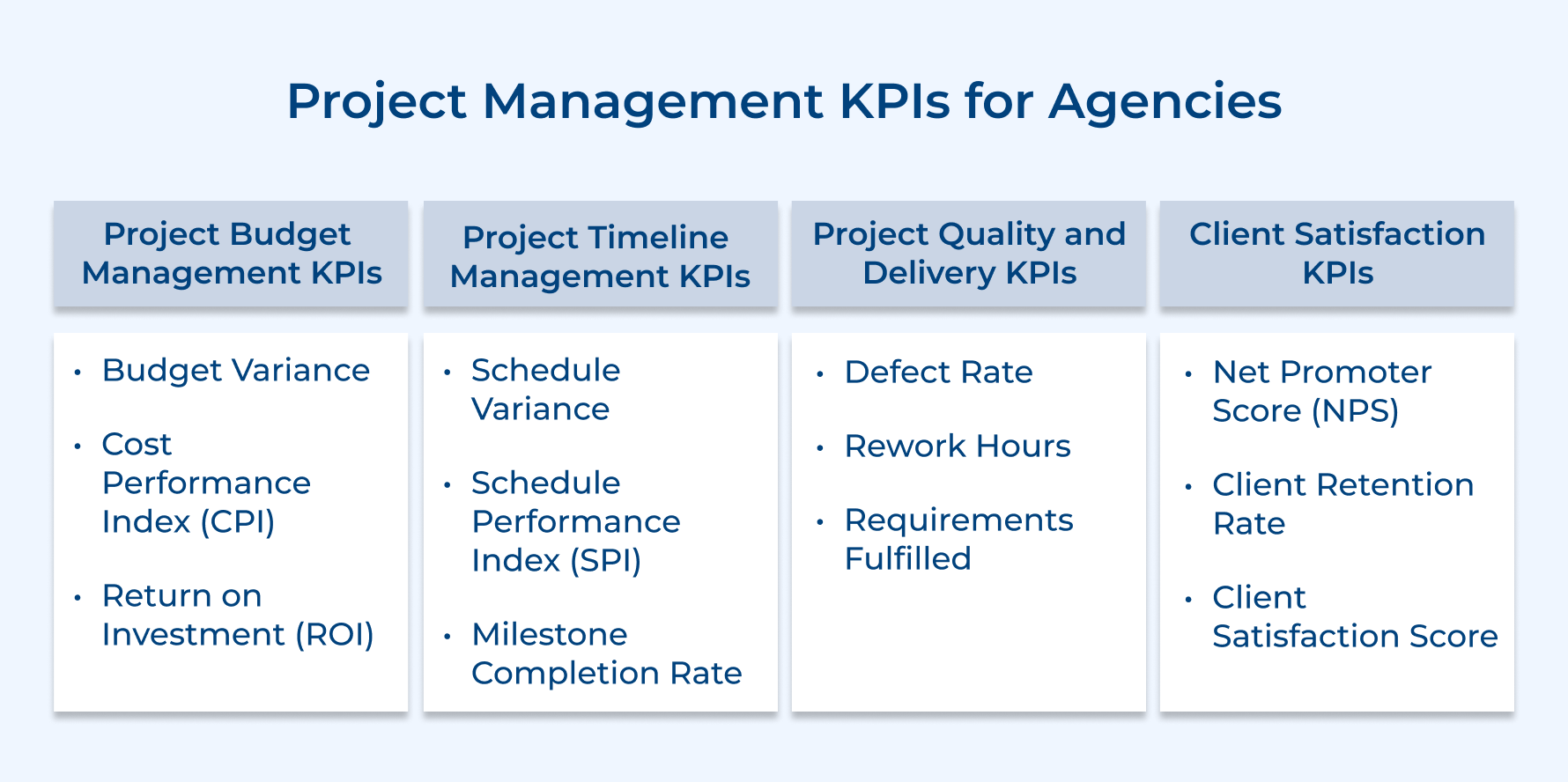
- Project Budget Management KPIs
- Project Timeline Management KPIs
- Project Quality and Delivery KPIs
- Client Satisfaction KPIs
- Common Challenges of Project Management KPIs and How to Fix
- How to Choose the Right Project Management KPIs
- 4 Best Tools for Tracking Project Management KPIs
- Achieve Clarity in Every Project Phase with Project Management KPIs
- FAQs about Project Management KPIs

Key Highlights:
- Tracking project management KPIs gives agencies clear visibility into budgets, timelines, and client satisfaction, driving smarter as well as effective decisions.
- Choosing the right KPIs ensures alignment with business goals, prevents metric overload, and empowers teams to improve project success.
- Common challenges in tracking project management metrics include inconsistent data, and metric overload, but standardized processes ensure accurate reporting.
In the current fast-paced agency world, trying to manage projects without clear metrics is like flying blind. Too often, teams rely on gut feelings instead of hard data to make key decisions—and that’s a risky game. Project Management KPIs become the savior here.
These simple yet powerful metrics turn vague ideas like “progress” or “efficiency” into real numbers you can act on. With the right KPIs in place, you’ll spot issues early, keep projects on track, and deliver better results for your clients. Here are ten essential KPIs every agency should use to boost performance and client satisfaction
What are Project Management KPIs?
Project management KPIs (Key Performance Indicators) are measurable values that help agencies and consultancies track progress toward specific objectives. They serve as quantifiable benchmarks for evaluating project health across dimensions like budget adherence, timeline compliance, resource utilization and client satisfaction.
Project management KPIs transform abstract goals into concrete metrics that teams can measure and improve upon. Organizations first identify objectives aligned with business strategy and then select relevant indicators to track progress. Regular measurement creates feedback loops that allow teams to spot trends and take corrective actions.
Key objectives:
- Budget adherence: Measures how well actual project expenses align with forecasted costs to prevent financial overruns.
- On-time delivery: Tracks milestone completion against planned schedules to ensure projects stay on their intended timeline.
- Resource utilization: Evaluates how efficiently team members’ time and skills are being deployed across project tasks.
- Client satisfaction: Gauges client happiness through feedback mechanisms like surveys and net promoter scores.
- Quality assurance: Monitors defect rates and rework metrics to ensure deliverables meet established standards.
Key Benefits of Tracking Project Management KPIs
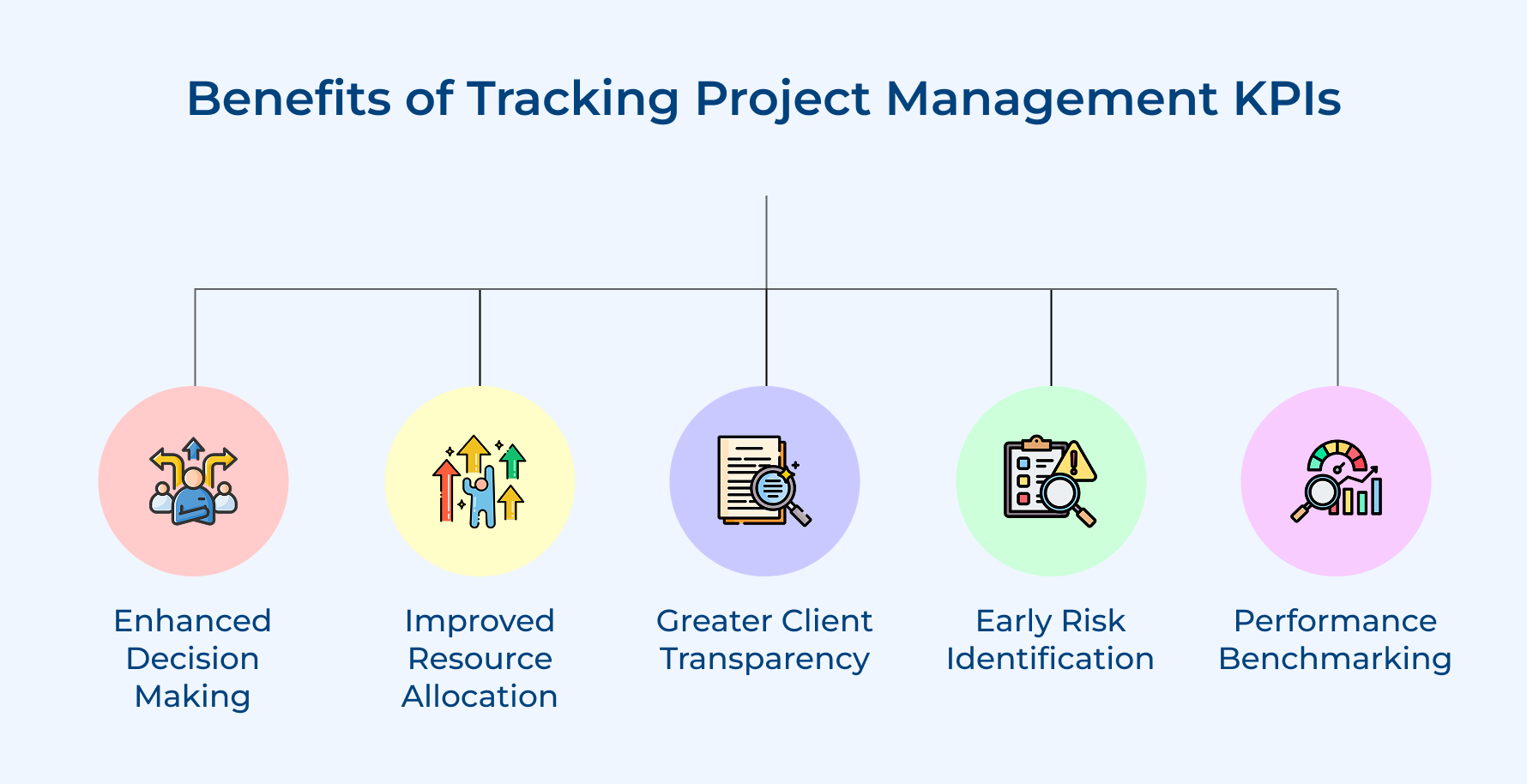
Let’s delve into the six key benefits that come from diligently tracking these indicators, revealing how they can elevate your project management strategies to new heights.
Enhanced Decision-Making
KPIs take the guesswork out of project management by giving you clear, data-driven insights. When something’s off, you’ll know exactly where to take action.
Improved Resource Allocation
Tracking resource KPIs helps you spot team members who are overloaded or underutilized, so you can balance workloads before burnout becomes an issue.
Greater Client Transparency
Sharing regular KPI updates with clients builds trust and keeps everyone on the same page. It’s much easier to handle scope changes or delays when expectations are clear.
Early Risk Identification
KPIs help you catch small issues—like slipping schedules or rising costs—before they turn into big problems. That means fewer surprises and smoother project delivery.
Performance Benchmarking
Over time, KPIs give you benchmarks to compare different projects or measure against industry standards. You’ll quickly see what’s working and where there’s room to improve.
12 Most Important Project Management KPIs for Agencies
Let’s explore the top 12 project management KPIs that every agency should consider to ensure projects meet expectations, budgets stay in check and teams remain productive
Project Budget Management KPIs
1. Budget Variance
Budget variance is all about knowing where your money’s going compared to where you planned for it to go. It shows whether you’re staying on track financially or if costs are starting to creep up. You calculate it by subtracting your actual spend from your planned budget.
Example:
Let’s say you’ve got a $100,000 website project. At the halfway mark, you’ve spent $48,000 but planned to spend $50,000. That gives you a +$2,000 variance, or 4% under budget which is a great news!
Pro Tips:
- Don’t wait for monthly reports, do quick weekly budget check-ins to catch issues early.
- Break down your costs by category (like design, development, tools) to see exactly where things are off, not just the total.
2. Cost Performance Index (CPI)
CPI is a ratio that shows how efficiently you’re using your budget compared to the value being delivered. It provides a standardized metric for evaluating cost efficiency across different projects regardless of their size.
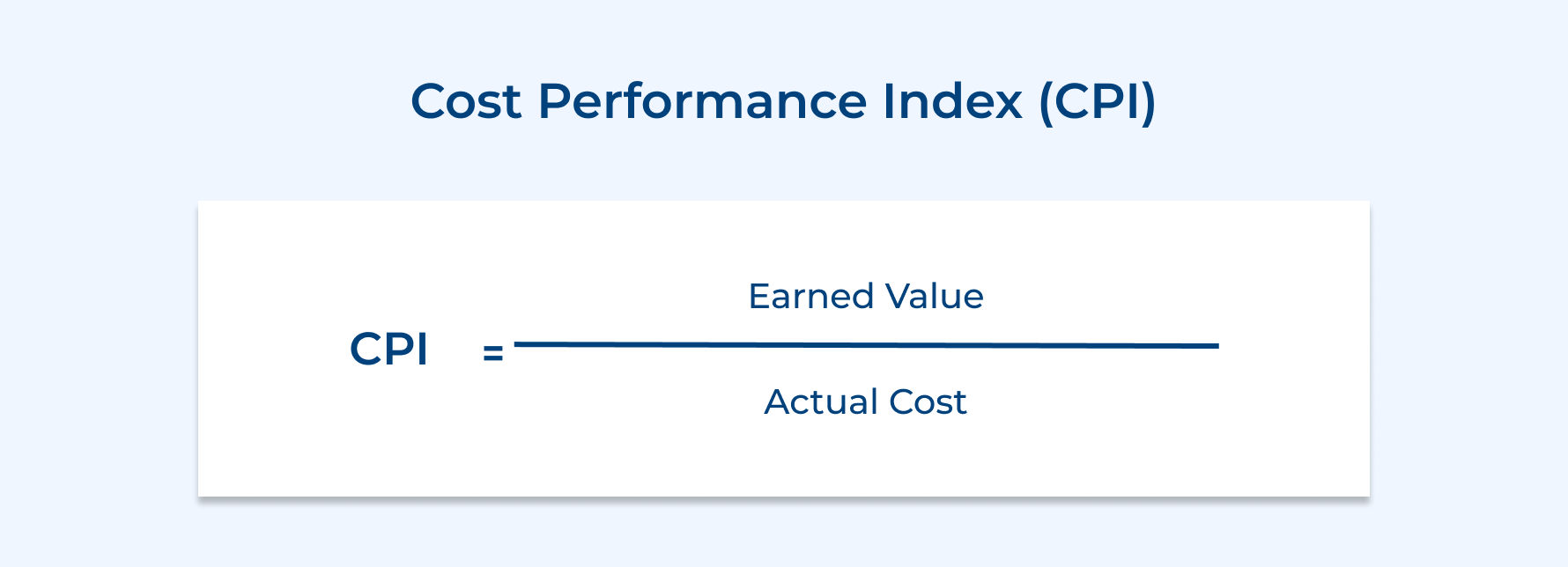
A CPI above 1.0 indicates cost efficiency while below 1.0 signals cost overruns. Most successful agencies maintain a CPI between 0.95 and 1.1, with world-class performers consistently achieving 1.05+.
Pro Tips:
- Track CPI trends over time rather than individual measurements to identify subtle efficiency declines before they become problematic.
- Compare CPI across different project types to identify which service offerings naturally yield better cost performance for your agency.
3. Return on Investment (ROI)
ROI measures the profitability of projects by comparing net gains against resources invested. It helps agencies prioritize projects that deliver the greatest financial return and justify investment decisions to stakeholders.
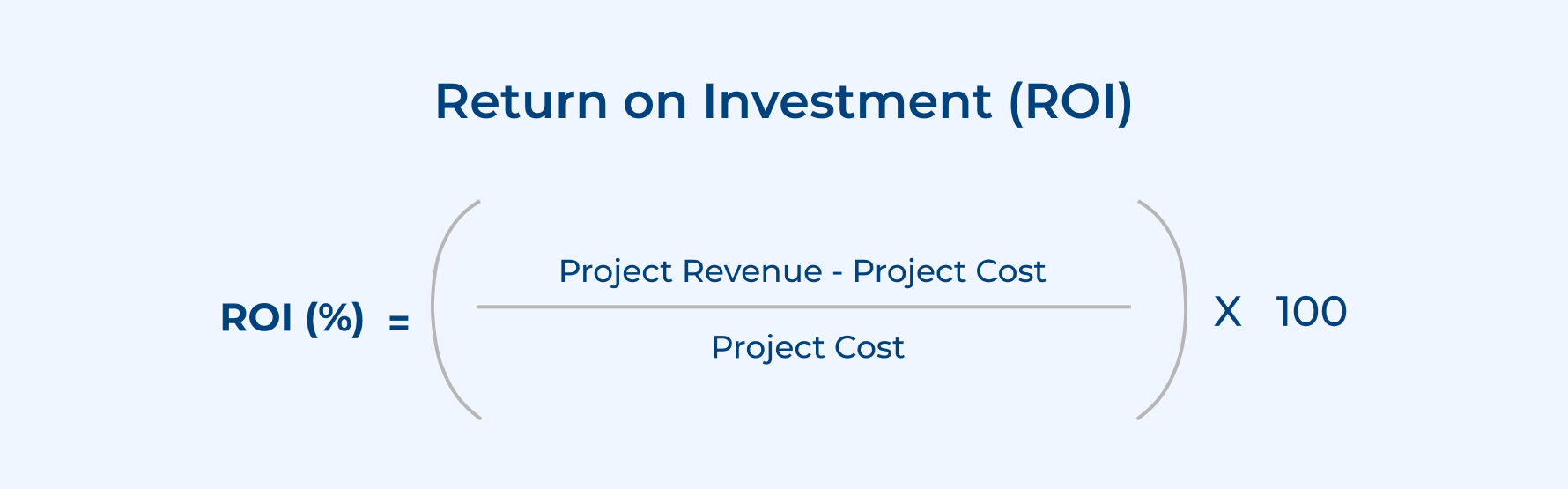
Agency projects typically target ROI between 20-30% at minimum, though creative and digital agencies often aim for 50%+ on higher-value strategic work.
How to improve?
- Calculate projected ROI before project acceptance to establish clear expectations and filter out potentially unprofitable work.
- Include long-term client value in ROI calculations rather than just immediate project revenue to better reflect strategic importance.
Project Timeline Management KPIs
4. Schedule Variance
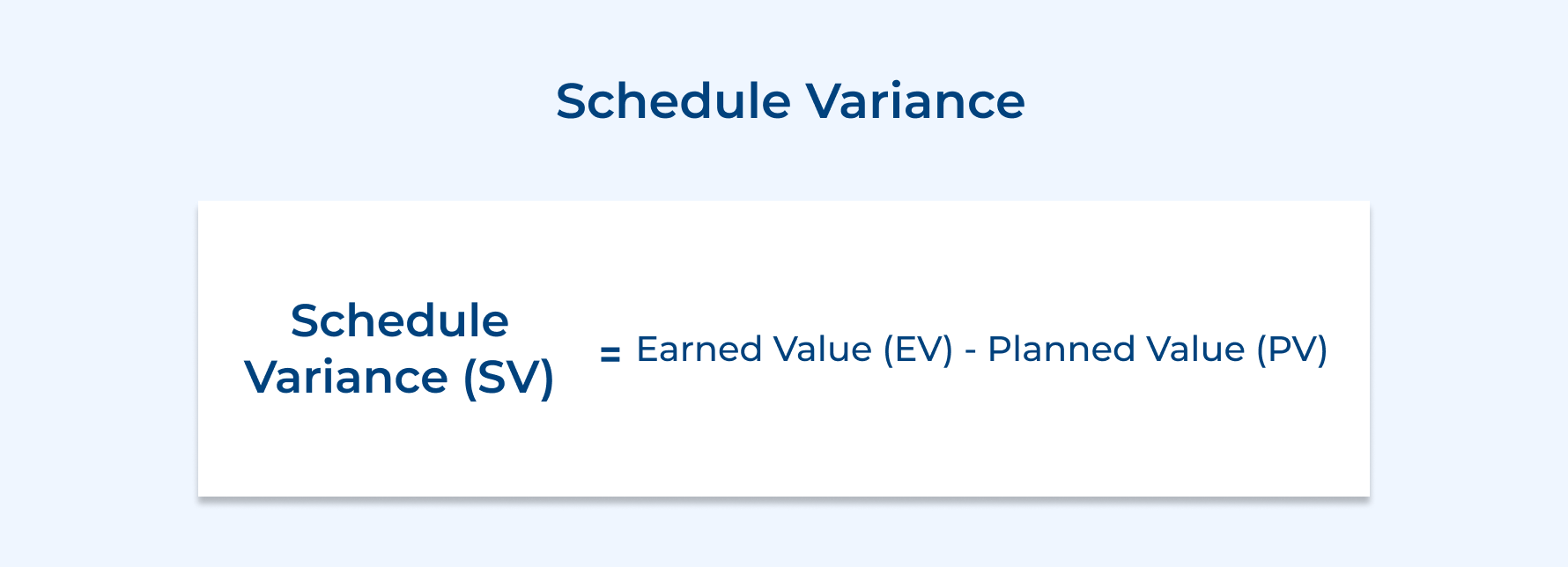
Schedule variance quantifies the difference between planned and actual progress on a project timeline. It helps project managers identify when work is falling behind or moving ahead of schedule so they can adjust resources and expectations accordingly.
How to Improve?
Plan thoroughly from the start, adding buffer time for riskier tasks. Break big jobs into smaller, clearly defined pieces. Hold regular check-ins to track timelines and keep everyone accountable for hitting milestones.
Ideal benchmarks:
- High-performing agencies maintain SV within ±5% of planned value throughout most of the project lifecycle.
- A consistently negative SV exceeding -10% signals significant schedule problems requiring immediate intervention.
- For complex projects, SV should trend toward zero as the project approaches completion, even if earlier phases showed variance.
5. Schedule Performance Index (SPI)
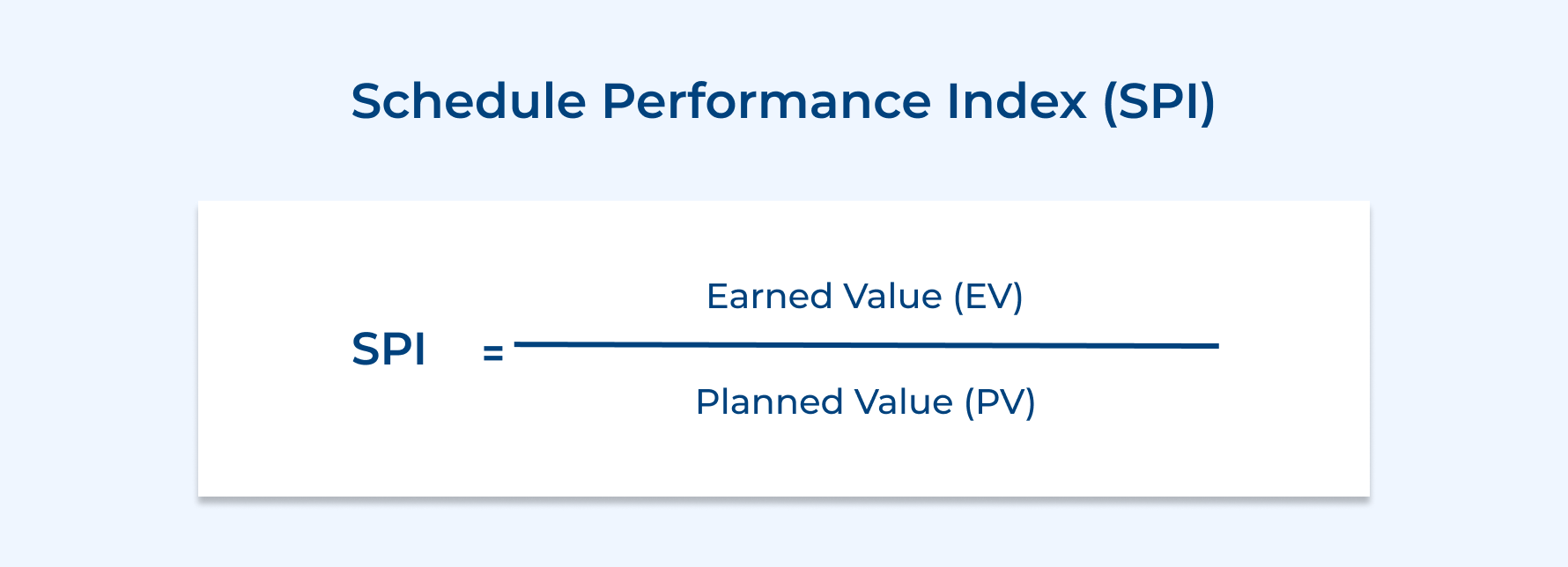
SPI is a ratio indicating how efficiently a project is progressing against its timeline. It provides a standardized metric to compare schedule efficiency across different projects and helps predict completion dates based on current performance.
How to Improve It?
Stay ahead of delays with weekly timeline reviews and by tracking team velocity. Train project managers to spot early signs of slippage and give them the freedom to adjust resources quickly, no red tape.
Standard Benchmarks:
- An SPI of 1.0 indicates perfect schedule adherence while below 1.0 suggests behind schedule and above 1.0 means ahead of schedule.
- Agencies should aim to maintain SPI between 0.95 and 1.10 throughout project execution.
- Below 0.85 or above 1.15 typically warrants investigation as either significant delay or unrealistic planning may be occurring.
6. Milestone Completion Rate
Milestone completion rate shows how well your project is meeting key checkpoints. Instead of waiting for the final deadline, it breaks the timeline into smaller wins, helping you spot delays early and stay on track.
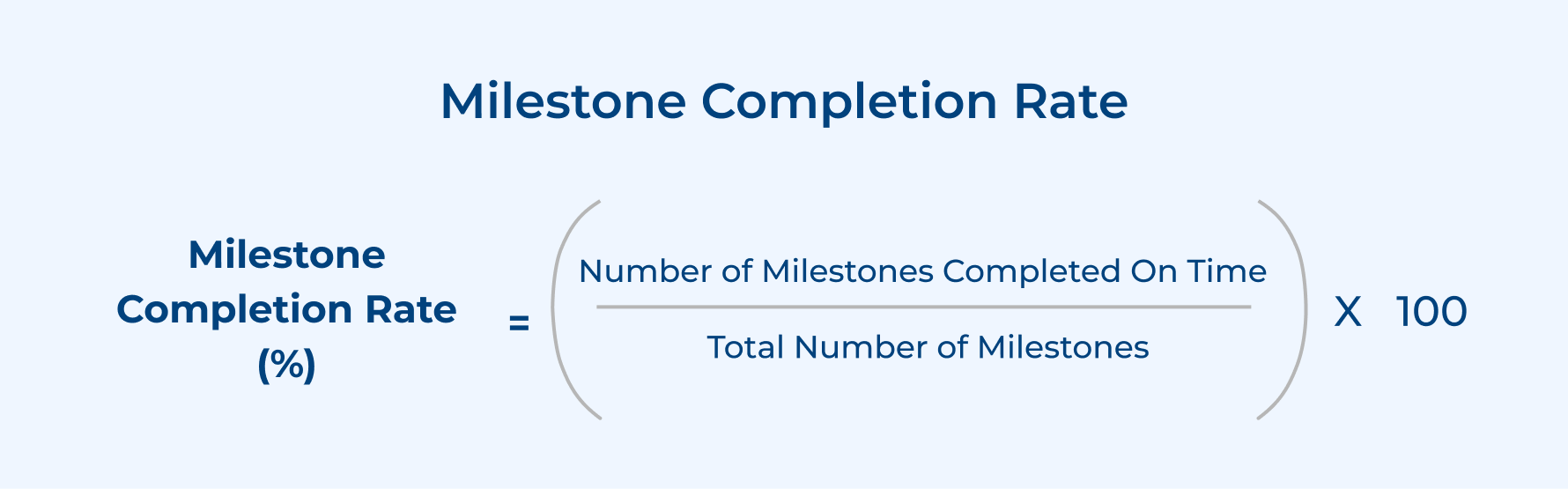
Agencies should target 80-85% on-time milestone completion at minimum, with leading organizations achieving 90%+. Lower rates often indicate ineffective planning or resource allocation, while consistently higher rates might suggest overly conservative milestone setting.
Pro Tips:
- Weight milestone completion metrics based on critical path significance rather than treating all milestones as equally important.
- Create visibility around upcoming milestones by incorporating a “milestone countdown” into regular team meetings and dashboards.
Project Quality and Delivery KPIs
7. Defect Rate
Defect rate measures the number of errors, bugs, or quality issues identified in deliverables relative to their size or complexity. It quantifies the reliability and technical excellence of your agency’s work across different project types.
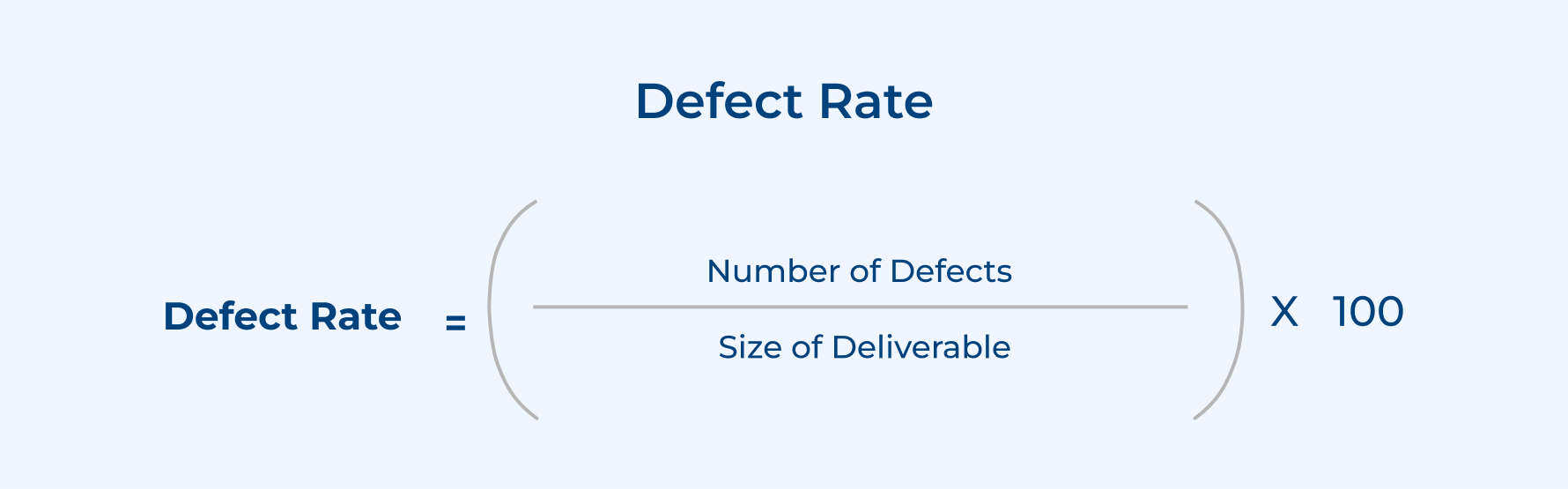
For a website development project with 50 pages, finding 10 functional or design defects during quality review would yield a defect rate of 20%. Most professional agencies target defect rates below 15% initially, with rates below 5% after normal quality assurance processes are completed.
Best practices:
- Have team members review each other’s work before it goes to the client. This helps catch mistakes that one person might miss.
- Keep track of the types of errors and who is making them. This shows where the team might need more training or better processes.
8. Rework Hours
Rework hours measure the time spent correcting errors, addressing quality issues, or implementing changes that could have been avoided with better planning or execution. This metric quantifies the inefficiency caused by quality shortfalls in your agency’s processes.
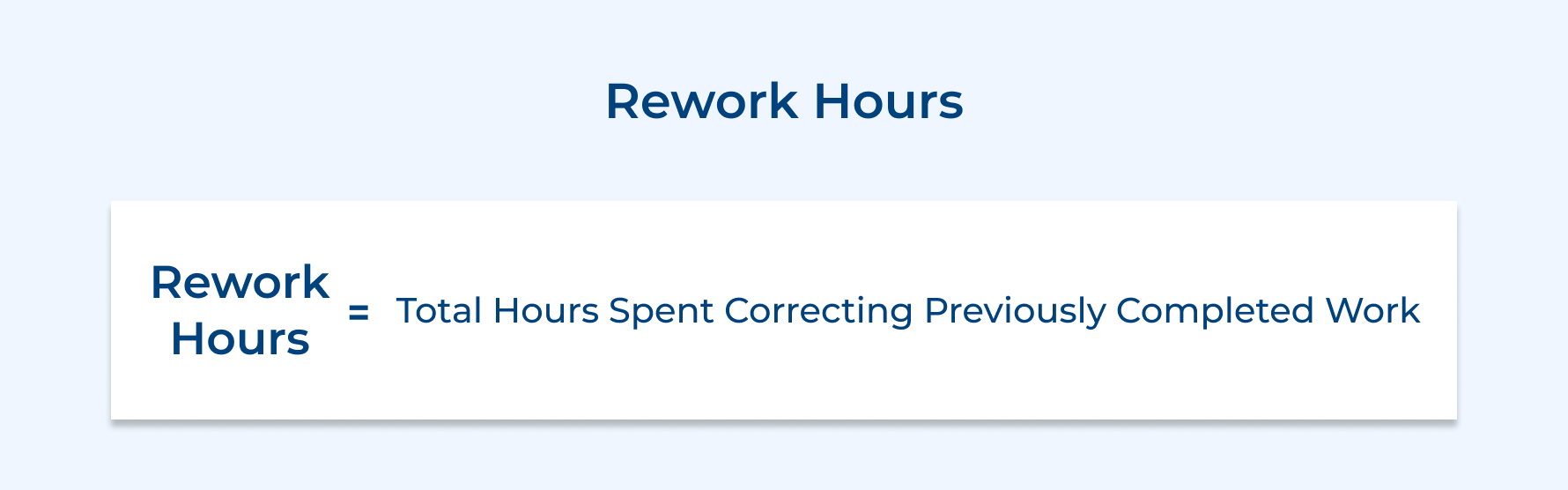
Industry leaders maintain rework below 10% of total project hours, with world-class agencies operating at 5% or less.
Pro Tips:
- Set up a simple “rework cause code” system where team members choose a reason when logging rework time. This helps you find the real cause of quality issues, not just the symptoms.
- After projects with lots of rework, hold a quick “lessons learned” session to avoid repeating the same mistakes with future clients.
9. Requirements Fulfilled
Requirements fulfilled measures the percentage of client-specified requirements successfully delivered in the final project. It reflects how well your agency understands, captures, and executes on client needs, serving as a foundational indicator of project success beyond subjective satisfaction scores.
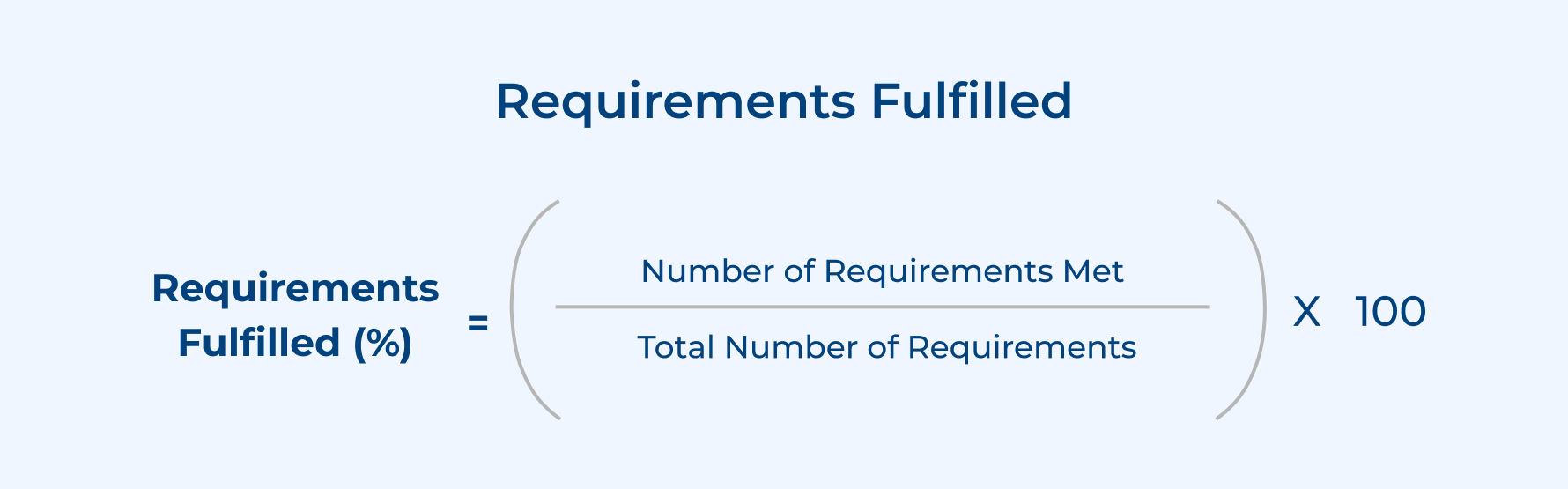
Standard Benchmarks:
- Leading agencies consistently achieve 95%+ requirements fulfillment across all projects, with many top performers targeting 100% as the only acceptable standard.
- Requirements fulfillment below 90% strongly correlates with lower client satisfaction and significantly increased likelihood of client churn within the next 12 months.
Client Satisfaction KPIs
10. Net Promoter Score (NPS)
Net Promoter Score measures client loyalty by gauging how likely clients are to recommend your agency to others. This single metric powerfully predicts client retention and organic growth potential while providing actionable feedback on the overall client experience.
Three Questions to Consider for Measuring NPS:
- “On a scale of 0-10, how likely are you to recommend our agency to a colleague or friend?”
- “What is the primary reason for the score you provided?”
- “What could we do to improve your experience with our agency?”
For professional service agencies, any NPS above +50 is considered excellent, with world-class agencies achieving +70 or higher. The metric ranges from -100 to +100, with B2B service providers typically averaging around +30. Compare your score against both industry averages and your historical performance to gauge improvement.
11. Client Satisfaction Score
Client satisfaction score shows how happy clients are with your work, communication, and overall service. It gives clear feedback on what you’re doing well and where you need to improve.
Three Questions to Consider:
- “How satisfied are you with the quality of deliverables provided by our team on a scale of 1-5?”
- “How would you rate our team’s responsiveness and communication throughout the project?”
- “To what extent did our work meet your business objectives and expectations?”
Most agencies target satisfaction scores of 4.5+ on a 5-point scale or 85%+ on percentage-based calculations. Top-performing agencies maintain averages above 4.7/5, recognizing that consistent scores below 4.0 strongly correlate with increased client churn and should trigger immediate relationship recovery efforts.
12. Client Retention Rate
Client retention rate shows the percentage of clients who stay with your agency over a set time. It highlights how well you build lasting relationships—and it’s key for profitability since keeping clients costs less than finding new ones.
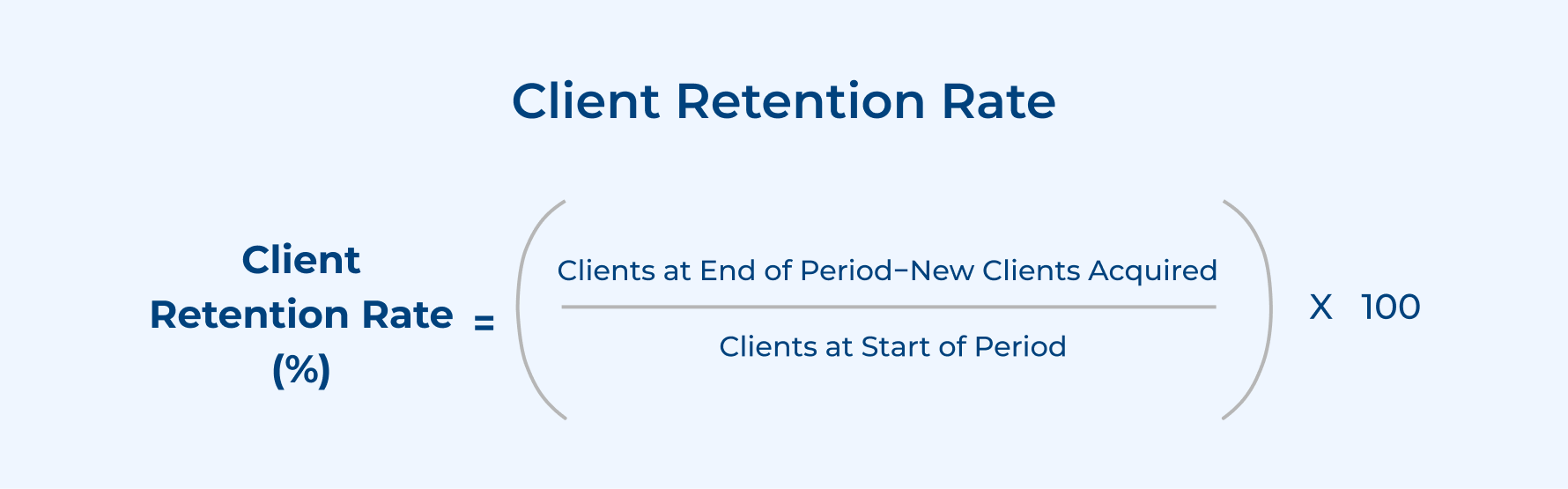
Best Practices:
- Implement quarterly relationship reviews with key clients that focus on long-term goals rather than just current project status.
- Create a standardized client offboarding interview process to understand why clients leave and identify patterns you can address systematically.
Common Challenges of Project Management KPIs and How to Fix
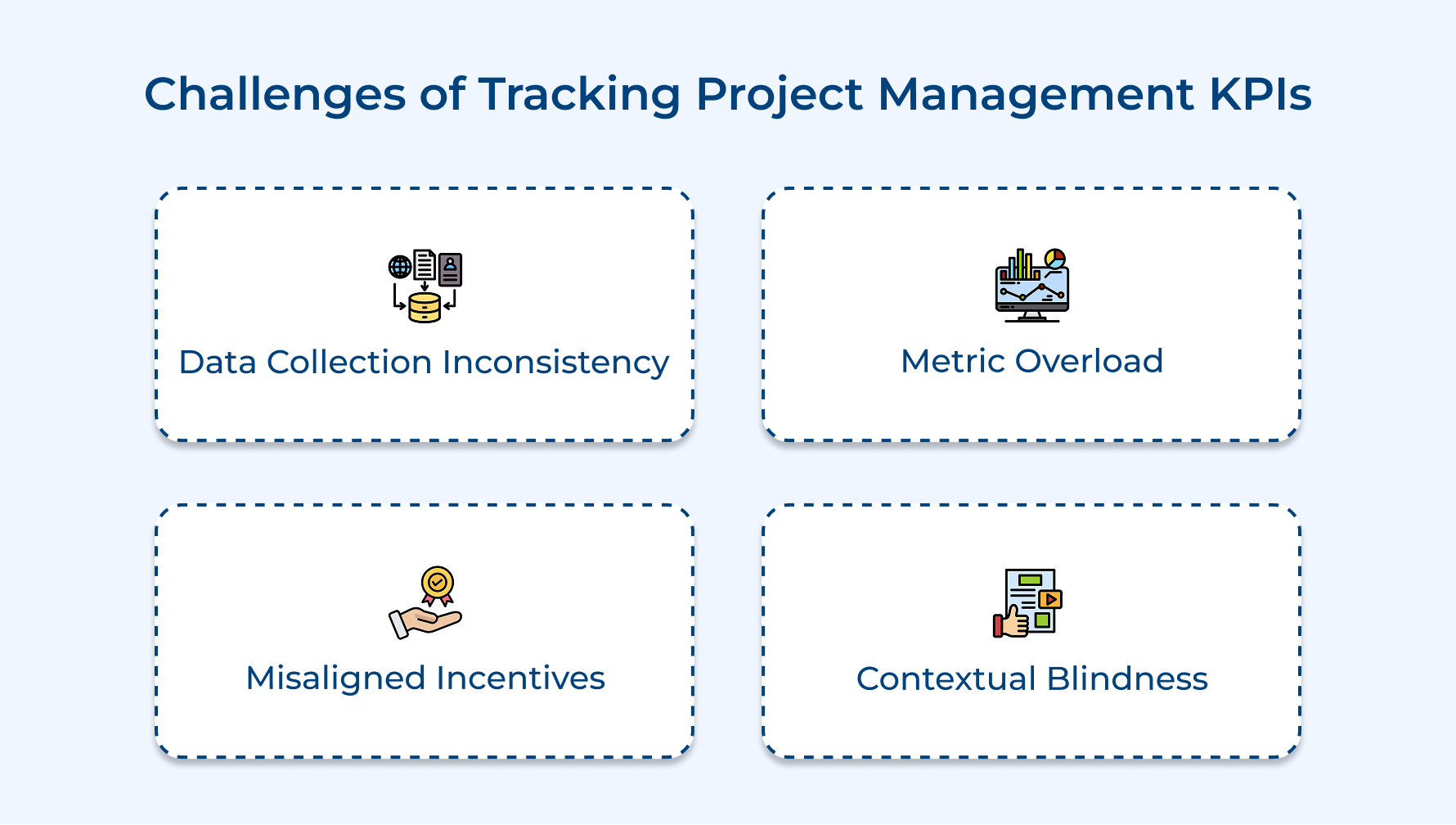
These challenges can undermine the project management metrics unless addressed thoughtfully. Here’s how you can overcome the challenges:
1. Data Collection Inconsistency
Teams often record project data in different tools and formats, making it hard to get a clear, reliable picture of how things are going. This patchy data can lead to incomplete or misleading KPIs. The fix? Use a single project management system with standard data entry rules. Automate data collection where you can, and train everyone to follow the same process. Make data reporting a regular part of your workflow.
2. Metric Overload
Trying to track too many KPIs at once can overwhelm teams and blur focus. It’s easy to get lost in the numbers and miss what really matters. Instead, pick 5-7 key KPIs that align with your agency’s goals. Keep these updated as priorities shift and focus most energy on those primary metrics.
3. Misaligned Incentives
If KPIs feel like a punishment, people might fudge numbers or chase metrics instead of quality. To avoid this, present KPIs as tools for learning and growth. Get your team involved in setting targets, and reward improvements instead of punishing misses.
4. Contextual Blindness
Numbers alone don’t tell the full story. Different projects and clients need different benchmarks. Add context to your reports, compare similar projects, and adjust metrics to fit each situation. This way, your KPIs guide smarter decisions.
How to Choose the Right Project Management KPIs
Let’s break down five essential questions that will help you decide which project management KPIs are crucial for steering your projects in the right direction.
1. What specific business goals are you trying to achieve?
Start by thinking about your agency’s main goals. Do you want to make more profit, deliver projects faster, or keep clients happier? Your KPIs should connect directly to these goals. Keep in mind that as your agency grows or changes, your focus might shift, so revisit this question often.
2. Who will be using these KPIs and for what decisions?
Think about who needs the data and how they will use it. Leaders may want big-picture numbers like overall profit. Project managers might need detailed info on schedules. Don’t track metrics that no one uses or that don’t help make decisions.
3. How many KPIs can you realistically monitor?
Don’t try to track everything. It’s better to focus on 5 to 7 important KPIs that get regular attention. Too many numbers can confuse your team and make reporting harder instead of helping.
4. Are your chosen KPIs counterbalanced to prevent unintended consequences?
Make sure one metric doesn’t hurt another. For example, focusing too much on keeping team members busy might lower quality or client happiness. Use KPIs that balance each other to avoid this.
5. How will you test and refine your KPI selection over time?
Set times to check if your KPIs are working well. Remove ones that aren’t helpful and add new ones if needed. Good KPIs change as your agency changes.
4 Best Tools for Tracking Project Management KPIs
Here’s a deep dive into four project management KPI tools that can revolutionize the way you monitor and execute your projects.
Kooper
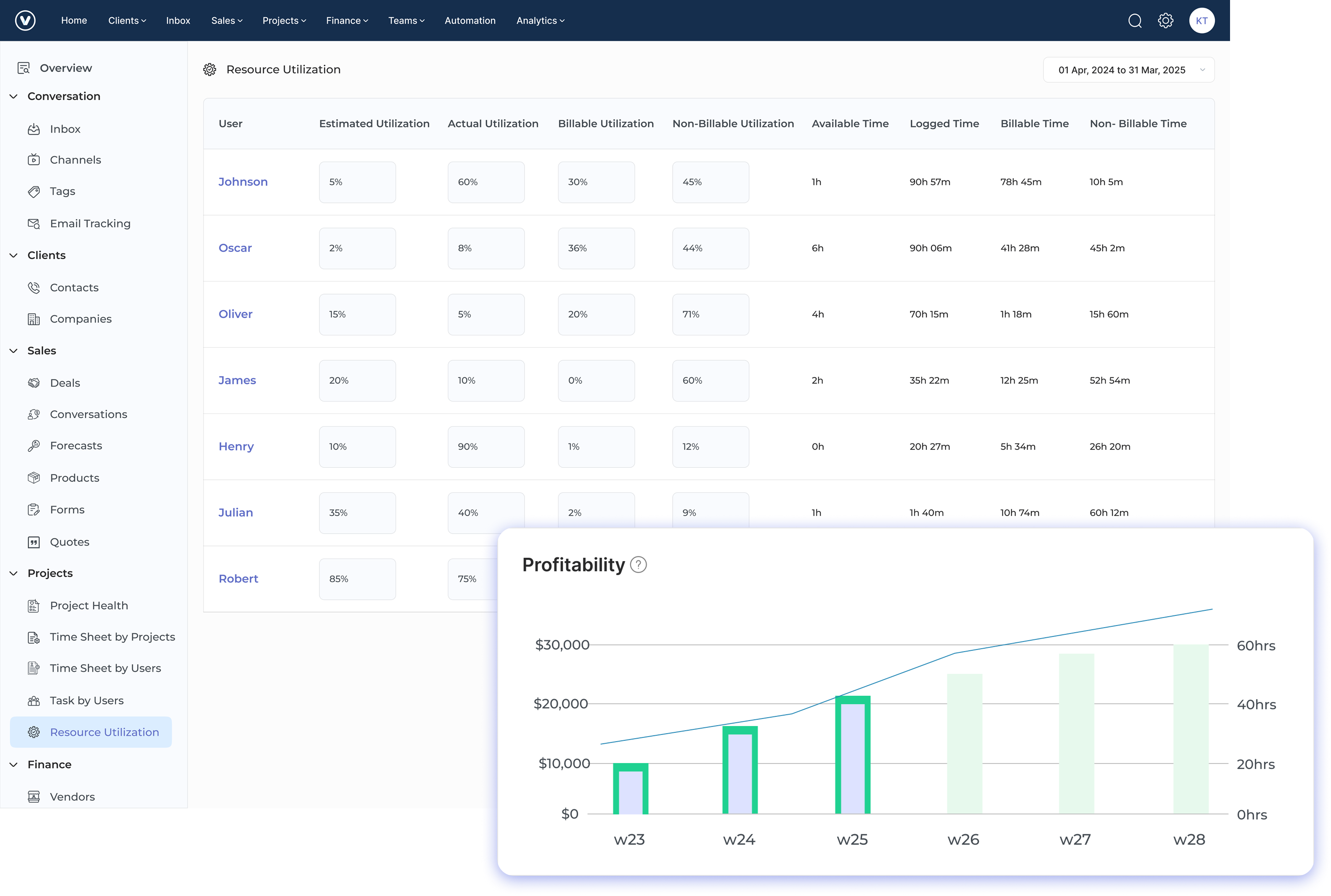
Kooper is an all-in-one business management platform designed just for service-based agencies. It goes beyond basic project tracking by linking time, budgets, and performance metrics in one easy system, so you get real-time insights into project health as well as profitability.
Key features:
- Profitability dashboards: See which projects are on track or need attention at a glance.
- Resource planning: Balance team workloads with a simple drag-and-drop scheduler.
- Budget tracking: Monitor budgets in real time with alerts before overspending.
- Time tracking with billing: Log hours easily and link them to clients as well as tasks.
- Client profitability analysis: Understand which clients bring real value over time.
Veemo Project
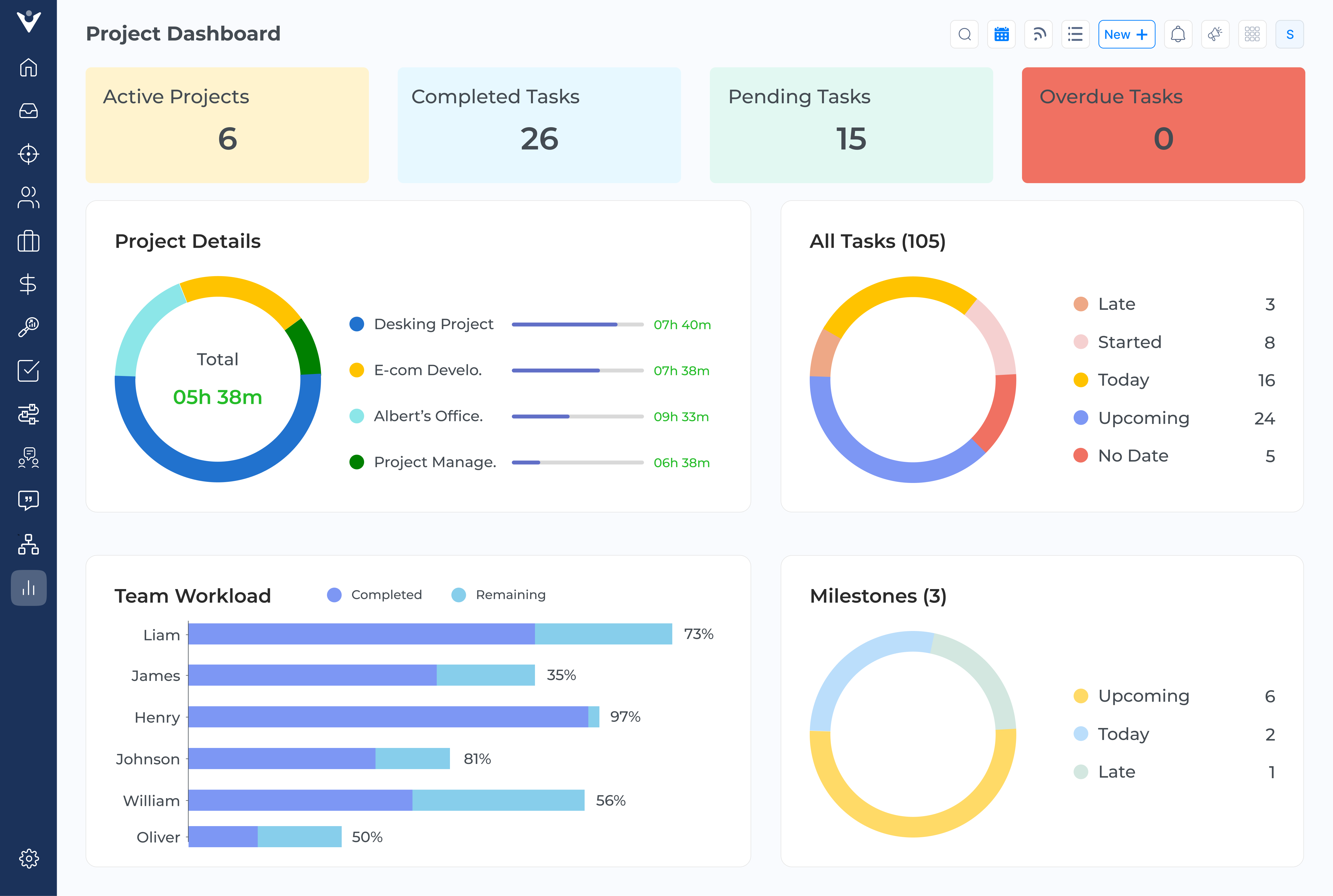
Veemo Project is an AI-powered project management tool made for client-focused businesses. It combines task management with smart performance tracking in an easy-to-use platform for all skill levels.
Veemo brings tasks, time tracking, and financial data together in one place, giving leaders clear insight into profits as well as which projects need attention.
Key features:
- Advanced time tracking: Separates billable and non-billable hours for accurate productivity KPIs.
- Customizable dashboards: Tailored views for executives and teams to track what matters most.
- Workload management: Balances resources and tracks utilization to avoid burnout or downtime.
- Client portals: Boosts transparency and gathers feedback that improves client satisfaction.
ClickUp
ClickUp combines project management with real-time KPI dashboards. Custom widgets track budgets, resources and timelines, while automation pulls data from tasks as well as time logs, keeping your metrics accurate without extra effort.
Monday.com
Monday.com makes tracking KPIs easy for everyone. Its user-friendly boards and conditional formatting highlight what needs attention, helping teams stay on top of performance without needing technical skills.
Asana
Asana turns project data into clear KPIs with portfolio views that track deadlines and milestones. Its goals link daily tasks to big-picture objectives, so you see exactly how work drives agency success.
Achieve Clarity in Every Project Phase with Project Management KPIs
Well-chosen project management KPIs transform from intuition-based to evidence-driven, providing agencies with the visibility needed to make timely course corrections. Rather than discovering problems after it’s too late, these metrics deliver early warning signals that prevent small issues from snowballing into project-threatening crises.
Agencies that master KPI implementation can simultaneously improve profitability through better resource allocation, boost operational efficiency by identifying while eliminating process bottlenecks, and enhance client satisfaction by consistently delivering on expectations. This holistic performance optimization creates a virtuous cycle that drives sustainable growth and competitive advantage.
Limit time — not creativity
Everything you need for customer support, marketing & sales.

Shivank Kasera is part of the marketing team at Kooper, where he focuses on building content that helps agencies and service providers grow. With a keen interest in SaaS, operations, and scalability, he translates practical insights into actionable resources for business leaders.