How to Improve Client Management in Professional Services
- What is Professional Services Client Management?
- Why is Strong Client Management Important?
- 7 Effective Strategies for Better Client Management and Retention
- What Do Good Client Management and Retention Look Like?
- 5 Tools Best Suited for Client Management in Professional Service Businesses
- Practical Examples Professional Services Client Management
- Streamline Success with Seamless Client Management
- FAQs about Client Management in Professional Services

Key Highlights:
- Professional services client management builds lasting client relationships, ensures tailored solutions and transforms one-time projects into sustainable partnerships.
- Effective client management improves retention, drives higher revenue and strengthens reputation by turning transactional relationships into strategic partnerships.
- Structured onboarding, dedicated managers and proactive communication create trust and demonstrate value.
Are you struggling to retain clients in your professional services business? Many firms excel at delivering client projects expertise but falter when managing the human side of client relationships, leading to unwanted client turnover.
The consequences extend beyond lost revenue. Your reputation suffers, team morale declines, and the constant pressure to replace departing clients creates a draining cycle of business development that prevents strategic growth.
Fortunately, effective client management in professional services follows learnable patterns that transform transactions into partnerships. By implementing structured processes for onboarding, communication and value demonstration, even small firms can create client experiences that generate loyalty as well as predictable revenue.
What is Professional Services Client Management?
Client management in professional service organizations is the strategic process of building and maintaining relationships with clients who purchase specialized knowledge-based services. It involves understanding client needs, delivering tailored solutions and building ongoing relationships that create value for both parties. The goal is to transform one-time projects into lasting partnerships.
Client management works by assigning dedicated professionals who serve as primary points of contact between service providers and clients. These managers coordinate resources, monitor project progress, handle communications and address concerns before they become problems. They balance client satisfaction with business profitability.
Key objectives:
- Establish trust through consistent delivery of promised outcomes and transparent communication.
- Drive client retention by demonstrating ongoing value beyond individual projects.
- Identify growth opportunities that benefit both the client’s business and your service offerings.
- Gather meaningful feedback to continuously improve service quality and client experiences.
- Develop client champions who willingly advocate for your services within their organization and network.
Why is Strong Client Management Important?
Strong client management creates the foundation for sustainable growth in professional service businesses. When done effectively, it transforms transactional relationships into strategic partnerships that benefit both parties.
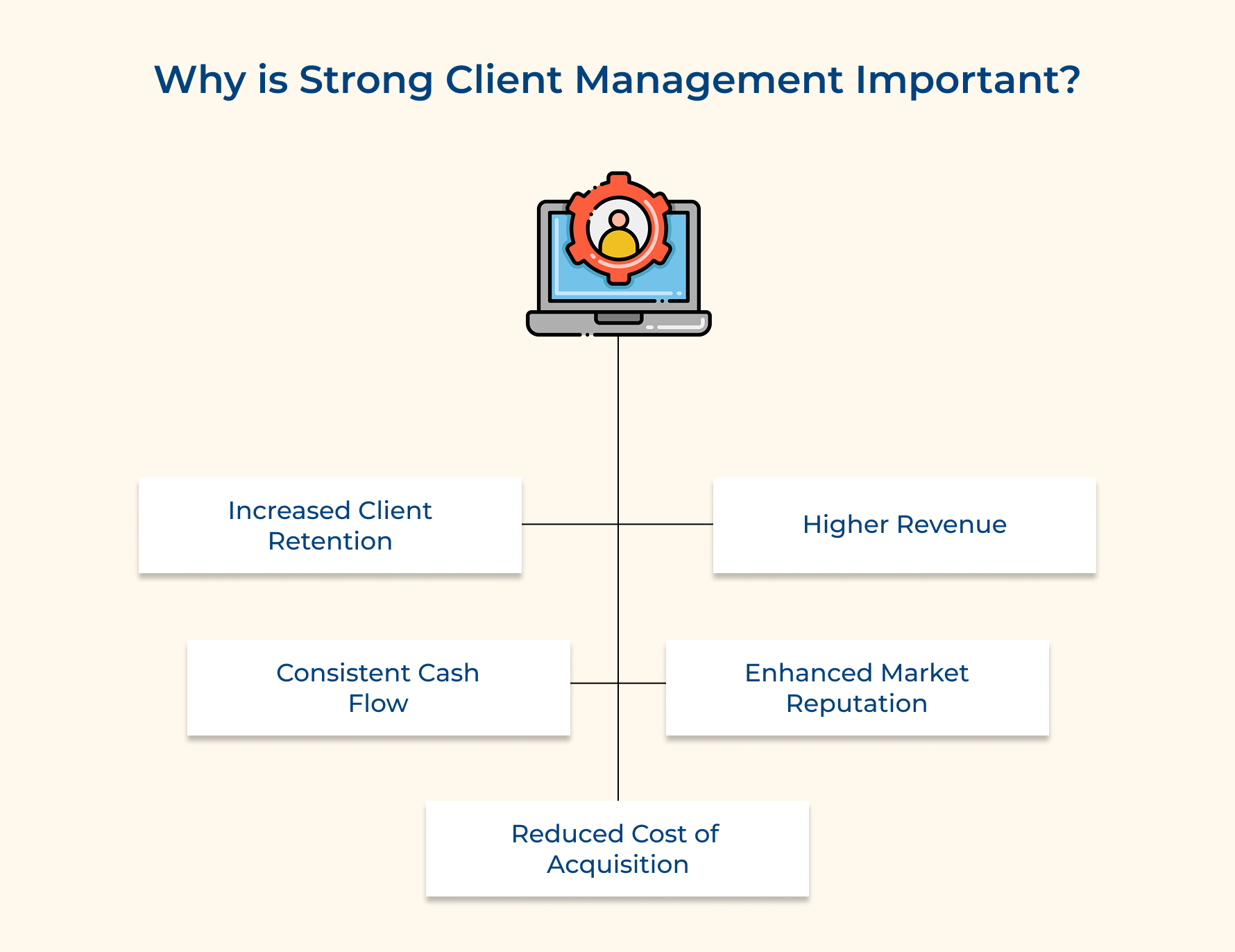
1. Increased Client Retention and Loyalty
Effective client management builds trust and demonstrates ongoing value, making clients less likely to switch providers despite competitive offers. This reduces costly acquisition efforts and creates a stable revenue foundation for long-term planning.
2. Higher Revenue Through Expanded Services
When you understand client challenges deeply, you can identify additional service opportunities that genuinely address their needs. This organic growth approach feels collaborative rather than pushy, increasing both project scope and lifetime client value.
3. More Consistent Cash Flow
Strong client relationships typically lead to more predictable work patterns and improved payment cycles. Established trust makes difficult conversations about scope changes or payment terms more productive, reducing financial uncertainty for your business.
4. Enhanced Market Reputation
Satisfied clients become natural advocates who refer new business and provide testimonials. Their authentic endorsements carry more weight than any marketing campaign and establish credibility that attracts higher-quality prospects who value expertise over price.
5. Reduced Cost of New Business Acquisition
The cost of acquiring new clients typically exceeds retaining existing ones by 5-25 times. Effective client management maximizes return on already-secured relationships, allowing you to allocate resources toward service innovation rather than constant prospecting.
7 Effective Strategies for Better Client Management and Retention
We’ve outlined eight essential strategies that will serve as your guide in fortifying client relationships as well as cementing your reputation as a trusted partner.
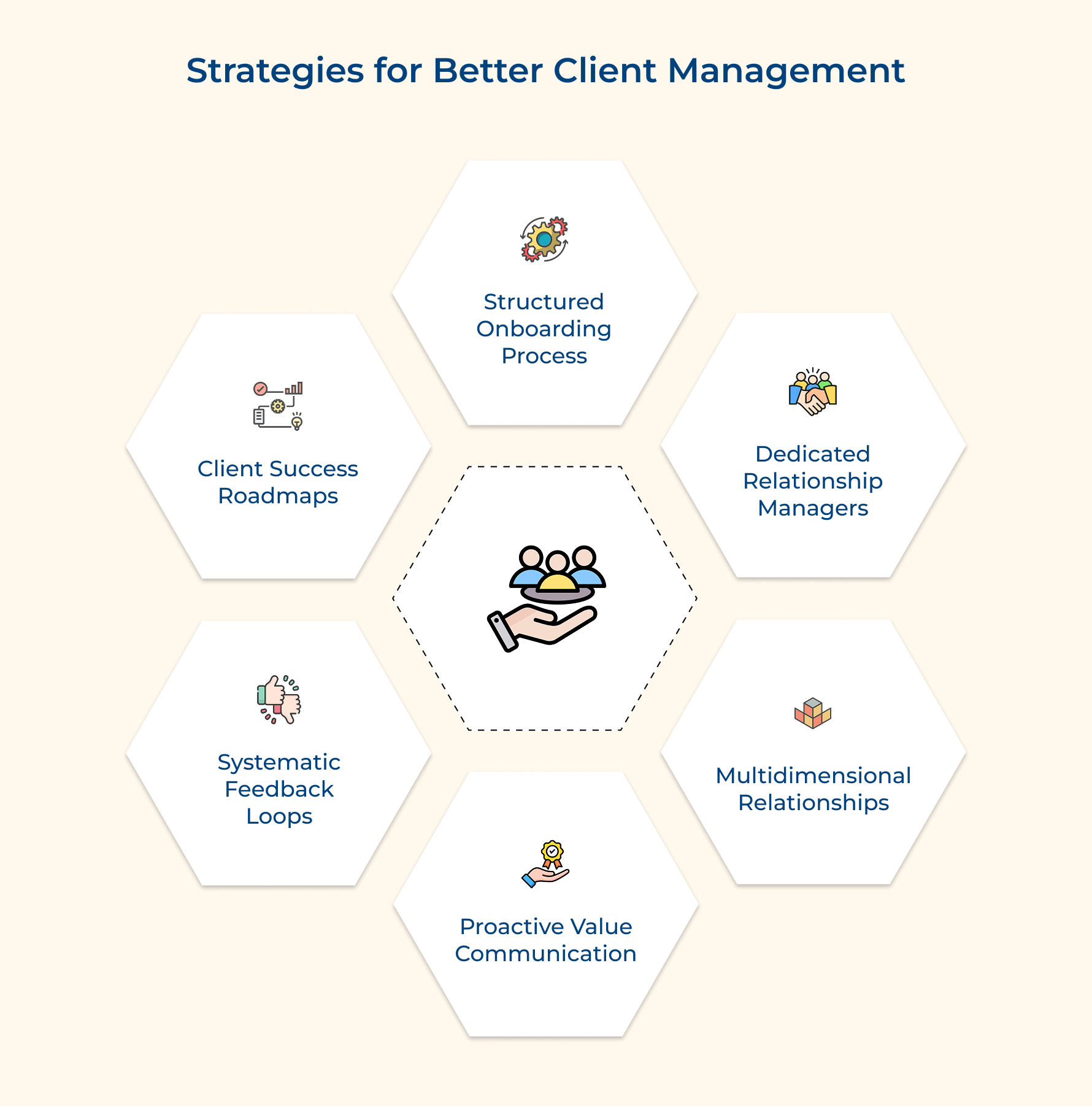
1. Create Structured Onboarding Experiences
A structured onboarding process creates clarity and confidence during the critical beginning phase of client relationships. This carefully designed introduction sets expectations and lays the foundation for successful long-term partnerships. Before creating your onboarding process, answer these essential questions:
- Have you documented the client’s specific goals and success metrics?
- Are all stakeholders identified with their roles and communication preferences?
- Has the client received a clear timeline of deliverables and milestones?
- Is there a dedicated point of contact assigned to guide the client through the process?
Creating structured onboarding experiences involves mapping each step of the client journey from contract signing through project kickoff. Document templates, welcome materials and scheduled check-ins make the process repeatable while allowing for customization based on client needs.
2. Assign Dedicated Relationship Managers
A great relationship manager is more than a point of contact, they’re the steady bridge between your team and the client. They keep communication smooth, ensure continuity and turn client needs into clear direction for your internal teams.
Here’s what makes a good match:
- Industry knowledge: They should know the client’s world: terms, challenges, competitors.
- Communication style: Match how they talk and share info with how the client likes to receive it.
- Problem-solving approach: Some clients want fast fixes; others prefer deep analysis.
- Growth potential: Choose someone who can grow as the client’s needs evolve.
Example: A marketing agency paired Susan with a healthcare client because of her medical background and clear, calm style. The result? A successful 3-year partnership.
3. Build Multidimensional Client Relationships
Great client partnerships don’t rely on just one person. The strongest relationships connect people across teams and levels, creating a web of trust as well as collaboration.
This wider network gives you better insight into the client’s business, sometimes revealing needs or opportunities a single contact might miss.
How to Build It:
- Make intentional introductions across departments.
- Involve more team members at key project moments.
- Match people based on roles, interests, or even how they like to communicate.
Best Practices:
- Create a simple relationship map and build connections gradually.
- Use a shared system to track all client interactions, so everyone stays aligned and nothing falls through the cracks.
4. Implement Proactive Value Communication
Ever wonder why some client relationships grow while others stall, even after providing an exceptional service? It often comes down to how well you show your value, not just deliver it.
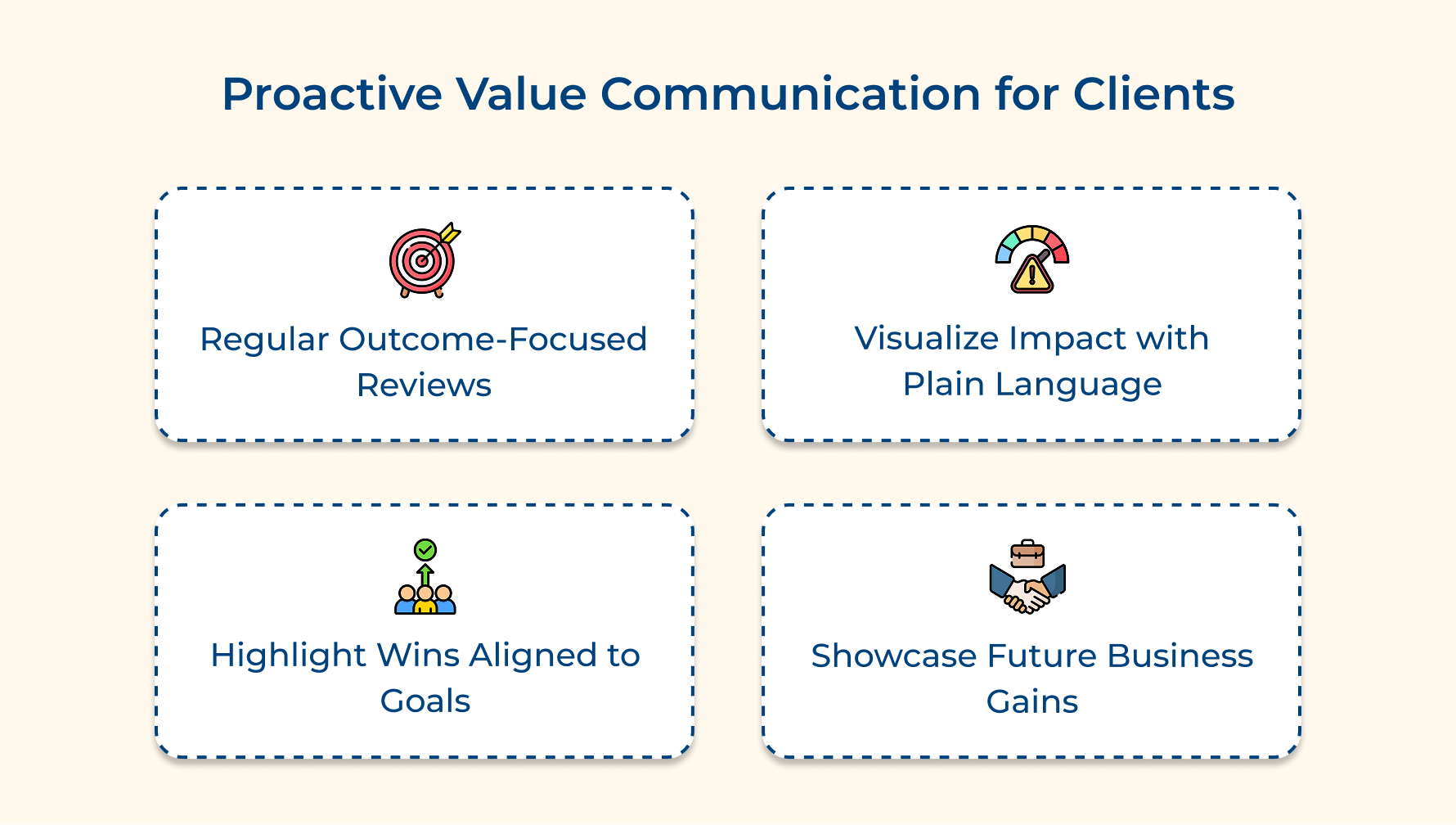
Here’s how to shift from being seen as just a vendor to a true partner:
- Regular Value Reviews
Set up dedicated check-ins focused purely on outcomes. Use clear metrics to show progress, highlight wins, and connect results to business goals. - Translate Tech into Business Impact
Skip the jargon. Use visuals and plain language to show how your work saves time, boosts revenue, or reduces risk. - Forecast Future Value
Don’t just talk about what’s done, share what’s coming. Help clients see the return they can expect from today’s investment.
5. Develop Systematic Feedback Mechanisms
Collecting feedback should be part of how you manage every client relationship. Do it right – it uncovers what’s working, what’s not, and where you can improve.
Here are four effective ways to gather client input:
- Milestone Reviews
Use project breakpoints to formally review deliverables and how the process felt for the client. - Regular Pulse Checks
Short surveys at steady intervals can spot satisfaction dips early. - Facilitated Focus Sessions
Host deeper conversations with client teams to surface insights that surveys might miss. - Anonymous Channels
Let clients share candid feedback without attribution to get the full picture.
Pro Tip: Feedback isn’t valuable unless you act on it. Analyze the trends, share what you learned, and show what you’re changing. That’s how trust grows.
Ask Questions Like:
- What’s one thing we should do more of?
- What’s one thing you’d change about how we work together?
- Are we helping you hit your biggest goals?
- Any challenges we might not be seeing?
6. Create Client Success Roadmaps
Want stronger, longer-lasting client relationships? A success roadmap helps you and your client stay aligned, track progress as well as plan for the future.
Here’s how to build one that works:
- Set Milestones for Relationship Growth
Go beyond project deadlines. Define key moments that reflect trust, value expansion and deeper collaboration. These milestones help both sides see how the relationship is evolving, not just what’s being delivered. - Align with Business Cycles
Understand your client’s fiscal calendar, product launches, or seasonal trends. Time your efforts to show up when they matter most. It makes your support feel smarter and more strategic. - Create a Long-Term Vision
Great partnerships aren’t built one project at a time. Co-create a multi-year plan that connects your services to their big-picture goals. When clients see you as part of their strategy, they stay.
7. Recognize and Reward Loyalty
Loyal clients are more than repeat customers, they’re long-term partners. Acknowledging their commitment in meaningful ways not only shows appreciation but also deepens the relationship and sets you apart from competitors.
Here are smart ways to reward loyalty in professional services:
- Tiered Service Enhancements
Offer extra perks over time like faster support, dedicated contacts, or flexible terms as clients grow with you. It shows you notice and value the relationship’s history. - Knowledge Sharing Privileges
Give loyal clients early or exclusive access to insights: invite them to private webinars, share research ahead of time, or connect them directly with your experts. - Client Community Leadership
Let long-term clients lead. Offer speaking slots at events, advisory board roles, or opportunities to mentor new clients. It gives them visibility and influence.
Make it real value, not just symbolic. When clients feel truly rewarded, loyalty turns into lasting partnership.
What Do Good Client Management and Retention Look Like?
Strong client relationships don’t just happen, they’re built intentionally. Here’s what sets great client managers apart:
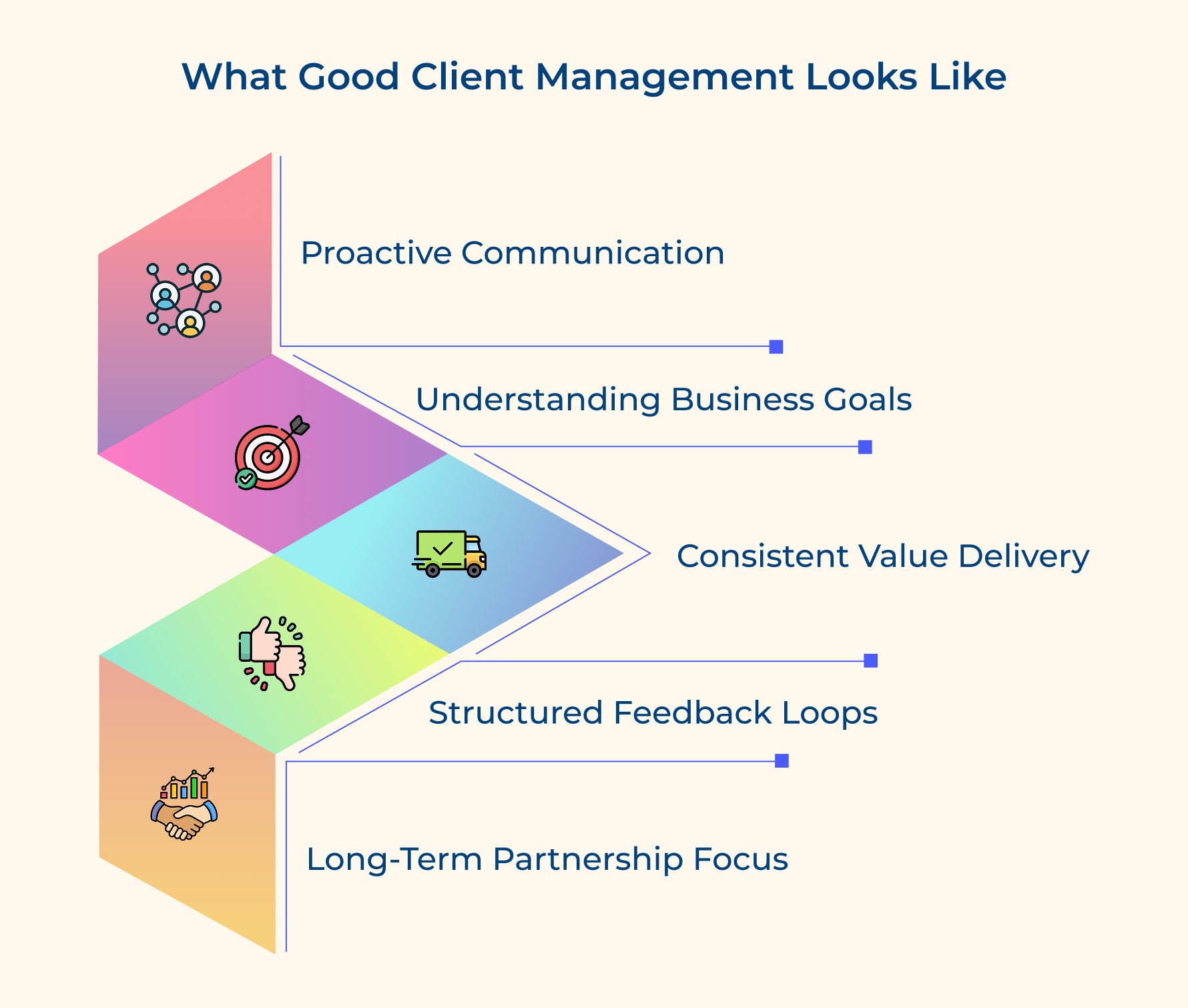
1. Proactive Communication & Expectations
Don’t wait for a client to ask. Share updates before they do, and tailor them to their preferred style and timing. Go beyond just project updates. Share industry insights or opportunities they might care about. It shows you’re thinking about their business, even when there’s no active task at hand.
2. Understanding Client Business Goals
Get to know their business goals, not just the immediate project. When you can link your work to their strategy or KPIs, it builds trust. Clients feel understood when you speak their language and offer suggestions that align with outcomes they actually care about.
3. Consistent Value with Smart Extras
Meet deadlines, hit milestones, and keep your promises. That’s the baseline. But now and then, go a step further. Share a helpful article, make a smart intro, or suggest a solution they hadn’t thought of. These little surprises make a big impact.
4. Feedback & Continuous Improvement
Create space for honest conversations. Ask for feedback regularly (formally as well as informally) and act on it. When clients see you genuinely listen and adjust, they feel like true partners, not just customers.
5. Building Long-Term Partnerships
Look beyond the project. Talk about where their business is headed and how you can support that journey. Introduce them to other team members to deepen the relationship. This way, the partnership feels stable, even if people change on either side.
5 Tools Best Suited for Client Management in Professional Service Businesses
Before investing in client management software, consider these critical questions to ensure you select solutions aligned with your firm’s specific needs and workflows:
- What specific client relationship challenges are we trying to solve?
- How will this tool integrate with our existing systems?
- How scalable is the solution?
- Does the platform offer customizable reporting?
Asking the right questions is the first step to finding the best suited tool for client management in professional services. Let’s now look into the other factors.
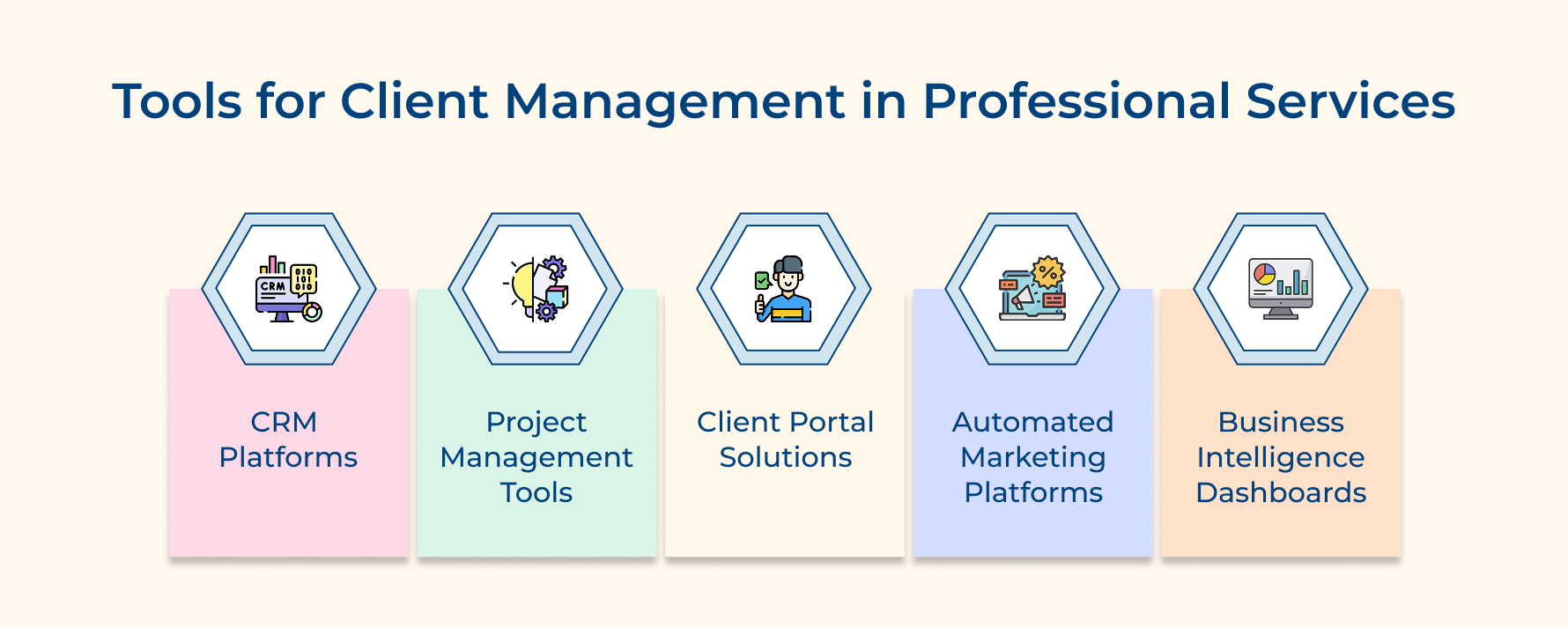
1. Customer Relationship Management (CRM) Platforms
Tools like Veemo Sales and Kooper Professional Services Cloud keep all client interactions in one place, so nothing gets lost, even when team members change.
2. Project Management and Collaboration Tools
Platforms like Kooper or Veemo Projects help teams stay on track while giving clients visibility into progress, approvals and deliverables.
3. Client Portal Solutions
Solutions like SharePoint create secure hubs for sharing documents, tracking conversations and managing approvals. Thus, keeping everything organized and accessible.
4. Automated Communication and Marketing Platforms
Email tools like Kooper automate check-ins, updates and milestone messages. Hence, ensuring clients stay informed without extra effort.
5. Business Intelligence and Analytics Dashboards
Tools like Power BI turn client data into smart insights track satisfaction, spot risks and prove ROI with clear visuals.
Practical Examples Professional Services Client Management
These case studies demonstrate how various firms have implemented effective client management strategies and the tangible business outcomes they’ve achieved.
McKinsey & Company
McKinsey builds long-term client partnerships through its structured “McKinsey Solution.” Dedicated teams stay involved even between projects, combining deep industry expertise with data-driven insights. This continuity has helped them shift from short-term consulting to decades-long advisory roles with Fortune 500 clients, boosting loyalty and revenue stability.
Accenture
Accenture assigns two relationship leads per client: one handles delivery, the other focuses on strategy. Their internal knowledge systems ensure teams always stay informed. The setup allows Accenture to scale consistently and cross-sell effectively. Most clients use three or more services, fueling strong year-over-year growth.
Deloitte
Deloitte uses a client tiering model to tailor service levels based on value and potential. Cross-functional teams lead annual planning with key clients, aligning efforts across service lines. The targeted approach drives long-term growth and helps build resilient client partnerships, even during downturns.
IDEO
IDEO keeps clients engaged through hands-on workshops and co-creation sessions. They map each client journey and focus on knowledge sharing to build lasting value. Hence, IDEO is more of an innovation partner than a service provider as most new work comes through referrals and repeat business.
Streamline Success with Seamless Client Management
Effective client management is a strategic imperative that directly impacts business sustainability. As client expectations evolve and competition intensifies, structured approaches to relationship building as well as value delivery separate thriving professional service firms from those that struggle with constant client turnover.
Professional service firms can level up their performance by getting serious about client management. At Kooper, we believe that effective client management in professional services means assigning dedicated relationship roles, setting up consistent communication routines, and using smart tech tools. These changes don’t just improve how teams work—they lead to stronger client ties, more efficient workflows, and standout experiences that are hard for competitors to copy.
Limit time — not creativity
Everything you need for customer support, marketing & sales.

Shivank Kasera is part of the marketing team at Kooper, where he focuses on building content that helps agencies and service providers grow. With a keen interest in SaaS, operations, and scalability, he translates practical insights into actionable resources for business leaders.