How to Create Effective Client Reporting in 7 Easy Steps
- What is Client Reporting?
- Why is Client Reporting Important?
- How to Create a Client Report 7 Simple Steps
- 6 Client Reporting Metrics You Should Know
- Challenges in Client Reporting and How to Overcome Them
- 6 Additional Best Practices for Client Reports
- Turn Data into Smart Decisions with Client Reporting
- FAQs about Client Reporting

Key Highlights:
- Consistent client reporting provides clear visibility into project progress and resource allocation, building trust with clients.
- Effective reports connect campaign outcomes directly to business results, enabling clients to see tangible value and justify ongoing investment.
- Transforming raw data into actionable insights, client reporting empowers clients to make informed choices and optimize future strategies.
Most agencies struggle with generic reports that fail to demonstrate clear business value, leaving clients questioning their investment returns. These reports often present data without context or strategic insights that connect to business outcomes.
These bland reports create dangerous disconnects between exceptional work and client perception, potentially leading to contract cancellations as well as reduced budgets. Professional relationships that took months to build can deteriorate when clients cannot see measurable impact from your services.
Strategic client reporting transforms raw data into compelling narratives that showcase measurable impact and strengthen professional partnerships effectively. This approach positions your agency as an indispensable strategic advisor rather than just another service provider competing on price alone.
What is Client Reporting?
Client reporting is the systematic process of documenting project progress, outcomes, and performance metrics for external stakeholders. It serves as the primary communication bridge between service providers and their clients. This practice transforms raw data and project activities into meaningful insights that demonstrate value while maintaining transparency throughout professional engagements.
How Client Reporting Works?
Service providers collect data from various project touchpoints and compile it into structured reports. These reports typically include performance metrics, milestone updates, and strategic recommendations. The information gets delivered through regular reporting cycles using dashboards, presentations, or detailed documents that align with each client’s specific requirements.
Just like a good story has characters, plot, and resolution, effective client reports weave together data points to create a compelling narrative about your work’s impact. The best reports don’t just show what happened, they help clients understand why it matters and what comes next.
Key objectives:
- Transparency: Provide clear visibility into project progress and resource allocation to build trust with clients.
- Accountability: Demonstrate measurable results and show how investments translate into tangible business outcomes.
- Strategic alignment: Ensure all activities remain focused on the client’s original goals and evolving business priorities.
- Relationship management: Strengthen partnerships through consistent communication and proactive issue identification.
- Value demonstration: Quantify the impact of services delivered and justify ongoing investment in the professional relationship.
Why is Client Reporting Important?
Client reporting forms the backbone of successful professional relationships and business sustainability in service-driven industries.
Understanding client reporting’s importance requires examining fundamental questions that shape how agencies and consultancies operate. These strategic questions reveal the core drivers
behind effective client communication and relationship management.
- What drives client satisfaction and retention in professional services?
- How do agencies demonstrate tangible value to justify their fees?
- What creates transparency between service providers and their clients?
- How can professional firms differentiate themselves in competitive markets?
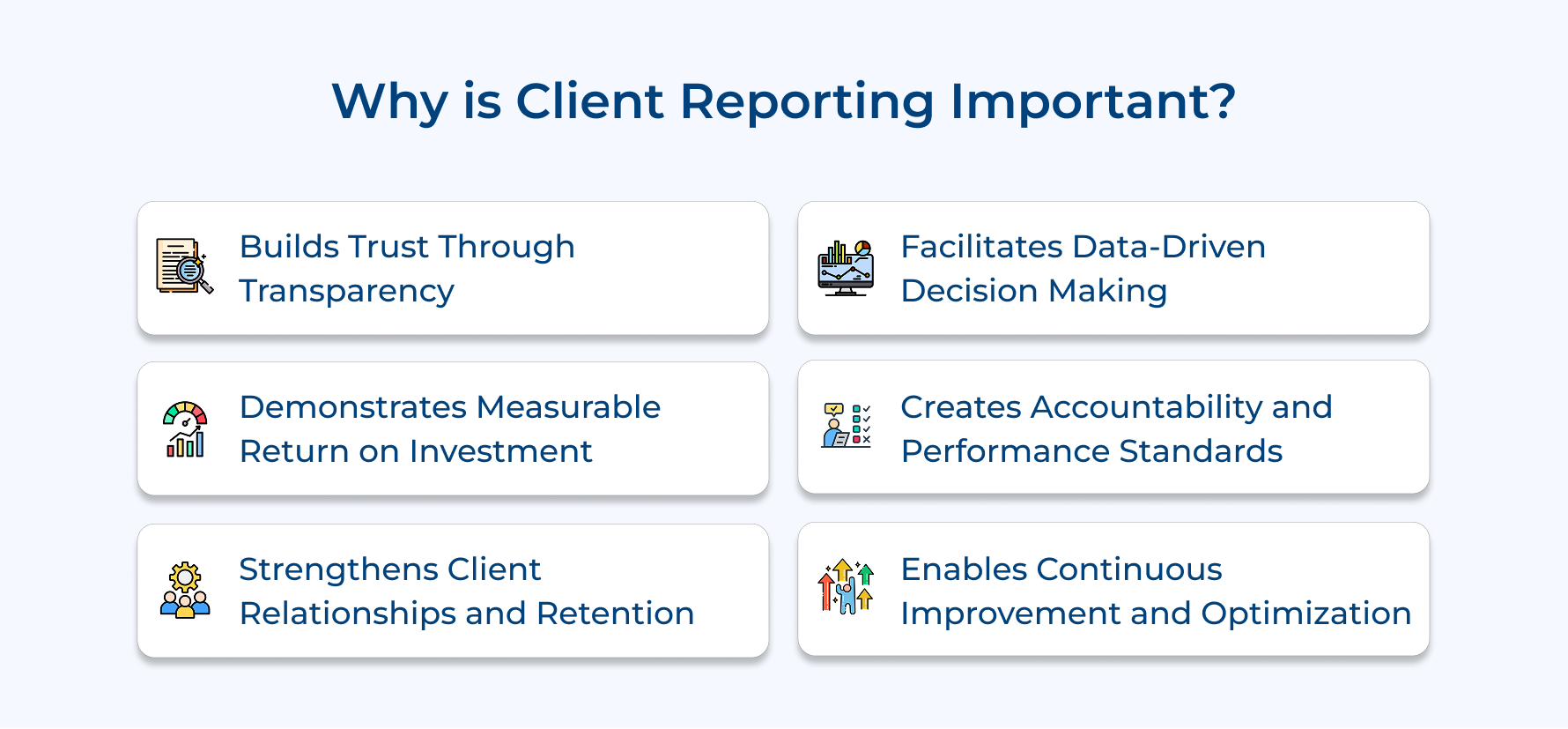
Builds Trust Through Transparency
Using reliable client reporting tools and sending regular custom reports shows your clients exactly what’s happening behind the scenes. They no longer have to wonder where their budget is going; they see the numbers, progress as well as strategy in black and white. This kind of openness builds trust and strengthens your credibility.
Demonstrates Measurable Return on Investment
The right client reporting process ties campaign results directly to business outcomes like more leads, better conversions, and increased sales. Monthly reports packed with real metrics make it easy for clients to see the value of your work and feel confident about continuing the partnership.
Strengthens Client Relationships and Retention
When you consistently share monthly reports, it sends a clear message: you care about their goals, not just ticking off tasks. These regular touchpoints create space for strategic conversations. You move beyond being just a vendor, you become a partner who helps them solve real business challenges.
Facilitates Data-Driven Decision Making
Great client reporting tools don’t just spit out numbers, they give context. Your reports should turn raw data into insights and next steps that help clients make informed decisions. This advisory approach elevates your agency from service provider to strategic partner.
Creates Accountability and Performance Standards
A well-run client reporting process ensures both sides stay aligned. Clients know what to expect, and your team stays focused on delivering results. When goals and KPIs are tracked regularly, it’s easier to spot issues early, prevent scope creep all while keeping projects on track.
Enables Continuous Improvement and Optimization
Over time, your monthly reports become a goldmine of insights. They show what’s working, what’s not, and where to adjust. This feedback loop helps you refine campaigns, allocate resources better, and deliver even stronger results in the future.
How to Create a Client Report 7 Simple Steps
Here’s a comprehensive seven-step guide to creating client reports that communicate effectively and leave a lasting impression.

Step 1: Define Report Objectives and Scope
Setting clear objectives forms the foundation of effective client reporting. Without defined goals, reports become scattered documents that fail to address client priorities or demonstrate meaningful progress toward their business outcomes.
Here are common reporting objectives that agencies typically establish to guide their client communication strategy:
- Performance tracking: Monitor campaign effectiveness against predetermined KPIs and conversion metrics to measure success rates.
- Strategic alignment: Ensure all project activities remain focused on the client’s core business objectives and evolving market priorities.
- Budget accountability: Demonstrate how allocated resources translate into measurable results and justify ongoing investment in services.
- Competitive analysis: Provide insights into market positioning relative to competitors and identify opportunities for strategic advantage.
Now that you’ve seen these examples, which objective resonates most with your current client relationship? Consider what your client values most – is it seeing immediate performance results or understanding long-term strategic positioning? The right objective depends on whether your client needs reassurance about ROI or guidance for future decision-making.
Step 2: Gather Relevant Data and Metrics
Data collection transforms scattered information into meaningful insights that support your client reporting narrative. Quality data serves as the evidence that validates your recommendations and demonstrates the impact of your professional services.
Quantitative data provides the numerical foundation that clients need to understand performance trends and make informed business decisions. These measurable elements create credibility and allow for objective comparison against industry standards.
Common quantitative data sources include:
- Website Analytics Platforms
- Social Media Performance Dashboards
- Email Marketing Metrics
- Sales Conversion Tracking Systems.
Qualitative data adds context and depth to the numbers by revealing the human elements behind performance metrics. This information helps explain why certain trends occur and provides strategic direction that pure statistics cannot deliver.
Valuable qualitative sources encompass:
- Client Feedback Surveys
- Customer Testimonials
- Competitive Analysis Reports
- Stakeholder Interview Insights
How do you ensure data accuracy without overwhelming your team? Start by establishing automated collection processes wherever possible and create simple templates for manual data entry. This approach reduces human error while maintaining consistency across all reporting periods.
Step 3: Analyze Performance Against Initial Benchmarks
Performance analysis involves comparing current results with the baseline measurements you established at the project’s beginning. This comparison reveals if your strategies are delivering expected outcomes and identifies areas that need strategic adjustment.
Benchmark analysis helps you tell a compelling story about progress and growth over time. It transforms raw data into meaningful insights that clients can use to understand their investment’s return and make future planning decisions.
Pro tips:
- Document baseline metrics comprehensively during the initial project phase to ensure accurate comparison points later.
- Use percentage changes rather than absolute numbers to make performance variations more understandable for non-technical clients.
Step 4: Structure Content Using Logical Framework
A well-structured client report makes it easy for clients to understand the value you’re delivering. A logical flow from big-picture insights to detailed proof keeps them engaged and helps them find what they care about, fast.
There are a few go-to structures that work well:
- Start with an executive summary to highlight key takeaways upfront. Clients get the answers they need right away, and they can dive into the details later if they want.
- Use a problem-solution format. Show what challenges you uncovered and how you solved them. It’s a great way to demonstrate your strategic thinking and results.
- A chronological approach also works, especially when you want to show progress and milestones over time.
Ultimately, choose a format that matches your client’s style. Some want fast conclusions; others prefer understanding the full journey behind your recommendations. Tailor your structure to meet their needs.
Step 5: Design Visual Elements and Formatting
Visual design transforms complex data into digestible information that clients can quickly understand and act upon. Effective formatting ensures your insights communicate clearly while maintaining professional credibility that reflects your agency’s attention to detail and quality standards.
Consider these essential design questions when creating visual elements for your client reporting success:
- Does the visual hierarchy guide readers naturally from key insights to supporting details?
- Are charts and graphs immediately understandable without requiring extensive explanation or additional context?
- Does the color scheme and branding remain consistent throughout all report sections as well as pages?
- Will the formatting display correctly across different devices and screen sizes that clients might use?
These questions help you create reports that not only look professional but actually enhance client comprehension and engagement. They ensure your visual choices support rather than distract from your core message and findings.
Additional consideration involves testing your report format with internal stakeholders before client delivery. This practice helps identify potential readability issues and ensures all visual elements contribute meaningfully to the overall narrative.
Step 6: Write Clear Narrative and Recommendations
Clear narrative writing transforms raw data analysis into compelling stories that guide client decision-making. Effective communication ensures your insights resonate with stakeholders and inspire action rather than simply documenting what happened during the reporting period. Essential components to develop for creating impactful client report narratives include these fundamental elements:
- Executive Summary
- Key Findings Analysis
- Strategic Recommendations
- Implementation Timeline
Why should your recommendations be actionable rather than theoretical? Think of your role as a strategic advisor who provides specific next steps instead of vague suggestions. Clients invest in professional services because they need clear direction about what to do next. Your recommendations should feel like a roadmap that guides them from current challenges to desired outcomes with concrete steps they can implement immediately.
Including next steps and timeline for implementation demonstrates your commitment to client success beyond the reporting period. This forward-thinking approach positions your agency as a strategic partner invested in long-term results rather than just project completion.
Step 7: Review Quality and Deliver Professionally
Quality review ensures your report meets professional standards while accurately representing your work and client outcomes. This final step protects your agency’s reputation and maintains the trust that clients place in your expertise as well as attention to detail. Consider these critical quality assurance practices before sending any client report to ensure professional delivery:
- Double-check all numerical data against original sources to prevent embarrassing calculation errors.
- Verify that client names and project details appear correctly throughout the entire document.
- Test all hyperlinks and ensure downloadable files function properly across different browsers.
- Schedule delivery during business hours when clients can review content and provide immediate feedback.
Imagine discovering a significant error in your report after the client has already shared it with their executive team. This scenario highlights why thorough review processes matter more than quick turnaround times. A delay of a few hours for quality checking prevents potential damage to your professional relationship that could take months to repair.
6 Client Reporting Metrics You Should Know
Effective client reporting relies on selecting the right metrics that demonstrate value and progress toward business objectives. Understanding which measurements matter most helps agencies build stronger client relationships through transparent communication.
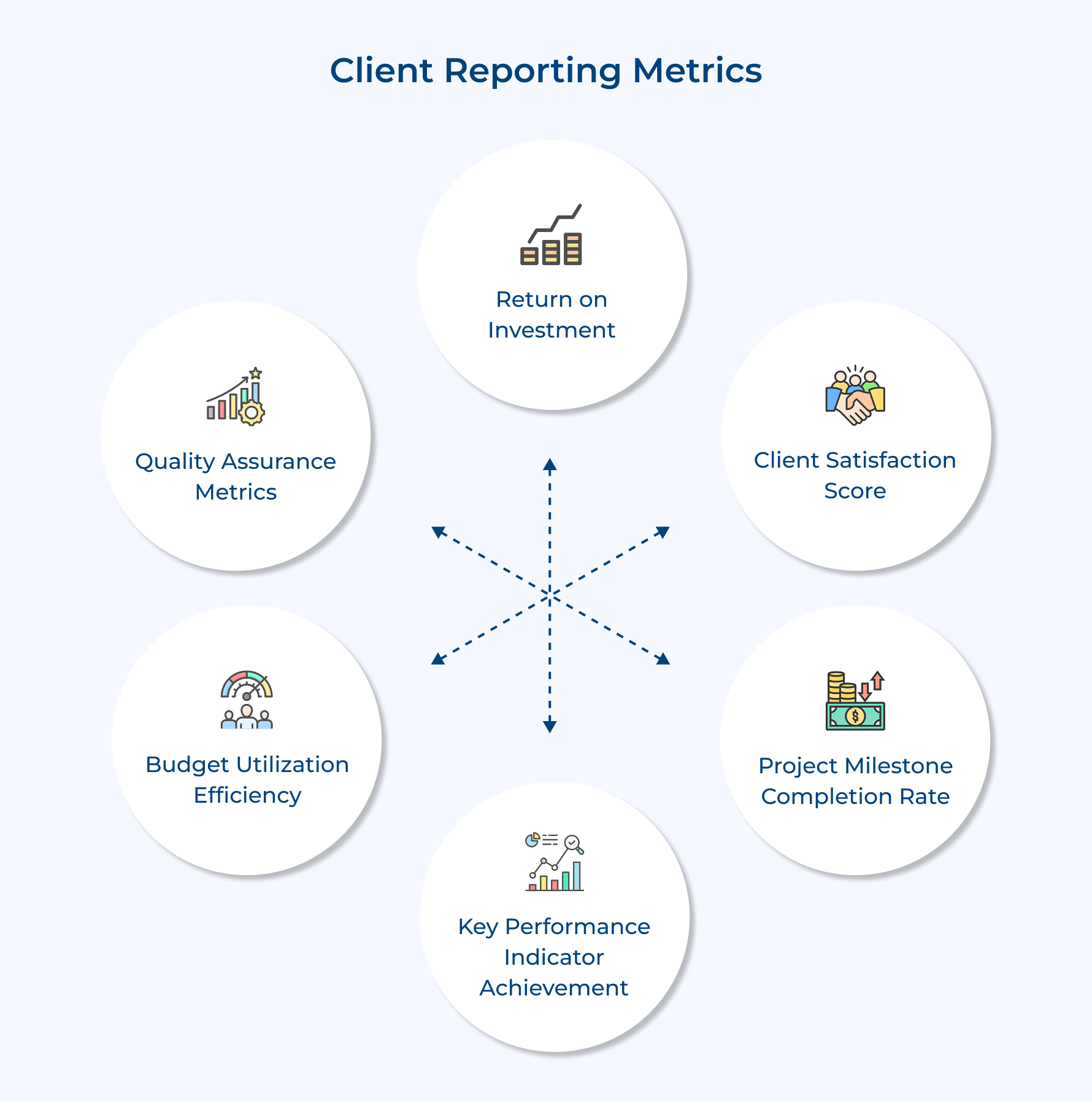
Return on Investment (ROI)
This fundamental metric calculates the financial return generated from your services compared to the client’s investment. ROI provides clear evidence of value creation and helps justify continued partnership while demonstrating your agency’s impact on their bottom line.
Client Satisfaction Score
Regular satisfaction surveys reveal how well your services meet client expectations and identify areas for improvement. This metric helps you address concerns proactively and strengthens relationships by showing your commitment to their success along with feedback incorporation.
Project Milestone Completion Rate
Tracking on-time delivery of key project phases demonstrates your reliability and project management effectiveness. This metric builds trust by showing consistent progress toward agreed-upon goals and helps clients plan their internal resources accordingly.
Key Performance Indicator Achievement
Measuring progress against predetermined KPIs shows how your work contributes to the client’s strategic objectives. These metrics vary by industry but typically include conversion rates, engagement levels, or efficiency improvements that directly impact business performance.
Budget Utilization Efficiency
This metric compares actual spending against allocated budgets to demonstrate responsible resource management. Efficient budget utilization shows your commitment to maximizing client investment while achieving desired outcomes without unnecessary overspending or waste.
Quality Assurance Metrics
Error rates, revision cycles, and deliverable approval times indicate the quality of your work output. These metrics demonstrate your attention to detail and help clients understand the value of your quality control processes in preventing costly mistakes.
Challenges in Client Reporting and How to Overcome Them
Client reporting presents unique obstacles that can strain professional relationships and undermine service effectiveness. Understanding these common challenges helps agencies develop proactive strategies that strengthen client communication and demonstrate consistent value.

Data Collection Complexity
Pulling info from different platforms and departments takes forever—especially when your clients use tools that don’t play well with your systems. It leads to messy, incomplete reports.
Use automated tools that pull data from multiple platforms into interactive dashboards. Centralized data equals faster, cleaner reporting.
Inconsistent Reporting Standards
If different team members use different formats or track different KPIs, clients end up lost. One month you’re talking click-through rates, the next it’s vague engagement metrics.
Build customizable templates with consistent formatting, terminology, and KPIs. It creates clarity and lets clients track progress over time without guessing.
Time Management Constraints
Deep-dive reports are time-consuming and that time often competes with project delivery or billable hours.
Block time specifically for reporting, and treat it like strategic consulting. After all, helping clients understand results is part of the value your marketing agency provides.
Technical Communication Barriers
Your team may be great at analyzing campaign performance, but not every client understands things like bounce rates or segmentation strategies.
Start every project with a discovery session to learn how your client likes to receive information. Then, use plain language, visuals and glossaries to explain the data in ways that actually resonate.
6 Additional Best Practices for Client Reports
These advanced practices help agencies differentiate their services while building deeper trust with clients through thoughtful reporting approaches.
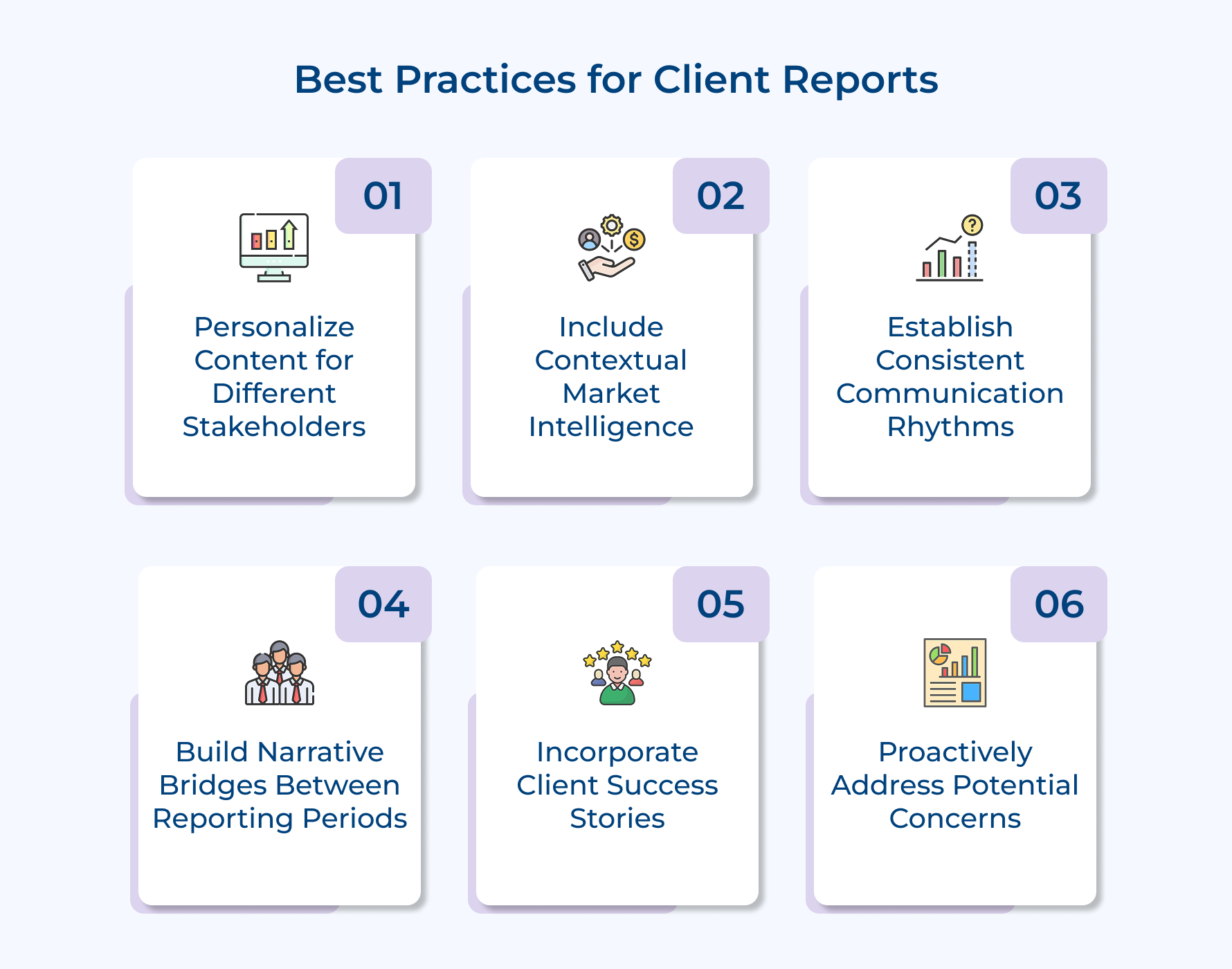
Personalize Content for Different Stakeholders
Not everyone reading your report wants the same thing. A CEO likely cares about big-picture strategy, while the marketing manager needs the nitty-gritty like campaign metrics and click-through rates. Tailor different sections to match their roles so everyone finds value fast.
Include Contextual Market Intelligence
Clients appreciate knowing how they’re doing not just internally, but against the competition. Including industry trends and relevant market shifts helps frame their results as well as positions your marketing agency as a strategic partner.
Establish Consistent Communication Rhythms
Don’t just send reports on the 1st of the month. Coordinate your reporting rhythm with your client’s key planning and budgeting cycles so your insights show up right when they’re making decisions.
Build Narrative Bridges Between Reporting Periods
Make each report feel like a continuation of the last. Connect the dots between past performance and current outcomes to show growth, momentum, what’s changing as well as why.
Incorporate Client Success Stories
Share real success stories like how a content tweak boosted leads or how your ad campaign outperformed benchmarks. These moments make your reports more relatable and prove the value of your work in concrete ways.
Proactively Address Potential Concerns
If performance dips or a result doesn’t meet expectations, talk about it. Be upfront, explain the why, and outline your plan to improve. This honesty builds long-term trust and shows your commitment to real results, not just reporting what looks good.
Turn Data into Smart Decisions with Client Reporting
Client reporting transforms complex professional work into clear business value that clients can understand and act upon. This translation process ensures your expertise becomes visible and measurable, preventing exceptional work from remaining invisible to stakeholders who make partnership decisions.
Strategic reporting enhances agency profitability through stronger client retention while streamlining operations through systematic processes. This disciplined approach elevates client relationships by positioning your firm as a trusted strategic advisor rather than just another service provider.
Limit time — not creativity
Everything you need for customer support, marketing & sales.

Shivank Kasera is part of the marketing team at Kooper, where he focuses on building content that helps agencies and service providers grow. With a keen interest in SaaS, operations, and scalability, he translates practical insights into actionable resources for business leaders.