Top 8 Capacity Planning Challenges for Agencies & Solutions

Key Highlights:
- Overcoming capacity management challenges helps improve profitability, client satisfaction, and team morale.
- Smart agencies use real-time data, flexible staffing, and skill mapping to overcome capacity management challenges.
- Proper capacity planning boosts revenue, client satisfaction, team morale, and financial predictability while reducing operational stress.
Agency leaders constantly struggle with the impossible balancing act of matching talented resources with unpredictable client demands while maintaining profitability and team morale across multiple concurrent projects.
This resource juggling creates cascading problems including missed deadlines, burned-out employees, disappointed clients, and lost revenue opportunities that threaten your agency’s reputation as well as long-term sustainability in competitive markets.
Tired of juggling resources last minute? Strategic capacity planning frameworks (paired with smart tools and proven methods) help you overcome common capacity planning challenges. They turn chaotic allocation into smooth, predictable operations that fuel sustainable growth and keep clients consistently happy.
Top 8 Capacity Planning Challenges for Agencies
Let’s explore the top 8 capacity planning challenges agencies face and discover strategies to overcome them.
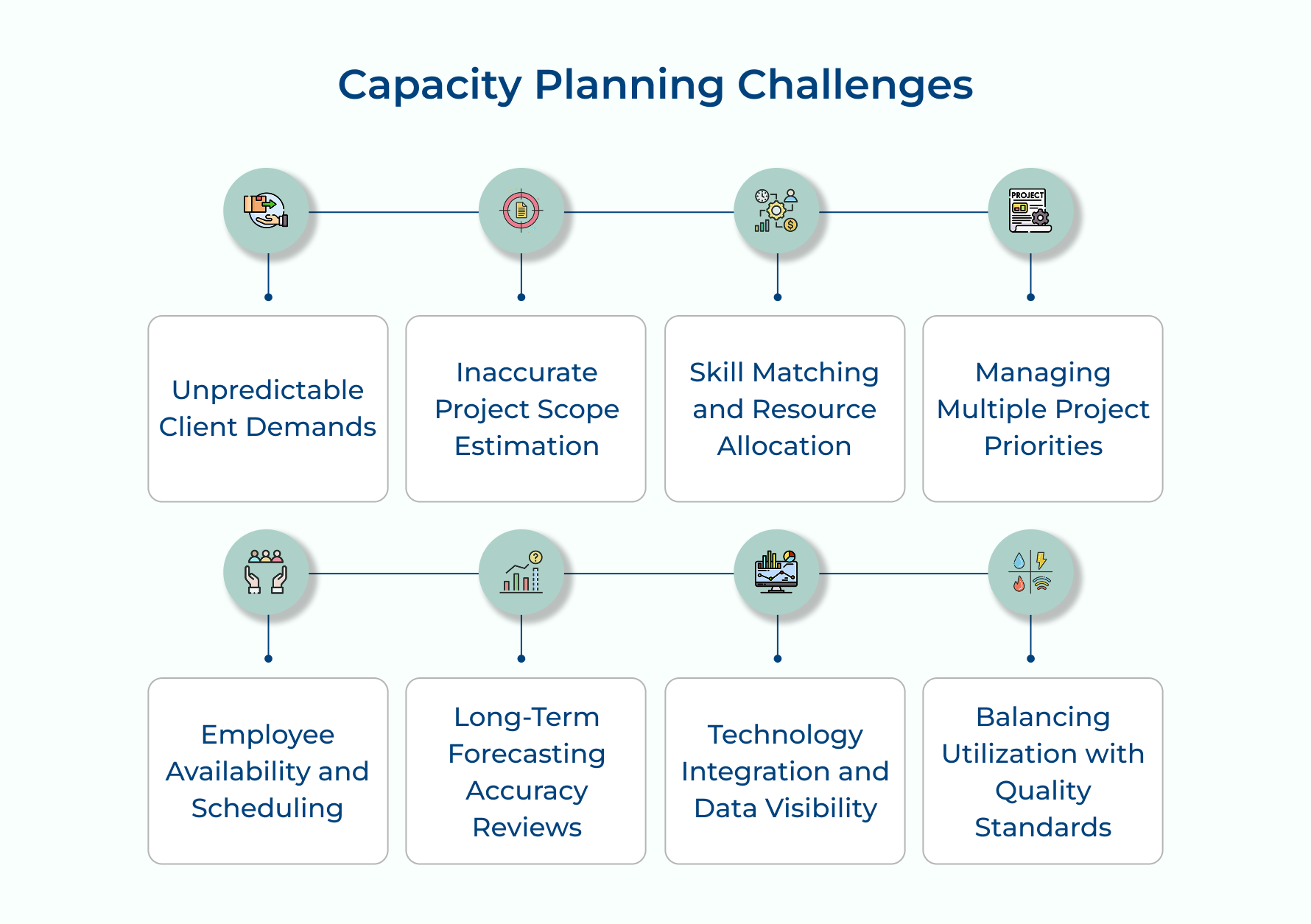
1. Unpredictable Client Demand Fluctuations
Professional services agencies often face unpredictable demand; some weeks are packed, others go quiet. This makes staffing feel more like guesswork than strategy. Common challenges include sudden client emergencies, seasonal highs and lows, as well as unexpected budget cuts during economic dips.
To prepare for future demands, smart agencies are ditching rigid staffing models. Instead, they’re using real-time data to forecast workloads as well as building flexible capacity with a mix of full-time staff, freelancers, and contractors.
Diversifying clients across industries also helps smooth out revenue bumps.
A 2024 Professional Services Council study found that firms using flexible capacity planning saw 23% higher profit margins and 31% better client retention. It’s a smarter, more resilient way to manage changing demand.
2. Inaccurate Project Scope Estimation
Getting project estimates right is one of the toughest resource capacity planning challenges agencies face. Clients change their minds, and complex tasks often reveal surprises mid-way. These shifts throw off your entire plan.
Here’s how to manage it better:
- Break projects into phases: Use iterative scoping with milestone reviews to catch changes early and adjust timelines realistically.
- Use estimation templates: Base your estimates on past projects to include common change requests and complexity factors from the start.
- Set up clear change protocols: Any major scope changes should trigger formal approvals and updated timelines to avoid overburdening your team.
These steps help agencies tackle capacity planning challenges with more control, fewer surprises, and happier clients.
3. Skill Matching and Resource Allocation
One of the biggest capacity planning challenges in agencies is having the right people available at the right time. Your top developers might be overloaded while juniors wait for tasks.
Add remote teams into the mix, and you often end up with talent in the wrong place at the wrong time. Thus, creating gaps despite having enough people on paper.
To fix this, agencies need to get clear on:
- Who has which skills and at what level
- What each project really needs and when
- How easily team members can cross-train
- The cost of shifting people across projects or locations
Using capacity planning tools, agencies can build detailed skill maps, launch cross-training plans, and set up smarter resource-sharing across offices—ensuring every project gets the expertise it needs.
4. Managing Multiple Competing Project Priorities
Every client wants to feel like a priority and that’s fair. But when every project is treated as the most urgent one, your teams end up stretched thin, juggling conflicting deadlines and risking burnout. It’s one of the most common capacity planning challenges in agencies, especially as you scale.
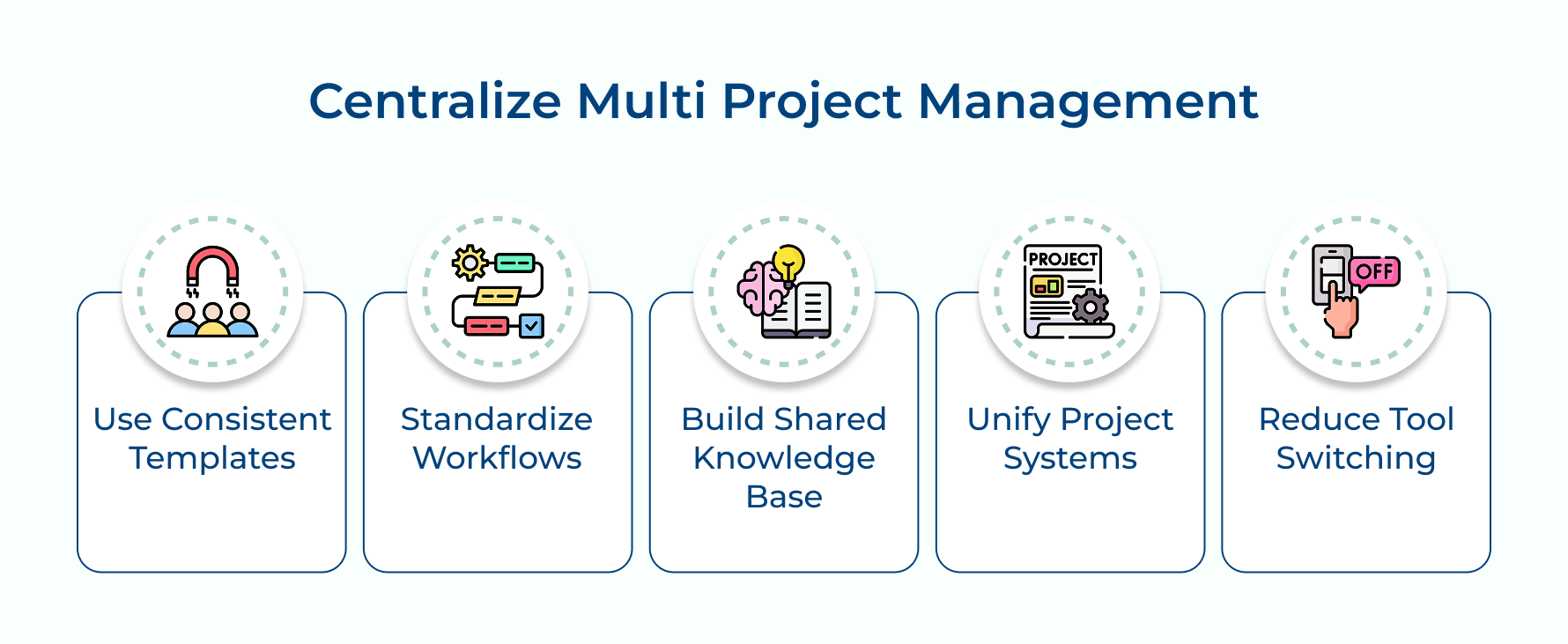
Account managers often over promise to keep clients happy, while delivery teams struggle to deliver without compromising quality. What does it lead to? Misaligned expectations, stressed-out teams, and missed opportunities.
Here’s how to fix it:
- Use a priority scoring system: Rank projects based on factors like revenue impact, client tier, and strategic value, so everyone knows what truly matters.
- Hold weekly capacity reviews: Bring account managers and delivery teams together to align on priorities, bandwidth as well as realistic timelines.
5. Employee Availability and Scheduling Conflicts
Staff absences are inevitable but they don’t have to derail your projects. One of the key capacity planning challenges in agencies is balancing human availability with business demands. Even one unexpected sick day can throw off timelines, especially when key team members are involved.
Picture this: Your lead designer calls in sick just as you’re about to launch a major brand campaign. Two others are already on vacation, and your backup is tied up with another client emergency. Stressful, right?
Here’s how to prepare for the unexpected:
- Track planned time off well in advance.
- Analyze past trends, how many team members are typically out during holidays?
- Identify roles with no backup and build coverage plans.
- Use capacity planning tools to integrate leave calendars into project schedules.
6. Long-term Forecasting and Planning Accuracy
Agencies face constant capacity planning problems when clients need to shift and the market keeps changing. Here’s how to stay ahead:
- Build Flexible Forecasting Models
Don’t rely on a single prediction. Create best-case and worst-case scenarios so you’re prepared no matter how things turn out.
- Improve Sales Pipeline Data Quality
Meet regularly with your sales team to review deals and update timelines. Accurate, real-time data leads to smarter resource planning.
- Implement Rolling Planning Cycles
Skip the once-a-year plan. Review and adjust your capacity plans every quarter to stay aligned with actual performance as well as shifting demand.
7. Technology Integration and Data Visibility
One of the most common capacity planning problems agencies face is scattered tech systems. Here’s how it causes trouble and what to do about it:
- Disconnected Tools Create Silos
Your PM, time tracking, and HR systems don’t talk to each other, making it hard to see the full picture.
- Too Much Manual Work
Teams waste hours updating data across platforms instead of focusing on client deliverables.
- Lack of Real-Time Insight
Weekly reports just don’t cut it. Managers need live dashboards to make smart, timely decisions.
Solution:
Invest in unified capacity planning tools that sync project schedules, resources, and billing in one place. Thus, giving you full visibility and saving time.
8. Balancing Utilization with Quality Standards
One of the overlooked capacity planning problems is the push to maximize billable hours, often at the cost of team wellbeing and client satisfaction.
- Burnout Creeps in Fast
Constant overwork leads to fatigue, lower creativity, and missed details that damages client trust and internal morale. - Quality Takes a Hit
Overloaded teams can’t maintain high standards, no matter how skilled they are. - Short-Term Wins Hurt Long-Term Growth
Revenue might rise briefly, but poor delivery impacts referrals, retention, and reputation.
How to fix it:
- Set sustainable utilization targets (70–80%) that leave room for creativity and review.
- Run regular workload audits to catch overload early and balance priorities.
Benefits of Addressing Capacity Planning Challenges
When agencies get capacity planning right they unlock significant advantages that ripple through every part of their business.
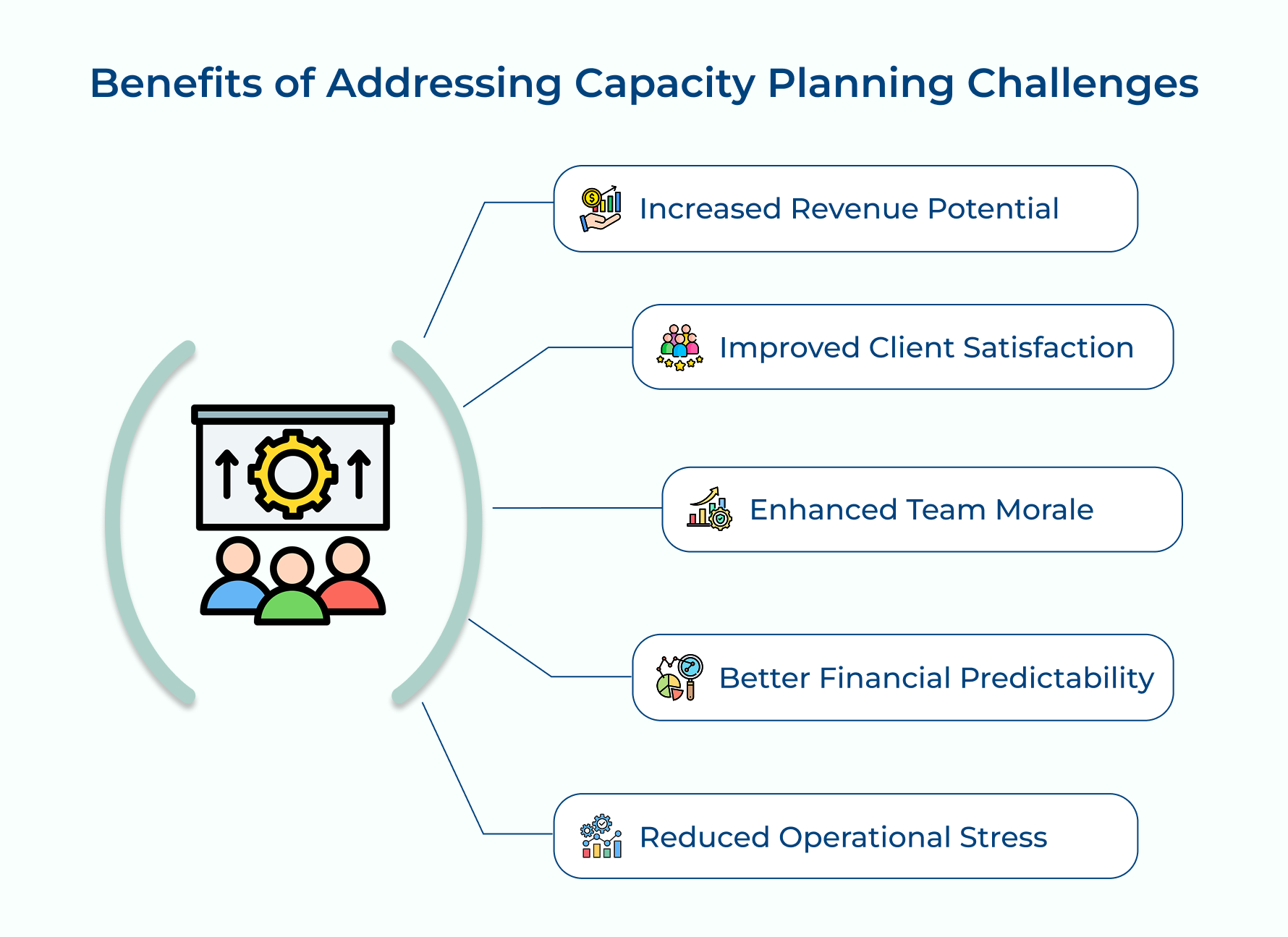
Increased Revenue Potential
Smart capacity planning lets you take on more profitable projects without turning away good clients. Your team can handle bigger work confidently.
Improved Client Satisfaction
Clients get better service when your team isn’t overworked. Proper planning allows you to focus on each client and maintain high-quality work.
Enhanced Team Morale
Staff are happier when workloads are balanced and predictable. They can plan personal time better without feeling overwhelmed or bored.
Better Financial Predictability
You get clear insight into future cash flow. This helps make informed decisions about hiring, office space, and investments.
Reduced Operational Stress
Project managers spend less time fixing problems and more on strategic work. Proper capacity planning removes constant delivery anxiety.
Essential Tips for Optimized Capacity Planning
Capacity planning doesn’t have to feel like constant guesswork. With the right strategies, agencies can stay flexible, avoid burnout and deliver consistently great work.
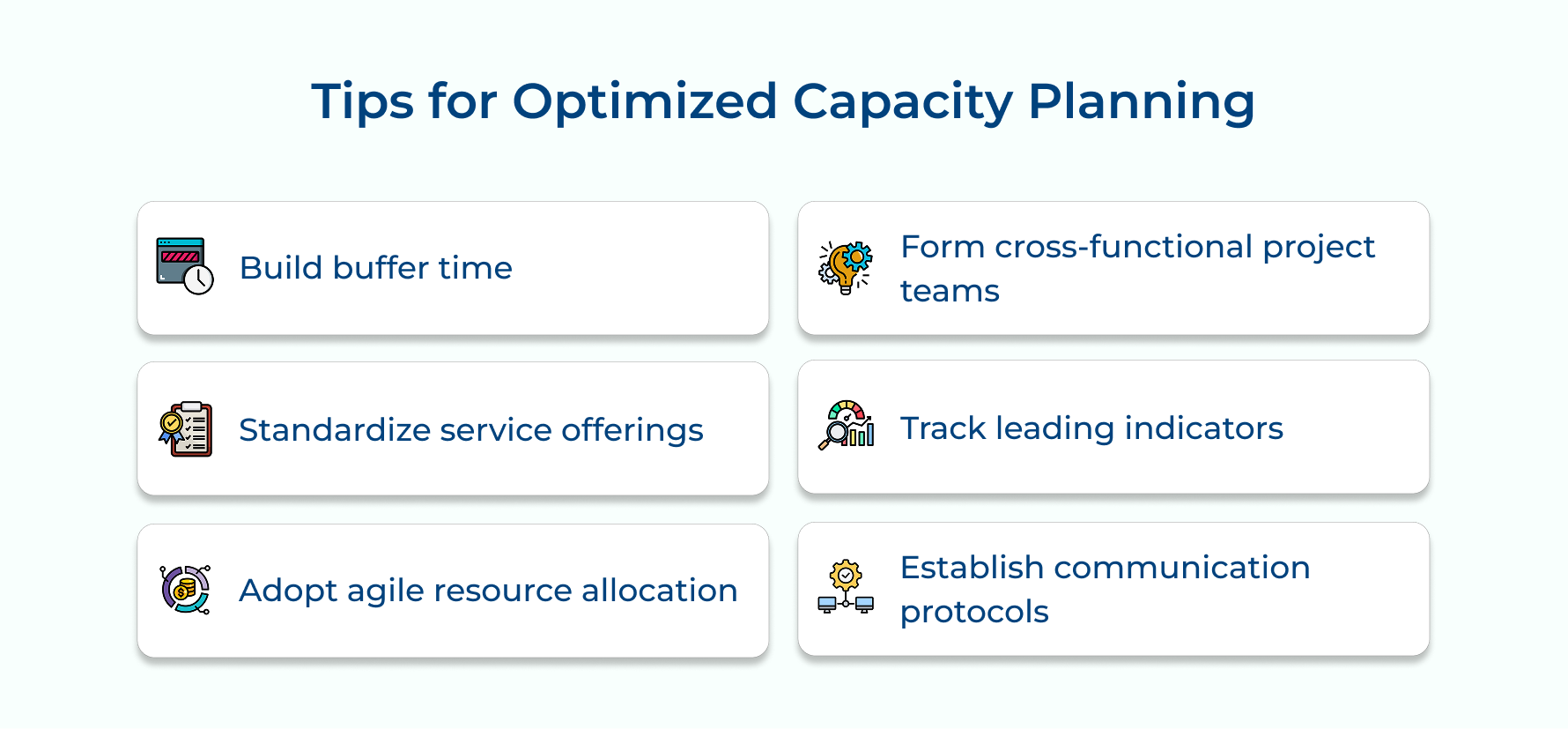
- Build Buffer Time Into Every Project
Add a 15–20% time cushion to protect your schedule from delays, scope changes, or client hold-ups. This prevents one late task from derailing multiple projects.
- Standardize Your Service Offerings
Create repeatable packages (like a “brand identity package”) with clear timelines, roles, and scope. This makes planning easier and helps clients understand what they’re getting.
- Adopt Agile Resource Allocation
Hold weekly sprint planning meetings to update priorities and reassign resources. Stay flexible and responsive as project needs evolve in real time.
- Form Cross-Functional Project Teams
Train team members across skill sets to avoid bottlenecks. When specialists aren’t available, others can step in without slowing the project down.
- Track Leading Indicators, Not Just Lagging Metrics
Watch early signals like pipeline velocity, proposal conversions, or average lead-to-kickoff time. These help you forecast capacity needs before workloads spike.
- Establish Clear Communication Protocols
- Run regular capacity review meetings with account managers and delivery leads.
- Set escalation processes for resource conflicts.
- Document key decisions so everyone stays aligned.
Mastering Capacity Planning: Your Path to Sustainable Agency Growth
Effective capacity planning turns chaotic firefighting into smooth, strategic growth. Agencies that tackle capacity planning challenges head-on can deliver top-notch work without burning out their teams or sacrificing profit margins. It’s all about smarter resource allocation, clearer communication, and flexible systems that adapt as client needs evolve.
When you plan proactively instead of reacting under pressure, you create space for both creativity and consistency. Start small, stay flexible and watch your agency grow sustainably with your team as well as clients thriving together.
Limit time — not creativity
Everything you need for customer support, marketing & sales.

Shivank Kasera is part of the marketing team at Kooper, where he focuses on building content that helps agencies and service providers grow. With a keen interest in SaaS, operations, and scalability, he translates practical insights into actionable resources for business leaders.