Agile Budgeting: How to Make Project Budgeting Effective
- What is Agile Budgeting?
- Key Benefits of Agile Budgeting in Project Management
- How to Make your Project Budgeting Agile in 8 Effective Steps
- Additional Tips for Agile Budgeting in Project Management
- The Role of AI and Automation in Agile Budgeting
- Limitations of Agile Budgeting and How to Overcome Them
- Agile Budgeting: Navigate your Projects with Financial Flexibility
- FAQs about Agile Budgeting

Key Highlights:
- Agile budgeting improves flexibility by adjusting spending as priorities shift, helping teams avoid waste and respond to changes quickly.
- Regular reviews and value-based planning help teams focus on results that build client trust as well as improve money decisions.
- Automation improves forecasting while tracking the expenses in real time and warn teams early about possible budget problems.
Traditional project budgets can box agencies into outdated plans, especially when market conditions change. Teams are left chasing irrelevant goals, costs spiral, and client trust fades.
Agile budgeting flips the script by funding work in smaller chunks, based on real results. This lets firms shift resources as priorities change, making budgeting a smart, strategic tool—not a rigid constraint.
Sure, adopting agile finance isn’t always easy, but with the right guardrails and metrics, consultancies can build more flexible, resilient project economics that benefit both sides. It’s about staying adaptable and always aligned with what matters most to the client.
What is Agile Budgeting?
Agile budgeting is a flexible way to manage project finances. Instead of setting one big budget at the start, it spreads funding out over time. It lets teams adjust spending as client needs, market conditions, or project details change. It’s a more responsive approach that helps professional services stay on track, even when things shift.
How does agile budgeting work?
Agile budgeting works in cycles, releasing money in smaller chunks tied to specific goals or timeframes. After each cycle, teams show what they’ve achieved, and that progress helps decide the next round of funding. This way, organizations can adjust plans based on real results.
It also means finance teams, project managers, and stakeholders need to work closely together. They regularly review progress and value delivered to make smart, informed decisions. This ongoing feedback keeps spending transparent and focused on what matters most, helping service firms stay efficient while delivering top value to clients.
Primary goals:
- Increase financial flexibility to respond quickly to market changes and emerging opportunities without the constraints of rigid annual budgets.
- Improve resource allocation by funding work based on continuous value delivery rather than upfront promises or projections.
- Enhance accountability through regular reviews that connect funding directly to demonstrable outcomes and business value.
- Reduce financial waste by stopping or pivoting unsuccessful initiatives earlier rather than continuing to fund them because they’re in the annual budget.
- Align financial and development cadences so that funding decisions happen at a rhythm that supports rather than hinders Agile delivery practices.
Key Benefits of Agile Budgeting in Project Management
Agile budgeting transforms how agencies and consultancies manage finances by replacing rigid annual plans with value-focused funding approaches that evolve as project realities unfold.
A good project agile budgeting plan will include the following elements:
- Communication
- Resources (including staff, physical assets, and cash)
- Timelines
- Workflow
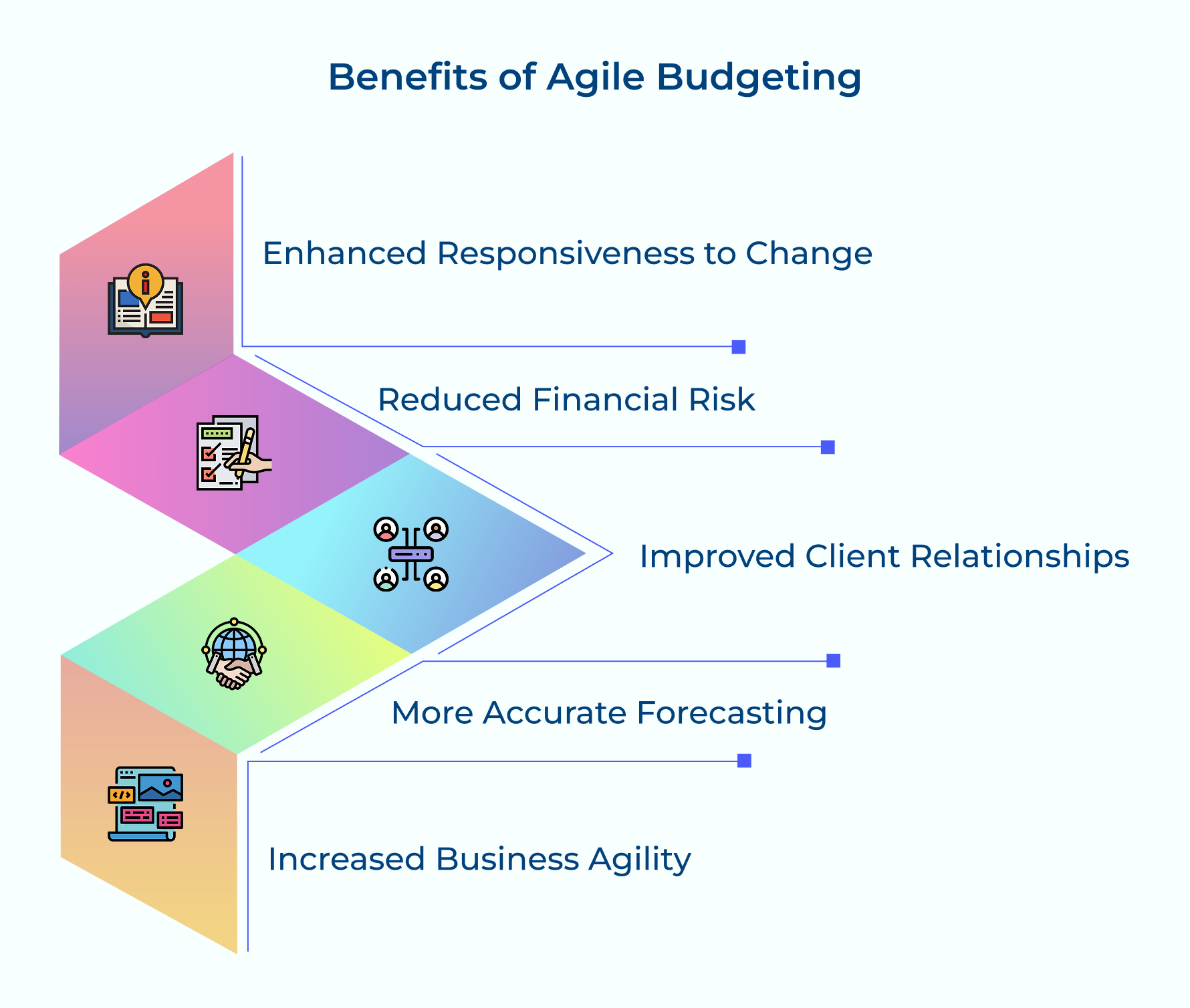
Enhanced Responsiveness to Change
Agile budgeting helps agile teams stay flexible. When client needs or market conditions change, teams can quickly shift funds to new priorities. This avoids being stuck with outdated plans and speeds up decision-making.
Reduced Financial Risk
Projects are funded in smaller amounts tied to clear deliverables with the agile methodology. This reduces the risk of big losses. Teams can spot problems early and adjust or stop work before too many resources are used.
Improved Client Relationships
Clients feel more involved when they see their feedback guiding budget choices. Agile budgeting makes project finances clear and builds trust. It encourages regular talks about value and how money is spent.
More Accurate Forecasting
Agile teams don’t try to predict everything from the start. Instead, they update forecasts often based on real project progress. This makes plans more accurate and useful.
Increased Business Agility
Agile budgeting helps agencies become more adaptable. Frequent financial reviews teach teams to make smart changes based on results—not outdated plans. This supports faster responses to market shifts.
How to Make your Project Budgeting Agile in 8 Effective Steps
In this article, we’ll guide you through eight essential steps to make your project budgeting more agile, ensuring your financial plans are as nimble as your project strategy.
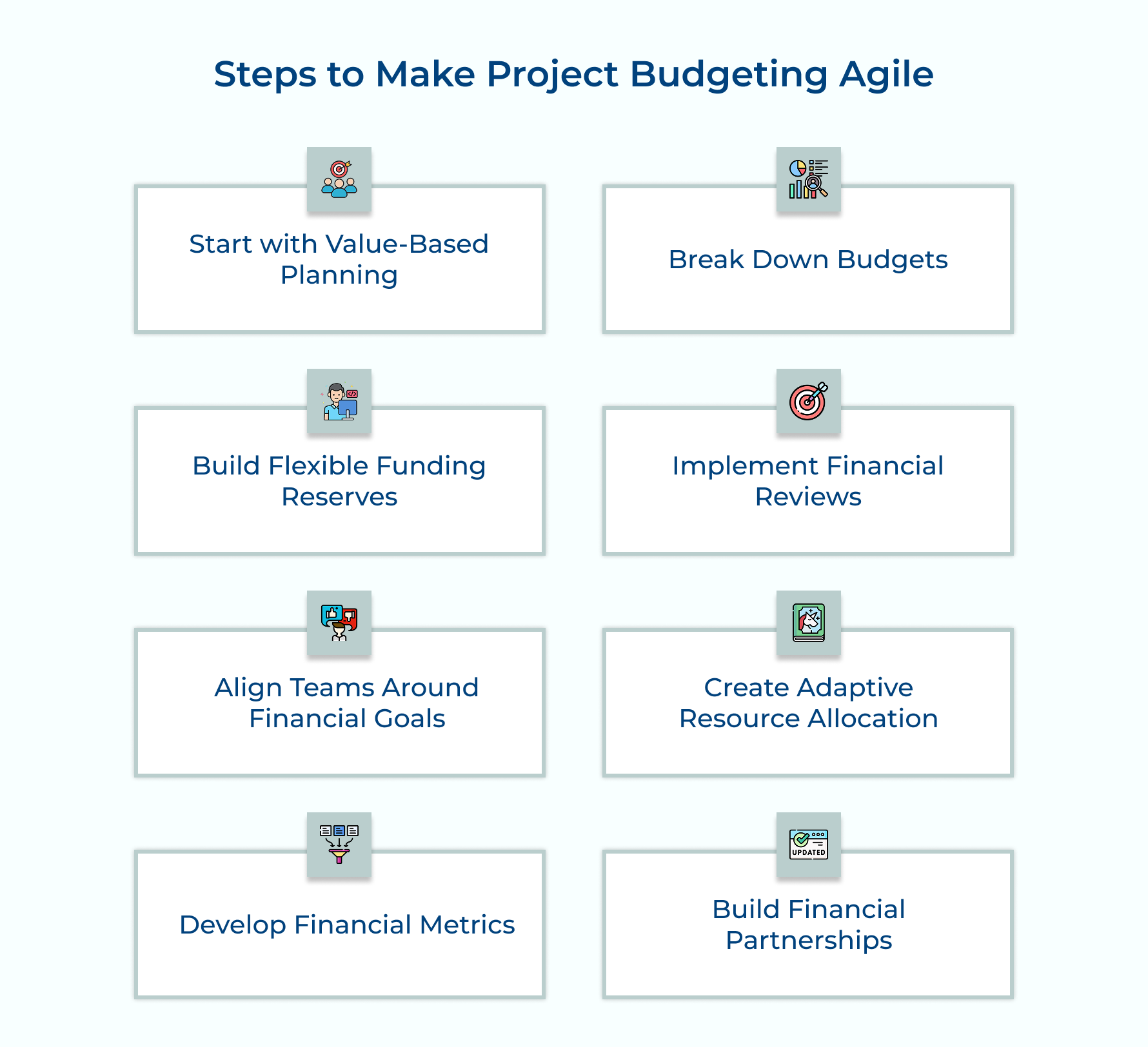
1. Start with Value-Based Planning
Value-based planning focuses on the results clients care about, not just tasks or deliverables. It makes sure every dollar spent helps achieve real business outcomes, not just fund activity that doesn’t drive impact.
Examples:
- Client dashboard: Fund features that boost retention by 15%, not fancy extras with little effect.
- Brand redesign: Spend on what fixes market perception, not a full rebrand if some assets still work.
- Website optimization: Focus on improving the checkout process that brings in $50K/month, not redesigning blogs that don’t convert.
- CRM implementation: Start with sales pipeline tools that help with revenue forecasting. Save reports for later.
Pro Tips:
- Use a chart to show value vs. cost. This helps make clear which items bring the most return per dollar.
- Sort tasks into three groups: must-haves, high-value, and nice-to-haves. This makes it easier to decide what to fund first.
2. Break Down Budgets by Iterations
Breaking a budget into smaller parts helps teams manage money in a flexible way. Instead of spending everything upfront, funds are used step by step to match project progress. This makes the entire process more adaptive and helps align spending with strategic objectives.
Here are four ways to do this:
- Sprint-based allocations: Every sprint (usually two weeks) gets its own small budget. This links spending directly to short-term deliverables and keeps finances in sync with development cycles.
- Value stream funding: Money is grouped by customer value streams instead of departments. This ensures the budget supports specific outcomes that matter to clients.
- Release-driven financing: Funds are tied to product releases. After each release, the team checks results and adjusts future spending based on customer feedback as well as business value.
- Milestone-triggered installments: Money is released when key milestones are reached. This builds momentum and ensures financial control throughout the project.
Example: A digital agency has a $120,000 budget to build a customer portal. They split it into six parts. The first part covers basic login features. Later parts fund more advanced tools. After each stage, the agency and client review progress while adjusting the next steps to meet strategic goals.
3. Build in Flexible Funding Reserves
Flexible funding reserves are like financial safety nets for your project. They give you room to handle surprises (like unexpected client needs or tech issues) without blowing the entire budget. Instead of guessing what might go wrong, you plan for it by setting aside 10–20% of the total budget.
These reserves are divided into categories based on the project’s risk. Each one should have clear rules: when to use it, who decides, and how it’s tracked. That way, the money is used wisely.
Here are a few best practices:
- Make the rules clear: Set up a process for dipping into the reserve. Teams should explain why they need the extra funds, so it’s easy to tell the difference between necessary changes and simple scope creep.
- Use approval levels: Not all changes need the same level of review. Small fixes can get a quick green light, but bigger shifts should go through proper approval and get input from key stakeholders.
4. Implement Regular Financial Reviews
Regular financial reviews turn budgeting into an ongoing conversation about spending and value. Instead of waiting for problems, these check-ins help teams spot issues early and make smart adjustments before they grow.
Hold short 30-minute budget reviews after each project iteration. In these meetings, project managers share actual vs. planned spending, team velocity, and any new financial risks. Focus on future actions, not past mistakes. Include key stakeholders so everyone can help decide what to prioritize next.
Pro tips:
- Use simple dashboards to show how budget use compares to progress and results. This makes it easy for both clients and teams to see if the project is on track.
- Try a “financial retrospective” after each phase. Reflect on how well the money was spent. This builds a habit of improving both budget use and product delivery over time.
5. Align Teams Around Financial Goals
Getting everyone on the same page with financial goals helps bridge the gap between creative work and business needs. When teams understand how their choices affect project profitability and client value, budget awareness becomes a shared responsibility.
Start by helping your team understand basic project economics using simple, real-life examples from your agency. Show how things like delays or scope changes impact the bottom line. Keep it visual and clear, dashboards that link daily decisions to financial outcomes work best.
Add quick financial updates to regular team check-ins so they feel relevant, not separate. Ask questions like: Do we all get how project profits affect job security? Are we showing the right financial info to the right people? Where are we losing money without realizing it?
Recognize smart financial decisions, even small ones. It builds a culture where good money habits are part of great project work.
6. Create Adaptive Resource Allocation
Adaptive resource allocation means shifting your team and tools as project needs change, so you’re not locked into the original plan when things evolve. It helps agencies stay efficient and focused on what matters most.
- Scale team size as needed: Add or reduce team members based on workload. This avoids paying for idle time or risking burnout during busy phases.
- Shift skills based on priorities: Move experts in and out as needed. You get the right skills at the right time without overcommitting resources.
- Balance specialists and generalists: Mix deep experts with flexible team members. This avoids bottlenecks and keeps your team agile as priorities shift.
7. Develop Meaningful Financial Metrics
Meaningful financial metrics turn project budgeting from dry numbers into actionable insights that guide decisions. They provide a shared language for teams and clients to see if spending is delivering the expected value.
Here are five key metrics for agile budgeting:
- Value delivery ratio: This shows if higher-cost tasks are producing more value for the client or just draining resources.
- Cost per story point: By dividing iteration costs by completed story points, you can see how much you’re spending per unit of work and spot inefficiencies.
- Budget forecast accuracy: It tracks how closely actual spending matches predictions, helping improve estimations and highlight hidden costs.
- Financial runway indicator: You get to know how many iterations you can fund at the current rate, giving early warnings if you’re about to exceed the budget.
- Client investment efficiency: It measures if client spending is translating into results that matter to them.
8. Build Client Financial Partnerships
Building strong client financial partnerships changes budgeting from a tense negotiation to a team effort. This creates a sense of shared responsibility for financial outcomes and helps everyone stay aligned on priorities. It builds trust and allows for faster adjustments when business needs change.
Start by making budget conversations feel safe by openly sharing your agency’s cost structure. Set up regular financial check-ins that focus on optimizing value, not policing the budget. Use shared tools to evaluate the impact of changes before discussing costs.
Best practices:
- Develop a shared tool to assess changes based on business value, complexity, and budget impact, so both parties can make informed decisions.
- Hold a “financial retrospective” at key milestones. Use this time to discuss what’s working or not in the financial partnership, focusing on how to improve, not assign blame.
Additional Tips for Agile Budgeting in Project Management
Beyond the core framework, these additional strategies can help agencies and consultancies refine their agile budgeting approach that often undermine financial flexibility.
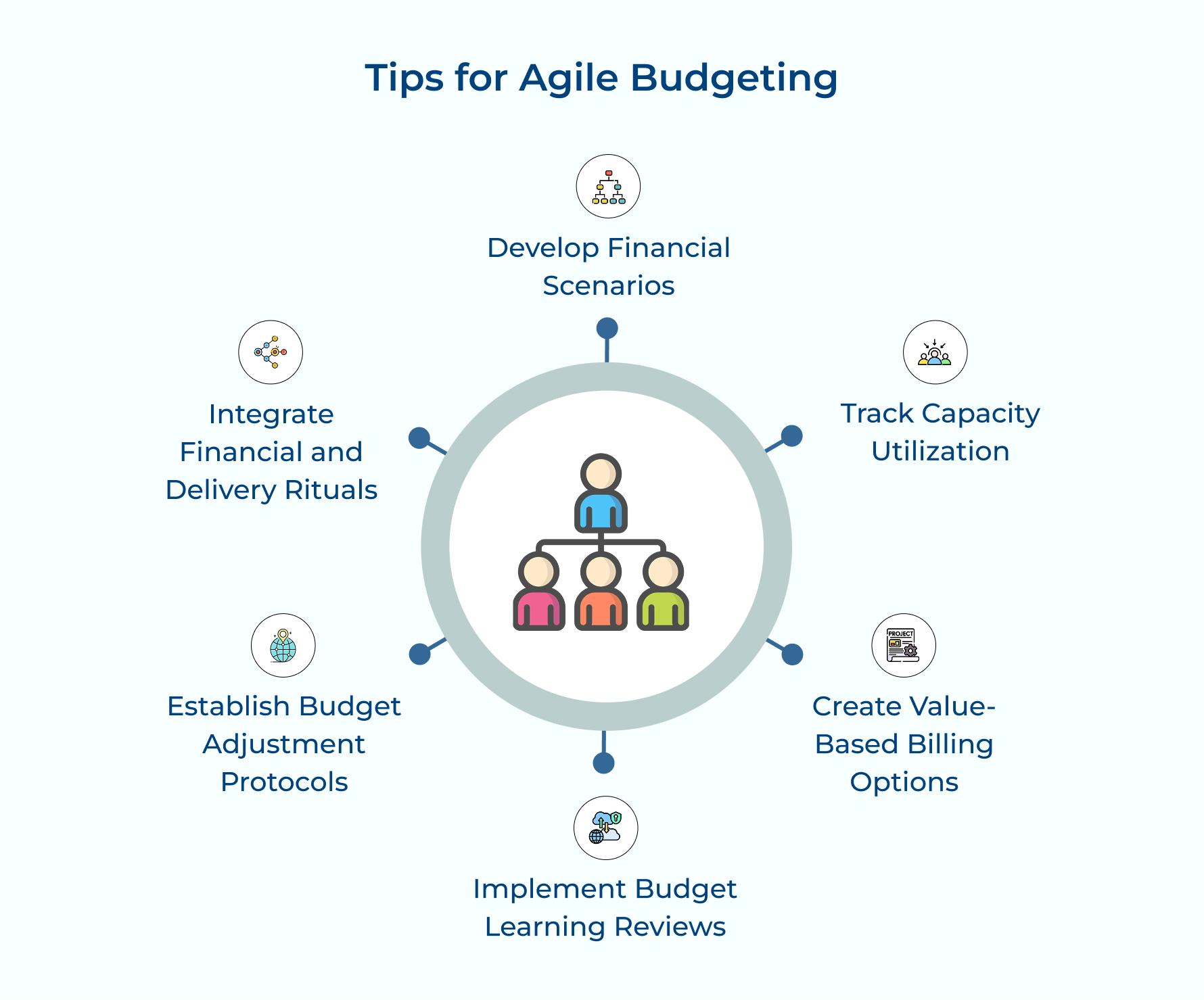
1. Develop Financial Scenarios, Not Just Plans
Start your project with three budget scenarios; conservative, expected, and optimistic. It helps your team prepare for changes and makes it easier to adjust later without stress.
2. Track Capacity Utilization Across Projects
Look at how your team is being used across all projects, not just one. This way, you get to share resources better, avoid burnout, and keep your agency profitable even if one project is struggling.
3. Create Value-Based Billing Options
Try pricing models that link your pay to client results instead of hours worked. This encourages both sides to focus on what really works, not just on ticking off tasks.
4. Implement Budget Learning Reviews
After each project, review what went right and wrong with the budget. Learn from mistakes and spot early warning signs so you can do better next time.
5. Establish Clear Budget Adjustment Protocols
Have clear steps for handling scope or budget changes. Decide who needs to be involved, what needs to be documented, and how updates will be shared.
6. Integrate Financial and Delivery Rituals
Add budget talk to your regular agile meetings. For example, review spending during sprint demos or discuss resources during daily standups so financials stay part of the workflow.
The Role of AI and Automation in Agile Budgeting
Let’s explore how AI and automation are revolutionizing agile budgeting, enabling companies to stay ahead in a competitive environment.
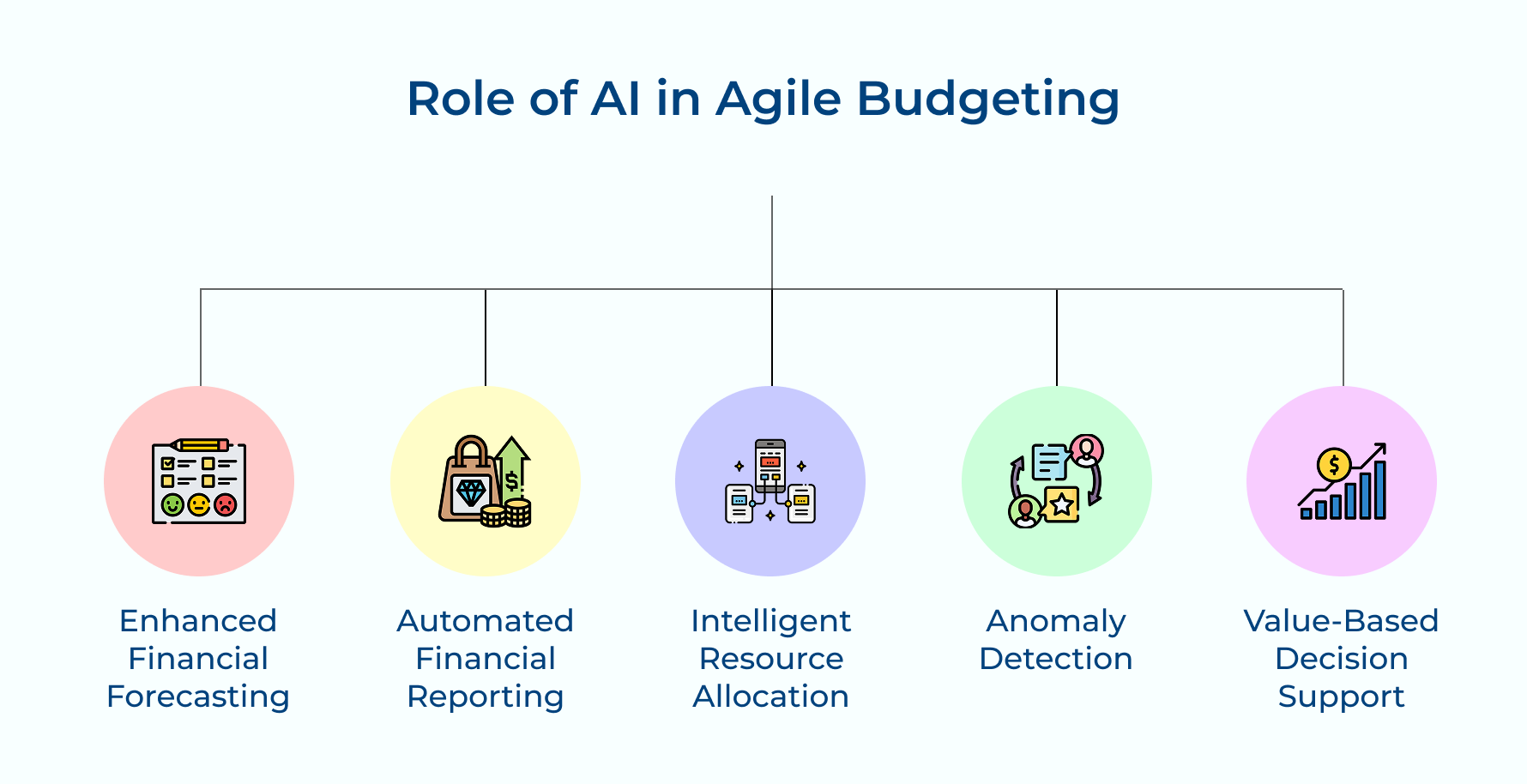
1. Enhanced Financial Forecasting
AI can look at past project data to make smarter budget estimates. It spots patterns to predict where costs might go off track, helping teams fix problems early.
2. Automated Financial Reporting
Automation tools can pull data from time tracking and project systems to create real-time budget dashboards. This saves time and gives teams instant updates on how the budget is doing.
3. Intelligent Resource Allocation
AI tools can match the right people to the right tasks by looking at skills, availability, and past use. It helps avoid wasting resources while keeping projects running smoothly and profitably.
4. Anomaly Detection and Early Warnings
Machine learning watches for odd spending patterns and flags problems early. This gives project managers a chance to step in before small issues become big budget problems.
5. Value-Based Decision Support
AI tools show how specific tasks impact client results. It enables teams to spend money on the work that matters most, getting better results with the same budget.
Limitations of Agile Budgeting and How to Overcome Them
Let’s delve into some of the challenges and provide insights into better aligning budget processes with the agile principles that drive modern project management.
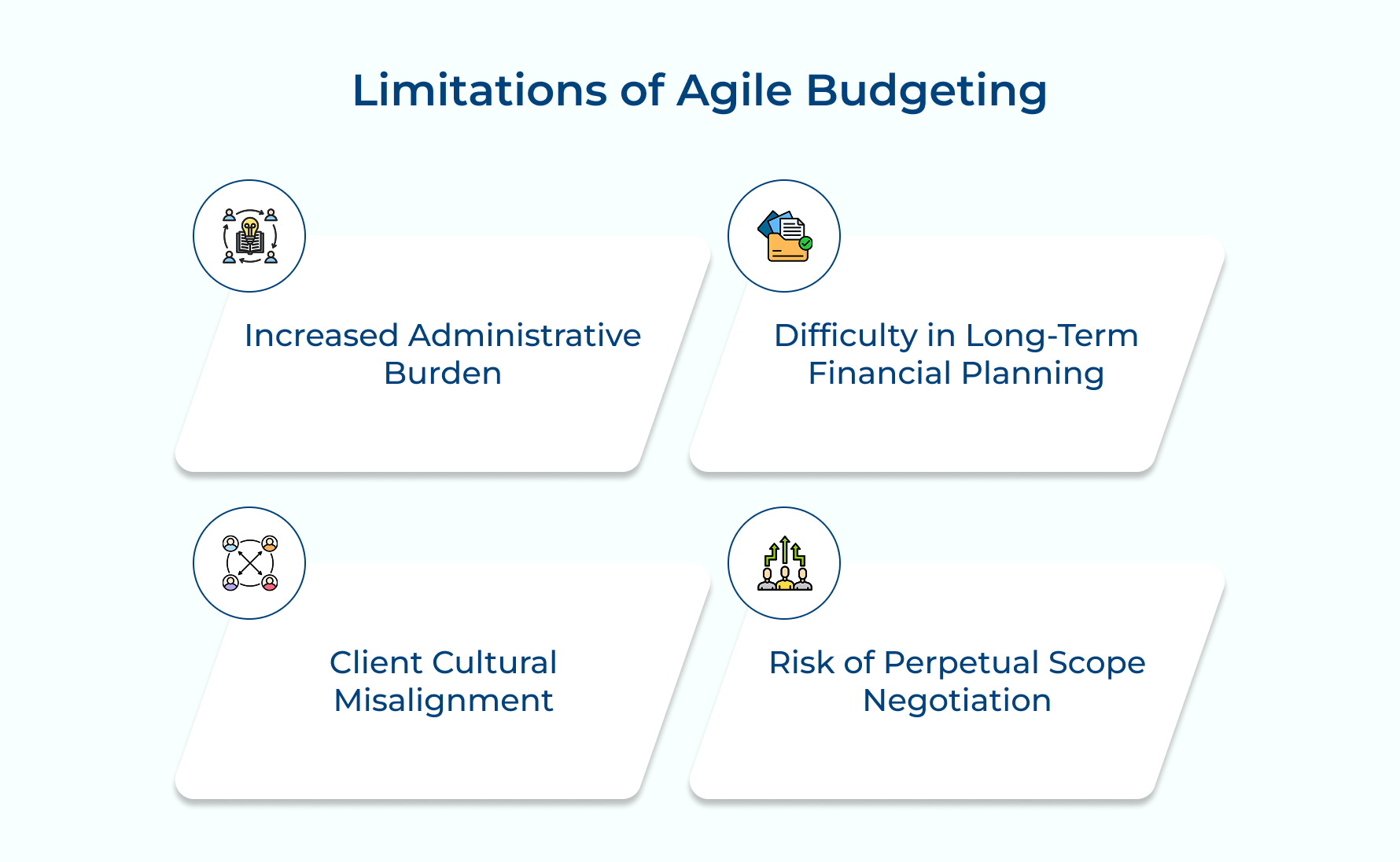
1. Increased Administrative Burden
Agile budgeting needs frequent check-ins, updates, and resource tweaks. All this extra tracking can feel like a time drain for delivery teams and project managers, leading some to see it as busywork rather than something useful.
2. Difficulty in Long-Term Financial Planning
Because agile budgets change often, it’s tough to predict costs months ahead. This can make it harder for agencies to plan hiring, manage cash flow, or give finance teams the clear forecasts they usually need.
3. Client Cultural Misalignment
Many clients stick to yearly budgets and fixed plans. That doesn’t always fit with agile methods, so agencies often have to “translate” between styles, which can cause confusion or strain trust when plans need to change.
4. Risk of Perpetual Scope Negotiation
If boundaries aren’t clear, every sprint can turn into a negotiation about what to build next. This can slow down progress, frustrate teams, and wear down client relationships.
While these challenges are significant, they can be effectively managed with thoughtful strategies and approaches. The following techniques can help organizations maximize the benefits of agile budgeting while minimizing its limitations.
- Keep Financial Oversight Simple but Smart
Set up lightweight financial systems that offer enough control without slowing things down. Use automated reports and connect them to your existing project tools to reduce manual work. - Use Rolling Forecasts
Build financial forecasts that look ahead a quarter at a time. This gives enough visibility for planning, while still allowing adjustments at each iteration to stay flexible. - Educate Clients on Agile Budgeting
Run workshops and share case studies to show clients how financial flexibility leads to better results. This helps ease their discomfort with uncertainty and builds trust. - Set Clear Financial Boundaries
Define a total budget range for the project and set rules for when changes require approval. This keeps things flexible but within clear limits everyone agrees on. - Share Responsibility
Make budgeting a shared effort between agency and client. Review the budget together regularly, focusing on what’s working and how to improve, not who’s to blame.
Agile budgeting has become essential as market volatility and client expectations continue to accelerate. By replacing rigid financial plans with adaptive funding approaches, agencies can respond to emerging opportunities, minimize waste while aligning resources with genuine client value rather than predetermined deliverables that may no longer serve business needs.
A thoughtful implementation of agile budgeting transforms agencies from order-takers to strategic partners. This change helps increase profits by using resources more effectively. It improves how work is done by focusing money on what matters most. It also builds stronger client relationships through honest financial conversations that focus on value and create long-term trust.
Limit time — not creativity
Everything you need for customer support, marketing & sales.

Shivank Kasera is part of the marketing team at Kooper, where he focuses on building content that helps agencies and service providers grow. With a keen interest in SaaS, operations, and scalability, he translates practical insights into actionable resources for business leaders.