Agency Capacity Planning for Better Utilization & Profitability
- What is Agency Capacity Planning?
- Importance of Agency Capacity Planning
- How to Create a Successful Agency Capacity Planning Strategy?
- Best Practices for Effective Agency Capacity Planning & Management
- Empowering Agencies through Proactive Capacity Management
- FAQs about Agency Capacity Planning & Management

Key Highlights:
- Agency capacity planning uses historical data and market trends to predict resource needs, ensuring balanced workloads.
- Ensure capacity planning supports business objectives, adjusting strategies based on performance and key metrics.
- Monitor workloads to prevent burnout, balancing billable hours with work-life balance for sustainable long-term productivity.
Managing workloads effectively can be a real challenge for agencies. Without proper capacity planning, teams often face burnout from overwork or inefficiencies from excess capacity. This imbalance can impact the quality of client projects, delay deadlines, and create stress for everyone involved.
The issue often arises from a lack of visibility into current demand and actual demand, making it hard to allocate resources effectively. By implementing smart agency capacity planning strategies you can streamline operations, optimize workload distribution as well as ensure sustainable growth.
Let us explore practical strategies to help your agency thrive.
What is Agency Capacity Planning?
Agency capacity planning is the strategic process of assessing an agency’s resources, skills, and workload to effectively meet client demands as well as business objectives. It involves analyzing current capabilities, forecasting future needs, and aligning resources to ensure efficient project delivery.
The importance of agency capacity planning cannot be overstated. It enables agencies to balance workload, prevent burnout, and maintain high-quality output. Effective capacity planning helps agencies avoid over-committing or under-utilizing their talent, leading to improved profitability and client satisfaction.
Agency capacity planning is mainly used for:
- Resource optimization: Maximize the utilization of existing resources while avoiding overallocation, ensuring efficient project execution and employee well-being.
- Workload forecasting: Accurately predict future project demands and resource requirements to make informed decisions about staffing, training, as well as business development.
- Skill gap identification: Assess current team capabilities against projected needs to identify areas for upskilling or hiring, maintaining a competitive edge in service offerings.
- Financial performance: Improve profitability by accurately forecasting resource needs, and optimizing billable hours, while identifying opportunities for growth or cost reduction.
Importance of Agency Capacity Planning
Agency capacity planning ensures teams handle client projects efficiently without overloading or underutilizing them. Let’s learn how agency capacity is important for you in the long run.
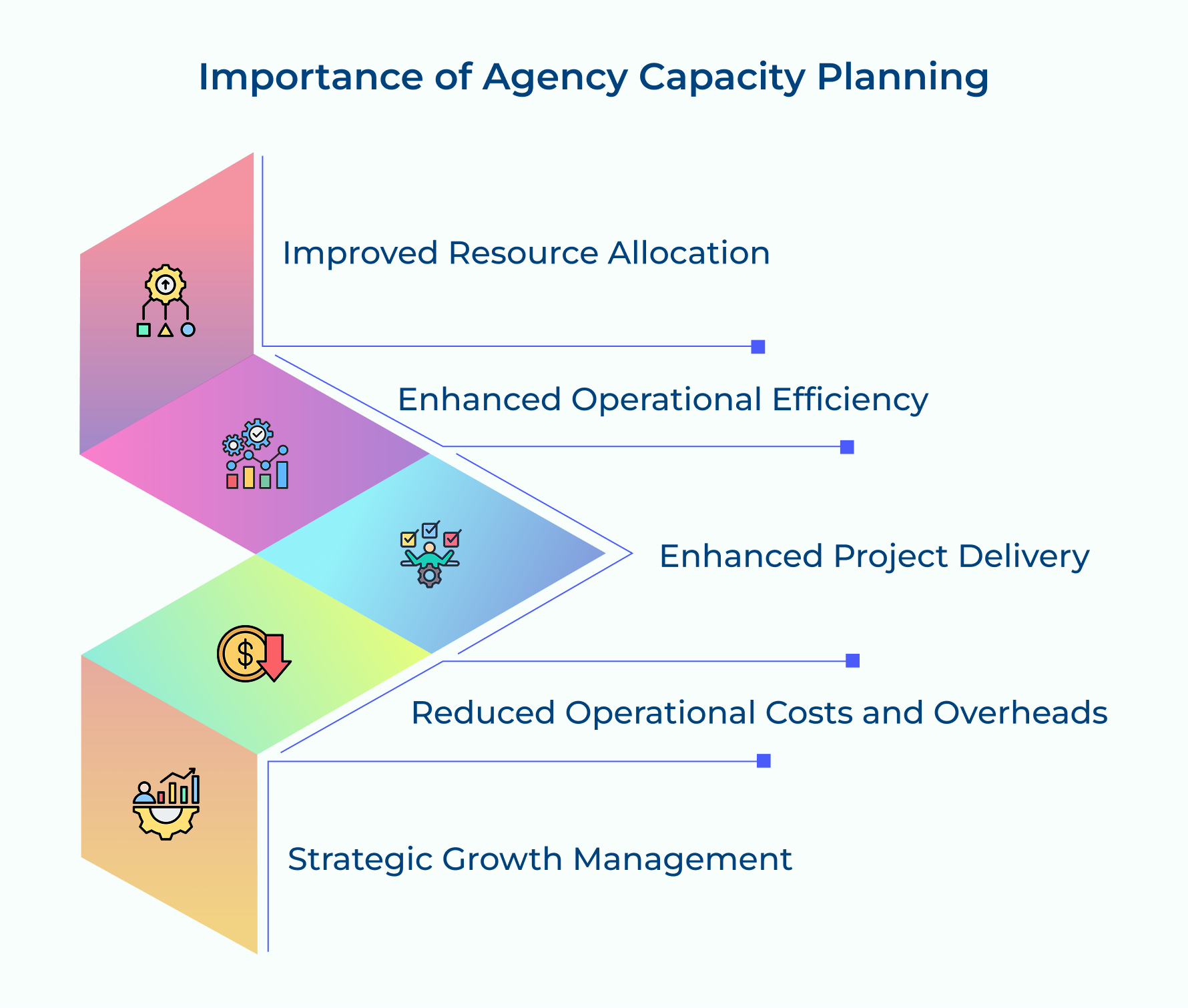
Improved Resource Allocation
Capacity planning helps agencies distribute workloads evenly across teams, ensuring no one feels overburdened or idle. Balanced resource planning prevents burnout, reduces overtime, and ensures every project gets the attention it deserves.
Enhanced Project Delivery
When agencies assess resources and skills accurately, they can set realistic timelines as well as deliverables. It doesn’t just boost project outcomes but also enhances client satisfaction and strengthens your reputation in the industry.
Enhanced Operational Efficiency
Aligning resources with project demands streamlines workflows and reduces bottlenecks. With fewer delays and minimal idle time, agencies can take on more projects as well as keep productivity high, leading to happier clients.
Reduced Operational Costs and Overheads
Optimized resource management minimizes unnecessary expenses, from overtime to last-minute hiring costs. Efficient capacity planning improves financial health and maximizes profit margins by reducing waste.
Strategic Growth Management
Knowing your current capacity and future needs enables smarter decisions about hiring, training, expansion, etc. The proactive strategy supports sustainable growth and keeps agencies competitive in an ever-changing market.
How to Create a Successful Agency Capacity Planning Strategy?
Creating a successful agency capacity planning strategy means aligning your current resources with future demand. By planning capacity in anticipation, you can stay prepared, optimize workflows, and ensure seamless project delivery. Explore the step-by-step strategy here!
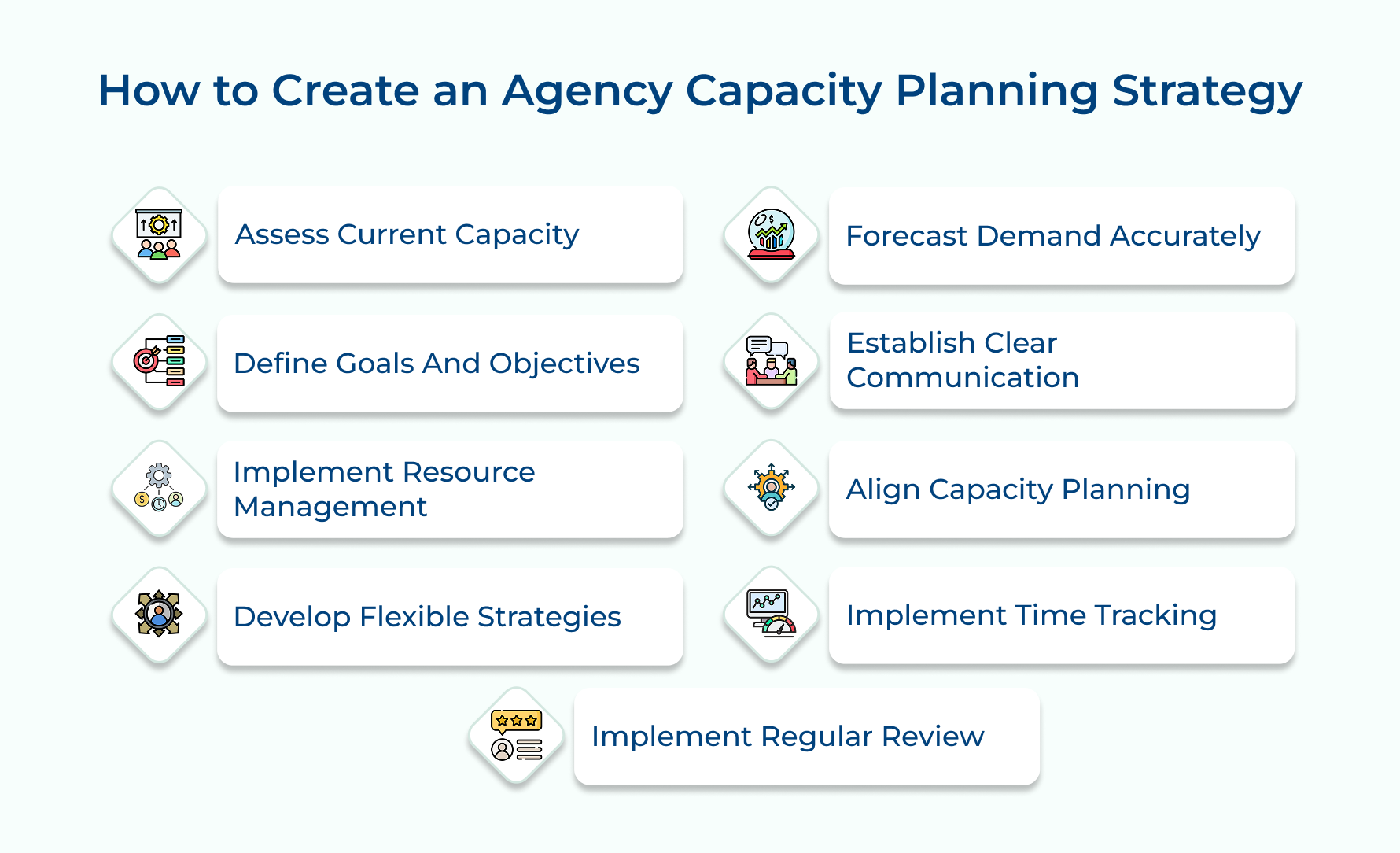
1. Assess Current Capacity
Start by assessing your agency’s current capacity—it’s the best way to get a clear view of your existing resources, skills, and workload. This step is key to spotting inefficiencies, leveraging strengths, and making smarter decisions about resource allocation along with future planning.
Take a close look to pinpoint bottlenecks, underused resources, and any skill gaps in your team. The insight will help you decide where to invest in training when to hire, and which projects to take on, ensuring smoother operations now as well as better planning for what’s ahead.
Best practices:
- Conduct regular skills assessments of your team members to maintain an up-to-date inventory of your agency’s capabilities and expertise.
- Utilize project management tools to track current workloads and resource utilization rates, providing real-time insights into your agency’s capacity.
2. Define Goals and Objectives
Having clear goals and objectives gives your capacity planning a sense of direction. It helps align your efforts with your agency’s bigger picture, ensuring that capacity management supports your vision and growth plans.
Use these goals to set measurable targets for things like capacity utilization, project timelines, and financial performance. These benchmarks not only help you track progress but also guide your decisions every step of the way.
Best practices:
- Develop SMART (Specific, Measurable, Achievable, Relevant, Time-bound) goals for your capacity planning to ensure clarity and accountability.
- Align capacity planning objectives with key business metrics such as profitability, client satisfaction, and employee retention to ensure holistic improvement.
3. Implement Resource Management Tools
Resource management tools give you a clear view of your agency’s capacity, workload, and project timelines. They make it easier to allocate resources efficiently, plan projects better, and make smarter decisions.
Use these tools to check resource availability, assign tasks, track progress, and create reports. They also help spot potential conflicts or overbooking early, so you can tackle issues before they escalate and keep your agency running smoothly.
Best practices:
- Choose a resource management tool that integrates well with your existing project management and time-tracking systems to ensure seamless data flow.
- Provide thorough training to all team members on how to use the resource management tool effectively, ensuring consistent and accurate data input.
4. Develop Flexible Resource Allocation Strategies
Flexible resource allocation lets your agency adapt to shifting project needs and market changes with ease. It ensures your team stays optimally utilized, workloads are balanced, and the right skills are on hand—even during busy periods or unforeseen challenges.
Try strategies like cross-training your team, building a reliable network of freelancers, or adopting project-based staffing models. These methods help you scale your capacity up or down as needed, so you can meet client demands without stretching your resources too thin.
Best practices:
- Create a talent pool of pre-vetted freelancers and contractors who can be quickly onboarded to handle capacity overflows or specific skill requirements.
- Implement a matrix organizational structure that allows for easy reallocation of team members across different projects based on changing priorities and skill needs.
5. Forecast Demand Accurately
Accurate demand forecasting is the key to staying ahead in capacity planning. It helps your agency predict human resource needs, prepare for challenges, and stay ready to meet customer demand—all without overextending your team.
Analyzing historical data, market trends, and your client pipeline, enhances your project’s future workloads. It ensures balanced workloads, smarter hiring decisions, and optimized resource allocation, keeping your agency running smoothly.
Best practices:
- Combine quantitative methods (such as time series analysis) with qualitative insights from account managers and industry trends to create more holistic demand forecasts.
- Regularly review and adjust your forecasts based on actual performance as well as changing market conditions to improve accuracy over time.
6. Establish Clear Communication Channels
Clear communication is one key aspect that keeps your team aligned on roles, responsibilities, and your agency’s current capacity. It builds better coordination, minimizes confusion, and ensures quick adjustments when capacity challenges pop up.
Make it a habit to hold regular capacity review meetings, use collaboration tools for real-time updates, and set clear guidelines for reporting any capacity concerns. Open communication like this keeps everyone on the same page, boosts team morale, and helps tackle issues before they escalate.
Best practices:
- Hold weekly capacity planning meetings with key stakeholders to review current workloads, upcoming projects, and potential resource conflicts.
- Use visual management tools, such as capacity heat maps or dashboards, to communicate current and projected capacity levels across the agency.
7. Align Capacity Planning with Financial Goals
Aligning your capacity planning with financial goals is key to making sure your resources are driving profitability and growth. It balances workloads with financial targets, so every decision adds to your bottom line.
Bring financial metrics like target billable hours, profit margins, and revenue per employee into your planning process. These numbers will help guide decisions on resource allocation, pricing, and even which new business opportunities to pursue.
Best practices:
- Develop a capacity planning model that includes financial projections, allowing you to assess the financial impact of different resource allocation scenarios.
- Regularly review the relationship between capacity utilization and profitability to identify opportunities for optimization as well as to inform pricing/staffing decisions.
8. Implement Time Tracking Systems
Accurate time tracking is a game-changer when it comes to understanding how your resources are being used across projects. It gives you crucial insights for capacity planning, helps pinpoint inefficiencies, and ensures you’re billing correctly as well as tracking profitability.
You can assess productivity, evaluate project profitability, and make smarter decisions for future planning by analyzing time-tracking data. It’s a great way to optimize resource allocation as well as spot areas where you can work more efficiently.
Best practices:
- Choose a user-friendly time-tracking system that integrates with your project management and billing software to minimize administrative overhead as well as ensure data consistency.
- Establish clear guidelines and expectations for time tracking, including the level of detail required as well as the frequency of updates, to ensure accurate data collection.
9. Implement Regular Review Processes
Regularly reviewing your capacity planning process helps keep it on track and aligned with your business goals. It gives you the chance to spot areas for improvement, adjust to market changes, and ensure your plans stay relevant.
Take time to assess your capacity planning results against your goals. Use these reviews to fine-tune your forecasting, tweak resource allocation strategies as well as update tools and processes to keep things running smoothly.
Best practices:
- Schedule quarterly capacity planning reviews to assess performance, identify trends, and make necessary adjustments to your strategies.
- Involve team members from various departments in the review process to gain diverse perspectives and ensure buy-in for any changes or improvements.
Best Practices for Effective Agency Capacity Planning & Management
Want to know how to master capacity planning and ensure your agency runs smoothly, even during peak periods? Let’s dive into the best practices that can make all the difference!
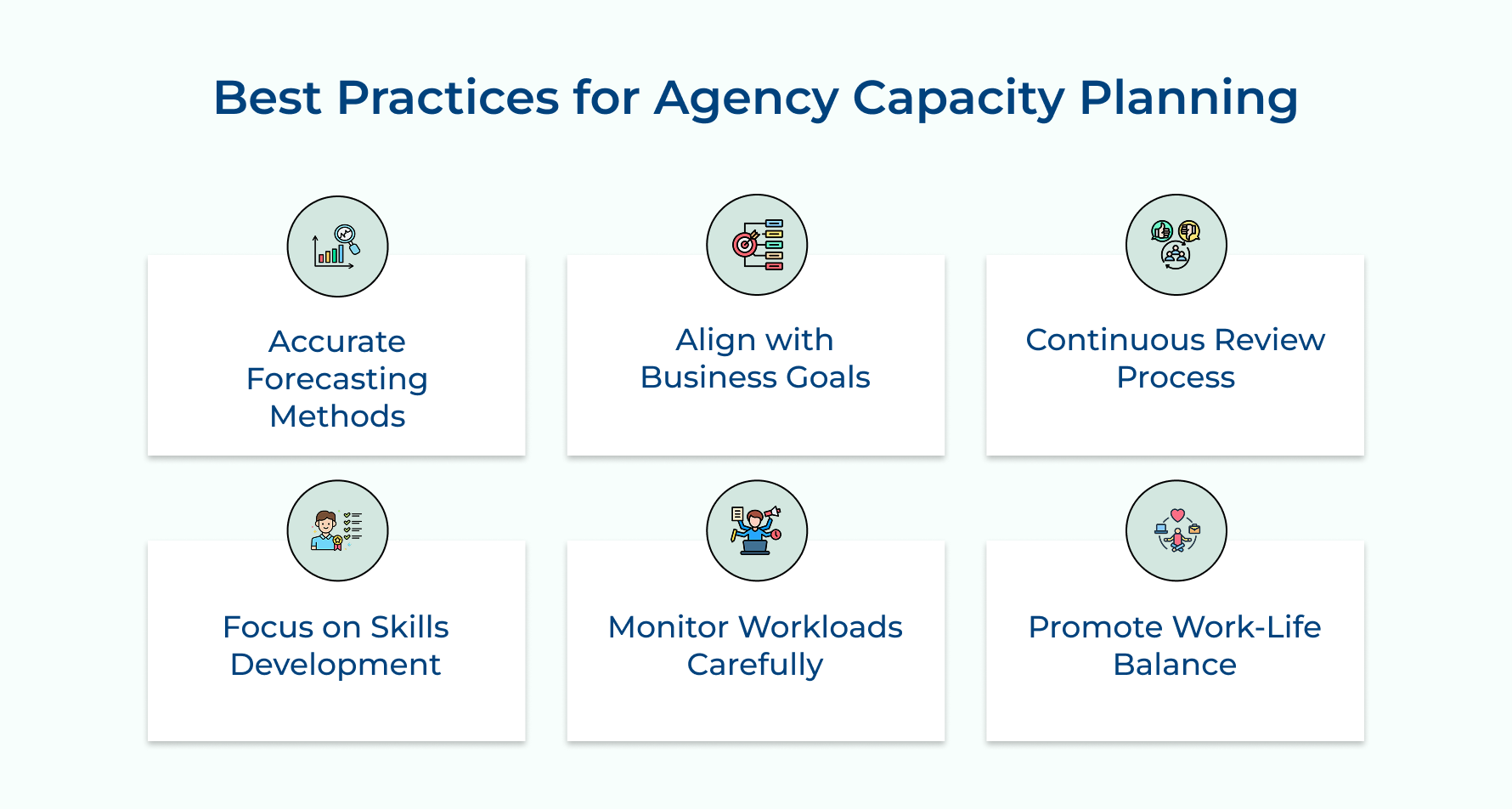
Develop Accurate Forecasting Methods
Combine historical data, market trends, and client pipeline information to create reliable demand forecasts. Regularly refine your forecasting models to improve accuracy over time, allowing for better long-term capacity planning.
Align Capacity Planning with Strategic Goals
Ensure your capacity management efforts support broader business objectives. Regularly review how capacity decisions impact key performance indicators and adjust strategies accordingly.
Implement Continuous Review and Optimization
Set up regular capacity review meetings to assess performance, identify bottlenecks, and make necessary adjustments. Be prepared to pivot quickly in response to changing market conditions or client needs.
Prioritize Skills Development
Maintain an up-to-date skills inventory and invest in ongoing training. The practice ensures your team’s capabilities evolve with market demands, reducing the need for last-minute hiring or outsourcing.
Balance Utilization with Employee Well-being
While maximizing billable hours is important, avoid consistently overworking your team. Monitor workloads closely as well as prioritize work-life balance to prevent burnout and maintain long-term productivity.
Empowering Agencies through Proactive Capacity Management
Mastering agency capacity planning opens the door to sustainable success. When resources are strategically aligned with workload demands, agencies unlock their full potential. The result is a seamless workflow, empowered teams, and the ability to deliver exceptional service to clients.
Effective capacity management ensures growth, stability, and lasting success. With the right planning in place, agencies can adapt to challenges and continue to thrive, delivering their best work while maintaining a healthy work-life balance.
Limit time — not creativity
Everything you need for customer support, marketing & sales.

Pooja Deshpande is a content contributor at Kooper, focused on creating insightful resources that help agencies and service providers scale efficiently. Passionate about SaaS trends, content strategy, and operational excellence, she delivers practical, easy-to-implement guidance for modern business leaders.