8 Ways to Improve Resource Allocation for Project Results

Key Highlights:
- Practical ways to improve resource allocation using data-driven planning, clear priorities and visibility across teams as well as ongoing projects.
- Better resource allocation reduces employee burnout, improves delivery quality and helps teams meet deadlines without constant last-minute reassignments.
- Step-by-step strategies support improving resource allocation through forecasting, collaboration and continuous reviews for long-term operational efficiency.
Your best people are stretched thin while others aren’t fully utilized. Deadlines slip, quality drops and clients feel the impact when the wrong resources land on the wrong projects. It’s frustrating – and it often leads to employee burnout across key teams.
Poor planning creates a domino effect. You rush to assign people after deals close, strategic work gets delayed and no one has a clear view of capacity.
The good part? You don’t need a major reset to improve resource allocation. Use historical data, apply a simple prioritization matrix, and plan ahead to balance workloads, reduce stress, all while delivering better results with your existing team.
What is Resource Allocation?
Resource allocation is the strategic process of assigning and managing an organization’s available resources—including people, budget, time, as well as equipment—to specific projects or tasks to achieve business objectives efficiently. It means matching the right team members with the right skills to the right projects at the right time.
Resource allocation starts with understanding project requirements and deadlines. Managers assess available team members as well as their current workload capacity. They then assign people to projects based on skills and availability.
The process continues with monitoring and adjusting allocations as project needs evolve. It requires constant communication between project managers and resource managers to prevent conflicts as well as bottlenecks.
Key principles:
- Priority-based assignment: Allocate resources to high-value or urgent projects first before distributing to lower-priority work.
- Skill-project matching: Assign team members whose expertise aligns with specific project requirements rather than just filling seats.
- Utilization balance: Maintain optimal productivity by avoiding both over-allocation that burns people out and under-allocation that wastes capacity.
- Flexibility and adaptability: Build buffer capacity and remain ready to reallocate resources when project scopes change or emergencies arise.
- Transparency and visibility: Keep allocation data accessible to stakeholders so everyone understands resource commitments and availability across the organization.
Key Benefits of Improving Resource Allocation
Better resource allocation transforms how your organization operates. Here’s what you gain when you get it right.
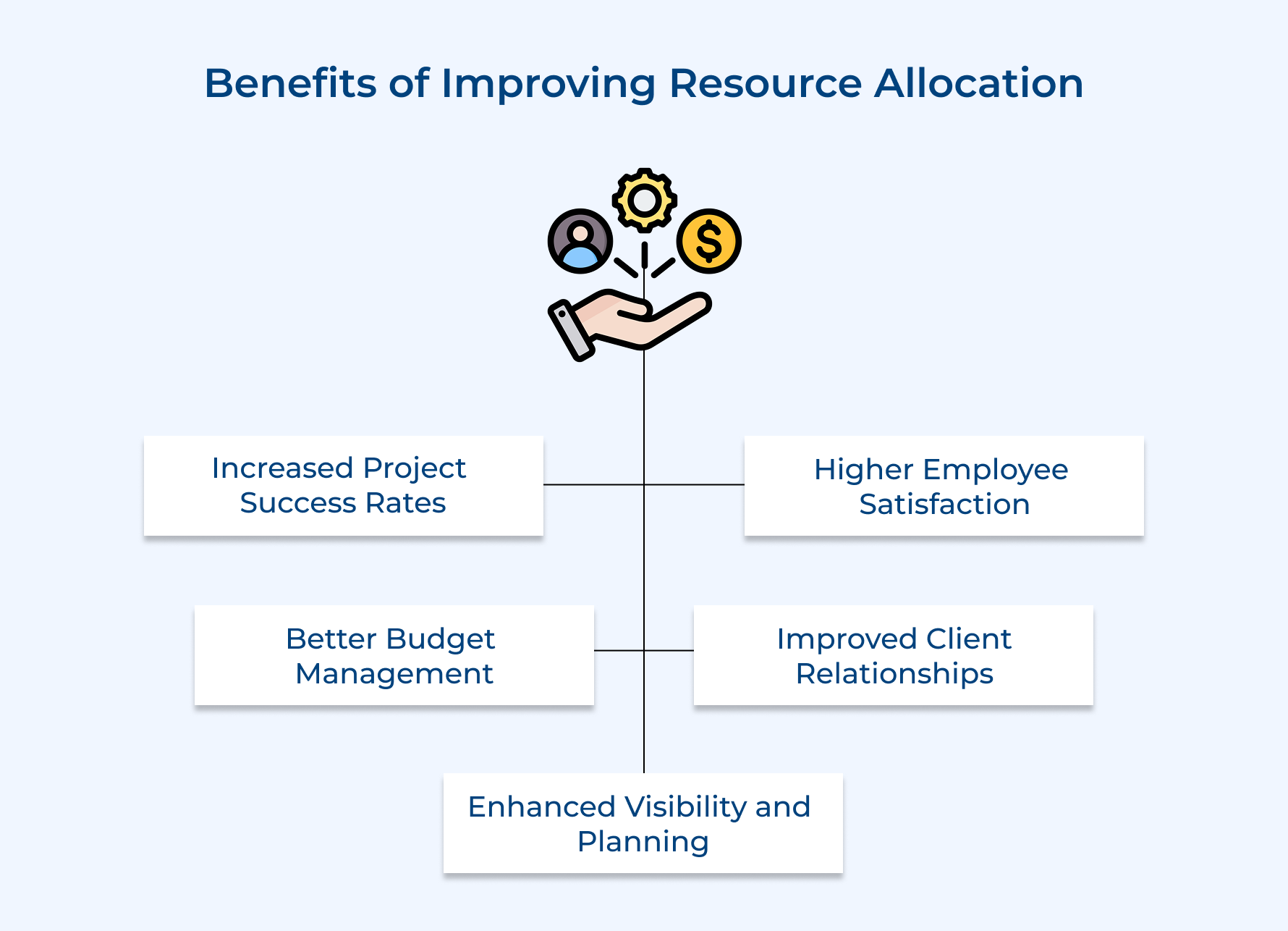
1. Increased Project Success Rates
When the right people are assigned to the right work, projects run smoother. Smart resource optimization ensures skills and availability are aligned from the start, reducing rework as well as failure risks.
2. Higher Employee Satisfaction
People do their best work when workloads feel fair and meaningful. Balanced assignments reduce stress and improve morale, while strong team collaboration grows naturally when no one is stretched too thin or left disengaged.
3. Better Budget Management
Thoughtful allocation helps you rely on existing talent instead of expensive overtime or last-minute hires. With clearer Workload forecasting, costs become more predictable and easier to control across projects.
4. Improved Client Relationships
Clients benefit from consistent delivery and focused attention. When teams aren’t overloaded, communication improves and trust builds. Accurate demand forecasting helps you commit confidently without overpromising.
5. Enhanced Visibility and Planning
You gain a clear view of who’s doing what and when capacity opens up. This visibility helps leaders spot conflicts early while making smarter decisions about timelines and new opportunities.
8 Effective Ways to Improve Resource Allocation
Explore these key strategies to enhance resource allocation, helping your organization to maximize efficiency, drive success as well as achieve its objectives.
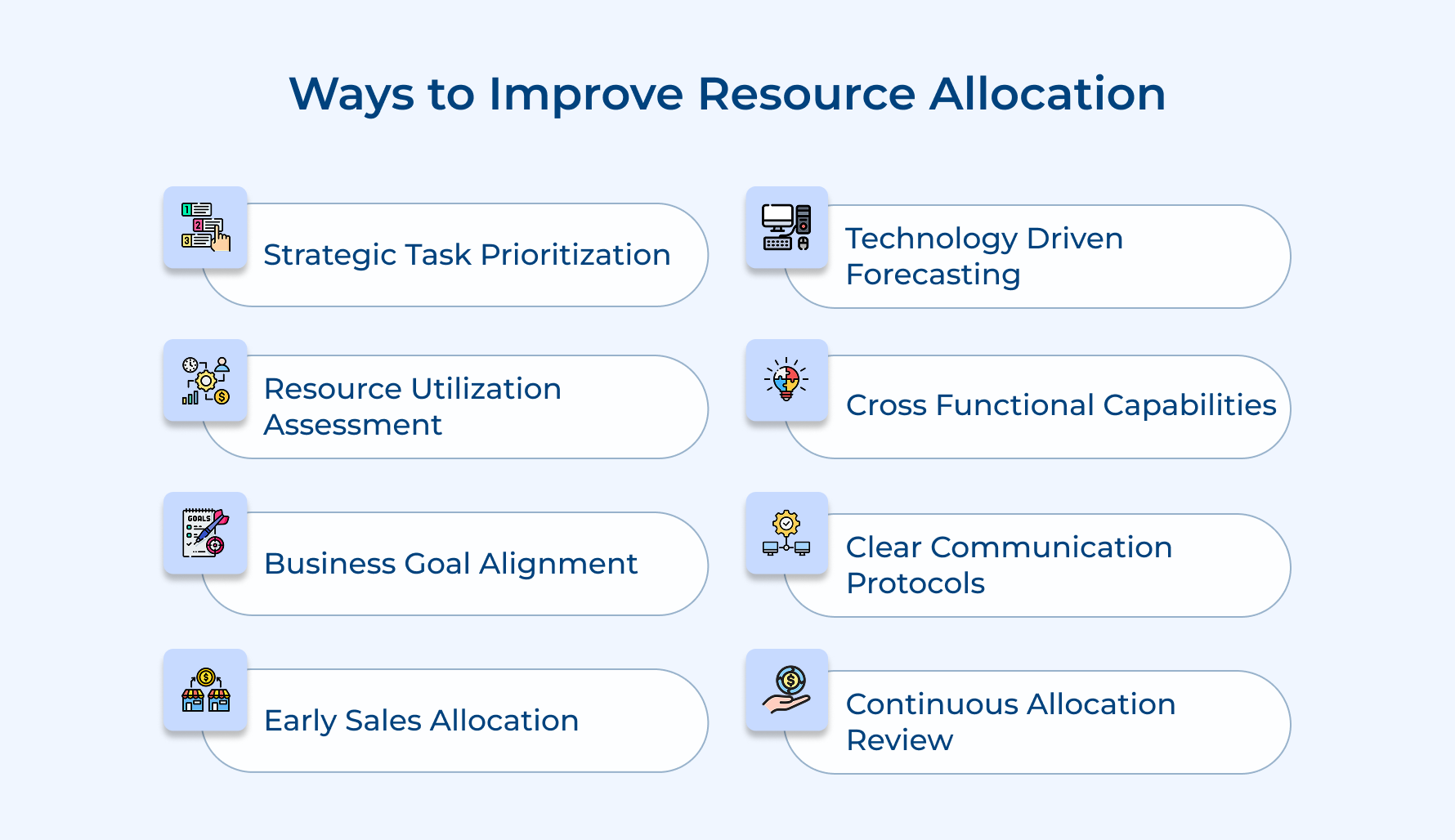
1. Prioritize Tasks and Projects Strategically
Prioritize tasks to evaluate which projects deserve your best resources first based on their strategic value. Smart prioritization ensures your most skilled people work on initiatives that drive real business results.
Here are three effective ways to implement this:
- Evaluate project value and urgency: Start by scoring each project against criteria like revenue potential and deadline pressure. This creates an objective framework for deciding what gets attention first.
- Rank initiatives based on business impact: Compare projects side by side to see which ones advance your organization’s goals most significantly. Move high-impact work to the front of the line regardless of who requested it.
- Focus resources on high-priority deliverables: Once you’ve ranked projects, assign your strongest team members to top-tier initiatives. Reserve less critical work for times when your key players have availability.
Consider a digital marketing agency managing ten client campaigns simultaneously with a team of fifteen specialists. They implemented a priority matrix that scored projects on client revenue and campaign launch dates.
High-value clients with tight deadlines received senior strategists and designers. Lower-tier projects got capable junior staff during off-peak periods. This shift increased on-time delivery by 40% and client satisfaction scores rose significantly.
2. Assess Current Resource Utilization Levels
Measure how your team actually spends their time. This comes second because you can’t improve allocation without understanding your current reality. Many organizations make decisions based on assumptions rather than data.
Not sure where to begin? Consider these questions:
- Who is consistently working overtime or missing deadlines?
- Which team members have availability but aren’t being assigned work?
- What percentage of time goes to billable work versus internal tasks?
- Are certain skills creating bottlenecks that slow multiple projects?
These questions reveal patterns you might not see in daily operations. They expose overworked stars who need support and underutilized talent you’re not leveraging. The answers give you a factual foundation for making better allocation decisions going forward.
Implementation is straightforward once you have the foundation. Track time across projects for two to four weeks to establish baseline data. Use this to spot imbalances and adjust workloads immediately.
Here’s how to dig deeper:
- Track time spent on different activities: Implement simple time-tracking to see where hours actually go each week.
- Identify underutilized and overworked team members: Compare workloads against healthy targets of 80-85% utilization.
- Analyze capacity gaps across departments: Look for skills you’re short on and areas with excess capacity.
This assessment isn’t a one-time exercise but rather an ongoing practice. Review utilization monthly to catch problems early and adjust allocations before small issues become major crises affecting project delivery.
3. Align Allocation with Business Goals
Aligning allocation means ensuring resource decisions directly support what your organization is trying to achieve. Teams can stay busy on work that doesn’t move the needle on revenue or growth. Strategic alignment ensures that every person’s time contributes to outcomes leadership cares about.
Connecting decisions to objectives sets the direction for everything else. You need a clear link between daily assignments and big-picture goals. Managers often make tactical decisions that seem efficient but fail to support the overall strategy if this is missing.
Here are key objectives you might align resources toward:
- Revenue growth targets: Direct your best teams toward high-value opportunities that expand income.
- Market expansion goals: Allocate specialists to projects entering new industries or regions.
- Product innovation priorities: Assign creative and technical experts to developing new capabilities.
Once you’ve connected resources to objectives, reviewing allocation against quarterly targets keeps you on track. Check monthly if your actual resource distribution matches the percentages you planned for each strategic initiative. If you committed 40% of capacity to new business but only 25% is allocated there, you need to rebalance.
One pitfall is that urgent requests pull resources from strategic work without anyone noticing. Protect minimum capacity for strategic initiatives regardless of short-term pressures. Strategic goals change mid-quarter but allocation often stays frozen. Build flexibility by reviewing monthly and shifting people when priorities evolve.
4. Allocate Resources Early in Sales
Early allocation means reserving team members while projects are still in proposal or negotiation. Ignoring this creates chaos because you promise delivery timelines without knowing if people are available. Teams scramble after contracts are signed, leading to delays or unsuitable matches.
Here’s how early allocation strengthens planning:
- Reserve team members during proposal stage: Tentatively block calendar time for key people before deals close so they’re available when needed.
- Forecast resource needs before deals close: Analyze your sales pipeline to predict which skills you’ll need in coming months.
- Build buffer capacity for likely wins: Keep some capacity unallocated specifically for high-probability opportunities in your pipeline.
- Communicate tentative allocations to teams: Share provisional assignments so team members can plan their workload and wrap up current tasks.
- Adjust allocations as deals progress: Update resource plans when deal probability changes or project scope shifts during negotiations.
How does this reduce post-kickoff scrambling? When you allocate early, project managers know exactly who they’re getting from day one. There’s no frantic search after contract signature. Teams jump straight into planning because calendars are already cleared instead of losing two weeks to resource negotiations.
Early allocation also improves sales accuracy because account managers know actual team availability when setting timelines. You avoid overpromising delivery dates that your team can’t realistically meet. This alignment between sales commitments and delivery capacity builds client trust from the first conversation.
5. Leverage Technology for Resource Forecasting
Leverage technology to predict future resource needs and visualize team capacity. Manual spreadsheets can’t handle the complexity of tracking multiple projects and shifting timelines. Technology gives you real-time visibility into who’s available and helps prevent allocation conflicts.
When selecting the right technology, consider these factors:
- Integration capabilities: Choose tools that connect with your existing project management and time-tracking systems for seamless data flow.
- User-friendly interface: Select software that your team will actually use without extensive training or constant frustration.
- Scalability for growth: Pick solutions that handle increasing team size and project volume as your organization expands.
- Reporting and analytics features: Ensure the tool provides customizable dashboards that give actionable insights quickly.
Automation transforms resource allocation by eliminating manual calendar checks and endless email chains about availability. Software automatically flags conflicts when someone is double-booked and suggests alternative team members with matching skills.
Here are key technologies that improve forecasting:
- Resource management platforms: Centralize capacity planning while providing visual timelines showing who’s assigned to what and when.
- AI-powered scheduling tools: Analyze historical project data to predict resource requirements and suggest optimal team compositions.
- Capacity planning dashboards: Display real-time utilization rates and forecast future availability based on current pipelines.
- Integrated time-tracking systems: Capture actual hours worked to improve future estimates and reveal resource consumption patterns.
Technology doesn’t replace human judgment but removes guesswork from resource planning. The right tools give you data-driven confidence and free up managers to focus on strategy.
6. Build Cross-Functional Team Capabilities
Team members train here to work across different roles or skill areas. This creates flexibility because you’re not stuck when a specialist is unavailable or overbooked. Teams with diverse skills adapt quickly to changing project needs.
You implement this by identifying adjacent skills that complement existing expertise and creating learning paths for team members. Encourage designers to learn basic development or developers to understand user experience principles.
Pro tips:
- Start cross-training with naturally adjacent skills rather than unrelated areas to ensure faster competency development.
- Pair junior team members with cross-functional experts on real projects so they learn by doing.
7. Establish Clear Communication Protocols
Establishing communication protocols means creating structured processes for how teams share resource information and updates. Without clear protocols, allocation decisions happen in silos and project managers compete for the same people. Good communication ensures everyone operates from the same information.
Share Allocation Updates Across Teams Regularly
Schedule weekly or bi-weekly resource reviews where project leads share upcoming needs and capacity changes. It prevents surprise conflicts when multiple managers assume the same person was available.
Coordinate Between Project and Resource Managers
Designate specific points of contact who own resource decisions and create escalation paths for conflicts. This centralized coordination prevents double-booking and ensures fair distribution.
Create Transparency Around Availability Changes
Implement systems where team members update their availability immediately when circumstances change like illness or commitments. Managers see real-time capacity rather than outdated information allowing quick reallocation.
8. Review and Adjust Allocations Continuously
Reviewing allocations continuously means regularly checking whether current assignments still match project needs and team capacity. Projects evolve and initial plans rarely survive contact with reality. Continuous review catches problems early when they’re still manageable.
Track these metrics to guide your reviews:
- Utilization rate by team member
- Project budget variance
- On-time delivery percentage
- Unplanned resource changes per project
- Bench time across the organization
These metrics reveal if your allocation strategy is working or needs adjustment. High variance signals initial estimates were off while consistent bench time suggests overstaffing. Monthly reviews should result in concrete allocation changes that address emerging issues. Compare actual resource consumption against forecasts to improve future planning accuracy.
Based on insights from these metrics, adjust your approach:
- Reallocate overworked resources: Move work from team members exceeding 90% utilization to those with capacity.
- Reassign mismatched skills: Swap team members when projects need different expertise than originally anticipated.
- Update future forecasts: Incorporate lessons from actual consumption patterns into planning models for upcoming projects.
Common Challenges in Resource Allocation
Even the best-intentioned allocation strategies run into obstacles. Here are the most common challenges organizations face when managing resources.
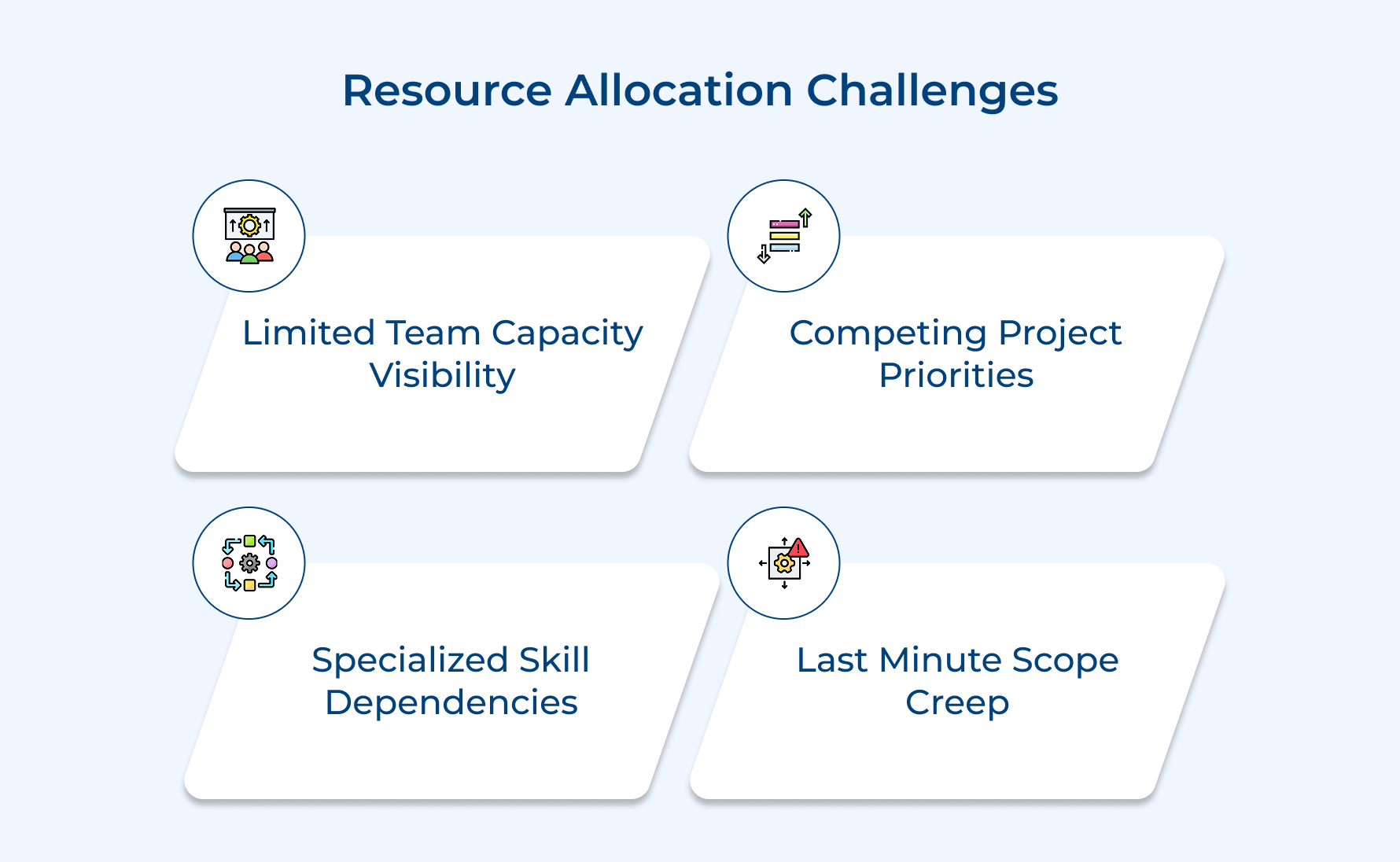
1. Limited Visibility Into Team Capacity
Many managers struggle to see who is actually available at any given moment. Spreadsheets age quickly, updates get missed and assumptions replace facts. Real-time capacity planning removes this blind spot and helps prevent overbooking, stress as well as uneven workloads across teams.
2. Competing Priorities Across Projects
High-performing team members are often pulled in multiple directions at once. Allocation decisions become subjective instead of strategic. Hence, creating friction and constant task switching. Clear resource prioritization keeps focus intact and helps teams meet critical project milestones.
3. Skills Gaps and Specialized Dependencies
Certain projects rely heavily on a small group of specialists. Work slows down whenever those individuals are unavailable, creating bottlenecks and delivery risks. Broader skill distribution and succession planning help reduce dependency on single points of failure.
4. Last-Minute Changes and Scope Creep
Project requirements rarely stay fixed from start to finish. Late requests force rapid reassignment and disrupt carefully balanced plans. Thoughtful buffer planning absorbs these changes and minimizes ripple effects across ongoing workstreams.
Enhance Productivity Through Effective Resource Allocation
Effective resource allocation plays a huge role in how consistently your organization delivers great work on time and within budget. The right match between people and projects boosts productivity because teams lean into their strengths instead of fighting mismatched roles. Work feels smoother, faster and far less stressful.
Start applying these eight strategies to Improve Resource Allocation and you’ll see real gains in delivery quality as well as team satisfaction. Resource allocation isn’t a one-and-done task—it’s an ongoing habit. Regular check-ins and small adjustments help your organization stay flexible, adapt to change, while getting the most value from the talent you already have.
Limit time — not creativity
Everything you need for customer support, marketing & sales.

Neeti Singh is a passionate content writer at Kooper, where he transforms complex concepts into clear, engaging and actionable content. With a keen eye for detail and a love for technology, Tushar Joshi crafts blog posts, guides and articles that help readers navigate the fast-evolving world of software solutions.