How to Improve Operational Efficiency in Business
- What is Operational Efficiency?
- Key Benefits of Operational Efficiency in Business
- Differences Between Productivity vs. Efficiency in Business
- Essential Operational Efficiency Methods for Measuring Business Performance
- How to Improve Operational Efficiency in 7 Essential Steps
- Important Factors Influencing Operational Efficiency
- Key Operational Efficiency Metrics
- Streamline Business Success with Improved Operational Efficiency
- FAQs about Operational Efficiency in Business

Key Highlights:
- Operational efficiency directly tracks cost control, resource use and profit margin for measurable improvement in business performance.
- Real-world efficiency strategies streamline processes, eliminate bottlenecks and support competitive advantage without adding extra costs.
- Advanced automation and analytics tools enable real-time monitoring, error reduction as well as actionable insights for optimizing operational efficiency.
Your team is working harder than ever but profits remain flat and deadlines keep slipping. Projects that should take weeks stretch into months while administrative tasks consume hours that could go toward client work.
The culprit is operational inefficiency and it’s quietly draining your resources every single day. Hidden bottlenecks and redundant processes cost your business thousands in wasted time as well as missed opportunities that compound over months.
This guide to operational efficiency shows you exactly how to identify inefficiencies and implement practical improvements that deliver measurable results. You’ll learn proven strategies that professional service firms use to boost productivity without burning out teams or inflating budgets.
What is Operational Efficiency?
Operational efficiency measures how well a business converts its inputs into outputs while minimizing waste and costs. It’s about doing more with less – getting better results from the same resources or maintaining quality while using fewer resources. This concept applies across all business types but becomes especially critical in professional service firms where time and expertise are the primary assets.
An operationally efficient business has streamlined processes that eliminate unnecessary steps and reduce friction. Every action serves a clear purpose and contributes to delivering value to clients or customers without burning through excess time or money.
Key goals:
- Reduce operational costs: Identify and eliminate unnecessary expenses while maintaining or improving service quality.
- Improve resource utilization: Ensure that people and technology work at optimal capacity without overburdening teams or leaving assets idle.
- Accelerate delivery times: Complete projects and serve clients faster by removing bottlenecks while streamlining workflows.
- Enhance quality consistency: Standardize processes so that outputs remain reliable and predictable regardless of who performs the work.
- Increase profitability: Generate higher margins by delivering the same value to clients while consuming fewer internal resources.
Key Benefits of Operational Efficiency in Business
When businesses fine-tune their operations, the positive effects ripple across every part of the organization. These benefits compound over time and create competitive advantages that are difficult for rivals to replicate.
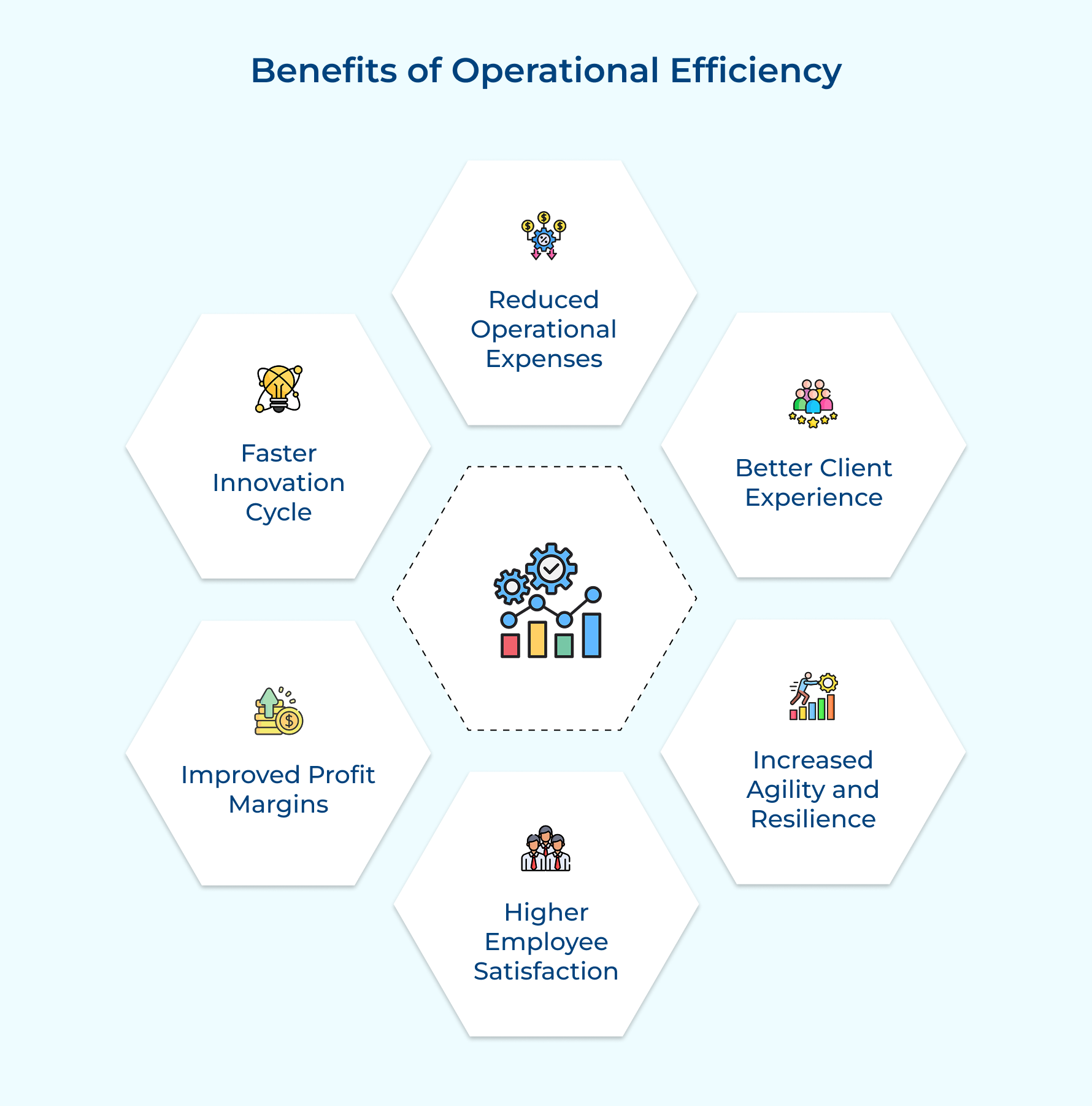
Reduced Operational Expenses
Lower costs come naturally when you cut redundant work and automate repetitive tasks. Using real-time data helps professional service firms spot inefficiencies, trim administrative overhead and reduce rework from unclear processes. Hence, improving how teams use their time and resources.
Better Client Experience
Clients instantly feel the difference when operations run smoothly. They get quicker responses, consistent service quality and proactive customer service. Fewer internal issues free teams to focus on delivering an exceptional customer experience that builds lasting relationships.
Increased Agility and Resilience
Streamlined operations give your business the flexibility to pivot when market conditions shift. Data analytics helps you anticipate challenges, adjust plans faster and maintain stability (even during disruptions) without overloading your resources.
Higher Employee Satisfaction
Employees thrive when systems are clear and efficient. Removing unnecessary steps and confusion reduces frustration, shortens cycle time while letting people focus on skill-based work instead of bureaucratic busywork.
Improved Profit Margins
Lower operational costs combined with stable or growing revenue lead to stronger margins. Service-based firms strategically direct staff time toward billable, high-impact work.
Faster Innovation Cycles
When daily operations run efficiently, your team has more room to innovate. Freed from routine bottlenecks, they can test new service ideas or delivery models quickly – turning innovation into a continuous business habit.
Differences Between Productivity vs. Efficiency in Business
These two terms often get used interchangeably but they measure fundamentally different aspects of performance. Understanding the distinction helps businesses optimize the right metrics for their specific goals.
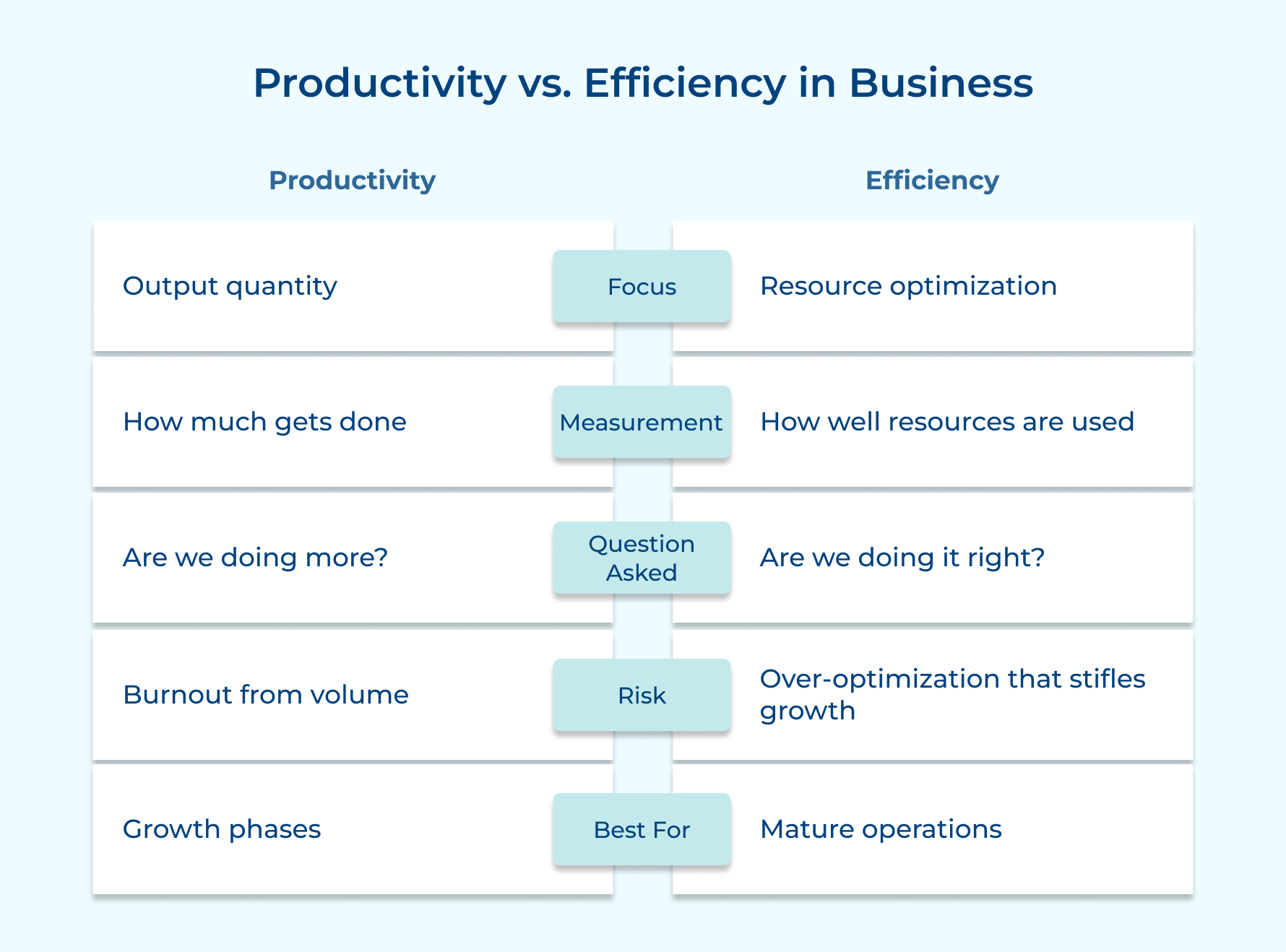
Focus
Productivity is all about how much work your team gets done within a set timeframe, like completing fifty client deliverables in a month.
Efficiency digs deeper and asks whether those fifty tasks were completed using the least amount of time, people, or effort.
Hitting your performance goals often depends on balancing both. Smart teams use process automation to cut manual work and keep output high without burning out.
Measurement
Productivity tracking looks at results – projects delivered, revenue earned, or improved conversion rates.
Efficiency tracking compares inputs and outputs to see if you’re getting more done with fewer resources. Tools like predictive analytics make this easier by spotting patterns and helping you optimize before small inefficiencies grow into bigger problems.
Question Asked
The productivity question is: “Can we do more?” It’s about growth and market reach.
The efficiency question is: “Can we do it smarter?” It’s about getting maximum value from what you already have. Both matter—especially when customer retention and profitability are at stake.
Risk: Burnout from Volume vs. Over-Optimization That Stifles Growth
Focusing only on productivity can push teams too hard, leading to burnout. But chasing efficiency alone can make things too rigid and stifle innovation.
Over-optimizing every process makes teams stop experimenting or taking creative risks. A healthy balance means automating repetitive work while keeping space for ideas that drive long-term growth.
Growth Phases vs. Mature Operations
Productivity drives growth phases when you’re chasing new opportunities, even with higher costs.
As operations mature, efficiency takes over—streamlining workflows and sustaining profits. Predictive analytics and process automation help maintain output without extra effort. The goal is balance: stay productive, efficient and adaptable as you grow.
Essential Operational Efficiency Methods for Measuring Business Performance
Measuring operational efficiency requires translating your business performance into quantifiable numbers. The most straightforward approach involves comparing what you spend to run your operations against what you earn from those operations.
The Operational Efficiency Formula
At its core, operational efficiency can be expressed as a simple ratio that anyone in your organization can understand. This formula takes your operating expenses and divides them by your total revenue to show the relationship between spending as well as earning.
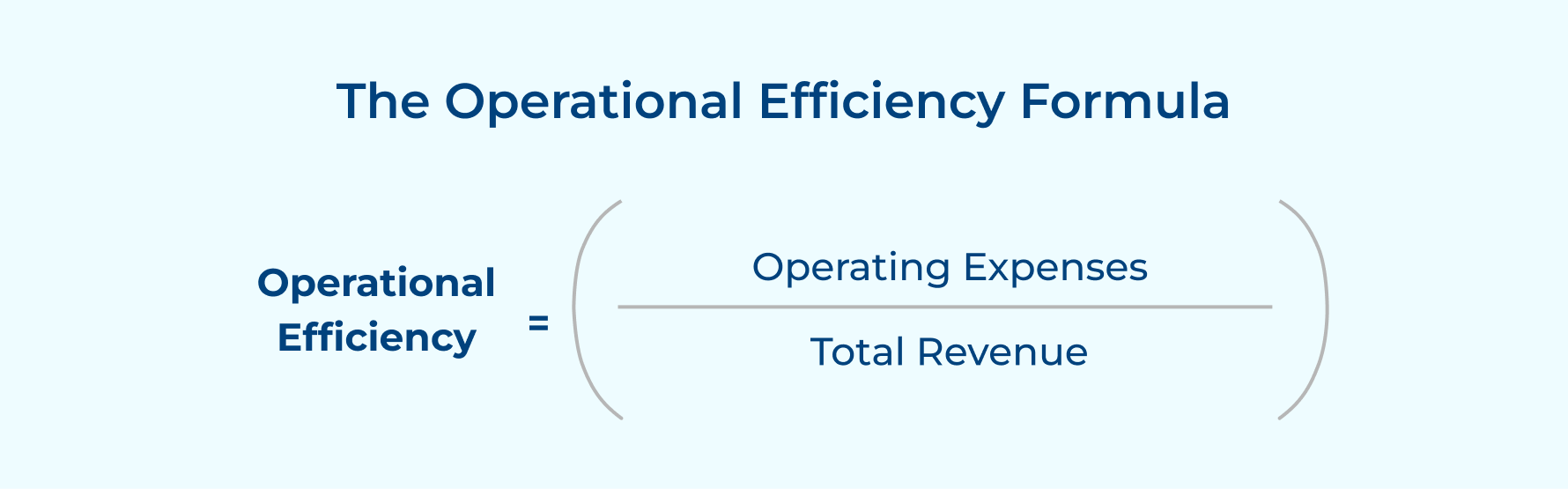
Here’s what each element means in practical terms:
- Operating expenses: These represent all the costs required to keep your business running on a daily basis, including salaries, rent, utilities, software subscriptions and professional services. This excludes one-time costs like equipment purchases or non-operating expenses like interest payments and taxes.
- Total revenue: This is the complete income your business generates from all sources before subtracting any expenses. For professional service firms this includes all billable work, retainer fees and any additional services you provide to clients during a specific period.
The Operational Efficiency Ratio
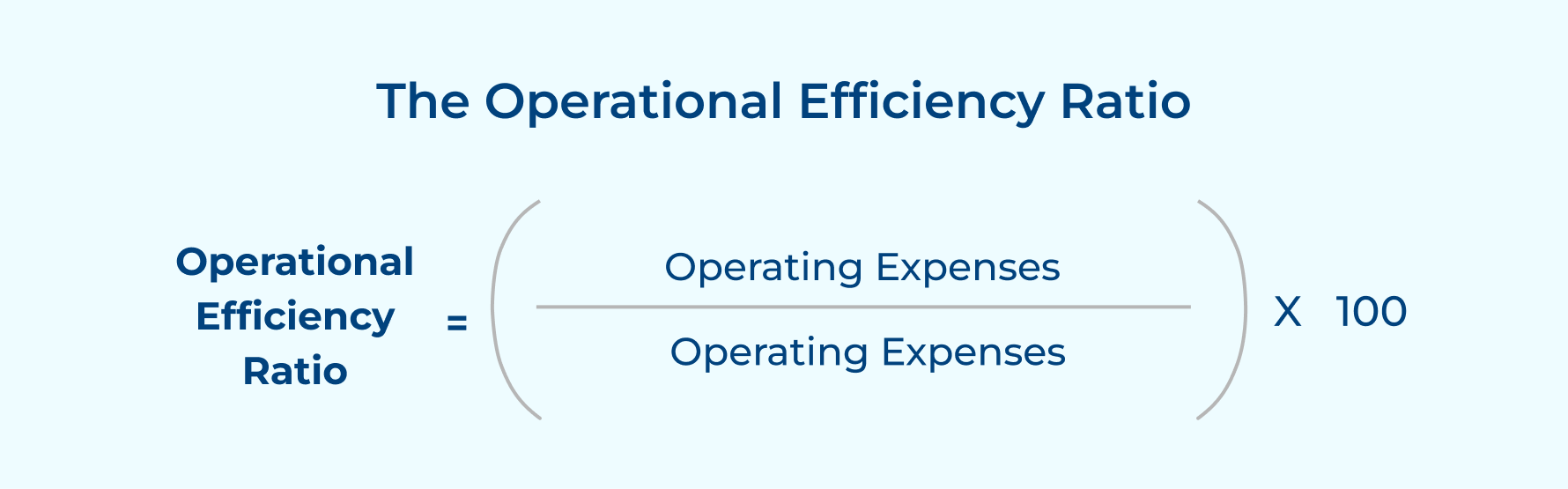
The operational efficiency ratio converts the basic formula into a percentage that makes comparisons easier across different time periods or between companies.
Ideal Benchmarks for Different Business Types
- Professional service firms typically aim for an operational efficiency ratio between sixty and seventy-five percent depending on their service model.
- Agencies with lower overhead might target the lower end while consulting firms with significant research costs might operate closer to the higher end.
- Manufacturing businesses often see ratios between seventy and eighty-five percent due to material costs
- Software companies might achieve ratios below fifty percent once they reach scale.
How to Calculate
Step One: Gather your operating expenses: Collect all costs from your accounting system for the period you’re measuring including payroll, rent, utilities, subscriptions and supplies but exclude non-operating items.
Step Two: Determine your total revenue: Pull your complete revenue figures for the same period from all income sources before any deductions to ensure you’re comparing apples to apples.
Step Three: Divide expenses by revenue: Take your total operating expenses and divide them by your total revenue to get a decimal number that represents your operational efficiency.
Step Four: Convert to percentage if desired: Multiply your result by one hundred to express your operational efficiency as a ratio that’s easier to communicate to stakeholders and track over time.
Example Calculation
Let’s walk through a realistic example for a mid-sized consulting firm measuring their quarterly performance.
The firm had the following figures for Q1:
Total Revenue: $850,000
Operating Expenses: $595,000 (including $420,000 in salaries, $85,000 in contractor costs, $45,000 in rent & utilities and $45,000 in software / administrative costs)
Using the basic formula:
$595,000 ÷ $850,000 = 0.70
This gives us an operational efficiency of 0.70, which means the firm spends seventy cents for every dollar earned.
Using the ratio formula:
$595,000 ÷ $850,000 × 100 = 70%
This gives us an operational efficiency ratio of seventy percent. For this consulting firm, the result falls within the healthy range for professional services and suggests they’re maintaining reasonable margins while still investing adequately in their team as well as infrastructure.
How to Improve Operational Efficiency in 7 Essential Steps
Let’s explore seven pivotal steps that can help you transform your organization’s operational framework, leading to improved efficiency and sustainable success.
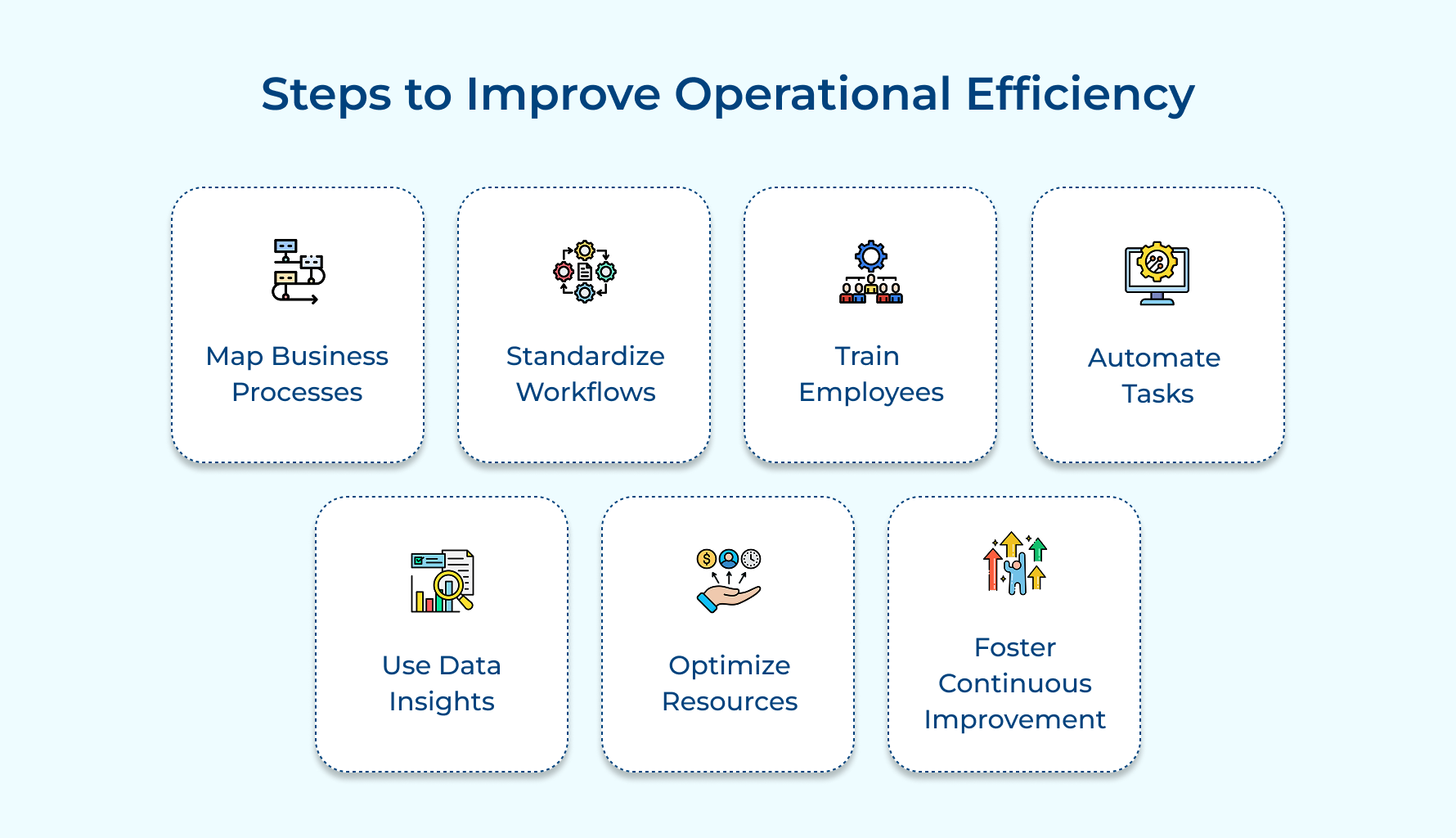
1. Identify and Map Your Business Processes
You can’t improve what you don’t understand. Mapping your processes helps you see how work truly flows and where bottlenecks or inefficiencies exist. This step ensures you base improvements on facts, not assumptions.
Start by asking:
- What core activities drive revenue or client value?
- Who handles each step from request to delivery?
- What triggers the start and end of each process?
- Which tasks consume the most time or frustrate your team?
- Where do handoffs occur between people or departments?
Once you’ve answered these, document one key process step by step. Follow it from start to finish, noting every decision and handoff. Use simple visuals like flowcharts or sticky notes to spot delays, redundancies, or areas where automation could make things smoother.
2. Streamline and Eliminate Redundant Tasks
Redundancy builds up over time as teams add new approval layers or safety nets without removing outdated ones. Trimming these tasks saves hours weekly – time your team can spend on client work or strategy instead of paperwork.
Here’s how agencies and service firms can streamline operations:
- Remove duplicate approvals: If both a project manager and department head review the same work, one qualified reviewer is enough.
- Consolidate overlapping roles: Clarify ownership to prevent multiple people from handling the same client communication.
- Cut low-value admin work: Drop reports or forms that add no real benefit, especially when project management tools already provide real-time data.
For instance, one agency merged three time-tracking systems into one – saving designers four hours weekly for billable work without losing oversight.
3. Invest in Employee Training Programs
Training ensures your team knows how to execute processes right the first time and adapt quickly when things change. Without it, employees waste time experimenting or creating inefficient workarounds.
Your training program should target your real operational gaps – not follow a generic template. A boutique consulting firm, for example, needs different development areas than a large agency. Focus on skills that directly resolve bottlenecks uncovered during process mapping.
Five valuable training types include:
- Technical skills for industry tools
- Process certifications for standardization
- Leadership programs to build strong managers
- Client communication workshops for better relationships
- Cross-functional shadowing to improve collaboration
Survey employees to pinpoint true skill gaps, then pilot programs with small groups. Measure success by tracking faster delivery and fewer revisions post-training.
4. Automate Repetitive Manual Work
Automation takes repetitive work off your team’s plate, letting them focus on tasks that need creativity and critical thinking. Manual processes waste time and often lead to errors – automation fixes both with a one-time setup.
Common tasks you can automate include:
- Client onboarding: Auto-generate contracts and collect e-signatures instantly.
- Time tracking and invoicing: Use automated timers and billing to avoid month-end chaos.
- Project updates: Let project management tools send real-time reports instead of manual summaries.
- Document creation: Use smart templates to auto-fill client details and maintain consistency.
- Scheduling: Enable self-booking calendars to eliminate email back-and-forth.
Start small – automate one frustrating process, test it for 30 days as well as measure the time saved before expanding across teams.
5. Standardize Workflows and Templates
Standardization creates predictable processes that anyone can follow without reinventing approaches for each project. Without standards, every team member develops their own methods which makes collaboration difficult and quality inconsistent.
Use templates and documented procedures for recurring work so new team members get up to speed quickly as well as experienced staff move faster. A standard proposal template ensures nothing gets forgotten while reducing the mental load of remembering every step.
Best practices:
- Document standards in accessible formats that people actually reference rather than lengthy manuals that gather dust in shared drives.
- Build flexibility into standards so teams can adapt them for unique situations rather than forcing rigid compliance that doesn’t fit every scenario.
6. Optimize Resource Allocation and Scheduling
Resource optimization ensures skilled people spend time on work that matches their expertise. Poor allocation leads to overload for some and idle time for others.
Here’s how to improve allocation and scheduling:
- Match skills to project needs: Assign tasks based on expertise so senior staff handle complex work while juniors manage simpler tasks. This improves quality and engagement.
- Balance workloads: Track capacity visually to prevent burnout and redistribute work early when someone’s overloaded.
- Plan ahead: Review upcoming projects monthly to forecast resource needs and avoid last-minute hiring or overtime.
For example, a design agency found senior designers doing routine revisions. Reassigning those to juniors boosted senior billable hours by 30% – no new hires needed.
7. Create Continuous Improvement Culture
A continuous improvement culture means your team actively looks for better ways to work rather than accepting inefficiencies as permanent fixtures. Without this mindset, processes decay as workarounds become accepted practice and nobody questions whether there’s a better way.
Encourage everyone to suggest improvements because people doing the work daily often spot inefficiencies that management overlooks. Create simple channels for submitting ideas and commit to testing promising suggestions so people see their input valued.
Two best practices for building continuous improvement into your culture:
- Schedule regular retrospectives where teams reflect on what worked and what didn’t in recent projects without fear of blame.
- Celebrate small wins publicly when process improvements save time or improve quality so others feel motivated to contribute their own ideas.
Important Factors Influencing Operational Efficiency
Operational efficiency doesn’t exist in a vacuum. Several interconnected factors determine how well your business converts inputs into outputs.
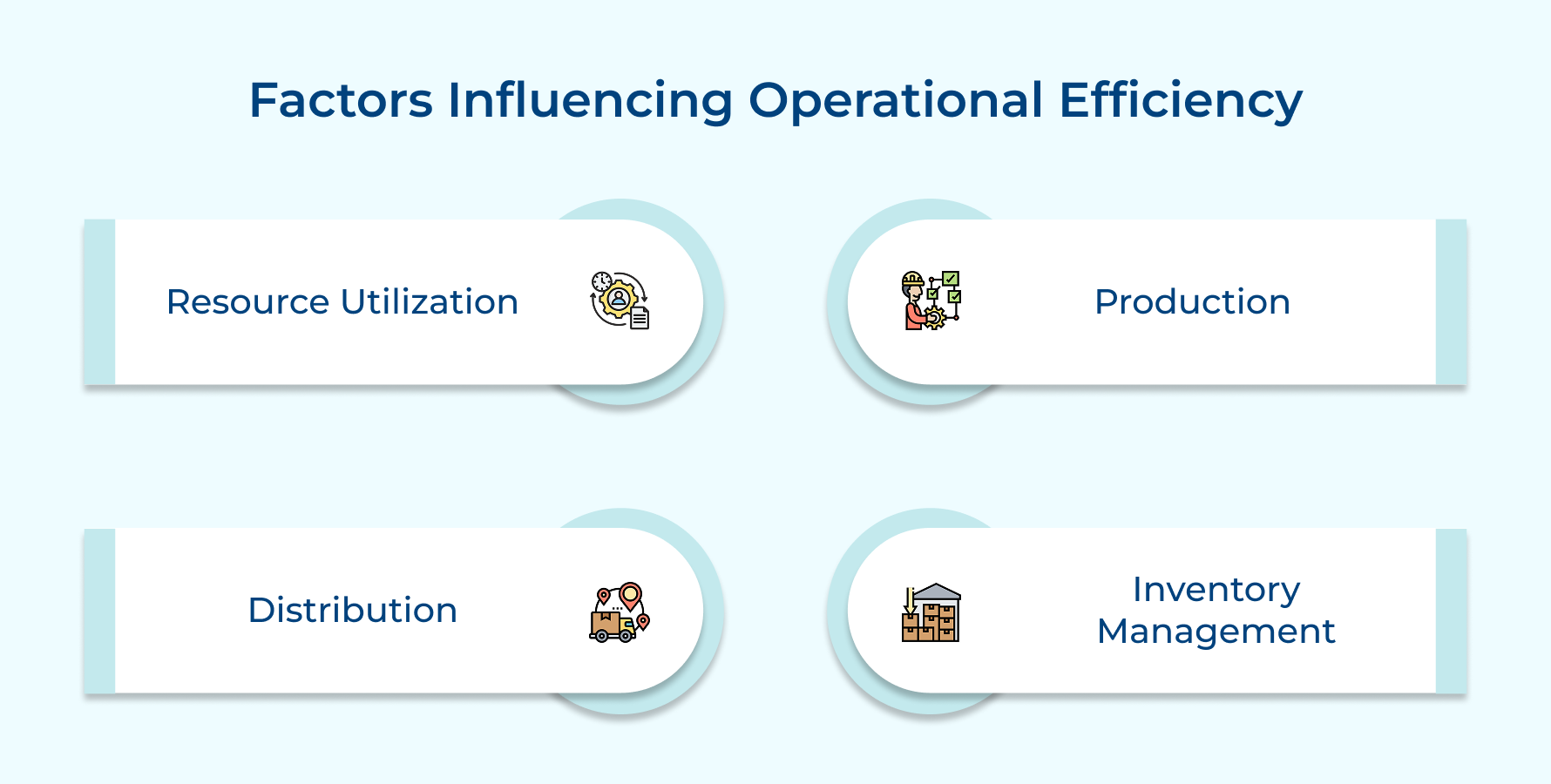
Resource Utilization
Resource utilization measures how effectively you deploy your available assets including people and equipment to generate value. Professional service firms particularly struggle when billable staff spend excessive time on internal meetings or administrative tasks instead of client work.
Production
Production refers to how your business transforms inputs into finished deliverables that clients want to buy. A consulting firm with streamlined research processes can serve more clients with the same team size compared to one starting from scratch each time.
Distribution
Distribution encompasses how you deliver services to clients including communication channels as well as delivery timelines. When your team spends hours clarifying deliverable formats or chasing client feedback, that time comes directly out of your operational efficiency.
Inventory Management
Inventory management in professional services means controlling your work-in-progress and ensuring projects don’t stall waiting for inputs or decisions. Maintaining the right balance ensures steady workflow without bottlenecks where half-finished work piles up while consuming resources.
Key Operational Efficiency Metrics
Measuring operational efficiency requires tracking specific metrics that reveal how well your business uses resources to generate results.
Ask these five questions to identify which operational efficiency metrics matter for your business:
- What percentage of revenue is consumed by the direct costs of delivering your services?
- How much revenue does each team member generate on average?
- What return are you getting on the assets you’ve invested in your business?
- How much of your available capacity is actually being used productively?
- What profit margin remains after covering all operating expenses?
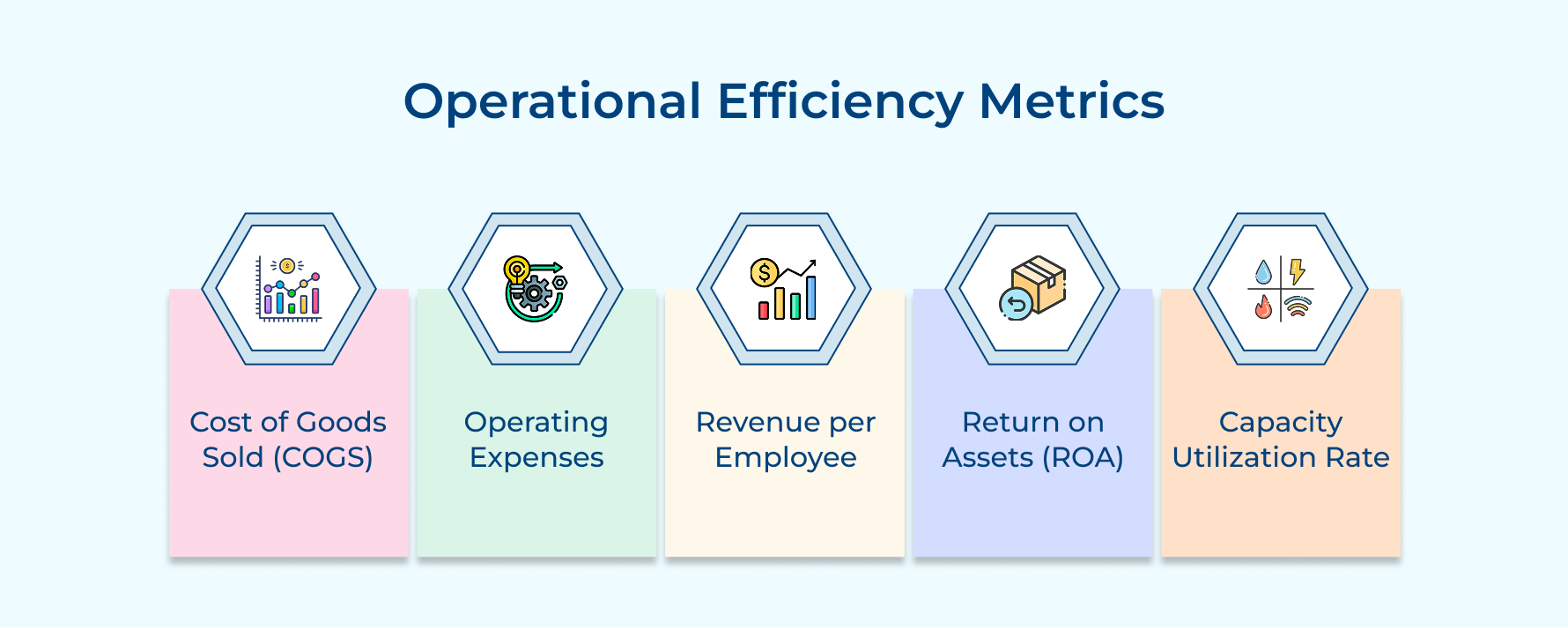
Cost of Goods Sold (COGS)
COGS represents the direct costs of delivering your services including contractor payments and project-specific expenses. Lower COGS relative to revenue indicates you’re delivering services efficiently without excessive direct costs eating into margins.
Operating Expenses
Operating expenses cover all costs required to run your business beyond direct service delivery including salaries, rent and software. Efficient businesses keep operating expenses stable or growing slower than revenue as they scale up operations.
Revenue per Employee
Revenue per employee measures how much income each team member generates by dividing total revenue by headcount. Professional service firms should see this number increase over time as processes improve as well as people become more skilled.
Return on Assets (ROA)
ROA shows how effectively you’re using business assets to generate profit by dividing net income by total assets. A higher ROA means you’re squeezing more profit from each dollar invested in technology or other resources.
Capacity Utilization Rate
Capacity utilization rate measures what percentage of your available work hours are spent on billable activities versus sitting idle. Rates consistently below seventy percent suggest overstaffing while rates above ninety percent indicate you’re maxed out.
Streamline Business Success with Improved Operational Efficiency
Operational efficiency isn’t just about cutting costs or working faster. It’s about building a business that runs smoothly and delivers consistent value to clients while giving your team room to breathe while innovating instead of constantly firefighting problems.
Start by measuring where you stand today and then tackle improvements one step at a time. Small changes in how you allocate resources or standardize workflows compound into significant gains that strengthen your bottom line and create sustainable competitive advantages in your market.
Limit time — not creativity
Everything you need for customer support, marketing & sales.

Shivank Kasera is part of the marketing team at Kooper, where he focuses on building content that helps agencies and service providers grow. With a keen interest in SaaS, operations, and scalability, he translates practical insights into actionable resources for business leaders.