7 Essential Sales Process Steps to Improve Conversions
- What is a Sales Process?
- Benefits of Sales Process Stages for Agencies
- 7 Proven Sales Process Stages That Drive Results
- How to Create a High-Performing Sales Process?
- 5 Actionable Best Practices to Improve Your Sales Process Stages
- Sales Process vs Sales Methodology
- Common Sales Process Examples Every Business Should Know
- Transform your Pipeline Into a Powerhouse with Sales Process Stages
- FAQs About Sales Process
Key Highlights:
- A structured sales process eliminates chaos and creates predictable, scalable revenue growth.
- Mapping the selling process ensures clear steps from lead generation to deal closure.
- Sales process mapping reveals bottlenecks and highlights areas needing refinement as well as training.
Your sales team struggles with inconsistent results while promising leads mysteriously disappear during conversations leaving you frustrated with unpredictable revenue streams. This chaos prevents sustainable business growth and creates feast-or-famine cycles. Every lost opportunity represents revenue walking out the door toward better-organized agencies.
This comprehensive guide reveals proven sales process frameworks that transform scattered efforts into predictable deal-closing machines. You’ll discover step-by-step methodologies that eliminate guesswork and consistently convert prospects into profitable long-term partnerships.
What is a Sales Process?
A sales process is a structured sequence of steps that agencies follow to convert prospects into paying clients. It provides a repeatable framework for identifying potential customers and guiding them through decision-making stages. This systematic approach ensures consistent results and helps teams track progress while improving conversion rates.
What is Sales Process Mapping?
Sales process mapping involves documenting each stage of your client acquisition journey from initial contact to contract signing. It creates a visual roadmap that shows how prospects move through your pipeline.
A digital marketing agency maps their process: lead generation through content marketing leads to discovery calls which progress to proposal presentations and contract negotiations. Each stage has defined criteria for advancement and specific actions.
Objectives to consider:
- Consistency: Ensure every team member follows the same proven approach to closing deals.
- Predictability: Create reliable revenue forecasts based on pipeline stages and conversion rates.
- Efficiency: Reduce time wasted on unqualified prospects by implementing proper screening steps.
- Scalability: Build a system that works whether you have two salespeople or twenty.
- Improvement: Establish measurable benchmarks that reveal where your process needs refinement.
Benefits of Sales Process Stages for Agencies
Having defined sales stages transforms how agencies operate and delivers measurable advantages for sustainable growth.
Before exploring the benefits, let’s establish your foundation by answering these essential questions:
- What specific stages does your agency currently use to move prospects forward?
- How do you measure success at each stage of your client acquisition journey?
- Which stage consistently creates the biggest bottlenecks in your sales pipeline?
- What criteria determine when a prospect moves from one stage to the next?
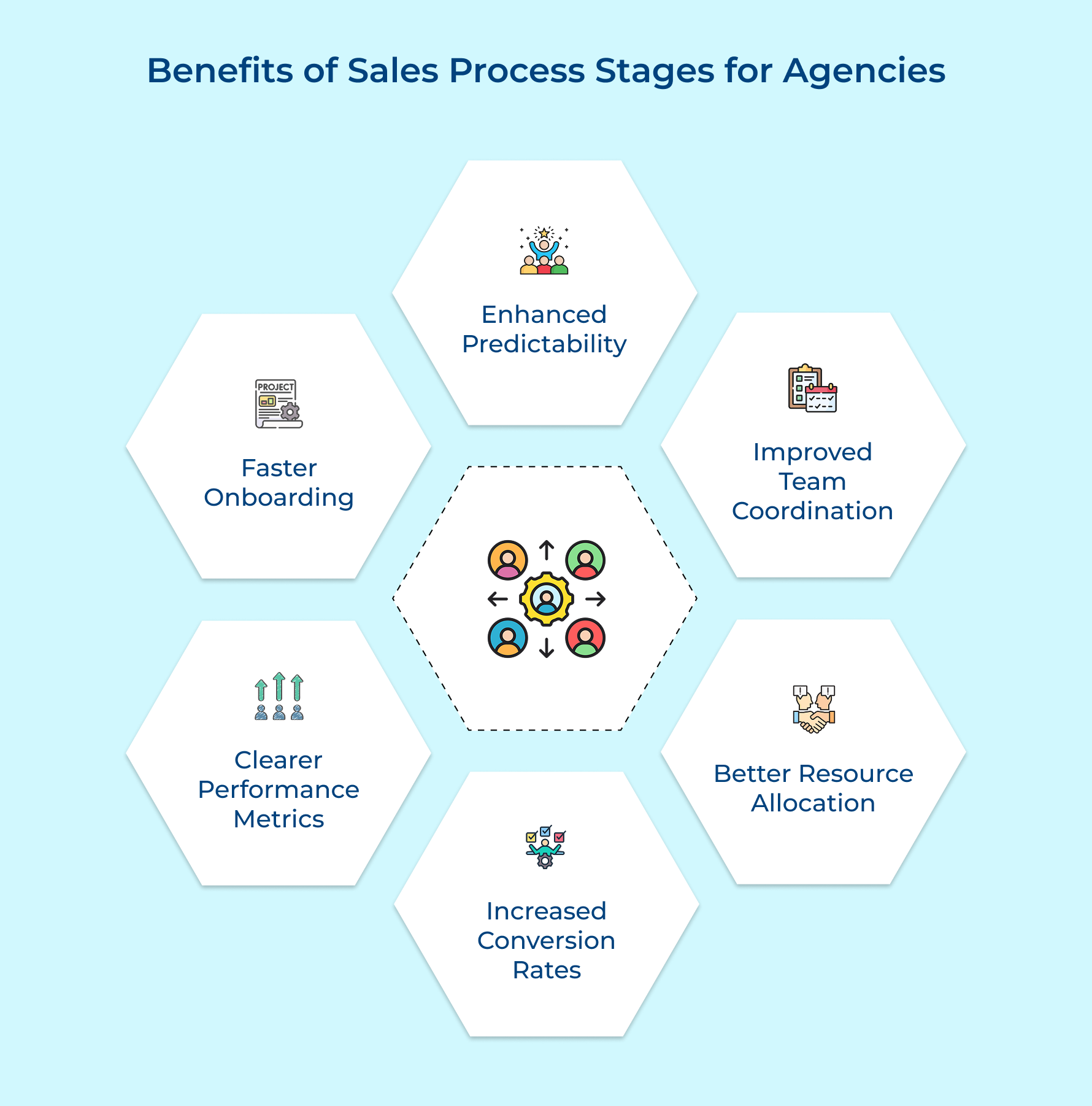
Enhanced Predictability
Clear sales stages make it easier to forecast revenue. You can see where prospects are in the pipeline, plan resources and align with your marketing team for consistent business planning.
Improved Team Coordination
When each stage has clear responsibilities, everyone knows their role. This prevents overlap while ensuring prospects get the right customer service and attention at the right time.
Better Resource Allocation
Understanding stage requirements helps you match the right talent. Senior consultants handle complex deals, while juniors focus on buyer personas, research and qualification tasks.
Increased Conversion Rates
Structured stages ensure no prospect gets lost. Every step has goals that guide prospects toward a decision, making your sales presentation and sales enablement efforts more effective.
Clearer Performance Metrics
Stage-based tracking shows exactly where your process works or breaks. This helps spot training needs and refine sales enablement strategies with real data.
Faster Onboarding
New hires get up to speed quickly. Stages act like a pathway, showing them what to do and when, without relying only on trial as well as error.
7 Proven Sales Process Stages That Drive Results
In this article, we’ll explore the seven key stages of a successful sales process, breaking them down to help you fine-tune your strategy and boost your sales performance.
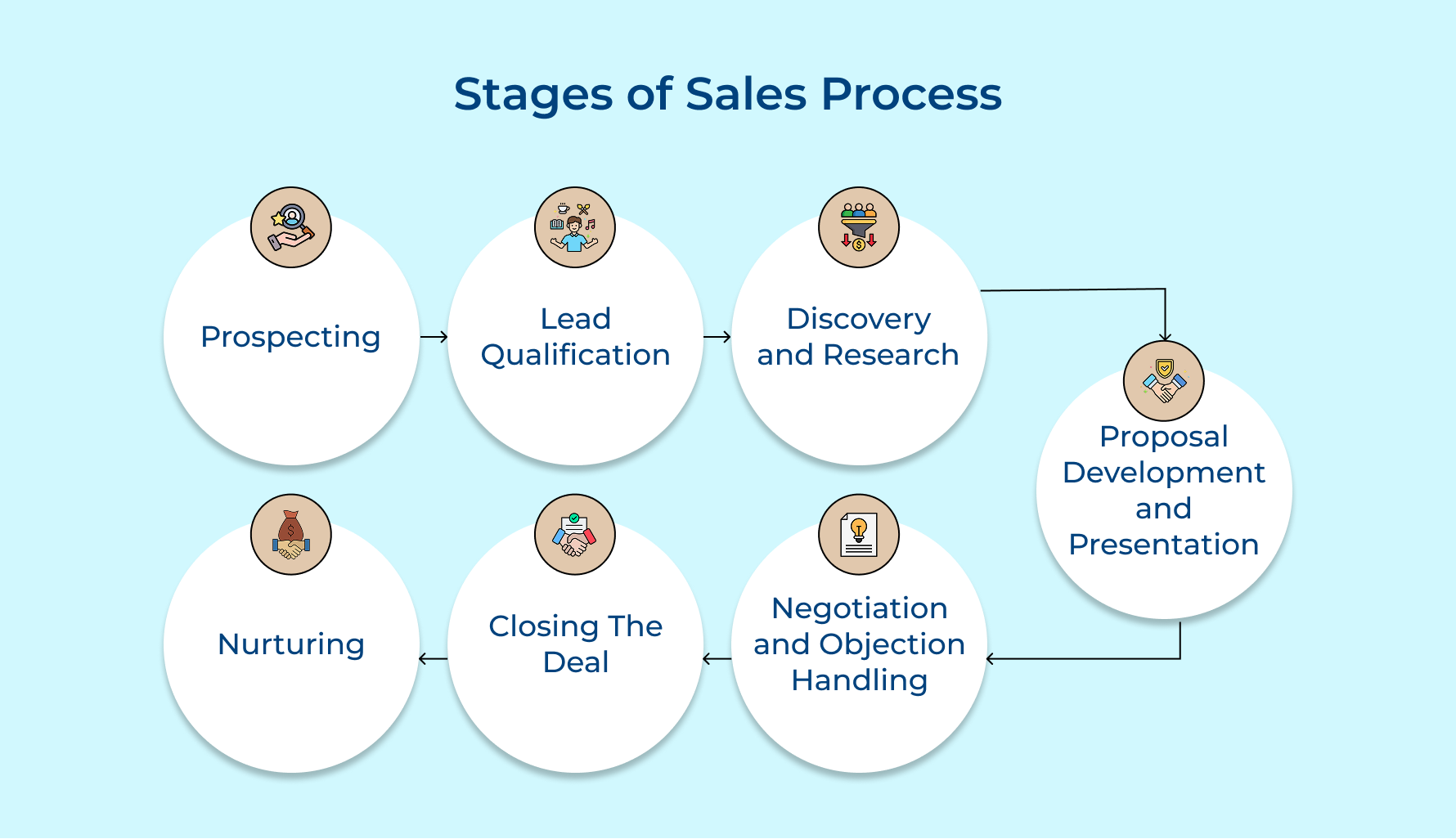
Prospecting
Prospecting is where your sales pipeline truly begins. Without it, agencies often face unpredictable revenue cycles that make planning tough. The key is consistency, steady prospecting keeps your pipeline full and growth more reliable.
Some effective ways agencies prospect:
- Cold outreach: Direct emails or LinkedIn messages to ideal prospects.
- Content marketing: Publishing blogs, guides, or case studies that attract leads.
- Referral programs: Using happy clients to introduce you to new opportunities.
- Networking events: Meeting potential clients at industry conferences or local meetups.
Don’t overwhelm your team by trying everything at once. Pick one method, get good at it, then expand gradually.
Lead Qualification
Lead qualification is about separating serious buyers from those who will never convert. Without it, your team wastes energy on deals that go nowhere. This step saves time and ensures you only pursue prospects worth your effort.
Here’s how it works:
- Ask questions about budget, authority and urgency early on.
- Use forms or discovery calls to gather key details.
- Spot red flags like unclear budgets or vague timelines.
For example, a web design agency learned that prospects saying “we need this yesterday” without budget clarity rarely become profitable. Qualification ensures your pipeline stays healthy and focused.
Discovery and Research
Discovery turns surface-level conversations into deep insights. It’s where you learn what truly matters to your prospect – their challenges, competitors and long-term goals. Done right, this step positions you as a trusted advisor, not just another vendor.
How to approach discovery:
- Prepare open-ended questions that spark honest conversations.
- Hold stakeholder meetings to uncover hidden priorities.
- Research competitors to ask smarter, more strategic questions.
This groundwork makes your proposals stronger because you’re addressing real pain points, not guessing.
Proposal Development and Presentation
Proposals are your chance to turn discovery insights into tailored solutions. Generic, one-size-fits-all pitches rarely land. Instead, focus on showing prospects you truly understand their needs.
A strong proposal includes:
- Problem statement: Restating their challenges in their words.
- Tailored solution: Specific strategies that match their goals.
- Clear deliverables: Defined timelines and outcomes.
- Investment justification: Explaining value and ROI.
- Next steps: Making the path forward simple.
When presenting, make it interactive. Ask questions, confirm understanding and treat it as a two-way conversation. This keeps prospects engaged and builds trust.
Negotiation and Objection Handling
At this stage, prospects may hesitate. They might worry about budget, scope, or results. Your role is to listen, address concerns and show the value you bring.
Three proven tactics:
- Active listening: Let them talk, validate their concerns and then respond.
- Question-based problem solving: Dig deeper to uncover what’s behind the objection.
- Value reframing: Shift focus from cost to long-term benefits.
For instance, a marketing agency won a hesitant client by offering a phased package. The client saw results first, then expanded services.
Closing the Deal
Closing isn’t just about getting a signature, it’s about creating confidence. Treat it like landing a plane: smooth, precise and well-sequenced.
Steps to close effectively:
- Confirm all terms like scope, timelines and pricing.
- Align all decision-makers and resolve last-minute doubts.
- Send a clear contract that protects both parties.
- Secure payments to confirm commitment.
You reduce the risk of delays or second-guessing just by staying organized and proactive.
Nurturing
The sales process doesn’t end after a deal closes. Nurturing is how you turn one-time buyers into long-term partners. It builds loyalty, repeat business and valuable referrals.
Ways to nurture clients:
- Schedule quarterly reviews to measure results and suggest new opportunities.
- Share insights or updates relevant to their industry.
- Follow up with past clients every six months to stay top of mind.
Strong relationships mean clients won’t just stick around, they’ll recommend you to others, fueling organic growth.
How to Create a High-Performing Sales Process?
Let’s explore the essential components of a successful sales process and provide you with practical steps to create a tailored strategy that fits your business needs.
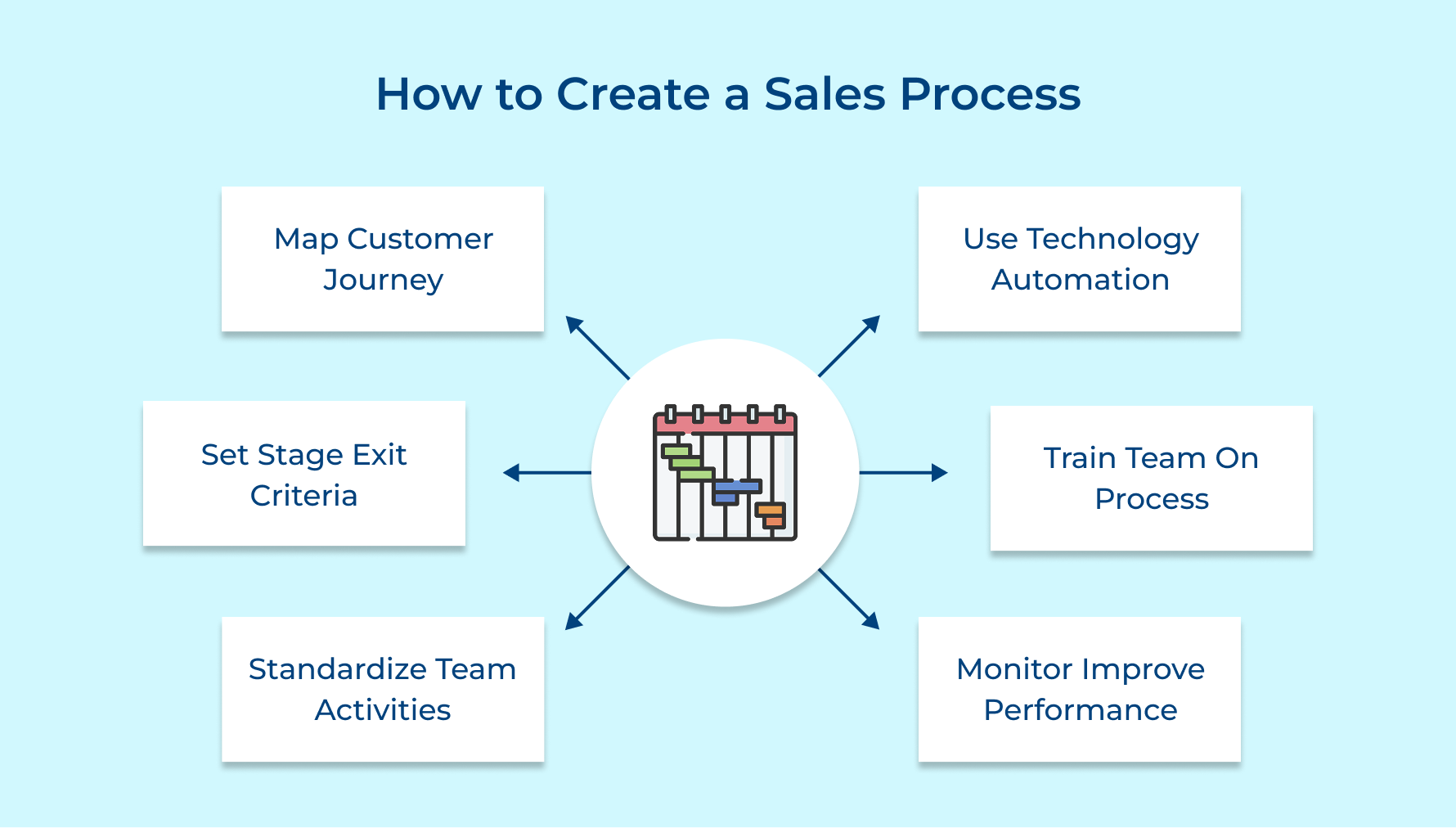
1. Map Your Current Customer Journey
The first step is to map your customer journey from awareness to purchase. This shows you the real path prospects take, not just the one you assume.
- Document every touchpoint between your agency and prospects.
- Identify what’s already working and where prospects drop off.
- Avoid building “theoretical” sales processes that ignore actual customer behavior.
This ensures your sales techniques are grounded in reality and tailored to your Ideal Customer Profile.
2. Define Clear Stage Exit Criteria
Exit criteria make your sales process consistent and prevent deals from moving forward too early. They act like checkpoints that keep everyone aligned.
Examples of Exit Criteria:
- Budget confirmed and aligned with project scope.
- Key decision makers identified and engaged.
- Timeline agreed upon that fits your agency’s capacity.
- Prospect’s pain points validated with success criteria defined.
Clear exit rules eliminate guesswork and help even new team members qualify leads effectively.
3. Standardize Your Sales Team Activities
Consistency across your team builds credibility and trust. Standardizing activities ensures best practices are followed without confusing prospects.
Ways to Standardize:
- Create email template libraries for different prospect stages.
- Use discovery question scripts to guide conversations.
- Develop presentation standards for slides and talking points.
The key is balancing structure with authenticity, training your team to personalize templates so they sound natural while applying proven sales techniques.
4. Implement Technology and Automation Tools
Digital tools reduce manual effort and prevent opportunities from slipping through the cracks. Choose systems that enhance (not complicate) your process.
Essential Tools:
- CRM platforms to track prospects and pipeline stages.
- Email automation to send personalized follow-ups.
- Scheduling tools that sync with calendars.
- Lead scoring platforms to focus on high-potential leads.
- Proposal software to create professional documents quickly.
Smart use of technology gives your team more time to focus on meaningful prospect conversations.
5. Train Your Team on Process
Even the best-designed processes fail without training. Teaching your team how to use the process ensures consistency across the board.
Training Ideas:
- Run regular workshops and role-playing sessions.
- Use recorded successful calls as real-world examples.
- Share checklists that guide team members during sales conversations.
This approach helps new hires ramp up quickly while experienced reps sharpen their sales techniques.
6. Monitor and Continuously Improve Performance
Your sales process should evolve with time. Regularly tracking results helps you refine and improve continuously.
Key Metrics to Track:
- Lead-to-opportunity conversion rate
- Average sales cycle length
- Win rate by sales stage
- Revenue per deal
- Cost per acquired customer
Turn this data into actionable insights by spotting patterns and making adjustments. Small improvements across stages can drive major results over time.
5 Actionable Best Practices to Improve Your Sales Process Stages
These proven practices help agencies refine their sales process stages for better conversion rates and smoother prospect experiences.
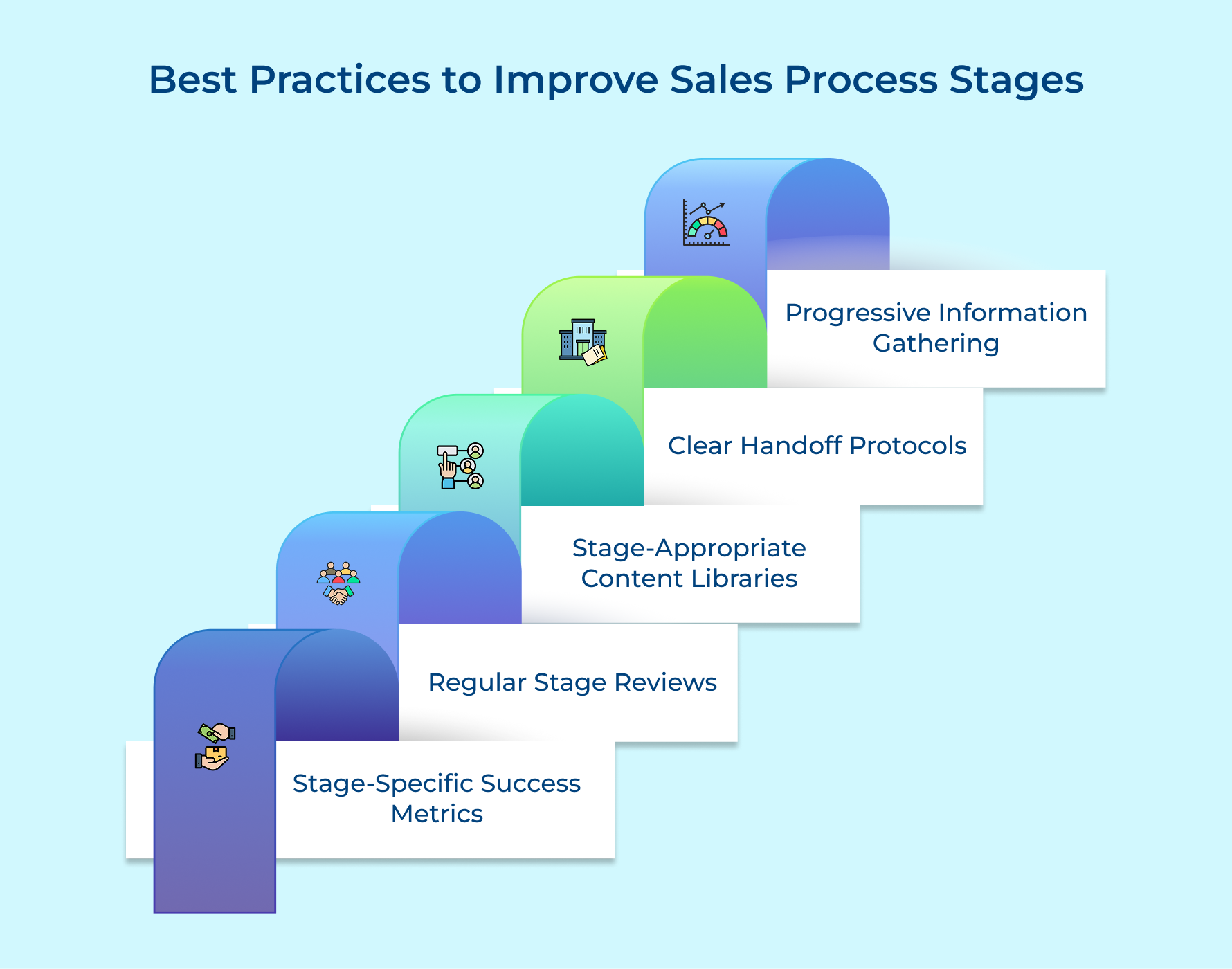
1. Create Stage-Specific Success Metrics
Set clear, measurable goals for every stage. Defined outcomes guide your team, show what progress looks like and prevent deals from stalling midway.
2. Implement Regular Stage Review Sessions
Schedule weekly pipeline reviews to identify deals stuck in certain stages. Group discussions uncover patterns and generate solutions that individuals may overlook.
3. Develop Stage-Appropriate Content Libraries
Provide tailored resources such as case studies and FAQs for each stage. Well-prepared materials help answer objections quickly and maintain consistent messaging.
4. Establish Clear Handoff Protocols
Design smooth transitions when prospects shift between stages or team members. Strong handoff rules prevent information gaps and keep momentum steady.
5. Use Progressive Information Gathering
Collect prospect details step by step instead of all at once. Gradual information sharing builds trust, lowers friction and keeps potential clients engaged.
Sales Process vs Sales Methodology
Understanding these fundamental differences helps agencies choose the right framework and avoid common confusion that leads to implementation failures.
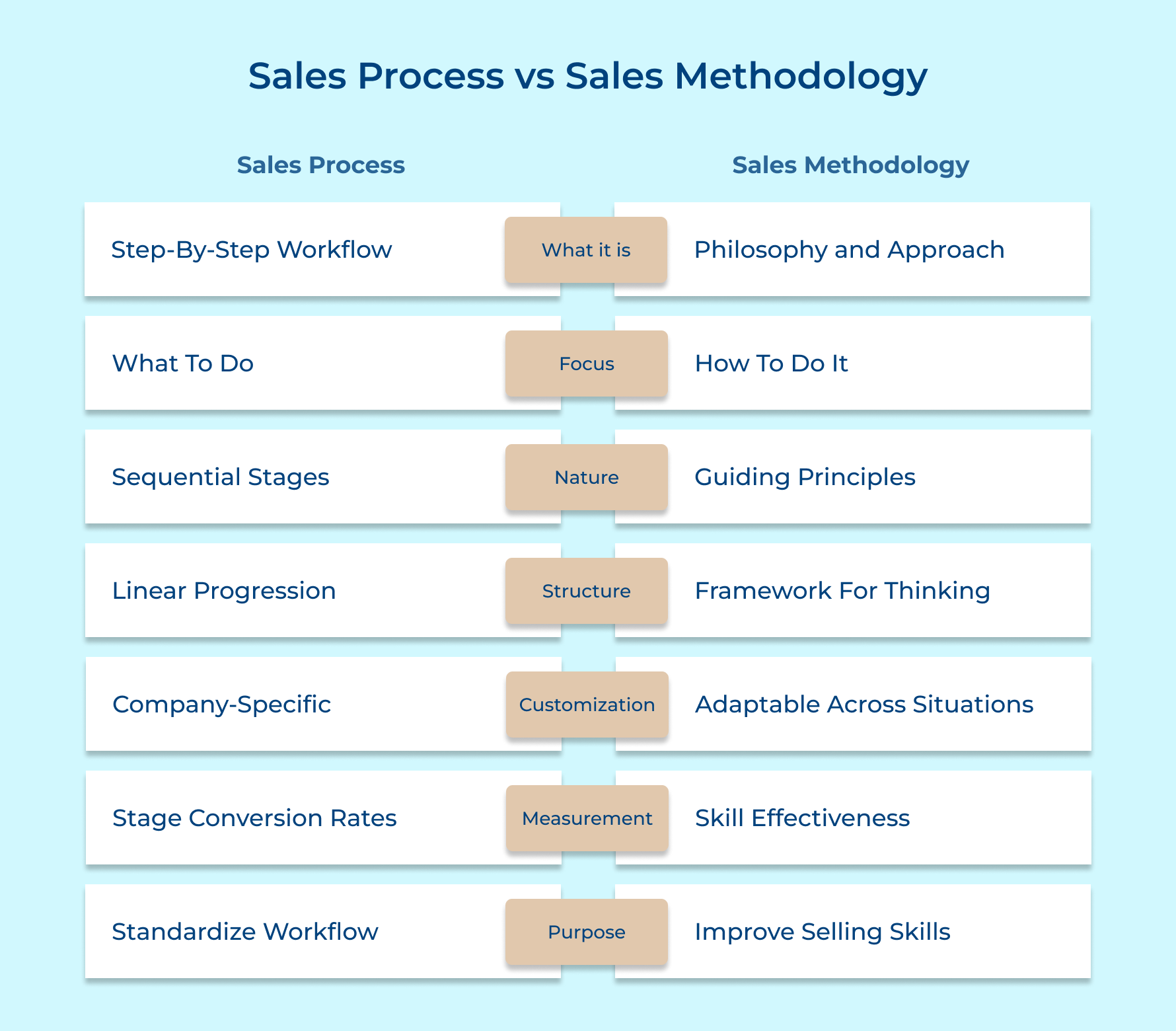
1. Structural Framework vs Philosophical Approach
A sales process is like a step-by-step pathway, it shows where prospects are and what comes next from first contact to closing the deal.
Sales methodologies shape how you think about selling. They’re less about exact steps and more about mindset as well as principles that guide interactions.
2. Tactical Actions vs Strategic Thinking
Sales processes focus on practical actions, like scheduling discovery calls or delivering proposals. They answer “what do we do next?” question.
Sales methodologies go deeper into strategy. They help your team understand buyer psychology and make smarter decisions in every conversation.
3. Company-Specific vs Universal Application
Sales processes are usually unique to each company, tailored to offerings, markets and sales cycles.
Sales methodologies, like SPIN Selling or Challenger Sale, work across industries. They tap into universal human behavior and can adapt to any business model.
4. Linear Progression vs Flexible Implementation
Sales processes move prospects through defined stages in order. It’s predictable, but sometimes feels rigid if prospects don’t follow the same path.
Sales methodologies are flexible. You can apply principles in any order and adapt them to suit different situations as well as personalities.
5. Performance Metrics vs Skill Development
Sales processes measure numbers like conversion rates, pipeline velocity and stage progress. They’re great for spotting bottlenecks.
Sales methodologies focus on people. The goal is building skills like better questioning and stronger rapport, which improve selling over time.
Common Sales Process Examples Every Business Should Know
These examples demonstrate how different agencies structure their sales processes to match their specific service offerings and client acquisition strategies.
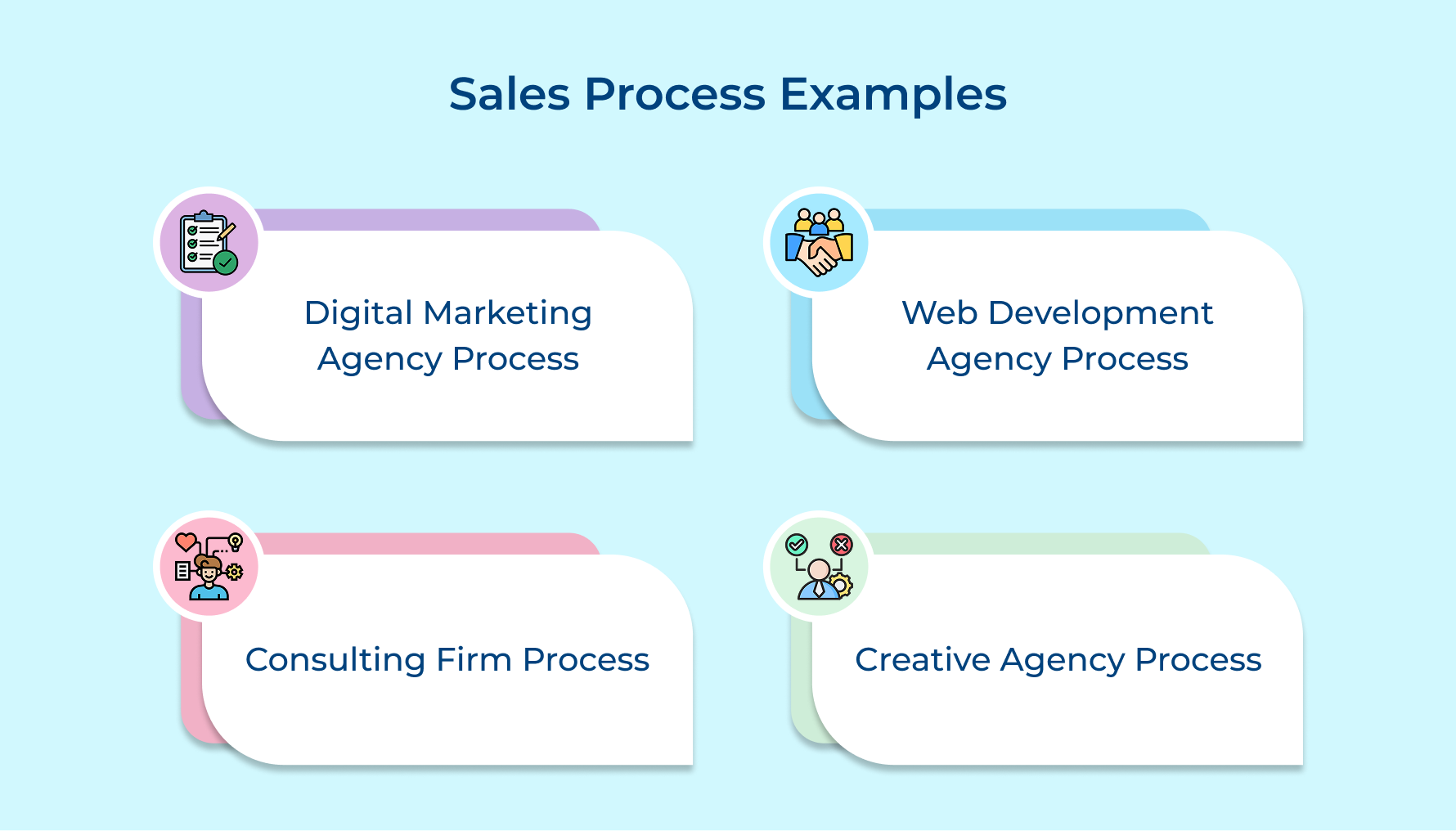
1. Digital Marketing Agency Process
This agency uses a seven-stage process starting with content marketing lead generation followed by qualification calls, discovery sessions, proposal presentations, contract negotiations, closing meetings and client onboarding. Each stage has specific deliverables and advancement criteria that guide prospects smoothly toward partnership.
2. Web Development Agency Process
Their streamlined five-stage approach begins with referral-based prospecting then moves through technical needs assessment project scoping and estimation collaborative proposal development and final contract execution. This process emphasizes technical expertise while building confidence in their development capabilities throughout each interaction.
3. Consulting Firm Process
A firm employs a relationship-focused six-stage process including initial networking and relationship building executive-level discovery sessions, strategic assessment presentations, customized solution development executive approval meetings and engagement kickoff planning. Their approach prioritizes long-term partnership over transactional relationships.
4. Creative Agency Process
Their creative-centric process features five stages starting with portfolio-driven prospecting, creative brief development, collaborative ideation sessions, comprehensive campaign proposal presentation and creative contract finalization. Each stage showcases their creative thinking while addressing practical business needs and budget considerations.
Transform your Pipeline Into a Powerhouse with Sales Process Stages
A well-structured sales process transforms chaotic lead management into predictable revenue generation by providing clear stages that guide prospects systematically toward partnership decisions. This framework eliminates guesswork while creating consistent experiences.
Implementation requires commitment to mapping current workflows defining stage criteria standardizing activities and continuously monitoring performance metrics. These foundational elements working together create sustainable growth that scales with your agency’s expansion goals.
Limit time — not creativity
Everything you need for customer support, marketing & sales.

Shivank Kasera is part of the marketing team at Kooper, where he focuses on building content that helps agencies and service providers grow. With a keen interest in SaaS, operations, and scalability, he translates practical insights into actionable resources for business leaders.