Top 10 Challenges in Professional Services and Solutions

Key Highlights:
- Discover how to tackle project scope, resource management and billing – the top challenges in professional services firms.
- Learn proven strategies to solve major challenges in professional services like client expectation gaps, burnout and scalability issues.
- Address persistent challenges in professional services with early warning systems, talent retention tactics and smarter project delivery methods.
Professional services organizations face unprecedented challenges in 2025 that threaten their survival and growth. Client expectations have evolved dramatically while competition intensifies and traditional service delivery models struggle to meet modern demands.
These mounting pressures create a perfect storm of operational inefficiencies and client dissatisfaction. Firms watching competitors gain market share while their own projects spiral over budget and behind schedule face existential threats to long-term viability.
Understanding and addressing the ten critical challenges in professional services becomes essential for success. Organizations that proactively tackle these obstacles will emerge stronger while others risk becoming irrelevant in an increasingly competitive marketplace.
What are Professional Services Challenges?
Professional services challenges represent the complex operational and strategic hurdles that knowledge-based businesses face daily. The core challenge lies in balancing client demands with resource constraints and maintaining quality standards across diverse projects.
These challenges directly affect profitability and client satisfaction in ways that can make or break a firm. When projects run over budget or talented staff burn out the ripple effects touch everything from client relationships to company reputation. The impact extends beyond immediate financial concerns to long-term competitive positioning and the ability to attract top talent.
Key focus areas:
- Resource optimization: Maximize billable hours while preventing staff burnout and maintaining work quality standards.
- Client relationship management: Build lasting partnerships that generate repeat business and referrals through consistent value delivery.
- Talent retention: Create an environment where skilled professionals want to stay as well as grow their careers.
- Project delivery excellence: Complete projects on time and within budget while exceeding client expectations.
- Scalable growth: Develop systems and processes that allow the firm to expand without sacrificing service quality or operational efficiency.
10 Key Challenges in Professional Services Growth
Let’s explore the top 10 challenges faced by professional service firms and provide actionable insights on how to tackle them effectively. Thus, ensuring that your business not only survives but thrives in this dynamic environment.
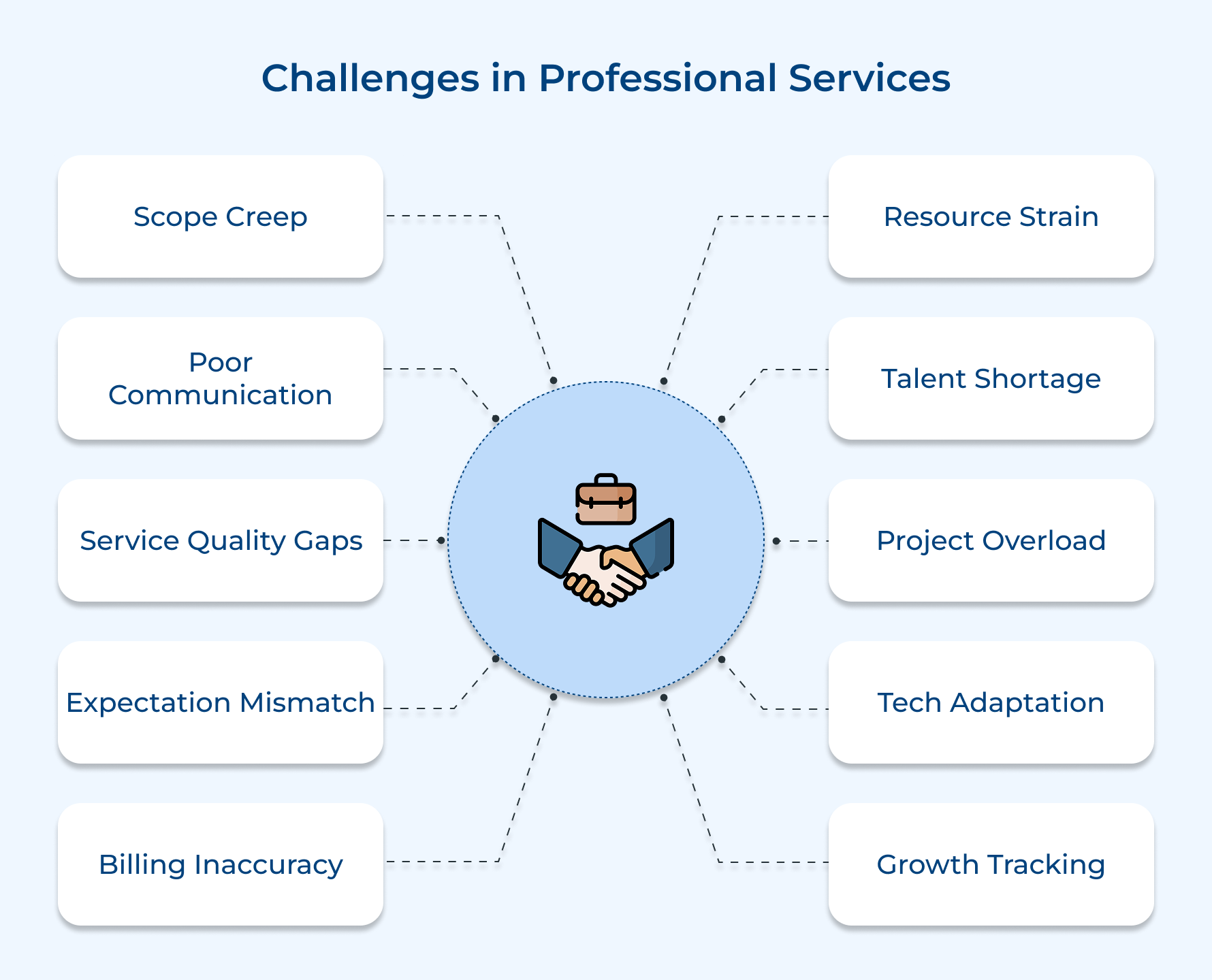
1. Project Scope Creep and Budget Overruns
Project scope creep happens when clients continuously add new requirements without adjusting timelines or budgets. This silent killer of profitability can transform profitable projects into financial disasters. Project scope creep and budget overruns typically stem from these four root causes:
- Poorly defined initial project requirements and deliverables
- Client assumption that small additions won’t impact costs
- Team members saying yes to requests without financial evaluation
How do you stop scope creep before it destroys your margins?
Start with crystal-clear boundaries and never deviate without proper approval. Think of your project scope like a restaurant menu – you wouldn’t expect free appetizers just because you ordered dessert.
2. Client Communication and Relationship Building
Poor communication creates misunderstandings that damage client relationships and lead to project failures. When clients feel disconnected from the process they lose confidence in your ability to deliver results.
Ask yourself these five critical questions:
- Are we providing updates frequently enough for client comfort levels?
- Do our reports clearly explain progress in terms clients understand?
- Are we addressing concerns before they become major problems?
- Does our communication style match what each client prefers?
- Are we being transparent about challenges and potential delays?
These questions help identify communication gaps before they damage relationships and create realistic expectations. Regular self-assessment prevents small issues from becoming relationship-ending problems that could destroy years of trust-building.
Beyond these questions, it’s also recommended to explore these four practical steps:
- Schedule weekly status calls regardless of project phase
- Create visual dashboards that show progress at a glance
- Document all decisions and share meeting summaries immediately
3. Inconsistent Service Quality Across Teams
Service quality inconsistency occurs when different team members deliver varying levels of work despite serving similar client needs. This creates confusion and undermines your firm’s reputation.
Why does this happen so frequently in professional services?
Different team members have varying experience levels and work styles. Without standardized processes each person approaches tasks differently leading to unpredictable results that frustrate clients. Here are three proven approaches to maintain consistent service quality across all teams:
- Standardize your processes: Create detailed checklists and templates that every team member must follow. Document best practices and make them easily accessible for reference during projects.
- Implement quality control systems: Establish peer review requirements before any deliverable reaches clients. Create feedback loops that catch issues early and maintain your reputation.
- Invest in team training: Regular skill development sessions ensure everyone meets the same standards. Cross-training helps team members understand different approaches and improves overall consistency.
For example, a consulting firm noticed client satisfaction varied dramatically between projects. After implementing standardized templates and review processes their quality ratings improved by 40% within six months.
4. Client Expectations vs Reality Management
Client expectations often exceed what’s realistically achievable within given timeframes and budgets. This disconnect creates frustration and damages relationships when promises can’t be delivered.
Understanding expectation misalignment is crucial because it’s the foundation of most professional service failures. When clients expect unrealistic outcomes, disappointment is inevitable regardless of actual work quality.
Example: A marketing agency promised a complete rebrand in four weeks. The client expected logo design, website development and brand guidelines. Reality required twelve weeks for quality execution creating immediate tension.
Three effective approaches to managing client expectations properly:
- Conduct thorough discovery sessions before proposing any timelines
- Provide regular progress updates that include both wins and challenges
- Document all assumptions and get written client agreement before starting
5. Inaccurate Accounting and Billable Hours
Inaccurate time tracking and billing errors destroy profitability while damaging client trust. When hours aren’t recorded properly or invoices contain mistakes your firm loses money and credibility simultaneously.
- Implement Automated Time Tracking Systems
Manual timesheets lead to forgotten hours and estimated entries that rarely reflect reality. Automated systems capture work as it happens eliminating guesswork while ensuring every billable minute gets recorded accurately for proper client invoicing.
- Regular Invoice Reconciliation Processes
Monthly invoice reviews catch discrepancies before they reach clients and create awkward conversations. Systematic reconciliation identifies patterns in billing errors and helps improve accuracy while maintaining professional relationships through transparent financial practices.
- Train Staff on Proper Billing Practices
Team members need clear guidelines on what constitutes billable work versus administrative tasks. Regular training sessions ensure everyone understands billing codes project classifications and client-specific requirements that affect how time gets allocated as well as invoiced.
6. Resource Management and Utilization
Poor resource allocation leads to overworked team members on some projects while others sit idle. This inefficiency reduces profitability and creates workplace stress that drives talented professionals to seek opportunities elsewhere.
Let’s suppose a consulting firm had three senior analysts working overtime on one client project while two equally qualified analysts had light workloads on different accounts. Poor resource visibility prevented optimal allocation.
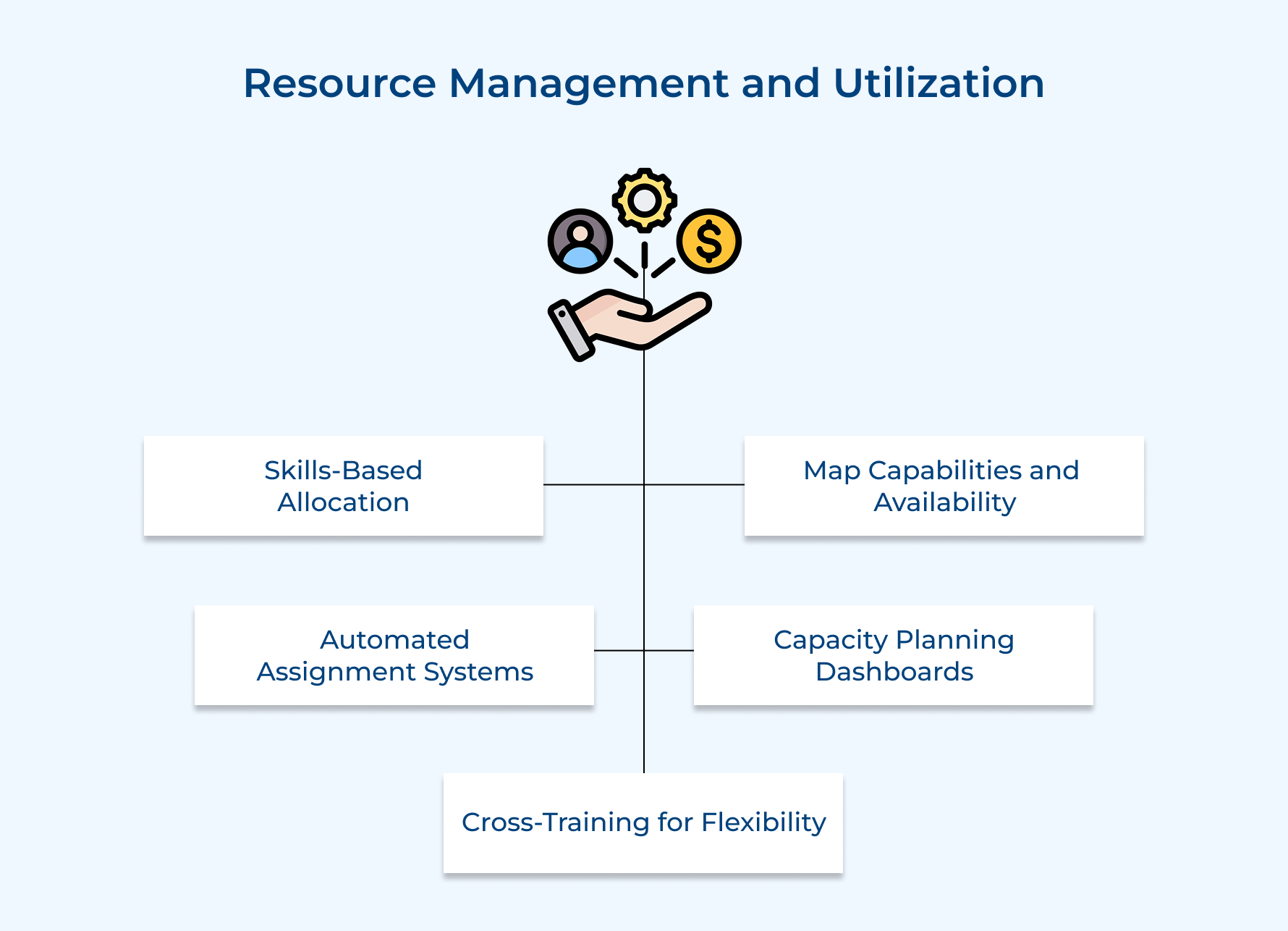
To overcome this challenge the vital process is developing skills-based resource allocation systems.
How do you match the right person to each task? Start by mapping every team member’s capabilities and availability. Then create systems that automatically suggest optimal assignments based on skills, workload along with client requirements.
Other than this main process there are three additional approaches:
- Create capacity planning dashboards: Visual tools that show team availability and upcoming project demands at a glance.
- Cross-train team members for flexibility: Develop multiple skills in each person to increase assignment options during busy periods.
7. Talent Retention and Acquisition
Talented professionals frequently leave professional service firms due to burnout, high stress and limited growth opportunities. This challenge creates expensive recruitment cycles while disrupting client relationships as well as institutional knowledge.
High workloads, competitive market conditions and inadequate career development programs drive skilled professionals to seek better opportunities elsewhere. When top performers leave they take valuable client relationships and project expertise with them.
Proven strategies for addressing this challenge:
- Regular salary benchmarking ensures your packages match or exceed market rates for similar roles.
- Structured career paths with clear advancement opportunities keep ambitious professionals engaged and growing.
How do you keep your best people engaged and motivated? A comprehensive talent retention strategy addresses both immediate needs and long-term career aspirations. Think of it like tending a garden – you need consistent care, attention and the right environment for growth.
8. Managing Multiple Projects and Deadlines
Handling multiple client projects at once can quickly become overwhelming without the right systems in place. Missed deadlines, poor quality and team burnout are common risks when work isn’t well organized.
- Use Project Management Tools
Digital tools help keep all project details, tasks and deadlines in one place. Everyone can see updates, track progress and spot issues early.
- Prioritize Tasks by Client Impact
Focus on tasks that matter most to the client first. Delay less urgent work so important things get done on time.
- Monitor Team Workloads
Regularly check if anyone is overloaded. This helps managers shift tasks or adjust timelines to avoid burnout and keep work quality high.
9. Technology Adaptation and Digital Transformation
Professional service firms must embrace new technologies to remain competitive while clients expect modern digital solutions and streamlined processes. Resistance to change or outdated systems create inefficiencies that competitors can exploit.
To conquer technology challenges in professional services consider these four essential elements:
- Investment in modern collaboration platforms: Cloud-based tools that enable seamless remote work and client interaction.
- Regular technology training programs: Ongoing education ensures team members can leverage new tools effectively and confidently.
- Integration strategy for existing systems: Careful planning that connects new technology with current operations without disrupting client service.
Example: A law firm implemented cloud-based case management software and virtual meeting platforms. Within six months they reduced administrative time by 30% while improving client communication.
10. Measuring Performance and Business Growth
Professional service firms struggle to define and track meaningful performance metrics that accurately reflect business health as well as growth potential. Without proper measurement systems firms cannot identify improvement opportunities or make strategic decisions.
Overcoming performance measurement challenges provides these two significant advantages:
- Data-driven decision making: Clear metrics enable strategic choices based on facts rather than assumptions or gut feelings.
- Improved client satisfaction: Regular performance tracking identifies service gaps before they damage important client relationships and revenue streams.
How do you measure something as abstract as client satisfaction or team expertise?
Start with simple metrics that matter most to your business success. Focus on revenue per employee client retention rates and project profitability rather than complex formulas that confuse more than clarify.
Additional Strategies to Prevent Professional Services Challenges
Prevention beats cure when managing professional service challenges. Smart firms implement proactive strategies that stop problems before they impact client relationships or project outcomes.
Before exploring additional prevention strategies it’s recommended to answer these four key questions:
- What early warning signs indicate potential project or client relationship problems?
- How effectively does our current communication system prevent misunderstandings and conflicts?
- Are our team members equipped with proper tools and training for consistent service delivery?
- What feedback mechanisms help us identify improvement opportunities before clients become dissatisfied?
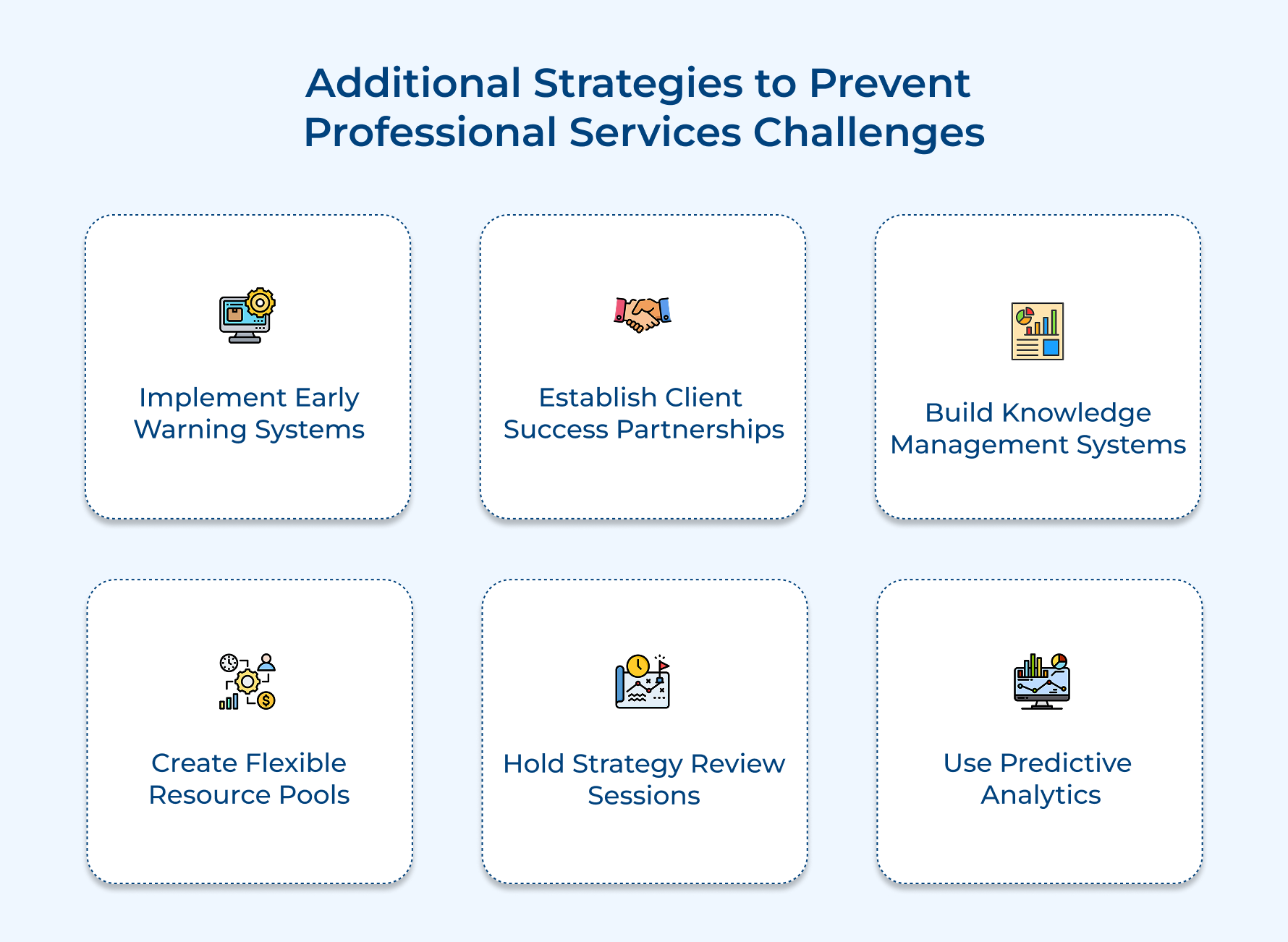
Implement Early Warning Systems
Don’t wait for problems to blow up. Use automated alerts to track things like budget changes, slow response times, or team overload. Catching small issues early means you can fix them before they affect your client relationships.
Establish Client Success Partnerships
Assign a dedicated client success manager to focus on relationship health, not just deliverables. They can spot new opportunities, check in regularly and make sure everything’s running smoothly. Happy clients are more likely to stick around and refer others.
Build Comprehensive Knowledge Management Systems
Create a central hub for documenting best practices, lessons learned and successful strategies. This way, your team avoids making the same mistakes twice and can repeat what’s working across all projects.
Create Flexible Resource Pools
Train team members in multiple areas so they can jump into different projects when needed. This helps avoid delays when someone’s overloaded and ensures you always have the right skills on hand for specialized tasks.
Institute Regular Strategy Review Sessions
Hold monthly strategy reviews to step back, see what’s working and adjust your approach. These sessions help your team stay aligned with client needs and long-term business goals.
Develop Predictive Analytics Capabilities
Predictive analytics can show you where things might go off track before they do. By analyzing trends and workloads, you can make smarter decisions, plan resources better while keeping projects running smoothly.
Professional services challenges are inevitable but conquering them separates thriving firms from struggling ones. Without proactive strategies these obstacles damage client relationships, reduce profitability and create operational chaos that drives away talented professionals.
Implementing structured approaches to overcome these challenges transforms professional services businesses dramatically. Better project management systems improve delivery consistency while enhanced client engagement strategies build lasting partnerships that generate sustainable revenue growth and competitive advantages.
Limit time — not creativity
Everything you need for customer support, marketing & sales.

Pooja Deshpande is a content contributor at Kooper, focused on creating insightful resources that help agencies and service providers scale efficiently. Passionate about SaaS trends, content strategy, and operational excellence, she delivers practical, easy-to-implement guidance for modern business leaders.