How to Become a Project Manager: A Complete Guide with Roles

Key Highlights:
- A practical guide for aspiring project managers in service businesses, covering technical skills, leadership and strategies to grow into the role effectively.
- Core responsibilities include planning, resource management, client communication, risk assessment and quality control for effective project execution.
- Seven steps (skills, experience, leadership, portfolio, etc.) form a proven pathway to become a project manager.
Are you watching project managers orchestrate complex client work with seeming ease while wondering how they developed such capabilities? The specialized role demands a unique blend of technical knowledge, business acumen and leadership skills that can seem overwhelming to develop.
Project management roles in service businesses offer rewarding career paths with significant impact and compensation, but the entry barriers can appear daunting.
This comprehensive guide provides a proven seven-step framework on how to become a project manager in agencies and professional service firms. By following this methodical approach, you’ll build the exact capabilities that service businesses value most while positioning yourself for advancement opportunities that leverage your unique strengths.
What is a Project Manager?
A project manager acts as the central coordinator for specialized, client-focused work within service businesses. They guide projects from inception to completion by organizing resources, managing timelines, and ensuring deliverables meet quality standards. Project managers create the critical bridge between client expectations and the team’s execution capabilities.
Project managers focus on temporary initiatives with definite endpoints while traditional managers oversee ongoing departmental operations. Project managers work across organizational boundaries and manage matrix teams without direct authority over most team members they coordinate.
Key responsibilities:
- Deliver projects on time and within budget while meeting quality expectations.
- Manage client relationships through clear communication and expectation setting.
- Coordinate cross-functional team members to ensure alignment and productivity.
- Identify and mitigate risks before they impact project outcomes.
- Document processes and learnings to improve future project execution.
6 Roles and Responsibilities of a Project Manager
Project managers wear many hats from planners to risk managers and team leaders. Here’s what they actually do and why investing in project management education as well as project management certifications is a smart move.
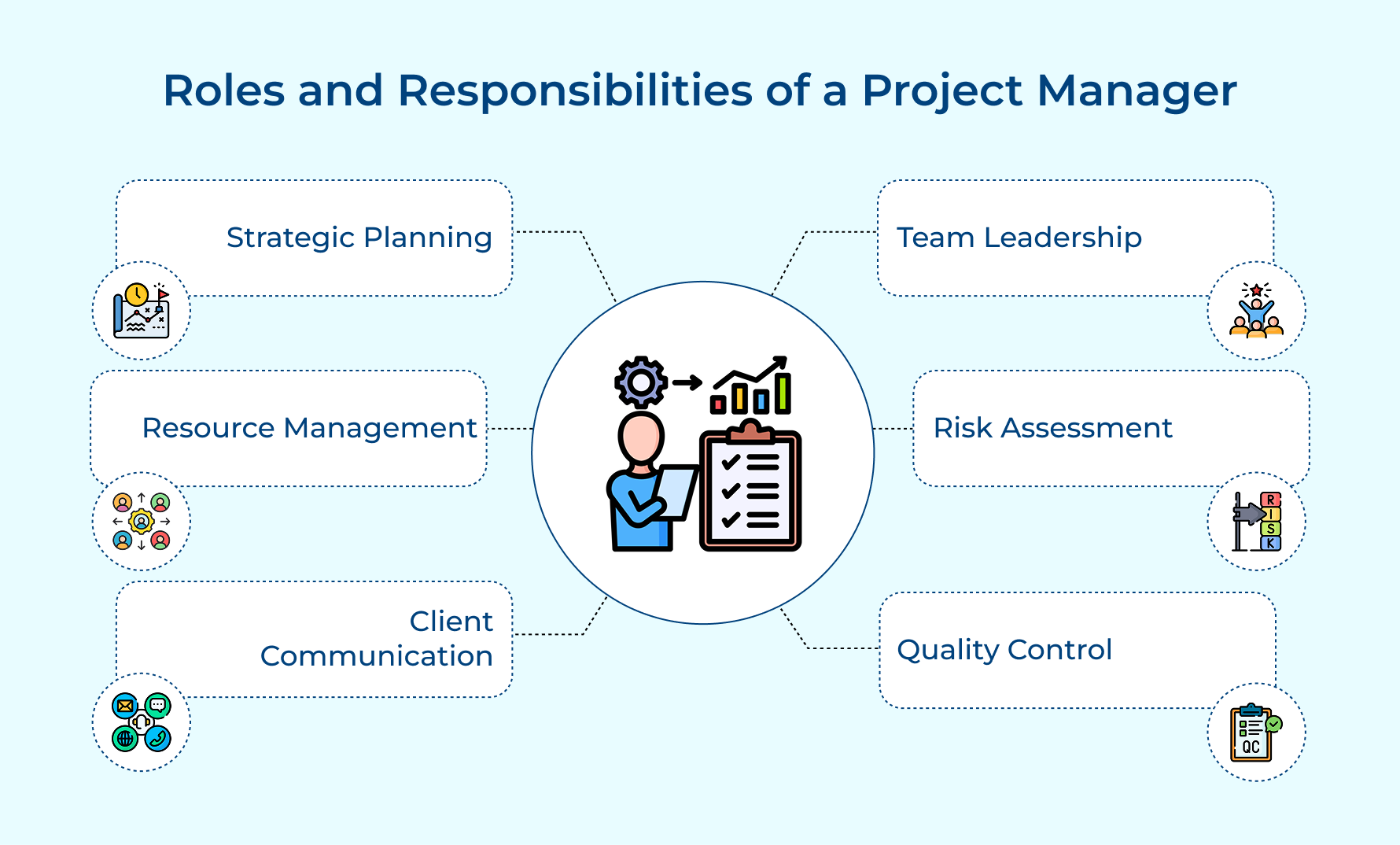
1. Strategic Planning
Great project managers take abstract client ideas and turn them into structured, goal-driven plans. This starts with breaking down big-picture goals into tangible tasks and deliverables.
They ask:
- How do we convert a vague client vision into clear, trackable deliverables?
- What boundaries do we need to set to avoid scope creep?
- What dependencies could delay us and how can we plan around them?
They also build realistic timelines (not fantasy ones!) and insert buffer time to deal with the unexpected. Clear project management methodologies like Agile, Waterfall, or Scrum help guide this process.
2. Resource Management
Managing people and their time effectively is a major part of the job. PMs must understand who’s available, what skills they bring and how to use those skills efficiently, without burning anyone out.
A few key tasks include:
- Forecasting staffing needs throughout the project
- Balancing workloads so no one is overwhelmed
- Creating back-up plans in case someone leaves or gets pulled away
- Monitoring utilization rates to ensure profitability
- Negotiating with other departments for the resources you need
This is where your project management experience and people skills come in. The more projects you manage, the better you get at handling these dynamics.
3. Client Communication
As the face of the project, the PM is the main contact between the client and the internal team. You’re responsible for keeping expectations aligned and translating business needs into technical instructions the team can follow.
Communication challenges you’ll need to manage:
- How often should you update the client?
- What’s their preferred communication style?
- How do you deliver tough news without damaging the relationship?
Strong soft skills like empathy, listening, and conflict resolution are just as important here as technical know-how. Project management education often touches on these soft skills, but real-world experience is where they really develop.
4. Team Leadership
Project managers create environments where team members feel empowered to contribute their best work and raise concerns early. They facilitate productive meetings with clear agendas and action items while eliminating unnecessary gatherings that waste valuable production time.
To lead effectively, you’ll want to:
- Set clear expectations and responsibilities
- Create a safe space for open feedback and innovation
- Give recognition when it’s due
- Clear blockers that get in the team’s way
As your project management experience grows, you’ll learn how to tailor your leadership style to different teams and personalities. Whether you’re managing developers, designers, or analysts, leadership is a universal must-have.
5. Risk Assessment
Project managers identify potential risks before they materialize and develop mitigation strategies to minimize their impact. They maintain risk registers that track evolving threats throughout the project lifecycle with assigned ownership for each response plan.
Ponder these risk management questions that proactive project managers regularly ask:
- What could potentially derail our project timeline or budget?
- Which risks carry the highest impact and probability as well as deserve immediate attention?
- How might external factors like market changes affect our project outcomes?
Project managers also solve emerging problems through analytical thinking and collaborative approaches rather than assigning blame. They understand when to escalate issues versus when to handle matters independently and can adapt quickly when circumstances change unexpectedly.
6. Quality Control
Delivering a project isn’t just about finishing on time. It’s also about hitting the quality standards that matter to the client. A good PM defines what “done” looks like upfront and builds in reviews to catch issues early.
Quality management includes:
- Setting objective acceptance criteria
- Running effective review cycles
- Balancing quality with budget and time constraints
- Maintaining consistency across the board
- Capturing lessons learned for future projects
Documenting what worked (and what didn’t) helps in not only improving future projects, you also build your credibility as a thoughtful project leader.
7 Effective Steps to Become a Project Manager
If you’re just starting or looking to advance in your career, following these seven steps will help you build the foundation needed to excel as a project management professional:
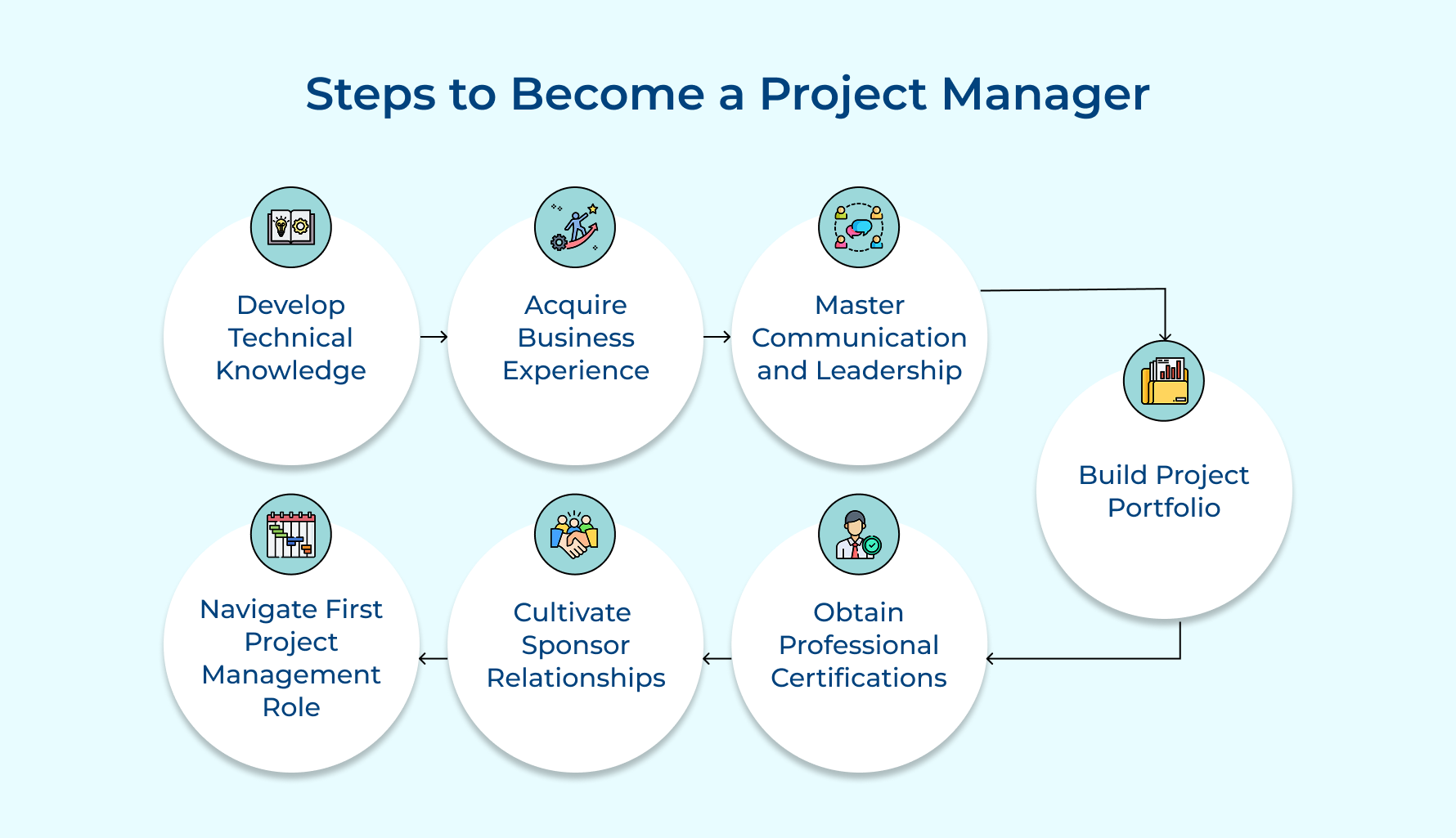
1. Develop Essential Technical Knowledge
Technical knowledge forms the foundation of effective project management in service businesses. Project managers need specialized expertise to structure work properly and communicate intelligently with both team members/clients about methodologies as well as processes.
Four essential technical areas every aspiring project manager must develop:
- Industry methodologies: Learn frameworks like Agile, Waterfall, or hybrid approaches that best suit your agency’s service delivery model.
- Project management software: Master tools like Asana, Monday.com, or ClickUp that facilitate planning, tracking, and reporting on project progress.
- Budget management: Understand how to create accurate estimates, track billable hours, and manage scope to maintain profitability.
- Documentation protocols: Develop skills for creating clear briefs, statements of work, and process documentation that prevent misunderstandings.
A digital marketing agency project manager might use their Agile methodology knowledge to structure a website redesign into two-week sprints with clear deliverables. This approach allows for client feedback between phases while maintaining momentum on the project. Best practices for developing your technical knowledge include:
- Connect with experienced project managers in your industry to learn which technical skills matter most in your specific context.
- Take online courses focused on both general project management principles and industry-specific applications of those principles.
- Practice using project management tools on personal projects to develop muscle memory before applying them in professional settings.
2. Acquire Relevant Business Experience
Business experience provides crucial context for aspiring project managers. Understanding the inner workings of service delivery helps you make better decisions when you eventually coordinate team members and manage client expectations. Valuable business experiences to acquire include:
- Client service roles: Direct client interaction builds empathy and communication skills essential for managing expectations later.
- Specialized practitioner work: Experience as a designer, developer, writer, or other specialist helps you understand the realities of producing deliverables.
- Account management: Learning to handle client relationships offers insights into balancing client demands with internal capabilities.
- Operations involvement: Understanding how the business functions from scheduling to invoicing provides critical perspective for project planning.
Volunteering for cross-departmental initiatives gives you visibility into how different teams approach their work. A content writer who participates in a website launch sees how their deliverables integrate with design and development, building valuable systems thinking for future project management.
Client-facing opportunities build perhaps the most critical project management skill: expectation management. When you experience firsthand how clients react to project updates, timeline shifts, and deliverable presentations, you develop the communication intuition needed to prevent problems before they occur.
3. Master Communication and Leadership
In service businesses, strong communication and leadership aren’t just nice-to-haves, they’re essential. As a project manager, you need to clearly explain complex ideas while rallying your team to do their best work, even under pressure.
Here’s how to build those skills:
- Set up communication systems: Use templates for updates, client meetings, and briefs to keep things consistent as well as stress-free.
- Practice tough conversations: Role-play scenarios like missed deadlines or shifting scopes so you’re ready when real issues arise.
- Lead through influence: Since you often don’t have direct authority, motivate your team by tying project goals to their personal growth and always show appreciation.
At the end of the day, great project managers don’t just track progress—they inspire progress. When you communicate clearly and lead with empathy, clients trust you more as well as your team is more committed to delivering results.
4. Build your Project Portfolio
If you’re serious about a career in project management, a strong portfolio is more powerful than a job title. It shows that you’ve delivered real results.
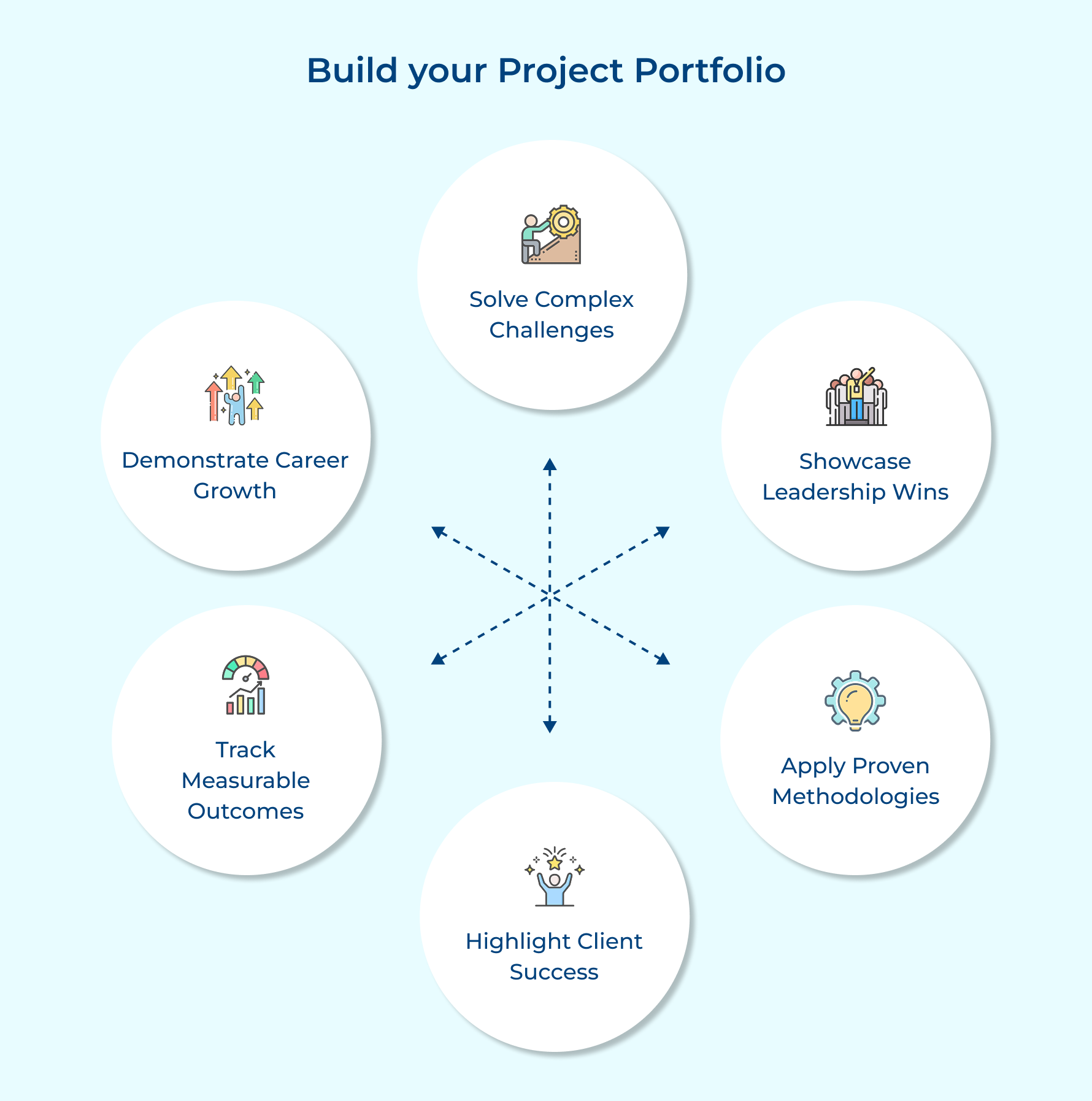
If you’re a project coordinator or aiming to become a project management professional, your portfolio should highlight:
- Tough challenges you solved to demonstrate problem-solving and critical thinking
- Leadership moments that directly influenced results like hitting KPIs or improving timelines
- Project management methodologies you applied to boost efficiency
- Client relationships you strengthened through great communication and soft skills
Don’t forget to include metrics: Did client satisfaction scores rise? Did your work increase profit margins?
If you’re tracking your hours of project management for a certification through the Project Management Institute, this portfolio becomes even more valuable. It reflects your growing capabilities and proves you’re more than ready for the next step in your project management journey.
5. Obtain Professional Certifications and Training
If you’re building a career in project management, earning a professional certification isn’t just a checkbox—it’s a credibility boost. For service business project managers, certifications show clients and internal teams that you’ve got both the knowledge as well as the commitment to lead effectively.
Certifications from the Project Management Institutes (PMI) help you turn theory into action. You’ll learn structured methods like risk assessment matrices, stakeholder mapping, and communication plans.
Pro tips to get the most value:
- Choose certifications that align with your industry vertical, not just the most popular ones
- Pair formal training with real-world practice. Attend workshops, take on new responsibilities, or shadow a project coordinator
- Track your hours of project management as you go, it’ll help you meet eligibility requirements for higher-level credentials later
6. Cultivate Sponsor Relationships Internally
Having internal sponsors can be a game-changer when you’re growing into a project management role. These advocates help spotlight your strengths, offer honest feedback and open doors you might not even know exist.
Here’s how to build meaningful sponsor relationships:
- Find alignment: Look for leaders whose paths reflect where you want to go and who understand your industry’s unique challenges.
- Offer value: Support their goals by pitching in on projects, sharing insights, or helping them shine.
- Stay visible: Join cross-functional initiatives or committees where collaboration happens naturally.
- Diversify: Connect with sponsors across departments and levels to get a broader view as well as more opportunities.
For example, a junior designer might offer to help track timelines on a project—learning in the process and building a mentorship opportunity.
7. Navigate First Project Management Role
Your first step into project management is a big one, it sets the tone for your entire career in service-based project management. How you handle this early stage shapes your habits, reputation, and confidence going forward.
Here’s how to build a strong foundation:
- Start with well-defined projects
Look for projects with clear goals, structured processes, and manageable complexity. These let you learn the ropes, build early wins, and gain momentum without getting overwhelmed. - Establish personal productivity systems
Before leading others, get your own workflow in order. Use simple tools to track tasks, decisions, and communication. Organized PMs inspire trust and stay sane. - Develop your leadership style
Try different ways of motivating and supporting your team. Pay attention to what works for different personalities, but stay true to your core values.
Your Guide to Becoming a Successful Project Manager
Becoming a project manager in service businesses requires deliberate skill building across technical expertise, business acumen, and people leadership. The journey combines formal learning with practical experience, certification with relationship building, all purposefully sequenced to build your capabilities progressively.
The path rewards those who balance attention to process details with strategic thinking about client and business needs. By developing these complementary skills and demonstrating impact through a well-documented portfolio, you’ll position yourself for success in this dynamic as well as rewarding career.
Limit time — not creativity
Everything you need for customer support, marketing & sales.

Shivank Kasera is part of the marketing team at Kooper, where he focuses on building content that helps agencies and service providers grow. With a keen interest in SaaS, operations, and scalability, he translates practical insights into actionable resources for business leaders.