Top 8 Resource Management Challenges & Solutions for Agencies
- What are Resource Management Challenges?
- Benefits of Optimizing Resource Management Challenges
- 8 Common Resource Management Challenges and Solutions
- 5 Technologies That Reduces Challenges in Resource Management
- Eliminate your Resource Management Challenges with Kooper
- FAQs About Resource Management Challenges

Key Highlights:
- Effective solutions to key resource management challenges optimize team utilization, enhance client satisfaction as well as ensure project success.
- Resource management challenges like capacity planning and conflicts drain productivity, but structured solutions help agencies deliver projects successfully.
- Modern technologies like AI forecasting reduce common problems by improving visibility, efficiency and decision-making.
Resource management sounds simple – get the right people on the right projects at the right time. But for most agencies and professional service firms, resource management challenges are a daily reality.
Missed deadlines, blown budgets and burned-out teams are just the tip of the iceberg. Project managers scramble for resources while leadership struggles to see who’s really available. It’s frustrating, chaotic and costly.
Here’s the good news. When you understand what’s really causing the chaos and apply the right tools, resource management becomes a strength, not a struggle. You’ll gain control, boost profitability and deliver work your clients can count on every time!
What are Resource Management Challenges?
Resource management challenges are the obstacles organizations face when allocating as well as optimizing their limited assets (people, time, budget and technology) to meet business objectives efficiently. These challenges include scheduling conflicts, skill mismatches, budget constraints and maintaining visibility across multiple projects while ensuring resources aren’t overcommitted or underutilized.
Poor resource management directly impacts project timelines, team morale, client satisfaction and profitability. When resources aren’t properly allocated, agencies experience missed deadlines and inconsistent service quality that damages client relationships while reducing competitive advantage.
Key objectives:
- Maximize billable utilization without causing team burnout or sacrificing quality.
- Match the right talent with appropriate projects based on skills and client needs.
- Forecast resource needs accurately to prevent bottlenecks and enable proactive hiring.
- Balance workloads equitably across team members while respecting their capacity limits.
- Create transparent resource visibility that supports data-driven decision making.
Benefits of Optimizing Resource Management Challenges
Tackling resource management head-on transforms how agencies and professional service businesses operate as well as deliver value to clients. Here are the benefits:
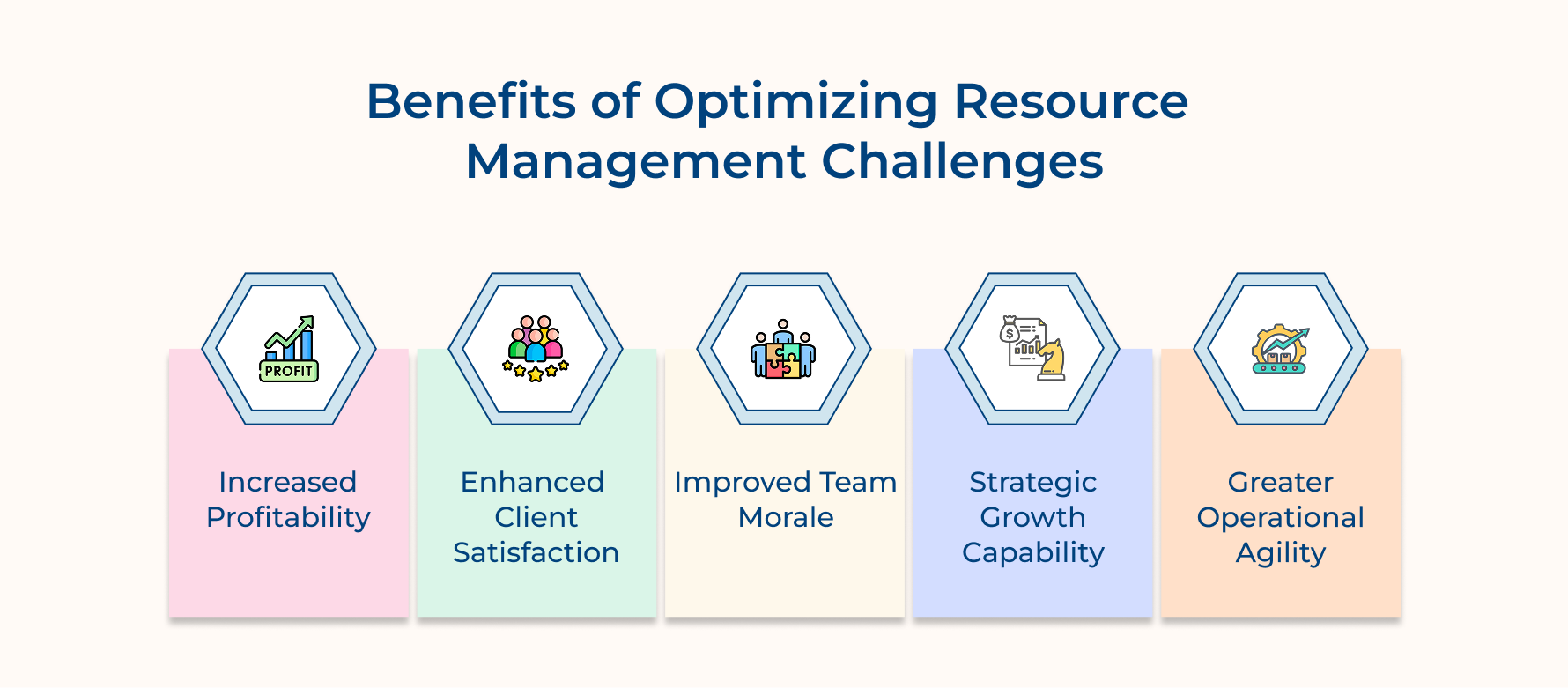
1. Increased Profitability
Better resource allocation means more billable hours are captured and fewer hours are wasted on administrative tasks. Teams can focus on high-value work that directly contributes to revenue while reducing bench time and optimizing the use of specialized talent across projects.
2. Enhanced Client Satisfaction
Assigning the right people to the right projects at the right time leads to better quality. Deadlines are met consistently and deliverables exceed expectations because team members aren’t stretched too thin or mismatched to tasks outside their expertise.
3. Improved Team Morale
Balanced workloads prevent burnout and reduce stress across your organization. Team members appreciate fair distribution of work and opportunities that align with their skills as well as career goals. Thus, leading to higher retention rates and a more positive workplace culture.
4. Strategic Growth Capability
Clear visibility into resource utilization enables confident business development decisions. Leadership can pursue new opportunities knowing exactly when and how to scale the team without overcommitting or turning away valuable projects due to uncertainty about capacity.
5. Greater Operational Agility
Optimized resource management creates flexibility to adapt quickly when priorities shift. Teams can respond to changing client needs or market conditions without major disruption because resources can be reallocated efficiently based on real-time visibility into workloads and availability.
8 Common Resource Management Challenges and Solutions
Resource management can make or break your project success. Here are 8 common challenges teams face and how to solve them effectively.
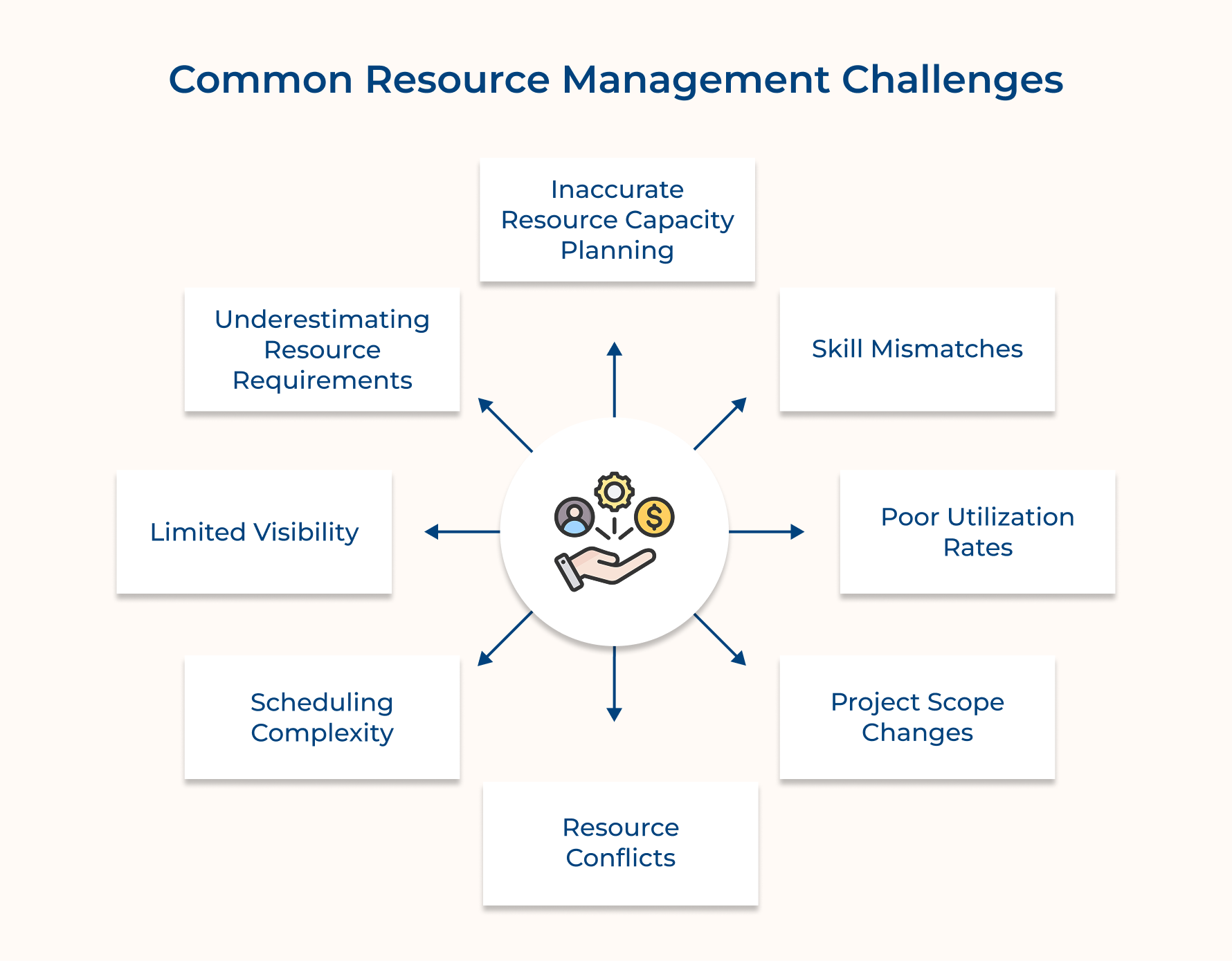
1. Inaccurate Resource Capacity Planning
A common challenge in resource management is inaccurate capacity planning, misjudging how much work your team can actually take on. This disconnect leads to overpromising, missed deadlines and constant last-minute scrambles. Project managers are stuck making tough calls: delay the project or cut corners? Meanwhile, teams get burnt out from nonstop crisis mode and morale takes a hit.
Fix this by starting with data. Use historical project data and current team availability to build realistic forecasts. This helps you make informed decisions that reflect real-world capacity. Also, build in a 10–15% buffer on every project. It’s a small step that gives you room to handle surprises without overwhelming your team or disappointing clients.
2. Skill Mismatches Across Client Projects
A common blocker to project success is skill mismatches—when people are assigned to work that doesn’t align with their strengths or experience. This often happens when managers lack full visibility into available skills or scramble to meet client demands without time for upskilling. Projects slow down, quality dips and both team morale as well as client satisfaction take a hit.
To fix this:
- Maintain a real-time skills inventory across the team.
- Match roles to experience and career interests.
- Build flexibility for upskilling ahead of complex projects.
- Avoid assigning critical tasks to underprepared team members.
3. Poor Utilization Rates and Productivity
Professional service teams often walk a tightrope trying to maximize utilization without burning people out or compromising quality. When utilization swings too far in either direction, it leads to financial instability, wasted resources, or overwhelmed teams.
- Set Realistic Targets
Avoid aiming for 100% billable time. Instead, set targets that reflect real work like internal meetings, training and downtime so people stay productive without burning out.
- Balance Billable Work and Growth
Make space for professional development in everyone’s schedule. It supports long-term growth and helps your team stay motivated as well as future-ready.
- Track for Insight, Not Control
Use time tracking to understand how work gets done, not to micromanage. Focus on improving processes, not policing people.
4. Project Scope Changes Disrupting Resources
Mid-project scope changes can throw your entire resource plan into chaos. When extra work is added without adjusting deadlines or resources, teams are forced to stretch too thin. It leads to delays across multiple projects. Project managers are stuck choosing between protecting their teams or keeping clients happy.
Take a digital agency, for example: a last-minute client request for extra landing pages means pulling designers off other projects, triggering a chain reaction of missed deadlines.
Dodge this by setting up a clear scope change process that includes resource impact analysis. Even better, build flex teams to handle urgent work without derailing everything else.
5. Resource Conflicts Between Multiple Projects
Resource conflicts are a common challenge, especially when multiple project managers need the same people at the same time. It leads to tension, rushed work and stressed-out teams juggling competing demands. Without a system in place, project managers end up fighting for resources and quality often takes a backseat.
Create a clear project prioritization framework. Involve project managers in building it so they feel ownership, not frustration. Factor in both short-term revenue and long-term client value to guide smarter decisions. This removes guesswork, reduces friction and helps everyone stay focused on what matters most for the team as well as the business.
6. Scheduling Complexity and Calendar Management
As agencies grow, scheduling gets messy fast. More projects, more teams and more moving parts make it easy for things to fall through the cracks. Poor scheduling leads to delays, confusion and wasted time. However, when done right, it boosts productivity while keeping everything on track.
Here’s how to simplify it:
- Centralized scheduling with a dedicated coordinator to keep the big picture in view
- Use resource management software for real-time visibility and automated conflict detection
- Set clear booking rules so everyone knows how and when to request resources
The right tools help cut chaos, use resources better and keep both your team as well as clients happy.
7. Limited Visibility Into Resource Availability
One of the most common resource management problems is limited visibility into who’s available and when. Without a clear view of current and upcoming commitments, teams get overbooked, underutilized, or assigned to the wrong projects. That leads to missed deadlines and wasted billable hours.
Fix it with a centralized resource dashboard that gives everyone the full picture. Include:
- Current allocation for each team member
- Forecasted availability 4–8 weeks out.
- Skill tags to match the right people to the right work.
- Capacity alerts to avoid overloading your team.
Seeing real availability helps you make better decisions, avoid surprises and deliver projects more reliably.
8. Underestimating Project Resource Requirements
Underestimating resource needs is a common resource management problem that can derail projects quickly. When agencies guess too low on the time or skills required, teams end up rushing, cutting corners, or working overtime just to keep up.
Project managers then face a tough choice: scramble for more resources mid-project or push the team beyond their limits, both harming quality and morale. For example, a web development firm might plan for 160 hours but actually need 250, throwing everything off schedule.
Avoid this by using data from past projects for more accurate estimates. Also, build in contingency buffers and confirm resources in phases as project details become clearer.
5 Technologies That Reduces Challenges in Resource Management
Modern resource management tools leverage technology to eliminate manual processes, increase visibility. Here are some great tech solutions to tackle common resource management problems:
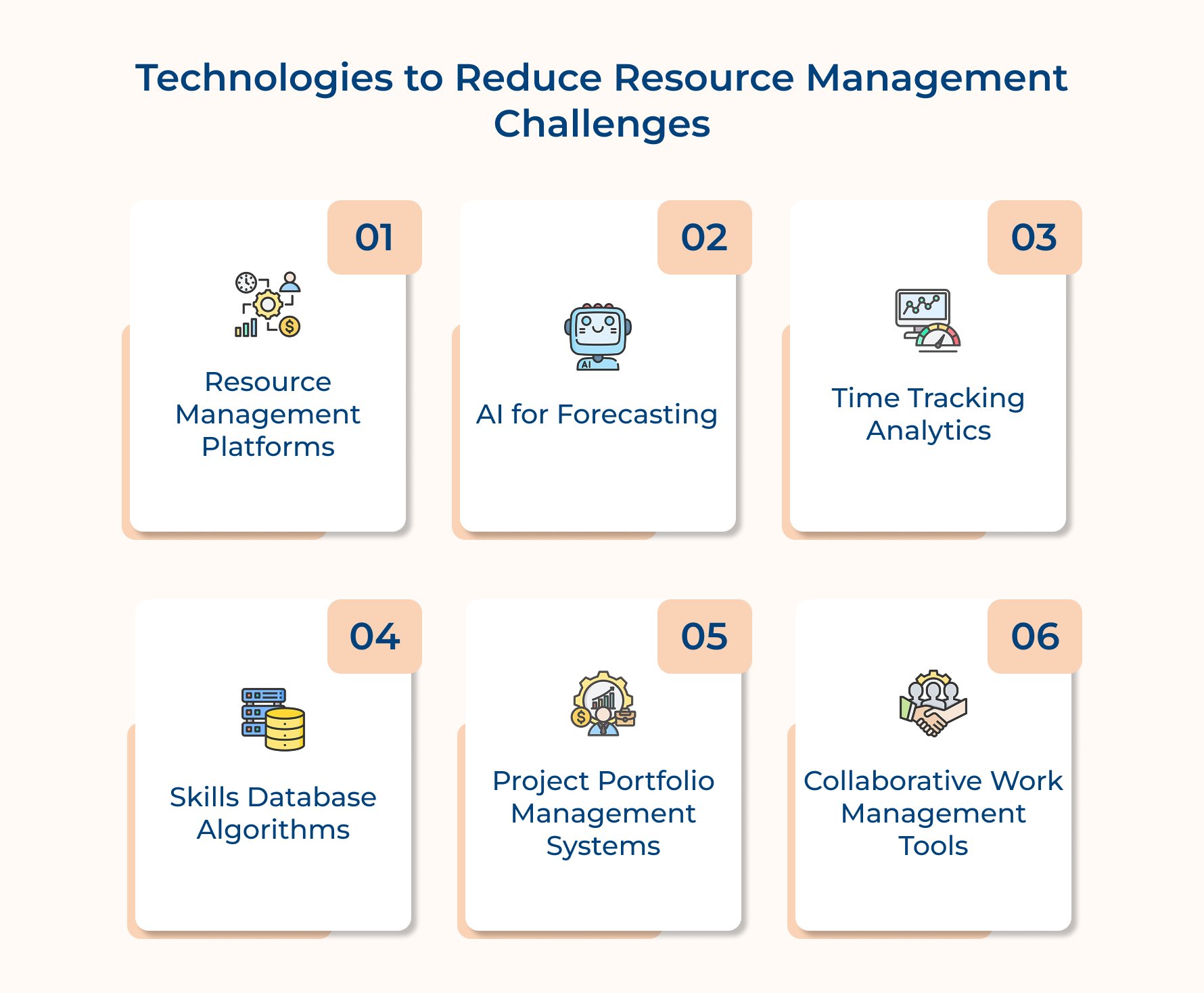
1. Resource Management Platforms
Tools like Mavenlink, Float and Resource Guru give you a clear, real-time view of all your resources as well as projects. They help centralize scheduling, track utilization and spot conflicts before they become headaches.
2. Artificial Intelligence for Forecasting
AI tools analyze past project data to predict resource needs more accurately than guesswork. They learn from patterns and improve forecasts as new info comes in.
3. Time Tracking and Productivity Analytics
Advanced time tracking goes beyond hours logged. It shows how time is really spent, spots inefficiencies and helps build realistic capacity plans.
4. Skills Database and Matching Algorithms
Skill management platforms match team skills with project needs, factoring in experience and preferences to assign the best fit.
5. Project Portfolio Management Systems
Portfolio management systems give a big-picture view of projects, helping prioritize work and align resources strategically to business goals.
Eliminate your Resource Management Challenges with Kooper
Eliminating resource management challenges is essential for project and resource managers seeking sustainable success. Without effective resource management, organizations face declining profitability, team burnout and damaged client relationships. The constant firefighting that comes with poor resource allocation drains energy from strategic growth activities while creating unnecessary stress.
Kooper provides a comprehensive PSA solution that centralizes all resource management activities in one intuitive platform. Kooper’s dashboards show team capacity and project demands, while smart allocation matches people to projects as well as integrations cut admin work.
Limit time — not creativity
Everything you need for customer support, marketing & sales.

Shivank Kasera is part of the marketing team at Kooper, where he focuses on building content that helps agencies and service providers grow. With a keen interest in SaaS, operations, and scalability, he translates practical insights into actionable resources for business leaders.