How to Bill for Consulting Services Effectively (2026)
- What is a Consulting Invoice?
- Strategic Benefits of Billing Clients for Consulting Services
- How to Bill Clients for Consulting Services in 8 Steps
- Top 6 Billing Tips and Best Practices for Consultants
- Challenges of Invoicing as a Consultant and How to Fix Them
- Tools or Software to Bill for Consulting Services Efficiently
- Simplify Your Invoicing: The Ultimate Billing Guide for Consultants
- FAQs about Consulting Services billing process

Key Highlights:
- Learning how to bill for consulting services helps consultants boost cash flow, reduce admin tasks, and secure timely payments.
- Smart consulting invoicing practices (like clear agreements, automated tools, and deposits) simplify workflows and strengthen professional client relationships.
- Common consulting services billing challenges include late payments, scope creep, and admin overload, but automation ensures smoother collections.
Struggling with late payments and messy invoicing? You’re not alone. Many consultants lose time and money without a clear process. Learning how to bill for consulting services the right way can make a huge difference.
Make a few simple, strategic changes. You’ll boost cash flow, cut down on admin work, and get paid on time without awkward conversations. This guide breaks down proven billing methods used by successful consultants to streamline operations and maximize income.
Regardless of you just starting out or refining your system, these practical tips will show you exactly how to bill smarter and build a more profitable business.
What is a Consulting Invoice?
A consulting invoice is a formal billing document sent by consultants to clients that details the services provided, fees charged, payment terms, and other relevant information. It serves as both a request for payment and a legal record of the business transaction between the consultant as well as client.
Consulting invoices directly affect cash flow and profitability by establishing clear payment expectations. They help consulting businesses maintain professional relationships with clients through transparent billing practices. Well-designed invoices also reinforce the consultant’s brand and value proposition while providing essential documentation for accounting along with tax purposes.
Key objectives:
- Request timely payment for services rendered to maintain healthy cash flow.
- Document the scope and value of work completed for client records as well as future reference.
- Establish clear payment terms, including due dates and acceptable payment methods.
- Provide a professional representation of your consulting brand and business practices.
- Create a legal record for tax reporting and financial accounting requirements.
Strategic Benefits of Billing Clients for Consulting Services
Let’s explore how proper billing practices can transform your consulting business beyond just getting paid.
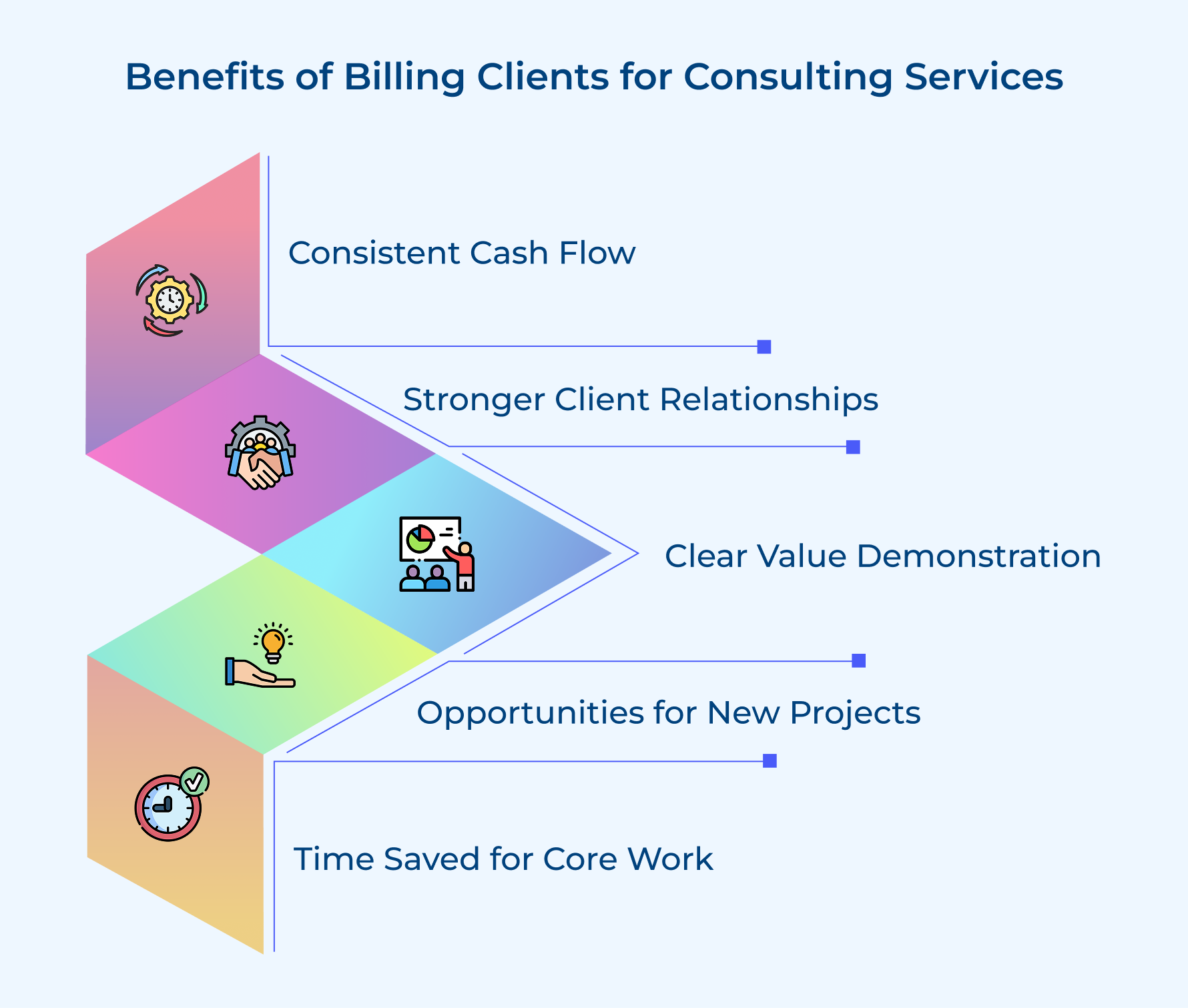
- Consistent cash flow: Regular invoicing keeps money coming in and makes it easier to plan for expenses as well as growth.
- Builds professional relationships: A clear invoice for consulting services example sets expectations while showing you’re organized and professional.
- Highlights your value: Detailed invoices help clients see the results they’re paying for—justifying your rates and reinforcing your impact.
- Opens doors to new work: Payment conversations often lead to ideas for new projects or services.
- Saves time: Streamlined consulting invoicing means less admin and more time doing what you do best.
How to Bill Clients for Consulting Services in 8 Steps
Dive into the following eight steps that will transform your billing approach from chaotic to seamless, all while strengthening trust and clarity with your clientele.
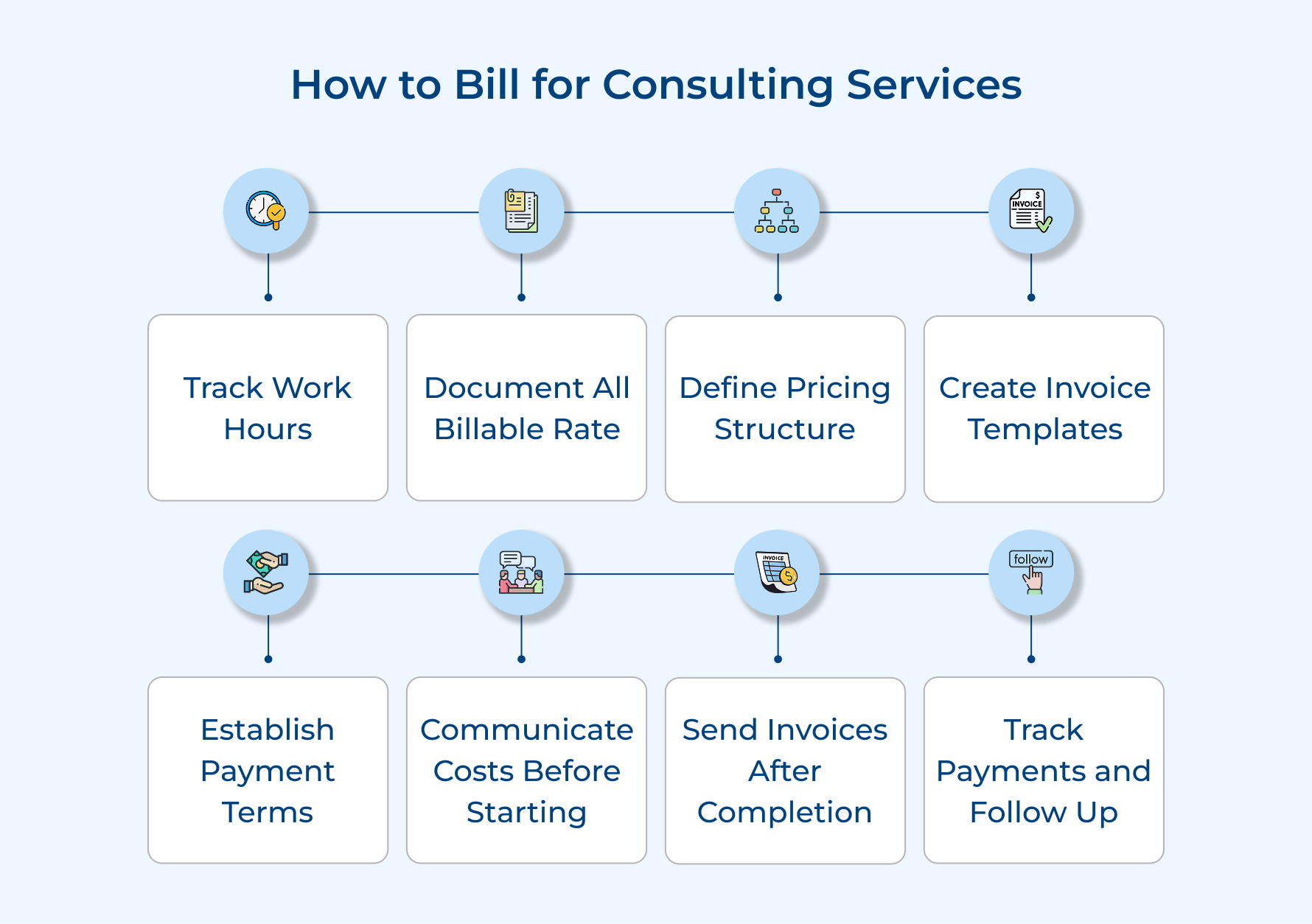
1. Track Work Hours
Tracking your work hours might not sound exciting, but it’s a game-changer for accurate billing and smart time management. By consistently recording the time you spend on client projects, you’ll build trust through transparent invoices as well as gain insight into where your time (and money) really goes.
Easy ways to track work hours:
- Use apps like Toggl or Harvest
- Create spreadsheet templates with auto-calculations
- Try browser extensions for real-time tracking
- Use project management tools with built-in timers
This helps you spot productivity trends and see which clients or services are most profitable.
2. Document All Billable Rates
Not sure how to bill clients as consultants or set the right rates? Start by clearly documenting what you charge, it keeps things consistent and avoids confusion.
Here’s how to create invoice for consulting services that reflect your value:
- Build service-based rate cards: List each offering (e.g., “Strategy: $250/hr”, “Support: $175/hr”) and update them as needed. Share with clients early to set expectations.
- Set pricing by expertise level: Junior consultants might bill at $125/hr, while senior partners charge more. Document the “why” behind each rate.
- Track rate history: Keep a record of past rates, discounts, and adjustments. It helps explain increases while keeping pricing decisions data-driven and fair.
3. Define your Pricing Structure
Setting up your pricing structure is one of the most important steps in building a sustainable consulting business. It shapes your income, client expectations, and how your value is perceived.
Ask yourself before setting prices:
- What results does my expertise deliver?
- How do others in my niche charge?
- What model fits my workflow best?
Popular pricing models:
- Hourly billing is great for flexible projects where time varies. Clients pay for exactly what they get.
- Project-based billing charges a flat fee for a set outcome. It’s often more profitable and easier for clients to budget.
Pro tips:
- Research industry benchmarks to ensure your rates are competitive and reflect market standards.
- Factor in client budget ranges when designing service tiers to make your offerings more accessible.
- Adjust your pricing seasonally if your consulting work follows predictable demand cycles.
- Create bundled service packages to increase perceived value and encourage clients to invest in more comprehensive solutions.
4. Create Professional Invoice Templates
Creating professional invoice templates means designing standardized billing documents that reflect your brand. These templates streamline your billing process while projecting professionalism and ensuring you collect all necessary payment information.
Essential elements to include in invoice templates:
- Your business name, logo, and contact information
- Client name and billing address
- Unique invoice number and date
- Itemized services with descriptions and rates
- Subtotal, taxes, and total amount due
- Payment terms and due date
- Multiple payment method options
Clear payment instructions prevent confusion that delays payment. Detailed explanations about accepted payment methods, account numbers, as well as processing procedures help clients complete transactions quickly with minimal back-and-forth communication.
5. Establish Clear Payment Terms
The most important step is setting clear and upfront payment terms to bill for consulting services effectively. It helps avoid awkward money talks and keeps your cash flow steady.
Here’s a simple how to bill for consulting services example:
- Set clear deadlines, use “Net 15” or “Net 30” based on the project size and client type.
- Ask for an upfront deposit (25–50%) to show commitment and cover early work.
- For longer projects, break payments into milestones tied to deliverables. Don’t wait until the end.
- Include late fee terms (1.5–2% monthly) and note when work might pause if invoices aren’t paid.
Clients appreciate clarity. You’ll spend less time chasing payments and more time doing great work.
6. Communicate Costs Before Starting
Talking about costs upfront is a smart move that builds trust and keeps things clear from the start. When you’re transparent about all potential expenses before diving into a project, clients feel respected and better prepared budget-wise. It helps avoid surprises or payment disputes later on.
Be upfront about things like extra research or timeline changes that might affect costs. This way, everyone’s on the same page and the money side of things runs smoothly.
Here are a couple of tips:
- Use standard estimate templates that break down all costs (hourly rates, project fees and any extras).
- Set up a budget chat before the project kicks off to go over everything and answer client questions.
7. Send Invoices Promptly After Completion
Sending invoices right after hitting project milestones is a game-changer for getting paid faster and showing you value your work. Using tools like QuickBooks or FreshBooks lets you automate invoices as soon as a task is done and even track when clients open them.
For ongoing work, use recurring billing so invoices are sent on the same day each month, clients value the predictability.
When emailing invoices, include a brief summary of what you delivered and keep the tone friendly yet professional. This shows value and often speeds up payments.
Being prompt with invoicing not only boosts your cash flow but also reduces admin headaches, making it easier for clients to pay on time every time.
8. Track Payments and Follow Up
Tracking payments is all about keeping an eye on which invoices have been paid and which ones are still hanging. It’s a simple but powerful way to make sure you’re not missing out on money you’ve earned and it also helps you spot clients who are regularly late, all while keeping things professional.
Tracking payments effectively helps you spot patterns early and resolve issues before they grow into major problems. For instance, you might want to tweak payment terms for clients who are always late, or even reward those who always pay on time with small perks.
Here are a couple of practical tips to make payment tracking easier:
- Set up automated reminders that gently escalate—from a friendly nudge to a more formal follow-up.
- Keep a record of all payment-related conversations in one place. It’ll come in handy when you’re following up or if there’s ever a dispute.
Top 6 Billing Tips and Best Practices for Consultants
Mastering your billing approach can transform your consulting business from chaotic to profitable. Here are six proven strategies to optimize your revenue collection.
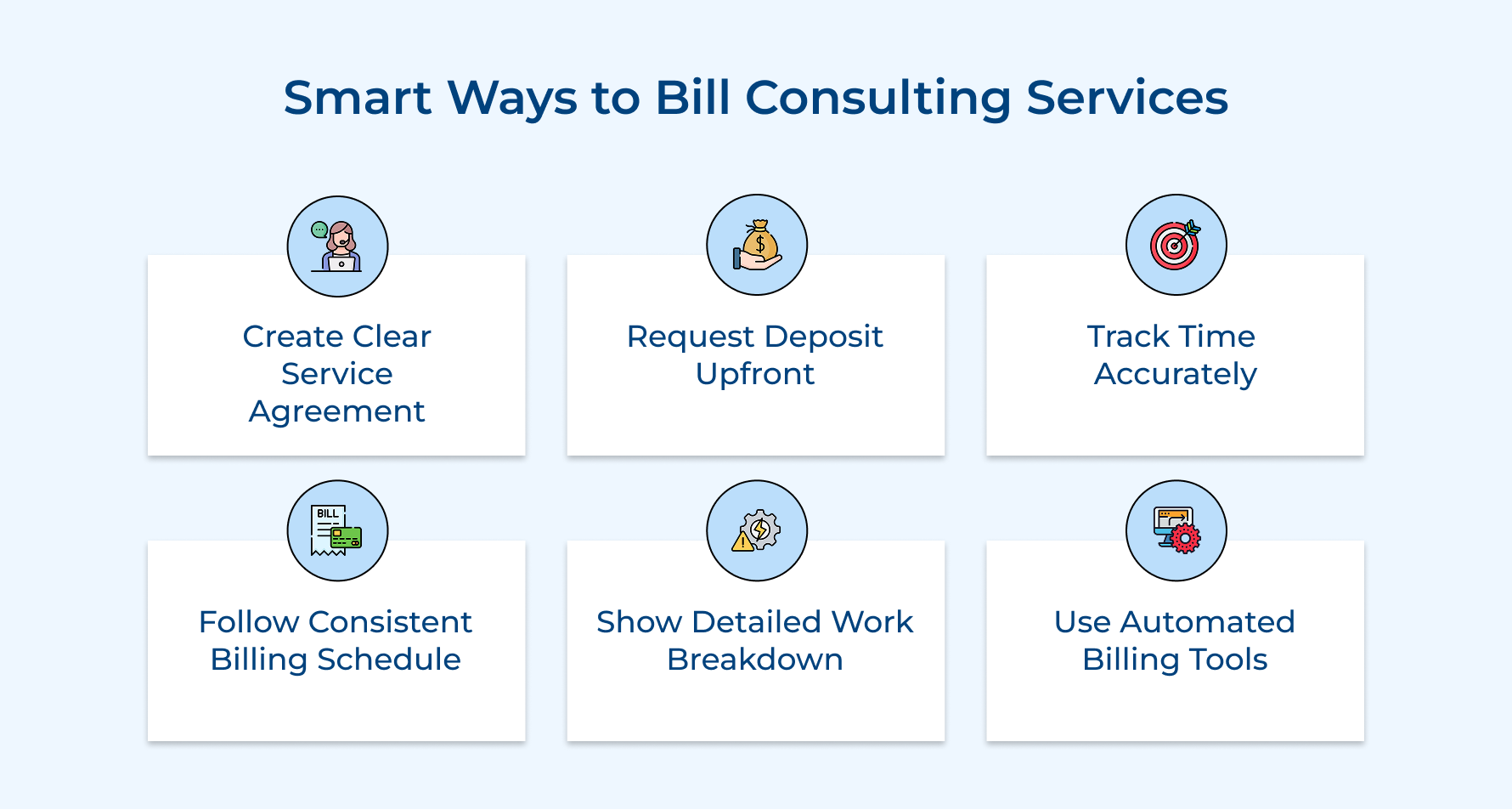
Start With A Solid Service Agreement
Spell out exactly what you’re offering, how you’ll bill (hourly, project-based, etc.), and any extra costs. This keeps things clear and avoids future confusion.
Ask for a Deposit Upfront
For new clients or large projects, request 25–50% before starting. It shows commitment, improves cash flow, and filters out non-serious leads.
Track Your Time Like A Pro
Use time-tracking tools to log every minute you spend. Break it down by task so clients know what they’re paying for. Weekly summaries help you stay organized and back up your invoices.
Stick to a Billing Schedule
Set a regular invoicing routine, monthly for ongoing work or milestone-based for big projects. Consistency helps both you and your clients stay on top of payments.
Break Down Your Value Clearly
Don’t just say “consulting services”, itemize what you did and link it to results. This builds trust as well as reduces back-and-forth.
Automate Where You Can
Use billing software to send invoices, track payments and flag issues. Less manual work, more time for actual client projects.
Challenges of Invoicing as a Consultant and How to Fix Them
Getting paid shouldn’t be harder than doing the actual consulting work, yet many consultants struggle with their invoicing processes. Here are the most frustrating obstacles you’ll likely face.
- Inconsistent cash flow
When clients pay late or on random schedules, it’s hard to plan. You end up holding cash instead of investing in your business. - Awkward money talks
Chasing overdue payments can feel uncomfortable and strain your client relationships. - Too much admin, not enough billable work
Manually creating invoices, tracking payments, and sending reminders eats into your productive time. - Scope creep with no extra pay
Those “quick favors” add up—and if they’re not tracked, you lose out on serious revenue. - Payment disputes
Clients questioning invoices after weeks? It delays payments and drains your time and energy.
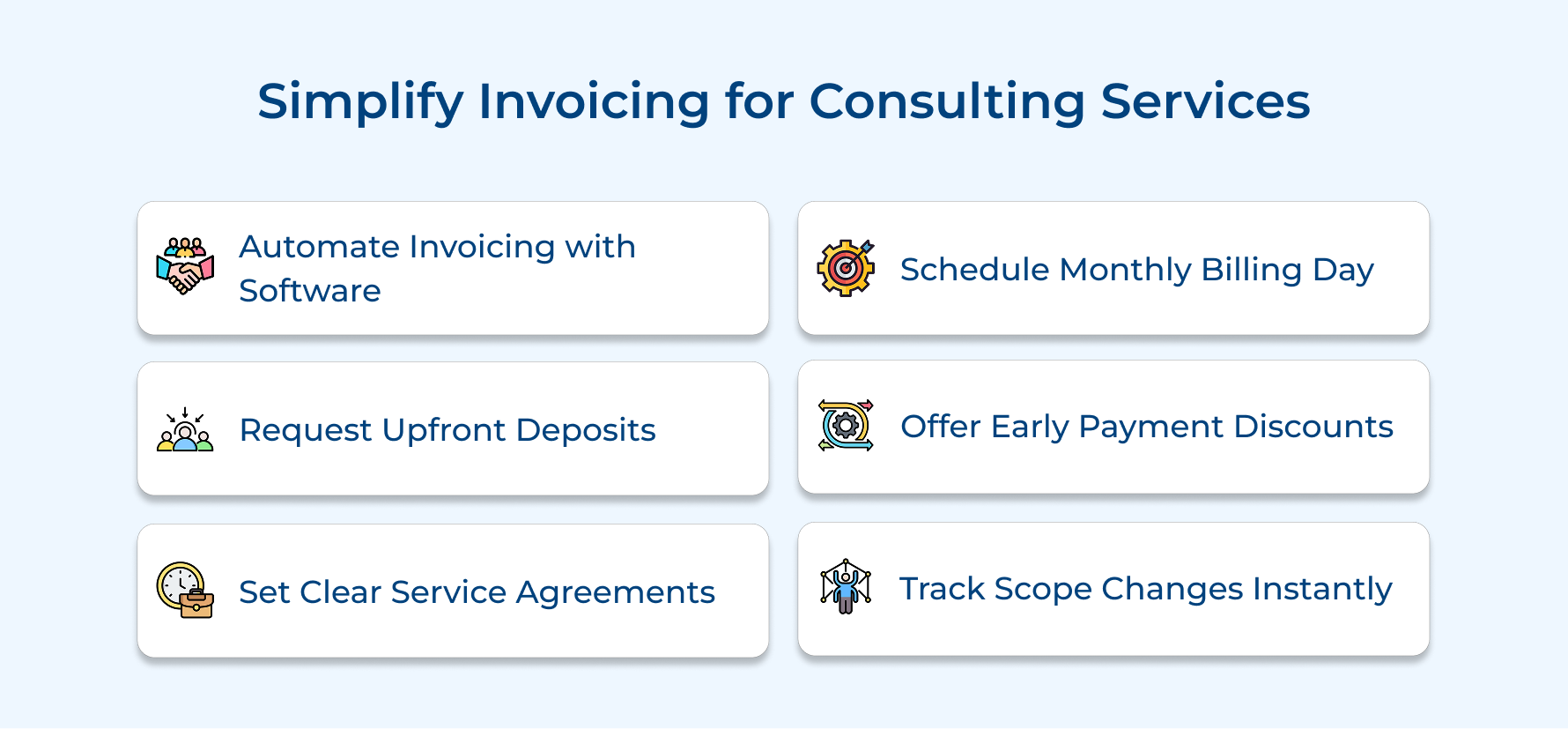
Here’s how to simplify things:
- Automate your invoicing process with specialized software that handles recurring billing and payment reminders.
- Require upfront deposits of 30-50% before beginning any new client engagement.
- Create detailed service agreements with explicit terms covering scope changes and additional requests.
- Establish a dedicated monthly administrative day for managing all billing-related tasks.
- Offer small discounts for early payments to incentivize clients to pay promptly.
- Document scope changes in real-time and immediately update estimates when project parameters shift.
Tools or Software to Bill for Consulting Services Efficiently
Finding the right billing software can transform your consulting practice from administrative chaos to streamlined proficiency. Let’s explore the top options designed specifically for consultants.
Kooper
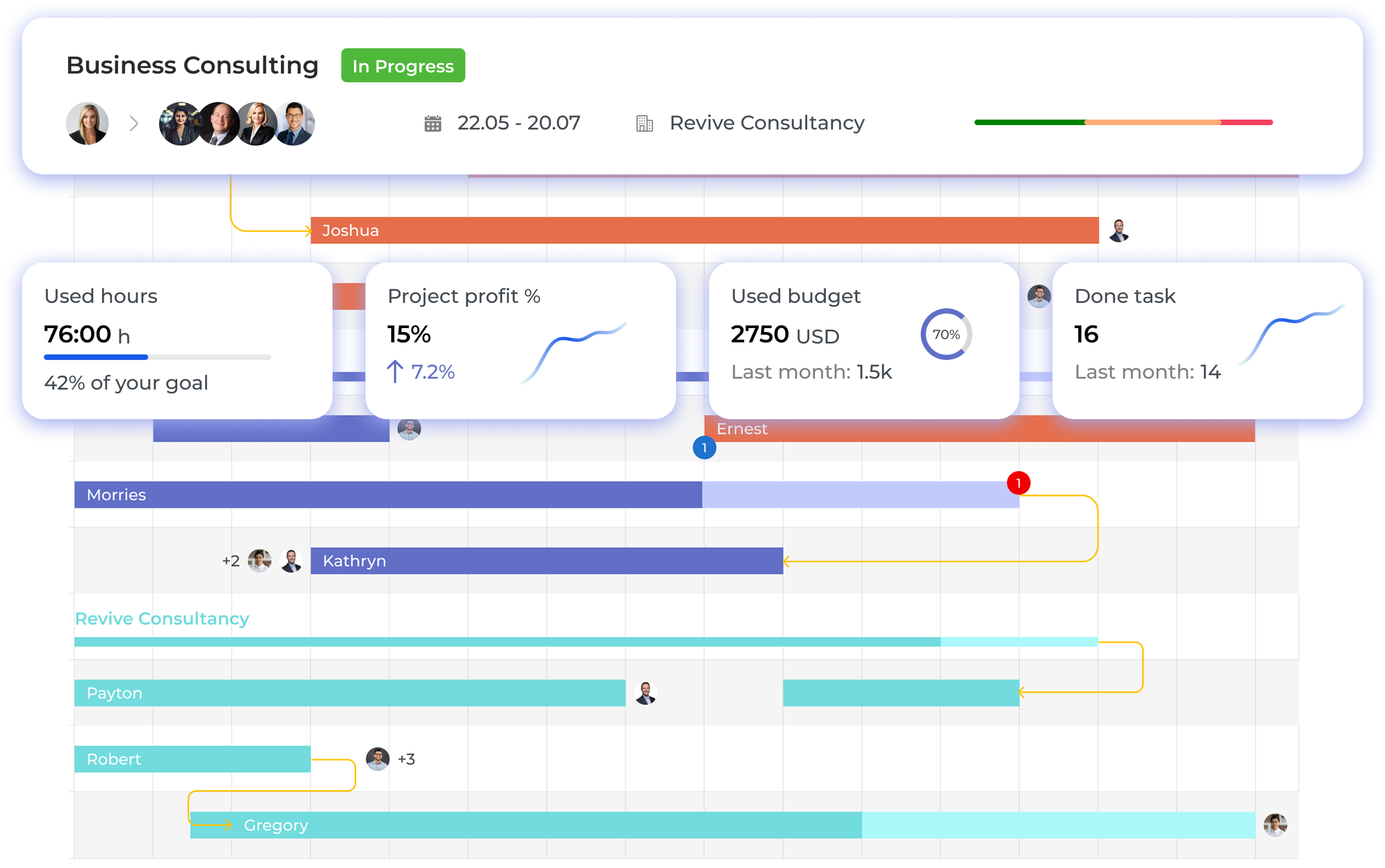
Kooper is an all-in-one business management platform made for consultants and service providers. It brings project management, time tracking, invoicing, and financial tools together—so you’re not bouncing between different apps all day.
Here’s what you get:
- Smart resource planning to assign the right people to the right projects
- Automated time tracking and billing to turn every hour into revenue
- Custom client portal for proposals, contracts, and easy payments
- Built-in accounting and expense tracking for full financial visibility
- Team collaboration tools like file sharing, task assignment, and comments
Veemo Project
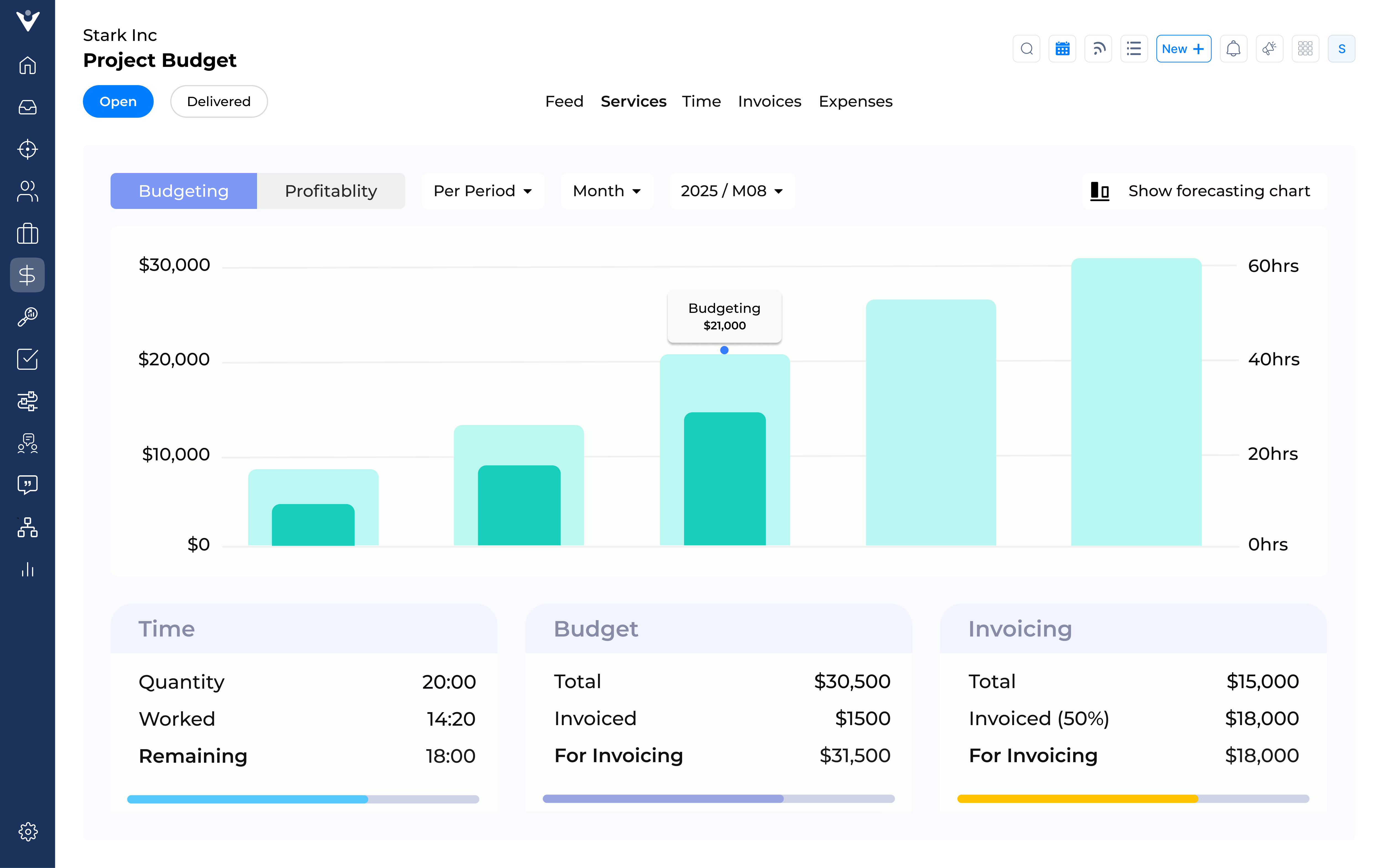
Veemo Project is a smart project management platform built for service-based businesses that need to manage resources, track time and bill clients, without the usual chaos. It connects your entire workflow, from planning to invoicing, so nothing slips through the cracks.
Everything lives in one place, making teamwork easier and freeing you from repetitive admin tasks. Plus, it ties resource usage and time tracking directly to your bottom line.
Key features include:
- Visual resource boards for smart staffing and workload balance
- Collaborative workspaces with task tracking and milestones
- Multi-device time tracking with approvals and billing tags
- Live budget tracking to stay on top of costs
- Automated invoicing straight from timesheets
QuickBooks Online
QuickBooks Online is a go-to financial tool for consultants and service-based businesses. It brings invoicing, expense tracking, tax prep, and reporting under one roof, giving you a clear picture of your business finances.
Key features:
- Customizable invoices with branding and auto-reminders
- Time tracking that feeds directly into invoices
- Online payments via credit cards and ACH
- Detailed reports like profit/loss and aging receivables
Bonsai
Bonsai is built with freelancers and consultants in mind. It combines proposals, contracts, time tracking, invoicing, and payments into one smooth workflow—cutting out admin headaches.
Key features:
- Ready-to-use contracts with e-signatures and auto-invoicing
- Late fee automation based on your terms
- Project tools that tie tasks to billing
- Tax support, including quarterly estimates and year-end prep
Wave
Wave is a great pick for new consultants or those who want solid tools without the price tag. It’s free but still delivers professional invoicing and accounting features.
Key features:
- Unlimited invoices and clients with custom templates
- Simple payment processing at fair rates
- Built-in double-entry accounting
- Dashboards to track income, expenses, and business health
Simplify Your Invoicing: The Ultimate Billing Guide for Consultants
Mastering your billing process isn’t just about getting paid, it’s the backbone of your consulting business’s financial health. Efficient invoicing prevents revenue leakage, reduces administrative burdens, and establishes professional credibility while creating predictable cash flow that enables strategic business planning.
Consultancies directly improve both profitability and operational efficiency by implementing structured billing systems. Clear payment terms, automated invoicing, and consistent follow-up processes dramatically reduce collection times while freeing valuable hours previously spent on administrative tasks for billable work that directly contributes to your bottom line.
Limit time — not creativity
Everything you need for customer support, marketing & sales.

Shivank Kasera is part of the marketing team at Kooper, where he focuses on building content that helps agencies and service providers grow. With a keen interest in SaaS, operations, and scalability, he translates practical insights into actionable resources for business leaders.