Professional Services Billing for Projects: A Complete Guide
- What is Professional Services Billing?
- Importance of Project Billing for Professional Services
- Common Examples of Professional Services Billing Methods
- 7 Important Stages of the Professional Service Billing Process
- Best Practices for Project Billing in Professional Services
- 5 Most Common Professional Services Project Billing Mistakes
- Professional Billing Solutions for Seamless Service Delivery
- FAQs About Professional Services Billing

Key Highlights:
- Proper professional services billing ensures accurate payment for all work and minimizes lost hours, ultimately boosting business revenue.
- Transparent billing builds trust, keeping clients confident and satisfied even during complex projects with unexpected changes.
- Dividing large projects into milestones helps manage cash flow. Thus, reducing financial risk and ensuring clients stay within budget.
Many professional service firms face cash flow issues and lost revenue because billing isn’t as tight as it should be. Admin tasks eat into time better spent with clients—and can even strain relationships.
A robust professional billing system changes that. It helps capture every billable hour, turns services into clear, accurate invoices, and encourages timely payments.
From setting up service agreements to getting paid and analyzing finances, understanding the full cycle for professional services billing helps firms stay stable as well as scale with confidence.
What is Professional Services Billing?
Professional services billing is the systematic process of charging clients for specialized knowledge-based services delivered by experts and consultants. It encompasses recording billable activities, tracking time as well as generating invoices for work performed by professionals like lawyers, consultants, accountants, and other service providers. This system ensures proper compensation for expertise while maintaining transparent client relationships.
Effective billing practices directly fuel business growth by ensuring consistent cash flow and maximizing revenue capture. When professionals accurately bill for their time and expertise, they avoid revenue leakage. Well-structured billing also builds client trust through transparency, which leads to stronger relationships along with increased referrals.
Key objectives:
- Maximize revenue by capturing all billable time and avoiding leakage.
- Maintain transparent client relationships through detailed and understandable invoices.
- Ensure timely payments to support consistent cash flow for business operations.
- Provide insights into service profitability to guide strategic business decisions.
- Support compliance with contractual terms and regulatory requirements across different jurisdictions.
Importance of Project Billing for Professional Services
Project billing forms the backbone of professional services operations, directly influencing both daily cash flow and long-term business success. Let’s explore why getting it right matters:
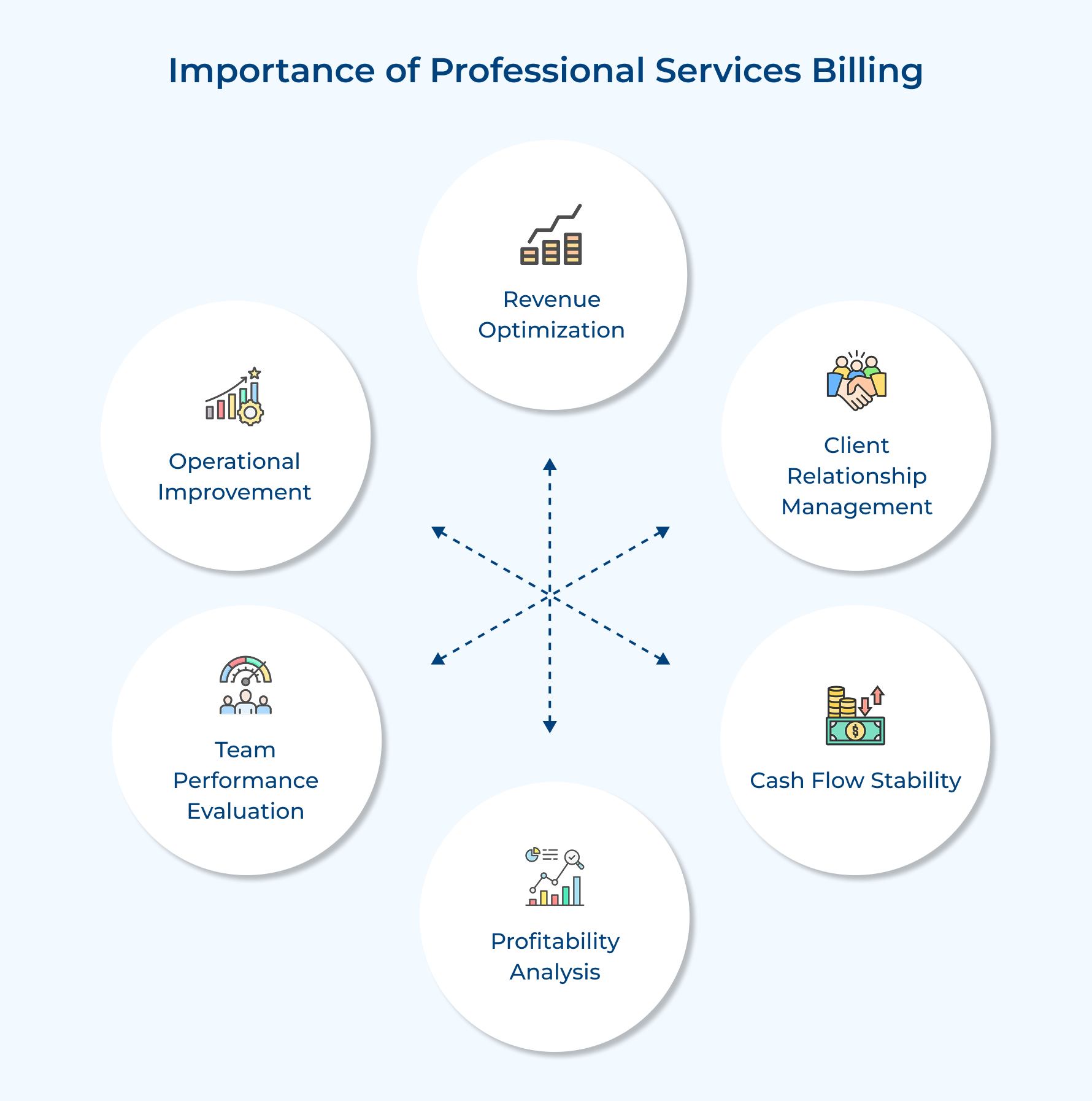
Revenue Optimization
Good billing helps you get paid for all the work you do. When your team tracks billable time carefully, you don’t miss out on money. No more lost hours or undercharging. That means more revenue and more room to grow your business.
Client Relationship Management
Clear billing builds trust. When clients see invoices that match the work you agreed on—with easy-to-understand details—they feel confident. This avoids payment issues and helps keep relationships strong, even when projects get tricky.
Cash Flow Stability
Timely billing leads to steady cash flow. When you send invoices on time while also setting clear payment terms, you avoid delays and money stress. It helps you pay your team and vendors without relying on loans.
Profitability Analysis
Your billing data shows what’s working. You can see which services as well as clients bring in the most profit—and where you might be giving too much away. These insights help you focus on the most valuable work.
Team Performance Evaluation
Billing records tell you how your team is doing. You can spot high performers and see where others might need support or training. It also helps you reward people fairly and encourage better results.
Operational Improvement
Billing data reveals how your business runs. It can show where things slow down or where resources aren’t used well. If you check this regularly, you can make smart changes and plan better for future projects.
Common Examples of Professional Services Billing Methods
Each method offers distinct advantages and suits different situations, understanding these options helps firms choose the right approach for their specific needs.
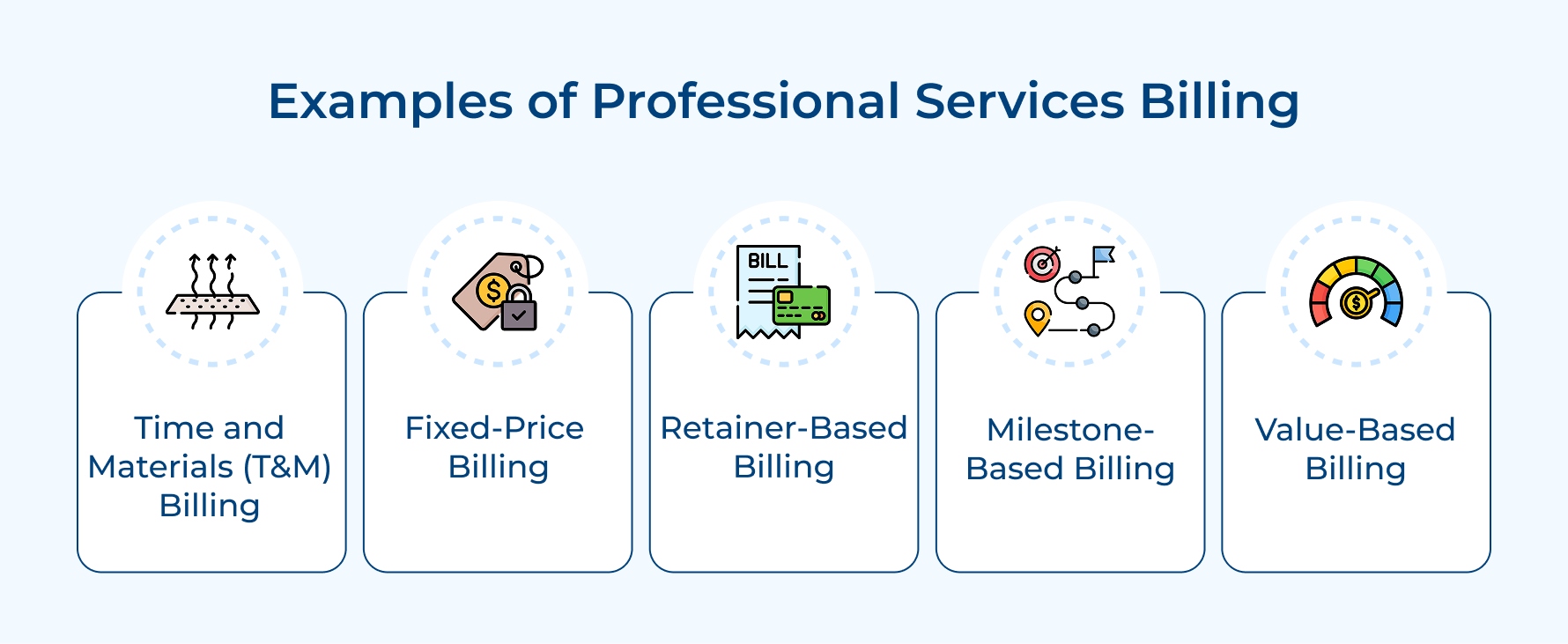
Time and Materials (T&M) Billing
When it comes to T&M billing, clients pay for the actual time spent and any costs during the project. You track your hours, multiply by your rate along with the bill accordingly.
It’s great for projects where the scope isn’t clear or might change. Clients like it because they only pay for work done, and providers are protected from scope creep.
Value-Based Billing
Value-based billing means you charge based on the results your work delivers—not just the time or effort. If your work helps the client make or save a lot of money, your fee reflects that value.
Do it better by understanding the client’s goals and how to measure outcomes. When it works, both sides win! You get paid more for impactful work and clients see a strong return.
There are two common types:
- Success fees: You get a base fee, plus more if you hit certain results like cost savings or growth.
- ROI-based pricing: You charge a percentage of the results you help create, like extra revenue or cost reductions.
Fixed-Price Billing
Fixed-price billing means you agree on one fee for the entire project, no matter how long it takes. Clients love the clear budget, but it’s on you to deliver within scope and avoid going over budget.
It works best when the project is clearly defined and you know what it will take to finish it. Careful planning is key to stay profitable.
Retainer-Based Billing
A retainer is when a client pays a regular fee to keep access to your services over time. It gives you steady income and helps the client get priority support when they need it. Retainer based billing is a great model for ongoing work and long-term relationships.
There are two main types:
- Pay-for-work retainers: Clients pay upfront but are only charged for time actually used.
- Access retainers: Clients pay a flat fee for access to your time, if they use it all or not.
Milestone-Based Billing
Milestone billing means you get paid when certain stages of the project are completed. Each milestone marks a clear achievement, and hitting it triggers payment.
It keeps the project moving and spreads payments out. Clients feel reassured by the progress, and you get paid along the way. Just be sure to define each milestone clearly to avoid confusion.
7 Important Stages of the Professional Service Billing Process
Every type of billing comes with a process. Let’s break down the stages of the professional service billing process, revealing key insights and best practices along the way.
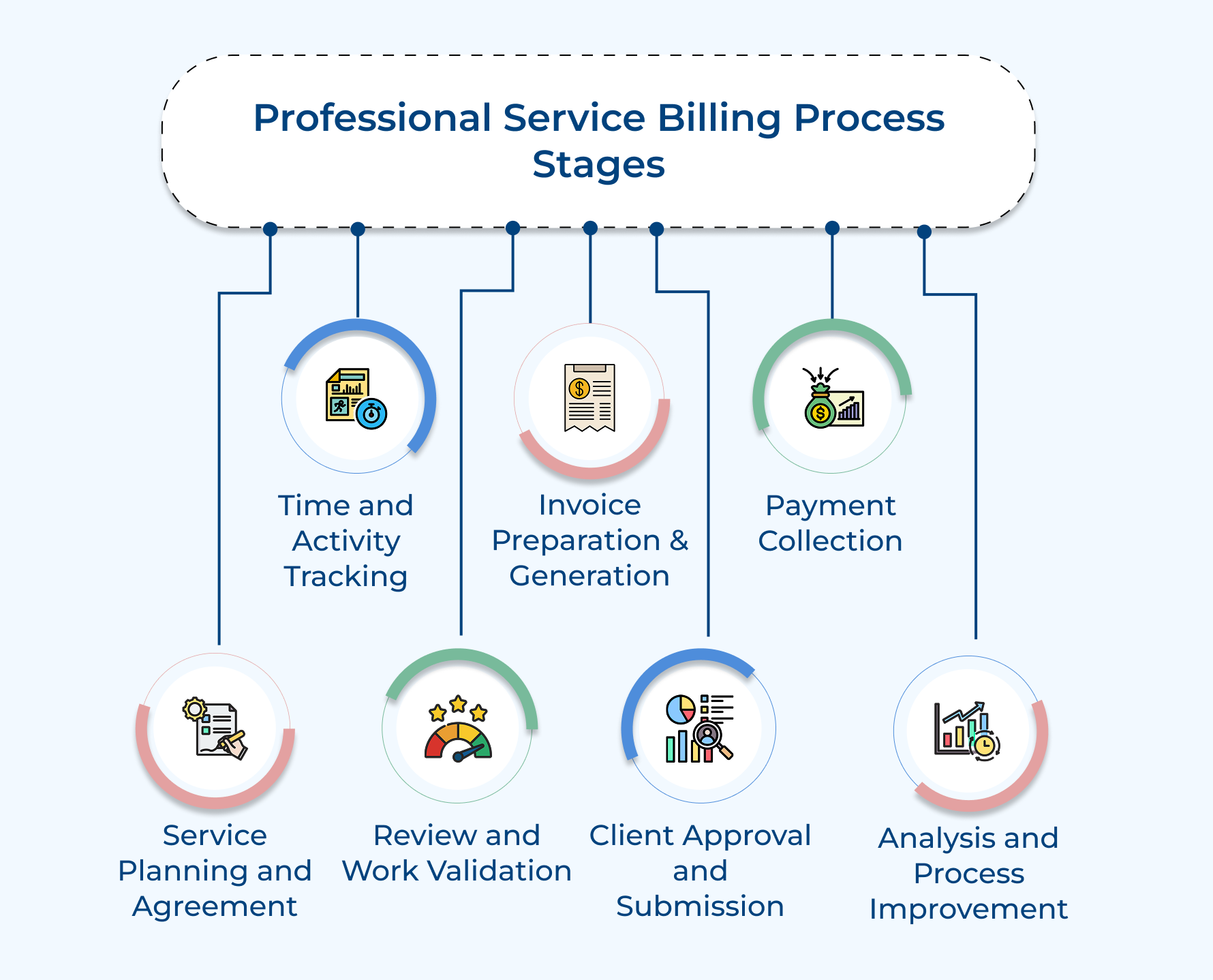
1. Service Planning and Agreement
Before any work begins, it’s important to plan the project and agree on what will be done as well as how it will be billed. This first step sets the stage for everything that follows. When expectations are clear from the start (about deliverables, timelines, and payments) there’s much less chance of confusion or disputes later on.
Here are some ways to make sure your planning leads to smooth billing:
- Collaborative scoping sessions: Sit down with the client and map out the work together. Talk through what’s expected, what success looks like, and write it all down clearly. This helps everyone get on the same page.
- Transparent pricing discussions: Be upfront about costs. Show how the pricing works and offer different options if needed. It ensures clients choose the right service level for their budget.
- Detailed service level agreements: Agree on what “good service” means—things like response time, quality, and deadlines. That way, it’s easy to tell when the work is done and done well.
- Comprehensive contract review: Go over the contract together one last time before starting. Clear up any confusing parts and have both sides sign off on the key terms—like scope, deliverables, payments, etc.
2. Time and Activity Tracking
Time and activity tracking is how professionals record all billable work done for clients. It’s the foundation for accurate invoicing and helps avoid lost revenue from missed hours. Good tracking also provides proof of work if a client has questions.
Before setting up a system, ask:
- What tasks count as billable for each project?
- How often should time be logged—daily, weekly?
- How much detail do clients expect in task descriptions?
The process usually starts with team members logging their work using software or timesheets. Each entry includes the time spent, what was done, and which client or project it was for. Team leads then review the entries before they go into the billing system to create invoices.
3. Review and Work Validation
Review and work validation is an important step before sending invoices. It ensures that the work done matches what was agreed upon. It catches any differences between the original scope and what was actually delivered. It also protects the firm from undercharging and makes sure clients are billed fairly.
Project managers usually handle this step. They compare the deliverables to the original plan, check time entries, and look for any extra work that may need separate billing.
Tips for success:
- Document everything: Keep a clear record of validation results and scope changes in your project system.
- Make time for it: Schedule regular review sessions instead of rushing. Careful checks reduce billing mistakes and build trust with clients.
4. Invoice Preparation and Generation
Invoice preparation turns validated work records into formal bills for clients. This process converts detailed time and expense entries into clear, understandable invoices, ensuring clients can easily process payments. Well-prepared invoices speed up payments and provide the necessary documentation for both parties’ financial records.
Key factors to consider:
- Invoice timing: Decide whether to bill upon project completion, at milestones, or on a regular schedule (monthly/quarterly). It affects cash flow and client expectations.
- Detail level: Provide enough information for clients to verify charges, but avoid overwhelming them with too many details.
- Format consistency: Use a standardized template that includes branding, payment terms, and organized information for easy navigation.
- Supporting documentation: Attach any necessary documents like time reports or receipts to avoid payment delays.
5. Client Approval and Submission
Client approval and submission is the final review before sending invoices to clients. This step helps catch any mistakes and ensures invoices meet both company standards as well as client requirements, especially for project milestones.
- Internal invoice reviews: Before invoices are sent, project managers or billing specialists double-check everything. They make sure time entries match the work done, expenses line up with receipts, and pricing follows the agreement.
- Approval signatures: Invoices go through an approval process based on project size or client importance. Senior team members approve large invoices to make sure they reflect the agreed terms.
- Delivery: Once approved, invoices are sent to clients using their preferred method—whether by email or through a specific portal. We also confirm the client received it to avoid any delays.
6. Payment Collection
Payment collection turns approved invoices into revenue by tracking, receiving, and processing client payments. It ensures the firm benefits financially from the project fee and services provided while keeping accurate records.
Ways to optimize the payment collection process:
- Establish clear payment expectations: Include payment terms, due dates, accepted methods, and early payment incentives in contracts as well as invoices to encourage prompt payments for the project fee.
- Implement automated payment reminders: Set up your system to send friendly reminder emails at key intervals without manual effort, ensuring timely follow-up for project fee payments.
- Develop a structured escalation process: Create a clear pathway for overdue payments, starting with reminders, followed by account manager outreach, and involving finance or leadership when needed.
- Offer multiple payment options: Allow clients to pay via credit card, ACH, or online portals to make the payment process for the project fee easier.
For example, a consulting firm sends an invoice for the project fee with a due date, tracks it, and sends reminders 7 days before as well as 3 days after. Once paid, they quickly apply the payment and confirm receipt.
7. Analysis and Process Improvement
Analysis and process improvement uses billing data to uncover strategic insights that enhance the entire billing workflow. The reflective stage helps identify inefficiencies, avoid recurring issues, and spot hidden revenue opportunities. Regular analysis drives continuous improvement in both billing practices and service delivery.
Most firms review key metrics like days sales outstanding, write-off percentages, and collection efficiency for different client segments. These insights reveal problem areas that need attention and patterns that guide process improvements for a more streamlined billing cycle.
Pro tips:
- Schedule regular billing review meetings with all stakeholders to analyze metrics, discuss bottlenecks, and create action plans for high-impact issues.
- Establish baseline measurements, track results after changes, and maintain a log of improvements to build institutional knowledge about what works in your billing process.
Best Practices for Project Billing in Professional Services
Project billing strategies help maximize revenue while maintaining the trusted relationships that drive long-term business success. Let’s get into its best practices.
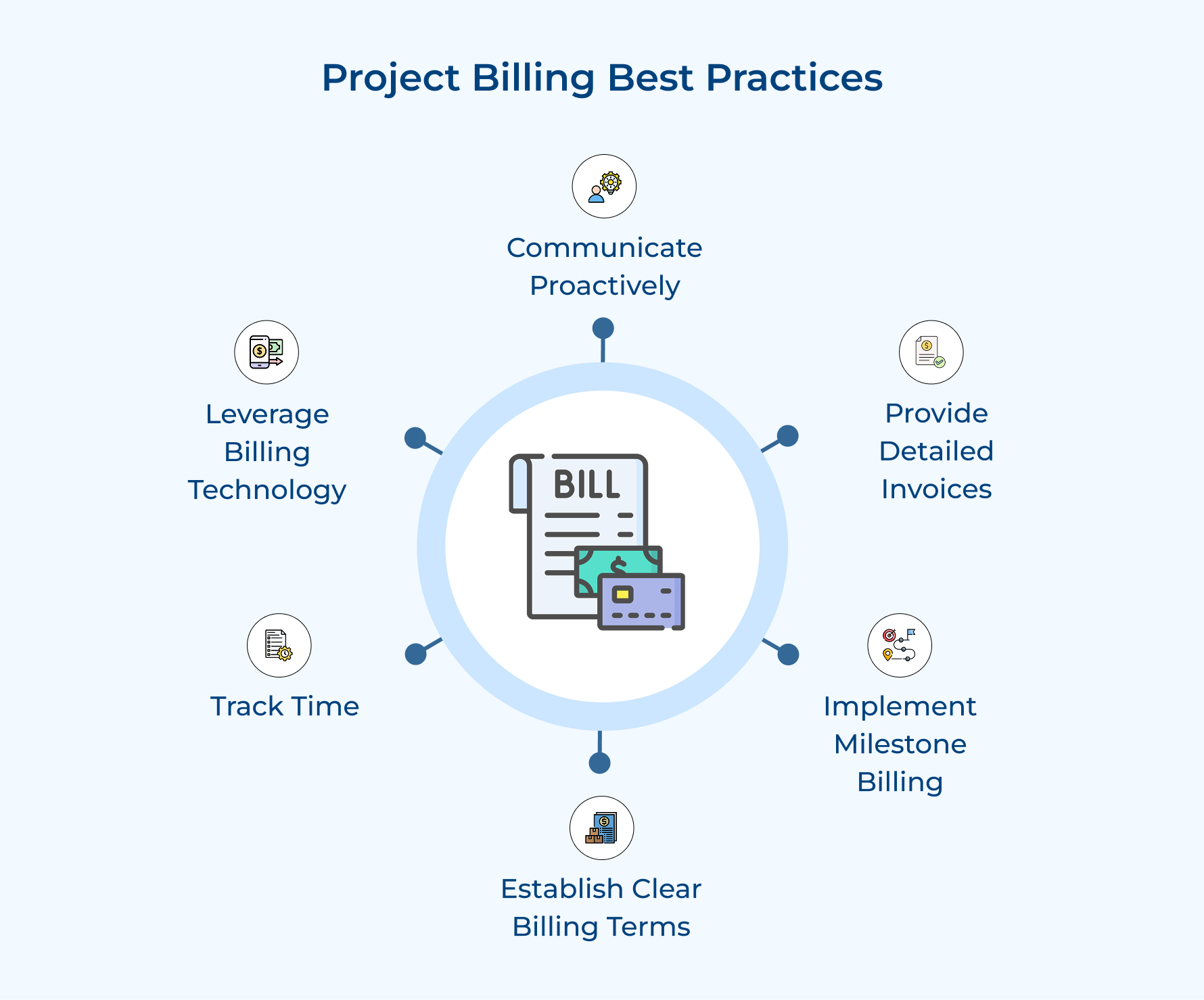
Communicate Proactively About Scope Changes
Address potential billing adjustments immediately when project requirements shift instead of surprising clients with unexpected charges. This transparency builds trust and gives clients the opportunity to make informed decisions about additional work before costs accumulate.
Provide Detailed But Understandable Invoices
Create invoices that balance comprehensiveness with clarity by grouping related activities and using client-friendly language to describe work performed. Avoid technical jargon or vague descriptions that might prompt questions and delay payment processing.
Implement Milestone Billing Where Appropriate
Break large projects into defined achievement stages with associated payments to improve cash flow and reduce financial risk. This approach creates natural checkpoints for both billing and project review while helping clients manage their budget expectations throughout the engagement.
Establish Clear Billing Terms Upfront
Establishing transparent billing terms at the project outset creates a foundation of trust that supports the entire client relationship. Clear documentation prevents the misunderstandings that often lead to payment disputes and client dissatisfaction. The most effective service providers make this conversation a structured part of their client onboarding process rather than treating it as an awkward afterthought.
Consider these key questions:
- Have you clarified which team members will work on the project and their individual billing rates?
- Does the client understand exactly which activities are billable versus non-billable?
- Have you documented how scope changes will impact billing and who has authority to approve additional charges?
The most successful firms supplement formal contracts with plain-language summaries that highlight key billing provisions and payment expectations. This approach ensures clients genuinely understand what they’re agreeing to rather than just signing documentation they haven’t fully processed.
Track Time Contemporaneously
Real-time time tracking dramatically improves billing accuracy by capturing work while details remain fresh in professionals’ minds. This approach eliminates the revenue leakage that occurs when team members reconstruct activities days later and inevitably forget billable interactions or underestimate time spent.
Consideration for time tracking approach:
- What tools would make real-time tracking least disruptive to your team’s workflow?
- How can you incorporate micro-prompts during the day to remind professionals to log time?
- Would time entry templates for common activities help improve consistency and efficiency?
Effective implementation requires both technological support and cultural reinforcement within your organization. Firms that successfully establish contemporaneous tracking habits typically combine user-friendly mobile tools with regular reminders and leadership modeling of desired behaviors.
Leverage Billing Technology Effectively
Use specialized software that integrates time tracking, expense management, and invoicing into a cohesive system with automated workflows. These tools reduce administrative burden while providing data visibility that supports both operational efficiency and strategic decision-making.
5 Most Common Professional Services Project Billing Mistakes
Let’s explore some frequent billing mistakes that could be undermining your firm’s success, along with proactive strategies to correct them.
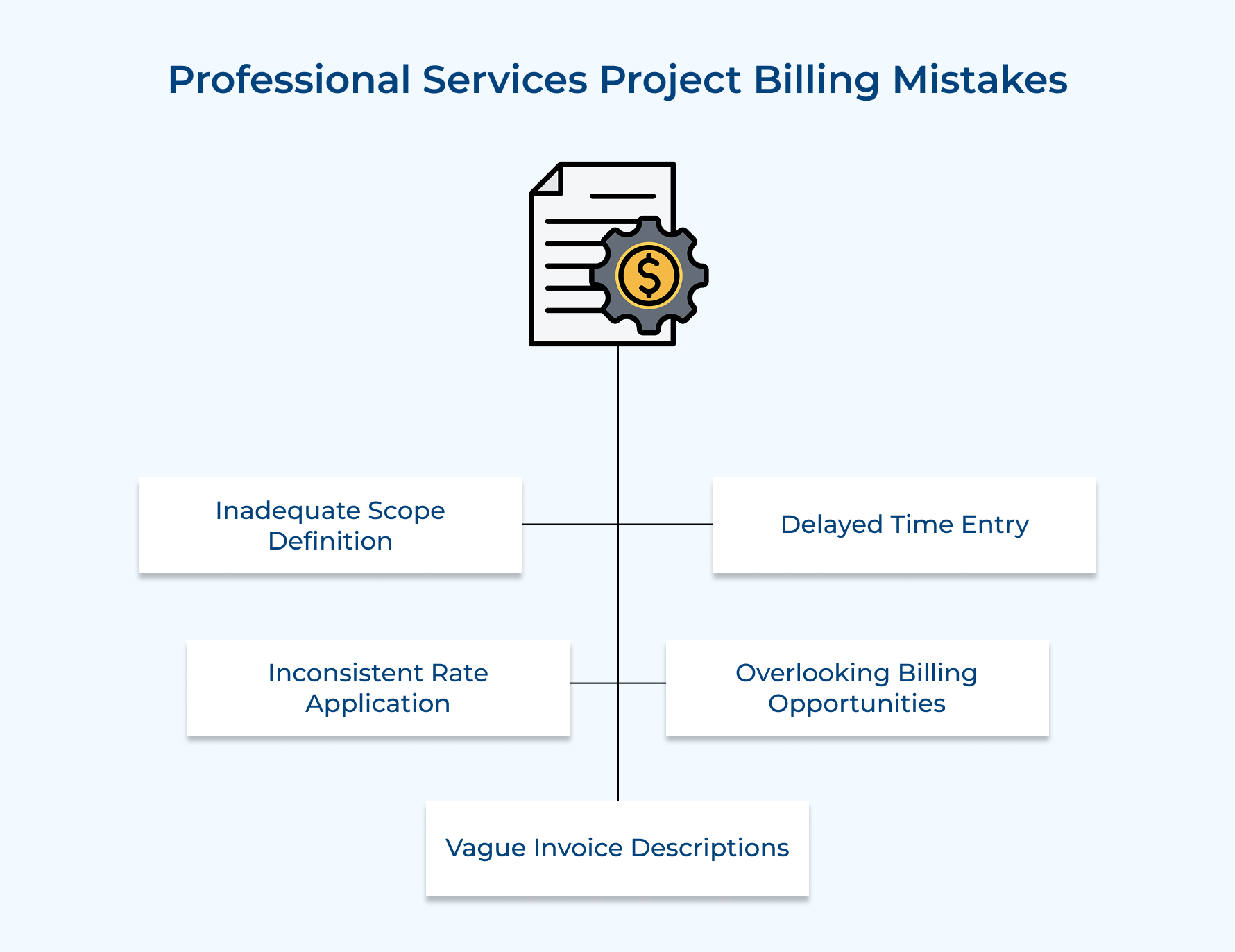
1. Inadequate Scope Definition
Without clear deliverables or boundaries at the start of a project, confusion arises over what’s included in the original agreement versus what needs additional billing. This can lead to scope creep, where extra work gets done but isn’t billed.
2. Delayed Time Entry
When team members wait days or weeks to log their billable hours, some activities get forgotten or underreported, leading to lost revenue, especially in labor-heavy projects.
3. Inconsistent Rate Application
Applying different rates for similar work or not updating rates with experience changes can create pricing inconsistencies, damaging trust and leading to difficult discount discussions with clients.
4. Overlooking Billing Opportunities
Small tasks like client calls, email consultations, or minor revisions are often missed in billing, even though they add up to significant revenue over time.
5. Vague Invoice Descriptions
Invoices with unclear or technical descriptions confuse clients and delay payments. Lack of clarity can make clients question the legitimacy of charges.
Strategies for Improvement:
- Define scope clearly: Create detailed scope documents that outline deliverables, meeting counts, revisions, and communication expectations. Have processes to document and approve any extra work.
- Daily time tracking: Encourage daily time tracking using easy-to-use mobile apps to ensure timely and accurate logging of billable hours.
- Standardize rates: Develop rate cards to set consistent pricing based on service type, experience, and client category, with workflows for exceptions.
- Capture small tasks: Set minimum billing increments for small client interactions and define what counts as billable work versus relationship-building activities.
- Regular billing reviews: Conduct frequent billing reviews to identify gaps between recorded hours and actual effort, pinpointing behaviors that contribute to revenue leakage while implementing targeted improvements.
Professional Billing Solutions for Seamless Service Delivery
Effective professional services billing solutions are key to turning great service into revenue that supports business growth. When billing works smoothly, it helps convert the value you deliver into the money needed to keep your business running and expanding. Without a solid billing system, even the best work won’t bring in the financial resources needed to grow.
Professional service businesses can boost profitability and client satisfaction by using integrated billing platforms. These platforms connect time tracking, project management, and financial systems. When combined with clear communication and regular financial reviews, this setup creates a cycle where better billing efficiency frees up more resources to deliver even better service.
Limit time — not creativity
Everything you need for customer support, marketing & sales.

Shivank Kasera is part of the marketing team at Kooper, where he focuses on building content that helps agencies and service providers grow. With a keen interest in SaaS, operations, and scalability, he translates practical insights into actionable resources for business leaders.