A Quick Guide to Professional Services Project Management
- What is Professional Services Project Management?
- Key Benefits of Professional Services Project Management
- How to Manage Professional Services Projects Successfully? 10 Smart Strategies
- Challenges of Project Management in Professional Services
- Building a Competitive Edge with Superior Project Management
- FAQs about Professional Services Project Management

Key Highlights:
- Efficient professional services project management boosts resource allocation, financial performance and risk management.
- Strategic communication, real-time tracking and automation enhance collaboration as well as ensure high-quality project delivery.
- Structured recovery plans drive long-term success as well as scalability in professional services.
Managing complex projects isn’t easy—missed deadlines, budget overruns and frustrated clients can quickly become a reality without the right approach. Even the best project teams struggle when there’s no clear strategy or leadership.
When project schedules go off track, stress builds, revenue takes a hit and reputations suffer. Real-time issues like poor communication and inefficiencies only make things worse.
With the right professional services project management strategies and tools, teams can stay on schedule, control budgets, as well as deliver great results.
What is Professional Services Project Management?
Professional services project management refers to the specialized discipline of planning, executing and overseeing projects within knowledge-based service industries (such as consulting, legal, accounting, engineering and IT services). Unlike traditional project management, it focuses on delivering expertise-driven outcomes rather than physical products. Hence, it requires a unique approach to managing resources, timelines and client expectations.
Professional services project managers must balance multiple competing priorities: meeting client expectations, managing internal resources and maintaining profit margins while also ensuring quality deliverables. They need to be particularly adept at scope management, as professional services projects can easily expand beyond initial parameters due to changing client needs or unforeseen complexities.
Key objectives:
- Maximize resource utilization to ensure optimal deployment of expensive professional talent while avoiding burnout and maintaining quality.
- Deliver consistent value to clients through standardized processes while allowing for customization to meet specific needs.
- Maintain healthy profit margins by carefully managing scope, time tracking and resource allocation against agreed-upon fees.
- Build long-term client relationships by exceeding expectations and creating opportunities for future engagements through excellent project delivery.
Key Benefits of Professional Services Project Management
Effective project management in professional services keeps teams organized, ensures smooth project schedules and delivers real-time results. Let’s learn more about its benefits:
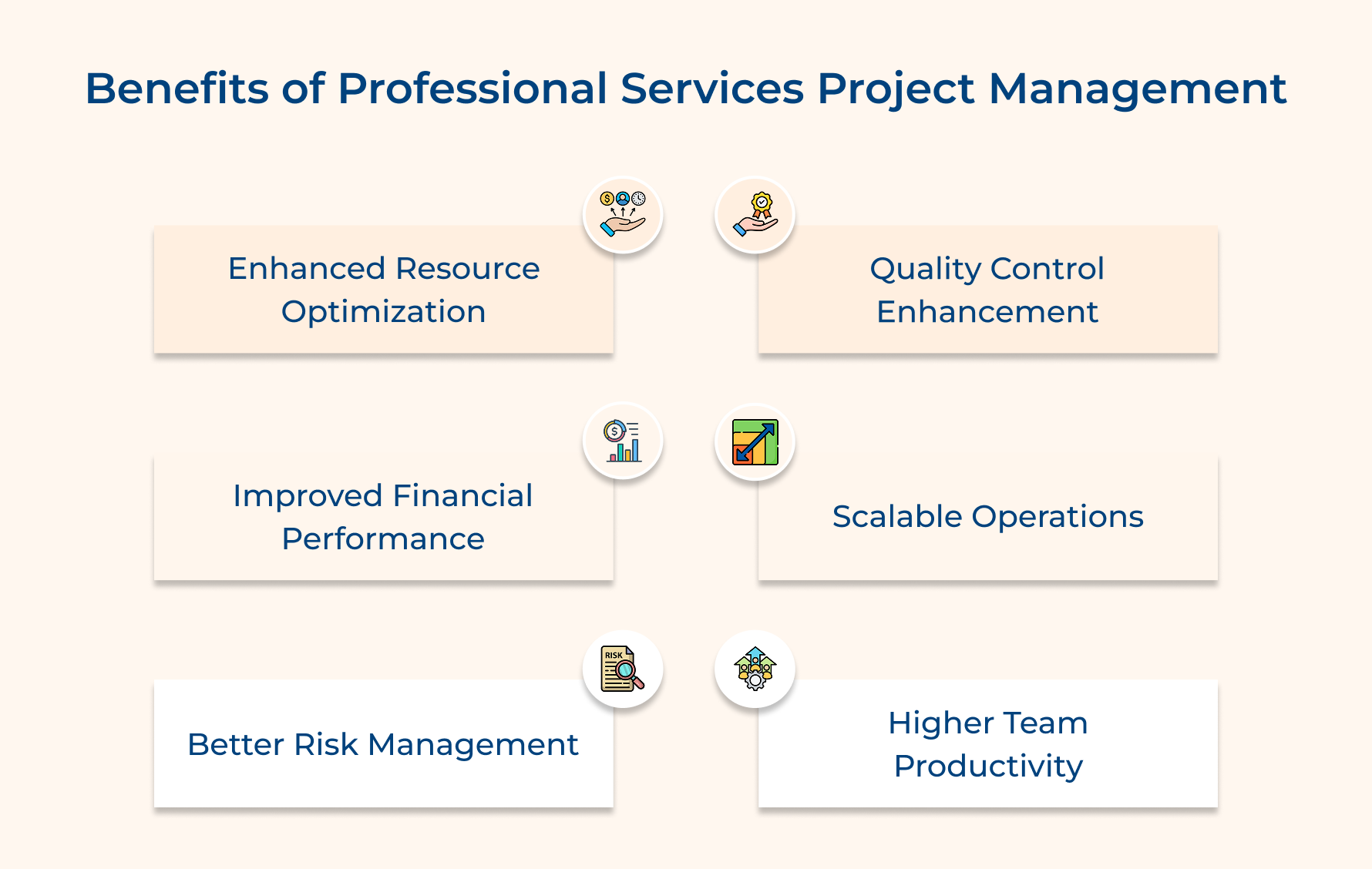
Enhanced Resource Optimization
With the right project management approach, professional services teams can allocate resources efficiently, ensuring the right people handle the right tasks at the right time. This maximizes productivity and minimizes wasted effort across multiple client projects.
Improved Financial Performance
Tracking billable hours, managing project costs and maintaining profit margins become seamless with structured task management. Keeping an eye on key performance indicators helps spot budget risks early, allowing for smarter financial decisions.
Better Risk Management
Proactive planning helps identify risks before they become real problems. By implementing mitigation strategies early, professional services teams can safeguard project success, maintain customer satisfaction and protect client relationships.
Quality Control Enhancement
A strong project management framework ensures every client project meets the highest standards. With standardized processes and regular quality checks, teams can consistently deliver excellent results that drive long-term customer satisfaction.
Scalable Operations
As your business grows, having a solid project management structure makes scaling easier. Standardized workflows and processes allow professional services teams to expand their service offerings while keeping operations efficient and controlled.
Higher Team Productivity
Defined roles, clear expectations and structured workflows keep teams on track. When everyone knows their responsibilities, task management becomes smoother, collaboration improves and projects move forward without unnecessary delays.
How to Manage Professional Services Projects Successfully? 10 Smart Strategies
Managing professional services projects requires a strategic approach to stay on track, meet deadlines and exceed client expectations. Here are 10 proven strategies to ensure project success.
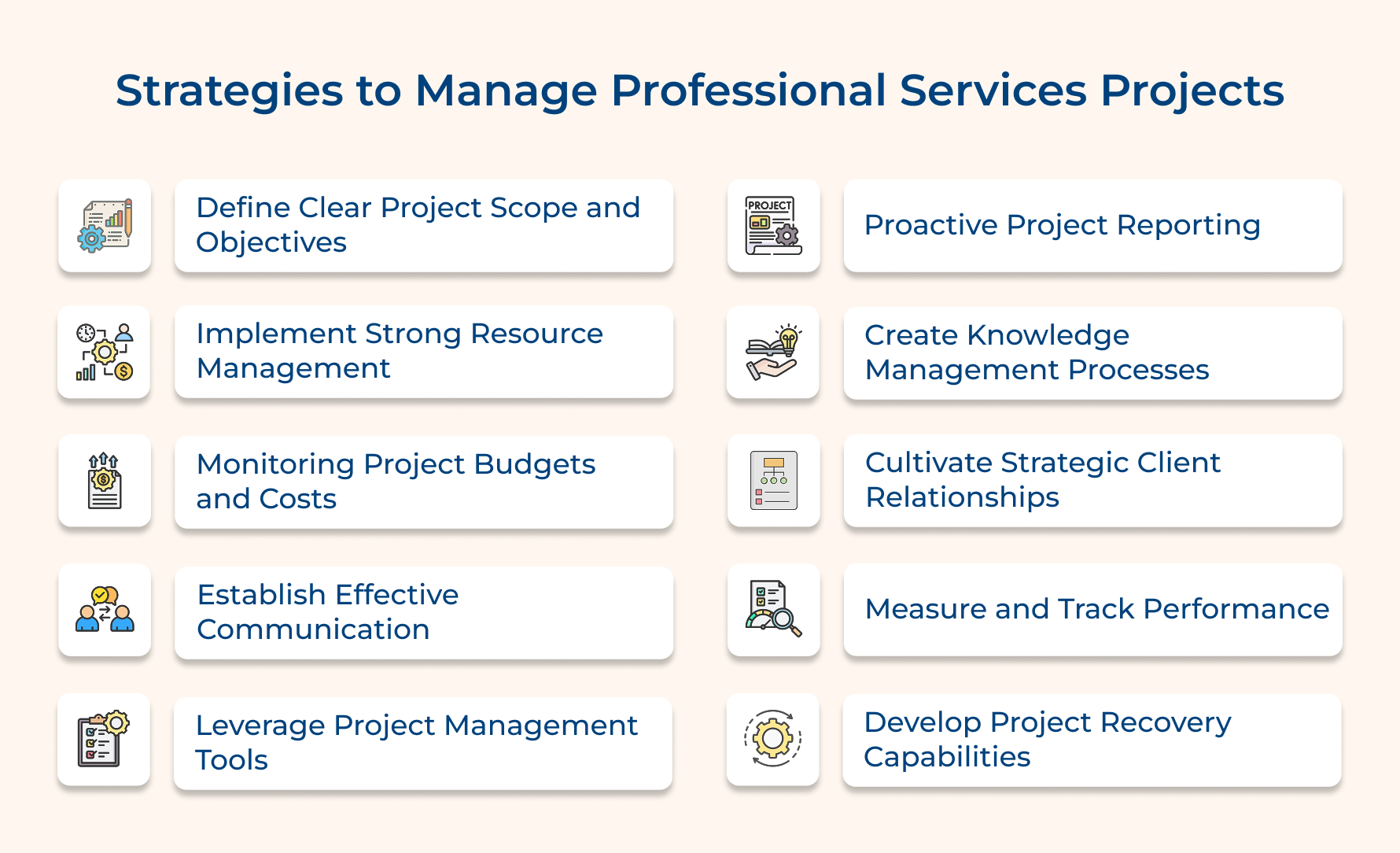
1. Define Clear Project Scope and Objectives
Imagine starting a client project without a clear scope. It’s a recipe for confusion, missed expectations and budget overruns. That’s where scope definition comes in!
A well-documented project scope outlines deliverables, timelines and boundaries, ensuring both your professional services team as well as the client are on the same page.
For example, if you’re building a marketing strategy, defining the exact services (like content creation, social media management and ad campaigns) prevents last-minute surprises.
Use detailed scope statements and project charters from day one to keep everything aligned as well as avoid scope creep.
Tips to consider:
- Create a scope definition template with mandatory sections, including deliverables, assumptions, constraints and exclusions, to ensure consistency across projects.
- Schedule monthly scope review meetings with clients and document all discussions as well as decisions in writing with sign-off requirements.
2. Implement Strong Resource Management
Managing resources effectively is key to keeping client projects on track without overloading your team. Imagine a consulting firm juggling multiple projects and without proper planning, some employees end up overwhelmed while others sit idle.
A robust resource management strategy ensures that the right people work on the right tasks at the right time, balancing workloads and maximizing billable hours.
Using resource management software helps track availability, skills and allocation in real time. Plus, smart capacity planning includes non-billable tasks like training, preventing burnout while keeping profitability and customer satisfaction high.
Pro tips:
- Develop a skills matrix for all team members and update it quarterly to maintain accurate resource planning capabilities.
- Set up weekly resource planning meetings to review upcoming needs and adjust allocations based on project demands.
3. Monitoring Project Budgets and Costs
Tracking project finances ensures profitability and prevents budget surprises. Regular reviews help teams stay on track and make informed decisions.
- Keeping a close eye on project finances ensures your client projects stay on track.
- Track time spent, expenses and revenue in real time to spot budget concerns before they become major issues.
- Regular financial reviews help maintain healthy margins and improve future project cost estimations.
- Use earned value analysis (EVA) to compare planned vs. actual costs and predict final project expenses.
- A simple habit of weekly budget check-ins can prevent surprises and keep your professional services team financially strong.
Actionable Tips:
- Create automated dashboard reports showing key financial metrics, including utilization rates, project margins and budget variance.
- Establish weekly timesheet reviews with mandatory completion deadlines to ensure accurate cost tracking.
4. Establish Effective Communication
Keeping everyone on the same page is key to a smooth project. Clear communication ensures alignment, prevents misunderstandings and keeps stakeholders engaged.
- Regular updates: Share project progress through status meetings, emails, or dashboards to keep everyone informed.
- Defined communication plan: Set expectations on how often updates will be shared and who needs to be in the loop.
- Structured reporting: Use templates for consistency in reports, making it easier to track progress.
- Proactive issue resolution: Open communication helps spot and fix problems before they escalate.
Tips to consider:
- Create a stakeholder communication matrix defining who needs what information and when, including escalation paths.
- Implement a standard project status report template that includes progress, risks and key decisions required.
5. Leverage Project Management Tools
Using the right project management tools can make a huge difference in efficiency and collaboration. The right software keeps everything organized and ensures smooth execution.
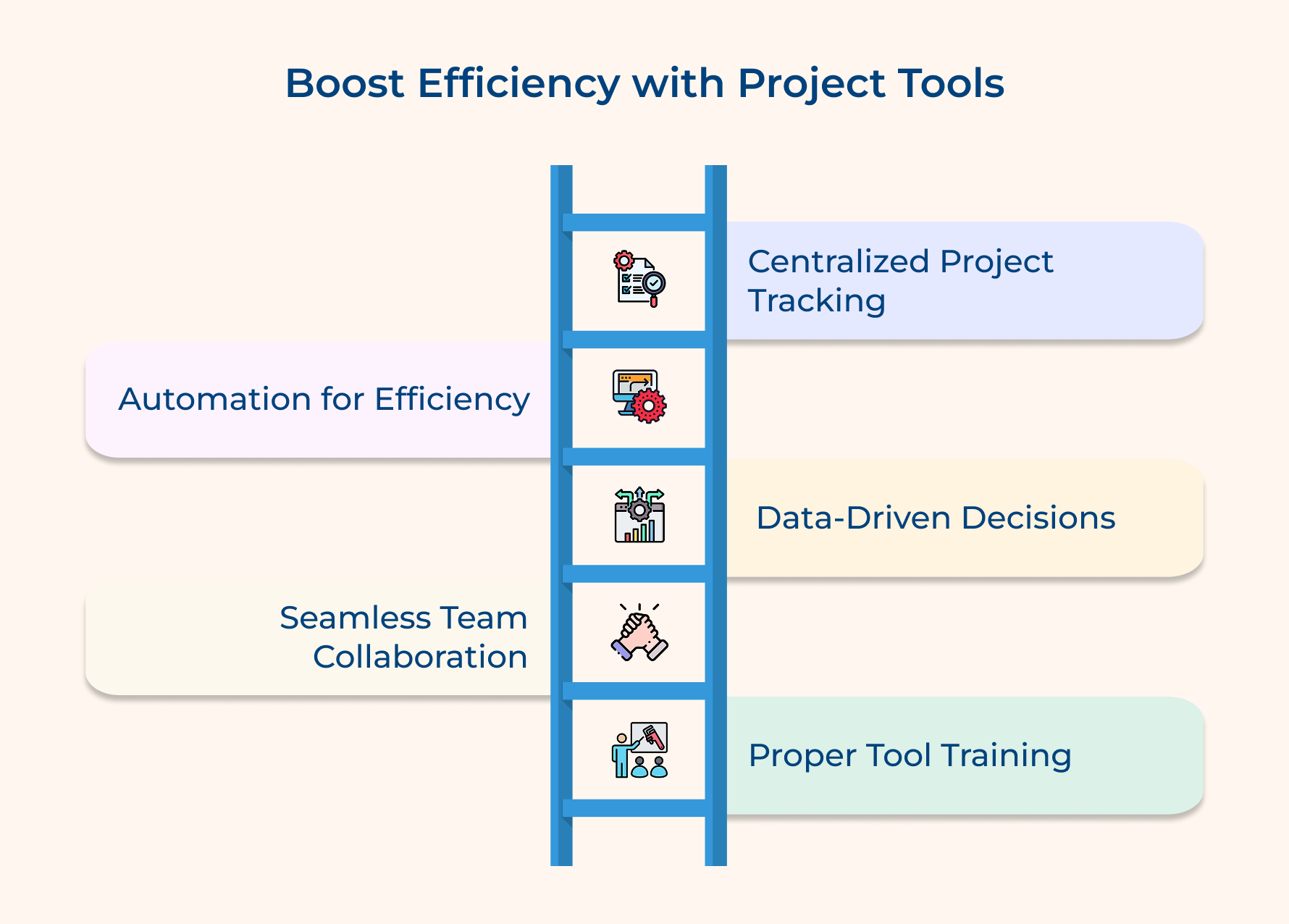
- Centralized project tracking: Keep all tasks, along with updates, in one place for better visibility.
- Automation for efficiency: Reduce manual work with automated reporting, reminders and workflows.
- Data-driven decisions: Use analytics to track progress, spot bottlenecks, as well as optimize performance.
- Seamless team collaboration: Enable easy file sharing, real-time updates and smooth communication.
- Proper training: Ensure teams know how to use the tools effectively for maximum impact.
Quick Tips:
- Conduct quarterly tool usage audits to ensure consistent adoption and identify training needs.
- Create standardized project templates within your tools to ensure consistency across projects.
6. Proactive Project Reporting
Keeping track of project progress is about ensuring that everything stays on course while avoiding last-minute surprises. Regular reporting gives your team and stakeholders a clear picture of where things stand, helping you catch potential issues before they escalate.
But how do you make reporting effective without drowning in spreadsheets? The key is to focus on the right metrics. Track milestones, risks and overall project health using visual dashboards that highlight what needs attention.
Set up weekly status reports that summarize key insights, making it easy for teams to stay aligned and make informed decisions. When done right, reporting becomes a powerful tool for transparency, efficiency and project success.
Tips to know:
- Implement a traffic light system (red/amber/green) for quick status visualization of key project metrics.
- Schedule automated report generation with predefined KPIs and distribute to stakeholders on a fixed schedule.
7. Create Knowledge Management Processes
Managing knowledge effectively ensures your team doesn’t waste time reinventing solutions. It helps streamline project delivery, maintain quality and keep everyone on the same page. So, how do you make it work?
- Create a central knowledge hub: Store project documents, templates and best practices in one accessible place.
- Encourage documentation: Make it a habit to record lessons learned and successful strategies after every project.
- Host knowledge-sharing sessions: Regular team discussions ensure insights are shared, reducing dependency on specific team members.
Actionable Tips:
- Create a mandatory project closure document template that captures key learnings and best practices.
- Schedule monthly knowledge-sharing sessions where teams present successful solutions and lessons learned.
8. Cultivate Strategic Client Relationships
Great client relationships are built by building trust and long-term partnerships. When clients feel valued and heard, they’re more likely to return for future projects as well as refer others to your services.
What could be the secret? Consistent communication, proactive problem-solving and a genuine commitment to their success. Schedule regular feedback sessions, keep them updated on progress and always be transparent about challenges.
Go beyond just completing tasks! Understand their goals, anticipate their needs and show that you’re invested in their success. That’s how you turn clients into long-term partners.
Quick Tips:
- Schedule quarterly business reviews with key clients to discuss project portfolio performance and future opportunities.
- Assign dedicated relationship managers for strategic clients with clear engagement protocols.
9. Measure and Track Performance
Tracking key performance indicators (KPIs) is essential to understanding what’s working and what needs improvement in your projects. Without it, you’re flying blind! Here’s how to stay on top of performance measurement:
- Set clear KPIs: Define measurable goals for project success, such as timelines, budget adherence and customer satisfaction.
- Monitor progress regularly: Use real-time dashboards and reports to track trends as well as spot potential issues early.
- Review and optimize: Hold regular performance reviews to assess results, identify gaps and refine strategies for continuous improvement.
Tips to know:
- Develop a balanced scorecard including financial, client satisfaction and operational metrics.
- Implement monthly performance review meetings to analyze trends and develop improvement actions.
10. Develop Project Recovery Capabilities
No project is immune to challenges, but having a solid recovery plan can make all the difference. When things start going off track, quick action helps minimize damage and keep client trust intact.
- Set up early warning systems: Track key project health indicators like missed deadlines, budget overruns as well as scope creep.
- Have a structured recovery plan: Define clear steps for assessing issues and reallocating resources while realigning project goals.
- Rely on experienced project managers: A strong recovery team can step in, troubleshoot problems and get the project back on course.
Pro Tips:
- Create a project health checklist that gets reviewed weekly to identify early warning signs.
- Maintain a database of recovery experts and standard operating procedures for quick deployment when needed.
Challenges of Project Management in Professional Services
Managing projects in professional services comes with unique challenges. From keeping clients happy to balancing workloads, things can quickly get complicated. Here’s how to tackle some of the biggest roadblocks:
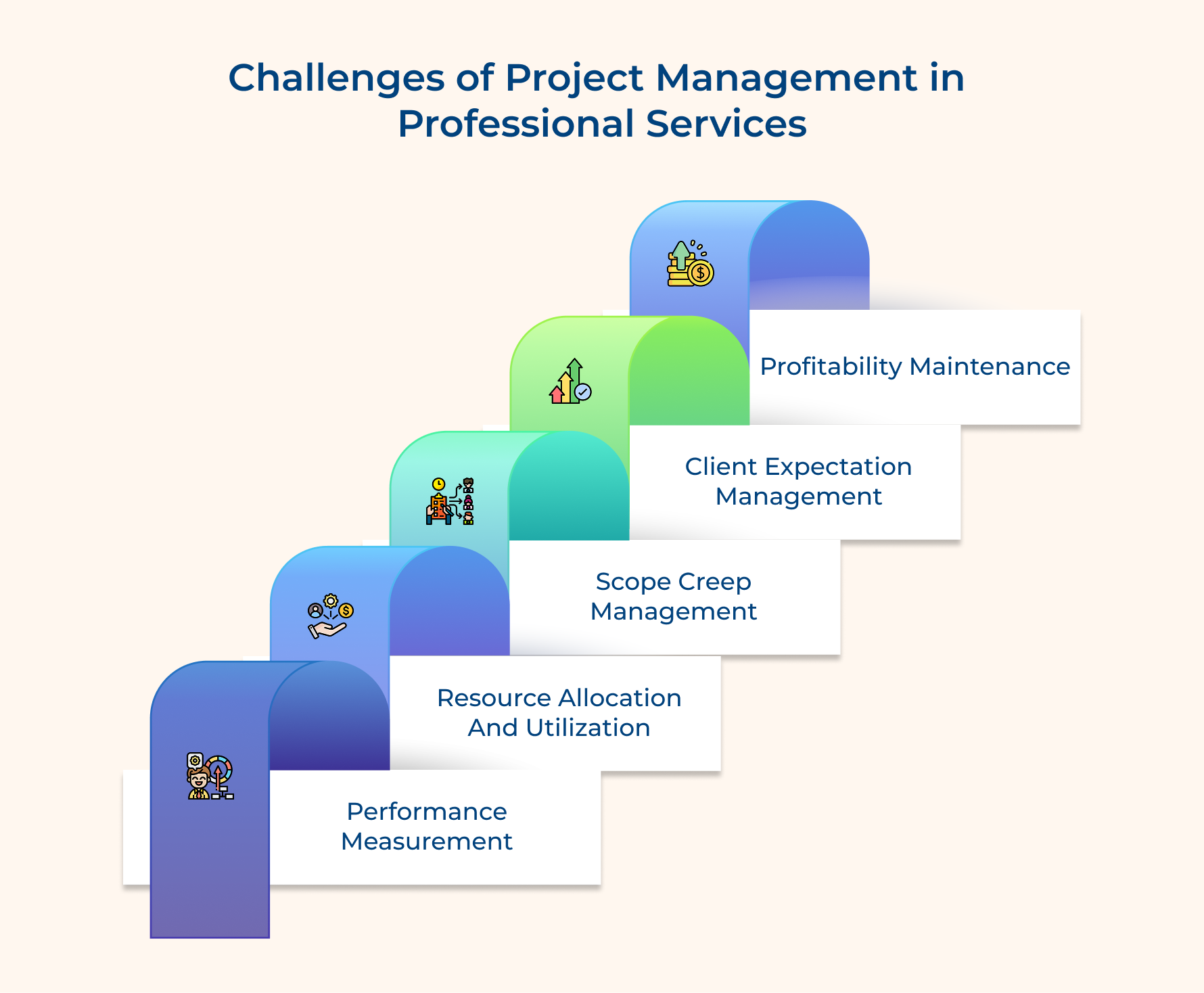
Performance Measurement
Ever struggled to define what “success” looks like in a project? Professional services projects aren’t always easy to quantify.
Set clear KPIs from the start. Use a mix of numbers (like revenue & efficiency) and client feedback to measure success. Regular satisfaction surveys can help, too.
Resource Allocation and Utilization
Balancing multiple projects while keeping your team productive and not overworked is a constant challenge.
Use resource management tools to track team availability and skills. Forecast workloads accurately, account for vacations and training as well as keep a flexible pool of contractors for peak times.
Scope Creep Management
Having a client request “just one more thing” without adjusting the budget is the most common way to see scope creep in action.
Define project scope clearly from day one. Set up a structured change request process, document client discussions and review scope regularly to avoid last-minute surprises.
Client Expectation Management
Misaligned expectations can lead to disappointment, even if your team delivers great work.
Kick off projects with a detailed charter that outlines goals, timelines and success criteria. Hold regular check-ins, send progress reports and communicate risks early to keep everyone aligned.
Profitability Maintenance
Underestimating costs or inefficient project execution can eat into profits fast.
Use historical data to create accurate cost estimates. Track project metrics closely, monitor time logs and address overruns quickly. Standardized processes also help improve efficiency.
Building a Competitive Edge with Superior Project Management
Successful project management directly impacts tangible results. Meeting deadlines, staying within budget and exceeding client expectations are all critical to project success. However, it’s the ability to deliver projects that create real value and solve client problems that sets great project managers apart.
Focusing on the right tools, strategies and leadership allows organizations to position themselves for continued growth. Refining project management practices leads to measurable rewards such as increased client loyalty, higher profitability and improved team morale, creating a solid foundation for long-term success.
Limit time — not creativity
Everything you need for customer support, marketing & sales.

Shivank Kasera is part of the marketing team at Kooper, where he focuses on building content that helps agencies and service providers grow. With a keen interest in SaaS, operations, and scalability, he translates practical insights into actionable resources for business leaders.