Importance of Resource Management for Teams & Projects

Key Highlights:
- Resource management importance directly impacts project costs, team productivity and your organization’s overall efficiency.
- Misallocated resources doom even well-planned projects — the right people must be available at the right time.
- Strong resource management transforms hiring from reactive guesswork into data-driven, strategic workforce planning decisions.
Imagine three people assigned to the same task while a critical deadline sits completely uncovered. Meanwhile, your budget drains as expensive resources stay idle and junior staff struggle with work beyond their skill level.
This is what poor resource management looks like in practice — and it happens more often than most project managers want to admit.
Understanding the importance of resource management means recognizing that most projects don’t fail because of bad ideas. They fail because the right people weren’t available at the right time.
Get resource management right and you turn that chaos into clarity. Your team hits deadlines, stays motivated and delivers work without burning out.
What is Resource Management?
Resource management in project management means strategically allocating your available assets to get work done effectively. These assets include your team members, budget, equipment, materials and time.
Resource management starts with identifying what you need for each project phase and comparing that against what you actually have. You then assign people and assets based on their skills as well as availability. Throughout the project you monitor usage and adjust allocations when priorities shift or problems emerge.
Key factors:
- Capacity planning: Understanding how much work your team can realistically handle before taking on new projects.
- Skill matching: Assigning tasks to people whose expertise fits the job requirements.
- Resource availability: Tracking who and what is free versus already committed to other work.
- Budget constraints: Staying within financial limits while still delivering quality results.
- Scheduling conflicts: Resolving competing demands when multiple projects need the same resources simultaneously.
Key Benefits of Effective Resource Management
When you manage resources well, the positive effects ripple across your entire organization. Here’s what improves when you get it right.
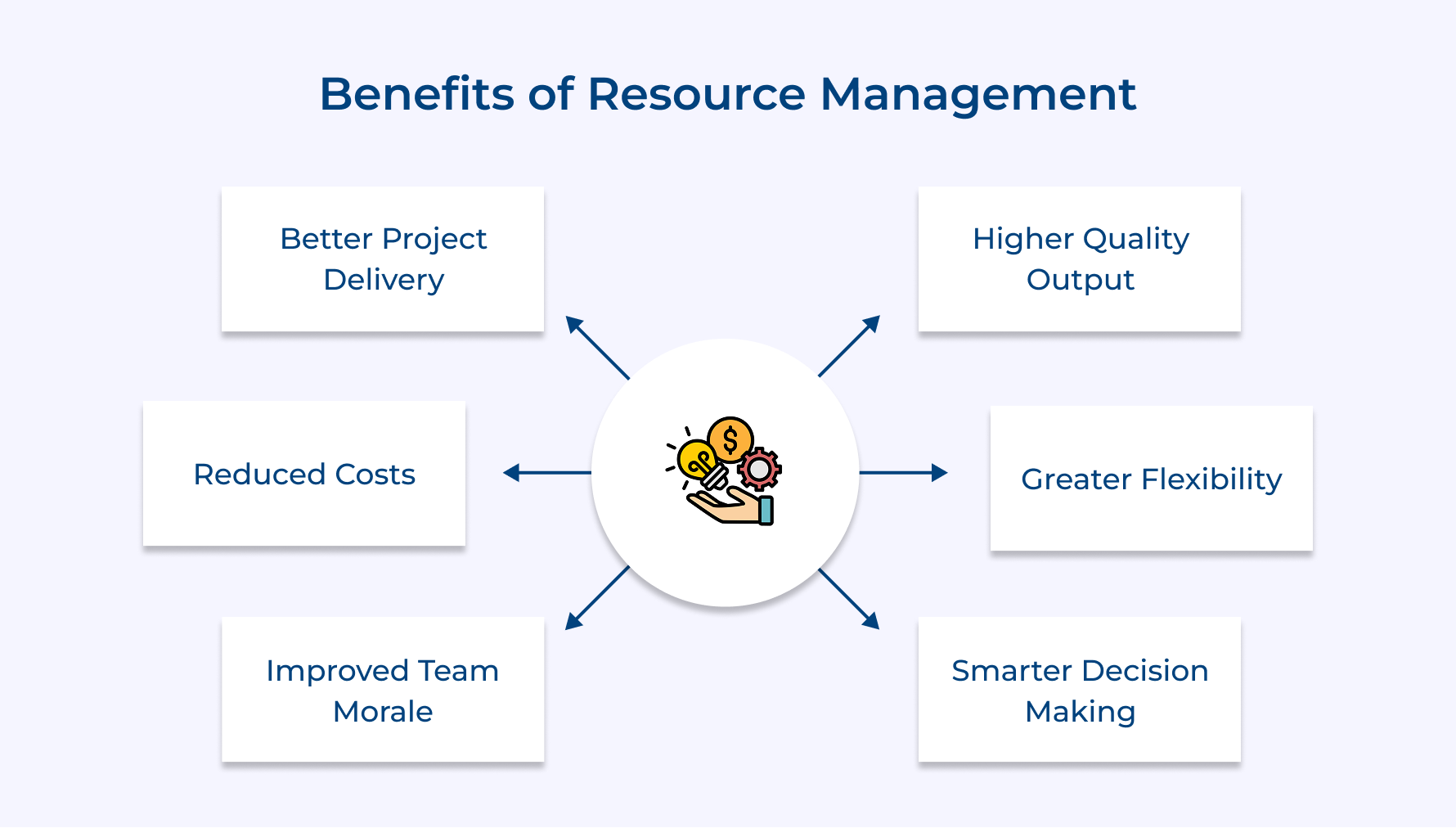
1. Better Project Delivery
The right people work on the right tasks at the right time, so deadline scrambles and last-minute chaos become rare. Teams build momentum instead of constantly stopping because resources aren’t available.
2. Reduced Costs
Even workload distribution means you’re not paying for idle time or unnecessary overtime. When you can forecast resource needs accurately, budget overruns and duplicated efforts stop draining your bottom line.
3. Improved Team Morale
People feel valued when their skills are put to good use and their workload is fair. Spotting overallocation early prevents burnout before it becomes a real problem.
4. Higher Quality Output
Matching tasks to the right expertise (with enough time to do the work properly) naturally raises quality. Resource planning reduces crunch situations where cutting corners feels like the only option.
5. Greater Flexibility
Know your exact capacity to handle unexpected changes or grab new opportunities without panic. Resolving resource conflicts gets much easier when you have accurate, real-time allocation data.
6. Smarter Decision Making
Instead of guessing, leadership can decide whether to take on new work based on what’s actually available. Utilization data reveals patterns that help you plan ahead and invest in the right areas.
Important Components of Resource Management
Effective resource management isn’t just one activity but a system of interconnected components. Each piece plays a specific role in keeping your projects running smoothly.
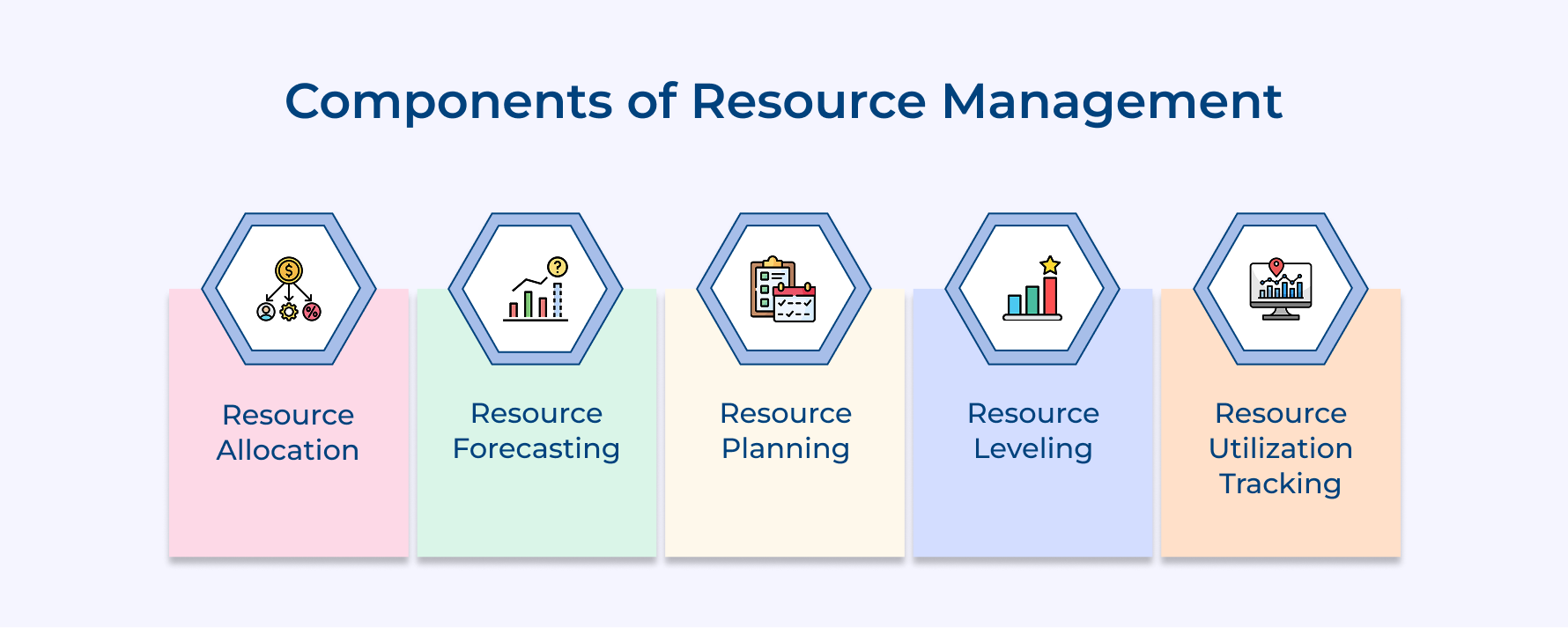
1. Resource Allocation
Resource allocation is simply deciding who does what and when, based on availability as well as skills. You’re turning plans into actual assignments.
Done well, it stops some team members from drowning in work while others have nothing to do. Critical tasks get the attention they need instead of falling through the cracks.
2. Resource Forecasting
Forecasting means looking ahead to predict what resources upcoming projects will require before demand hits. You’re never caught scrambling because you saw it coming.
This gives you time to act! Regardless if that’s hiring, scheduling training, or building capabilities so the right people are ready when projects actually kick off.
3. Resource Planning
Resource planning is your big-picture strategy for using everything available across all projects – people, budgets, equipment. It’s the blueprint that guides every decision that follows.
Good planning surfaces conflicts before they become problems and keeps you from committing resources you don’t actually have, including accounting for seasonal shifts in availability.
4. Resource Leveling
Resource leveling shifts tasks around to balance the workload when someone has too much on their plate. You’re shifting tasks to smoother periods rather than letting people burn out trying to do everything at once.
It might mean extending a deadline occasionally, but you end up with realistic schedules your team can actually execute without working unsustainable hours.
5. Resource Utilization Tracking
Utilization tracking measures how effectively you’re using your resources compared to total capacity. Are people productive, or sitting idle more than they should be?
That data is genuinely useful – high utilization signals good deployment, while low numbers point to waste or a resource pool that needs trimming.
9 Reasons Why Resource Management Is Important
Let’s now explore nine compelling reasons why effective resource management is essential for your business’s success and how it can serve as a catalyst for achieving your strategic objectives.
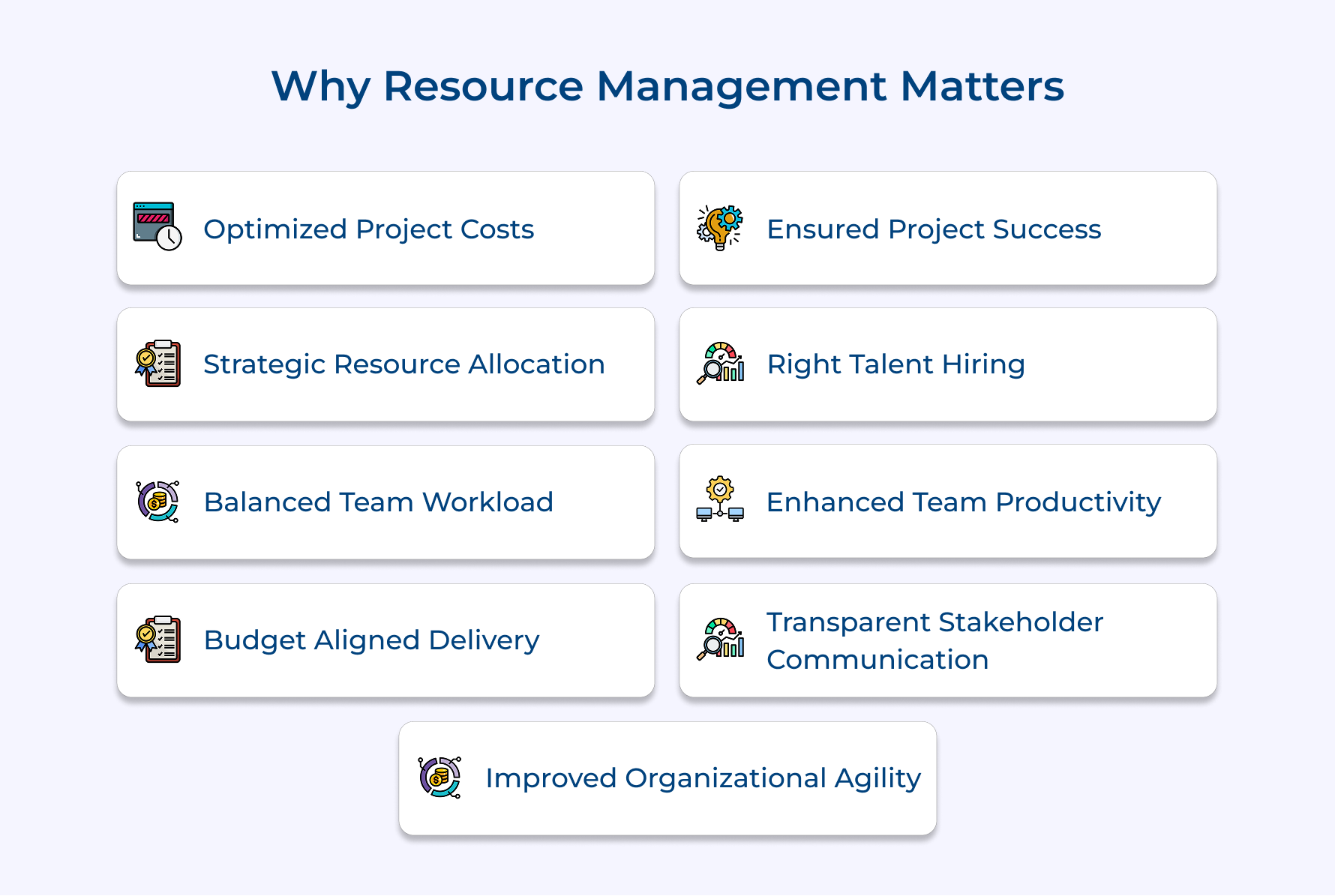
1. Optimized Project Costs and Improved Profitability
Resource management cuts waste by ensuring you only use what you need when you need it. Poor management leads to paying for idle staff or equipment that sits unused while your budget drains away.
When resources are managed well you see a direct impact on your bottom line through reduced costs. Money saved from better planning can be reinvested into growth initiatives or passed along as improved profit margins.
Pro tips:
- Review resource utilization reports monthly to spot patterns of underuse or overuse.
- Set utilization targets for different resource types and adjust allocations when you fall short.
2. Strategic Resource Allocation Across All Projects
Strategic allocation means putting your best assets where they’ll create the most value for your organization. This reason highlights importance because misallocated resources can doom even well-planned projects to mediocrity or failure.
Here’s how effective resource management drives strategic allocation in project management:
- High-priority assignment: You get visibility into which projects align with business goals, so your most skilled people go where it matters most.
- Portfolio balancing: Managing multiple projects means making trade-offs. Resource management tools give you the big picture so nothing falls through the cracks.
- Goal alignment: Every allocation decision becomes an opportunity to reinforce what your organization values and where it’s heading.
Imagine a software company with two projects running simultaneously: a client customization and a new product feature. Strategic allocation means assigning senior developers to the product feature because it creates long-term competitive advantage.
Why does this matter so much? Because your resources are limited and every choice about where to deploy them is essentially a bet on what will drive success for your business.
3. Improved Workload Management for Teams
Workload management keeps your team productive without pushing them into exhaustion or leaving them bored. This showcases resource management importance because balanced workloads directly affect both project outcomes and employee retention rates.
Prevents Burnout Through Balanced Task Distribution
When you can see everyone’s workload across all projects you spot imbalances before they cause problems. Someone juggling three urgent deadlines can get help while another team member with a lighter load picks up tasks.
Identifies Overallocation Issues Before They Become Problems
Resource management systems flag when someone is assigned more hours than they have available in a week. You catch scheduling conflicts early and adjust plans rather than discovering the issue when deadlines start slipping.
Creates Sustainable Work Patterns That Maintain Productivity
Consistent and reasonable workloads help teams maintain steady output over time instead of cycling through sprints as well as crashes. People work better when they know what’s expected and have the capacity to deliver quality results.
4. Delivery Within Approved Project Budget
Budget overruns are one of the top reasons projects get labeled as failures. Resource management gives you the controls to keep spending aligned with what was actually approved.
Here’s how it keeps you on budget:
- Real-time tracking: Monitor actual costs against planned budgets as work happens, not at month-end when it’s too late.
- Controlled expansion: Scope change requests immediately show their resource implications so you can adjust the budget or push back.
- Efficiency optimization: Matching the right skill level to each task stops you from overpaying for work a junior resource could handle.
- Utilization monitoring: Spot expensive resources sitting idle and reassign or release them before costs pile up.
- Variance analysis: Regular planned-vs-actual comparisons let you course-correct before small overages become serious problems.
Key elements that support budget delivery:
- Resource rate cards defining costs across skill levels
- Approval workflows for any additions beyond the original plan
- Regular budget reviews that keep the whole team aware of constraints
The biggest threat here is scope creep, extra requirements sneaking in without formal budget adjustments. Resource management makes the cost of every change visible so stakeholders can decide with full information.
5. Helps Guarantee Overall Project Success
Resource management ensures projects have what they need to succeed by matching requirements with available capacity. Without proper allocation even brilliant project plans fail because critical work sits undone or gets rushed through.
Success happens when the right capabilities are available at each project phase to maintain momentum and quality. Resource gaps or mismatches create delays that cascade through the schedule and ultimately jeopardize the entire initiative.
Best practices:
- Conduct resource requirement analysis during project planning to identify needs before work begins.
- Build resource buffers for high-risk tasks so unexpected issues don’t derail the entire project.
6. Helps You Hire the Right People
Hiring decisions become data-driven when resource management reveals actual capability gaps versus assumed needs. Wrong hires waste money and time while leaving your projects understaffed in critical areas.
Here are five essential questions to ask before making hiring decisions:
- What specific skills are we consistently short on across our project pipeline?
- Can we meet upcoming project demands with our current team capacity?
- Are we hiring for temporary project spikes or permanent workload increases?
- Would training existing staff be more cost-effective than bringing in new people?
- Do we need full-time employees or would contractors provide better flexibility?
These questions prevent reactive hiring by forcing you to examine patterns and future needs systematically. You avoid panic-hiring when a project starts or maintaining excess headcount after a busy period ends.
Resource management shows where current capacity falls short and forecasts future requirements based on your project roadmap. This visibility transforms hiring from guesswork into strategic workforce planning.
7. Enhanced Team Productivity and Efficiency
Productivity improves when people work on tasks that match their abilities and have what they need. Mismatched assignments create frustration and waste talented people on work below their capability.
Matches Tasks to People With Appropriate Expertise
When you assign work based on skills rather than just availability the job gets done faster and better. A senior developer completes complex coding in hours while a junior might struggle for days.
Reduces Time Wasted Waiting for Unavailable Resources
Tasks are scheduled when needed resources are actually free to work on them. Teams maintain momentum instead of sitting idle because the specialist they need is tied up elsewhere.
Streamlines Workflows by Eliminating Resource Bottlenecks
You can identify when one person or asset becomes a constraint across multiple projects and take action. Adding capacity at bottleneck points keeps everything flowing smoothly instead of backing up.
8. Better Stakeholder Communication and Transparency
Stakeholders trust you more when your commitments are backed by real resource data — not optimistic guesses. Missed deadlines caused by resource issues that were never communicated upfront erode that trust fast.
Concrete data lets you have honest conversations about constraints and trade-offs before making promises you can’t keep. Most stakeholders can handle difficult news, what they can’t handle is being surprised by it.
Pro Tip:
- Share resource capacity reports with stakeholders during project initiation so expectations are realistic from the start.
- Update stakeholders immediately when resource conflicts arise rather than hoping you can solve them invisibly.
9. Increased Organizational Agility and Adaptability
Agility means your organization can pivot quickly when markets shift or new opportunities emerge without chaos. Companies that respond faster to change often capture value that slower competitors miss.
This reason why resource management is important centers on competitive advantage through flexibility. Why does this matter? Because you can’t be agile if you don’t know if you have the resources to act on new priorities.
Here’s how effective allocation enables organizational agility and adaptability:
- Quick priority response: Clear resource visibility lets leadership make fast decisions about shifting focus when business conditions change.
- Opportunity reallocation: When promising initiatives arise you can quickly assess if capacity exists or what needs to be deprioritized.
- Disruption pivoting: You can rapidly reassign people and assets when unexpected events require changes to ongoing project work.
- Capacity flexibility: Understanding your resource pool deeply means you know which people can stretch into new roles when needed.
Organizations with strong resource management adapt to change while maintaining stability through informed choices. Rather than reactive scrambling you get deliberate decision-making that protects both new initiatives and existing commitments.
Revolutionize Your Project Delivery With Smart Resource Management
Resource management isn’t just about tracking who’s doing what, it’s about building a system that actually works smarter over time. When you get it right, projects flow smoothly and teams stay energized instead of running on empty.
That’s the real importance of resource management: it transforms how you deliver projects by turning chaos into clarity and guesswork into confident strategy. Start with one project, get visibility into your resources and watch how everything around it changes for the better.
Limit time — not creativity
Everything you need for customer support, marketing & sales.

Neeti Singh is a passionate content writer at Kooper, where he transforms complex concepts into clear, engaging and actionable content. With a keen eye for detail and a love for technology, Tushar Joshi crafts blog posts, guides and articles that help readers navigate the fast-evolving world of software solutions.