How to Create a Work Plan in 8 Efficient Steps
- What is a Project Work Plan?
- Why is Work Planning Important?
- How to Create a Work Plan in Project Management?
- Additional Tips for Managing Your Project Work Plan
- 5 Biggest Mistakes to Avoid While Creating a Work Plan
- Examples of Project Work Planning
- Project Work Planning: Streamline Success from Start to Finish
- FAQs about project Work Planning
Key Highlights:
- Project work plan breaks complex deliverables into clear tasks with assigned responsibilities.
- Effective work planning improves client transparency, risk management and overall project efficiency.
- Use milestones, review cycles and contingency buffers to optimize project outcomes.
Project managers often find themselves stuck in the middle of messy workflows, missed deadlines, frustrated clients and a team that’s constantly overwhelmed. When there’s no clear structure, priorities get blurred, time gets wasted and projects quickly go over budget.
It’s not just one project that suffers, poor planning has a ripple effect. Clients start to lose trust and your team ends up exhausted from constantly putting out fires instead of focusing on real progress. It becomes a cycle of reacting instead of leading.
It doesn’t have to stay that way. With the right planning systems in place, you can turn that chaos into consistency. This guide on how to create a work plan will walk you through practical strategies to build structured work plans that help you hit deadlines, stay within budget and keep everyone on the same page.
What is a Project Work Plan?
A project work plan acts as a detailed blueprint that outlines what needs to be done and when it needs to happen. It transforms abstract project goals into concrete actionable steps that your team can follow from start to finish.
How does Project Work Planning work?
The work plan breaks down complex deliverables into manageable tasks with clear deadlines and responsibilities. It creates accountability by assigning specific team members to each activity. Most importantly it provides a reference point for tracking progress and communicating status updates to clients throughout the project lifecycle.
Primary objectives:
- Resource allocation: Ensures the right people with the right skills are assigned to appropriate tasks at the optimal time.
- Timeline management: Establishes realistic deadlines and identifies potential bottlenecks before they derail project delivery.
- Quality control: Builds in review checkpoints and approval stages to maintain deliverable standards throughout the process.
- Risk mitigation: Anticipates potential challenges and creates contingency plans to keep projects on track when issues arise.
Why is Work Planning Important?
Project work planning transforms chaotic client engagements into structured success stories. Let’s explore how systematic planning drives measurable results.
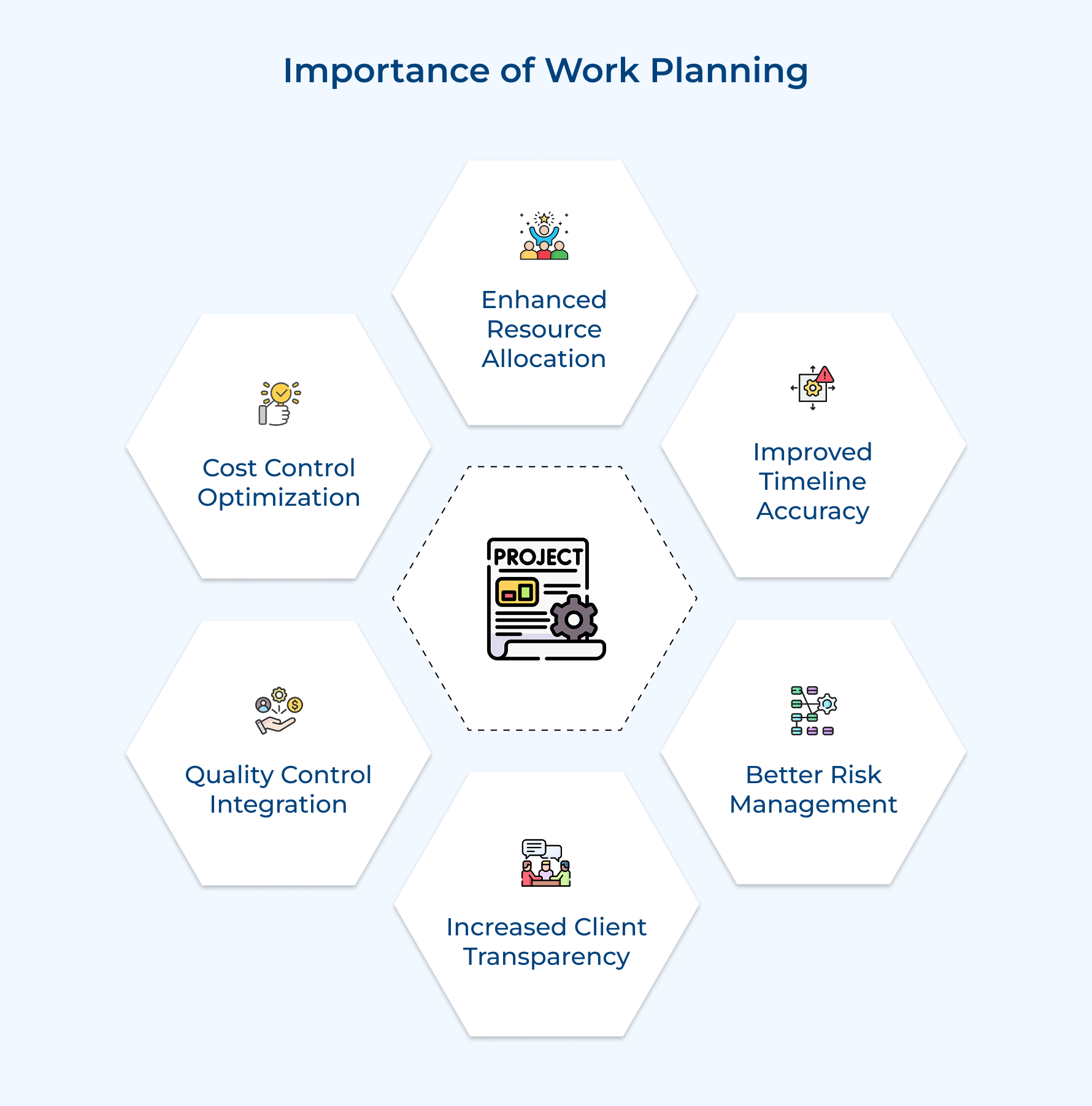
Enhanced Resource Allocation
Work plans optimize team member assignments based on skills and availability. This prevents overallocation while ensuring critical expertise reaches high-priority tasks when needed most.
Improved Timeline Accuracy
Detailed planning creates realistic project schedules that account for dependencies and potential delays. Teams get to set achievable milestones that build client confidence throughout the engagement.
Better Risk Management
Systematic planning identifies potential roadblocks before they become costly problems. Teams develop contingency strategies that keep projects moving forward despite unexpected challenges.
Increased Client Transparency
Work plans provide clear communication tools that keep clients informed about progress and next steps. The transparency builds trust and reduces misunderstandings about project scope.
Quality Control Integration
Planning embeds review checkpoints and approval stages throughout the project lifecycle. It ensures deliverables meet standards before reaching clients and reduces costly revision cycles.
Cost Control Optimization
Detailed work plans track budget allocation against actual spending to prevent financial overruns. Teams can make informed decisions about resource adjustments before costs spiral out of control.
How to Create a Work Plan in Project Management?
In just a few clear steps, we will guide you through creating a work plan that not only outlines every phase of your project but also anticipates challenges and sets your team up for success.
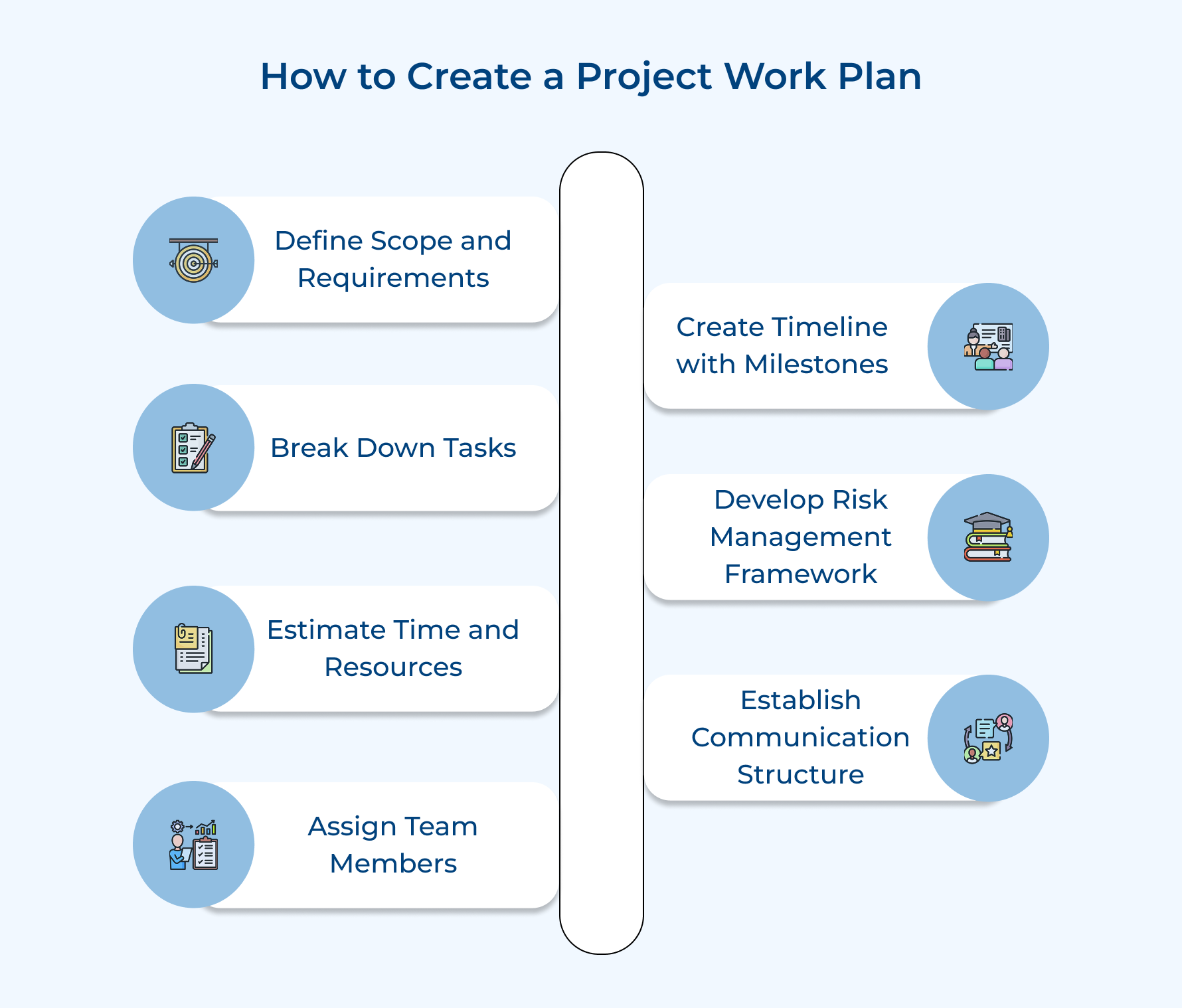
1. Define Project Scope and Requirements
A clear project scope lays the groundwork for everything that follows. It keeps everyone aligned, prevents scope creep and sets clear expectations from day one. Without it, teams risk building the wrong thing, or worse – constantly reworking deliverables.
Start by asking the right questions:
- What outcomes does the client expect?
- What’s included and not included in the scope?
- What features are non-negotiable vs. nice-to-have?
- Who signs off on major decisions?
These questions remove guesswork. But clarity goes beyond conversation. Write down deliverables in specific terms. Don’t just say “improve marketing strategy”, spell it out as “create a 12-month digital roadmap with budget allocation.” This kind of precision ensures everyone understands what success looks like.
And when it comes to deliverable details, go granular. Document formats, required quality levels as well as review needs. For instance: does a report need an executive summary? Should a presentation include speaker notes? Define these specs early, they’ll serve as your quality checklist throughout the project.
2. Break Down Tasks into Components
Big projects can feel overwhelming, until you break them down. Task decomposition simplifies everything into smaller, more manageable pieces. It makes estimating easier and gives your team clear ownership of their roles.
- Start with major deliverables and break them into work packages that take about 2–5 days to complete. This helps maintain steady momentum and avoids overwhelming team members.
- Structure your tasks hierarchically, mapping out dependencies. What needs to be finished before something else starts? It helps prevent scheduling issues later on.
- Go granular without micromanaging. Define the smallest actionable units, just enough detail for team members to give realistic estimates. This clarity supports better planning and keeps everyone moving in the same direction.
3. Estimate Time and Resource Needs
Time and resource estimates transform big ideas into actual plans. Get these wrong and your project budget suffers. Get them right and you’ll avoid overpromising, overcommitting as well as underdelivering.
Use tried-and-tested estimation methods:
- Historical data: Look back at similar projects. What did they cost? How long did they take? Patterns help you predict better.
- Expert judgment: Involve your senior team. Their experience helps spot hidden complexity that numbers alone won’t show.
- Three-point estimation: For each task, estimate best-case, worst-case and most-likely timeframes, then average them. It’s a great way to handle uncertainty.
Even with careful planning, surprises happen. Build a 15–20% contingency buffer into your timeline. That extra cushion gives you breathing room when things shift unexpectedly.
4. Assign Team Members to Tasks
Assigning tasks is all about matching the right people to the right work. Your best bet? Align team capabilities with workload to get quality results without burnout.
Use your project management software to visualize workload distribution and make assignments accordingly. This keeps efforts balanced and prevents bottlenecks.
A few things to keep in mind:
- Document backup resources for high-risk tasks. You don’t want to rely on just one person for mission-critical work.
- When possible, align tasks with individual development goals. Helping someone grow while getting the job done is a win-win.
Smart task assignment means less rework, smoother collaboration and better results for your clients.
5. Create Timeline with Key Milestones
A good timeline keeps your project on track. It outlines when things should happen, aligns team efforts and gives stakeholders confidence in your process.
Ask yourself:
- What dates are non-negotiable for deliverables?
- Which tasks depend on others being completed?
- Where might external delays slow things down?
These questions help identify your project’s critical path. Use that path to schedule realistically and build your timeline around key milestones that show progress.
Common milestone examples:
- Discovery complete: All client requirements documented and approved.
- Design approved: Visuals are finalized and ready for execution.
- Beta tested: Feedback collected and implemented.
- Final delivery: Everything is handed off and approved.
Track these milestones in your project management software and schedule review sessions a week in advance. That way, you can spot issues early and avoid last-minute rushes.
6. Develop a Risk Management Framework
Risks are part of every project, but ignoring them is where things go wrong. Proactive risk planning protects your timeline, team morale and client trust.
Build a system that categorizes risks by likelihood and impact while assigning mitigation plans accordingly. This lets your team prioritize what matters most and stay ahead of potential roadblocks.
Helpful tips:
- Keep a risk register that logs threats, mitigation strategies and owners.
- Schedule regular risk reviews as the project evolves. New challenges can pop up midstream, so stay agile.
A strong risk framework helps your team act instead of react and that’s key for keeping projects smooth as well as stress-free.
7. Establish Communication and Reporting Structure
Communication breakdowns derail projects fast. A solid communication plan ensures everyone stays informed, aligned and confident in your process.
Start by setting regular check-in cadences with your clients. Ask them how often they want updates and in what format. Then, lock it into your project charter.
create standardized reporting templates. These help your team stay consistent and save time. A few formats to consider:
- Weekly status dashboard: A visual summary showing what’s done, what’s next and how the budget is tracking.
- Monthly executive summary: A higher-level overview for leadership, including wins, risks and key decisions.
- Milestone reports: Detail how specific deliverables were met, lessons learned and what comes next.
Establish escalation paths. Not every issue can be solved in a weekly meeting. Clear procedures help you act fast when high-priority problems arise—without disrupting everything else.
Additional Tips for Managing Your Project Work Plan
Effective work plan management requires ongoing attention and strategic adjustments. These practical tips help teams navigate common challenges while maintaining project momentum.
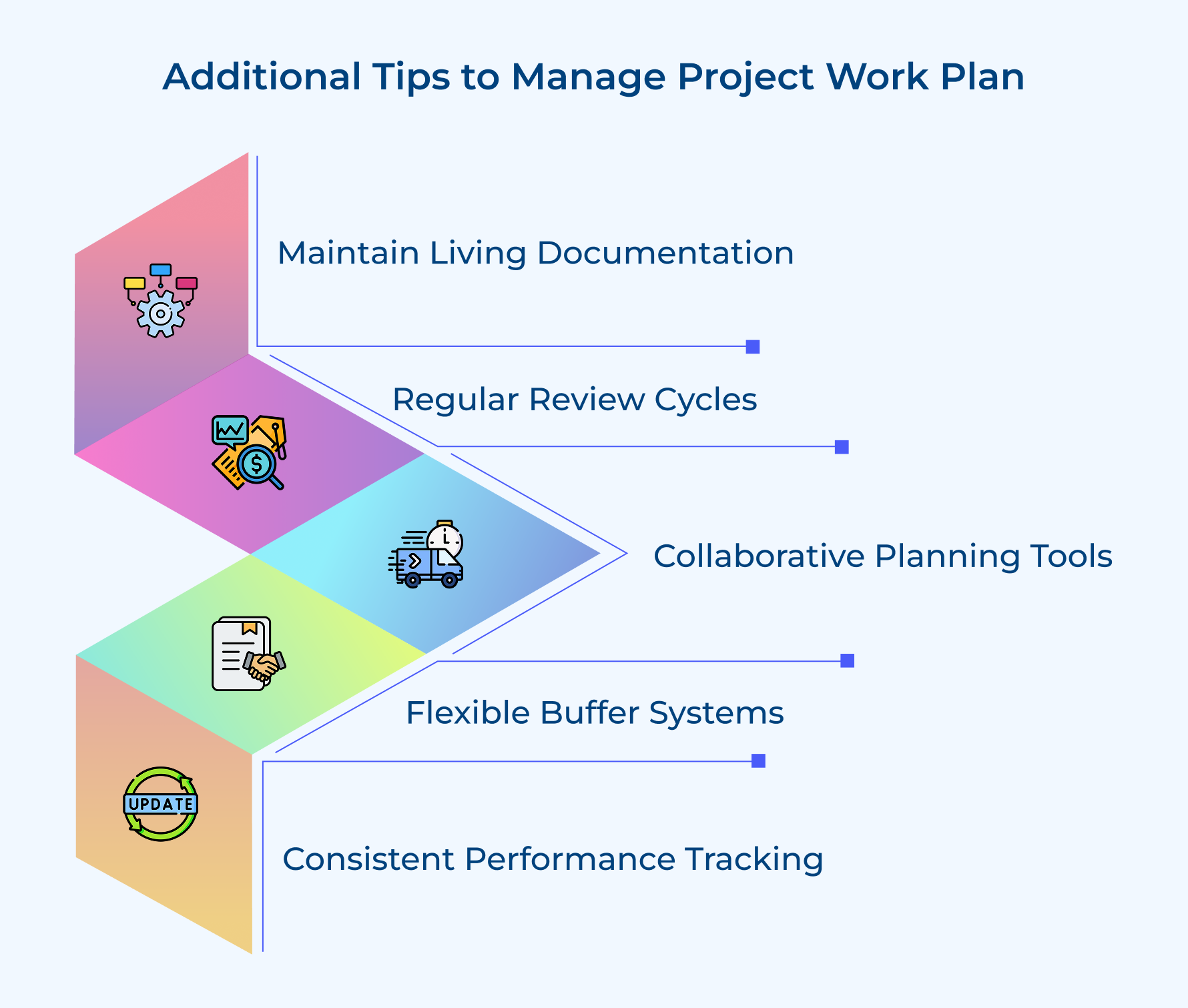
- Maintain living documentation: Don’t treat it like a set-it-and-forget-it document. Update it regularly as things shift on the ground. That way, your team always knows what’s current and no one wastes time following outdated priorities.
- Build in regular review cycles: Set aside time each week to check progress against your original timeline. These check-ins are your chance to catch small issues early and adjust course before they become major problems.
- Leverage collaborative planning tools: Your whole team can update the plan in real time with the right digital platform. Everyone sees the latest version and can weigh in with their expertise.
- Implement flexible buffer systems: Instead of padding every single task, build in flexible buffers only at key points in your timeline. It keeps the schedule realistic while giving you room to handle unexpected delays smoothly.
- Track performance metrics consistently: Monitor metrics like task completion rates and team bandwidth. Over time, this data shows you where your planning shines and where there’s room to improve for the next client project.
5 Biggest Mistakes to Avoid While Creating a Work Plan
Even experienced project managers can fall into common traps that derail well-intentioned work plans. Understanding these pitfalls helps you create more robust project frameworks from the start.
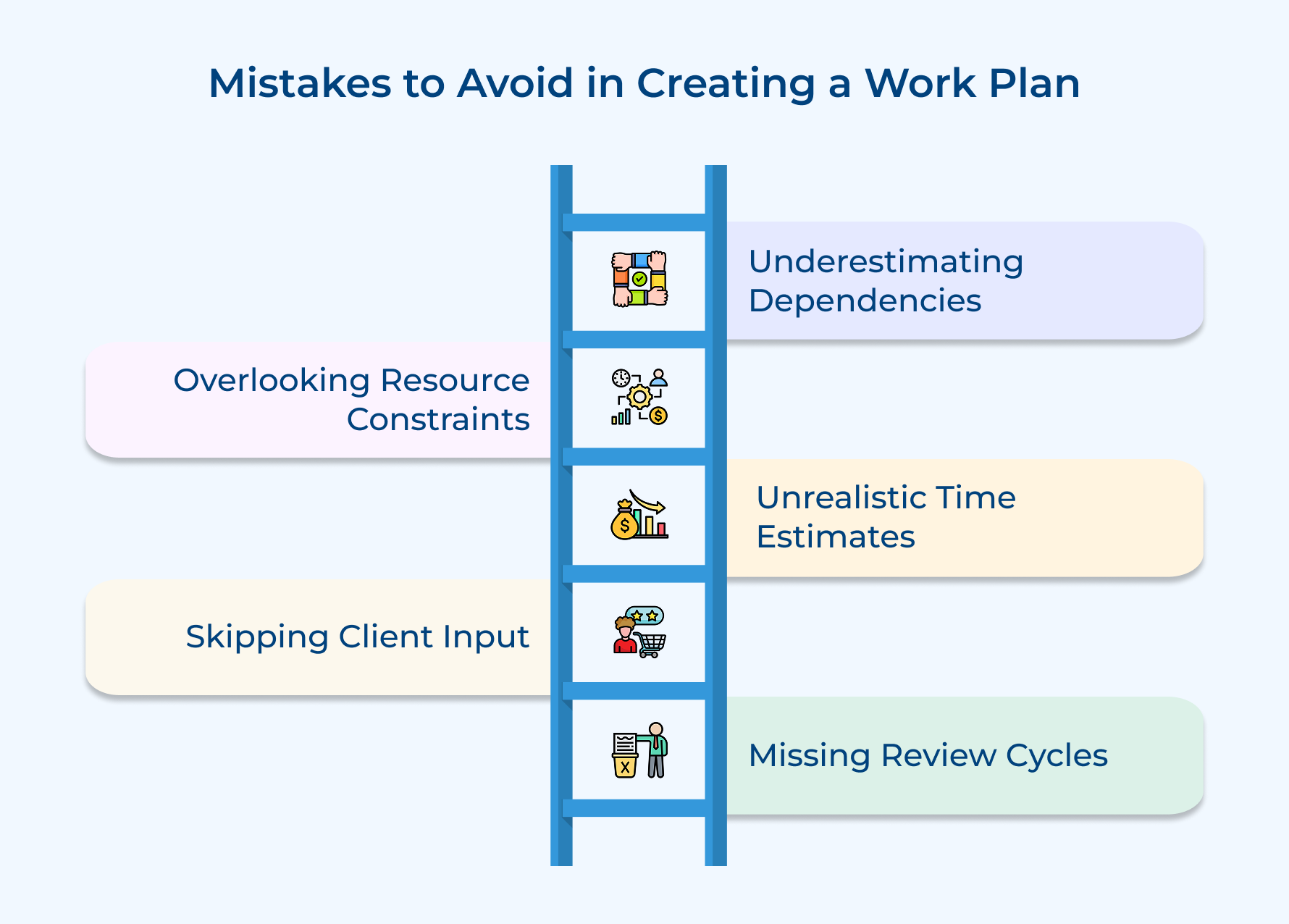
Underestimating Task Dependencies
It’s easy to assume tasks can run in parallel, but many actually rely on others to be completed first. If you don’t map these connections clearly, your timeline starts off unrealistic and delays snowballing quickly. Before locking in dates, take time to chart out how tasks relate to one another.
Ignoring Resource Availability Constraints
Assigning tasks based on who should be available doesn’t cut it. Teams often get overbooked when actual bandwidth isn’t considered. Check your team’s real workload and commitments before finalizing assignments to avoid burnout as well as last-minute scrambles.
Creating Overly Optimistic Time Estimates
We all want to believe things will go smoothly, but projects rarely unfold under perfect conditions. Skipping time for setbacks or hidden complexity leads to rushed work and frustrated teams. Build in a 20–30% buffer and validate your estimates using past project data.
Neglecting Client Input During Planning
Some managers create detailed plans, only to find out later the client had different expectations. Skipping client involvement can lead to mismatches in priorities and sudden changes mid-project. Invite them into planning sessions early so everyone’s on the same page.
Failing to Build in Review Cycles
You risk catching mistakes far too late when there aren’t scheduled checkpoints. Add regular quality reviews and approval stages into your timeline. These checkpoints help catch issues early, when they’re much easier and cheaper to fix.
Examples of Project Work Planning
Each example showcases unique approaches tailored to specific industry requirements and client expectations.
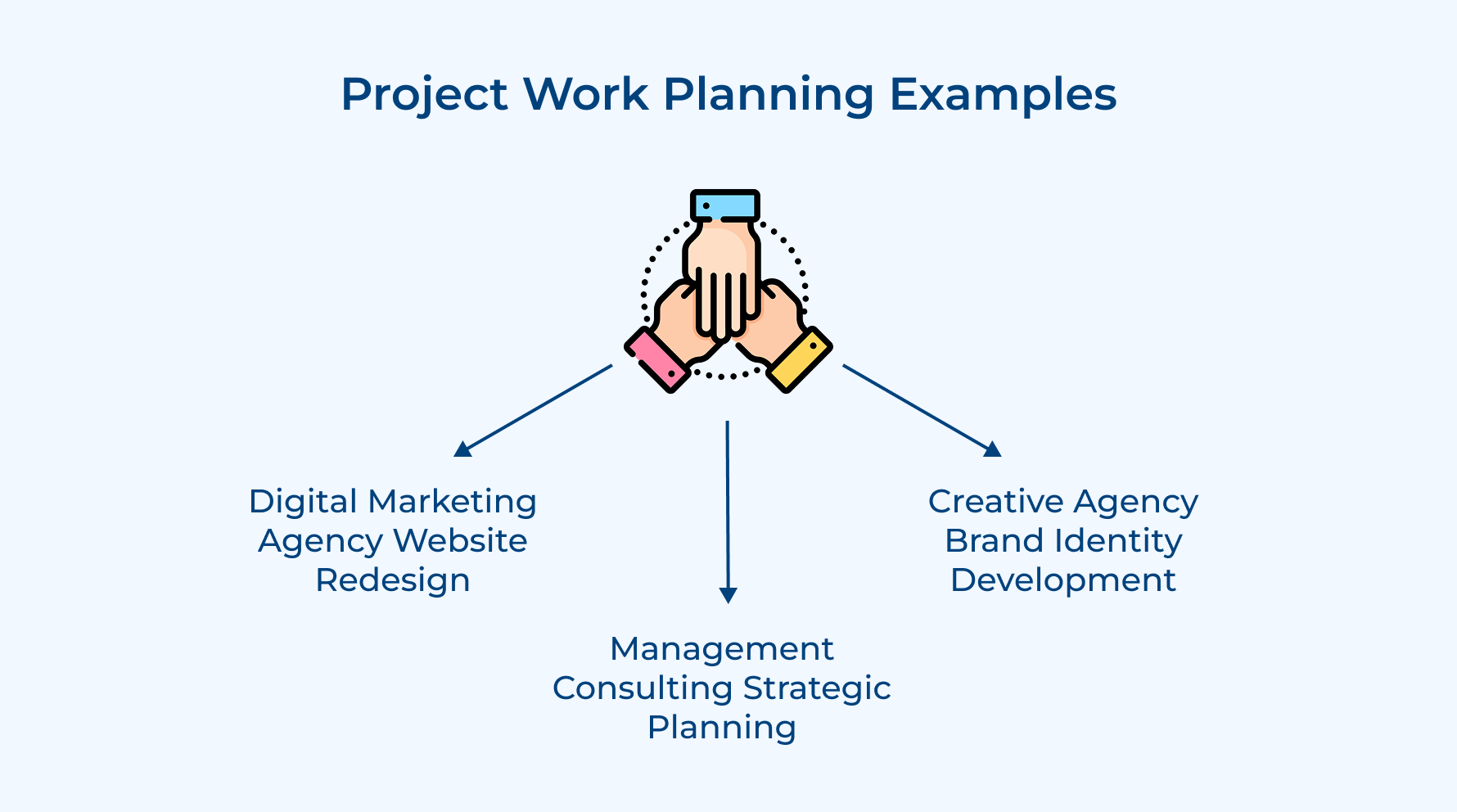
1. Digital Marketing Agency – Website Redesign Project
This comprehensive website redesign project spans three months with clear phases and deliverables. The work plan begins with discovery sessions to understand brand requirements and user personas before moving into design phases.
Technical implementation follows approved designs with integrated SEO optimization and performance testing. The final phase includes staff training and ongoing maintenance planning to ensure long-term success for the client’s digital presence.
2. Management Consulting Firm – Strategic Planning Engagement
The strategic planning engagement starts with extensive stakeholder interviews and market analysis over six weeks. Consultants gather internal data while conducting competitive research to identify growth opportunities and operational inefficiencies.
Strategy development occurs through collaborative workshops with leadership teams to build consensus around priorities. Final deliverables include detailed implementation roadmaps with quarterly milestones and success metrics for measuring progress toward strategic objectives.
3. Creative Agency – Brand Identity Development
Brand identity projects require deep understanding of company values and target audience preferences through research phases. Creative teams develop multiple concept directions based on strategic positioning and visual identity guidelines for client consideration.
Selected concepts undergo refinement through iterative feedback cycles with key stakeholders and focus groups. Final deliverables include comprehensive brand guidelines covering logo usage and messaging frameworks plus implementation across various marketing materials.
Project Work Planning: Streamline Success from Start to Finish
Project work planning serves as the foundation that transforms chaotic client engagements into predictable success stories. Without structured frameworks, teams struggle with unclear priorities and missed deadlines that damage client relationships.
Agencies and professional services firms using systematic work planning achieve higher profit margins through optimized resource allocation as well as reduced project overruns. Enhanced operational efficiency and transparent client communication create competitive advantages that drive sustainable business growth.
Limit time — not creativity
Everything you need for customer support, marketing & sales.

Pooja Deshpande is a content contributor at Kooper, focused on creating insightful resources that help agencies and service providers scale efficiently. Passionate about SaaS trends, content strategy, and operational excellence, she delivers practical, easy-to-implement guidance for modern business leaders.