Service Operations Optimization for Better Performance and Success
- What is Service Operations Management?
- 3 Pillars of Service Operations You Should Know
- Why are Service Operations Important?
- Service Operations Management Process in 7 Simple Steps
- 4 Important Service Operations Tools for Professional Services
- Key Metrics for Measuring Service Operations Performance
- Elevate Your Service Game with Service Operations Management
- FAQs about Service Operations

Key Highlights:
- Discover what service operations and how processes, people as well as technology drive consistent customer satisfaction across industries.
- Explore essential service operation management metrics to track performance, optimize resources while ensuring high-quality professional service operations.
- Uncover actionable strategies and real-world examples to strengthen your service operations process from planning to continuous improvement.
Many organizations pour time and effort into their services, yet still face breakdowns in delivery. Customers get frustrated, resources are stretched thin and internal teams struggle without clear direction.
Poor service operations management doesn’t just slow things down. It drives up costs, strains your team and puts long-term growth at risk. These issues often compound, making it harder to maintain performance.
This guide is designed to help you fix that. Inside, you’ll find structured frameworks, practical tools and proven strategies to bring clarity as well as efficiency to your operations. Whether you’re trying to improve customer experiences or scale with confidence, these insights will help you build a stronger, more reliable service foundation.
What is Service Operations Management?
Service operations management is the systematic approach to designing and controlling the processes that deliver services to customers. It focuses on making service delivery efficient while maintaining quality standards that meet customer expectations. This discipline bridges the gap between what customers want and how organizations can deliver those services consistently.
Service operations management transforms how professional services firms deliver value to their clients by streamlining project workflows and resource allocation. It enables consultancies to maintain consistent service quality across different client engagements while optimizing their internal processes.
Core principles:
- Customer-centricity: Every operational decision should ultimately enhance the client’s experience and outcomes.
- Process standardization: Consistent workflows reduce errors and enable teams to deliver predictable results across projects.
- Resource optimization: Strategic allocation of people and tools maximizes productivity without compromising service quality.
- Continuous improvement: Regular evaluation and refinement of processes ensures operations stay effective.
- Performance measurement: Clear metrics and monitoring systems help identify problems early as well as track progress toward goals.
3 Pillars of Service Operations You Should Know
Service operations rest on three fundamental pillars that work together to create exceptional customer experiences.
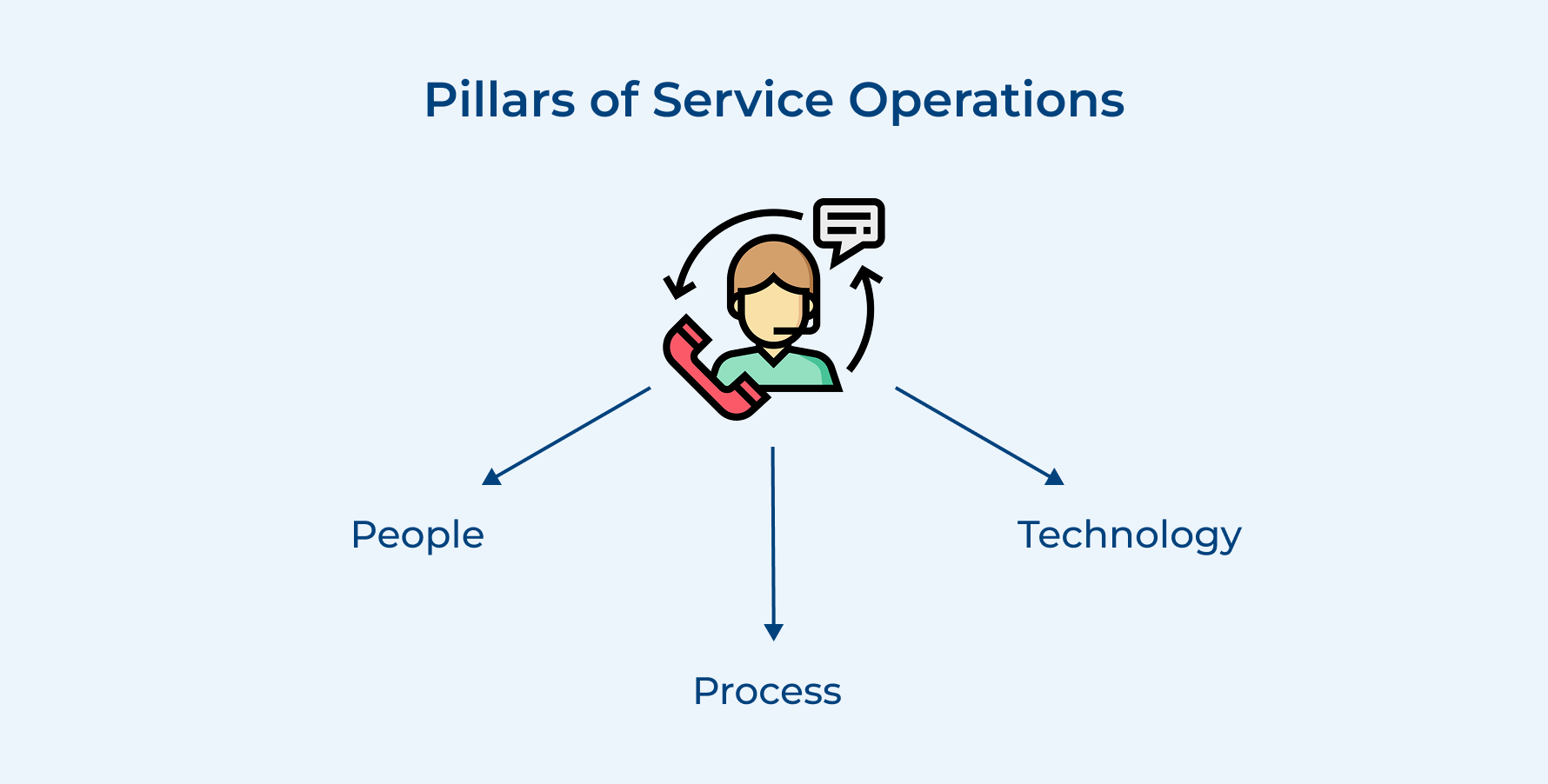
People
Your team is at the center of every customer interaction. With the right training and mindset, they can turn routine service into memorable moments that keep customers coming back.
It’s their empathy and adaptability that make the difference, handling situations no automated system could.
Even with great tools and processes in place, it’s your people who bring the human touch that builds trust while driving long-term loyalty.
Process
Strong service delivery needs more than good intentions, it needs clear processes. When everyone follows the same playbook, customers get a consistent experience no matter who they talk to.
Well-documented steps reduce errors, improve handoffs and make onboarding new team members smoother.
Better yet, refining these processes regularly helps you spot inefficiencies as well as keep improving. It’s how your service stays reliable and scalable as your business grows.
Technology
Smart use of technology takes your service operations to the next level. Automation handles the repetitive tasks, freeing your team to focus on complex, high-impact work.
Real-time tools give both staff and customers instant access to information, making interactions faster as well as smoother.
The right tech also connects systems and teams, giving you useful data to improve service. Just remember, tech should support great service not replace the human connection.
Why are Service Operations Important?
87% of respondents see a direct correlation between using a work management platform and improved productivity. Service operations transform how businesses deliver value while improving internal efficiency. Understanding these benefits helps build the foundation for competitive advantage.
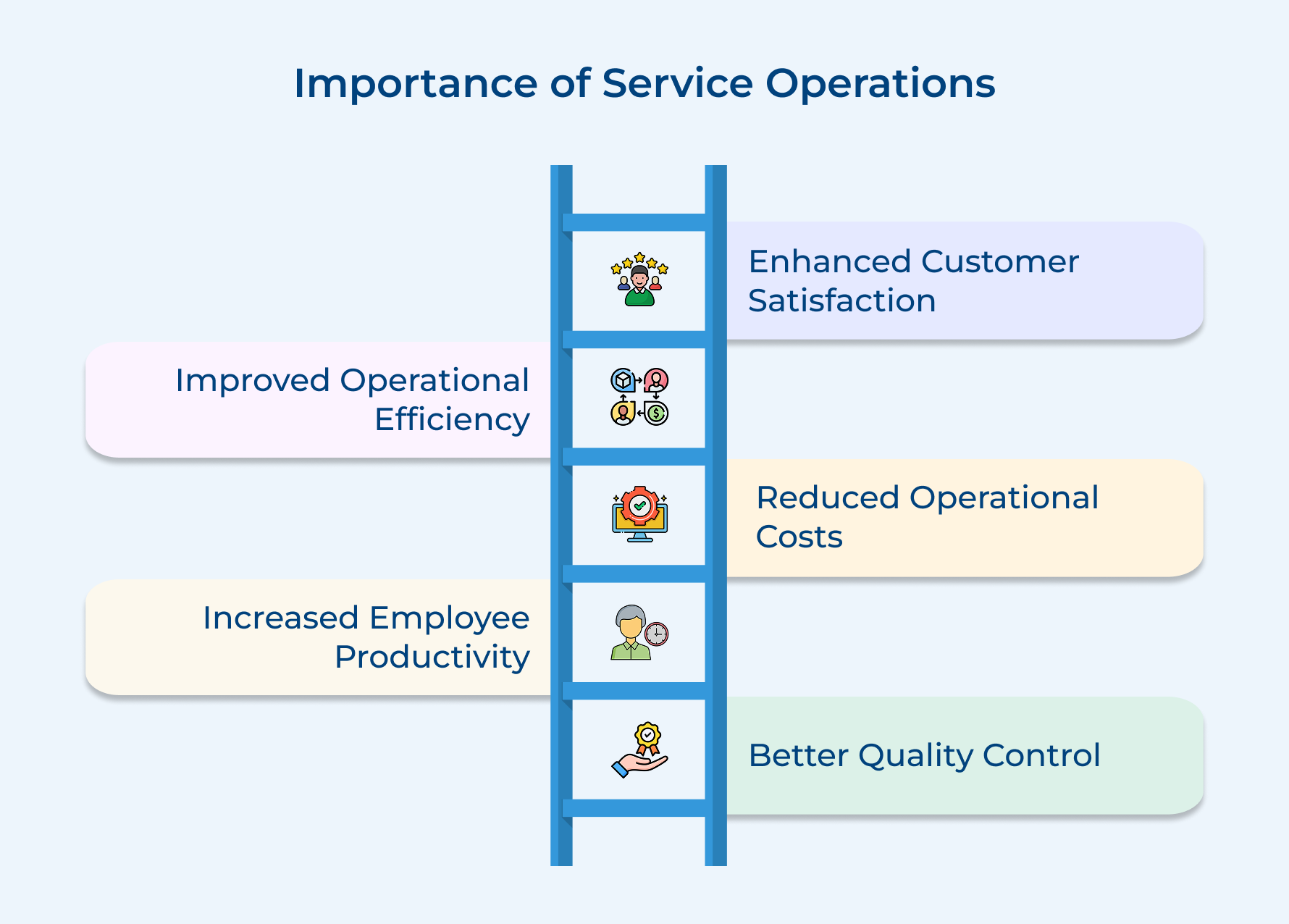
Enhanced Customer Satisfaction
Great service operations make every interaction feel smooth and consistent, no matter who’s helping the customer. When things run like clockwork, customers don’t have to deal with confusion or delays – they get the help they need, every time. That reliability builds trust, keeps frustration low and turns first-time buyers into loyal fans who keep coming back.
Improved Operational Efficiency
When your service operations are well-organized, everything just flows better. Teams aren’t wasting time digging for info or figuring out what to do next because the process is already mapped out. This kind of structure lets you serve more customers without stretching your team too thin, all while keeping your standards high.
Reduced Operational Costs
Strong service operations help you spot and cut out the steps that aren’t doing much, except eating up your budget. Automation takes care of the repetitive stuff and clear processes help avoid expensive mistakes. These smarter ways of working add up to real savings that benefit your bottom line.
Increased Employee Productivity
Good operations make life easier for your team. When employees know exactly what’s expected and have systems that support their workflow, they can focus on doing great work. It means less time wasted, less stress and more energy spent on what really matters.
Better Quality Control
Service operations are about catching issues before they snowball. With regular checks and clear standards in place, you can spot small problems early as well as fix them before they affect your customers. This proactive mindset protects your brand and helps maintain a strong reputation.
Service Operations Management Process in 7 Simple Steps
Managing service operations effectively ensures every stage of the customer journey is smooth, consistent and value-driven. Here’s a 7-step process to get it right.
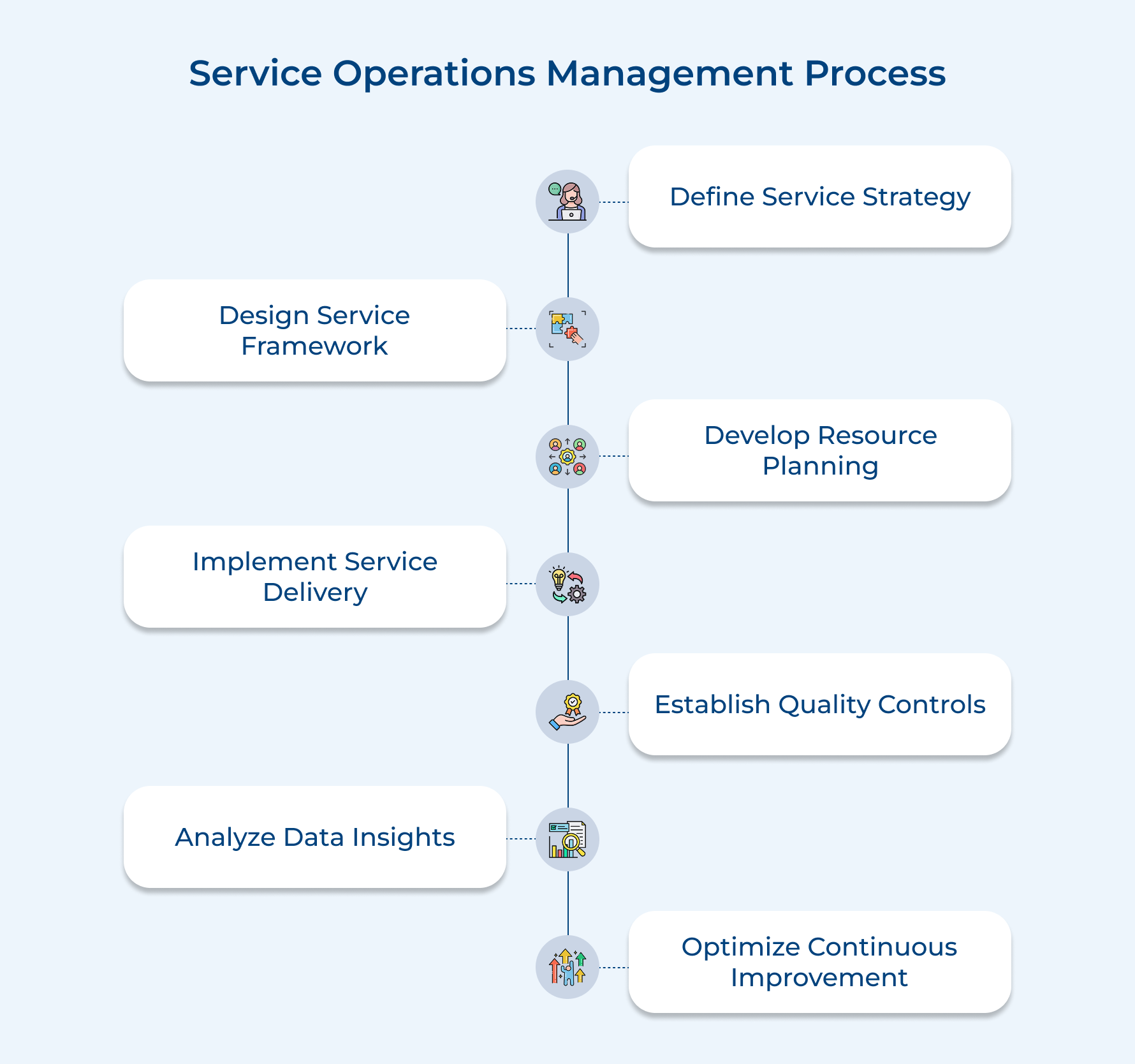
Define Service Strategy and Objectives
Before diving into operations, ask yourself: What are we really trying to achieve? Setting a clear service operation strategy ensures everyone (from leadership to frontline teams) is aligned. It’s not just about vague ideas like “better service.” You need measurable goals that guide daily decisions. For example:
- Want faster response times? Set a 24-hour reply target across all channels.
- Focused on quality? Aim for 95% satisfaction by standardizing processes.
- Looking to cut costs? Identify areas for automation and process tweaks.
Once you’ve outlined goals, reverse-engineer them. Break them into quarterly milestones and day-to-day tasks your team can act on. This alignment turns strategic thinking into a real action plan.
Design Service Architecture and Framework
Think of service operations architecture as your operation’s playbook, it shows your team exactly how to deliver value consistently. Without it, processes become confusing and inconsistent. A great framework:
- Connects all customer touchpoints in a smooth, logical flow
- Defines clear steps so nothing critical gets missed
- Creates predictable experiences that build customer trust
Pro tip: Design your framework from the customer’s perspective, not just internal systems. Where do delays happen? Where do things break down? Also, build in flexibility. A rigid system won’t hold up in real-world situations. Create standard procedures that can adapt when needed, especially during peak times or high-stress situations.
Develop Resource Planning and Allocation
Resource planning makes sure you’re ready for what’s coming. This step ensures you’re not scrambling during high-demand periods or left with idle time in slower ones. Here’s how to make it work:
- Forecast demand: Use past trends to predict peak periods and staff accordingly.
- Cross-train your team: Equip people to jump between roles so you’re not stuck when someone’s out.
- Use tech smartly: A good CRM system helps manage workloads, track customer needs and balance team assignments.
Think about tax season for consulting firms, demand spikes fast. Smart resource planning means they’re ready with trained backups and efficient workflows that handle the load without burnout.
Implement Service Delivery Processes
You’ve built a great plan, now it’s time to bring it to life. Implementation turns ideas into day-to-day reality, but it needs a thoughtful approach. Before you launch anything:
- Check if your team has the tools and training to succeed
- Prepare for exceptions, what happens when something doesn’t fit the standard flow?
- Decide how you’ll track early results and tweak as needed
A smooth rollout means fewer disruptions and a better customer experience. Start small – pilot your new process with one team or department. Watch what works, fix what doesn’t and scale from there. This helps avoid surprises as well as builds team confidence along the way.
Establish Quality Assurance and Controls
Don’t wait for customers to point out issues, spot them before they become a problem. Quality assurance ensures your service operations are consistently excellent by building in checkpoints and standards. Think of it as your safety net.
- Set clear criteria so quality can be measured objectively, not just by “gut feel”
- Use tech to monitor performance in real-time, not just during quarterly reviews
- Track common problem areas to adjust your process proactively
A reliable CRM system can help track quality metrics across teams and highlight where attention is needed. When quality controls are built into daily operations, your team gets early signals of trouble and can fix things fast.
Analyze Data and Identify Improvements
Data tells a story about how well your service is working. Analyzing performance trends helps you see what’s going well and where you’re falling short. Start by asking:
- What are customers consistently happy (or unhappy) about?
- Are there common delays or service breakdowns?
- What patterns show up seasonally or across different teams?
Dig into your CRM system to uncover trends across tickets, response times and resolution quality. Then identify what’s causing friction. Maybe it’s approval delays, siloed data or mismatched staffing. Compare your results with industry benchmarks to know if you’re just keeping up or actually leading. These insights guide improvements that really move the needle.
Optimize and Continuously Improve Operations
Optimization is about constantly refining your service to stay ahead of customer expectations and business needs. Once you have data and feedback, ask yourself:
- What’s the biggest opportunity for improvement right now?
- Which processes impact customer satisfaction the most?
- Can we enhance speed or quality without overloading our team?
Start small with low-risk changes, like updating a communication template or automating simple tasks. Pilot improvements with one team or a handful of clients. Measure results, adjust if needed, then roll it out more broadly. This approach helps you evolve without disrupting the experience your customers already love.
4 Important Service Operations Tools for Professional Services
The right tools can transform how service organizations manage their daily operations and deliver value to customers. Selecting appropriate technology requires understanding your specific operational needs and workflow requirements.
Key questions for tool selection:
- What specific operational challenges does this tool solve that manual processes cannot handle effectively?
- How well does this tool integrate with our existing systems and workflows without creating additional complexity?
- What training and support resources are available to ensure our team can use this tool successfully?
- What are the total costs including implementation, training and ongoing maintenance over the next three years?
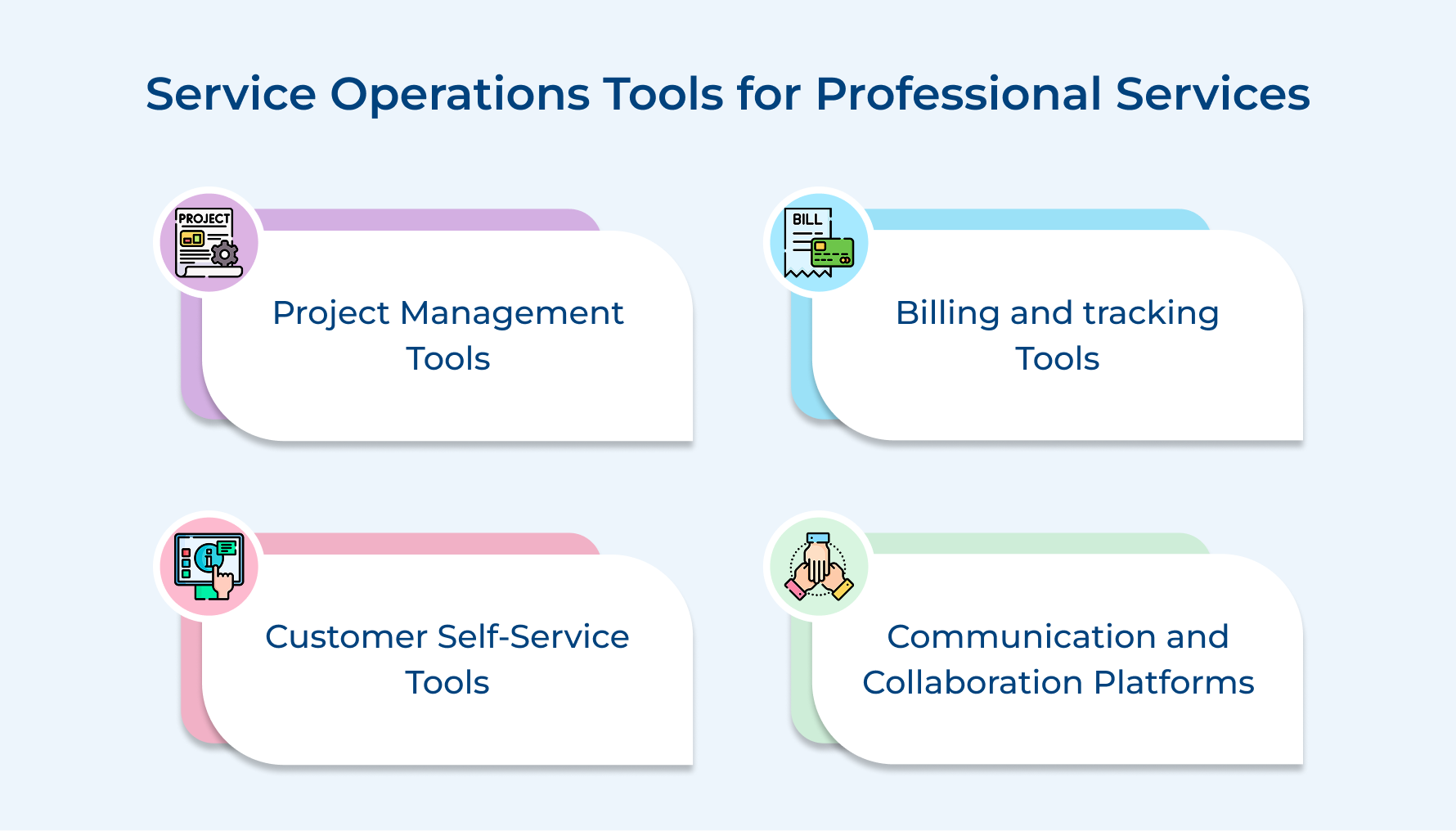
Project Management Tools
Project management platforms help professional service operations firms coordinate complex client engagements by providing centralized visibility into timelines, deliverables and resource allocation. These tools enable teams to track project progress, manage dependencies and communicate updates effectively while ensuring nothing falls through the cracks during busy periods.
Billing and Tracking Tools
Billing software automates the process of tracking billable hours, generating invoices and managing client payments for consultancy work. These systems integrate time tracking with project codes and client rates to ensure accurate billing while reducing administrative overhead while improving cash flow management.
Customer Self-Service Tools
Self-service platforms empower customers to find answers and resolve common issues independently through knowledge bases, FAQ sections, automated troubleshooting guides, etc. These tools reduce support ticket volume while providing customers with immediate assistance outside normal business hours, improving satisfaction and operational efficiency.
Communication and Collaboration Platforms
Communication tools facilitate seamless information sharing and coordination between team members working on different aspects of service operations. These platforms centralize conversations, document sharing and decision-making processes to prevent miscommunication. It ensures everyone stays aligned on priorities and expectations.
Key Metrics for Measuring Service Operations Performance
You need to track the right metrics, not just what’s easy to measure, when it comes to improving service operations. These key performance indicators reveal how well your service supports the customer journey and business goals.
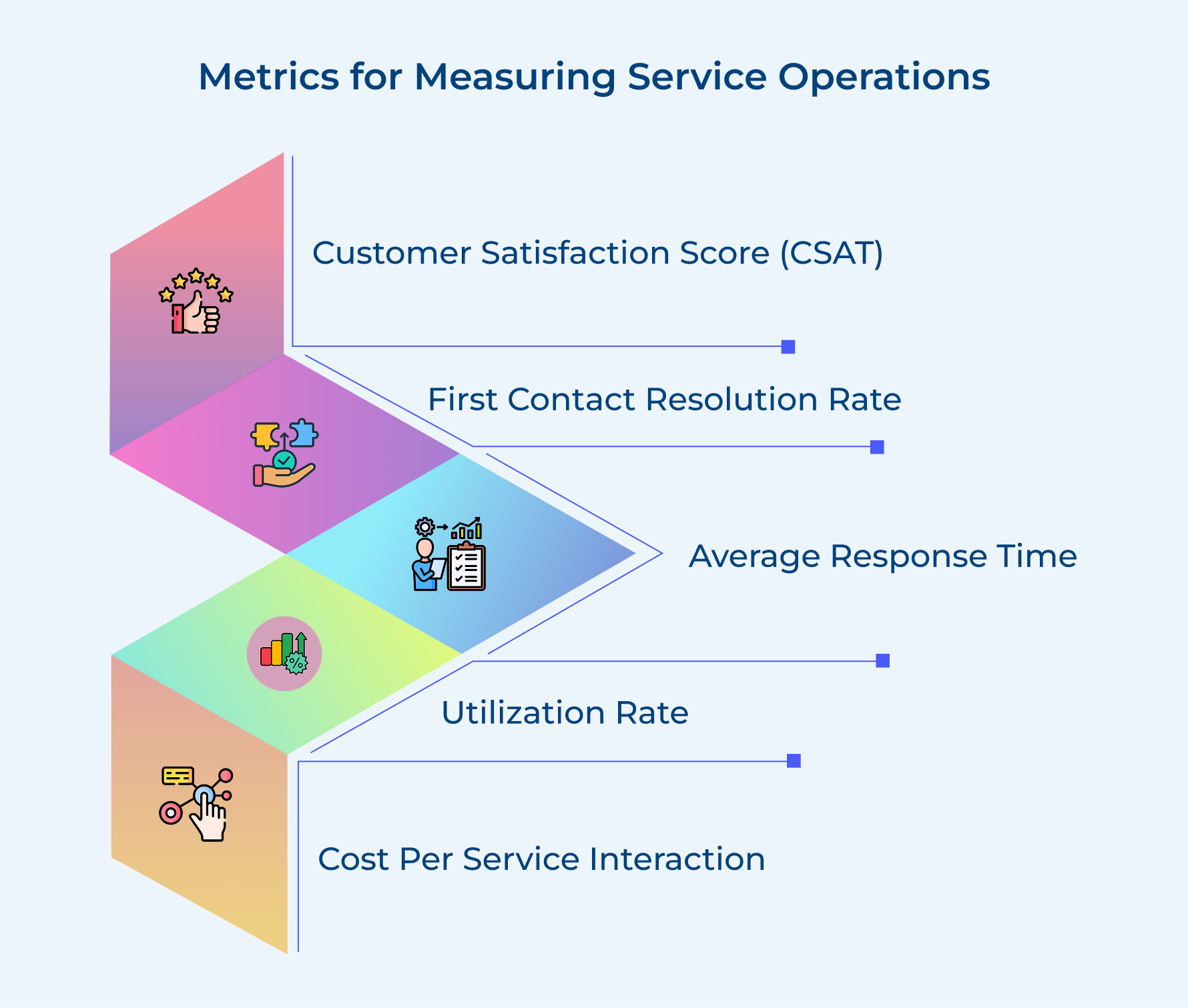
Customer Satisfaction Score (CSAT)
Customer satisfaction measures how well your service operations meet client expectations through surveys and feedback collection. It reveals if operational improvements translate into better customer experiences and serves as your report card from the people who matter most.
First Contact Resolution Rate
First contact resolution tracks the percentage of customer issues resolved during initial interaction without requiring follow-up. Professional services firms use this to measure how effectively consultants address client concerns during meetings, with higher rates indicating better problem-solving capabilities.
Average Response Time
Response time measures how quickly your team acknowledges and begins addressing customer inquiries across all communication channels. For consultancies, this tracks response speed to client emails or project requests, with faster times correlating to higher satisfaction and stronger relationships.
Utilization Rate
Utilization rate calculates the percentage of available work time spent on billable activities versus administrative tasks. Professional firms offering service operations use this to ensure consultants focus on revenue-generating work. Hence, the higher utilization indicates better profitability and resource allocation.
Cost Per Service Interaction
Cost per interaction calculates total operational expenses divided by service requests handled during a specific period. This helps understand true service delivery costs and identify efficiency opportunities, with lower costs while maintaining quality indicating effective operational management.
Elevate Your Service Game with Service Operations Management
Service operations management transforms how your organization delivers value by creating systematic approaches that ensure consistent customer experiences. When you implement these frameworks properly, you build the foundation for sustainable growth and competitive advantage.
Consider these service operations as your organizational compass that guides every customer interaction toward success. By measuring performance and continuously improving processes, you create a service delivery system that thrives in changing business environments.
Limit time — not creativity
Everything you need for customer support, marketing & sales.

Pooja Deshpande is a content contributor at Kooper, focused on creating insightful resources that help agencies and service providers scale efficiently. Passionate about SaaS trends, content strategy, and operational excellence, she delivers practical, easy-to-implement guidance for modern business leaders.