What is Cost Overrun? Definition, Causes & Best Practices
- What is Cost Overrun in Project Management?
- What are the Causes of Cost Overruns?
- Long-Term Consequences of a Cost Overrun
- 8 Practical Tips to Prevent Cost Overruns in Project Management
- Examples of Cost Overrun in Project Management
- Prevent Project Cost Overrun With Kooper
- FAQs about Project Cost Overrun

Key Highlights:
- Project cost overrun reduces margins, strains client relationships, and hurts agency reputation.
- Warning signs of cost overrun include frequent budget changes and extended project timelines.
- Cost overruns lead to resource reallocation, morale decline, and long-term financial strain.
Project budgets can spiral out of control quicker than most agencies realize. What starts as a profitable contract can suddenly become a financial headache, hurting both margins and client trust.
On top of that, asking for emergency funding often leads to tough conversations that strain relationships and damage your agency’s reputation in a competitive market.
Understanding the root causes of cost overruns and putting prevention strategies in place can change everything. With the right approach, budget chaos turns into predictable success.
This guide on cost overruns shares practical techniques that help agencies stay in control of budgets while protecting profit margins and client confidence.
What is Cost Overrun in Project Management?
Cost overrun happens when a project’s actual expenses exceed its approved budget. This occurs when teams spend more money than originally planned and allocated for the project. It represents the difference between what you budgeted and what you actually spent to complete the work.
This financial strain often leads to resource reallocation from other projects and can harm the agency’s reputation in competitive markets. Understanding warning signs helps project managers catch potential overruns early. The key lies in monitoring these indicators consistently rather than waiting until the damage becomes obvious to everyone involved.
Key signs of cost overrun in projects:
- Frequent budget revisions: When your project budget needs constant adjustments upward to accommodate new expenses.
- Scope creep without budget adjustments: Additional work requirements keep appearing but the budget remains unchanged from the original plan.
- Resource allocation exceeding estimates: Your team is working significantly more hours than initially calculated for project completion.
- Vendor costs surpassing contracts: Third-party suppliers and contractors are billing amounts higher than their original agreements specified.
- Timeline extensions requiring additional funding: Project delays are forcing you to spend more money on extended team time and resources.
What are the Causes of Cost Overruns?
Let’s dive into the common causes of cost overruns and explore how to better manage your project’s financial health.
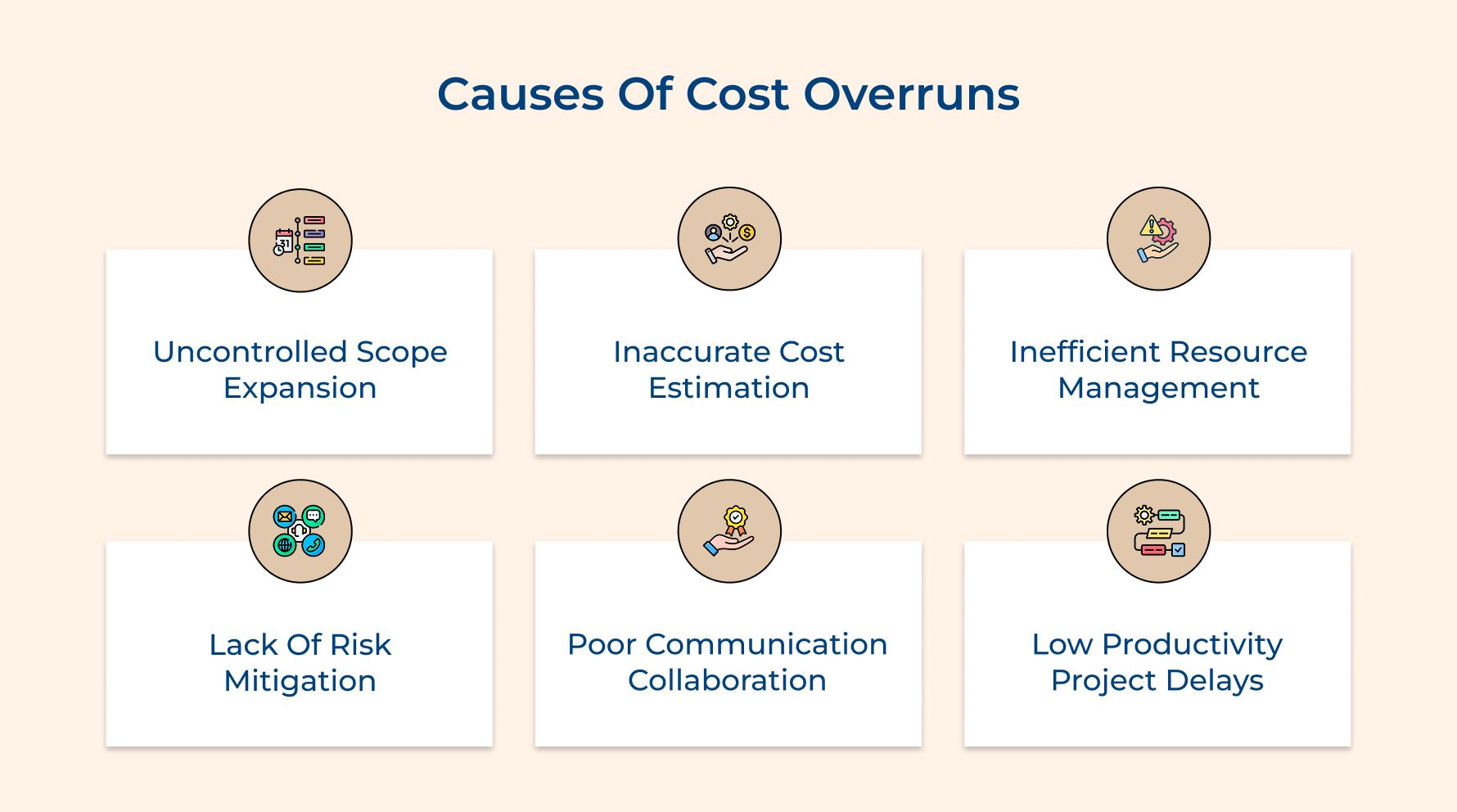
1. Uncontrolled Scope Expansion
Projects begin with clear goals, but clients often ask for extra features without adjusting the budget. These additions pile up and push costs beyond the original estimate. Teams then struggle to maintain quality while staying on track.
Common triggers of scope expansion:
- Client requests for new features mid-project
- Team suggestions made without cost checks
- Stakeholder demands for extra deliverables
When changes are accepted without proper project planning or documentation, scope creep becomes costly. The project grows bigger than the budget and deadlines allow.
2. Inaccurate Cost Estimation
Many projects fail because early cost estimates miss hidden challenges. Teams often underestimate time or overlook risks during planning. Optimism clouds realistic judgment.
Questions that expose weak estimates:
- Did we plan for system integration issues?
- Are timelines based on ideal conditions?
- Have we factored in technical roadblocks?
Poor estimates set false expectations and make projects financially weak from the start. Actual work quickly outgrows the unrealistic budget.
3. Inefficient Resource Management
Assigning the wrong people to tasks increases delays and labor costs. Senior staff waste time on routine work, while junior members struggle with complex tasks.
Resource mismanagement patterns to watch for:
- Skilled employees doing admin-level tasks
- Junior staff assigned to advanced technical work
- Too many people working on a task that needs one owner
Misaligned skills stretch project timelines, create rework and drain budgets. Labor costs rise when work takes longer than planned.
4. Absence of Risk Mitigation Strategies
Many projects move ahead without risk planning. Teams assume everything will run smoothly and skip creating contingency plans.
When unexpected problems appear, emergency fixes raise labor costs and disrupt other projects. Without risk strategies, teams pay more for last-minute solutions.
5. Poor Communication & Collaboration
When teams don’t share updates, miscommunication causes duplicated work and delays. Information silos also block progress and waste resources.
Key communication breakdowns:
- Gaps in status reporting
- Delayed decisions
- Conflicting approaches between departments
Poor collaboration leads to rework cycles that inflate labor costs. Time is wasted fixing misunderstandings instead of delivering results.
6. Low Productivity & Project Delays
Inefficient processes and frequent bottlenecks slow project delivery. Extended timelines require more resources, which increases labor costs and reduces profit margins.
Questions to keep productivity in check:
- Are milestone dates met without quality issues?
- Do team members know daily priorities?
- Are approvals causing unnecessary delays?
Each delayed week adds more salary costs and overhead, making projects far more expensive than planned.
Long-Term Consequences of a Cost Overrun
Cost overruns create ripple effects that extend far beyond simple budget adjustments and impact multiple stakeholders across the organization.
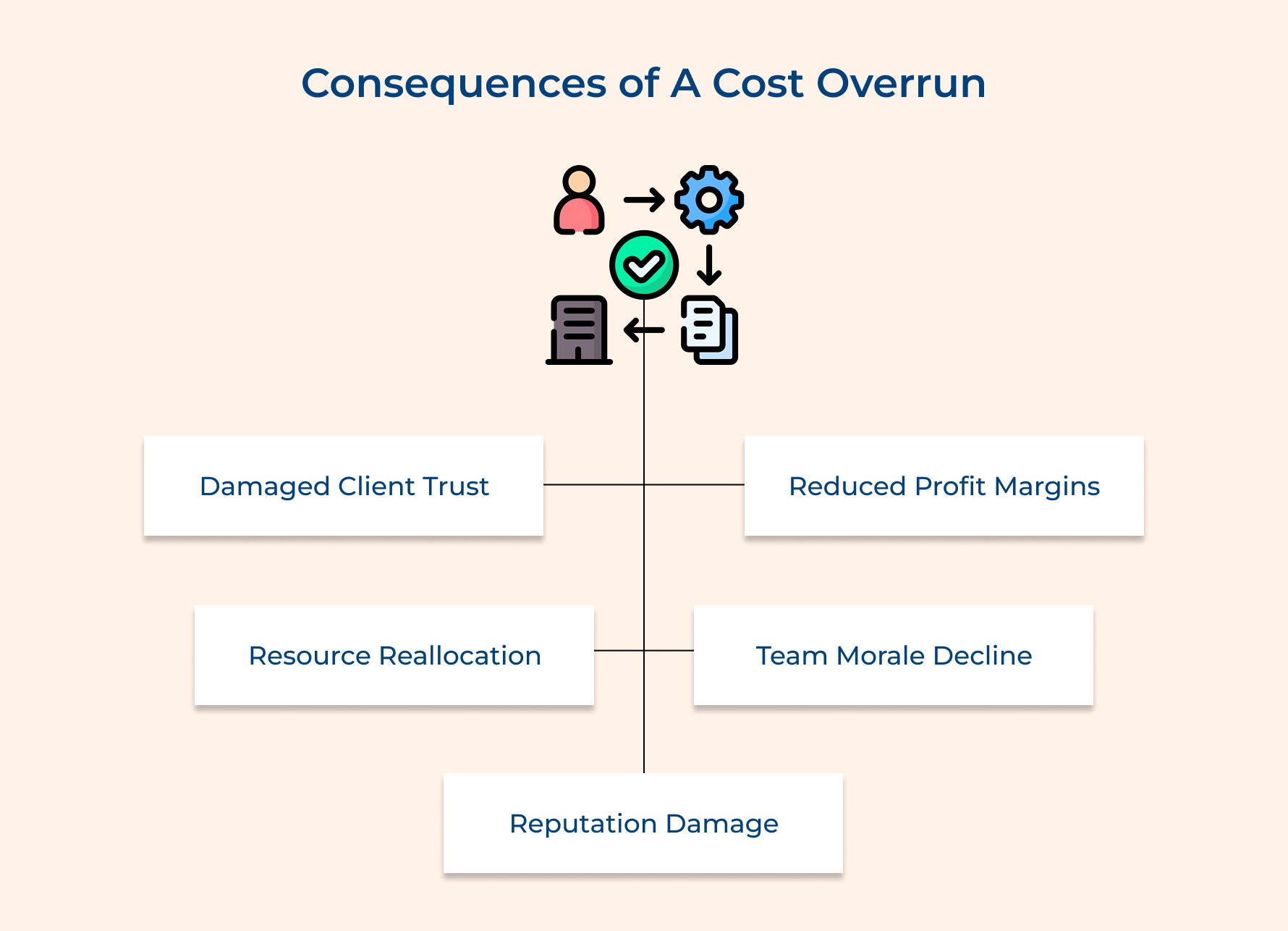
1. Damaged Client Relationships and Trust Erosion
When budgets go over, clients see it as poor project control. Trust that took years to build can disappear quickly if financial promises keep breaking.
2. Reduced Profit Margins and Financial Strain
Extra costs cut directly into profit margins. Companies often cover these overruns from other income, which limits funds for growth and staff development.
3. Resource Reallocation from Other Projects
Projects that overrun budgets need extra funding, usually taken from other initiatives. This delays multiple projects and disrupts overall portfolio planning.
4. Team Morale and Productivity Decline
Budget stress puts pressure on teams. When they feel blamed for issues outside their control, morale drops, mistakes increase and productivity suffers.
5. Reputation Damage in Competitive Markets
In competitive industries, word spreads fast about agencies that can’t control budgets. Poor reputation makes it harder to win clients, leaving price as the only lever.
8 Practical Tips to Prevent Cost Overruns in Project Management
Dive into these eight tried-and-tested strategies to keep your project within budget as well as on course.
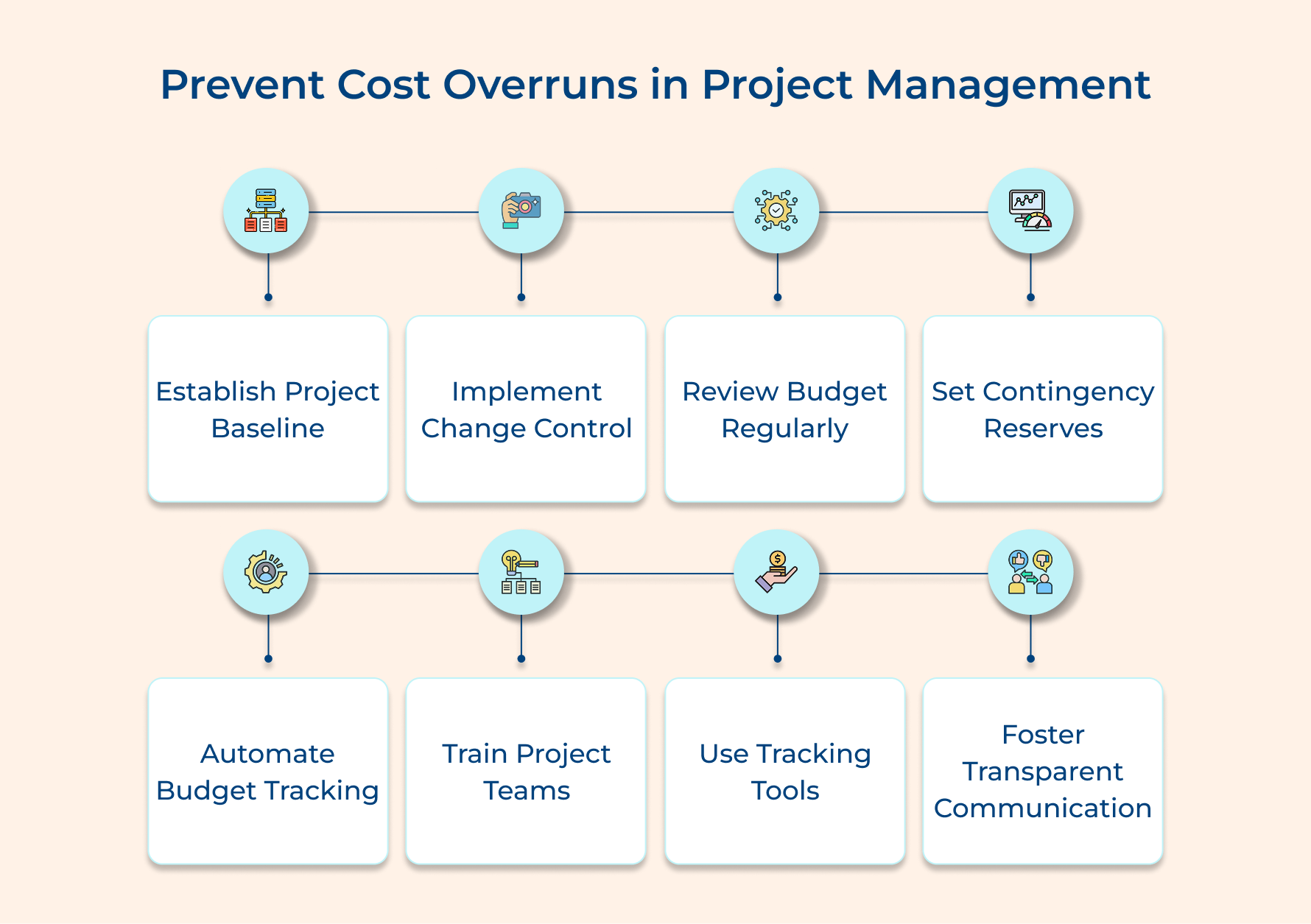
1. Establish Comprehensive Project Baseline Documentation
Project baseline documentation sets the foundation for cost control. It clearly defines what needs to be done and the approved budget. Without it, teams face hidden tasks and unplanned costs.
- Work breakdown structures: Break deliverables into smaller tasks with time and cost estimates.
- Assumption documentation: Record assumptions, dependencies and constraints that impact cost as well as time.
- Success criteria: Define measurable outcomes and acceptance standards to avoid scope creep.
Example: A software project listed 150 tasks and acceptance rules. When clients asked for extras, the team showed scope changes required more budget.
2. Implement Robust Change Control Processes
Change control ensures modifications are reviewed before affecting budgets. This prevents overruns by requiring financial checks for every request.
Key questions:
- Who can approve budget changes?
- What documents must support requests?
- How to assess cost impacts?
- How fast should reviews happen?
- How to share updates with teams?
Agencies can use standard forms, workflows in project tools and clear approval levels.
3. Conduct Regular Budget Monitoring Reviews
Regular reviews catch overspending early. Weekly budget meetings compare planned vs. actual spending and allow quick fixes.
Agenda items:
- Spending vs. budget
- Upcoming costs
- Risks that need action
- Tasks to fix variances
Variance reports explain budget differences and outline actions. This builds trust with clients while keeping projects on track.
4. Build Realistic Contingency Reserves
Contingency reserves act as financial safety nets. They cover unexpected costs without hurting scope or budget.
Steps to consider:
- Assess risks and their impact.
- Allocate percentages based on complexity.
- Separate reserves by category.
- Define approval levels.
- Document usage.
Example: A marketing agency kept 15% reserve for a website project. When API issues came up, reserves covered costs without client disputes.
5. Automate Budget Tracking and Reporting
Automation reduces errors and gives real-time visibility into spending. It helps catch deviations faster and saves admin time.
Examples:
- Expense capture: Import vendor invoices instantly.
- Dashboards: Auto-update budgets with visual indicators.
- Alerts: Trigger warnings at spending thresholds.
Automation turns budget control into a proactive system instead of reactive fixes.
6. Enhance Team Skills Through Training
Strong project planning depends on skilled teams. When people know how to estimate better, they create accurate budgets and avoid costly mistakes. Better skills also reduce wasted labor costs and rework.
Training helps team members spot risks early and use proven estimation methods that improve budget accuracy. Skilled teams also raise concerns quickly and suggest practical, cost-saving solutions.
Best practices:
- Train with real project planning scenarios your team faces instead of generic theory.
- Build mentorship programs where experienced staff guide new members through complex cost estimation.
7. Deploy Advanced Project Tracking Tools
Project tracking tools give real-time visibility into costs and progress. They help managers see budget issues early and stop overruns before they grow. This makes project planning more predictable and keeps labor costs under control.
Key factors to consider:
- Integration: Make sure the tool connects with accounting and time tracking systems.
- Real-time reports: Automatic updates reduce manual delays.
- Custom alerts: Notifications warn when costs pass set limits.
- Ease of use: Choose tools with simple interfaces teams will actually use.
Example: A consulting firm used tracking tools that imported timesheets and invoices automatically. The system alerted managers at 80% budget spend, giving them time to adjust scope.
8. Build Transparent Communication Culture Always
Open communication keeps project planning on track. When teams share problems early, agencies can fix issues before they affect labor costs or client relationships. Hidden problems only get worse over time.
Key questions to ask:
- How can we encourage reporting without blame?
- What meetings keep everyone aligned on project status?
- Who gets financial updates and how often?
- What channels work best for quick updates?
Alongside formal meetings, informal check-ins help team members feel safe sharing concerns. This culture builds trust and prevents last-minute budget surprises.
Examples of Cost Overrun in Project Management
These examples mentioned below give you an idea on how cost overruns develop across different industries and project types while revealing effective recovery strategies.
Website Redesign Project – Marketing Agency
A marketing agency’s website redesign project exceeded budget by 40% when the client requested additional e-commerce functionality mid-development. The team hadn’t documented scope boundaries clearly and accepted changes without proper impact assessment or budget adjustments initially.
The agency overcame this overrun by implementing formal change control processes and renegotiating the contract to include additional functionality. They presented detailed cost breakdowns showing how new requirements differed from original specifications and secured client approval for budget increases.
Software Development Project – Technology Startup
A mobile app development project faced 60% cost overrun when third-party API integrations proved more complex than estimated. The development team underestimated integration challenges and discovered compatibility issues requiring custom solutions as well as extended development time beyond original planning.
The startup addressed overruns by securing additional funding from investors and extending the project timeline strategically. They also brought in specialized integration experts to resolve technical challenges efficiently rather than continuing with inexperienced internal resources.
Marketing Campaign Launch – Advertising Agency
A digital marketing campaign exceeded budget by 50% when initial ad performance required additional creative development and platform expansion. The agency underestimated testing requirements and discovered their original creative concepts didn’t resonate with target audiences as expected.
The agency overcame overruns by demonstrating improved campaign performance metrics to justify additional investment from the client. They also streamlined creative production processes and negotiated better rates with media vendors to reduce future campaign costs significantly.
Prevent Project Cost Overrun With Kooper
Project management tools provide the systematic oversight and real-time monitoring capabilities that manual processes cannot deliver consistently. Without proper tools teams rely on spreadsheets and guesswork which inevitably miss early warning signs of developing cost overruns.
Kooper helps agencies prevent cost overruns through integrated time tracking, automated budget monitoring and predictive analytics that identify potential problems before they impact project profitability. The platform combines all essential cost control features into one comprehensive system for maximum effectiveness.
Limit time — not creativity
Everything you need for customer support, marketing & sales.

Shivank Kasera is part of the marketing team at Kooper, where he focuses on building content that helps agencies and service providers grow. With a keen interest in SaaS, operations, and scalability, he translates practical insights into actionable resources for business leaders.