7 Best Steps to Resource Planning for Multiple Projects
- What is Multi-Project Resource Planning?
- Benefits of Resource Planning Across Multiple Projects
- How to Plan Resources for Multiple Projects: 7 Strategic Steps
- Challenges in Resource Planning for Multiple Projects
- Multi-Project Resource Planning Tips & Best Practices
- Streamline Success with Seamless Project Resource Planning
- FAQs about Resource Planning for Multiple Projects

Key Highlights:
- Gain real-time resource visibility to allocate talent efficiently and avoid burnout with resource planning for multiple projects.
- Prioritize projects with clear frameworks to minimize conflicts and ensure optimal delivery using strategic resource planning for multiple projects.
- Implement flexible resource sharing and regular utilization reviews to boost productivity while maintaining consistent quality across multiple client engagements.
Managing resources across multiple client projects feels like solving a puzzle with constantly changing pieces. Your talented team members get pulled in different directions while deadlines loom and clients demand attention.
The question arises when you have to make sure your best people manage the work effectively and yet aren’t burnt out. How can you manage when projects are falling behind and profit margins are shrinking?
This comprehensive guide to resource planning for multiple projects provides proven strategies and practical frameworks. It transforms chaotic resource management into streamlined operations. You’ll discover step-by-step approaches that maximize team productivity while maintaining quality across your entire project portfolio.
What is Multi-Project Resource Planning?
Multi-project resource planning is the strategic coordination of people, skills and time across multiple client projects simultaneously. It ensures agencies have the right talent available when needed while maximizing billable hours and preventing resource conflicts.
Resource managers create a centralized view of all active and upcoming projects alongside team member availability as well as skill sets. They allocate resources based on project requirements, deadlines and individual capacity while building in buffer time for unexpected changes. The system continuously adjusts as projects evolve, new opportunities arise and team members become available. Thus, ensuring optimal resource utilization across the entire portfolio.
Primary objectives:
- Maximize billable utilization: Keep team members working on revenue-generating client work rather than sitting idle between projects.
- Prevent resource conflicts: Avoid double-booking talented individuals or having critical skills unavailable when projects need them most.
- Improve project delivery: Ensure projects have the right expertise at the right time to meet deadlines and quality standards.
- Enable strategic capacity planning: Identify when to hire new talent or when the agency can take on additional client work.
- Optimize profit margins: Balance junior and senior resources effectively to deliver quality work while maintaining healthy project profitability.
Benefits of Resource Planning Across Multiple Projects
Resource planning across multiple projects transforms how agencies operate and deliver value to clients.
Let’s first explore these foundational questions to understand the landscape. These questions help clarify your current planning approach and challenges:
- What visibility do you currently have into resource availability across all projects?
- How do you handle conflicting resource demands when multiple projects need the same expertise?
- What happens when unexpected scope changes or urgent requests disrupt your planned resource allocation?
- How do you measure and optimize resource utilization to ensure profitability across your project portfolio?
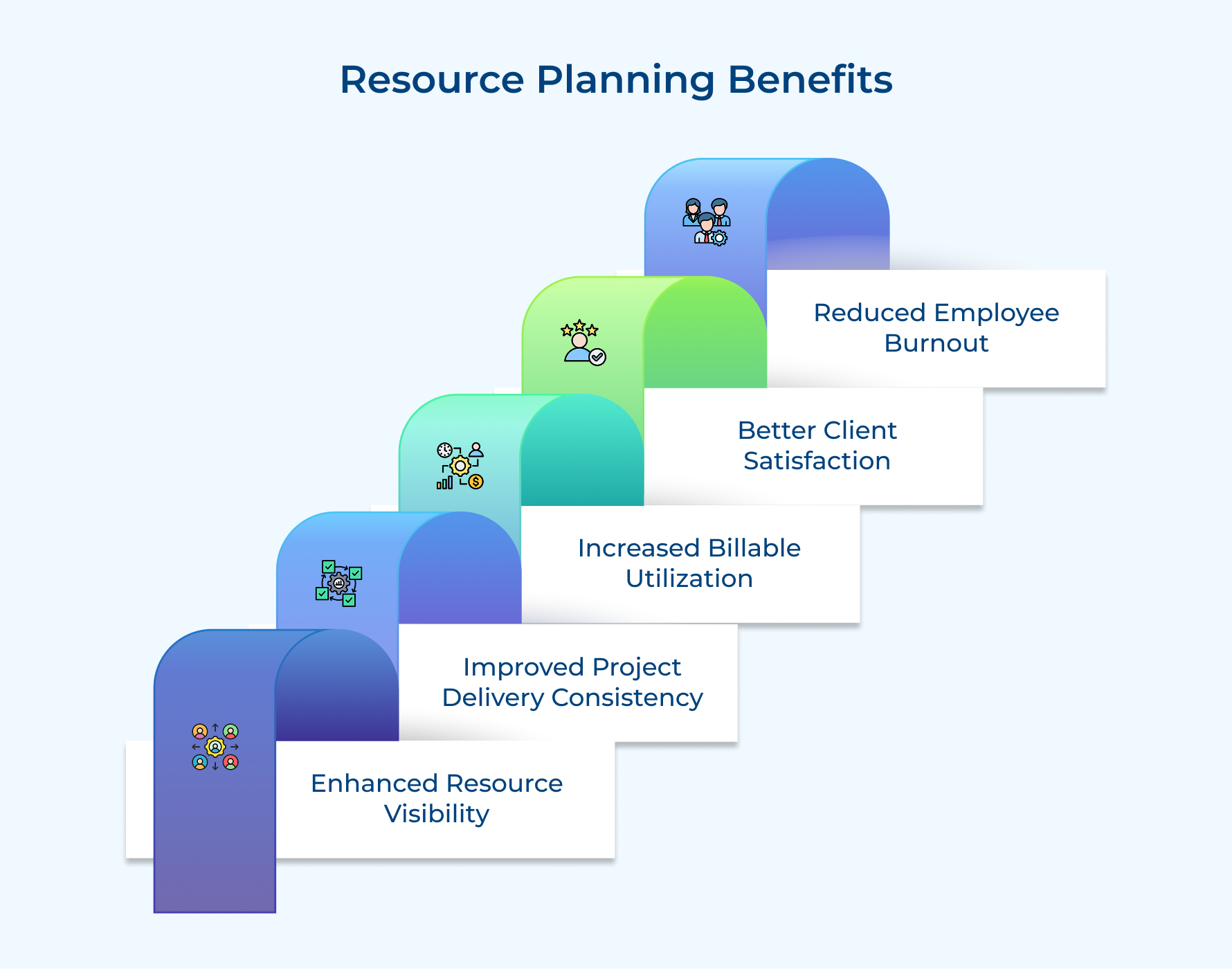
Enhanced Resource Visibility
Managers no longer have to guess who’s free or best suited for a task when they have a clear, real-time view of team availability and skillsets. It helps avoid overbooking and ensures no one gets overlooked when assigning important work.
Improved Project Delivery Consistency
Projects run more smoothly when the right people are assigned at the right time. This proactive approach means fewer last-minute scrambles, more on-time deliveries, and consistent quality across all client engagements.
Increased Billable Utilization
Smart resource planning keeps team members busy with work that actually brings in revenue. Instead of sitting idle between projects, everyone stays productive. Hence, helping the agency get more value out of every salary dollar spent.
Better Client Satisfaction
Clients get attention from the right experts without worrying they’re being pulled in multiple directions. When teams stay focused, deliverables improve and so do long-term client relationships.
Reduced Employee Burnout
When managers can see everyone’s workload clearly, they can spread tasks more evenly. This helps prevent burnout in high-performers while making sure no one’s left underused.
How to Plan Resources for Multiple Projects: 7 Strategic Steps
Planning resources across multiple projects can feel overwhelming, but it doesn’t have to be. Follow these seven steps to stay organized and efficient.
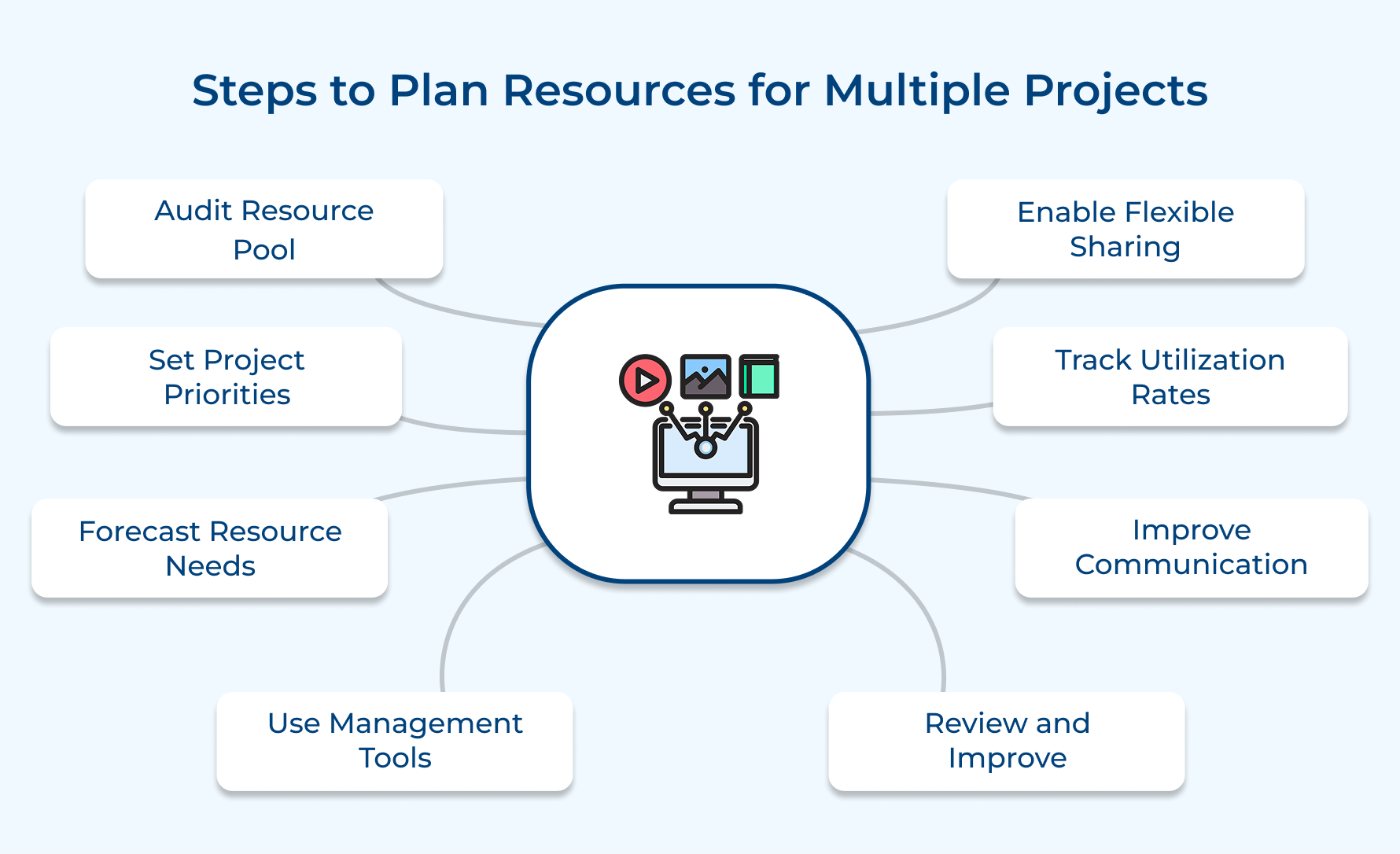
1. Audit Your Current Resource Pool
Before diving into project planning, take stock of what you’ve got. Auditing your current resources helps you set realistic expectations and avoid surprises later.
- Start with people: List out team members, their core skills, certifications, experience levels, and preferred work styles.
- Check availability: Record actual working hours, leave schedules, and current workloads. Don’t assume everyone is 100% available.
- Map skills: Build a skill matrix that connects people to their expertise and proficiency levels.
- Spot bottlenecks: Look for skills that are in high demand but in short supply, like having one motion designer across five projects.
Also consider the following
- Human resources: Your team members represent your primary asset including their skills, experience levels, availability and capacity for taking on additional responsibilities.
- Technical resources: The tools, software licenses, equipment and technology infrastructure that your team needs to complete their work effectively.
- Financial resources: Your budget allocation for salaries, contractor fees, tool subscriptions and other project-related expenses that impact resource availability.
- Time resources: The actual hours available for project work after accounting for meetings, administrative tasks, professional development and other non-billable activities.
2. Establish Clear Project Priority Framework
When multiple projects compete for the same people or tools, you need a fair system to decide who gets what. That’s where a project priority framework comes in.
- Create objective criteria: Rank projects based on value, urgency, strategic importance, client relationships, and revenue potential.
- Avoid guesswork: This framework helps you make consistent decisions without playing favorites or relying on gut feelings.
- Reduce conflict: Everyone understands why one project takes priority over another.
- Plan ahead: Use the framework during planning meetings so resource clashes don’t catch you off guard.
Pro tips:
- Don’t just focus on short-term revenue, consider long-term client value too.
- Revisit your framework every quarter so it stays aligned with business goals.
3. Forecast Resource Demands Across Portfolio
Once you know what you have and what matters most, forecast who you’ll need as well as when. Break it down clearly.
- Task breakdown: Split each project into deliverables and estimate time for each task.
- Skill match: Map what skills (and experience levels) are needed for each task – junior, mid, or senior.
- Timeline mapping: Identify which tasks can run in parallel and which are dependent.
Then, analyze:
- Peak periods: Spot when multiple projects need the same resources.
- Specialist overload: Flag roles with limited availability that could become bottlenecks.
- Deadline overlaps: Manage situations where clients expect deliverables around the same time.
Pro tip:
- Always include buffer time for scope creep or unexpected delays. A
- strong forecast prevents chaos and helps you shift resources proactively.
4. Invest in Resource Management Tools
Spreadsheets can only take you so far. The right tool makes managing dozens of projects and people way easier.
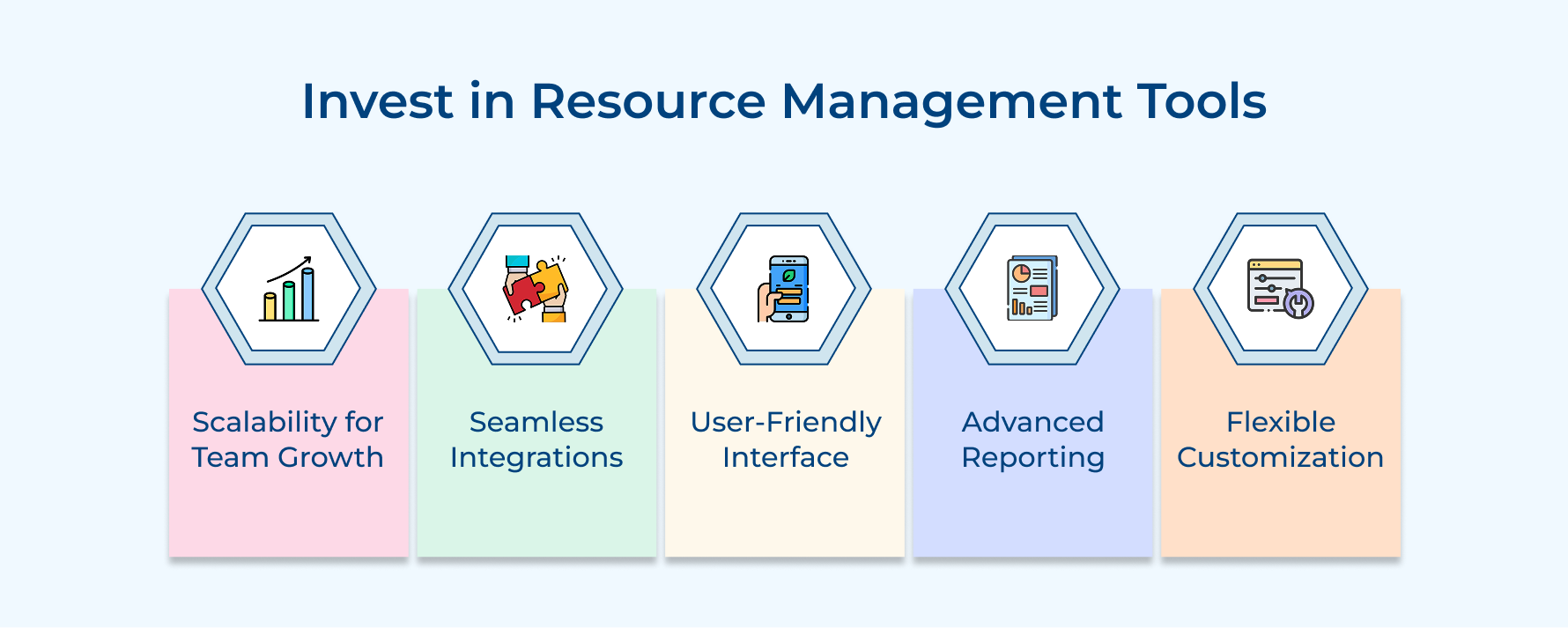
Look for tools with:
- Scalability: Can it grow with your team and project count?
- Integrations: Syncs with project management, time tracking, and finance tools.
- User-friendly interface: So your team actually uses it.
- Reporting: Offers visibility into utilization, availability, and allocation.
- Customization: Adapts to your workflows, not the other way around.
Yes, there may be resistance to new tools. Overcome it by:
- Involving team leads in the selection process.
- Offering training during rollout.
- Gradually phasing in usage.
A good tool gives you a bird’s-eye view, simplifies decisions and keeps everyone aligned, especially when juggling multiple projects.
5. Implement Flexible Resource Sharing System
To keep things moving, people need to be able to shift between projects without friction. Flexibility is key.
Ask yourself:
- When should someone switch projects?
- How much notice do project managers need?
- How will you handle handoffs and knowledge transfer?
- Which projects take precedence when resources are tight?
Then put it into practice:
- Host weekly resource syncs: PMs share who’s wrapping up and where help is needed.
- Track task milestones: Once someone finishes a phase on Project A, they can jump into Project B.
- Standardize documentation: Make handovers smoother with shared notes or checklists.
6. Monitor Utilization Rates and Adjust
Just because someone is busy doesn’t mean they’re productive. Track the right metrics to find the sweet spot.
Watch these metrics:
- Billable utilization rate: % of time spent on client work.
- Capacity utilization: How much of someone’s available time is used.
- Project profitability index: Are you making money after labor costs?
- Resource allocation efficiency: Are the right people working on the right things?
Also monitor:
- Team satisfaction: Burnout kills quality.
- Project quality: Are clients happy with results?
Then act:
- Host monthly reviews to spot overbooked or underused people.
- Adjust timelines or redistribute work as needed.
It’s sustainable, smart productivity that keeps your team happy and your clients satisfied.
7. Develop Cross-Project Communication and Coordination
Projects shouldn’t exist in silos. Communication across teams prevents surprises and keeps your whole operation running smoothly.
Here’s how to do it:
- Weekly resource alignment meetings: PMs discuss needs, overlaps, and upcoming challenges.
- Shared dashboards: Everyone can see project timelines, team assignments, and deadlines in one place.
- Cross-training programs: Help team members build skills outside their core role so they can fill gaps when needed.
This approach helps:
- Avoid last-minute conflicts over shared team members.
- Make informed decisions about shifting priorities.
- Keep delivery timelines consistent across all client work.
Strong coordination makes your agency more agile, reduces stress and helps everyone pull in the same direction – even when priorities shift.
8. Establish Continuous Improvement Review Cycle
Planning resources isn’t a one-time task, it’s an ongoing process. Regular reviews help you refine your approach, fix what’s not working, and stay ahead of problems.
Here’s how to build that cycle:
- Monthly retrospectives: Review what went well and where resource planning fell short across projects.
- Invite team input: Your people know where bottlenecks and inefficiencies happen, include them in feedback loops.
- Track improvement metrics: Monitor changes in utilization rates, project delivery timelines and employee satisfaction to see if your adjustments are working.
- Document lessons learned: Keep a running log of insights you can apply to future resource planning.
Pro tips:
- Rotate who leads the review to get fresh perspectives.
- Use real project examples to make it actionable and not just theoretical.
Challenges in Resource Planning for Multiple Projects
Resource planning for multiple projects presents unique obstacles that can derail even well-intentioned agencies and consultancies. Here’s how you need to identify and overcome the challenges.
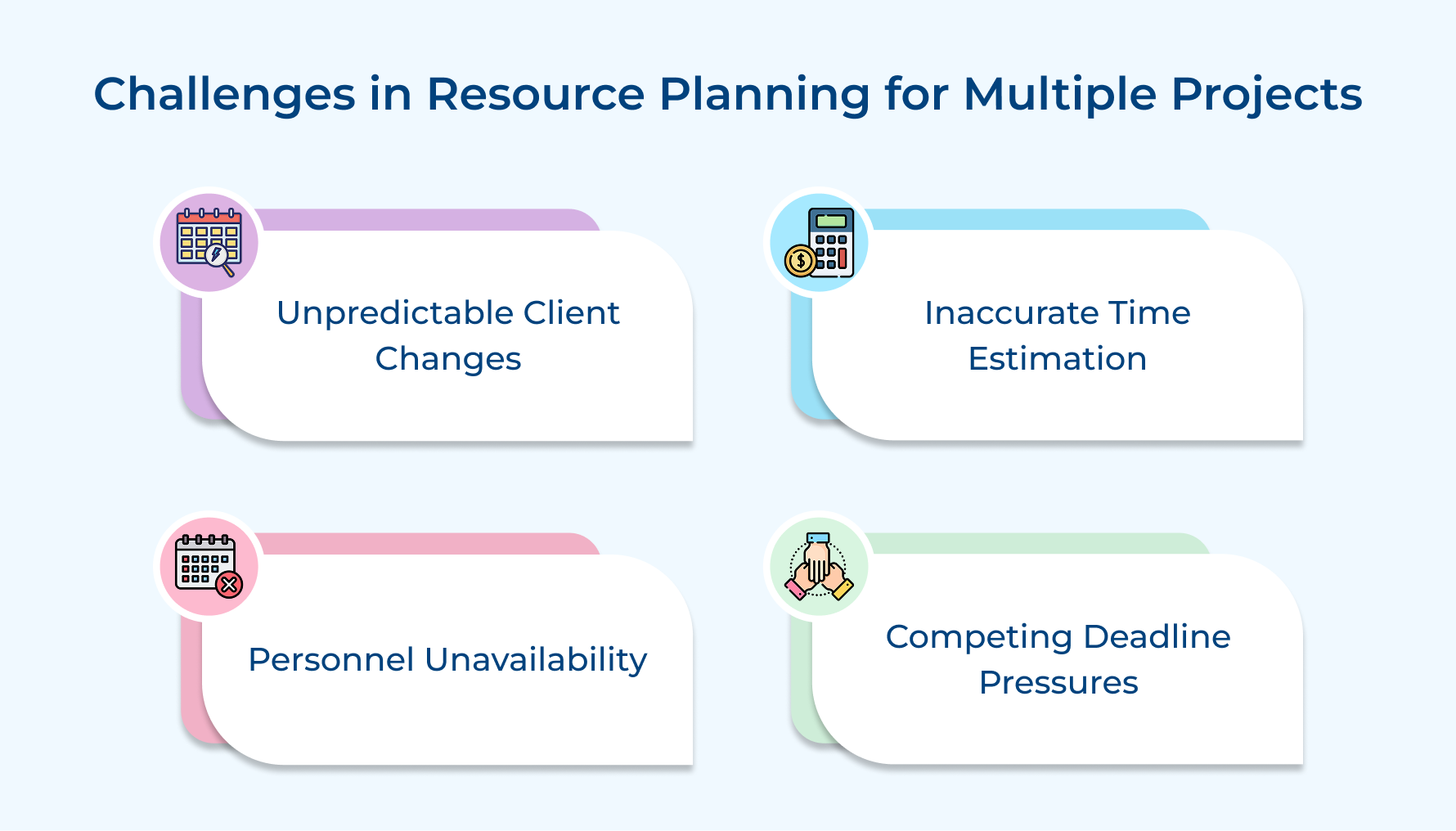
Unpredictable Client Scope Changes Mid-Project
Clients frequently request additional features or changes that weren’t part of the original scope, creating immediate resource conflicts across your portfolio. These unexpected demands disrupt carefully planned schedules and force you to scramble for alternative solutions.
Inaccurate Time Estimation Leading to Resource Overcommitment
Teams consistently underestimate how long complex tasks will take, especially when dealing with new technologies or unfamiliar client requirements. This optimistic planning creates a domino effect where multiple projects compete for overbooked resources.
Key Personnel Becoming Unavailable During Critical Project Phases
Your most skilled team members often become single points of failure when they take vacation, fall ill, or leave the company unexpectedly. The disruptions hit hardest during crucial phases where specialized knowledge is essential.
Competing Deadline Pressures from Multiple High-Priority Clients
Different clients all believe their projects deserve top priority, creating impossible situations where you must choose between disappointing important customers. The pressure intensifies when multiple projects hit critical phases simultaneously.
Here are five practical solutions to overcome these common resource planning challenges:
- Implement change request protocols that require formal approval and timeline adjustments before scope modifications take effect.
- Create detailed project templates based on historical data to improve estimation accuracy and reduce overcommitment risks.
- Develop cross-training programs that ensure multiple team members can handle critical tasks and reduce dependency on individuals.
- Establish clear client communication about realistic timelines and the impact of competing priorities on project delivery.
- Build contingency buffers into all project plans to absorb unexpected disruptions without derailing other concurrent projects.
Multi-Project Resource Planning Tips & Best Practices
Juggling resources across multiple projects can get messy fast. These tips and best practices will help you stay balanced, efficient as well as in control.
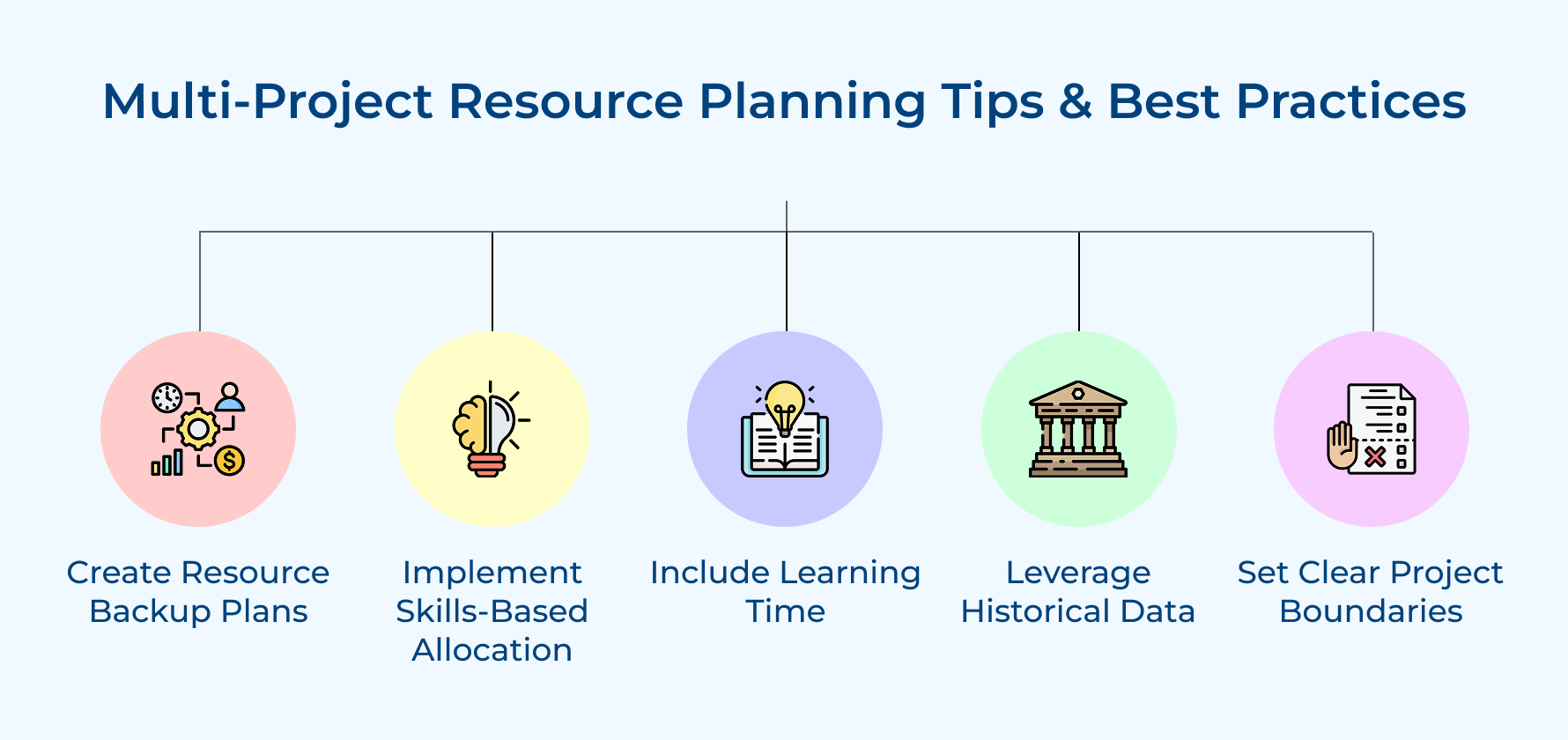
Create Resource Backup Plans for Critical Dependencies
Don’t rely on just one person for key roles. Identify backups in advance so projects stay on track even if someone’s unavailable. A simple contingency plan can turn a potential disaster into a minor hiccup.
Implement Skills-Based Resource Allocation instead of Person-Based
Assign tasks based on skills, not names. This makes resource planning more flexible and prevents bottlenecks. If multiple people can do the job, you can pivot quickly when availability changes or priorities shift.
Build Learning Time Into Resource Planning
Include dedicated time for upskilling in your resource plans. It strengthens your internal talent pool, reduces contractor dependence and helps your team grow in ways that support your agency’s long-term goals.
Use Historical Data to Improve Future Estimates
Track actual vs. estimated time for tasks. Over time, this data helps you forecast more accurately, avoid underestimating effort and make smarter resourcing decisions for similar projects in the future.
Establish Clear Boundaries Between Projects
Avoid spreading people too thin. Set clear rules for how much time team members can split between projects. Respecting focus and preferences helps maintain quality as well as team morale across all work.
Streamline Success with Seamless Project Resource Planning
Effective multi project resource planning transforms chaotic agency operations into orchestrated success stories. When you implement systematic approaches to resource allocation, forecasting and coordination, your teams deliver consistent results while maintaining healthy work-life balance.
The strategies and solutions outlined here provide your foundation for sustainable growth as well as client satisfaction. Remember that resource planning is an ongoing journey requiring continuous refinement, but the investment pays dividends through improved profitability and team morale.
Limit time — not creativity
Everything you need for customer support, marketing & sales.

Pooja Deshpande is a content contributor at Kooper, focused on creating insightful resources that help agencies and service providers scale efficiently. Passionate about SaaS trends, content strategy, and operational excellence, she delivers practical, easy-to-implement guidance for modern business leaders.