Project Management Framework Explained in 7 Efficient Steps
- What is a Project Management Framework?
- Key Components of Project Management Framework
- Project Framework vs. Project Methodology
- 7 Essential Steps to Build a Strong Project Management Framework
- Examples of Project Management Framework
- 5 Major Benefits of Following a Project Management Framework
- Transforming Plans into Performance with Robust Project Management Framework
- FAQs about Project Management Framework
Key Highlights:
- A project management framework standardizes processes, tools and methodologies for consistent project delivery as well as improved resource utilization.
- Key components include project lifecycle stages, control cycles, templates and multiple common project management methodologies.
- Implementing a well-designed project management framework enhances client satisfaction, boosts team productivity, reduces risks and supports rapid business growth.
Picture your agency juggling multiple client projects while team members constantly ask “What’s the next step?” and deadlines slip through cracks. Inconsistent project delivery creates frustrated clients and stressed teams working longer hours without improving results.
A framework without a structure leaves your agency in reactive mode, making every project feel like starting from scratch. This chaos leads to scope creep and missed deadlines while profitable opportunities slip away through poor resource management.
A well-designed project management framework transforms this disorder into predictable success patterns that boost profitability and client satisfaction. These seven proven steps will guide you through building a customized framework that fits your agency’s unique needs.
What is a Project Management Framework?
A project management framework is a structured system that defines processes, tools and methodologies for delivering client work efficiently. It provides standardized approaches for planning, executing and controlling projects while ensuring consistent quality as well as profitability.
The framework operates through defined phases that create predictable workflows for your team. Each phase includes specific deliverables, approval gates and resource allocation guidelines that keep projects on track. It transforms chaotic project execution into a repeatable system that clients can trust and teams can follow confidently.
Strategic priorities:
- Standardize delivery processes: Create consistent approaches that reduce variability and improve client experience across all projects.
- Improve resource utilization: Optimize team allocation and workload distribution to maximize billable hours as well as minimize downtime.
- Enhance project visibility: Provide clear status tracking and communication channels that keep stakeholders informed throughout the engagement.
- Accelerate team onboarding: Enable new hires to contribute quickly by following established workflows rather than learning everything from scratch.
Key Components of Project Management Framework
Every effective project management framework consists of four interconnected components that work together to create a cohesive system for managing client work and internal operations.
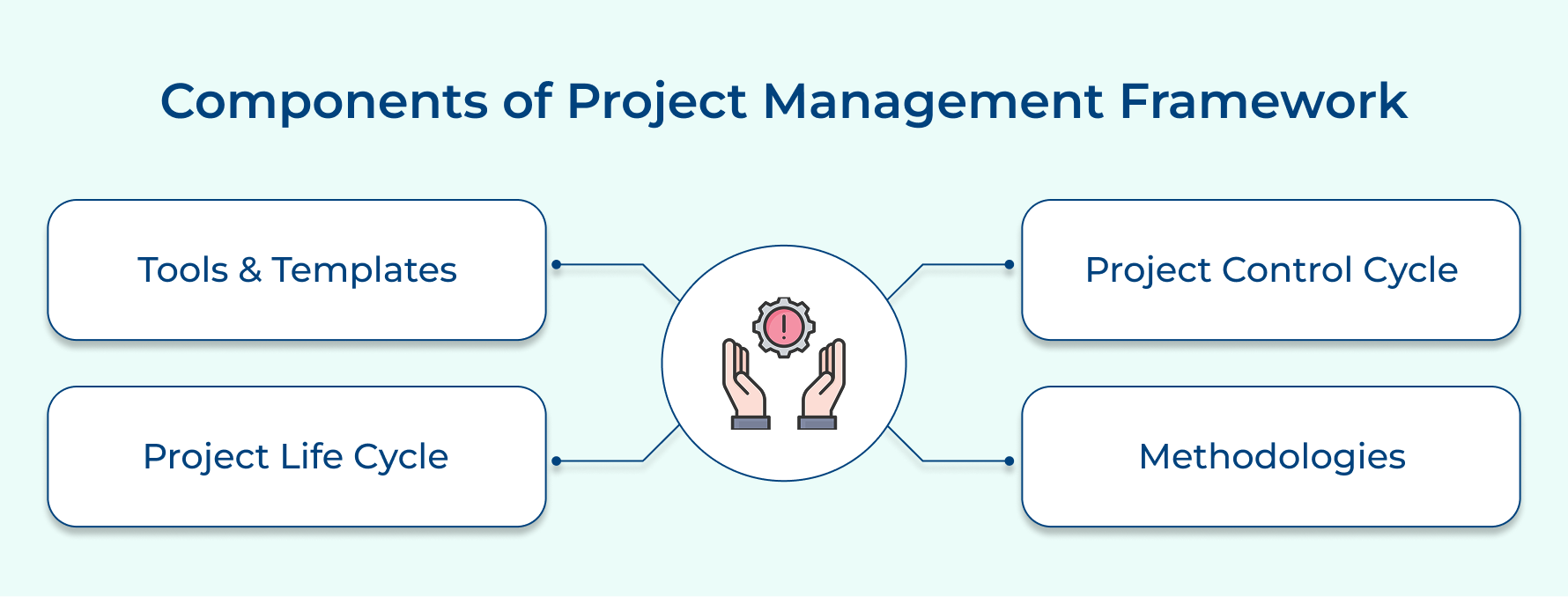
Tools & Templates
Tools and templates bring structure to daily project planning. Standardized documents like briefs and status reports, along with tools like time trackers as well as collaboration platforms, create consistency. They reduce guesswork, improve accuracy and help teams focus on key project deliverables while following proven workflows that support repeatable, scalable success.
Project Life Cycle
The project life cycle outlines the key phases from start to finish – initiation, planning, execution and project closure. Each phase has clear objectives and deliverables, helping teams understand progress as well as prepare for what’s next. This structured roadmap keeps everyone aligned and ensures that nothing is missed along the project journey.
Project Control Cycle
The project control cycle keeps your plans on course. It includes regular check-ins, reviews and real-time adjustments based on performance data. This ensures that progress matches the original project planning goals. It’s essential for delivering high-quality project deliverables while keeping your team responsive, efficient and focused on key priorities.
Methodologies
Methodologies shape how projects get done. The Waterfall Methodology offers a step-by-step approach, while Lean Methodology removes waste and improves efficiency. Agile fits well for fast, flexible work. Each supports different project types and helps define the Work Breakdown Structure, guiding teams to execute with clarity as well as consistent results.
Project Framework vs. Project Methodology
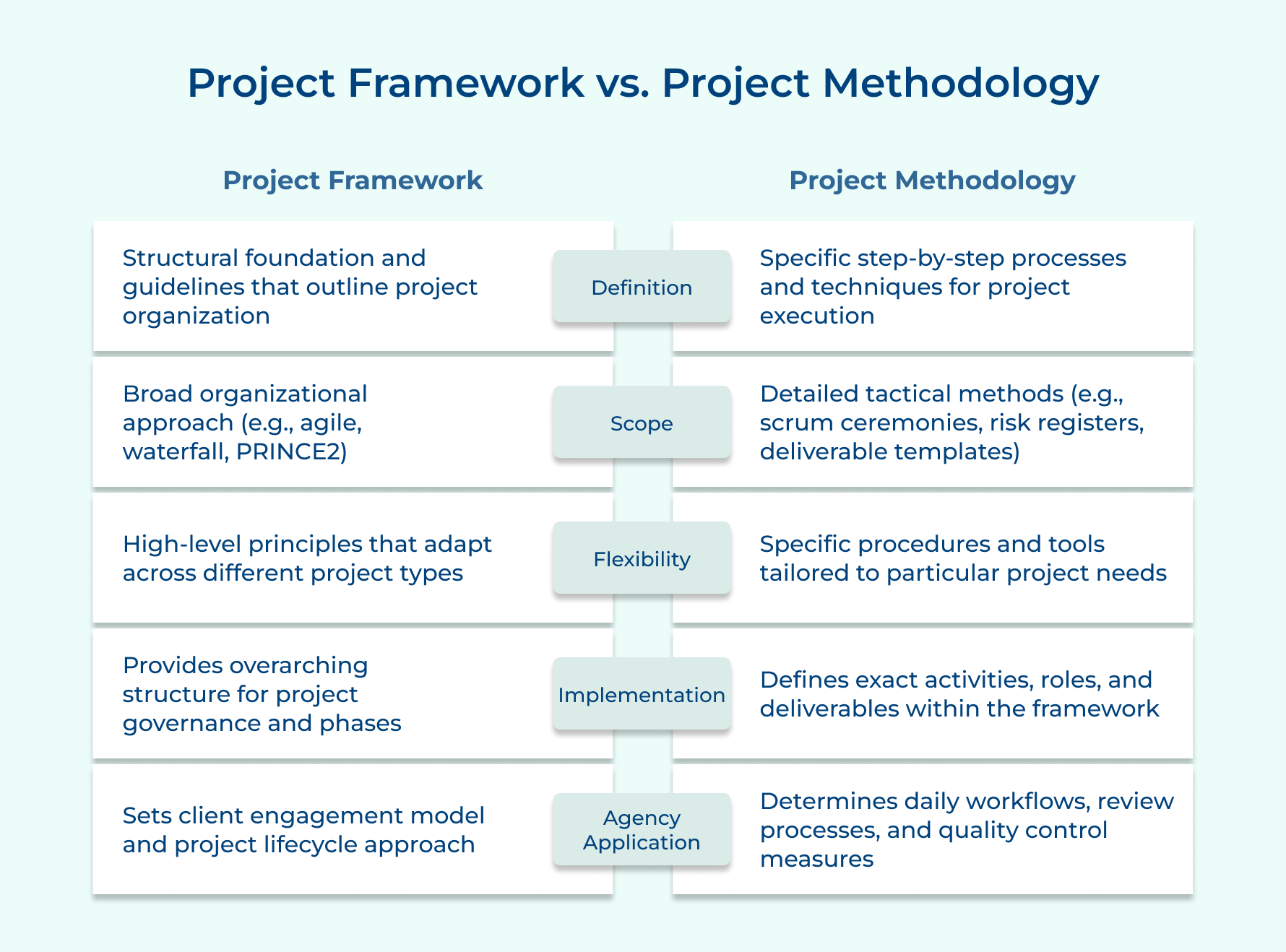
Understanding the distinction between frameworks and methodologies is crucial for selecting the right approach for your agency’s unique needs.
Definition and Purpose
Consider the project framework as the architectural blueprint for your agency’s project management approach. It establishes the foundational principles and governance structures that guide how projects should be conceived as well as controlled across your organization.
A project methodology represents the specific construction techniques and detailed procedures your teams follow to build each project. It provides the exact steps and tools needed to move from initial requirements gathering through final delivery along with client handoff.
Flexibility and Adaptability
Project frameworks offer agencies the freedom to adapt their approach based on client needs and project complexity. You can modify processes while maintaining consistent quality standards and organizational alignment across different engagement types as well as team configurations.
Methodologies require teams to follow predetermined sequences and deliverables that have been tested over time. The structured approach ensures predictable outcomes but may feel restrictive when dealing with unique client requirements or innovative project types.
Scope and Application
Frameworks operate at the organizational level and influence how your agency approaches portfolio management as well as resource allocation. They establish the governance principles that ensure all projects align with business objectives and maintain consistent quality standards.
Methodologies focus on individual project execution and provide tactical guidance for specific phases of work. They define how teams should collaborate and what artifacts should be produced during each stage of the project lifecycle.
Implementation Approach
Project frameworks serve as customizable foundations that agencies can tailor to their specific industry focus and client base. You can incorporate elements from multiple frameworks while maintaining consistency with your organizational culture and operational preferences.
Methodologies demand adherence to established rules and sequences that have been proven effective through extensive testing. Teams must follow the prescribed approach to achieve the intended benefits and maintain compatibility with supporting tools as well as processes.
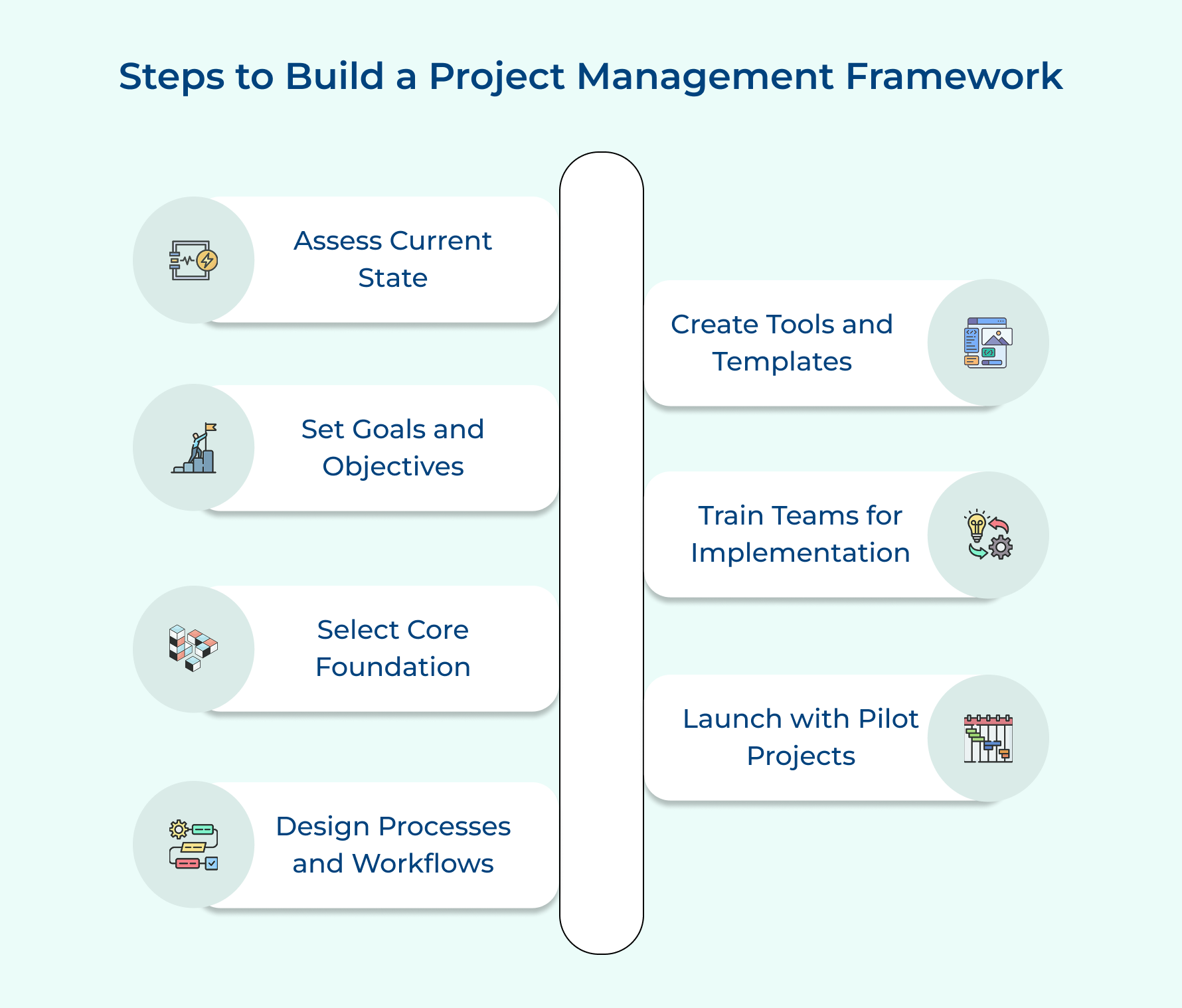
7 Essential Steps to Build a Strong Project Management Framework
In this article, we will outline seven essential steps to help you construct a practical and effective project management framework tailored to your team’s needs.
1. Assess Current Project Management State
Before you build something new, it’s smart to figure out what’s already working and what’s not. A proper assessment gives you a real picture of how your agency currently runs projects, so you don’t end up creating a framework that fixes the wrong things.
Here are three easy ways to get started:
- Document review: Look through contracts, status reports and existing project plan docs. Spot recurring issues and note where workflows break down.
- Team interviews: Chat with your project managers and team members. Ask about daily headaches, unclear steps, or missed handoffs in project management framework.
- Real-world insight: A digital agency once found five different approval methods in use. That kind of inconsistency delayed projects and annoyed clients.
Taking the time to understand your current landscape helps you design smarter solutions tailored to real issues.
2. Define Framework Goals and Objectives
Let’s be honest: frameworks fall flat without clear goals. You need more than a good idea, you need measurable outcomes that give your new system direction and purpose. Otherwise, it’s just a set of management plans collecting dust.
Ask yourself these five questions to set a strong foundation:
- What project outcomes do we want to improve most?
- How will we measure success once this framework is in place?
- Which issues are causing daily slowdowns?
- What parts of the client experience need an upgrade?
- How will this support our agency’s long-term growth?
Once you’ve nailed the goals, align them with your business strategy. Your framework should boost both revenue and efficiency while reinforcing your market position.
Be realistic about timelines. Try a phased approach:
- 3–6 months: Document key processes and train your core team.
- 6–12 months: Launch pilots and gather feedback.
- 12–18 months: Expand and refine with ongoing updates.
3. Choose Your Core Framework Foundation
Choosing your core project management framework is a big deal, it shapes how your agency views and talks about project work. The right choice becomes your operational backbone and affects everything from project management processes to client expectations.
Here are four key criteria to guide your decision:
- Industry fit: Your framework should reflect how you serve clients. Don’t force a tech-focused model onto a creative agency.
- Team readiness: Pick something your team is already familiar with to reduce training time and speed up adoption.
- Client compatibility: Make sure the language and structure align with how your clients think about projects as well as reporting.
- Scalability: Choose a framework that works for both small retainers and multi-phase engagements.
Often, a hybrid approach works best. Blend methodologies that solve your biggest challenges and ensure they don’t clash. Integration is key – design them to complement, not compete.
4. Design Custom Processes and Workflows
Here’s where your framework becomes something real. Custom processes and workflows translate big-picture thinking into step-by-step guidance your team can use every day. This is your playbook – the operational system that supports consistent delivery, no matter who’s leading the project management framework.
These workflows:
- Help teams make decisions confidently, without needing constant oversight
- Standardize quality, even across different project types and teams
- Give new hires a fast track to being productive
To design them effectively:
- Map out when clients need updates or approvals and build around those key touchpoints
- Create adaptable procedures that work across different services while preserving quality
Well-designed workflows eliminate confusion and ensure your project plan isn’t just theoretical, it’s executable from day one.
5. Develop Supporting Tools and Templates
Your framework won’t stick unless your team has the tools and templates to bring it to life. They turn documentation into usable, day-to-day assets across all your Project Management Office efforts.
Here’s what you’ll want to include:
- Project dashboards: Real-time tracking for status, resources and milestones
- Time tracking tools: For capturing billable hours and ensuring accurate budget forecasting
- Communication platforms: Keep updates and collaboration flowing without silos
One consulting firm cut client check-in calls by 60% just by using a custom dashboard, proof that tools make a difference.
As for templates, start with:
- Project charter templates: Capture scope, goals and stakeholder roles
- Risk assessment templates: Spot and plan for possible issues early
- Resource allocation templates: Assign people based on skills and capacity
These tools and templates don’t just save time, they help your team stay consistent as well as confident from kickoff to completion.
6. Train Teams on Framework Implementation
Even the best framework fails if no one knows how to use it. Training is how you turn documents into action, helping your team work smarter.
Here are training methods that work:
- Workshops: Get teams hands-on with real scenarios
- Mentorships: Pair new members with experienced pros
- Online Modules: Great for flexibility and on-demand learning
- Simulations: Practice with live cases before going client-facing
Why is this so crucial? Because people don’t just need to know the rules, they need to know how to apply them in real life. Like learning to drive, they need time behind the wheel, not just a manual.
Support ongoing learning with quick guides, FAQs and video demos. That way, when challenges pop up mid-project, your team can solve them fast without waiting for formal training to catch up.
7. Launch Framework with Pilot Projects
Ready to test your framework? Pilot projects are your safest way to do that. They let you see how well your new processes work in the real world before rolling them out across every client and project.
Think of pilots as dress rehearsals. You learn what’s clunky, what’s smooth and what needs reworking without putting key clients or revenue at risk.
To get the most from your pilot:
- Choose clients or projects that give you room to experiment
- Capture wins and setbacks so you can adjust confidently
- Document lessons learned and build an improvement roadmap
The goal here isn’t perfection, it’s learning. By refining your framework before a full launch, you build something that works under pressure and delivers real value across your entire Project Management Office.
Examples of Project Management Framework
These six frameworks represent the most widely adopted approaches that agencies use to structure their project delivery and client engagement processes.
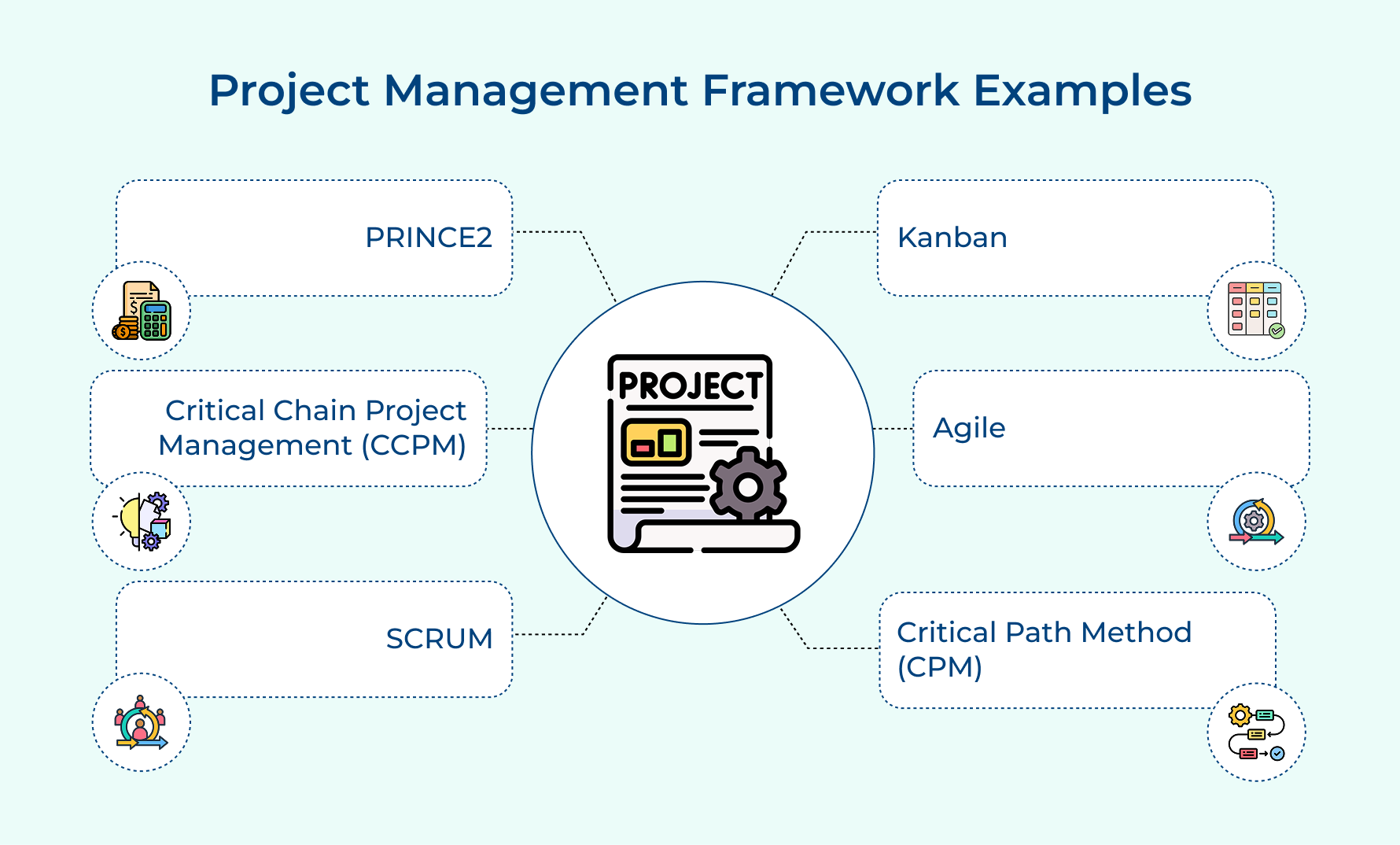
PRINCE2 (Projects in Controlled Environments)
PRINCE2 provides a structured approach with defined roles and stage-based progression that emphasizes business justification throughout the project lifecycle. This framework focuses on dividing projects into manageable stages with clear decision points and governance structures.
Pros:
- Clear accountability through defined roles like Project Manager, Project Executive and Senior User.
- Strong governance with regular stage reviews and business case validation throughout project duration.
Cons:
- Heavy documentation requirements that can slow down fast-moving agency projects and client deliverables.
- Rigid structure that may not suit creative or innovative projects requiring flexibility and rapid iteration.
PRINCE2 works exceptionally well for large consulting engagements with multiple stakeholders where clear governance and formal reporting structures are essential for project success.
Critical Chain Project Management (CCPM)
Critical Chain Project Management focuses on resource constraints rather than task dependencies to manage project schedules and delivery timelines effectively. The approach emphasizes buffer management and resource leveling to prevent bottlenecks that typically cause project delays.
It helps in improving resource utilization by identifying and managing the most constrained resources across multiple concurrent projects. Reduced project duration through strategic buffer placement that protects critical paths from common delays
CCPM excels in professional services firms managing multiple concurrent projects with shared resources where bottlenecks frequently cause delays and cost overruns.
SCRUM
SCRUM organizes work into fixed-length sprints with defined ceremonies that promote collaboration and rapid iteration through regular feedback loops. This framework emphasizes self-organizing teams and frequent delivery of working solutions to clients throughout the engagement.
Pros:
- High client satisfaction through regular demonstrations and feedback incorporation that ensures final deliverables meet expectations.
- Adaptive planning that allows teams to respond quickly to changing client requirements and market conditions.
Cons:
- Requires significant client involvement as well as availability for regular meetings and feedback sessions throughout project duration.
- Can struggle with fixed-scope contracts where clients expect detailed upfront specifications and predictable deliverables.
Kanban
Kanban is a visual project management framework that uses boards to track work items as they move through clearly defined stages, from initial request to final delivery. It focuses on maintaining a steady flow by limiting work-in-progress, which helps teams stay productive without feeling overwhelmed.
Kanban is especially effective for marketing agencies and creative teams that manage ongoing client requests with shifting priorities. It brings clarity, balance and efficiency to fast-paced environments where deadlines along with deliverables constantly evolve.
Critical Path Method Project Management Framework (CPM)
CPM identifies the longest sequence of dependent activities that determines minimum project duration and focuses management attention on critical tasks. It uses network diagrams to visualize task dependencies and calculate float time for non-critical activities.
Pros:
- Precise schedule management through mathematical calculations that identify exactly which tasks can be delayed without affecting deadlines.
- Efficient resource allocation by clearly distinguishing between critical tasks requiring immediate attention and flexible activities.
Cons:
- Time-intensive planning phase requiring detailed task analysis and dependency mapping before project work can begin.
- Poor handling of uncertainty since the framework assumes fixed task durations and dependencies throughout project execution.
CPM excels in construction consulting and engineering services where task sequences are well-defined as well as accurate scheduling is critical for project success.
5 Major Benefits of Following a Project Management Framework
Using a project management framework brings structure and clarity to complex work. Let’s explore how it benefits business in the long run.
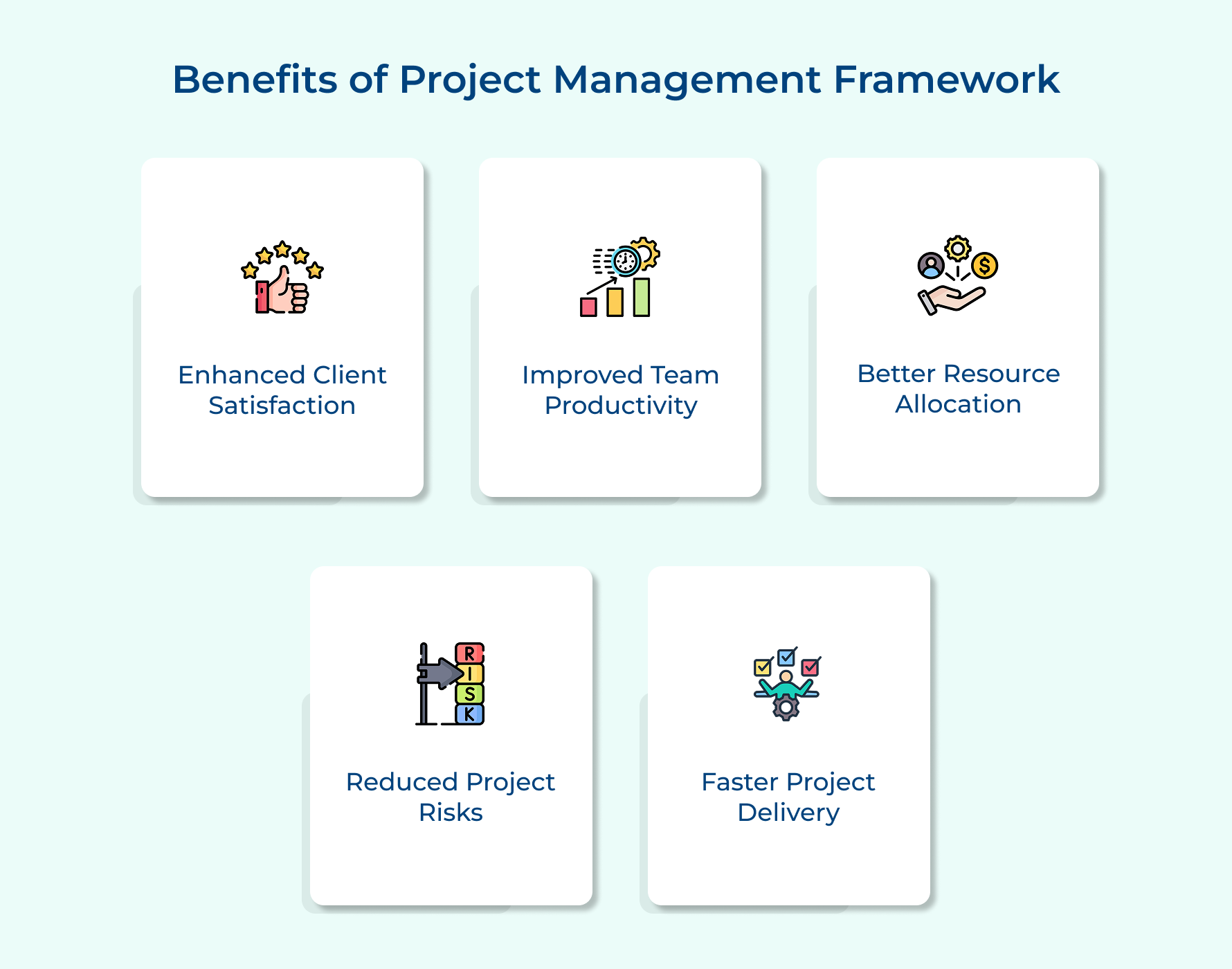
Enhanced Client Satisfaction
A good project framework makes it easier to keep clients in the loop. With regular check-ins as well as transparent updates at every phase, clients feel confident knowing what’s happening and what’s next. This level of communication strengthens trust and takes the stress out of wondering where things stand, key to great stakeholder management.
Improved Team Productivity
When your team follows a consistent process, there’s no time wasted figuring out who does what next. Everyone knows the plan, so they can dive right into meaningful work. It cuts down on decision fatigue and lets people focus on what they do best, especially helpful in fast-paced or hybrid project management setups.
Better Resource Allocation
Frameworks give you a clear view of upcoming work and who’s available to handle it. With that foresight, you can plan ahead and balance workloads before things get too heavy. No more last-minute scrambles or burned-out teams, just smoother operations and smarter use of your resources.
Reduced Project Risks
A good framework includes built-in checkpoints that act like early warning signals. Instead of reacting to last-minute surprises, your team can spot risks early and fix issues before they get expensive. It’s about staying in control and avoiding chaos, one of the biggest wins in stakeholder management.
Faster Project Delivery
When your team uses the same tried-and-true processes every time, things move faster. You’re not reinventing the wheel with each project and you avoid unnecessary delays. Familiar workflows reduce bottlenecks and make it easier to deliver quality work on schedule, especially when using hybrid project management methods.
Transforming Plans into Performance with Robust Project Management Framework
Project management frameworks serve as the operational backbone that transforms chaotic project execution into predictable success patterns for professional services firms. Without structured approaches agencies struggle with inconsistent delivery quality and unpredictable outcomes that erode client confidence.
These frameworks directly improve profitability through better resource utilization and scope control while enhancing operational efficiency through standardized processes. Strong frameworks also elevate client engagement by providing transparent communication channels and reliable delivery experiences that build lasting partnerships.
Limit time — not creativity
Everything you need for customer support, marketing & sales.

Pooja Deshpande is a content contributor at Kooper, focused on creating insightful resources that help agencies and service providers scale efficiently. Passionate about SaaS trends, content strategy, and operational excellence, she delivers practical, easy-to-implement guidance for modern business leaders.