Effective Capacity Planning Strategies for Growing Teams
- What are Capacity Planning Strategies?
- Benefits of a Good Capacity Planning Strategy
- How to Implement a Capacity Planning Strategy in 6 Quick Steps
- 4 Types of Capacity Planning Strategies with Examples
- 6 Best Practices for Capacity Planning Strategy to Consider
- Important Metrics to Measure the Effectiveness of Capacity Planning Strategy
- Maximize Efficiency and Minimize Waste with Strategic Capacity Planning
- FAQs about Capacity Planning Strategies
Key Highlights:
- Capacity planning strategies minimize overstaffing and underutilization while ensuring timely project delivery along with team efficiency.
- Capacity planning drives smarter project staffing, reduces burnout and aligns your team’s skills with real-time business needs.
- Get step-by-step guidance on building a strategic capacity plan to boost utilization and reduce operational costs.
Project managers in agencies and professional services know the struggle. If you get resource planning wrong, you either burn cash or burn out the team. Too many people on the bench drains your budget. Too few? You miss out on big opportunities and let clients down.
When there’s no solid capacity planning in place, you’re constantly scrambling, rushing to fill roles during crunch time or stuck paying full salaries during slow spells. It’s stressful, unpredictable and pushes your best talent to look for more stable jobs.
That’s where capacity planning strategies make all the difference. With smart approaches like lag, lead, or hybrid strategies, you can turn chaotic staffing into a predictable system that protects your margins.
What are Capacity Planning Strategies?
Capacity planning strategies are systematic approaches that help organizations predict and allocate their human resources effectively across current as well as future projects. These strategies balance available talent with project demands while considering skills and timing constraints.
The process starts by mapping out existing team members and their skills alongside upcoming project requirements. Managers then identify gaps where demand exceeds supply and create action plans to address these shortfalls. This ongoing cycle helps organizations stay ahead of resource challenges rather than scrambling to solve them reactively.
Primary objectives:
- Resource optimization: Maximize utilization of existing team members while avoiding burnout and overallocation across multiple projects.
- Revenue protection: Ensure sufficient skilled resources are available to deliver contracted work and maintain client relationships without delays.
- Strategic workforce planning: Identify when to hire new talent or develop existing team members to meet anticipated future demands.
- Risk mitigation: Create contingency plans for resource shortfalls and establish backup options when key team members become unavailable.
Benefits of a Good Capacity Planning Strategy
A solid capacity planning strategy helps agencies make smarter decisions by using real-time data to align resources with demand. It results in improved efficiency, higher customer satisfaction and stronger project outcomes.

Enhanced Project Delivery Predictability
When you have a clear view of who’s available and when, your team can commit to realistic deadlines and scope. No more guessing or last-minute scrambles, projects flow smoothly because the right people are in place from the start. With the help of capacity planning tools, your delivery becomes more predictable and stress-free.
Improved Client Satisfaction and Retention
A smart capacity strategy ensures that the right experts are assigned to the right tasks at the right time. That means fewer delays, fewer team reshuffles and more consistent results. Clients notice this kind of dependability and that’s what turns one-off jobs into long-term partnerships.
Reduced Employee Burnout and Turnover
Burnout drops when managers spot overload before it happens. Balanced workloads lead to higher team morale, better engagement and improved retention. Good capacity utilization respects employees’ time and strengths, so people stay as well as thrive.
Increased Revenue and Profit Margins
Proper planning lets you take on profitable work without stretching your team thin. Senior talent is assigned to high-value projects, not patching gaps. It results in better billing, fewer surprises and lower operational costs across the board.
How to Implement a Capacity Planning Strategy in 6 Quick Steps
Successfully implementing capacity planning requires a systematic approach that builds understanding before action.
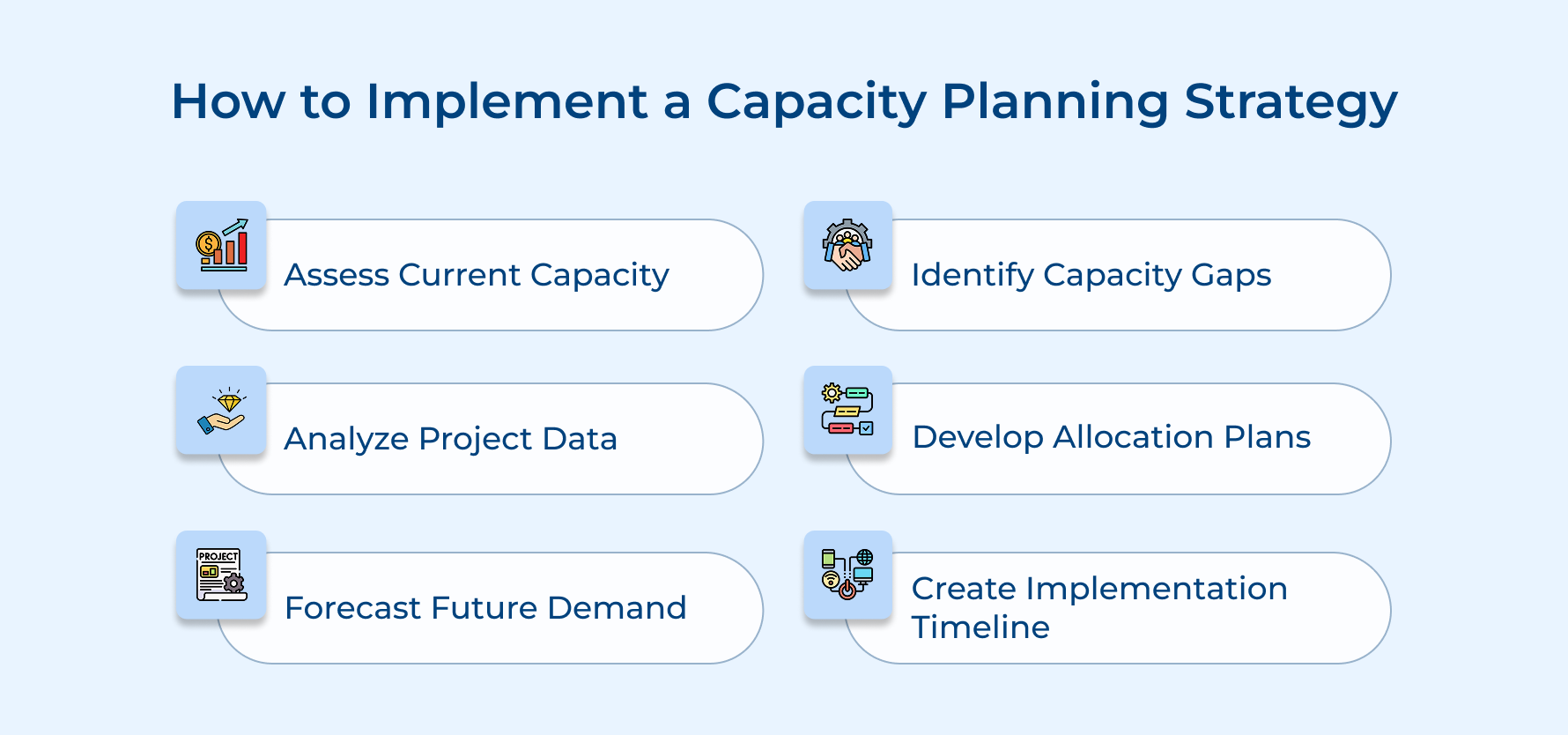
Step 1: Assess Current Resource Capacity
Before you plan ahead, take a good, honest look at what you already have. Think of it like inventory management. But instead of tracking products, you’re auditing your people.
Ask yourself:
- What specialized skills do team members have that aren’t obvious from their job titles?
- How much of their time is actually available for client work vs internal tasks?
- Who has leadership potential you haven’t tapped into yet?
Map out current workloads, utilization rates and skill sets just like you would on a production line. This gives you a real picture of where you’re stretched too thin and where you have breathing room.
Step 2: Analyze Historical Project Data
Your history is packed with insights, so pull up those old project files and look for patterns. It’s like reverse-engineering your supply chain management process to improve the next cycle.
Focus on:
- How long different types of projects usually take
- Which roles or skills get used the most
- When client demand tends to spike or slow down
Also, take note of projects that ran over budget or missed deadlines and dig into why. These lessons will shape smarter, more accurate future plans.
Step 3: Forecast Future Demand
Now it’s time to peer into the future. This is about using sales pipeline data and market signals to forecast demand, much like retailers plan around inventory management systems.
Here’s what to include in your forecast:
- Confirmed projects and high-probability opportunities
- Seasonal trends that affect demand
- Economic conditions that may shape client spending
The goal is to avoid getting caught off guard and ensure you’re never scrambling last-minute for people.
Step 4: Identify Capacity Gaps
Once you know what’s coming and what you’ve got, the next step is comparing the two. Where are the shortfalls in your production line of talent?
To guide your analysis, ask:
- Which shortages could delay current client work?
- What happens to your competitive edge if you can’t fix them soon?
- Can you close some of the gaps with cross-training or outside partners?
Prioritize gaps that have the biggest impact on revenue or client satisfaction and don’t just default to hiring. Sometimes a freelancer or tech partner does the trick.
Step 5: Develop Resource Allocation Plans
Now that you know the gaps, decide how you’ll fill them. Will you hire? Bring in partners? Shift workloads? Each solution should come with a budget, timeline and fallback plan.
Be sure your allocation strategy has room to breathe:
- Allow for changing project scopes
- Prepare for last-minute opportunities or delays
- Align with your overall supply chain management strategy for services
This is just like a dynamic blueprint that adapts with your business, not a static plan that breaks under pressure.
Step 6: Create Implementation Timeline
Turn the strategy into action. Create a detailed timeline that shows when and how you’ll execute each part of your plan.
Break big steps into bite-sized tasks like:
- “Hire UX designer by Sept 15”
- “Sign retainer with DevOps agency for Q4 overflow”
- “Cross-train PMs on new project tracking tools”
Tie each task to a broader goal so everyone sees the big picture. Just like a well-oiled production line, your team needs to know who’s doing what (and when) to keep things running smoothly.
4 Types of Capacity Planning Strategies with Examples
Selecting the appropriate capacity planning strategy requires careful consideration of your organization’s unique circumstances and market position.
4 Questions to consider when choosing the right capacity planning strategy:
- What is your organization’s current financial stability and ability to handle revenue fluctuations?
- How predictable is demand in your specific market and service offerings?
- What are your competitors doing and how does that affect client expectations for project start times?
- How quickly can your organization adapt when chosen strategies need adjustment mid-cycle?

Lag Strategy
The lag strategy means you scale your team after securing project contracts. You don’t commit to new hires until the revenue is confirmed, prioritizing financial safety over instant readiness. This approach works well for businesses that want to avoid unnecessary costs—but it requires precision.
Benefits:
- You reduce financial risk by hiring only when work (and revenue) is guaranteed.
- Team capacity utilization stays high, everyone is billable from day one.
Drawbacks:
- Clients may get frustrated with delayed start dates.
- You might lose business to faster-moving competitors.
Example: A consulting firm lands a six-month deal and only then hires a specialist. It avoids unnecessary payroll, but risks losing clients who want immediate starts.
How to make it work:
- Use capacity planning software to track pipeline data in real time and identify hiring trigger points.
- Build a rapid recruitment process with pre-vetted freelancers for quick deployment.
- Practice match strategy planning by aligning hires to high-probability deals.
- Be upfront with clients. Set clear expectations around project timelines and resource availability.
Lead Strategy
Lead capacity planning means hiring and training talent before you have actual projects on the books. It’s a forward-thinking strategy where you build internal capabilities based on forecasted demand.
You’re betting on your market insights, strategic growth goals and ability to attract new business fast.
Why choose lead capacity planning?
- You’re ready to start projects immediately, no hiring delays.
- Clients get a smoother, faster experience.
- You’re positioned as a reliable partner with specialized skills always on hand.
Disadvantages:
- You carry higher operational costs, paying salaries before bringing in project revenue.
- If demand doesn’t materialize, you’re stuck with underutilized resources and shrinking margins.
Ask these 4 questions before you commit:
- How predictable is demand in your target markets?
- Do you have the financial runway to weather dips in capacity utilization?
- Can your competitors respond faster or slower than you?
- How confident are you in your market forecasting?
These questions help you decide if the lead capacity planning aligns with your growth ambitions and risk tolerance.
Example: A digital agency hires three developers in January based on projected e-commerce demand. They invest in training those developers on emerging tech. By March, when retail clients ramp up online expansions, the agency is fully staffed and ready to deliver.
Match Strategy
Match strategy involves adjusting your team size in real-time to align perfectly with current project demand. This approach is essential when market conditions are unpredictable and organizations need flexibility to respond quickly without carrying excess overhead costs.
What’s the downside though? This constant adjustment creates instability for your team members who face uncertain employment and makes it challenging to build long-term client relationships when team composition keeps changing.
How does match strategy work in project management?
- Demand forecasting: Monitor project pipeline weekly to predict resource needs for the next 30-90 days based on client commitments.
- Flexible staffing models: Maintain relationships with freelancers and contractors who can join projects quickly when demand increases.
- Resource reallocation: Move team members between projects as priorities shift and client needs change throughout project lifecycles.
A marketing agency scales their creative team from five to twelve people during busy seasons by bringing in freelance designers and copywriters. When campaigns end they return to their core team size.
How to implement the match strategy:
1. Real-time Resource Adjustment to Align with Current Demand
Requires establishing systems that provide immediate visibility into both demand and supply factors. You need dashboards showing current utilization rates alongside upcoming project requirements so decisions happen based on actual data rather than assumptions.
Key tracking elements include:
- Create centralized visibility into team member availability and project requirements across all active engagements.
- Monitor billable hours percentages and identify when team members approach overallocation or underutilization thresholds.
- Track sales pipeline probability and timeline to predict resource needs for upcoming months.
2. Balanced Approach Between Risk and Opportunity
It means you’re neither too conservative nor too aggressive in your staffing decisions. This balance requires careful analysis of market conditions and your organization’s financial position to make informed choices.
Essential balance components:
- Risk assessment framework: Evaluate financial impact of both understaffing and overstaffing scenarios before making resource decisions.
- Opportunity cost analysis: Calculate potential revenue loss from turning down projects versus costs of maintaining excess capacity.
3. Flexible Workforce Management Through Multiple Sourcing Options
This approach focuses on building strong relationships with multiple talent sources, so you can tap into specific skills quickly when needed. It takes ongoing effort to manage those relationships and establish smooth processes for onboarding external experts into your team.
It’s especially useful when demand is unpredictable, helping you stay flexible without the financial pressure of keeping a full-time team during slow periods.
Hybrid Strategy
Hybrid strategy combines permanent core staff with flexible contract resources to balance stability and adaptability. This approach is essential because modern professional services face unpredictable demand cycles that pure strategies cannot handle effectively.
Advantages:
- Cost optimization: Maintain essential capabilities through permanent staff while scaling variable costs up or down based on project demand without carrying fixed overhead during slow periods.
- Risk mitigation: Diversify workforce risk by balancing job security for core team members with flexibility to adjust capacity without layoffs during market downturn
Disadvantages:
- Management complexity: Coordinating different employment types with varying compensation structures and commitment levels increases administrative burden.
- Cultural integration: Blending permanent and temporary team members can create workplace dynamics that affect collaboration as well as team cohesion.
How do you actually make this work day-to-day? Start by identifying which roles require deep institutional knowledge and should remain permanent versus which functions can be handled by skilled contractors. Then build processes that seamlessly integrate both groups while maintaining quality standards.
Questions to Consider:
- What percentage of your workforce should be permanent versus contract to optimize both stability and flexibility?
- How will you maintain consistent quality and culture when integrating temporary team members with permanent staff?
- Which specific roles and skill sets are critical enough to your business that they must remain in-house permanently?
6 Best Practices for Capacity Planning Strategy to Consider
These advanced practices elevate your capacity planning from basic resource management to strategic competitive advantage in professional services.
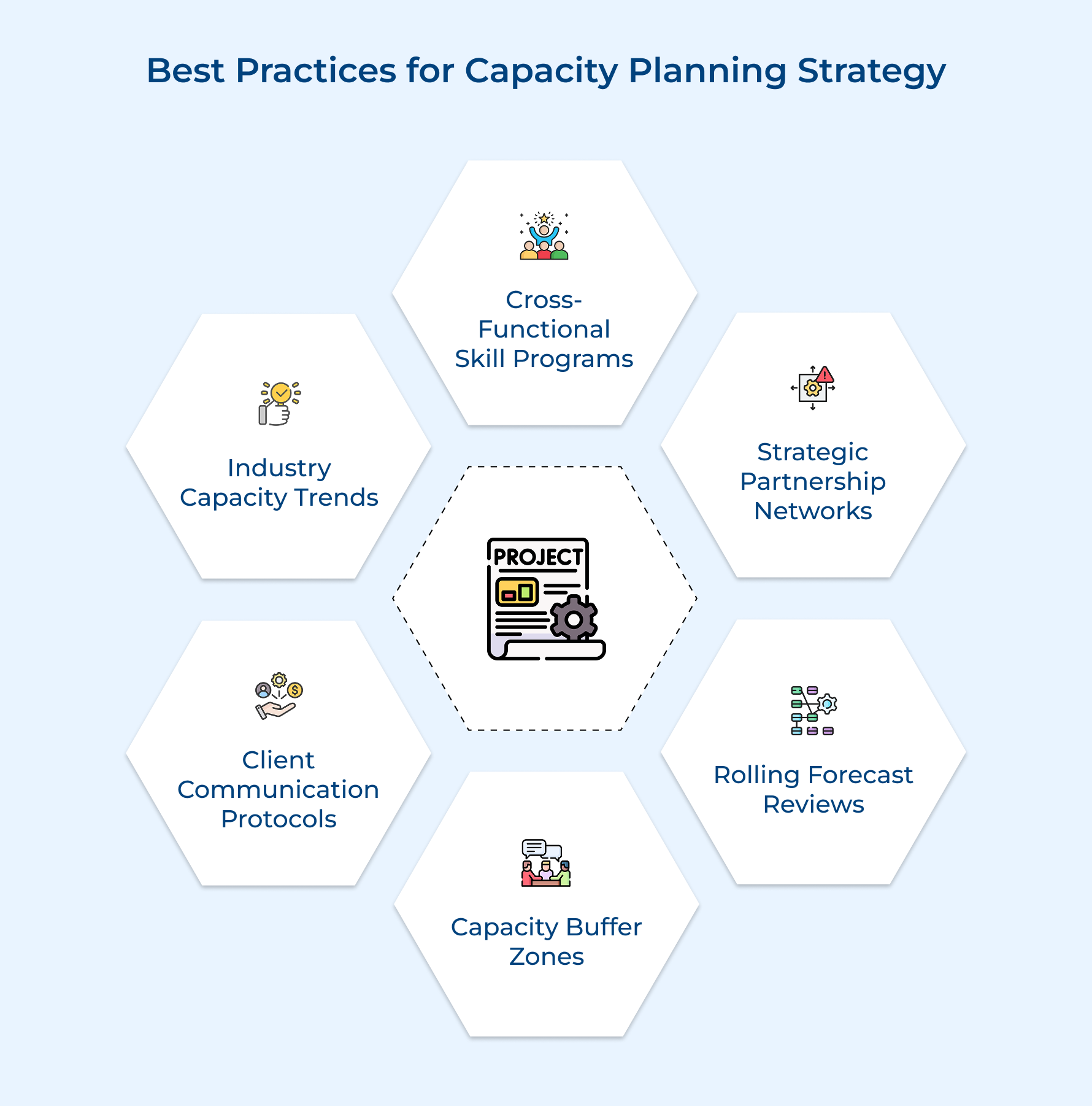
Build Cross-Functional Skill Development Programs
Invest in training programs that help team members develop complementary skills beyond their primary expertise areas. This approach creates internal flexibility where people can shift between different project types when demand fluctuates unexpectedly.
Establish Strategic Partnership Networks
Develop relationships with other agencies and freelancers who can provide additional capacity during peak periods or specialized expertise. These partnerships function as an extended team that expands your capabilities without increasing your fixed overhead costs.
Implement Rolling Forecast Reviews
Update your capacity forecasts every month rather than creating annual plans that become outdated quickly. Rolling forecasts help you spot trends early and adjust your resource strategy before small issues become major problems.
Create Capacity Buffer Zones
Maintain deliberate slack in your resource planning to handle unexpected project changes or client requests. The buffer prevents overcommitment and ensures you can deliver quality work even when scope expands or timelines compress.
Develop Client Communication Protocols
Establish clear processes for discussing resource constraints and timeline expectations with clients before projects begin. Transparent communication prevents unrealistic expectations and builds trust when capacity limitations require project adjustments.
Monitor Industry Capacity Trends
Stay informed about resource availability and pricing trends in your market to make better timing decisions. Understanding when talent is scarce or abundant helps you plan hiring cycles and contractor negotiations more effectively.
Important Metrics to Measure the Effectiveness of Capacity Planning Strategy
Measuring capacity planning effectiveness requires both quantitative data and qualitative insights to understand whether your strategy delivers the intended results. These metrics help you identify what’s working well and where adjustments are needed.
Questions to Measure Effectiveness:
- Are we consistently meeting project deadlines without overworking our team members?
- How accurately do our capacity forecasts predict actual resource needs three months ahead?
- What percentage of new opportunities do we have to decline due to resource constraints?
- How quickly can we scale our team up or down when market conditions change?
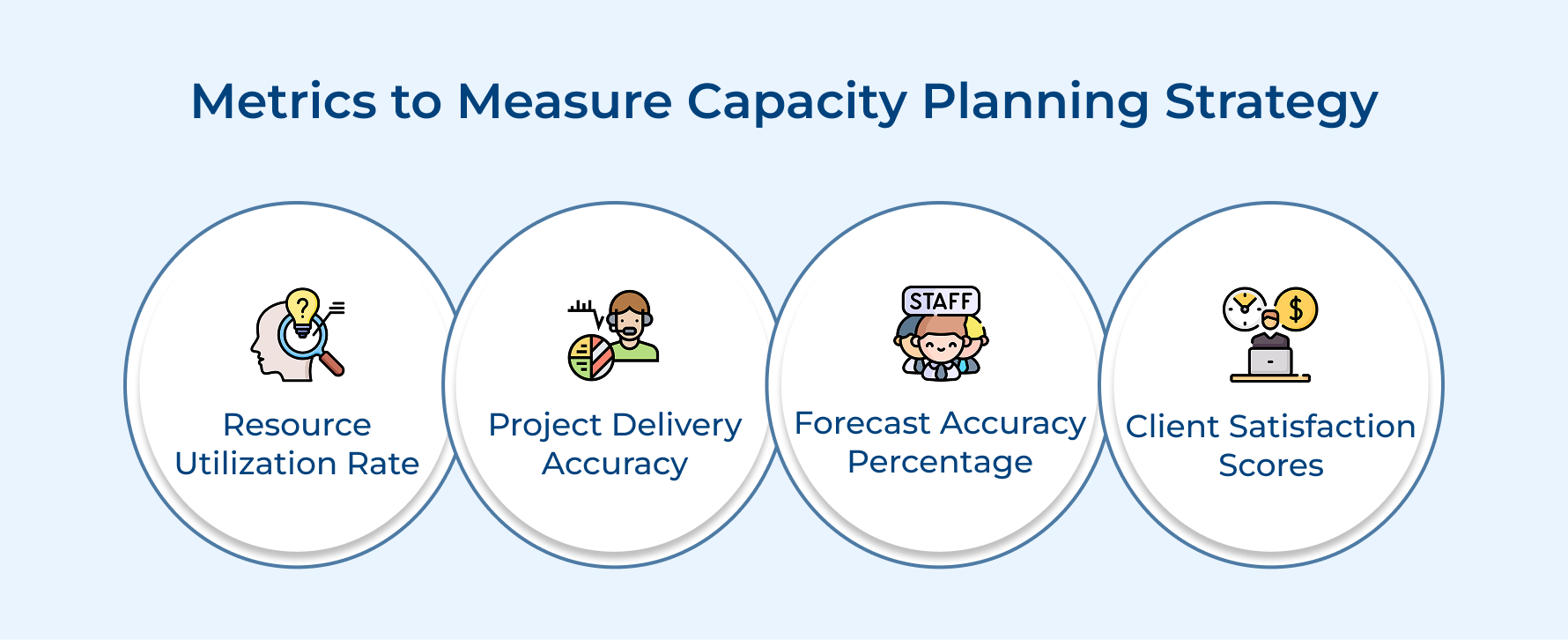
Resource Utilization Rate
This shows how much of your team’s time goes to client work. A healthy range is 70–85%. Over 90% can burn people out and under 60% suggests you’re not using capacity effectively.
Project Delivery Timeline Accuracy
How often do you meet promised deadlines? Consistent on-time delivery means your resource planning is solid. Frequent delays usually point to poor forecasting or overloaded teams.
Forecast Accuracy Percentage
It compares your predicted resource needs to actual ones. Hitting 80–90% accuracy means you’re planning well. Miss the mark too often and you’re either short-staffed or overspending.
Client Satisfaction Scores
Happy clients often reflect good capacity planning. When your team has the right skills and bandwidth, it shows. Dropping satisfaction usually signals resource or delivery issues.
Maximize Efficiency and Minimize Waste with Strategic Capacity Planning
Capacity planning strategies become absolutely necessary because it transforms unpredictable resource management into a systematic approach that prevents costly overstaffing and damaging understaffing situations. Without proper planning organizations waste money on unused talent or lose revenue opportunities.
Professional service businesses improve profitability through optimized resource allocation that matches skilled talent with high-value projects while maintaining consistent service delivery. Enhanced operational efficiency and stronger client relationships emerge when teams have predictable workloads as well as appropriate expertise for every engagement.
Limit time — not creativity
Everything you need for customer support, marketing & sales.

Pooja Deshpande is a content contributor at Kooper, focused on creating insightful resources that help agencies and service providers scale efficiently. Passionate about SaaS trends, content strategy, and operational excellence, she delivers practical, easy-to-implement guidance for modern business leaders.