Complete Guide to SWOT Analysis in Project Management
- What is SWOT Analysis in Project Management?
- Key Components of SWOT Analysis
- How to Conduct a SWOT Analysis in Project Management: 7 Effective Steps
- Benefits of Project Management SWOT Analysis
- 5 Crucial Best Practices for SWOT Analysis in Project Management
- Common Mistakes of SWOT Analysis in Managing Projects
- Navigate Project Success with Swot Analysis Insights
- FAQs about Swot Analysis in Project Management

Key Highlights:
- Conduct focused workshops and gather internal data to drive strategic decisions. Uncover hidden project management strengths and weaknesses.
- Use SWOT analysis in project management to build actionable plans, align with client goals and improve stakeholder communication.
- Avoid generic SWOT lists by applying real-time updates, data-driven scoring and dynamic scenario planning for evolving project environments.
Project managers often hit roadblocks because of incomplete risk assessments. It results in unexpected issues, missed opportunities and even project failures.
If you don’t take a step back to strategically evaluate your project, you may overlook internal weaknesses. You might also ignore external threats and miss opportunities that could add real value.
That’s where SWOT analysis in project management comes in. It gives you a structured way to assess your project’s strengths, weaknesses, opportunities and threats. Instead of reacting to problems as they come, you’re equipped to make smarter, proactive decisions with a full picture in front of you.
What is SWOT Analysis in Project Management?
SWOT analysis serves as a strategic planning framework that examines four critical dimensions of any project. It systematically evaluates internal Strengths and Weaknesses alongside external Opportunities as well as Threats. This comprehensive assessment helps project managers make informed decisions and develop robust strategies that account for both controllable internal factors along with unpredictable external forces.
How SWOT Analysis Works?
The process involves gathering stakeholders to honestly assess each quadrant through structured discussions and data collection. Teams identify what advantages they possess and what gaps need addressing internally. They then scan the external environment for favorable conditions to exploit and potential risks to mitigate throughout the project lifecycle.
Primary principles:
- Be brutally honest about weaknesses rather than sugar-coating internal limitations that could derail your project.
- Focus on actionable insights instead of creating exhaustive lists that nobody will reference again.
- Update your SWOT regularly because project environments shift faster than most teams anticipate.
- Involve diverse perspectives since different stakeholders spot different strengths and blind spots.
Key Components of SWOT Analysis
Let’s walk you through the four essential building blocks that make SWOT analysis such a powerful tool for project assessment.
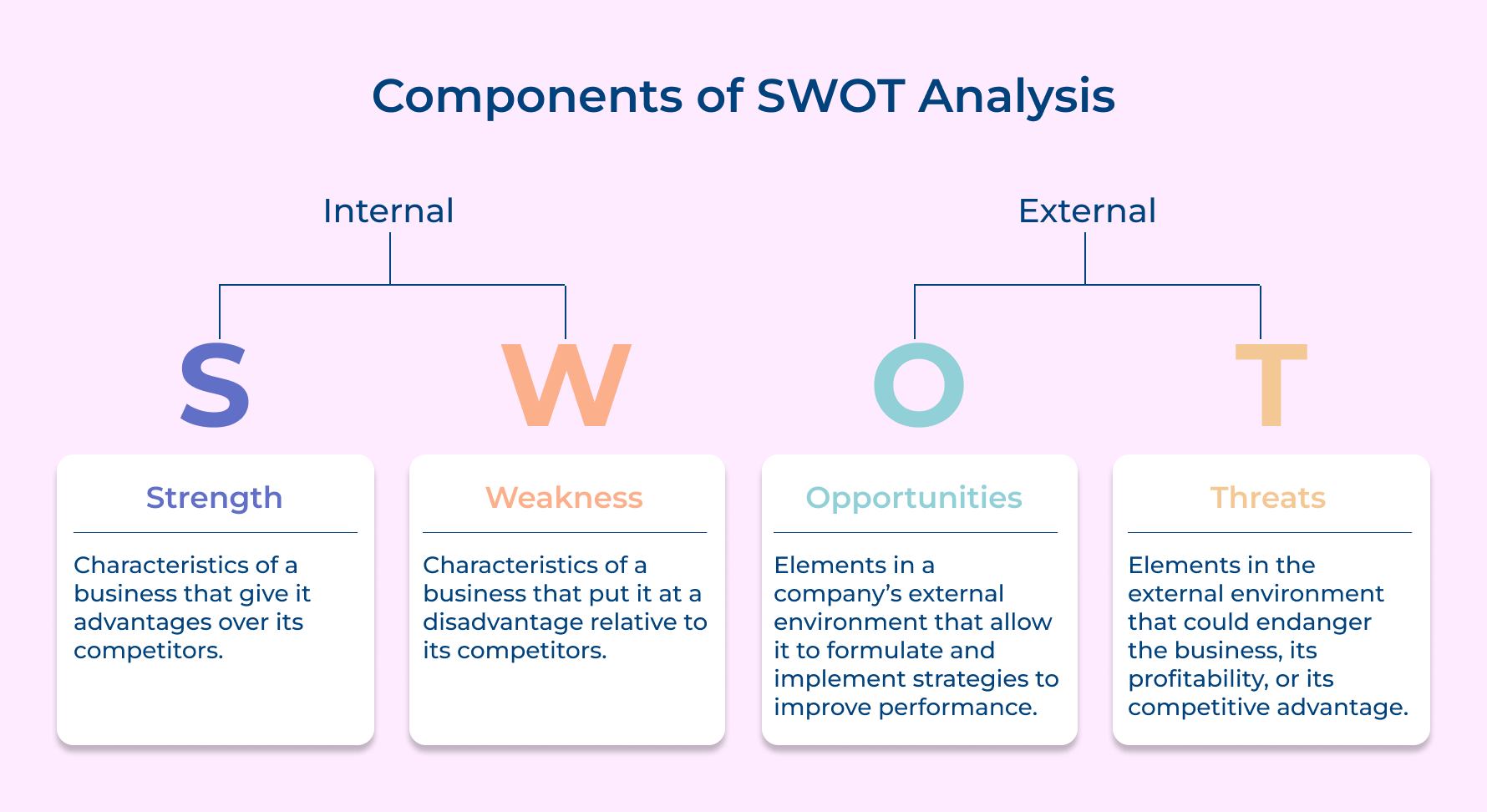
1. Strengths
Strengths represent the positive internal attributes and resources your project team possesses right now. These might include specialized expertise within your team or proven methodologies that have delivered success in similar projects before.
Quick reflection questions to deepen your analysis:
- What specific skills does your team have that competitors or other projects lack?
- Which past project successes can you replicate or build upon?
- What resources or relationships give you an unfair advantage?
The unique capabilities that give you a competitive edge. When you identify these correctly you can leverage them strategically throughout your project to maximize impact and efficiency.
2. Weaknesses
Weaknesses are the internal factors that could hinder your project’s progress or success if left unaddressed. These honest assessments might reveal skill gaps in your team or outdated technology that slows down delivery.
Acknowledging weaknesses isn’t about being negative, it’s about being realistic so you can plan accordingly. Smart project managers use weakness identification as an opportunity to develop mitigation strategies before problems actually surface.
3. Opportunities
Opportunities exist in the external environment and represent favorable conditions your project can capitalize on. Market trends shifting in your favor or new technologies becoming available could accelerate your project timeline significantly.
Strategic thinking prompts for opportunity identification:
- What industry trends could boost your project’s relevance or impact?
- Which external partnerships or collaborations could enhance your outcomes?
- What timing advantages exist in your current market or organizational environment?
The key with opportunities lies in timing and recognition, you need to spot them early enough to incorporate them meaningfully. Missing opportunities often happen because teams get too focused internally and forget to scan their external landscape regularly.
4. Threats
Threats are external factors that could negatively impact your project regardless of how well you execute internally. Economic downturns affecting client budgets or regulatory changes requiring additional compliance work fall into this category.
While you cannot control threats you can certainly prepare for them through contingency planning and risk management strategies. The most successful projects anticipate potential threats and build flexibility into their approach from the very beginning.
How to Conduct a SWOT Analysis in Project Management: 7 Effective Steps
Conducting a SWOT analysis helps project managers make smarter business decisions by identifying key internal and external factors. Here’s a simple 7-step process to guide you.
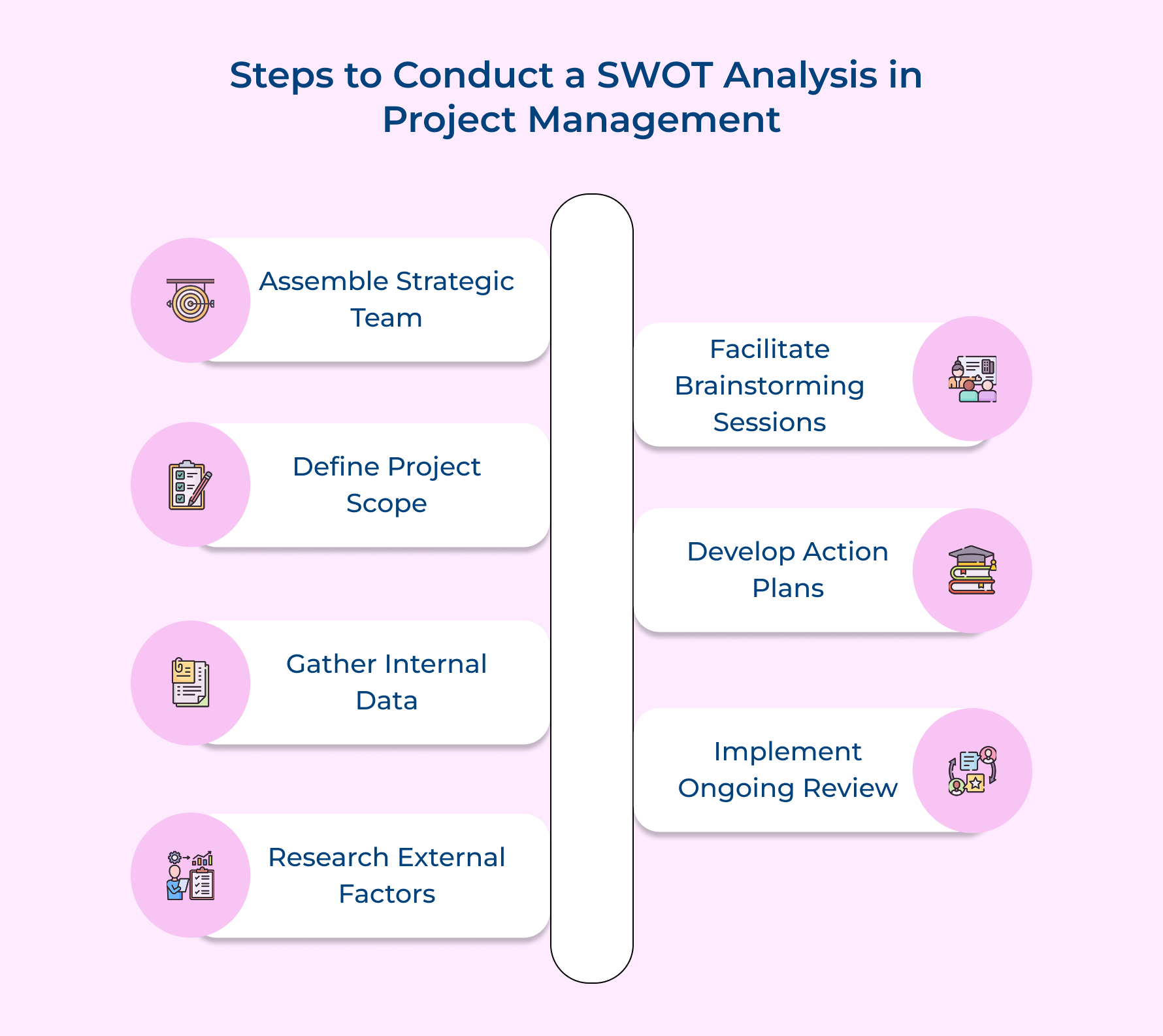
1. Assemble Your Strategic Analysis Team
Building a diverse team ensures multiple perspectives surface during your SWOT analysis rather than relying on single viewpoints that miss critical insights. Cross-functional representation prevents blind spots and creates more comprehensive project assessments.
Here are five essential team members who bring unique value to your strategic analysis:
- Project manager: Coordinates the entire SWOT process and ensures alignment between analysis outcomes as well as project execution strategies.
- Senior stakeholder: Provides organizational context and decision-making authority to validate findings while approving recommended strategic responses.
- Client relationship lead: Offers deep understanding of client expectations and market positioning to inform opportunity as well as threat identification.
- Technical subject matter expert: Contributes specialized knowledge about project complexities and potential technical risks or advantages.
- Operations specialist: Brings practical insights about resource constraints and process capabilities that impact project feasibility assessments.
2. Define Clear Project Scope Boundaries
Defining clear boundaries is key to making your SWOT analysis useful, not vague or overwhelming. Without a focused scope, it’s easy to get sidetracked and miss real project risks. Agencies can try three proven methods:
- Deliverable-based scoping focuses on tangible outputs and filters out the extras. It’s great for teams managing multiple clients.
- Timeline-constrained analysis puts a time limit on your SWOT to encourage quick, focused thinking while adapting to evolving needs.
- Stakeholder impact mapping narrows your view to factors that affect decision-makers and key relationships.
For example, a digital consultancy working on e-commerce upgrades for a retailer might limit their SWOT to a six-month rollout, not the entire supply chain overhaul. The goal is to have clarity and action, not analysis overload.
3. Gather Comprehensive Internal Data Sources
You need solid internal data to make your SWOT analysis meaningful. Without it, your strategy feels more like a guess than a business plan grounded in reality. Start by asking:
- What do past projects tell you about how your team performs under pressure?
- Who has the skills (or gaps) that could affect delivery?
- Do your processes support the project timeline or slow it down?
- Are there tech limitations that might impact client experience?
Want real answers? Talk to your finance team about project profitability. Ask HR about skill gaps. Then dig into key internal sources:
- Past project reports
- Skill assessments
- Capacity planning tools
- Financial data
- CRM insights
These give your SWOT analysis the backbone it needs to drive smart decisions.
4. Research External Market Environmental Factors
External market research identifies opportunities and threats existing outside your organization’s direct control but significantly impacting project success. This environmental scanning helps agencies anticipate changes that could derail projects or create unexpected advantages during execution phases.
Market intelligence transforms your SWOT analysis from internal navel-gazing into comprehensive strategic planning that accounts for real-world dynamics. Understanding external factors allows project managers to position their teams advantageously while preparing contingency plans for potential disruptions.
Best practices:
- Subscribe to industry newsletters and set Google alerts for client sectors to maintain continuous environmental awareness.
- Schedule quarterly competitor analysis sessions to track market positioning changes that might affect your project approaches.
5. Facilitate Structured Brainstorming Workshop Sessions
Ever sat through a SWOT session that turned into a venting marathon? That’s exactly what structured workshops help you avoid. By using proven formats, you keep the discussion focused, inclusive and productive. Try one of these approaches:
- Round Robin SWOT sessions to give everyone a voice
- Silent brainstorming with affinity mapping to surface diverse ideas
- Scenario planning for “what if” thinking
- Cross-functional challenge sessions to shake up perspectives
Start with clear ground rules, then dig into each quadrant (strengths, weaknesses, opportunities and threats) with time-boxed focus. Map relationships between factors and vote on what really matters.
Keep energy high by kicking off with a quick win, ask everyone to share one recent project success. It sets a positive tone and helps frame challenges as fixable, not fatal.
6. Develop Strategic Response Action Plans
SWOT analysis is all about acting on them. Without a plan, even the best insights won’t improve your project. That’s where strategic response planning comes in. It turns your SWOT into a practical roadmap that sharpens execution and builds competitive advantages.
Here’s how to do it:
- Tackle weaknesses head-on: Fill skill gaps with training or partnerships and assign clear responsibilities with timelines.
- Seize opportunities: Use your SWOT findings to spot market openings or client advantages. Set up triggers so your team knows when to act.
- Prepare for threats: Monitor external risks with early warning systems and create contingency plans for rapid response.
For example, a marketing firm that lacks analytics skills might partner with experts while upskilling their team, gaining a long-term edge.
7. Implement Ongoing Review and Update
Ongoing SWOT review ensures your analysis remains relevant as project conditions evolve rather than becoming outdated documentation that sits unused.
Regular updates help teams adapt strategies based on new information and changing circumstances throughout the engagement lifecycle.
Dynamic SWOT maintenance transforms static analysis into living strategic guidance that informs decision-making throughout your project journey.
This iterative approach helps professional service teams stay responsive to client needs while maintaining strategic focus on core objectives.
Pro tips:
- Schedule monthly 30-minute SWOT check-ins during regular project meetings rather than treating updates as separate intensive sessions.
- Assign different team members to monitor specific external factors and report changes that might affect your strategic positioning.
Benefits of Project Management SWOT Analysis
Let me walk you through the significant advantages that SWOT analysis brings to project management across professional service environments. Recent industry data demonstrates the measurable value of strategic project planning methodologies:

Enhanced Risk Mitigation Capabilities
SWOT analysis helps you shift from reacting to problems to preventing them. By spotting threats early, agencies and consultancies can build smart backup plans that keep timelines as well as budgets on track, even when the unexpected hits.
Improved Resource Allocation Decisions
Knowing your team’s strengths and weaknesses lets you assign the right people to the right tasks. It’s not just about filling roles, it’s about maximizing billable hours and making sure every team member works where they shine.
Clearer Strategic Project Direction
Project managers can align their decisions with big-picture business goals when they have a clear picture of what’s working (and what’s not). This ensures every deliverable adds real value, to both the client and your firm’s market position.
Strengthened Client Relationship Management
When you understand your project’s strengths and opportunities, you can communicate more clearly, address concerns early while also showing clients you’re a proactive partner.
Accelerated Decision-Making Processes
With SWOT, you’re not guessing. You have clarity on what your team can handle and what’s coming from outside. That means quicker, more confident choices and less time second-guessing.
5 Crucial Best Practices for SWOT Analysis in Project Management
Here are six advanced practices that will elevate your SWOT analysis from a basic planning exercise into a strategic advantage for your professional service projects.
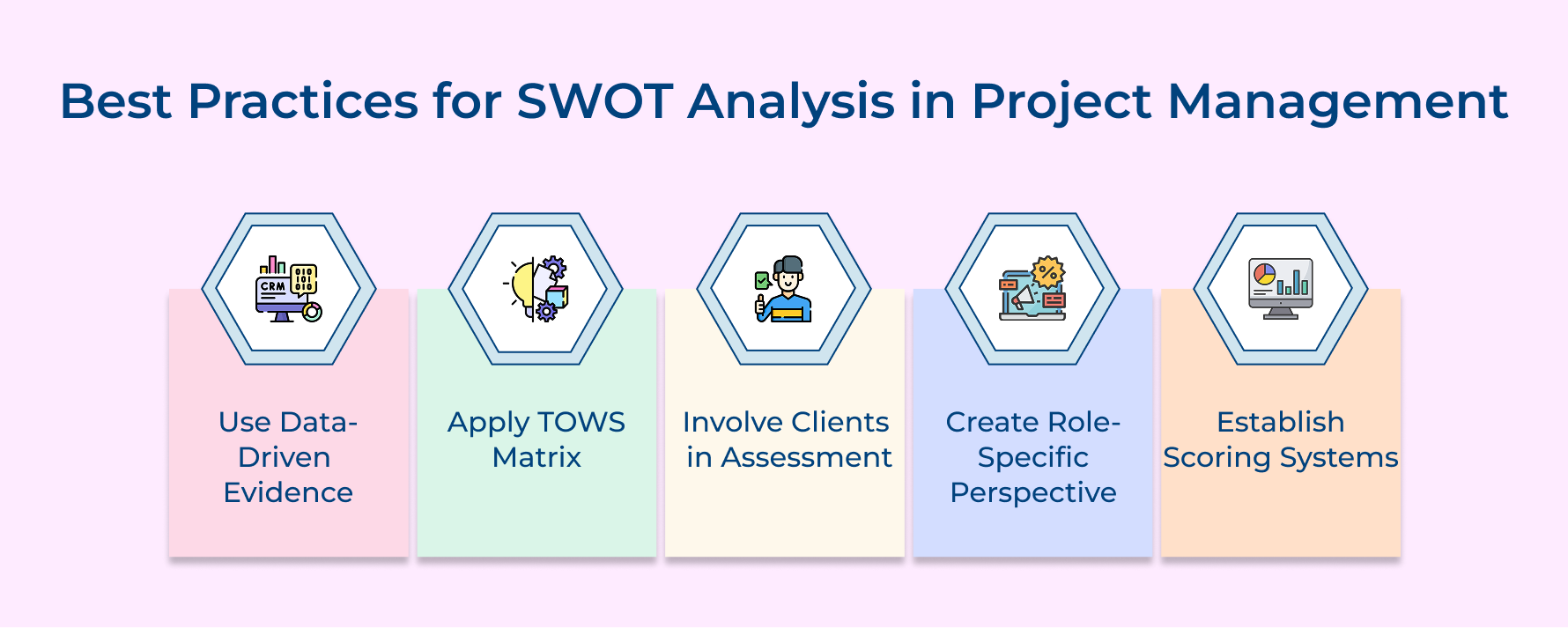
Use Data-Driven Evidence Over Gut Feelings
When it comes to SWOT analysis, go beyond opinions. Use real metrics, past project data and performance reports to assess each quadrant. It turns your analysis into something stakeholders can actually trust and act on with confidence.
Apply the TOWS Matrix for Strategic Integration
Don’t stop at identifying strengths and weaknesses. The TOWS matrix helps you take it further by turning insights into strategy. For example, you might use strengths to chase an opportunity or spot how an opportunity could offset a weakness. It’s a smart way to connect the dots.
Involve Clients in Collaborative Assessment Sessions
Your clients often see what your team can’t. Bringing them into the SWOT process adds valuable outside perspective and builds stronger partnerships. It shows you’re invested in understanding the real-world challenges they face.
Create Role-Specific SWOT Perspectives Within Teams
Instead of doing one big SWOT session, run smaller ones with functional teams like tech, design, business development, etc. Each group brings unique insights that might get lost in a general discussion. Then, pull it all together for a more complete picture.
Establish Quantitative Scoring Systems for Prioritization
Not all SWOT factors are created equal, so don’t treat them that way. Give each one a numerical score based on how big its impact could be and how likely it is to happen during the project. This simple scoring system helps your team focus on what really matters, instead of getting distracted by every single detail.
Common Mistakes of SWOT Analysis in Managing Projects
Even experienced project managers fall into predictable traps when conducting SWOT analysis, often undermining the entire strategic planning process.
Critical questions to consider before identifying common pitfalls:
- Are you treating SWOT as a one-time exercise rather than an ongoing strategic tool?
- Do team members feel safe expressing honest assessments about project weaknesses?
- Are you focusing on factors that your project team can actually influence?
- Is your analysis specific enough to guide concrete decision-making processes?
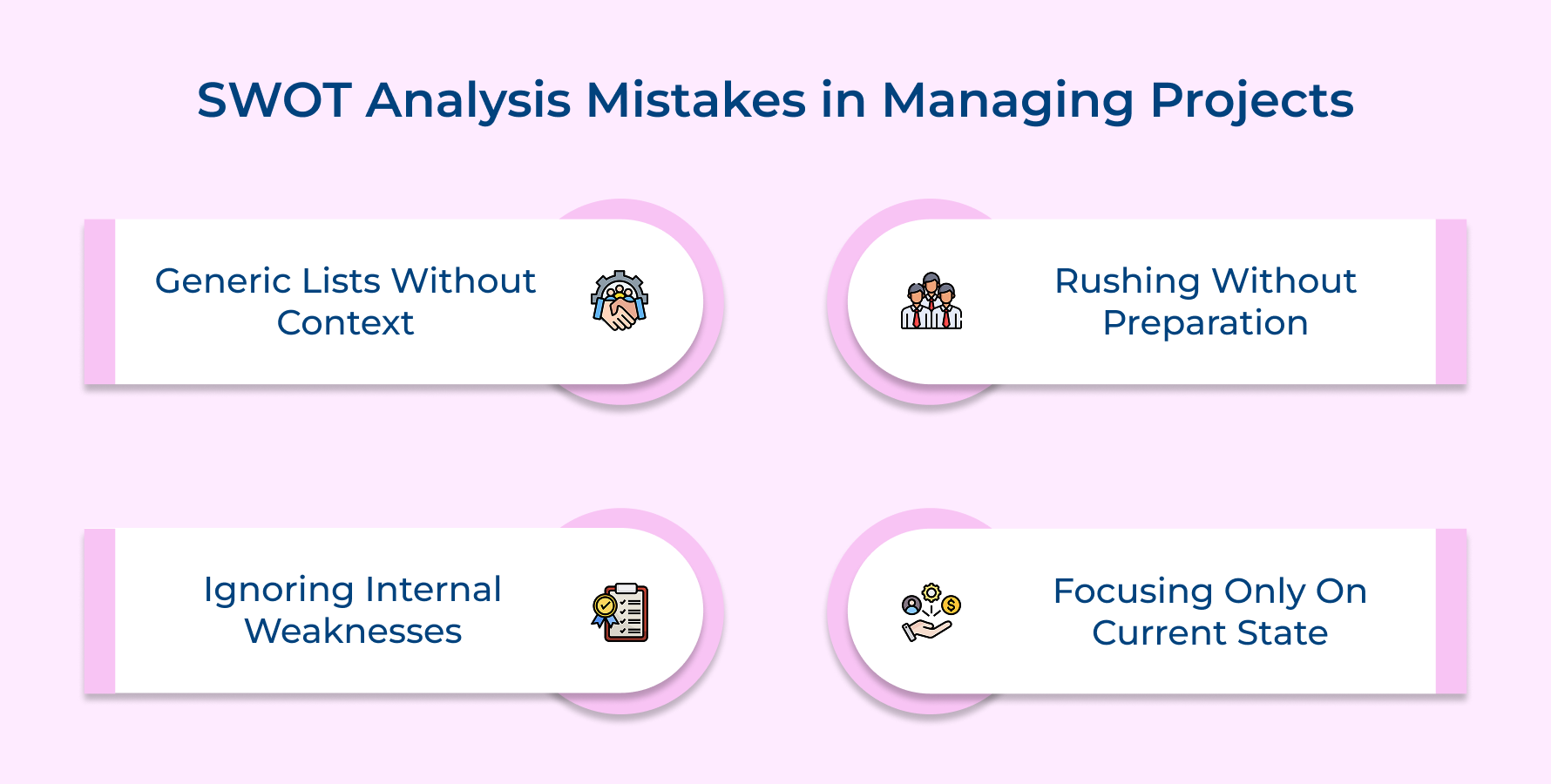
Creating Generic Lists Without Project Context
One common pitfall? Making broad SWOT lists that could fit any project. Without tying insights to your specific deliverables or client needs, especially in marketing campaigns, the analysis becomes too vague to be useful.
Rushing Through the Process Without Adequate Preparation
Quick SWOT sessions might seem efficient, but without background data or proper prep, you’ll get knee-jerk reactions instead of meaningful insights. Give your team the time and info they need to dig deep.
Avoiding Uncomfortable Truths About Internal Weaknesses
It’s tempting to sugarcoat weaknesses to keep morale high or impress clients, but avoiding tough conversations can backfire. Frame weaknesses as opportunities to grow and strengthen your project instead.
Focusing Only on Current State Rather Than Future Evolution
Many teams assess what’s happening today but ignore what’s coming next. Good SWOT analysis for marketing campaigns should be dynamic, factoring in evolving needs, emerging trends and changing priorities across project phases.
SWOT analysis in project management shifts from reactive problem-solving into proactive strategic planning. This systematic framework empowers professional service teams to leverage their unique strengths while addressing weaknesses that could undermine client satisfaction and project outcomes.
The most successful agencies and consultancies treat SWOT analysis as a living document that evolves throughout the project lifecycle rather than a static planning exercise. This dynamic approach ensures that strategic insights continuously inform tactical decisions and resource allocation choices that drive measurable business results.
Limit time — not creativity
Everything you need for customer support, marketing & sales.

Pooja Deshpande is a content contributor at Kooper, focused on creating insightful resources that help agencies and service providers scale efficiently. Passionate about SaaS trends, content strategy, and operational excellence, she delivers practical, easy-to-implement guidance for modern business leaders.