Agency Client Onboarding Process & Best Practices (2026)
- What is Agency Client Onboarding?
- Why is Agency Client Onboarding Important?
- 7 Essential Steps in Agency Client Onboarding Process
- Tips to Improve Agency Client Onboarding Process
- 8 Critical Elements of Agency Client Onboarding Checklist
- Pave the Path to Partnership with Impeccable Onboarding
- FAQs about Agency Client Onboarding

Key Highlights:
- Streamline agency client onboarding with a structured process to increase client retention and ensure long-term business success.
- Use an agency client onboarding checklist to optimize communication, automate admin tasks, and monitor project milestones for better outcomes.
- Enhance your agency client onboarding strategy with templates and personalized plans to improve client satisfaction as well as business growth.
New client relationships often start with confusion and miscommunication that derails projects before they begin. Think about your last challenging client relationship that started rocky and never recovered its footing. Disorganized handoffs lead to endless revision cycles, budget overruns and clients who badmouth your agency to potential referrals in their network.
A proven agency client onboarding framework eliminates guesswork while building confidence through every interaction with new clients. This comprehensive approach turns potentially chaotic beginnings into smooth launches that establish trust and set realistic expectations for long-term partnership success.
What is Agency Client Onboarding?
Agency client onboarding is the structured process of welcoming new clients and setting them up for success with your services. This critical phase transforms a signed contract into an active working relationship where both parties understand their roles and responsibilities.
A smooth onboarding experience sets the tone for your entire client relationship and determines whether projects will run seamlessly or face constant friction. When clients feel confident and informed from day one they’re more likely to trust your recommendations and provide the collaboration you need.
Key objectives:
- Establish clear communication channels: Define who talks to whom and when so nothing falls through the cracks.
- Gather comprehensive project requirements: Collect everything your team needs to deliver work that hits the mark.
- Set realistic timelines and milestone expectations: Create a roadmap that keeps everyone aligned on what happens when.
- Document processes and approval workflows: Create a clear path for reviews and sign-offs that prevents bottlenecks later.
Why is Agency Client Onboarding Important?
A well-structured onboarding checklist transforms chaotic first impressions into organized client experiences that build lasting partnerships. Let’s explore in detail as to how it is important for your organization.
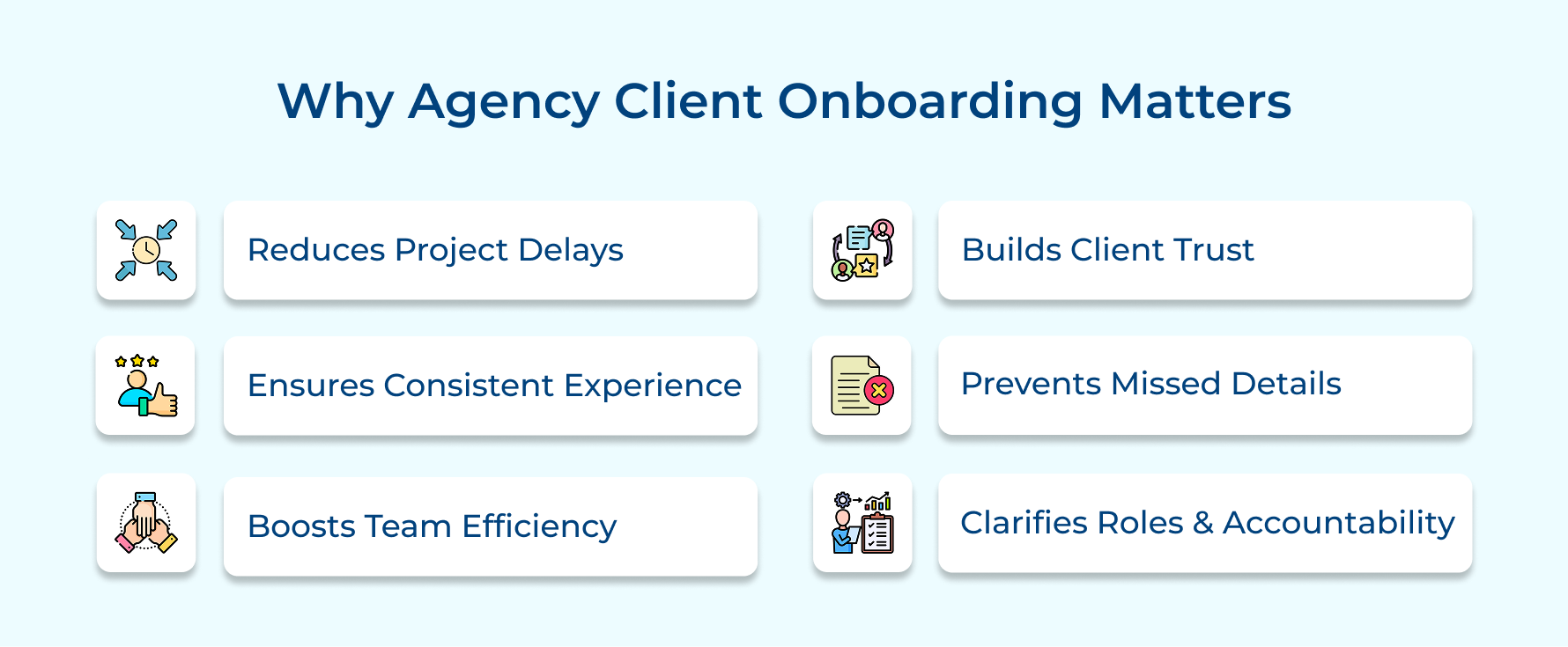
Reduces Project Delays and Miscommunication
A well-structured checklist takes the guesswork out of client onboarding. Instead of bouncing emails back and forth, your team knows exactly which administrative tasks to complete as well as when. Hence, making project launches quicker, smoother and way less stressful.
Creates Consistent Client Experience Across All Accounts
Clients receive the same high-quality experience, whether from a senior account manager or a new hire. With consistent administrative support baked into your process, you build trust and elevate your agency’s business operations – no matter who’s leading the account.
Improves Team Efficiency and Resource Planning
Checklists do more than keep things tidy, they make your team more productive. With clear steps in place, there’s less time wasted on redundant work and more accurate planning of timelines as well as capacity. That kind of efficiency is key to long-term success.
Builds Client Confidence and Trust from Day One
First impressions matter. When clients see that your onboarding process is buttoned-up and well-documented, it instantly signals professionalism. Having everything organized (from kickoff calls to social media guidelines) shows them they’re in capable hands.
Prevents Important Details from Falling Through Cracks
It’s easy for key info (like brand tone or who signs off on what) to get lost in conversation. A checklist ensures that nothing important is forgotten, creating a reliable reference point that supports consistent deliverables and smooth communication.
Establishes Clear Expectations and Accountability
No more confusion over responsibilities. A clear onboarding workflow spells out tasks, owners, and deadlines, helping both your team as well as your clients stay aligned. When accountability is clear, everyone can focus on doing great work.
7 Essential Steps in Agency Client Onboarding Process
Let’s explore seven pivotal steps your agency can take to ensure your client onboarding process leads to lasting success and profitable partnerships.
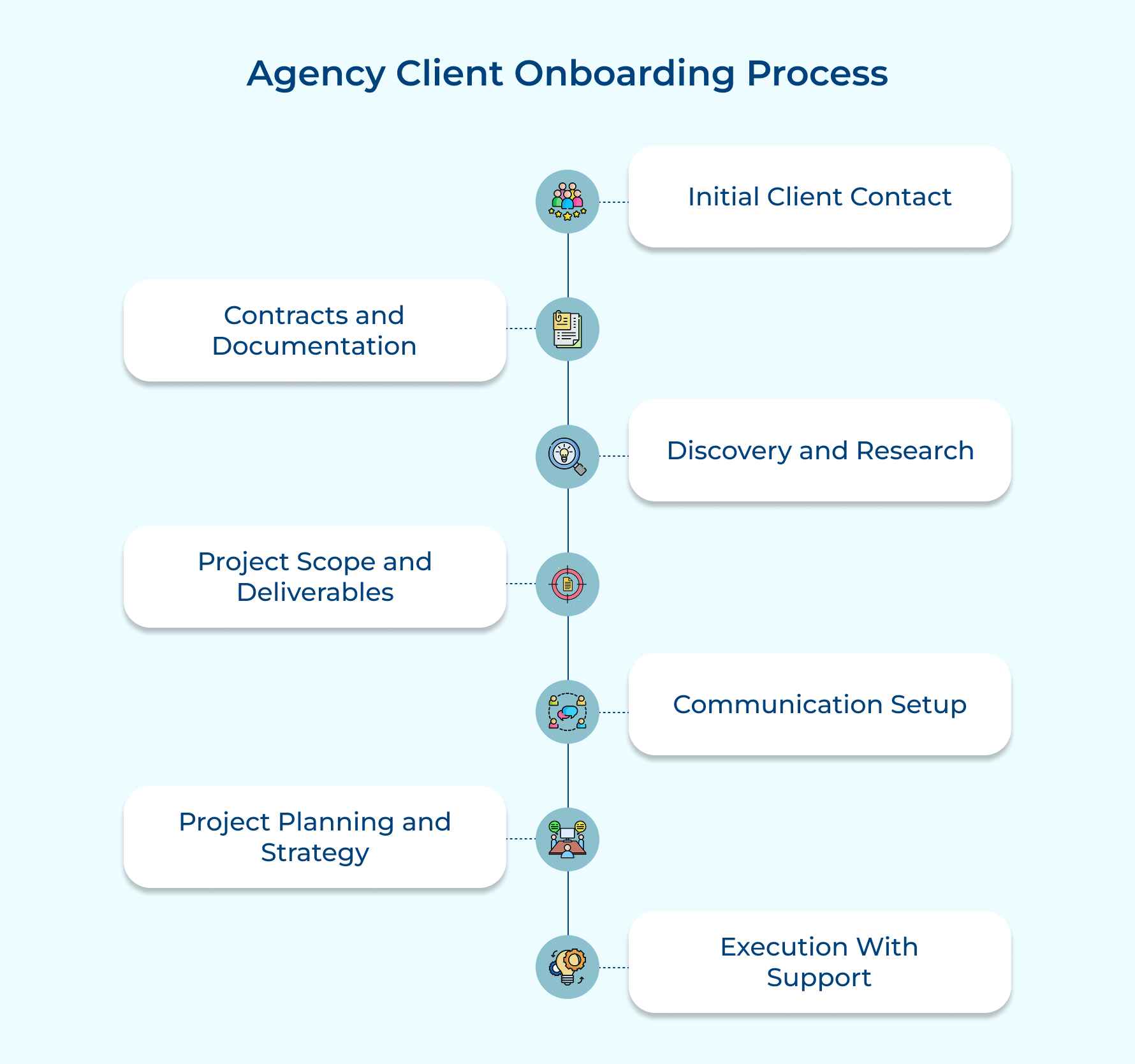
1. Establish Initial Client Contact Framework
Clear communication isn’t just a nice-to-have, it’s the backbone of any successful client relationship. Without it, even the most exciting projects can stall before they get going. A robust agency client onboarding strategy starts with setting up smart, reliable communication protocols that keep everyone aligned from day one.
Here’s how successful agencies do it:
- Identify Primary and Secondary Contacts
Who signs off on final deliverables? Who’s just offering input? Mapping this out early means your team isn’t stuck in endless email threads waiting for the “right person” to respond. It cuts down delays and sets the tone for an efficient working relationship.
- Set Communication Preferences and Timelines
Some clients live in Slack; others swear by email. Whatever their style, define it upfront and agree on response time expectations for different types of messages. It’s a small step that prevents major misunderstandings later.
- Hold a Kickoff Meeting with Key Decision Makers
Get everyone in the same (virtual) room early on. Introduce teams, align on goals, and walk through the onboarding plan. This saves you from having to repeat information or backtrack weeks down the line.
Let’s say, if your creative team spends days perfecting a campaign, only to find out the feedback came from someone without approval power. That’s not just frustrating, it’s costly too!
A strong agency client onboarding strategy helps avoid these pitfalls by making sure everyone knows who’s who and how to communicate clearly.
2. Execute Contracts and Legal Documentation
This is where your client relationship shifts from a friendly handshake to a formal partnership – one that’s legally sound and built on clear, mutual expectations. For business owners, having proper documentation is about setting the tone for a smooth, professional engagement from the start.
Consider your contract as the playbook for how you’ll work together. What happens when a client asks for “just one more thing” that wasn’t in the original agreement? Without solid documentation, you’re stuck debating what’s included versus what should come with an extra fee. A well-crafted contract handles these situations before they ever turn into awkward conversations.
Here are a few pro tips that smart business owners swear by:
- Spell out revision rounds and approval timelines
Endless feedback cycles can kill momentum and your margins. Set clear limits on revisions and timelines so everyone stays on track without burning out your team.
- Include scope change procedures
Clients will request changes. It’s inevitable. Instead of scrambling to renegotiate on the fly, build in a simple process for handling changes, complete with pre-agreed hourly rates. This keeps things flexible without compromising your boundaries.
At the end of the day, contracts protect both sides. They’re not just legal safety nets, they’re a crucial part of building trust, setting expectations and running a profitable business.
3. Conduct Comprehensive Discovery and Research
Here you’ve got to get under the hood of your client’s business understanding their brand, their market and what truly sets them apart. Skipping this deep-dive is like running a race blindfolded. Without proper discovery, you risk creating campaigns that completely miss the mark.
A strong agency client onboarding example always includes a discovery session that covers the following:
- What are your specific goals, and how will we measure success?
Defining success early ensures your work has a clear direction and measurable impact. - Who’s your ideal customer, and why do they choose you over others?
This insight helps craft messaging that resonates with the right people, not just everyone. - Which brand elements are set in stone, and where is there creative flexibility?
Knowing where you can push boundaries (and where you can’t) avoids unnecessary revisions later. - Which marketing channels have performed well and which haven’t?
This tells you where to double down and where to rethink strategy.
These questions not only uncover key business insights but also build trust with your client. It shows that you’re invested in their success.
Another crucial part of the discovery phase is competitor analysis. Understanding who your client is up against helps you spot gaps in the market and craft strategies that stand out, rather than blend in with the crowd.
A great agency client onboarding example always starts here because when you truly know the client, your creative work becomes that much more powerful.
4. Define Project Scope and Deliverables
Before any real work begins, it’s crucial to turn broad ideas into a clear, actionable plan. When everyone knows exactly what’s in scope, you avoid endless revisions, last-minute surprises and projects that drag on without delivering value. It’s how you protect your margins and your team’s sanity.
Here’s how to nail this part of the agency client onboarding process:
- Break the Project Into Phases
A detailed roadmap makes even the most complex projects feel manageable. Dividing work into clear phases with defined deliverables and approval checkpoints helps both teams stay focused while maintaining momentum without sacrificing quality.
- Define What Success Actually Looks Like
When goals are clear from the beginning (if it’s lead conversions, brand engagement, or increased social media reach) everyone is aligned on what the project needs to achieve. These success metrics guide creative decisions and give you a solid foundation for proving your value later.
- Get Clear on Budget and Resources
Budget clarity nothing but planning things right. Knowing how much the client wants to invest in each area helps you assign the right talent and manage timelines. It also sets the stage for open, honest conversations around what’s feasible, helping you avoid awkward surprises mid-project.
5. Set Up Communication and Collaboration
Keep projects running smoothly by using the right tools and not just talent. Setting up the right systems early creates a solid tech foundation that supports clear communication, efficient workflows, and happy clients. Without this, you’ll end up wasting time sorting through email chains and missed messages instead of focusing on the creative work your agency is actually hired to do.
Here’s how to build that backbone as part of your agency client onboarding strategy:
- Project Management Tools
Platforms like Kooper or Veemo Project help you track deliverables, deadlines, and responsibilities. Clients can see what’s happening without having to ask.
- File Sharing Systems
Google Drive or Dropbox ensures everyone’s pulling from the same, most up-to-date creative assets. No more wondering which version is the “final final.”
- Communication Channels
Slack or Veemo Chat keeps conversations organized by topic or project. It’s a faster, more structured alternative to endless email threads.
- Feedback + Approval Tools
Tools like InVision or Veemo Survey make it easy for clients to leave comments directly on designs, keeping feedback clear and actionable.
- Time Tracking Software
Platforms like Harvest help you stay on top of hours logged and keep project budgets in check.
The best system? The one that fits your client’s style. Some might already be using Slack, while others prefer email and scheduled calls. Adapt your tech stack to meet them where they are, without compromising your internal efficiency.
Want to go the extra mile? Add shared calendars for milestones and video conferencing tools for real-time creative reviews.
6. Launch Project Planning and Strategy
Now that you’ve done the research and gathered all the insights, it’s time to build the strategic game plan. This is where you shift from “what we know” to “what we’re going to do about it.” Without this step, even the most creative ideas can fall flat because they aren’t tied to real business goals.
Before diving into execution, use these planning questions to check your direction:
- What business challenge are we solving and why does it matter right now?
Clarity here keeps your work focused and impactful. - Does the strategy align with the client’s brand values and long-term vision?
Creative without alignment can look great, but still miss the mark. - Are we reaching the right audience with the right message?
Targeting the right people is half the battle and it’s where many campaigns go wrong. - Do timelines account for feedback, revisions, and real-life delays?
A realistic schedule avoids last-minute chaos and sets client expectations early.
Taking time to map out the strategy ensures your team is building with purpose. It prevents missteps like creating a gorgeous campaign that totally overlooks the client’s main pain point.
Here’s how to make it stick:
- Host strategy alignment meetings with all decision-makers before the creative work kicks off.
- Document key insights as well as boundaries so your team knows where to flex and where to stay firm.
- Connect every tactic to a business objective because great work should always move the needle.
7. Begin Execution with Ongoing Support
At this point, you’re ready to shift from planning mode to execution, but that doesn’t mean the onboarding mindset ends. In fact, this phase is where all your prep work really starts to pay off. Staying consistent with your communication and strategic direction ensures the relationship gets stronger as the project heats up.
Rolling out the approved strategy takes discipline. Your team should follow the framework you’ve built while adapting to real-world dynamics. When clients see their vision coming to life in a clear, coordinated way, it builds trust and reinforces the value of your partnership.
Don’t just “set it and forget it.” Regular check-ins as well as performance tracking are key to keeping things on course. If something isn’t working (either low engagement or missed conversion targets) you’ll catch it early and adjust fast. That agility not only protects results but also shows your clients you’re proactive.
Some essential metrics to keep an eye on:
- Conversion rates
- Engagement levels
- Lead generation volume
- Brand awareness benchmarks
When you track these numbers consistently, you’re not just delivering results – you’re building the case for deeper collaboration and future projects.
Done right, your agency client onboarding strategy doesn’t just kick off a project. It lays the foundation for a long-term, high-value relationship that delivers real results.
Tips to Improve Agency Client Onboarding Process
A smooth onboarding experience sets the tone for a successful client relationship. Here are practical tips to help your agency streamline the process and deliver lasting value.
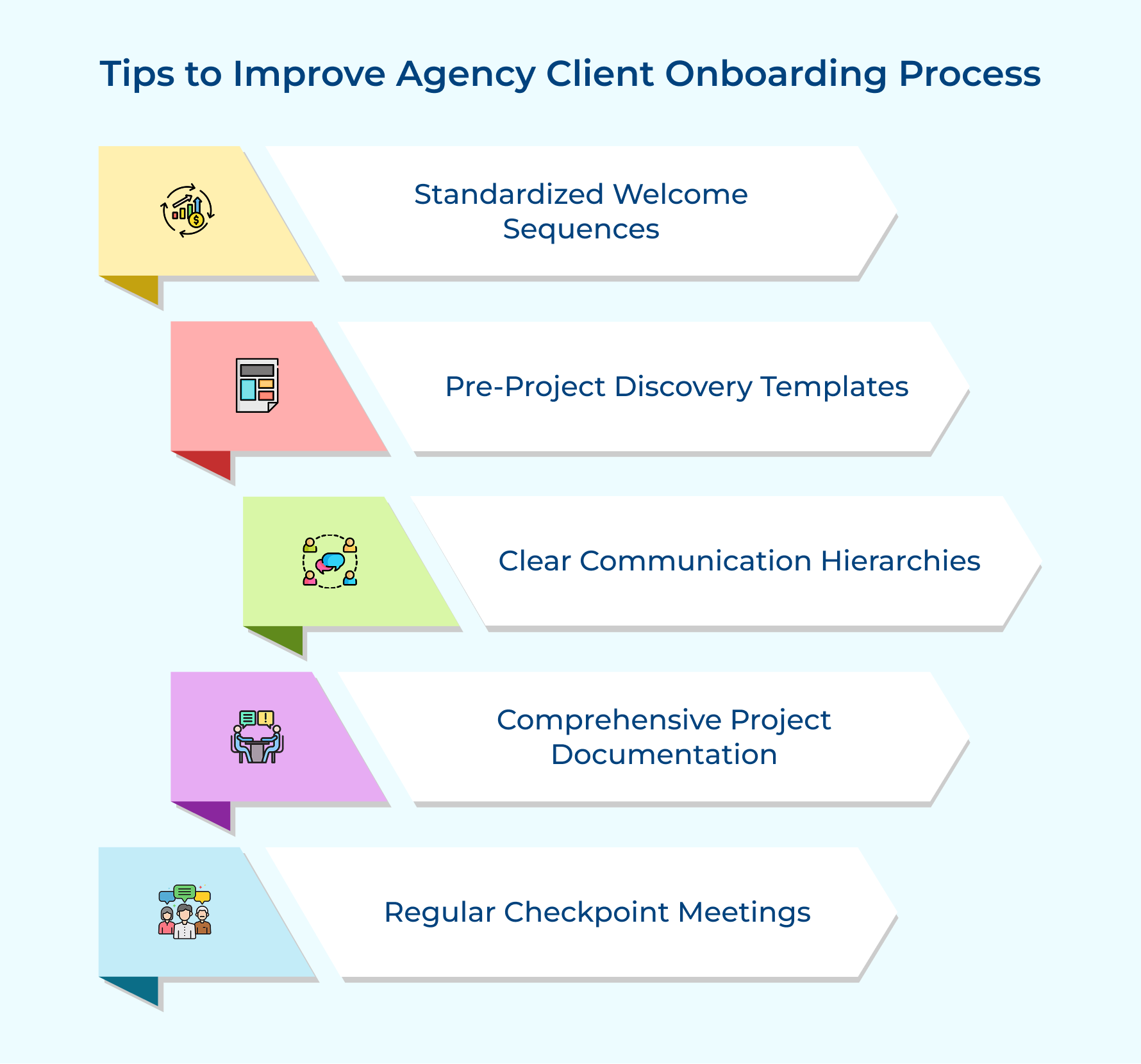
Create Standardized Welcome Sequences
Building a consistent welcome experience ensures every client receives the same professional treatment regardless of which team member handles their onboarding.
Your standardized sequence should include personalized welcome materials and clear next-step communications that make clients feel valued from day one.
The systematic approach eliminates the awkward silence that often happens after contracts are signed when clients wonder what comes next. Think of this like a restaurant that delivers the same quality meal regardless if the head chef or sous chef is cooking.
Implement Pre-Project Discovery Templates
Discovery templates guide your team through comprehensive information gathering while ensuring nothing important gets overlooked during client interviews.
These structured frameworks help even junior team members conduct thorough discovery sessions that rival experienced account managers.
Essential elements that make discovery templates truly effective:
- Brand guidelines and asset collection checklists that capture every visual element your creative team needs
- Target audience profiling questions that reveal deeper motivations beyond basic demographic information
- Competitive analysis frameworks that identify market positioning opportunities and potential threats
Templates also speed up the discovery process by providing clients advance notice of what information they need to prepare.
Establish Clear Communication Hierarchies
Avoid crossed wires by defining exactly who your team should go to for feedback, approvals, or quick decisions.
Here’s how it helps:
- Reduces delays caused by mixed signals.
- Shields your team from getting stuck between conflicting opinions.
- Makes it easier for clients to organize their own internal process.
This clarity keeps projects moving and everyone on the same page.
Build Comprehensive Project Documentation
Think of your documentation as the playbook your team and the client rely on when questions pop up.
Key pieces to include:
- Scope of work with clearly defined deliverables.
- Timeline with milestones and review checkpoints.
- Clear process for handling scope changes.
Having everything written down avoids miscommunication and keeps expectations realistic on both sides.
Schedule Regular Checkpoint Meetings
Quick check-in calls or meetings help you stay aligned without eating up your week.
Make them count by:
- Setting a short, clear agenda.
- Using the time to unblock progress or clarify questions.
- Keeping them consistent, but not overwhelming.
These meetings catch small problems early and keep the project running smoothly.
Create Client Success Measurement Systems
Defining success isn’t just for the end, it should be part of onboarding too.
Measure things like:
- Timeline accuracy and scope stability
- Communication ease and feedback clarity
- Overall client satisfaction
These insights help you refine your process and show clients you’re invested in doing great work, together.
8 Critical Elements of Agency Client Onboarding Checklist
A strong onboarding checklist is your agency’s secret weapon for smooth client transitions. Instead of scrambling to remember what comes next, you’ve got a clear, repeatable process that keeps everything on track.
It ensures nothing important slips through the cracks as well as helps every new client feel confident, informed, and taken care of – right from the start. Plus, it brings consistency to every account, no matter who’s managing it.
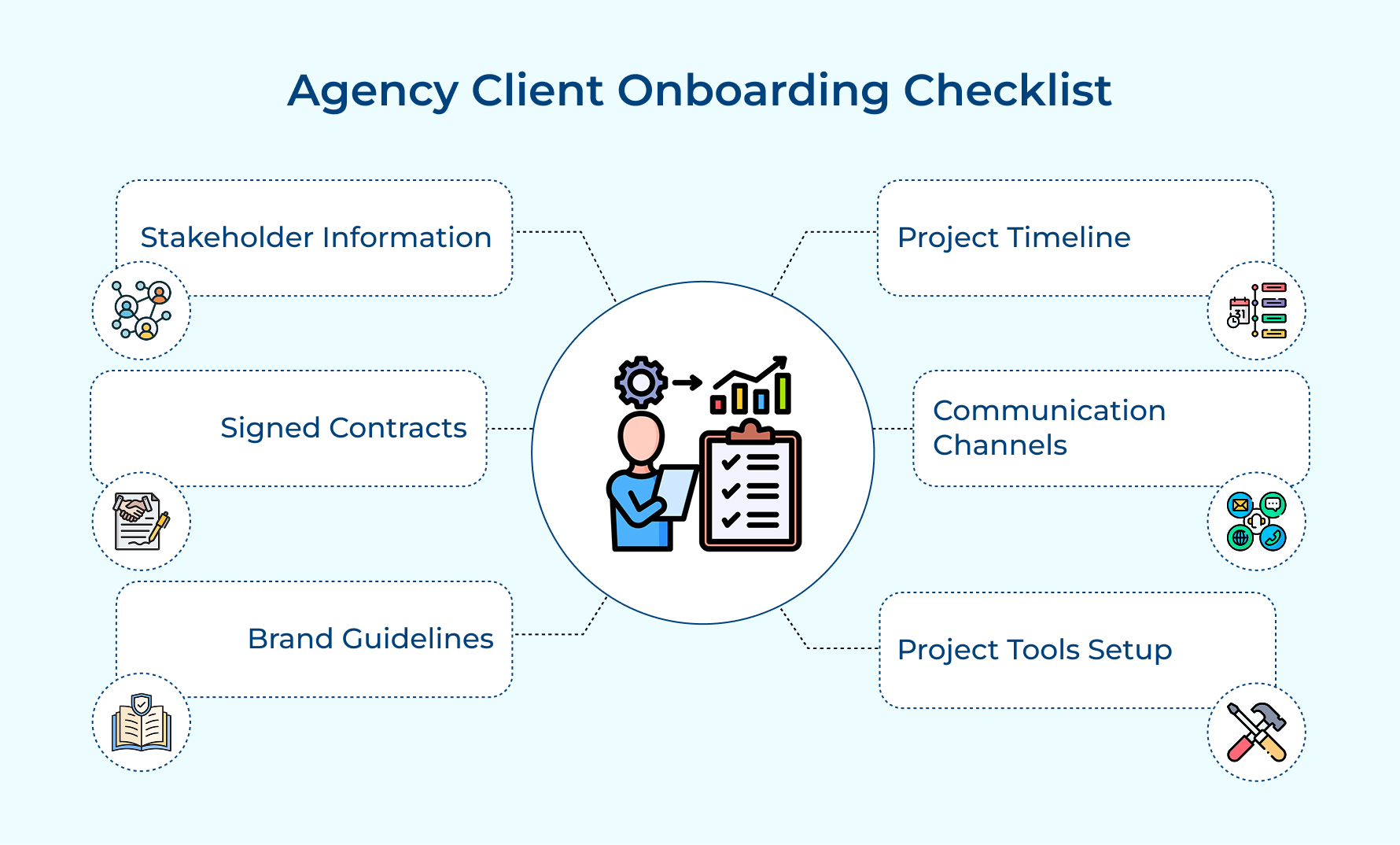
Essential Questions for Complete Agency Client Onboarding:
- Have you collected and documented all primary / secondary stakeholder contact information with their specific roles as well as decision-making authority?
- Are all contracts signed with clearly defined scope boundaries and payment terms established to prevent future misunderstandings?
- Have you gathered comprehensive brand guidelines including logos, color palettes, fonts, and messaging standards that your creative team requires?
- Is the project timeline documented with specific milestone dates, approval stages, and deliverable deadlines that all parties have agreed upon?
- Have you established preferred communication channels, meeting schedules, and response time expectations that work for both teams?
- Are project management tools set up with appropriate access levels and training provided to ensure smooth collaboration throughout the engagement?
- Have you conducted thorough competitive research and market analysis to inform strategic recommendations as well as creative direction decisions?
- Is there a clear success measurement framework in place with specific metrics and reporting schedules that demonstrate project value?
Pave the Path to Partnership with Impeccable Onboarding
Effective agency client onboarding serves as the foundational bridge between initial client acquisition and long-term partnership success. When agencies fail to establish clear expectations as well as project frameworks from the start, they risk client confusion and scope creep.
Strategic processes directly enhance operational efficiency by standardizing workflows, reducing miscommunication while accelerating project timelines. Professional services firms that invest in comprehensive client orientation see improved engagement rates, higher retention, and streamlined delivery processes that benefit both parties.
Limit time — not creativity
Everything you need for customer support, marketing & sales.

Pooja Deshpande is a content contributor at Kooper, focused on creating insightful resources that help agencies and service providers scale efficiently. Passionate about SaaS trends, content strategy, and operational excellence, she delivers practical, easy-to-implement guidance for modern business leaders.