How to Identify & Fix Resource Underutilization in Projects
- What is Resource Underutilization?
- Importance of Optimal Resource Utilization
- Operational Impact of Inefficient Resource Utilization
- Root Causes of Resource Underutilization Issues
- 8 Proven Warning Signs of Resource Underutilization & Their Fixes
- 6 Additional Strategies to Avoid Resource Underutilization
- How to Use Kooper to Identify and Overcome Resource Underutilization?
- Unlock Potential, Maximize Efficiency by Overcoming Resource Underutilization
- FAQs about Resource Underutilization

Key Highlights:
- Proactive visibility and real-time tracking help identify as well as correct resource underutilization before it erodes profitability.
- Strategic internal projects as well as cross-functional training turn underutilized resources into innovation engines, boosting productivity and morale.
- Data-driven forecasting and integrated planning optimize resource deployment, minimizing bench time while maximizing business impact.
Professional services firms hemorrhage millions annually through resource underutilization while talented employees sit idle between projects or work below capacity. This hidden drain destroys profitability and competitive advantage systematically.
Every day of underutilized talent represents lost revenue opportunities while overhead costs continue mounting relentlessly. Understanding eight critical warning signs enables proactive intervention before it becomes a crisis.
Implementing targeted correction methods transforms wasted capacity into strategic advantage through systematic resource optimization and enhanced operational efficiency.
What is Resource Underutilization?
Resource underutilization occurs when available team members, equipment, or budget capacity remains unused or operates below optimal levels during project execution.
This gap between available resources and actual deployment creates inefficiencies. It directly impacts project profitability and timeline performance across agencies as well as professional services firms.
How Resource Underutilization Works?
When projects experience delays or scope changes, allocated resources often sit idle while still consuming costs. Team members may find themselves between assignments or working on low-priority tasks while billable hours decrease.
Key optimization goals:
- Visibility drives accountability: You cannot manage what you cannot measure, so tracking real-time resource usage becomes the foundation for improvement.
- Proactive planning prevents waste: Anticipating resource needs and potential gaps allows organizations to redirect capacity before underutilization occurs.
- Flexibility enables optimization: Cross-training team members and maintaining adaptable skill sets helps organizations respond quickly to changing project demands.
- Communication eliminates silos: Regular coordination between project managers ensures resources can be shared across teams when bottlenecks or capacity issues arise.
- Continuous monitoring creates learning loops: Regular analysis of utilization patterns helps identify systemic issues and informs better resource allocation decisions for future projects.
Importance of Optimal Resource Utilization
Optimal resource utilization ensures your team, time, and tools are used efficiently. Let’s explore why it is important to maximize output while minimizing waste and costs.
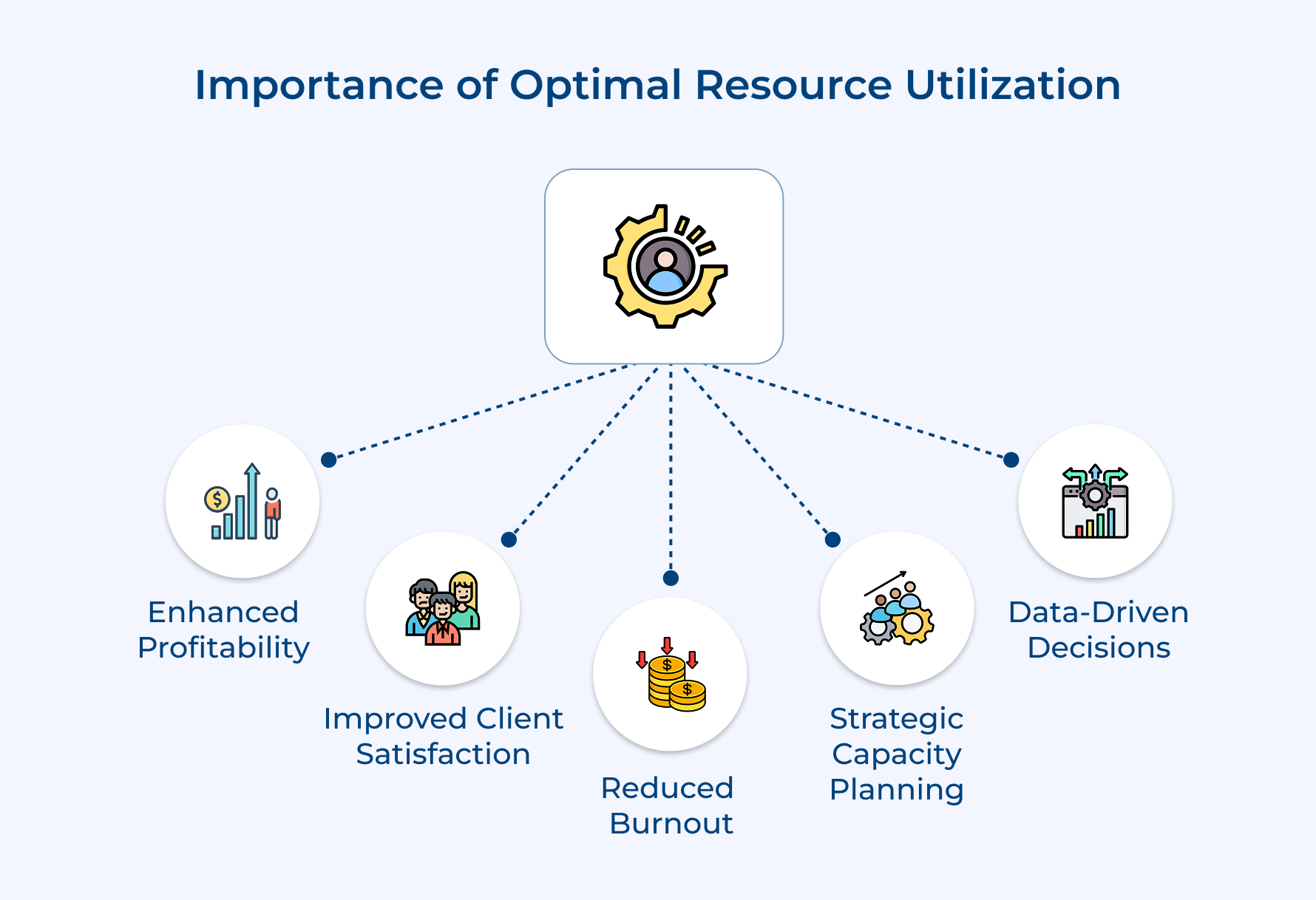
Enhanced Profitability and Revenue Generation
When your team is used to its full potential, you naturally boost billable hours without increasing overhead. That sweet spot (between underused and overworked) directly lifts profit margins. In fact, many professional services firms see a sharp rise in revenue just by improving how they allocate time and talent.
Improved Client Satisfaction and Project Delivery
Having the right people on the right tasks ensures projects hit deadlines without compromising on quality. Clients get consistent attention from focused experts, which builds trust. That trust often turns into long-term contracts and valuable referrals that keep your pipeline full.
Reduced Employee Burnout and Turnover
Swinging between overload and boredom wears people down. Smart resource planning helps balance workloads so your team can thrive. A well-paced schedule encourages growth, reduces burnout as well as leads to lower turnover. Thus, saving you the headache (and cost) of constant hiring.
Strategic Capacity Planning and Growth Enablement
Knowing exactly how much your team can take on makes growth feel a lot less risky. When you understand your capacity, you can say yes to new business opportunities without stretching your people too thin. It’s a foundation for scaling that’s smart, not reactive.
Data-Driven Decision Making and Continuous Improvement
Tracking how your resources are used reveals patterns like your team’s strengths, peak demand seasons and which projects bring the best returns. These insights help you make sharper decisions around hiring, training and planning.
Operational Impact of Inefficient Resource Utilization
Resource underutilization creates a ripple effect that extends far beyond simple cost concerns. When consultancies fail to optimize their human capital and assets, the consequences manifest as reduced profitability, missed opportunities as well as weakened competitive positioning.
Latest Statistics Showcasing the Impact (2023-2024)
- 50% more resources are likely to leave their jobs when under allocated, creating costly turnover cycles that drain institutional knowledge.
- Billable utilization fell to just 68.9% in 2024, falling below the 75% optimal threshold mark, representing millions in lost revenue potential.
- EBITDA fell to 9.8% in 2024 from 15.4% in 2023, which is the lowest it has been in 5 years, highlighting severe profitability pressures.
- 23% cite poor resource allocation as the primary cause when projects fail to deliver on time, showing direct operational impact.
These statistics paint a stark picture of how resource underutilization systematically undermines business performance across multiple dimensions. But what’s really driving this widespread problem? The answer often lies in reactive rather than proactive planning approaches that leave organizations constantly scrambling to match talent with opportunities.
Root Causes of Resource Underutilization Issues
Understanding why resources remain underutilized requires examining the systemic issues within professional services organizations. These issues create gaps between available capacity and meaningful work assignments.
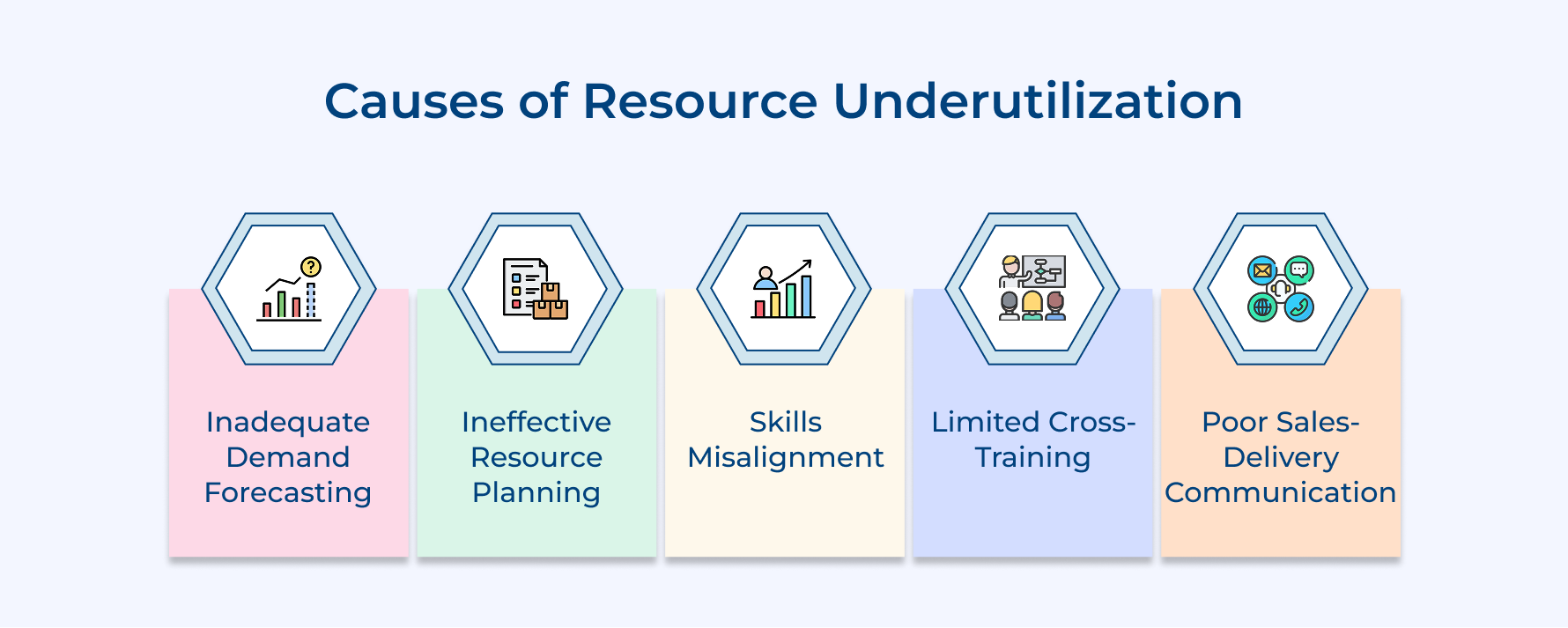
Inadequate Demand Forecasting and Pipeline Visibility
Organizations struggle to predict future project needs accurately, leading to mismatched capacity planning. When leadership lacks visibility into the sales pipeline or project timelines shift unexpectedly, teams find themselves between assignments while new opportunities remain unidentified.
Ineffective Resource Planning and Allocation Systems
Many firms rely on spreadsheets or outdated tools that cannot track real-time availability across multiple projects and skill sets. It creates blind spots where qualified resources remain idle while project managers scramble to find available talent for urgent client needs.
Skills Misalignment and Limited Cross-Training
Teams become siloed within specific expertise areas, creating bottlenecks when certain skills are over demanded while others sit unused. Without deliberate cross-training initiatives, organizations cannot flexibly redistribute talent when project requirements shift or specialized resources become unavailable.
Poor Communication Between Sales and Delivery Teams
Sales teams often commit to timelines without consulting delivery capacity, while project managers operate without insight into upcoming opportunities. The disconnect creates feast-or-famine cycles where resources either face overwhelming workloads or extended periods without billable assignments.
8 Proven Warning Signs of Resource Underutilization & Their Fixes
Let’s explore eight common indicators of resource underutilization and provide actionable strategies to correct them. Turn dormant assets into dynamic contributors to your organization’s goals.
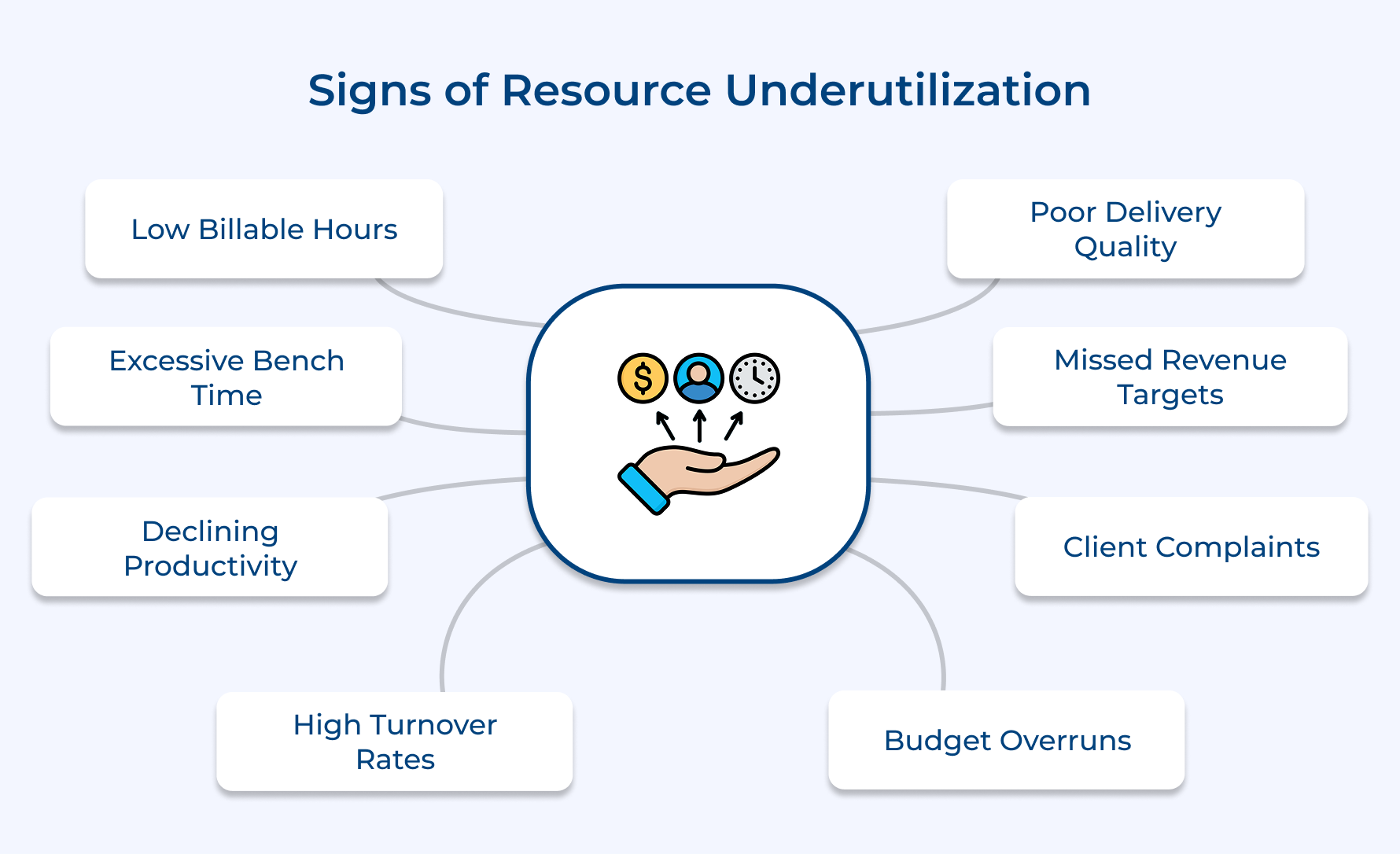
1. Low Billable Hours Per Employee
Low billable hours often mean your team is tied up with internal tasks instead of client work, hurting profitability fast. Since professional services firms rely almost entirely on billable time for revenue, this signals a bigger issue: either a lack of client demand or internal inefficiencies.
To figure out what’s really going on, ask yourself:
- What percentage of total hours are billable each week?
- Are employees spending more time on admin than client work?
- Which non-billable activities eat up the most time?
- How accurate is your current tracking of planned vs. actual billable hours?
These questions reveal where the gaps are, so you can decide if the fix lies in better business development or tightening operations.
Here’s how to turn it around:
- Automate time tracking across all team members to capture billable vs. non-billable hours in real-time.
- Improve visibility into upcoming projects so teams can transition smoothly between assignments.
- Use forecasting tools to better match available talent with project needs ahead of time.
2. Excessive Bench Time Between Projects
Excessive bench time occurs when skilled professionals sit idle between client assignments while still consuming overhead costs. This represents pure financial waste since these resources continue drawing salaries without generating corresponding revenue streams.
The following three corrections address this challenge most effectively:
- Develop strategic internal project portfolios: Create meaningful internal initiatives that generate long-term value during downtime periods. These projects should focus on process improvements, tool development, or market research. It strengthens competitive positioning while maintaining team engagement.
- Establish cross-training and skill development programs: Use bench time strategically to expand team capabilities through structured learning initiatives. This investment creates more flexible resource allocation options while improving individual career satisfaction and overall organizational resilience.
- Build stronger sales and delivery coordination: Implement regular communication between business development and project delivery teams to ensure pipeline visibility. The coordination helps predict capacity needs and prevents surprise gaps between client engagements.
Consider bench time like maintaining a sports team roster. How do successful coaches keep talented players engaged when they’re not in active games? They focus on skill development and strategic preparation rather than treating downtime as wasted investment. Professional services firms can apply this same principle by viewing bench periods as opportunities for strategic improvement rather than necessary evils.
3. Declining Team Productivity Metrics
What happens when your team’s output starts dropping despite having the same number of people and similar workloads? Declining productivity metrics often signal that resources aren’t being deployed effectively or that systemic barriers prevent optimal performance across different project types.
Consider these factors when identifying productivity decline patterns:
- Task completion rates compared to historical performance baselines across similar project types.
- Communication overhead that diverts attention from core deliverable creation activities.
- Technology limitations that create unnecessary friction in daily workflow execution.
So what’s the recommended approach once you’ve identified these productivity warning signs? Focus on removing obstacles that prevent your team from doing their best work rather than pushing harder on existing processes. This means streamlining workflows and investing in tools that eliminate friction points throughout project delivery cycles.
4. High Employee Turnover Rates
High turnover rates indicate that talented professionals leave due to insufficient challenging work or poor resource allocation decisions. When skilled team members consistently depart, it signals underlying problems with how organizations manage and deploy their human capital effectively.
Why should this pattern concern leadership teams focused on sustainable growth? Think about the hidden costs beyond just replacement hiring. When experienced consultants leave due to underutilization, they take institutional knowledge and training investments with them. This creates a vicious cycle where remaining team members face increased pressure while new hires require months to reach productive contribution levels.
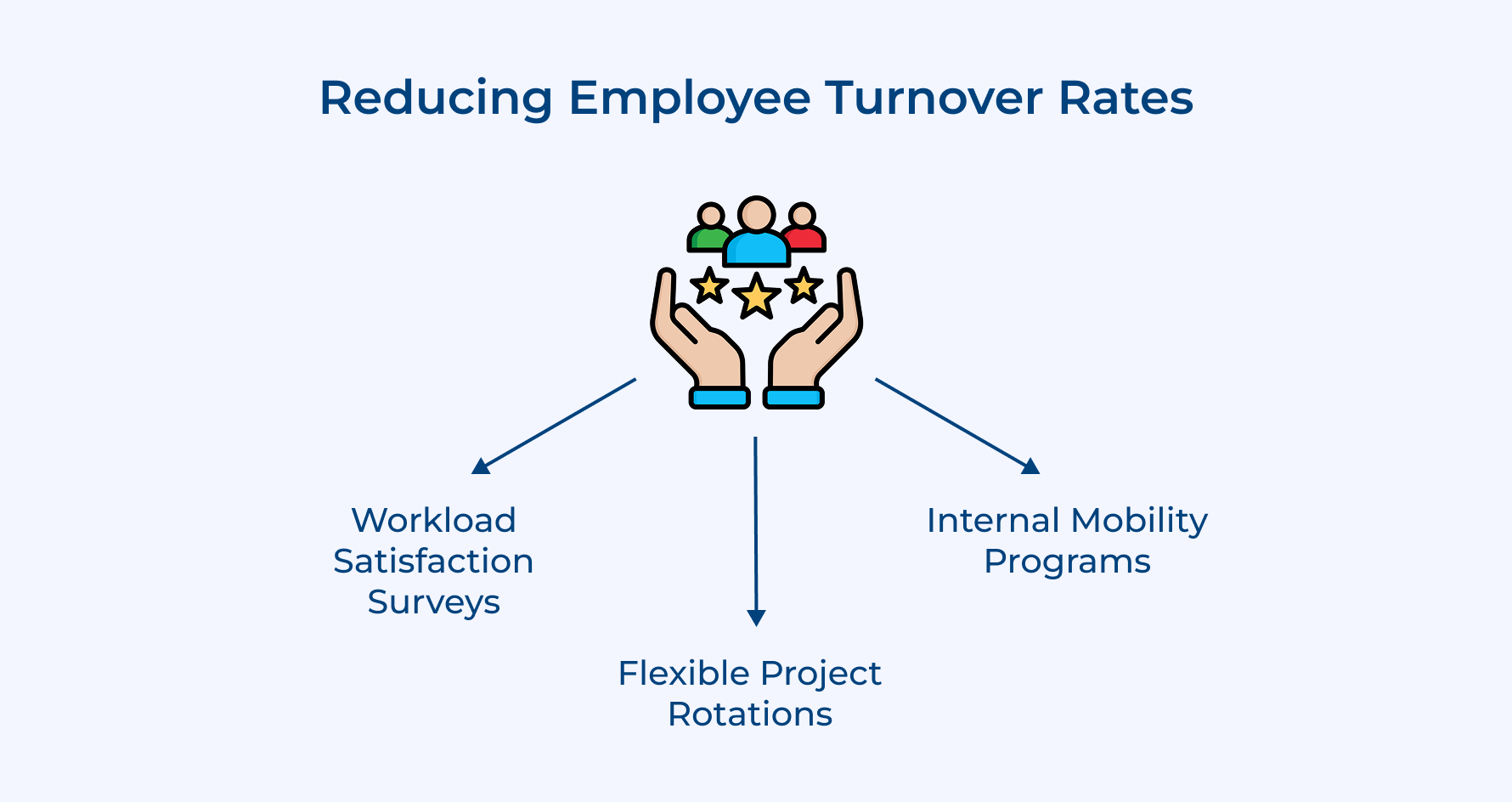
Proven methods for addressing turnover-related resource challenges:
- Conduct regular workload satisfaction surveys: Gather systematic feedback about engagement levels and work distribution preferences across all team members.
- Implement flexible project rotation policies: Create opportunities for professionals to experience different types of client work and industry sectors.
- Develop internal mobility programs: Enable lateral moves between departments or practice areas to maintain engagement and expand skill sets.
5. Inconsistent Project Delivery Quality
Inconsistent quality emerges when resources lack proper guidance or clear standards for deliverable creation across different project types. The variation signals that talented professionals aren’t receiving adequate support structures to perform at their optimal capability levels consistently.
Standardizing resource allocation methodologies helps overcome inconsistent quality by ensuring qualified professionals get matched with appropriate project requirements based on proven frameworks rather than ad-hoc assignment decisions.
Three proven resource allocation methodologies to standardize include:
- Skills-based matching matrices
- Workload balancing algorithms
- Project complexity scoring systems
Establish peer review and mentoring systems – But how does this actually solve quality inconsistencies caused by resource underutilization? When experienced team members guide less seasoned colleagues through structured review processes, it creates valuable knowledge transfer opportunities. This not only raises overall performance standards but also ensures optimal resource deployment across all phases of a project.
6. Revenue Targets Consistently Missed
Revenue shortfalls often come down to one thing: poor resource deployment. You may have the right people available, but if they’re not being used efficiently (or if sales and delivery teams aren’t in sync) you end up leaving money on the table. Let’s break down how to fix that:
Align Capacity Planning With Sales Forecasts
Sales needs to know who’s available before making promises, and delivery needs advance notice of what’s coming down the pipeline. When these two functions are aligned:
- Sales sets more realistic client expectations
- Delivery avoids last-minute staffing scrambles
- You reduce the chances of turning down work despite having available talent
Implement Dynamic Pricing And Resource Strategies
Markets shift fast, your pricing and resource plans should too. A flexible strategy helps you respond to real-time conditions like:
- Spikes in demand
- Talent shortages in specific skill areas
- Competitive pressures on pricing
With dynamic strategies, you make the most of your talent while staying profitable and competitive.
Create Accountability Mechanisms Across Departments
Revenue is everyone’s job, not just sales. When teams work in silos, optimization suffers. To fix that:
- Set shared financial goals across sales, delivery, and operations
- Define who owns what in the resource planning process
- Make it clear how each team’s decisions impact profitability
Collaboration, visibility, and accountability turn available capacity into actual revenue.
7. Client Complaints About Service
Client complaints about service quality directly indicate that resources aren’t being utilized effectively to meet customer expectations and project requirements.
When clients express dissatisfaction, it often signals that qualified team members aren’t being deployed optimally to deliver the expertise and attention that projects truly require.
Understanding how to leverage client feedback becomes crucial for identifying resource deployment gaps that might otherwise remain hidden from an internal management perspective.
Client complaints offer external validation that there may be issues with how resources are being allocated internally. They also highlight specific areas where underutilized team members could step in to improve service delivery across various phases of a project.
How to overcome it?
- Implement regular survey mechanisms that capture specific complaints related to resource availability and expertise deployment.
- Create protocols that quickly redirect underutilized resources toward addressing client concerns before they escalate into relationship-threatening issues.
8. Budget Overruns on Projects
Budget overruns frequently occur when underutilized resources create inefficiencies that force projects to consume more time and money than originally planned. Poor resource deployment leads to missed deadlines, rework cycles, and scope creep that ultimately destroys project profitability margins.
Consider these diagnostic questions for identifying budget overrun patterns:
- Are projects consistently exceeding their allocated budgets by similar percentages across different client types?
- Do cost overruns correlate with specific team members or skill sets being unavailable when needed?
- How often do timeline extensions result from waiting for appropriate resources to become available?
- What percentage of budget variance stems from using less experienced resources due to optimal talent being underutilized?
What’s the most effective approach for correcting budget overruns caused by resource underutilization? Focus on proactive capacity planning that ensures the right people work on appropriate projects from the beginning rather than reactive fixes that attempt to salvage troubled engagements after problems emerge.
6 Additional Strategies to Avoid Resource Underutilization
Avoiding resource underutilization requires more than just time tracking. Here are six practical strategies to help you boost productivity and maximize team potential.
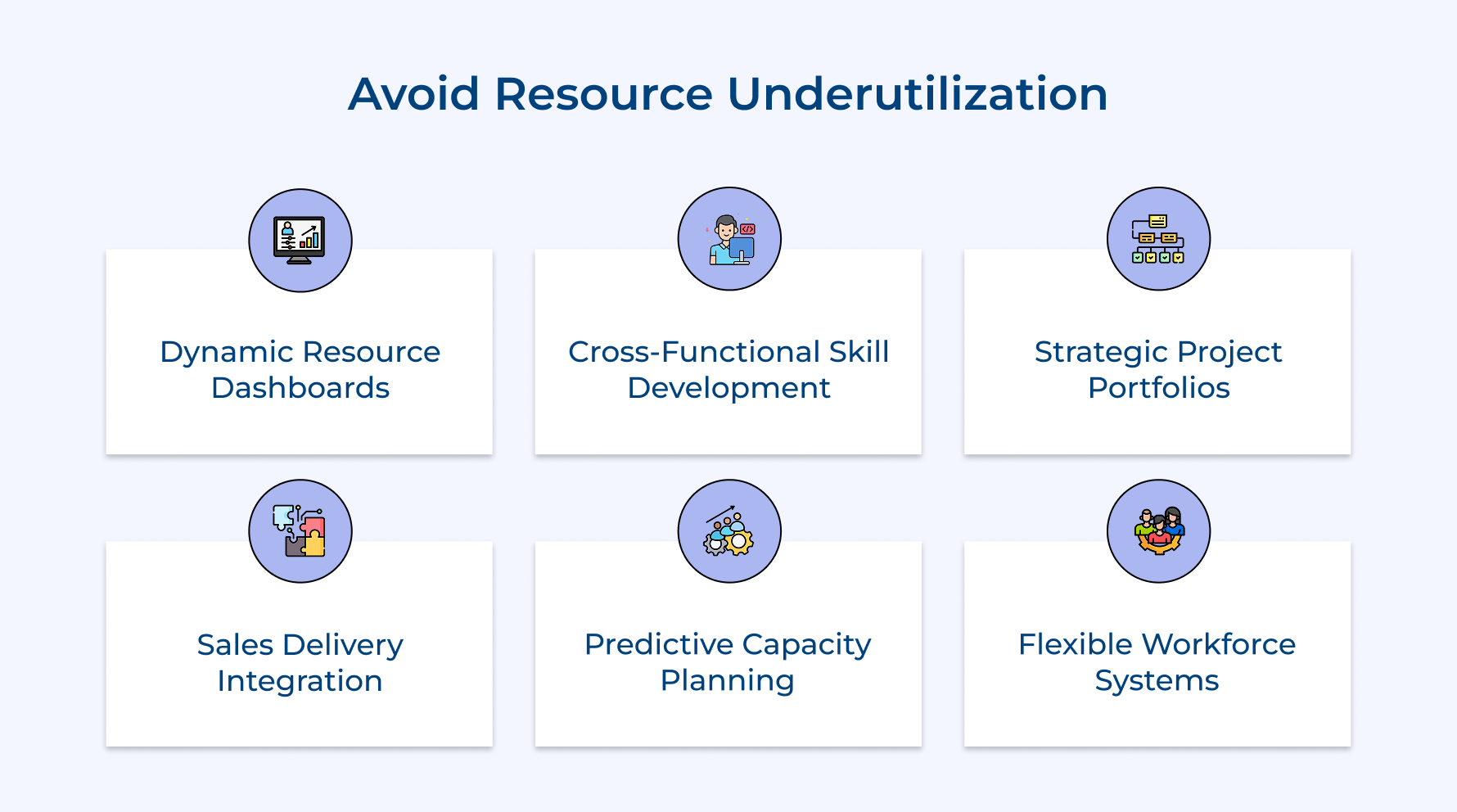
Implement Dynamic Resource Visibility Dashboards
Give managers a clear, real-time view of who’s available and when. Live dashboards make it easier to spot underused talent early and redirect them to billable work or high-impact tasks.
Establish Cross-Functional Skill Development Programs
Cross-train your people so they’re not locked into one role. When team members build complementary skills, they can jump into different projects, cutting down idle time.
Create Strategic Internal Project Portfolios
Don’t let gaps between client work go to waste. Assign underutilized team members to internal projects that improve processes, spark innovation, or build long-term assets.
Build Robust Sales and Delivery Integration
When sales and delivery teams stay in sync, fewer surprises pop up. Aligning these functions ensures client promises match real capacity. Hence, avoiding both overbooking and idle time.
Deploy Predictive Capacity Planning Models
Use data to forecast demand and plan ahead. Predictive models help you stay one step ahead by matching skills with future project needs before gaps appear.
Develop Flexible Workforce Management Systems
Mix in contract workers or partners when things ramp up. This keeps your core team productive without taking on too much overhead during slower periods.
How to Use Kooper to Identify and Overcome Resource Underutilization?
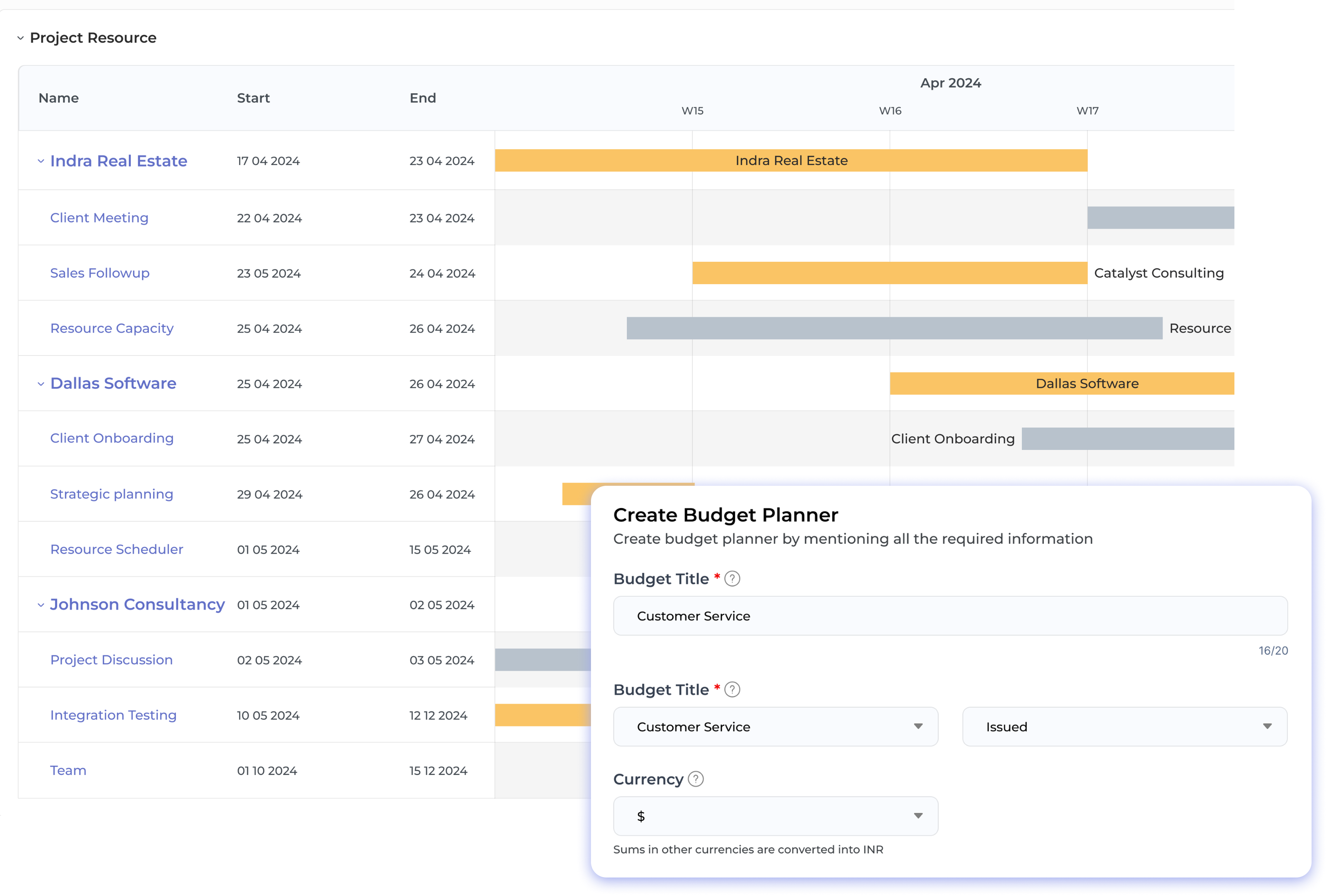
Resource management challenges are addressed through Kooper, a comprehensive Professional Services Automation (PSA) platform built specifically for agencies and consultancies. The platform transforms how organizations deploy their human capital by providing real-time insights into capacity utilization patterns across all team members and project types.
The platform includes project planning, resource allocation, and performance tracking into a unified system. It enables proactive decision-making about talent deployment while eliminating the blind spots that typically create underutilization problems.
Key features:
- Real-time resource capacity dashboard: Get an instant, centralized view of how your team is being used. Spot overbooked or underutilized members at a glance and make quick adjustments to keep workloads balanced.
- Predictive resource planning tools: Use smart forecasting to plan ahead. These tools analyze past data and current pipeline trends to help you schedule projects strategically as well as plan hiring before crunch time hits.
- Project portfolio visibility interface: See what’s coming next and what each project needs. With full visibility into deliverables and resource demands, you can shuffle assignments efficiently as well as keep your team engaged.
- Automated utilization reporting and analytics: Track how your resources are being used over time. Automated reports reveal trends, flag persistent underutilization, and offer insights to help you fine-tune your allocation strategy.
Unlock Potential, Maximize Efficiency by Overcoming Resource Underutilization
Resource underutilization represents one of the most costly yet preventable challenges facing professional services organizations. When talented professionals sit idle between projects or work below their optimal capacity, organizations hemorrhage money while missing opportunities to deliver exceptional client value and build competitive advantages.
Smart agencies transform underutilization into strategic advantage by implementing systematic resource management practices that align talent with opportunities seamlessly. These organizations achieve higher profit margins, deliver consistent project quality, and create deeper client relationships through optimal deployment of their most valuable asset: human expertise.
Limit time — not creativity
Everything you need for customer support, marketing & sales.

Pooja Deshpande is a content contributor at Kooper, focused on creating insightful resources that help agencies and service providers scale efficiently. Passionate about SaaS trends, content strategy, and operational excellence, she delivers practical, easy-to-implement guidance for modern business leaders.