Technical Project Management: Skills, Challenges & Best Practices
- What is Technical Project Management?
- Essential Technical Project Management Skills
- Roles and Responsibilities of Technical Project Management
- 7 Proactive Technical Project Management Best Practices
- Real-life Examples of Technical Project Management
- Essential Technical Project Management Certifications
- Common Challenges in Technical Project Management
- Manage your Technical Projects Effectively with Kooper
- FAQs about Technical Project Management
Key Highlights:
- Technical project management blends technical expertise with leadership to deliver complex IT projects efficiently and effectively.
- Key technical project management skills include risk mitigation, agile methodologies, and stakeholder communication for project success.
- Challenges in technical project management include scope creep, technical debt, and coordinating diverse technical teams effectively.
Technical projects consistently fail across agencies and professional services. This happens because traditional project management approaches fall short. They can’t handle the unique complexities of software development, system integrations, and emerging technology implementations.
Organizations lose millions due to failed deployments and missed deadlines. The main reason is the lack of proper technical project management frameworks. Stakeholders are frustrated because they cannot bridge the communication gap between technical teams and business objectives effectively.
This comprehensive guide focuses on technical project management. It offers proven strategies, essential skills, and practical frameworks. These tools help transform technical project chaos into structured success by promoting systematic approaches that balance technical excellence with business outcomes seamlessly.
What is Technical Project Management?
Technical project management is the specialized discipline of leading complex technology-driven projects from conception to delivery. It combines traditional project management principles with deep technical understanding to navigate software development challenges.
Technical project managers act as translators between technical teams and business stakeholders throughout the project lifecycle. They break down complex requirements into manageable tasks while maintaining oversight of code quality and system architecture decisions. Their daily work involves risk assessment and resource coordination to keep projects moving forward smoothly.
Primary objectives:
- Scope management: Define and protect project boundaries to prevent scope creep while accommodating necessary changes.
- Technical quality assurance: Ensure deliverables meet both functional requirements and technical standards through systematic review processes.
- Risk mitigation: Identify potential technical and business risks early while developing contingency plans to address them proactively.
- Resource optimization: Allocate team members and technical resources efficiently to maximize productivity as well as minimize bottlenecks.
Essential Technical Project Management Skills
Mastering technical project management requires a unique blend of technical expertise and leadership capabilities that evolve with industry demands. Here’s the list you should consider:
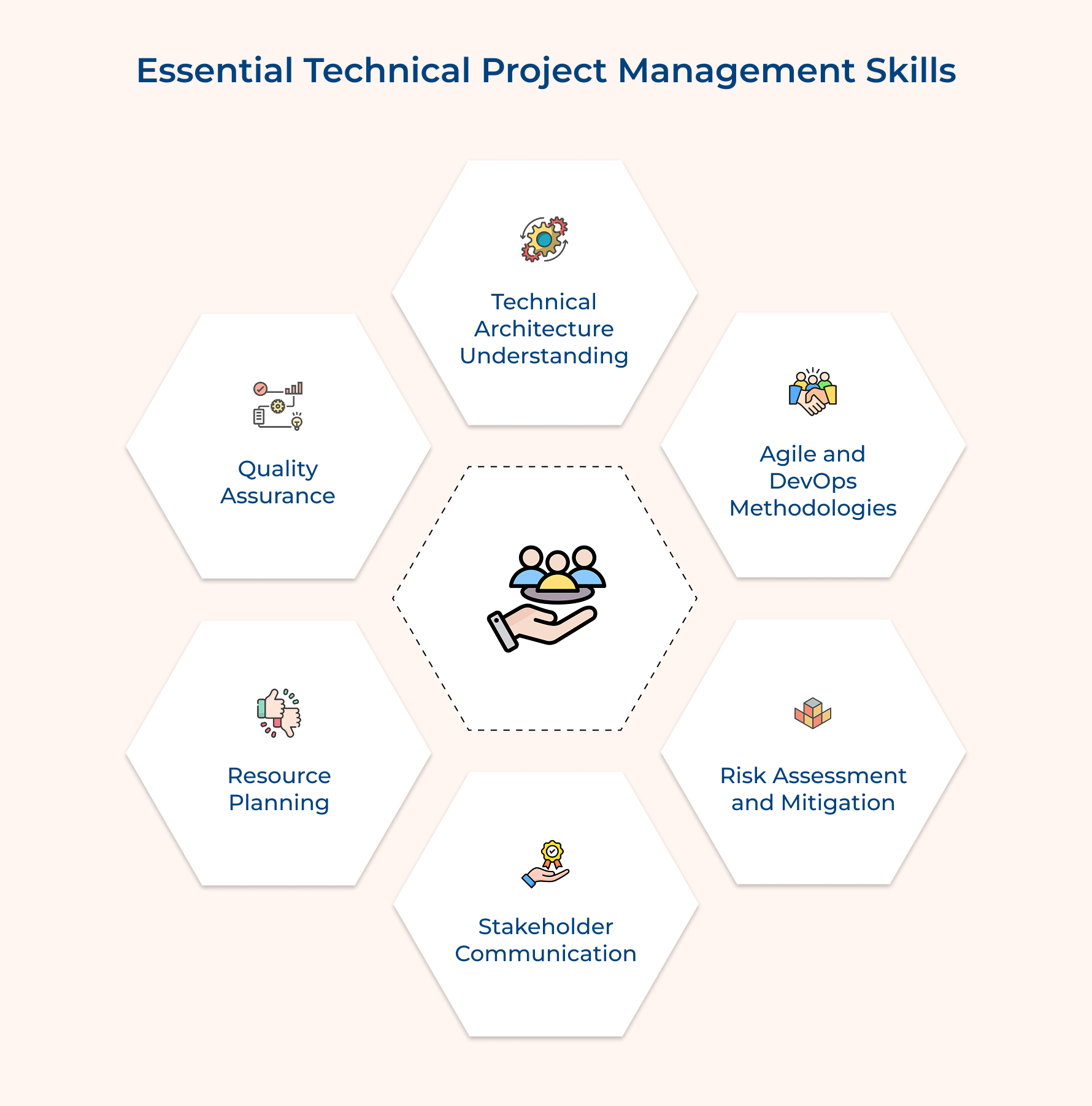
1. Technical Architecture Understanding
Technical project managers need a solid grasp of system architecture to make informed decisions about project feasibility and resource allocation. This knowledge helps them evaluate technical proposals and identify potential integration challenges before they become costly problems.
Core architecture concepts every PM should master:
- System design patterns: Microservices and monolithic architectures
- API integration: Restful services and third-party connectivity
Understanding architecture fundamentals enables better communication with development teams and more accurate timeline estimation. Project managers can spot technical debt early and guide teams toward sustainable solutions that serve long-term business objectives.
2. Agile and DevOps Methodologies
Modern technical projects demand familiarity with agile frameworks that promote iterative development and continuous improvement cycles. Project managers must understand sprint planning as well as retrospective processes to maintain team velocity and project momentum.
Essential agile and DevOps practices for technical PMs:
- Sprint ceremonies: Daily standups and sprint reviews optimization
- Version control: Git branching strategies and code review processes
DevOps integration requires knowledge of deployment pipelines and automated testing strategies that reduce manual overhead. This understanding helps project managers coordinate between development and operations teams for smoother product releases.
3. Risk Assessment and Mitigation
Security vulnerabilities and scalability limitations are a few risks we face that require proactive identification as well as management. Project managers must develop systematic approaches to evaluate technical risks against business impact and probability.
Consider these critical risk evaluation questions:
- How might this technical decision impact system performance under heavy load?
- What security vulnerabilities could emerge from our current architecture choices?
- Which integration points present the highest failure probability for our timeline?
Effective risk mitigation involves creating contingency plans and maintaining close relationships with technical leads who can provide early warning signals. It helps prevent minor technical issues from escalating into project-threatening problems.
4. Stakeholder Communication and Translation
Technical project managers serve as interpreters between technical teams and business stakeholders who speak different professional languages. They must translate complex technical concepts into business terms while preserving accuracy and important nuances.
The communication bridge helps maintain project alignment and prevents misunderstandings that can derail timelines or budgets. Successful translation requires understanding both technical implementation details and business strategy implications.
5. Resource Planning and Technical Staffing
Technical resource planning goes beyond headcount to consider skill specialization and technology stack requirements for project success. Project managers must understand different technical roles and how they contribute to various project phases.
Reflect on these staffing optimization questions:
- Which technical skills are most critical for each project milestone and delivery phase?
- How can we balance senior developer mentorship with junior team member growth opportunities?
- What cross-training strategies will reduce single points of failure in our technical team?
Effective staffing involves matching developer expertise with project requirements while considering learning curves for new technologies. It optimizes team productivity and ensures technical deliverables meet quality standards.
6. Quality Assurance and Testing Strategy
Technical project managers need comprehensive understanding of testing methodologies to ensure deliverables meet both functional and performance requirements. It includes knowledge of automated testing frameworks and manual QA processes that fit project constraints.
Quality strategy development requires balancing thoroughness with timeline pressures while maintaining standards that protect long-term product stability. Project managers must coordinate between QA teams and developers to establish realistic testing schedules.
Roles and Responsibilities of Technical Project Management
Technical project managers in agencies and professional services juggle multiple critical functions that bridge the gap between technical execution as well as business success.
Essential questions to consider before defining technical PM responsibilities:
- What specific technical expertise does your client base require from project leadership?
- How will you balance hands-on technical guidance with strategic project oversight throughout the engagement?
- What communication frameworks will ensure both technical teams and business stakeholders remain aligned on deliverables and expectations?
- How can you structure accountability measures that track both technical quality and business outcome achievement?
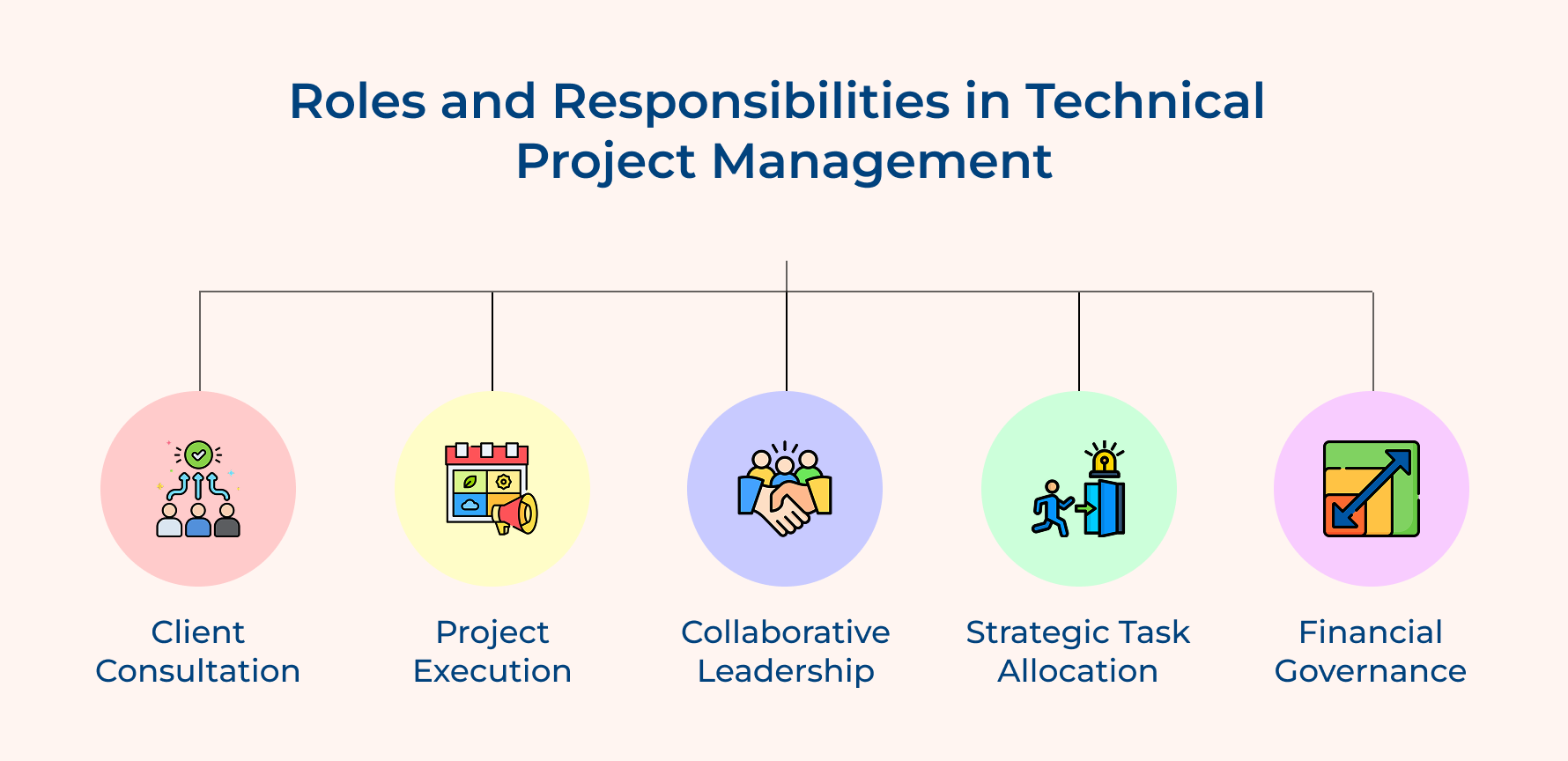
1. Client Technical Consultation and Advisory
Technical project managers act as trusted advisors, guiding clients through complex tech decisions. They break down technical options, explain the impact of different approaches, and help shape strategic investments. By translating business needs into practical solutions, they make sure everyone’s on the same page about risks and opportunities.
2. Orchestrating Project Execution
Managing project execution means keeping multiple technical workstreams aligned and moving forward. Technical PMs create detailed plans, track progress as well as identify roadblocks early. They make sure system components are integrated smoothly and that nothing falls through the cracks during any phase.
3. Collaborative Leadership for Unified Objectives
Instead of siloed efforts, technical PMs build a collaborative space where specialists work toward common goals. They encourage clear, cross-functional communication so everyone understands how their work contributes to the bigger picture and stays aligned throughout the project.
4. Strategic Task Allocation
Assigning tasks isn’t just about availability, it’s about strategy. Technical PMs consider each team member’s strengths and growth areas, the complexity of tasks along with interdependencies. It results in smarter task distribution that keeps the project efficient and the team motivated.
5. Financial Governance
Managing the budget isn’t just a finance role. Technical PMs keep an eye on costs, balancing tech decisions with timelines and quality. They look for smart ways to optimize resources and make sure the project stays financially sound without cutting corners.
7 Proactive Technical Project Management Best Practices
Let’s now explore seven indispensable best practices that every technical project manager should incorporate to streamline their processes and deliver exceptional results.
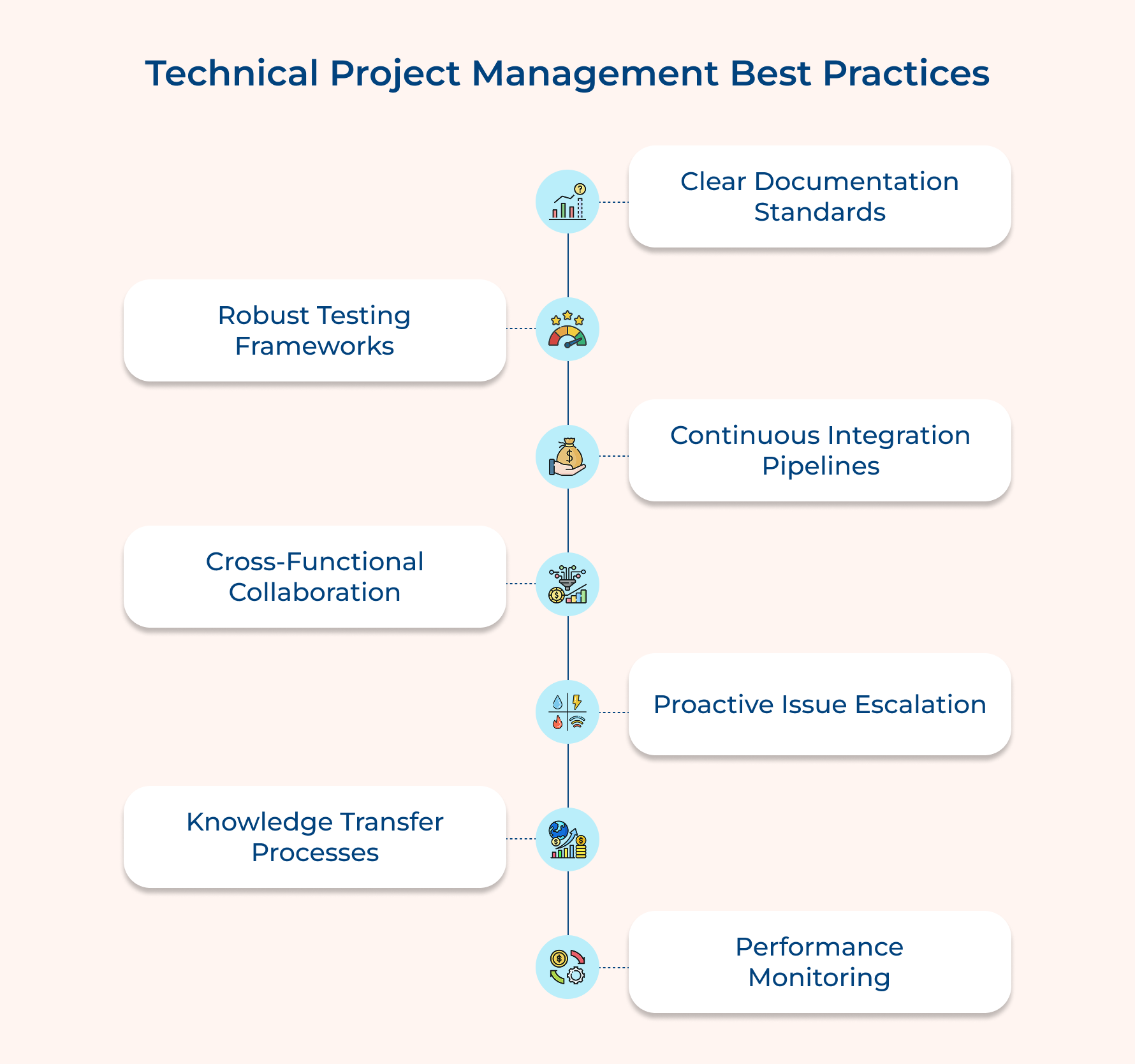
1. Establish Clear Technical Documentation Standards
Technical documentation standards create consistent communication frameworks. What does it mean? It simply means that it enables team members to understand complex systems and make informed decisions throughout project life cycles. Without standardized documentation practices teams waste time deciphering inconsistent information formats.
Three proven methods for implementing effective documentation standards:
- Comprehensive API documentation templates: Create standardized formats that include endpoint descriptions and response examples with clear error handling procedures. These templates ensure developers can integrate systems efficiently without constant back-and-forth clarification requests.
- Code commenting and review protocols: Establish mandatory commenting requirements for complex logic sections and implement peer review processes before code merging. The approach catches potential issues early while building shared understanding across development teams.
- Updated system architecture diagrams: Maintain visual representations of system relationships that reflect current implementation rather than original design intentions. Regular diagram updates help new team members understand system complexity without lengthy explanation sessions.
- Think about it this way: when was the last time you joined a project and immediately understood how everything connected together without asking dozens of questions?
2. Build Robust Testing and Validation Frameworks
Testing frameworks provide systematic approaches to verify that technical solutions meet both functional requirements and performance expectations before client delivery. Comprehensive testing reduces post-launch emergencies and builds client confidence in delivered solutions.
Essential questions to evaluate before building testing frameworks:
- What specific user scenarios must our testing cover to ensure real-world functionality?
- Which performance thresholds will indicate system readiness for production deployment?
- How will we balance automated testing coverage with manual exploratory testing needs?
- What client approval processes should we integrate into our validation workflows?
These questions help establish testing priorities that align technical validation efforts with business objectives and client expectations for successful project outcomes.
Once you have clarity on these foundational questions how do you actually implement a testing strategy that catches problems before they reach clients? Start by building automated test suites that run with every code change then layer in client-facing acceptance criteria that validate business requirements.
3. Implement Continuous Integration and Deployment Pipelines
CI/CD pipelines automate the process of integrating code changes and deploying applications to reduce manual errors as well as accelerate delivery timelines. Automated deployment processes eliminate inconsistencies between different environments while providing reliable rollback capabilities.
Implementing CI/CD requires establishing automated workflows that build, test and deploy code changes without manual intervention at each step. These pipelines create consistent deployment processes that work regardless of team member availability or project timeline pressures.
Pro tips:
- Start with simple build automation before adding complex deployment stages to avoid overwhelming teams with too many new processes simultaneously.
- Always include automated rollback triggers that activate when deployment health checks fail to minimize downtime during problematic releases.
4. Create Cross-Functional Team Collaboration Methods
Strong cross-functional collaboration brings specialists from different technical areas together to work toward a common goal, instead of operating in silos. This kind of teamwork prevents knowledge gaps and ensures that every technical decision supports the larger business vision throughout the project lifecycle.
Make cross-team knowledge sharing truly effective (without taking up too much of everyone’s time) by structuring the sessions with a focused agenda. Skip theoretical debates, zero in on real project challenges and lessons learned.
Key topics to include:
- Recent technical architecture decisions
- Problem-solving approaches that worked
- Key milestones coming up
When multiple specialists contribute to major deliverables, success becomes a shared responsibility. Create a clear accountability framework that allows each expert to maintain ownership of their domain, while still working as part of a unified team. This collective approach builds resilience, transparency, and long-term success.
5. Develop Proactive Issue Escalation Strategies
Proactive escalation strategies help technical project managers identify and address potential problems before they become project-threatening crises. Strategic escalation prevents small technical issues from cascading into larger problems that impact client relationships and project timelines.
Here are a few real examples worth flagging early:
- Technical debt is piling up and it’s starting to slow down development more than expected. Time to reassess before it affects future progress.
- Key team members are double-booked or unavailable, and it’s looking like critical milestones might slip. Better to raise this sooner than scramble later.
- The client suddenly shifts requirements and now the original architecture or implementation plan doesn’t quite fit. This needs a quick, aligned response.
- Testing reveals poor performance metrics that don’t meet the benchmarks. That’s a red flag worth immediate attention.
So how do you actually build escalation strategies that catch problems early instead of reacting to crises after they happen? Start by establishing clear trigger points for different types of issues then create communication pathways that ensure the right stakeholders receive timely information.
6. Create Comprehensive Knowledge Transfer Processes
Knowledge transfer processes ensure that project insights and technical solutions remain accessible even when team members transition to different projects or roles. Comprehensive knowledge transfer protects organizational investment in technical solutions while enabling future teams to build upon previous work effectively.
Methods for building effective knowledge transfer systems:
- Document technical decisions and business rationale: Create detailed records that explain not only what technical choices were made but why those decisions served specific business objectives. These documents help future teams understand the context behind technical implementations rather than just the mechanics of how systems work.
- Conduct structured handoff sessions between phases: Organize formal knowledge transfer meetings where outgoing team members share insights with incoming contributors through systematic review processes. These sessions ensure that critical project knowledge transfers through direct communication rather than relying solely on written documentation.
Consider a scenario where your lead developer unexpectedly leaves during a critical project phase and the replacement needs to understand complex integration decisions made months earlier. Comprehensive knowledge transfer processes would provide clear documentation and accessible resources that enable smooth transitions without project delays.
7. Monitor Performance Metrics and Continuous Improvement
Performance monitoring transforms technical project management from reactive problem-solving into strategic optimization of team capabilities and project delivery outcomes. Systematic measurement enables data-driven decisions that improve both technical quality and business results across multiple project cycles.
Essential metrics for technical project management performance evaluation:
- Code quality scores and technical debt ratios
- Team velocity and sprint completion rates
- Client satisfaction ratings and project profitability margins
- System performance benchmarks and uptime statistics
Once you gather comprehensive performance data the real value comes from analyzing trends and patterns that reveal improvement opportunities rather than simply collecting numbers. So how to do it?
- Compare current project metrics against historical performance to identify areas where teams are improving or declining.
- Create action plans that address specific performance gaps while building on existing team strengths and capabilities.
Real-life Examples of Technical Project Management
These real-world examples demonstrate how technical project managers apply their expertise to complex technology initiatives that require both technical depth and strategic business thinking.
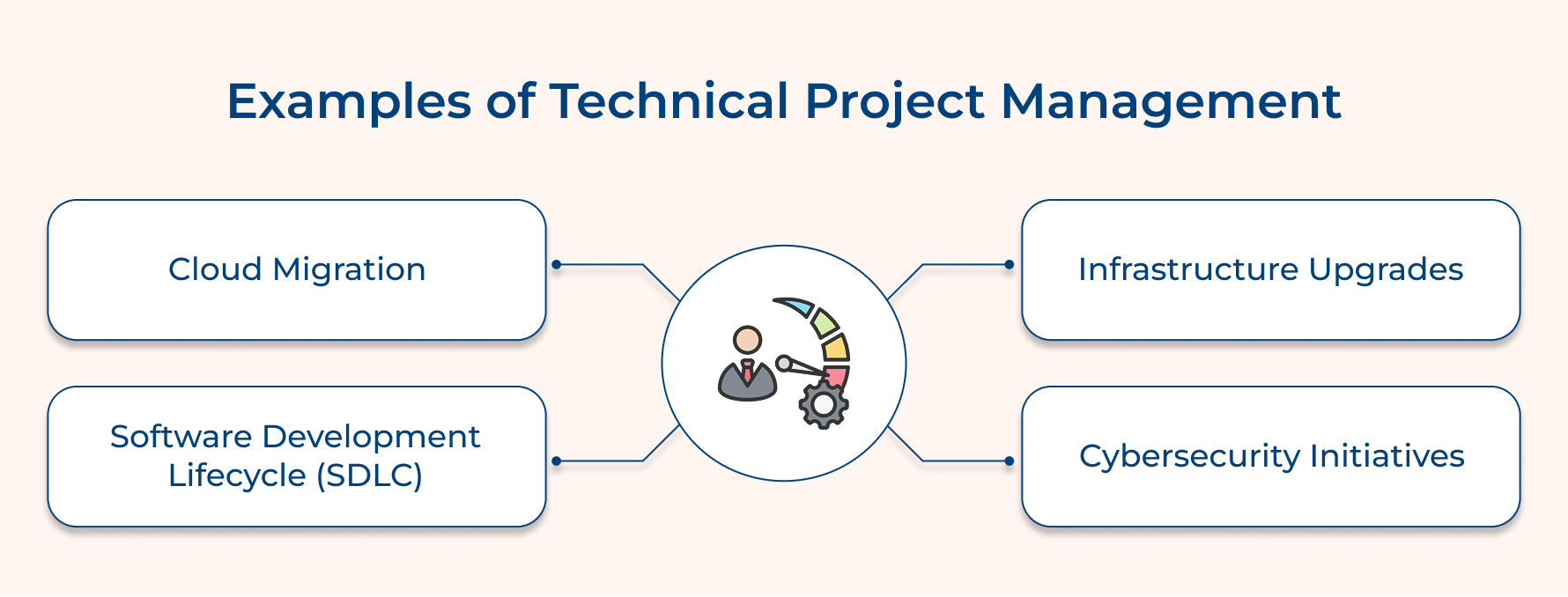
Cloud Migration Projects
Cloud migrations are all about moving from on-prem systems to the cloud—without disrupting daily business. Technical managers bring together infrastructure teams and developers to make the switch as smooth as possible, keeping downtime to a minimum as well as operations running as usual.
Software Development Lifecycle Management
Managing the SDLC means handling everything from planning and design to testing as well as deployment. These projects focus on building custom software tailored to client needs. Technical managers guide each phase, making sure the code is solid and different parts of the system work well together.
Infrastructure Upgrade Initiatives
Upgrading infrastructure is about modernizing the tech backbone (servers, networks, databases) to handle more and perform better. Technical managers lead the charge, from choosing the right hardware to getting everything installed, all while making sure day-to-day work isn’t interrupted.
Cybersecurity Implementation Projects
Cybersecurity projects are focused on locking down sensitive data with firewalls, encryption, and real-time monitoring tools. Technical managers team up with security experts to identify risks and roll out protection strategies that keep threats at bay as well as the business secure.
Essential Technical Project Management Certifications
Technical project management certifications provide structured learning paths that validate your expertise in managing complex technology projects while demonstrating professional credibility to clients and employers.
Project management professional (PMP): The gold standard certification that covers comprehensive project management principles including scope management, risk assessment, and stakeholder communication across all industries.
- Certified scrummaster (CSM): Agile methodology certification that focuses on facilitating scrum teams, managing sprint cycles, and implementing iterative development practices in software projects.
- Certified information systems security professional (CISSP): Cybersecurity certification that demonstrates expertise in designing, implementing, and managing comprehensive security programs for enterprise-level technical projects.
- Certified kubernetes administrator (CKA): Container orchestration certification that validates skills in deploying, managing, and troubleshooting Kubernetes clusters for modern application development projects.
Common Challenges in Technical Project Management
Technical project management in agencies and professional services faces unique obstacles that stem from balancing client expectations with technical realities while managing complex stakeholder relationships.
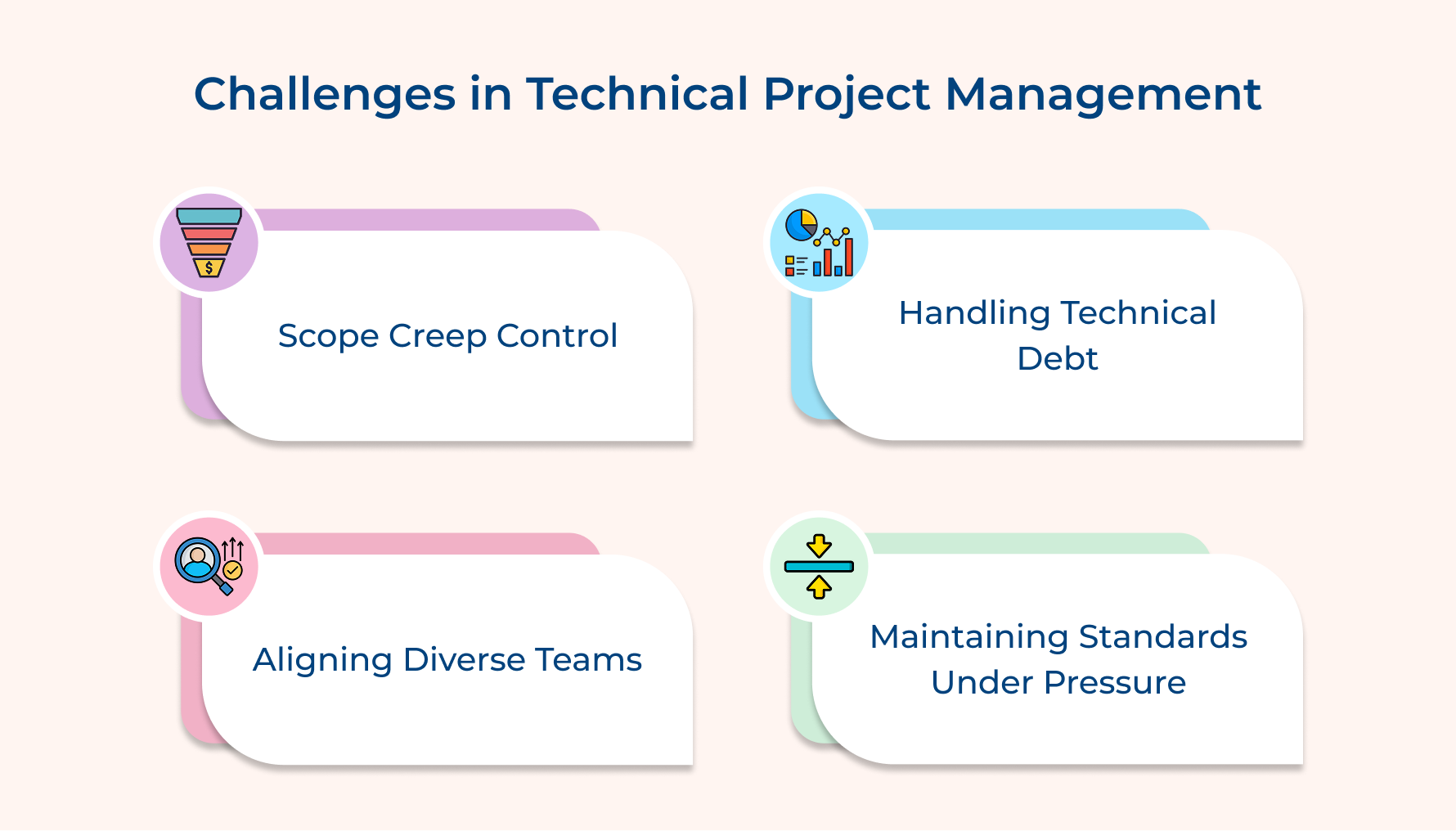
1. Managing Scope Creep and Changing Requirements
Scope creep happens when project requirements grow beyond what was originally agreed without updating the timeline or budget. It’s common during development when clients start to better understand the system and spot new needs that didn’t surface during planning. Managing this requires clear change management and well-defined approval workflows to keep things under control.
2. Balancing Technical Debt with Delivery Pressures
Sometimes teams take shortcuts to meet tight deadlines, which builds up technical debt. In fast-paced agency environments, clients often push for quick delivery, making it harder to stick to best practices. It helps to schedule time for addressing tech debt and to educate clients on how quality development now saves time and cost later.
3. Coordinating Diverse Technical Teams and Skillsets
Modern projects bring together specialists like front-end devs, back-end engineers, DB admins, and infrastructure pros. But with different vocabularies and expertise, communication can break down. To fix this, visual documentation along with simple analogies help bridge the gap and client training programs improve overall tech understanding across the board.
4. Maintaining Standards Under Time and Budget Constraints
When budgets are tight and timelines are short, testing often takes a hit. But skipping QA can lead to bigger problems post-launch. The solution? Build non-negotiable quality gates into project milestones as well as show clients how proactive testing saves them time, money, and headaches in the long run.
Manage your Technical Projects Effectively with Kooper
The right technical project management tools create centralized platforms where teams can track progress, manage resources, and maintain visibility into complex project dependencies. These tools eliminate communication gaps and provide real-time insights that enable data-driven decisions throughout development cycles.
Kooper specifically addresses technical project challenges by offering integrated environments where developers, designers, and stakeholders collaborate seamlessly on shared deliverables. These platforms combine project tracking with technical workflows, enabling teams to coordinate code reviews, testing phases and deployment schedules within unified workspaces.
Limit time — not creativity
Everything you need for customer support, marketing & sales.

Pooja Deshpande is a content contributor at Kooper, focused on creating insightful resources that help agencies and service providers scale efficiently. Passionate about SaaS trends, content strategy, and operational excellence, she delivers practical, easy-to-implement guidance for modern business leaders.